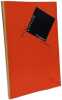
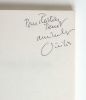
A. Ghio. 1881. In-12. Broché. Etat d'usage, Couv. défraîchie, Dos fané, Rousseurs. 432 pages. Page de faux-titre découpée.. . . . Classification Dewey : 190-Philosophie occidentale moderne
Classification Dewey : 190-Philosophie occidentale moderne
Paris, Klincksieck 1960 [4] + 448pp., dans la série "Etudes et commentaires" volume 34, 25cm., brochure originale, pages toujours non coupées, très bon état, F105217
Paris, Armand Colin 1932 268pp., dans la série "Ames et visages", br.orig., 20cm., cachet, bon état, F42286
Vickrey William S. Forstater Mathew Tcherneva Pavlina R
Reference : 100138892
(2004)
ISBN : 1843764091
Edward Elgar Publishing Ltd 2004 141 pages 16 2x2 2x23 4cm. 2004. Cartonné jaquette. 141 pages.
proche du neuf avec sa jaquette intérieur propre bonne tenue
Napoli, Domenico and Antonio Morano, 1869. 8vo. Bound uncut and unopened with the original blue printed wrappers in a recent green full cloth binding with gilt leather title-label to spine. Back wrapper with worm holes, lack of lower corner, and tears.Some minor brownspotting due to the paper quality. CXXIII, (1), 72 pp.
The very rare first edition, first printing, of five of Vico's early orations (Oration I, III, IV, V, VI, and the beginning of II), which founded the first basis for his seminal ""Scienza Nuova"". The publication of the orations is based on manuscript XIII B 53 in the National Library of Naples. Although Vico's orations are of the greatest importance to the understanding of the philosophical and intellectual development of this seminal and vastly influential thinker, Vico himself only promoted the immediate publication of the last of them, namely the ""De nostri Temporis Studiorum Ratione"", which was printed in 1708, based on the argument that it summed up much of that which was included in his earlier orations. Thus, had it not been for Galasso, the invaluable five early orations, being all of the unpublished early texts, might not have been preserved for posterity. Besides this invaluable contribution to Vico scolarship, Galasso here also provides us with a very elaborate study on the seminal importance of the present orations. (Part of the second oration was published by Villarosa in 1823).GIAMBATTISTA VICO (1668 - 1744) was appointed professor of Latin Eloqence at the University of Naples in 1699 and possessed this chair till 1708. In this capacity Vico had to each year give an inaugural oration, and it is five of these that are printed here for the first time. Vico's orations were based on classic humanistic grounds, with great inspiration found in e.g. Pico della Mirandola, and he tried to urge his students to develop both as human beings and as scholars, inspiring them to use their education to become better persons, as well as inspiring them to keep educating themselves and persuading them that they have the capacity to become wise, telling them that they are ""born for wisdom"". As such, Vico's early orations display the greatest examples of his ideas of paideia and and humanitas as well as his inspiration from Greek and Latin sources and especially from the Renaissance humanists"" they contain the very first sketches of his theories on humanity and history, which later came to provide the basis for his revolutionary ""Scienza Nuova"".
Mauvezin Trans-Europ-Repress 1987 1 vol. broché in-8, broché, couverture illustrée, 59 + 59 pp. Traduit du latin par Georges Mailhos et Gérard Granel. Très bon état.
Firenze, G. C. Sansoni 1950, 200x130mm, 200pagine, in brossura. Buono stato. Pagine in parte non tagliate.
Pour un paiement via PayPal, veuillez nous en faire la demande et nous vous enverrons une facture PayPal
Gallimard. 1993. In-12. Broché. Bon état, Couv. convenable, Dos satisfaisant, Intérieur frais. 432 pages.. . . . Classification Dewey : 100-PHILOSOPHIE ET DISCIPLINES CONNEXES
Collection tel n°227 - traduit de l'italien par Christina Trivulzio princesse de Belgiojoso - Préface de Philippe Raynaud. Classification Dewey : 100-PHILOSOPHIE ET DISCIPLINES CONNEXES
France, Cafe Clima, Editeur, 1983. 15 x 23, 414 pp., broché, bon état (couverture légèrement défraîchie).
Nagel. 1986. In-8. Broché. Bon état, Couv. convenable, Dos satisfaisant, Papier jauni. XLVII + 558 pages - un tableau hors texte dépliant.. . . . Classification Dewey : 100-PHILOSOPHIE ET DISCIPLINES CONNEXES
2e édition - Collection pensées - Traduction intégrale d'après l'édition de 1744 par Ariel Doubine - Présentation par Benedetto Croce - introduction, notes et index par Fauso Nicolini. Classification Dewey : 100-PHILOSOPHIE ET DISCIPLINES CONNEXES
Milan, Tipografia de' classici Italiani, 1801 3 tomes en un fort vol. in-8, LXXIV-152-293-[3]-165-[3] pp., avec un tableau dépliant hors-texte, manquent le portrait et la planche, demi-veau havane, dos lisse cloisonné et orné en long, pièce de titre noire, tranches marbrées (rel. du milieu du XIXe s.). Dos intégralement insolé, rousseurs.
Première édition posthume de l'oeuvre majeure de Vico (1668-1744), parue originellement en 1725, et qui n'avait été rééditée que deux fois du vivant de l'auteur, dont en 1744. Elle avait en effet été profondément oubliée ensuite. C'est la première à présenter l'autobiographie du philosophe. L'ouvrage est capital pour la prise de conscience historiciste de l'Occident, et il ne saurait être question de le résumer, d'autant que son foisonnement rend l'entreprise malaisée. Qu'il suffise de rappeler qu'il a influencé, à travers sa relecture, toute la pensée positive du XIXe siècle, et que, exempt des illusions du "progrès" nécessaire et indéfini qui fut la grande idole de la pensée des Lumières, il est susceptible de jeter une lumière neuve sur l'évolution historique même à l'époque de Fukuyama.Printing and the mind of man, 184 (pour l'originale). Cf. Croce (Benedetto) : Bibliografia Vichiana (Naples, 1947-1950). - - ACTUELLEMENT EN CONGÉS, DE RETOUR LE 17 AOÛT - VENTE PAR CORRESPONDANCE UNIQUEMENT - LIEN DE PAIEMENT, NOUS CONSULTER.
Bruxelles, Hauman, Cattoir et comp. (t.2-3: Meline, Cans et comp.) 1837-1840 Complet en trois tomes, reliés en 1 volume ; vii,230 + 277 + 268pp., 16cm., reliure cart., plats marbrés, dos en cuir brun avec titre et faux-nerfs dorés, qqs. rousseurs, bon état, F95208
A cura di Fausto Nicolini - Bari : Laterza, 1911-1913 - 2 volumes in-8 brochés sous couvertures imprimées, LXXIX, 710 pages - bon état - texte en italien -
Tous nos livres sont visibles sur notre site : https://www.livrepoesie.com/
Lausanne, Editions Gallimard 1993, 190x125mm, 432pages, broché. Très bel exemplaire.
Pour un paiement via PayPal, veuillez nous en faire la demande et nous vous enverrons une facture PayPal
Napoli, Excudebat Felix Musca, 1716. 4to. Nice contemporary Italian full vellum binding with gilt title to back. A bit of soiling and averall wear. Internally occasional brownspotting, but overall a very nice copy. Title-page in red an black, full-page engraved portrait of Hadrianus Carafa, full-page engraved portrait of Antonius Carafa, six beautiful large engraved vignettes, and six beautiful large engraved initials. Tissue-guards inserted later. (2) ff. (being half-title and title-page), portrait, (12) ff. (dedication), portrait, 501 pp.
The very rare first edition of Vico's intriguing account of the deeds of Antonius Carafa, the historical biography which the highly influential Enlightenment philosopher, historian, and jurist was commissioned to write about the important seventeenth-century statesman. The work is more than a beautifully printed work by a highly influential thinker about an important Italian statesman, though it is a rich and enlightened reconstruction of many major historical events and aspects of the contemporary history of Vico, mixed with numerous of Vico's personal opinions. As such, the work is of the greatest interest to historians, philosophers, jurists and political historians, as well as anyone interested in early modern European history" it furthermore gives us a unique insight into the thought of a thinker, whose ideas and opinions, both philosophical and political, have greatly influenced the likes of Marx, Hegel, Goethe, etc. The commission of the work is also that which caused Vico to become interested in the question of the law of nations, and that which led him to discover Grotius' ""On the Law of War and Peace"" (1625), which came to influence him greatly. The biography of Antonio Carafa is the next major work that Vico writes after his magnum opus, the ""Scienza Nouva"". ""The life of Carafa was a commissioned work, undertaken at the request of Don Adriano Carafa, the nephew of the subject and a former pupil of Vico, and for its composition access to the family archives was given him. It appeared in 1716, in magnificent format, as Vico says ""in the Dutch style"", and won for its author the praise of Pope Clement XI as well as the friendship of the Italian scholar Gianvincenzo Gravina""."" (Camponigri, Time & Idea: The Theory of History in Giambattista Vico, p. 22). Vico later married one of Carafa's daughters, and he has himself said of the work that it was ""tempered by honour towards the subject, reverence towards the princes and the just claims of truth."" (The Autobiography). Antonio Carafa (1646-1693) was a Neapolitan statesman and diplomat, who immigrated to Vienna in 1662 to serve the Holy Roman Emperor Leopold I of Habsburg, in whose service he stayed throughout most of his life. Carafa spent years at the Viennese court, familiarizing himself with the intrigues and learning the secrets of the state and the art of governing here. He became a favourite of the emperor and the Habsburg princes (Charles of Lorraine and Maximillian of Bavaria ) and came to serve as a statesman and diplomat of Leopold I in Vienna, Poland and Hungary. He kept rising through the ranks, as his military experience grew, and he was known for his courage, wisdom, strategic skills and political diplomacy. Eventually he rose to the highest rank in the Austrian military and was appointed Military Governor of, first, Upper Hungary, then Transylvania as well as General Commissary of all imperial armies on all fronts, namely the Rhine, Danube, and Po"" he was integral in Leopold's wars against the Ottoman Empire. Towards the end of his career, he came to suffer from infamy, according to Vico due to the jealousy of his rivals, and he was dubbed the ""butcher of Eperjes"""" he was thus sent back to Vienna, where he died shortly after.The present text by Giambattista Vico (1668-1744) is a historiographical work which sets out to delineate the biography of Antonio Carafa, a statesman much admired by Vico. The work touches on numerous events, in which the important statesman and diplomat was involved, and Vico thus describes in detail, from a contemporary point of view, many highly interesting historical events. These events include THE ALLIANCE'S WAR AGAINST THE TURKS BETWEEN 1683 AND 1694, THE SECOND ENGLISH REVOLUTION OF 1688-1689, THE WAR OF THE AUGSBURG LEAGUE, etc., etc. These events are also valuably commented upon by Vico, for whom they were contemporary and vivid. For a modernist, the present work possesses a rare source of information on a number of important European events, presented in the most interesting manner, by one of modern Europe's great thinkers, and it is thus probably of greater interest to us today than it ever has been. ""In his own time, Vico was relatively unknown, but from the nineteenth century onwards his views found a wider audience and today his influence is widespread in the humanities and social sciences."" (SEP). In 2004 the first English translation of the work appeared, bearing witness to the renewed interest in this important and interesting work by one of the leading Enlightenment philosophers. ""Vico's next major work [after the ""Scienza Nuova""], ""The Life Of Antonio Carafa"" (1716), although somewhat of a by-way in the development of his general thought, contains one relevant point. Whereas, in ""On the Study Methods of our Time"", he had emphasised the importance of wisdom, virtue and eloquence in training the intellectual to guide the masses, in his biography of Carafa he attributes Carafa's success to his natural, rather than acquired, shrewdness and suggests that formal culture is likely to hinder rather than to promote effective action. This was not a view that he was to maintain in its generalised form, but it is indicative of decreasing confidence in the capacity of the intellectual to bring about political well-being by the methods advocated earlier. At this point it is necessary to turn to the importance of Grotius's influence on Vico, though this is a highly debated matter. Vico may have known something about Grotius's doctrines, probably through discussion, as early as 1708, but as part of his preparation for ""The Life of Antonio Carafa"", he had undertaken a thorough reading of ""The Law of War and Peace""."" (Introduction to Vico's ""The First New Science"" by Leon Pompa, p. XXIII).First editions by Vico are generally of great scarcity, and the present work is no exception, as it is almost impossible to find.
Paris, Presses Universitaires de France 1946 183pp., dans la série "Bibliothèque de philosophie contemporaine", 23cm., brochure originale, textes en français, bon état, F104867
PRESSES UNIVERSITAIRES DE FRANCE. 1946. In-8. Broché. Etat d'usage, Couv. légèrement passée, Dos fané, Intérieur acceptable. 184 pages.. . . . Classification Dewey : 100-PHILOSOPHIE ET DISCIPLINES CONNEXES
COLLECTION FONDEE PAR FELIX ALCAN. Classification Dewey : 100-PHILOSOPHIE ET DISCIPLINES CONNEXES
Paris P.U. F In-8 185 pp , exemplaire non coupé
Correct Broché à raba
ARMAND COLIN. 1963. In-12. Broché. Bon état, Couv. convenable, Dos satisfaisant, Intérieur frais. 381 pages .. . . . Classification Dewey : 100-PHILOSOPHIE ET DISCIPLINES CONNEXES
COLLECTION BIBLIOTHEQUE DE CLUNY - Traduits de la Scienza Nuova et précédés d'un discours sur le système et la vie de l'auteur par Jules Michelet. Classification Dewey : 100-PHILOSOPHIE ET DISCIPLINES CONNEXES
Colin Armand Colin, 1963. In-8 relié demi skyvertex noir, 377 pages. Traduits de la SCIENZA NUOVA et précédés d'un discours sur le système et la vie de l'auteur par Jules Michelet. Très bon état.
Toutes les expéditions sont faites en suivi au-dessus de 25 euros. Expédition quotidienne pour les envois simples, suivis, recommandés ou Colissimo.
Paris, Librairie Armand Colin 1963, 180x140mm, LXXI - 381pages, broché. Bel exemplaire.
Pour un paiement via PayPal, veuillez nous en faire la demande et nous vous enverrons une facture PayPal
Napoli, Musca, 1720 & 1721. 4to. Bound together in one contemporary full vellum bindingwith old, faded title in ink to spine. A vertical crack to the spine, but binding fine and tight. A bit of wear to extremities. A bit soiled, but all in all good and completeley unrestored. Some quires quite browned and some quires with brownspotting. Book-plate to inside of front board (LA Law Library) and contemporary owner's signature to title-page (De Marinis). Some contemporary underlinings and marginal pointers to the first leaves. First title printed in red and black. (4), 195, (1) pp. + (4), 260 pp.
The exceedingly scarce first edition of what is arguably Vico's magnum opus, his great work on law, which is now generally accepted as the first version of his New Science, due to which Vico is now considered one of the most important philosophers of all times. The work consists in the two books known as ""De Uno"" and ""De Constantia"" that were published separately in 1720 and 1721 respectively. They are almost always bound together and we know that all copies of that Vico gave away contain both works. Having finished his magnum opus, he couldn't put it away and began making extensive notes and revisions - evident from the extremely annotated copy that he himself had, where not a single margin was left blank. These annotations were later published as his ""Notae"" and sometimes accompany the first two books to make up what is known as the ""Diritto Universale"" (or ""Universal Right""). . It is in this magnificent work of law - these two books that constitute the most comprehensive work that Vico ever wrote - that the thoughts that lie at the heart of Vico's philosophy are formulated for the first time. ""The new Science"" is an extension of that invented in his ""De Constantia"", and it is here that we find for the first time Vico's philosophy of history. It is thus in the present work, not in the ""New Science"" as often thought, that we find the groundbreaking interpretation of history as the product of the actions of men - the ""Verum-factum""-identity, which is at the core of not only the ""New Science"", but of all his later thought. Though most scholars today agree that the present work is the most important of all of Vico's work, outshadowing even ""The New Science"", the work has been neglected and overlooked for decades. In many ways, the reason for this could be found with Croce and his work on Vico from 1923. ""Croce minimized Vico's contributions in the domain of the philosophy of law. Gianturco is firmly convinced that the most certain result of the Crocean monograph on Vico was to direct on the ""New Science"" such a dazzling light and to make of it such a seducing, glowing star as to establish it in the center of the firmament of Vichian research. Thus, the ""New Science"" eclipses the extraordinary achievements in the juridical sphere that are found in the ""De Uno"". As Gianturco began to develop his thesis with arguments derived from the history of juridical thought, he advises readers to free themselves of this kind of favoritism for the ""New Science"" and to clear the eyes of their mind of the blindness that does not allow them to see where other, perhaps even greater, merits of Vico are to be found... It is necessary for us to perform a kind of ""Copernican"" turning, a reorientation of our categories. It is necessary to assume that the North Star of our research, the cynosure of our attention, is no longer the ""Scienza nuova"", but ""Diritto universale... (From the preface to the English translation of Vico's ""Universal Right"", Pinton & Diehl, edt., p. xlv).And this is a notion backed by virtually all modern Vico-scholars - the ""De Uno"" and the ""De Constantia"" (together ""Diritto Universale"") are considered absolutely central in Vico's philosophy and as the starting point of all of his unique and monumental ideas. ""Michael Mooney, from the beginning of his work of 1985 on Vico's rhetoric, points out the correlation that exists between ""Institutiones Oratoriae"" and ""Diritto universal"" in regard to the importance of philology as the leit-motif of all, let us say, using Gianturco's image, the Vichian firmament. Mooney confirms that the merit goes to Vico for having developed philology not merely to an art, but to a science, by means of all the groundwork done in ""Diritto universal"", working out a system of civilization, of commonwealths, laws, poetry, history - in a word, of the whole human culture. Thus, Vico carefully thought out a scientific philology."" (Pinton & Diehl, p. xlv).The present work marks a significant step in the redefinition of the relationship between metaphysics and philosophical questions of law. Vico connects natural and historic law and creates a new notion of the natural right of people that theorizes the historic right of nations. Uinifying human and divine knowledge, Vico creates a new theory of law, philosophy, and history.""Giambattista Vico is often credited with the invention of the philosophy of history. Specifically, he was the first to take seriously the possibility that people had fundamentally different schema of thought in different historical eras. Thus, Vico became the first to chart a course of history that depended on the way the structure of thought changed over time.To illustrate the difference between modern thought and ancient thought, Vico developed a remarkable theory of the imagination. This theory led to an account of myth based on ritual and imitation that would resemble some twentieth century anthropological theories. He also developed an account of the development of human institutions that contrasts sharply with his contemporaries in social contract theory. Vico's account centered on the class struggle that prefigures nineteenth and twentieth century discussions.Vico did not achieve much fame during his lifetime or after. Nevertheless, a wide variety of important thinkers were influenced by Vico's writings. Some of the more notable names on this list are Johann Gottfried von Herder, Karl Marx, Samuel Taylor Coleridge, James Joyce, Benedetto Croce, R. G. Collingwood and Max Horkheimer. References to Vico's works can be found in the more contemporary writings of Jürgen Habermas, Hans-Georg Gadamer, Alasdair MacIntyre and many others.There is no question that his work is difficult to grasp. Vico's style is challenging. Further, he is heavily influenced by a number of traditions that many philosophers may find unfamiliar: the natural law tradition of thinkers like Grotius" the Roman rhetorical tradition of authors like Quintillian" and the current science and anthropology of his day. Nevertheless, Vico's theories on culture, language, politics and religion are deeply insightful and have excited the imaginations of those who have read him."" (IEP).The work is of the utmost scarcity, with merely one copy appearing at auction within the last 50 years and with very few copies in libraries world-wide (especially containing both parts).
P., Renaissance du Livre, 1927, in 12 broché, 172 pages ; portrait en frontispice.
Fermeture du 1er au 23 Août
Phone number : 04 77 32 63 69
1978. Estrel, 1978. Format 15x20 cm, broche, 197 pages. Tres bon etat.
J. Vrin 1934 in8. 1934. Broché.
Bon Etat de conservation sous rhodoïd couverture défraîchie ex-libris intérieur jauni propre