 Write to the booksellers
-
Type
Autograph (15)
Book (51753)
Magazine (289)
Manuscript (2)
Maps (1)
New book (1)
Old papers (1)
Photographs (1)
-
Latest
Last 24h (18)
Last 3 days (18)
Last month (249)
Last week (63)
-
Language
Dutch (5)
English (37)
Finnish (1)
French (51942)
German (18)
Greek (5)
Italian (20)
Japanese (2)
Latin (20)
Polish (1)
Portuguese (3)
Spanish (7)
Swedish (2)
-
Century
16th (59)
17th (193)
18th (1281)
19th (3644)
20th (22591)
21st (3805)
-
Countries
Belgium (6747)
Brazil (24)
Canada (6)
China (2)
Côte d'Ivoire (67)
Denmark (1010)
France (39504)
Germany (3)
Greece (3)
Netherlands (272)
Switzerland (4425)
-
Syndicate
ALAC (6)
CLAM (29)
CNE (6)
ILAB (20162)
NVVA (998)
SLACES (907)
SLAM (17873)
SNCAO (41)
Problèmes de l'enjeu.
Paris Editions de Minuit, coll. "Arguments" 1979 1 vol. in-8 (222 x 134 mm) broché 189 pp. Parfait état. Edition originale (sans grand papier). Envoi de l'auteur.


Systématique ouverte. Collection Arguments.
Paris, Les Editions de Minuit 1984, 220x135mm, 124pages, broché. Bel exemplaire.
Pour un paiement via PayPal, veuillez nous en faire la demande et nous vous enverrons une facture PayPal
LETTRES A PRUNELLE
EDITIONS 1. 1998. In-8. Broché. Bon état, Couv. convenable, Dos satisfaisant, Intérieur frais. 281 pages. . . . Classification Dewey : 100-PHILOSOPHIE ET DISCIPLINES CONNEXES
Classification Dewey : 100-PHILOSOPHIE ET DISCIPLINES CONNEXES
Lettres à prunelle
Editions 1. 1998. In-12. Broché. Bon état, Couv. convenable, Dos satisfaisant, Intérieur frais. 281 pages.. . . . Classification Dewey : 100-PHILOSOPHIE ET DISCIPLINES CONNEXES

Classification Dewey : 100-PHILOSOPHIE ET DISCIPLINES CONNEXES
Lettres à Prunelle.
Editions Numéro 1, 2003. Grand in-8 broché, couverture couleurs.
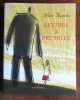
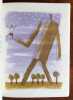
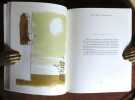
"Les Lettres à Prunelle constituent un guide de sagesse universelle, un véritable manuel philosophique. Chacun peut y trouver matière à réflexion, à méditation, à enseignement. Ces " lettres " ont été écrites par Alain Ayache, et sont autant de maximes, de pensées, qu'il destine à sa fille. Comme tout parent, il s'est interrogé sur l'avenir de son enfant, lui transmettant conseils et remarques afin de la guider, de la soutenir tout au long de sa vie. Qualités, défauts, vertus, tout est passé au crible par ce père attentionné qui délivre ainsi une sorte de mode de conduite à l'usage de sa propre chair. En petits textes courts, fables, réflexions saisies sur le vif, observations, fruits de ses expériences, il s'adresse à la future femme qui sommeille en Prunelle et qui, un jour, lira ces lignes. Ces textes nous renvoient à nos propres histoires d'enfance. " De même que nous avons entendu les histoires de nos parents, nous racontons ce que nous avons vu à nos enfants, qui raconteront à leurs enfants, et ainsi de suite. Nos histoires sont notre héritage ", tel que l'écrit dans sa préface Paulo Coelho." Suite à un accident immobilisant votre libraire pour quelques semaines, le traitement des commandes est bien assuré, mais momentanément ralenti. Merci de votre patience et de votre compréhension.
Homo sapiens 2.0. Introdution à une histoire naturelle de l'hyperinformation.
Paris, Ed. Max Milo, 2008. In-8, couv. rempliée ill. en coul., 284 pp., bibliographie, index.
Bon ex. - Frais de port : -France 6,8 € -U.E. 9 € -Monde (z B : 14 €) (z C : 24 €)
La mémoire
Paris, A.Collin 1956 pp.161-224, 50e année nr.4 du "Bulletin de la Société française de Philosophie" (Séance du 1er décembre 1956, exposé par A.-J.Ayer, discussion: Berger, Goldmann, Leroy, Ohana, Patri, Poirier, Ruyer, Wahl, Wolff), non coupé, F32740
Man as a Subject for Science. Delivered on February 1964 at the London School of Economics and Political Science.
London, Athlone Press, (1964). Orig. printed wrappers. 26 pp.
Auguste Comte Memorial Lecture.
Names and descriptions. (In: Thinking and Meaning. Entretiens d'Oxford 1962. Organisés par l'Institut International de Philosophie. Extrat de logique et analyse, Novelle Série, 5e Année, Numéro 20.)
Louvain & Paris, Nauwelaerts & Béatrice-Nauwelaerts, 1963. 8vo. Orig. wrappers, uncut and partly unopened. Front board waterstained, otherwise fine. (4), pp. 153-292,(2).
First edition. A. J. Ayer (1910-89), a British philosopher known for his promotion of logical positivism - particularly in his books 'Language, Truth and Logic' (1936) and 'The Problem of Knowledge' (1956) - was Grote Professor of Philosophy of Mind and Logic at the University College London from 1946 till 1959, and afterwards he became Wykeham Professor of Logic at the University of Oxford. The present exposition by Ayer is later in the same volume discussed by L. J. Russell, Doop and Findlay.The issue also contains, amongst others, an exposition by Roman Ingarden (1893-1970), named 'Le mot comme élément d'une langue', which is discussed by De Waelhens and Hippolyte.
Philosophy and Language. An Inaugural Lecture delivered before the University of Oxford on 3 November 1960.
Oxford, Clarendon Press, 1960. Orig. printed wrappers. 36 pp.
First edition.
Philosophy and language. An Inaugural Lecture delivered before the University of Oxford on 3 November 1960
Clarendon Press Broché 1960 In-8 (14x21.5 cm), broché deux agrafes, 35 pages ; quelques passages annotés, dos insolé, bon état. Livraison a domicile (La Poste) ou en Mondial Relay sur simple demande.
Russell and Moore. The Analytical Heritage.
(London), Macmillan, (1971). Orig. boards. X,254 pp.
First edition.
The Problem of Knowledge.
(Edinburgh), (Pelican) Peguin Books, (1956). 8vo. Bound in modest cont. half cloth, loose in back. Leaves browned and some underlinings. 224 pp.
An issue of the major work by Alfred Jules Ayer (1910-89) published same year as the first edition.
Wittgenstein
Weidenfeld & Nicolson 1985 224 pages in8. 1985. Cartonné jaquette. 224 pages.
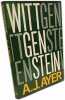
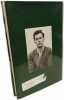
Très Bon Etat de conservation intérieur propre bonne tenue avec sa jaquette
Language, Truth and Logic. - [A CLASSIC OF ANALYTIC PHILOSOPHY]
London, Victor Gollanoz, 1936. 8vo. Orig. blue full cloth w. gilt lettering on spine. Spine a bit soiled, otherwise nice and clean, also internally.
Rare first edition of Ayer's most important and well known work, in which he presents his Verification Principle, which defines a sentence as being meaningful if, and only if, is has a verifiable empirical import. He began writing the book at the young age of 24, and two years later it was published. Ayer is considered a clear and stringent writer. ""Ayer's philosophical ideas were deeply influenced by those of the Vienna Circle and David Hume. His clear, stringent and polemical exposition of them makes ""Language, Truth and Logic"" essential reading on the tenets of Logical Positivism -- the book is regarded as a classic of 20th century analytic philosophy, and is widely read in philosophy courses around the world."" (Wikipedia). The great logical positivist, Sir Alfred Jules Ayer (1910-89), was Grote Professor of Philosophy of Mind and Logic at the University College London from 1946 till 1959, and afterwards he became Wykeham Professor of Logic at the University of Oxford.
Les grands domaines de la philosophie
Seghers 1976 In-8 broché. 279 pages. Bon état d’occasion.
Bon état d’occasion
Wittgenstein. Traduit de l’anglais par Robert Davreu.
Paris, Seghers 1986, 240x155mm, 237pages, broché. Bel exemplaire.
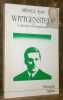
Pour un paiement via PayPal, veuillez nous en faire la demande et nous vous enverrons une facture PayPal
AYERE (A.), BERGER (G.), JANKELEVITCH 5Vladimir), ROCHEDIEU (R.), BASTIDE (Georges), DE GREEF (E.), PARROT (P.), SIMON (P.-H.)
Reference : 18258
La présence d'autrui
,Paris, Presses Universitaires de France Collection 'Nouvelle recherche' 1957, 173 pp., 1 vol. in 12 carré br. couverture rempliee.
NOTES SUR LE MAL
Marseille Les Cahiers du Sud 1937 in 8 (19x14) 1 volume broché, 100 pages [2]. Envoi autographe signé par l'auteur. Bel exemplaire ( Photographies sur demande / We can send pictures of this book on simple request )
Très bon Signé par l'auteur
Galerie du clergé contemporain. M l' abbé Théobald Mitraud du diocèse de Limoges.
Couverture rigide P, Dezobry et Magdeleine, 1850 , in12 plein veau clair, dos à nerfs, caissons ornés, plats estampés à froid, filets sur les plats et intérieurs, tranches dorées. 399pp Biographie de Théobald Mitraud, philosophe, auteur entre autres de " la nature des sociétés humaines" . Langue: Français
Vous êtes philosophe sans le savoir !
TROIS FONTAINES. 1997. In-12. Broché. Très bon état, Couv. convenable, Dos satisfaisant, Intérieur frais. 156 pages.. . . . Classification Dewey : 190-Philosophie occidentale moderne
La philosophie au quotidien. Classification Dewey : 190-Philosophie occidentale moderne
Kung Fu Tse - le chemin vers la vérité intérieure
JIC 1975 In-8, broché, avec frontispice en couleurs. 259 pp. papier bruni par le temps, couverture passée. Etat correct d’occasion.
Bon état d’occasion
JUGEMENT IMPARTIAL SUR NAPOLEON ou Considérations philosophiques sur son caractère, son élévation, sa chute et les résultats de son gouvernement suivies d'un PARALLELE ENTRE NAPOLEON ET CROMWELL; entre la Révolution d'Angleterre et la Révolution Française.
A Paris chez Aimé André 1820. In-8 broché couverture d'attente aubergine de l'époque, étiquette de titre imprimée sur le dos 2 feuillets non chiffrés II-XII 2-304pp 2 feuillets non chiffrés catalogue. Petits manques de papier sur le dos et en bordure de la couverture, rousseurs claires (plus prononcées pages 194 à 207), auréole claire ancienne (davantage visible de la page 177 à la fin). Exemplaire complet. Texte favorable à Napoléon.
Pierre Hyacinthe Azaïs (1766-1845), philosophe optimiste, était favorable à Napoléon, ce qui lui valut quelques désagréments à la Restauration. Il conclut son ouvrage en déclarant: "Napoléon, réconcilié avec son siècle, deviendra pour tous les siècles un objet de haute admiration".
Des compensations dans les destinées humaines
P., Garnery, 1809, un volume in 8 relié en cartonnage rose (reliure de l'époque), (dos passé), (3), 16pp., 335pp.
---- EDITION ORIGINALE ---- "L'univers n'a qu'une loi primitive, nécessaire et éternelle. C'est la loi d'équilibre ou, ce qui est la même chose, d'action et de réaction parfaitement égales, parfaitement correspondantes. AZAIS assimile à cette loi d'équilibre une loi de compensation qualitative, psychologique, éthique. Enfin cette loi de compensation est elle-même interprétée dynamiquement comme une lois de progrès. AZAIS croit pouvoir expliquer ainsi le monde inanimé comme l'être vivant, la vie individuelle comme celle des peuples et proposer au surplus une morale et une politique". (J. Lefranc "Dictionnaire des philosophes") ---- H. AZAIS, philosophe français (1766/1845, fit des études littéraires et scientifiques. Il fut professeur au Prytanée de Saint-Cyr**19900.199.P3

