Write to the booksellers
-
Type
Autograph (15)
Book (50922)
Magazine (288)
Manuscript (2)
Maps (1)
New book (1)
Old papers (1)
Photographs (1)
-
Latest
Last 24h (37)
Last 3 days (35)
Last month (1182)
Last week (29)
-
Language
Dutch (6)
English (43)
Finnish (1)
French (51101)
German (19)
Greek (5)
Italian (20)
Japanese (2)
Latin (21)
Polish (1)
Portuguese (3)
Spanish (7)
Swedish (2)
-
Century
16th (61)
17th (194)
18th (1293)
19th (3614)
20th (22001)
21st (3742)
-
Countries
Belgium (6728)
Brazil (24)
Canada (6)
China (2)
Côte d'Ivoire (69)
Denmark (1046)
France (38685)
Germany (3)
Greece (3)
Netherlands (269)
Switzerland (4396)
-
Syndicate
ALAC (6)
CLAM (37)
CNE (6)
ILAB (19985)
NVVA (998)
SLACES (907)
SLAM (17652)
SNCAO (41)
NOTES SUR LA PHILOSOPHIE EN FRANCE AU XIXe SIECLE De Maine de Biran à Bergson
COLLECTION PROBLEMES ET CONTROVERSES-IN 8-134 PAGES-(3E)
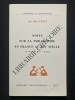
VRIN COUVERTURE SOUPLE ETAT NEUF
Principes de vie politique
Nouvelles éditions latines 1956 187 pages in12. 1956. broché. 187 pages.
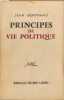
Très bon état couverture tachée dos jauni
CALVIN et la souveraineté de Dieu
COLLECTION PHILOSOPHES DE TOUS LES TEMPS N°12-192 PAGES-13,5 CM X 16 CM-COUVERTURE ILLUSTREE-(11F)

SEGHERS COUVERTURE SOUPLE ETAT BON
PIERRE DE COEUR Un poème inédit de Paul Celan "Le Périgord"
IN 8 CARRE-86 PAGES-6 PHOTOGRAPHIES EN FIN D'OUVRAGE-(7F)
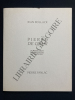

PIERRE FANLAC COUVERTURE SOUPLE ETAT NEUF
JEAN BOLLACK-PIERRE JUDET DE LA COMBE-HEINZ WISMANN
Reference : ABE-1665389434644
(1977)
CAHIERS DE PHILOLOGIE-2-LA REPUBLIQUE DE JOCASTE Sur les fragments d'un poème lyrique découverts à Lille-AVEC UN SUPPLEMENT AVRIL 1977
106 PAGES-IN 8-ET SUPPLEMENT DE 16 PAGES-(21E)
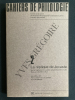
PUL PUBLICATIONS DE L'UNIVERSITE DE LILLE III COUVERTURE SOUPLE ETAT NEUF
ESQUISSE D'UNE HISTOIRE DE LA CGT 1895-1965
1967 / 383 pages. Broché Editions Confédération générale du travail tiré a 150 exemplaires
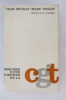
Préface de René Duhamel Couverture d'usage frottée avec de petites rousseurs, dos cassé, intérieur trés frais.


La conscience et l'inconscient -
Classique hachette 1966 in12. 1966. Broché.
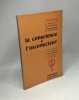
rousseurs sur tranche intérieur propre
Philosophie de l'histoire Les promesses du temps
1990, éditions Stock, in-8, broché, 372 pages, bibliographie et Index in fine.
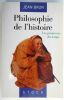
pliure du dos, bords frottée, bon état d'usage.
Phone number : 04 96 21 81 64
Epicure et les épicuriens
Presses universitaires de France. 1978. In-12. Broché. Bon état, Couv. convenable, Dos satisfaisant, Intérieur frais. 176 pages. Note sur la page de faux titre.. . . . Classification Dewey : 100-PHILOSOPHIE ET DISCIPLINES CONNEXES
Classification Dewey : 100-PHILOSOPHIE ET DISCIPLINES CONNEXES
Remarques sur la formation de la théorie abstraite des ensembles - 1 préhistoire La création de Cantor - Paris Hermann & Cie 1938
in8 broché, volume 1 seul - 107pp
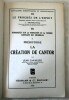
légèrement corné sinon intérieurs solide, très frais - PHILOSOPHIE - MATHEMATIQUES - RESISTANCE - GUERRE
Lucien Lévy-Bruhl : sa vie son œuvre avec un exposé de sa philosophie
Presses universitaires de france 1963 in12. 1963. Broché. Cet ouvrage de Jean Cazeneuve est une monographie consacrée à la vie et à l'œuvre du philosophe et sociologue Lucien Lévy-Bruhl. Il présente de manière synthétique son activité intellectuelle et sa bibliographie avant de développer en détail sa théorie centrale de la mentalité primitive et son évolution à travers ses six principaux ouvrages sur le sujet
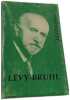
Bon Etat ex libris rousseurs minimes intérieur propre
Psychologie de la joie
Éditions Michel Brient et Cie 1962 117 pages in8. 1962. broché. 117 pages.
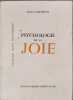
Bon état qq traces sur la couverture
AIMER LA VIE.
Le centurion.. 1977. In-12. Broché. Bon état, Couv. convenable, Dos satisfaisant, Intérieur frais. 252 pages. Couverture rempliée.. . . . Classification Dewey : 100-PHILOSOPHIE ET DISCIPLINES CONNEXES
Classification Dewey : 100-PHILOSOPHIE ET DISCIPLINES CONNEXES
La pensée puissance inconnue : sa culture sa maîtrise
Éditions "Astra" 1951 124 pages in12. 1951. broché. 124 pages. Cet ouvrage de Jean Chaboseau publié par les éditions Astra explore la pensée comme une puissance inconnue et propose des méthodes pour la cultiver et la maîtriser selon les principes de l'hermétisme. Il s'agit d'une réédition numérique d'un livre paru au XXe siècle
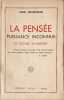
Bon état
Analyse et examen de l'Antiquité dévoilée, du despotisme oriental, & du christianisme dévoilé, ouvrages posthumes de Boullanger, par un solitaire
chez la veuve Duchesne Chez Barde Manget | à Genève & à Paris 1788 | 14 x 21 cm | broché
Edition originale. Broché, sous papier rose d'époque. Dos refait moderne de papier crème. Titre à la plume. Mors supérieur fendu sur 10 cm. L'antiquité dévoilée est un livre du baron d'Holbach d'après des notes manuscrites de Boulanger, sans compter le remaniement important que d'Holbach fit subir aux notes, il en a développé l'esprit anti religieux. L'ouvrage eut un fort retentissement à la fin du XVIIIe siècle, il s'entendait à prouver que chez tous les peuples de la terre, la population avait été maintenue sous le joug de la superstition et de la terreur inspirées par les différentes religions du monde. L'auteur se propose méthodiquement l'analyse et l'examen des thèses et des idées développées par d'Holbach. Il établie un parallèle avec le système des Economistes (Matérialistes) et de Rousseau. La relative impartialité de l'auteur éclaire d'une manière inattendue les thèses des matérialistes et de d'Holbach. NB : Cet ouvrage est disponible à la librairie sur demande sous 48 heures. - Photographies et détails sur www.Edition-Originale.com -
THEOLOGIE SPIRITUALITE ET METAPHYSIQUE DANS L'OEUVRE ORATOIRE D'ACHARD DE SAINT-VICTOR Etudes d'histoire doctrinale précédées d'un essai sur la vie et l'oeuvre d'Achard
ETUDES DE PHILOSOPHIE MEDIEVALE-2 PLANCHES HORS TEXTE-GRAND IN 8 BROCHE-356 PAGES (400G)
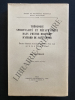
VRIN-PARIS COUVERTURE SOUPLE ETAT NEUF
Commentaire
Arthème Fayard | Paris 1971-1972 | 14.50 x 22.50 cm | 2 volumes reliés
Edition originale, un des quelques exemplaires numérotés sur alfa pour le premier volume,un des quelques exemplaires numérotés sur Japon bambou pour le second, seuls grands papiers. Reliures en demi chagrin maron chocolat à coins, dos à quatre nerfs sertis de filets à froid, plats, gardes et contreplats de papier marbré, couvertures et dos conservés, têtes dorées sur témoins. Bel exemplaire agréablement établi. - Photographies et détails sur www.Edition-Originale.com -
Commentaire. De Vienne à Alger 1938-1944. - D'Alger à Berne 1944-1952. - De Berne à Paris 1952-1962
Arthème Fayard | Paris 1971-1973 | 14.50 x 22.50 cm | 3 volumes reliés
Edition originale, un des quelques exemplaires numérotés sur alfa pour le premier volume,un des quelques exemplaires numérotés sur Japon bambou pour le second et un des quelques exemplaires numérotés sur alfa pour le troisième et dernier, seuls grands papiers. Reliures en demi chagrin maron chocolat à coins, dos à quatre nerfs sertis de filets à froid, plats, gardes et contreplats de papier marbré, couvertures et dos conservés, têtes dorées sur témoins. Bel exemplaire agréablement établi et complet en trois volumes. - Photographies et détails sur www.Edition-Originale.com -
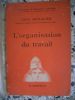
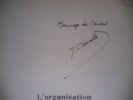
L'organisation du travail
Flammarion, "Bibliotheque de philosophie scientifique", 1946. Format 13x19 cm, broche, 293 pages. Petit envoi autographe de l'auteur en page de garde. Bon etat.
L'HUMANISATION ou LES PREMIERS PAS DES VALEURS HUMAINES.
PIERRE MARDAGA. 1985. In-8. Broché. Etat d'usage, Couv. convenable, Dos plié, Intérieur frais. 257 pages. Premier plat illustré en couleurs. Nombreuses photos et illustrations en couleurs et noir et blanc, dans et hors texte.. . . . Classification Dewey : 100-PHILOSOPHIE ET DISCIPLINES CONNEXES
Classification Dewey : 100-PHILOSOPHIE ET DISCIPLINES CONNEXES
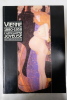
Vienne 1880-1938 : L'apocalypse joyeuse
Broché, 767 pages, paru en 1986 aux Éditions du centre Georges Pompidou, très bon état général, très légères marques d'usages, légère pliure le long du dos, intérieur frais.
Vienne : 1880-1938, L'apocalypse joyeuse
Broché, 768 pages, paru en 1986 aux éditions du Centre Pompidou, très bon état, légère pliure le long du dos, intérieur frais.

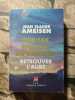
Sur les épaules de Darwin : Retrouver l'aube
Les liens qui liberent editions 2014 448 pages 14 6x3 4x21 8cm. 2014. Broché. 448 pages.
Bon état
Sur les épaules de Darwin : Tome 2 Je t offrirai des spectacles admirables
Les liens qui liberent editions 2013 360 pages 14 6x22x3 4cm. 2013. Broché. 360 pages.
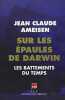
Très bon état