 Write to the booksellers
-
Type
Autograph (15)
Book (51037)
Magazine (288)
Manuscript (2)
Maps (1)
New book (1)
Old papers (1)
Photographs (1)
-
Latest
Last 24h (13)
Last 3 days (80)
Last month (1162)
Last week (70)
-
Language
Dutch (6)
English (43)
Finnish (1)
French (51216)
German (19)
Greek (5)
Italian (20)
Japanese (2)
Latin (21)
Polish (1)
Portuguese (3)
Spanish (7)
Swedish (2)
-
Century
16th (61)
17th (194)
18th (1294)
19th (3643)
20th (22023)
21st (3738)
-
Countries
Belgium (6728)
Brazil (24)
Canada (6)
China (2)
Côte d'Ivoire (135)
Denmark (1046)
France (38734)
Germany (3)
Greece (3)
Netherlands (268)
Switzerland (4397)
-
Syndicate
ALAC (6)
CLAM (37)
CNE (6)
ILAB (20021)
NVVA (998)
SLACES (907)
SLAM (17688)
SNCAO (41)
LES PAGES LES PLUS CELEBRES DE LA PHILOSOPHIE OCCIDENTALE
Perrin. 1989. In-8. Relié. Bon état, Couv. convenable, Dos satisfaisant, Intérieur frais. 643 pages.. . . . Classification Dewey : 100-PHILOSOPHIE ET DISCIPLINES CONNEXES
De Socrate à Foucault. Préface de Jean Guitton. Classification Dewey : 100-PHILOSOPHIE ET DISCIPLINES CONNEXES


Les Pages les plus Célèbres de la Philosophie Occidentale : de Socrate à Foucault - Editions Le Grand Livre du Mois Paris 1995
in-8° broché, très bon état, tranches un peu salies, 644 pages, préface de Jean Guitton de l'Académie Française - ISBN : 9782286058661
Ce livre se propose d'offrir à ses lecteurs quelques-unes des pages les plus célèbres de la pensée occidentale, celles que chacun doit connaître. On trouvera réunis en un seul volume deux cents textes clés qui constituent une sorte de condensé de la pensée philosophique à travers les âges.
Huisman Denis, Malfray Marie-Agnès, Guitton Jean
Reference : RO30356535
(1989)
ISBN : 2262006822
Les pages les plus célèbres de la philosophie occidentale
Perrin. 1989. In-8. Cartonné. Bon état, Couv. convenable, Dos satisfaisant, Papier jauni. 643 pages. Quelques rousseurs.. . . . Classification Dewey : 190-Philosophie occidentale moderne
Préface par Jean Guitton de l'Académie française. Classification Dewey : 190-Philosophie occidentale moderne
Visages de la philosophie - Les philosophes d'expression française du XXe siècle - Avec la collaboration de Serge Le Strat
Arléa. 2000. In-8. Broché. Bon état, Couv. convenable, Dos satisfaisant, Intérieur frais. 184 pages - nombreuses photos en noir et blanc hors texte. Plats contrepliés en un rabat. Petite annotation au crayon de papier en page de garde.. . . . Classification Dewey : 190-Philosophie occidentale moderne
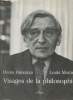
Classification Dewey : 190-Philosophie occidentale moderne
Nouveau court trait de philosophie - Classes terminales C,D,E,F 11.
Fernand Nathan. 1978. In-8. Broch. Bon tat, Couv. convenable, Dos satisfaisant, Intrieur frais. 479 pages - nombreuses illustrations en noir et blanc - quelques planches en couleurs.. . . . Classification Dewey : 100-PHILOSOPHIE ET DISCIPLINES CONNEXES
Prface du Professeur Louis Leprince-Ringuet.
Histoire Des Philosophes Illustrée Par Les Textes
Paris Nathan 1998 In8 431 pages - broché - trés bon etat
Très bon
L'art de la dissertation littéraire.
Couverture souple. Broché. 357 pages. Format de poche.
Livre. Editions Sedes, 1965.
Tableau de la philosophie contemporaine (1967) + Tableau de la philosophie moderne (1965) + Histoire de la philosophie européenne antique & médiévale (1964)
Fischbacher in8. Sans date. Broché. 3 volume(s).
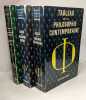
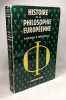
Bon état couvertures défraîchies bords frottés intérieur propre fente en haut de charnière du premier plat de "tableau d la phil. moderne"
De l'authenticité du Parménide -- EDITION ORIGINALE -- BEL EXEMPLAIRE
P., Thorin, 1873, un volume in 8 relié en demi-toile marron, dos orné de filets et fleurons dorés (reliure de l'époque), (quelques rousseurs), 8pp., 210pp., (1)
---- EDITION ORIGINALE ---- BEL EXEMPLAIRE ---- Antécédents du Parménide (L'école éléatique, mégarique, Platon et l'éléatisme) - analyse du Parménide - date supposée de la composition du Parménide - témoignages historiques - origine probable - jugements des anciens et des modernes sur le Parménide**5524/K7
De l'authenticité du Parménide (Thèse présentée à la Faculté des Lettres de Paris)
Paris, Ernest Thorin 1873 212pp., br.orig., rousseurs dans le texte
ETUDES SUR LE BANQUET DE PLATON
Ernest Thorin, Paris. 1889. In-8. Broché. Etat d'usage, Plats abîmés, Dos satisfaisant, Quelques rousseurs. 138 pages. Papier muet encollé sur le dos, le consolidant. Etiquette de code sur la couverture. Quelques tampons de bibliothèque. Manques importants sur les plats.. . . . Classification Dewey : 100-PHILOSOPHIE ET DISCIPLINES CONNEXES
La scène du dialogue. Les personnages. Le plan. Le sujet. La discussion... Classification Dewey : 100-PHILOSOPHIE ET DISCIPLINES CONNEXES
PLATON A L'ACADEMIE, FONDATION DE LA PREMIERE ECOLE DE PHILOSOPHIE EN GRECE
Ernest Thorin, Paris. 1882. In-8. Broché. Etat passable, Couv. défraîchie, Dos fané, Fortes mouillures. 64 pages. Etiquette de code sur la couverture. Ouvrage fortement défraîchi. Quelques rousseurs.. . . . Classification Dewey : 180-Philosophie antique, médiévale, orientale
Par C. Huit, Prof. à l'Institut Catholique de Paris. Classification Dewey : 180-Philosophie antique, médiévale, orientale
La philosophie de la nature chez les anciens
Paris, Fontemoing 1901 583pp., reliure cart.avec plats marbrés, dos en toile avec titre doré, 25cm., édition originale, qqs.cachets sur p.d.t., bon état, F63501
La philosophie de la nature chez les anciens
Paris, Albert Fontemoing 1901 583pp., br.orig. (dos restauré), 25cm., bon état, F80678
LA PHILOSOPHIE DE LA NATURE CHEZ LES ANCIENS.
Paris, Albert Fontemoing, 1901. Grand in-8 broché, 583pp, édition originale, non coupé.
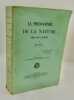
C'est la philosophie grecque qui fait ici l'objet d'une étude approfondie de qualité Petite entame en queue du second mors, piqûres sur les tous premiers ff., le corps du livre restant intact, bonne condition. - Frais de port : -France 7,15 € -U.E. 9 € -Monde (z B : 14 €) (z C : 24 €)
La Vie et les oeuvres de Ballanche.
Lyon-Paris, Emmanuel Vitte, 1904 petit in-8, VIII pp., 376 pp., un f. n. ch. de table, manque le portrait, toile verte, pièce de titre, couverture conservée (reliure moderne). Dos passé.
Unique édition. Charles Huit (1845-1914) avait obtenu la chaire de littérature grecque lors de la création de l'Université catholique de Paris, et sa production imprimée concerne surtout le monde hellénique ancien. - - VENTE PAR CORRESPONDANCE UNIQUEMENT - LIEN DE PAIEMENT, NOUS CONSULTER.
La face cachée du temps. L’imaginaire dans l’au-delà.
Paris, Fayard 1985, 235x150mm, 413pages, broché. Exemplaire à l'état de neuf.
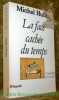
Pour un paiement via PayPal, veuillez nous en faire la demande et nous vous enverrons une facture PayPal
La Face cachée du temps. L'imaginaire de l'au-delà
Fayard 1985 In-8 broché 23 cm sur 15. 414 pages. Annotations au stylo sur première page. Bon état d’occasion.
Bon état d’occasion
Sciences naturelles et formation de l'esprit Autour de la réforme de l'enseignement de 1902
Presses universitaires du Septentrion. 2002. In-8. Broché. Très bon état, Couv. convenable, Dos satisfaisant, Intérieur frais. 395 pages.. . . . Classification Dewey : 190-Philosophie occidentale moderne
Classification Dewey : 190-Philosophie occidentale moderne
HULOT Nicolas Dubois Philippe Jacques
Reference : 500033145
(2004)
ISBN : 9782732430904
Vers l'ultime extinction
Editions de la Martinière 2004 16 8x1 8x23 6cm. 2004. Broché.
Comme neuf - livre issu de destockage - pouvant présenter d'infimes traces de stockage - Expédié soigneusement dans emballage adapté
HULOT Nicolas Dubois Philippe Jacques
Reference : 500034644
(2004)
ISBN : 9782732430904
Vers l'ultime extinction
Editions de la Martinière 2004 16 8x1 8x23 6cm. 2004. Broché.
Comme neuf - livre issu de destockage - pouvant présenter d'infimes traces de stockage - Expédié soigneusement dans emballage adapté
Wahrheit und Geschichte. Alfred Loisy zwischen Tradition und Kritik
Essen, Ludgerus Verlag Hubert Wingen 1973 xi + 213pp., 24cm., in the series "Beiträge zur neueren Geschichte der katholischen Theologie" vol.16, softcover (some use), 2 stamps, interior VG, R70359
Mélanges
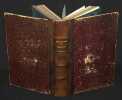
Félix Oudart, imprimeur-éditeur Relié 1843 "In-8 (16 x 23,2 cm), reliure demi-chagrin, dos à 4 nerfs, gardes couleur, 575 pages, mélanges de Félix van Hulst, docteur en droit et fondateur de ""La Revue de Liège"", ouvrage peu commun ; coupes usées, papier reliure frotté aux plats, dos passé et un peu frotté également, note manuscrite au titre, par ailleurs intérieur bien conservé, assez bon état général. Livraison a domicile (La Poste) ou en Mondial Relay sur simple demande."
Mélanges philosophiques : recueil d'essais consacrés à la défense du spiritualisme par le retour à la tradition des écoles catholiques.
Paris J. de Gigord 1914 1 vol. relié in-8, demi-basane havane, dos à nerfs, XII + 524 pp. 3e édition. Dos passé, sinon bon état.
Conférences de Notre-Dame. Carême de 1893. Les devoirs envers Dieu. (fin).
Couverture rigide. Reliure demi-chagrin. 322 pages.
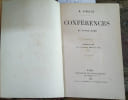
Livre. Librairie Ch. Poussielgue, 1893.

