 Write to the booksellers
-
Type
Autograph (15)
Book (51028)
Magazine (288)
Manuscript (2)
Maps (1)
New book (1)
Old papers (1)
Photographs (1)
-
Latest
Last 24h (9)
Last 3 days (15)
Last month (266)
Last week (53)
-
Language
Dutch (5)
English (43)
Finnish (1)
French (51209)
German (19)
Greek (5)
Italian (20)
Japanese (2)
Latin (20)
Polish (1)
Portuguese (3)
Spanish (7)
Swedish (2)
-
Century
16th (62)
17th (207)
18th (1317)
19th (3633)
20th (22069)
21st (3748)
-
Countries
Belgium (6716)
Brazil (24)
Canada (6)
China (2)
Côte d'Ivoire (69)
Denmark (1046)
France (38740)
Germany (3)
Greece (3)
Netherlands (269)
Switzerland (4459)
-
Syndicate
ALAC (6)
CLAM (36)
CNE (6)
ILAB (20142)
NVVA (998)
SLACES (907)
SLAM (17753)
SNCAO (41)
EXAMEN CRITIQUE DE LA LOI PSYCHOPHYSIQUE. SA BASE ET SA SIGNIFICATION.
GERMER BAILLIERE ET Cie / BIBLIOTHEQUE SCIENTIFIQUE INTERNATIONALE / QUESTIONS DE PHILOSOPHIE ET DE SCIENCE. 1883. In-12. Relié. Etat d'usage, Couv. partiel. décollorée, Coiffe en tête abîmée, Intérieur frais. 189 pages. Toile noire, titres et filets dorés. Papier vert et noir sur les plats. Tampons de bibliothèque.. . . . Classification Dewey : 100-PHILOSOPHIE ET DISCIPLINES CONNEXES
Classification Dewey : 100-PHILOSOPHIE ET DISCIPLINES CONNEXES


EXPOSES DE LA PHILOSOPHIE DES SCIENCES VII - LA PREVISION HISTORIQUE DANS LA NATURE - ACTUALITES SCIENTIFIQUES ET INDUSTRIELLES 304
HERMANN. 1935. In-8. Broché. Bon état, Couv. convenable, Dos satisfaisant, Non coupé. 53 pages.. . . . Classification Dewey : 100-PHILOSOPHIE ET DISCIPLINES CONNEXES
Exposés publiés sous la direction de L. de Broglie. Classification Dewey : 100-PHILOSOPHIE ET DISCIPLINES CONNEXES
SYNOPSE DES TEXTES CONCILIAIRES.
EDITIONS UNIVERSITAIRES. 1966. In-8. Broché. 1413 pages.
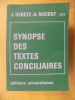
Très bon état général. Intérieur frais et agréable, extérieur propre, bon exemplaire de collection ou documentation.
J. DE ROSNAY, J.L. SERVAN-SCHREIBER, F. DE CLOSETS
Reference : R260146430
(2005)
ISBN : 2020843153
UNE VIE EN PLUS. LA LONGEVITE, POUR QUOI FAIRE ?
SEUIL. 2005. In-8. Broché. Bon état, Couv. convenable, Dos satisfaisant, Intérieur frais. 220 pages.. . . . Classification Dewey : 100-PHILOSOPHIE ET DISCIPLINES CONNEXES
Classification Dewey : 100-PHILOSOPHIE ET DISCIPLINES CONNEXES
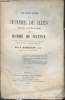
Le bon sens d'un homme de rien contre les non sens d'un homme de science.
Charles Douniol / Chez l'auteur. 1870. In-8. Broché. Etat passable, Couv. légèrement passée, Dos abîmé, Quelques rousseurs. XVI + 488 pages - dos abîmé, ouvrage désolidarisé - quelques rousseurs et traces de mouillures à l'intérieur de l'ouvrage sans réelle conséquence sur la lecture - 1er plat absent.. . . . Classification Dewey : 210-Philosophie et théorie
Classification Dewey : 210-Philosophie et théorie
Histoire de la philosophie - Collection Bibliothèque de vulgarisation.
A.Degorce-Cadot. 1882. In-12. Broché. Etat d'usage, Couv. défraîchie, Coiffe en pied abîmée, Rousseurs. 315 pages - rousseurs à l'intérieur de l'ouvrage sans réelle conséquence sur la lecture.. . . . Classification Dewey : 100-PHILOSOPHIE ET DISCIPLINES CONNEXES
Collection Bibliothèque de vulgarisation. Classification Dewey : 100-PHILOSOPHIE ET DISCIPLINES CONNEXES
LES DICATEURS A PENSER ET AUTRES DONNEURS DE LECONS
LE GRAND LIVRE DU MOIS. 2004. In-8. Broché. Bon état, Couv. convenable, Dos satisfaisant, Intérieur frais. 117 pages. . . . Classification Dewey : 100-PHILOSOPHIE ET DISCIPLINES CONNEXES
Classification Dewey : 100-PHILOSOPHIE ET DISCIPLINES CONNEXES
Philosophia ad usum scholarum accomodata : Logica
Apud J.C. Pyron | Cadomi (Caen) 1777 | 9.50 x 16 cm | relié
Nouvelle édition après la première de 1771. Impression de Caen. Pleine basane d'époque marbrée. Dos à nerfs orné. Pièce de titre en maroquin rouge. Manque en tête avec le carton présent. Mors inférieur fendu en tête. Frottements. Manuel de logique philosophique destiné aux étudiants. Jean Adam était professeur à l'université de Caen. - Photographies et détails sur www.Edition-Originale.com -
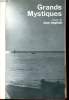
GRANDS MYSTIQUES
HERMES. 1967. In-12. Relié. Très bon état, Couv. fraîche, Dos satisfaisant, Intérieur frais. 232 pages. Nombreuses illustrations en noir et blanc, dans le texte et hors texte. Numéro de classement écrit au stylo sur le dos. Tampon de l'institution sur la page de titre.. . . . Classification Dewey : 180-Philosophie antique, médiévale, orientale
Classification Dewey : 180-Philosophie antique, médiévale, orientale
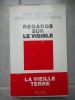
Regards sur le visible
Plon, 1996. Format 14x22 cm, broche, 269 pages. Un pli de coin a la 4eme de couverture. Bon etat, petites traces d'usage sur un livre d'occasion.
De la philosophie de la nature ou traité de morale pour le genre humain tiré de la philosophie et fondé sur la nature. Troisième édition et la seule conforme au manuscrit original
S. n. | à Londreset se trouve dans la plupart des capitales de l'Europe 1777 | 12.50 x 19.50 cm (In-8) | 6 volumes reliés
Nouvelle et meilleure édition augmentée (en partie originale), illustrée d'un frontispice, de 12 figures non signées, et de 6 vignettes de titre (les pages de titre sont entièrement gravées). Belle impression. L'édition originale de 1770 n'était qu'en 3 Volumes in 12. Reliures en plein veau écaille d'époque. Dos lisse orné avec fleurons et multiples roulettes. Triple filet d'encadrement sur les plats. Tranches cailloutées bleues. Légères épidermures sur les plats. Quelques trous de ver aux mors, et un travail de ver en marge du tome I. Malgré ces menus défauts, bel exemplaire, bien relié et bien frais. * Livre protéiforme consacré à l'étude de l'homme, mêlant adroitement et dans une lecture toujours plaisante des récits, des dialogues et des pièces de théâtre (on y trouve même citées in extenso des lettres de 'Lettres Persanes'), de l'histoire ; l'ouvrage a un but inavoué encyclopédique sur la nature de l'homme. Si le premier volume est consacré stricto sensu à la philosophie de la nature dans l'histoire, les volumes suivants s'en éloignent vite pour se consacrer entièrement à l'étude de l'homme (morale, religion, politique). On trouvera le volume IV particulièrement intéressant, son objet étant l'étude des monstres de la nature (homme des bois, homme poisson, eunuques...) ; ses sources bibliographiques sont précieuses. Ce sont les deux derniers volumes étudiant le rapport de l'homme à la religion qui firent aussitôt condamner le livre au feu et bannir son auteur à perpétuité avec confiscation de ses biens. Ce dernier ne se contente pas de la seule religion chrétienne, mais de la plupart des cultes connus alors, de ceux des Anciens et de ceux actuels. En fin de l'uvre, une réflexion politique très sévère sur la religion. On a traité l'auteur de "singe de Diderot". Au sens où il emprunte les mêmes formes pour atteindre son but, sans doute, mais c'est là un lot commun chez les philosophes du XVIIIe. L'uvre est profondément originale, multiple, et si elle est critiquable, c'est dans ses qualités mêmes. 'De la philosophie de la nature' est à redécouvrir et à réhabiliter. - Photographies et détails sur www.Edition-Originale.com -
Mémoires du Marquis de Mirmon, ou le solitaire philosophe. Par Me. L. M. D.
Amsterdam, Wetstein & Smith 1736, 130x75mm, reliure pleine veau marbré de l’époque. Pièce de titre doré au dos à cinq nerfs. Fleurons et encadrements ornés dorés au dos. Tranche rouge. Cuir frotté par endroits et coins usés, autrement bon état.
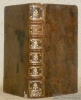
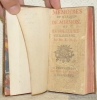
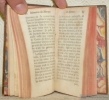
2ff. + 319 pages, lettrines, bandeaux, culs-de-lampes, Pour un paiement via PayPal, veuillez nous en faire la demande et nous vous enverrons une facture PayPal
La philosophie du bon sens
Chez Pierre Paupie | à La Haye 1747 | 9.50 x 17 cm | 2 volumes reliés
Nouvelle édition, réimpression de l'édition augmentée du second volume de 1740. Elle est illustrée d'un portrait et d'une curieuse figure allégorique au premier volume, ainsi que d'une grande vignette de titre à l'épitre. Pages de titres en rouge et noir. Reliure en plein veau marbré glacé d'époque. Pièce de titre et de tomaison en maroquin rouge. 3 coins émoussés. Légère fente au mors supérieur du tome II. Malgré les défauts annoncés, bel exemplaire, au fort bel aspect. Oeuvre d'un libre penseur des Lumières, la philosophie du bon sens est un examen des préjugés et de toutes les branches des connaissances à la lueur du postulat du scepticisme ; pour l'auteur ce postulat de l'incertitude est salutaire quant à la vérité des choses ; le livre fut jugé suffisamment dangereux pour être interdit par le Parlement et d'Argens écrivit ainsi la plupart de ses livres en Hollande, à l'abris d'une arrestation. Bien que salué par Voltaire, l'oeuvre fut condamné par Kant. - Photographies et détails sur www.Edition-Originale.com -
Lettres cabalistiques ou correspondance philosophique
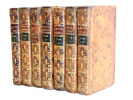
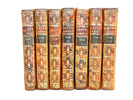
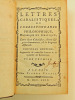
Lettres cabalistiques ou correspondance philosophique, historique et critique, entre deux Cabalistes et divers esprits élémentaires & le Seigneur Astaroth. Nouvelle édition augmentée de nouvelles lettres et de quantité de remarques. Les lettres cabalistiques sont l'un des fleurons de l'activité journalistique de d'Argens ; son écriture variée excelle dans ce climat à la frontière de la philosophie, du pamphlet et de la critique journalistique ; comme pour les autres recueils de lettres, ils paraîtront en périodiques dans le Gazetier Universel. L'ouvrage fut mis à l'index en 1742. L'auteur approfondit certains thèmes des Lettres juives notamment en ce qui concerne les religions, la superstition et les diverses formes de croyance ; on y trouve de nombreuses considérations critiques sur les jésuites, la franc-maçonnerie, la Kabbale, les Templiers, les Alchimistes, etc. La table des matières permet de retrouver aisément toutes les questions traitées. Complet en 7 volumes reliés pleine basane époque, frottements, in12, 15x10, bel état intérieur, tranches rouges, 356, 306, 344, 365, 350, 340, 367 pages. A La Haye, chez Pierre Paupie, 1769 ref/25/8
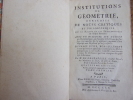
Institutions de Géométrie enrichies de notes critiques & philosophiques sur la nature et les développements de l'esprit humain
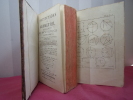
Jean-Baptiste de La Chapelle grand mathématicien du XVIIIème a contribué à de nombreuses articles de mathématiques de l'Encyclopédie Diderot d'Alembert, il est également l'inventeur du mot « scaphandre » et fut attiré par la ventriloquie dont il publia en 1772, une étude sur un épicier de Saint-Germain-en-Laye, intitulée le Ventriloque, ou l’engastrimythe qui fera autorité en la matière jusqu’au siècle suivant. Tome I. de l'Arithmétique - de l'Algèbre - Institutions de Géométrie Complet de ses 13 planches dépliantes in fine. fort vol in8, 200x130, relié pleine basane époque, accrocs, frais. 438pp. Rare. A Paris, chez Debure père, 1765 ref/H24/1
Jean-Baptiste de MIRABAUD et Paul Henri Dietrich Baron d'HOLBACH + HELVETIUS
Reference : 35411
(1774)
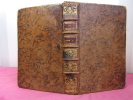
Systeme de la nature ou Des Loix du monde Physique et du monde moral - [Ensemble] - Le vrai sens du systême de la nature - Ouvrage posthume de M. Helvetius -
1774 Londres - [Amsterdam] - [Marc Michel Rey] - 1774 - Complet des 2 tomes et de l'ouvrage d'Helvetius en un volume in8 de (14) - 397 - (4) - 500 - (4) - 84 - (3) pages - Reliure pleine basane d'époque - dos cinq nerfs orné - coins émoussés - tranches frottées - accrocs aux coiffes - mouillures anciennes en angle supérieur droit de 81 pages environs -
Rare réunion avec l'ouvrage d'Helvétius en édition originale -
Jean-Baptiste de MIRABAUD - Paul Henri Dietrich Baron d' HOLBACH - HELVETIUS
Reference : 36999
(1774)
Systeme de la nature [Ensemble] Le vrai sens du systême de la nature
S. n. [ Marc Michel Rey] | à Londres [Amsterdam] 1774 | 12.50 x 19.50 cm | relié
Rare et intéressante réunion de ces deux ouvrages. Nouvelle édition du système de la nature après la rare originale de 1770, et édition originale de l'ouvrage d'Helvetius à la même date de 1774 que cette nouvelle édition de Mirabaud ; en réalité trois éditions sont parues à la même date, avec une collation différente, sans qu'on ait pu déterminer s'il y a une véritable originale. Reliure en pleine basane marbrée d'époque. Dos lisse très orné. Pièce de titre en maroquin rouge, et de tomaison en maroquin noir. Tranches rouges. Coiffes de queue arrachées. Une tâche brune sur le plat supérieur du tome I. Restauration à l'aide d'une pièce de cuir au plat supérieur du tome II. Assez bon exemplaire. L'ouvrage d'Helvetius est une exégèse et un examen du Système de la nature, l'auteur semble en avoir condensé la matière sous forme de maximes et d'assertions, le tout reposant sur un fort credo matérialiste. On sait aujourd'hui que l'ouvrage n'est peut-être pas d'Helvetius, bien qu'on y reconnaisse sa philosophie. Quant au Système de la nature de Mirabaud, il fut reçut comme une bombe dans le milieu des lettres, et finalement assez mal accueilli par les philosophes. Ce ne furent pas les thèses ouvertement matérialistes de d'Holbach qui furent condamnées mais la démonstration d'athéisme et d'anticléricalisme. - Photographies et détails sur www.Edition-Originale.com -
Jean-Baptiste de Panafieu Étienne Lécroart
Reference : 500132217
(2017)
ISBN : 9782360120857
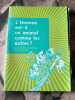
L'Homme est-il un animal comme les autres
LA VILLE BRULE 2017 64 pages 15x20 8x1cm. 2017. Relié. 64 pages.
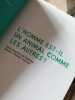
Bon état
Norberto Bobbio et la question internationale.
Broché, 21X17 cm, 2016, 402 pages, presses universitaires de Rennes. Très bon état.
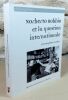
Nous sommes absents jusqu'au 17 septembre. Nous reprendrons les expéditions à cette date. Merci.
COURS COMPLET D'ECONOMIE POLITIQUE PRATIQUE. Ouvrage destiné à mettre sous les yeux des Hommes d'Etats, des propriétaires fonciers et des capitalistes, des savants, des agriculteurs, des manufacturiers, des négociants, et en général de tous les citoyens, l'économie des sociétés. Seconde édition entièrement revue par l'auteur.
En 2 tomes : Tome 1 : 1840 / 676 pages Tome 2 : 1840 / 628 pages. Relié. Editions Guillaumin
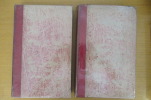
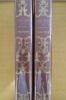
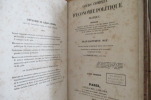
Reliure a dos cuir rouge d'usage, frotté, coins cornés sur les 2 ouvrages. Intérieurs avec rousseurs éparses. Bon état.
Principes de la Philosophie de L'Histoire
Armand colin 1963 in8. 1963. Broché.
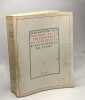
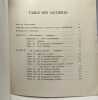
rousseurs sur la couverture dos un peu creusé intérieur propre pages non-coupée+s
PHILOSOPHES ET SAVANTS FRANCAIS DU XXe SIECLE. EXTRAITS ET NOTICES. III. LE PROBLEME MORAL.
LIBRAIRIE FELIX ALCAN. 1926. In-12. Broché. Etat d'usage, Tâchée, Dos satisfaisant, Intérieur frais. 202 pages.. . . . Classification Dewey : 100-PHILOSOPHIE ET DISCIPLINES CONNEXES
Classification Dewey : 100-PHILOSOPHIE ET DISCIPLINES CONNEXES
Ecran total
Galilée | Paris 1997 | 15 x 24 cm | broché
Edition originale pour laquelle il n'a pas été tiré de grands papiers. Dos très légèrement ridé sans gravité, agréable exemplaire. Envoi autographe signé de Jean Baudrillard à Pierre Boncenne. - Photographies et détails sur www.Edition-Originale.com -
Le crime parfait
Galilée | Paris 1995 | 13.50 x 21.50 cm | broché
Edition originale pour laquelle il n'a pas été tiré de grands papiers. Agréable exemplaire. Envoi autographe signé de Jean Baudrillard à une amie prénommée Ginette. - Photographies et détails sur www.Edition-Originale.com -
Mots de passe
Pauvert | Paris 2000 | 12 x 18.50 cm | broché
Edition originale pour laquelle il n'a pas été tiré de grands papiers. Agréable exemplaire. Envoi autographe signé de Jean Baudrillard àlaromancière, essayiste et critique littéraireCatherine (David) - Photographies et détails sur www.Edition-Originale.com -

