 Write to the booksellers
-
Type
Book (3478)
Disk (1)
Magazine (40)
-
Latest
Last 24h (3)
Last month (38)
Last week (3)
-
Language
English (1)
French (3517)
Spanish (1)
-
Century
16th (1)
17th (2)
18th (19)
19th (79)
20th (1167)
21st (1391)
-
Countries
Belgium (466)
Canada (7)
China (4)
Côte d'Ivoire (1)
Denmark (4)
France (2994)
Greece (1)
Netherlands (4)
Switzerland (38)
-
Syndicate
ALAC (7)
CLAQ (2)
ILAB (296)
NVVA (3)
SLACES (3)
SLAM (278)
(CHOMSKY) / BRICMONT Jean, FRANCK Julie & al.
Reference : LHERNE765452544760722
(2007)
ISBN : 9782851971456
Chomsky
Paris, Editions de L'Herne, "Les Cahiers de l'Herne" n° 88, 2007, 21 x 27, 356-II pages sous couverture souple illustrée. Avec un cahier de II pages d'illustrations noir & blanc.
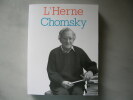
Très bon état.
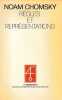
Régles et représentations
Flammarion, Nouvelle bibliothèque scientifique, 1985, 285 pp., broché, couverture un peu jaunie, pli de lecture sur le dos, état correct.
Structures Syntaxiques
Seuil / France Culture Seuil, L'Ordre Philosophique, 1972 - In-8,couverture blanche,141 pages, bon ensemble de seconde main ( menus accidents sans gravité ).
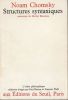
Bon Etat Mise à jour du Samedi 27 Juin 2026. Paiement PayPal immédiat, Mondial Relay pour : France, Allemagne, Autriche, Belgique, Espagne, Italie, Portugal, Luxembourg, Pays-Bas, Pologne (Communiquer votre point ou locker si connu). Une participation supplémentaire peut être demandée pour les colis lourds hors France où les envois compris entre 5 et 25 kg sont dégressifs : 2 à 4 kilogrammes - 7.99 / 5 à 10 kg - 15.99 / 15 -25 kg - 25.99. Certaines de nos collections ( Vian, Céline, Camus (...) peuvent être expédiées en Franco de port. Pour linternational hors Europe (Suisse, Canada, Japon, Etats-Unis, les frais dexpéditions peuvent varier selon le poids (mise à jour : 1 juin 2026).
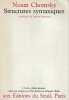
Structures syntaxiques
Seuil, L'ordre philosophique, 1969, édition originale française non justifiée, 140 p., broché, légères traces d'usage, état correct.
Mon imagier-jeu de la maison
Fernand Nathan 2019 14 pages 20 8x21x1 6cm. 2019. Relié. 14 pages.
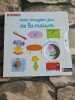

Bon état
La civilisation ma mere
Editions Belin 2012 224 pages 12 4x1 2x17 4cm. 2012. Broché. 224 pages.

Bon état
Lancelot Ou Le Chevalier De La Charette (Biblio College)
Hachette 2006 127 pages 12 5x18x0 7cm. 2006. Broché. 127 pages.
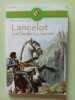
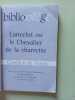
Neuf
Christmas pudding: Et autres surprises du chef - 1960
Librairie des Champs-Elysees 1984 12x1 4x17 6cm. 1984. Broché.
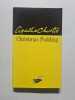
Bon état
Destination En Connue (Club des masque)
Editions Flammarion 1995 11x1x17 7cm. 1995. Broché.
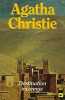
Bon état
La Troisieme Fille (Club des Masques)
Editions Flammarion 1986 10 2x1 8x16cm. 1986. mass_market.
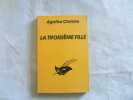
Bon état
N ou M
Librairie des Champs-Elysees 2005 223 pages 11x1x18cm. 2005. Broché. 223 pages.
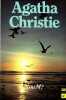
Très bon état
latin et la litt rature n o-latine au XIXe si cle. Pratiques et repr sentations
, Brepols, 2020 Paperback, v + 299 pages, Size:160 x 240 mm, Languages: French, English, Italian. ISBN 9789492771322.
Summary Le XIXe si cle est connu comme l' poque o l'essor des nationalismes et des langues nationales en Europe a d finitivement rel gu le latin aux marges du monde social. Or, si le latin conna t alors un ind niable d clin, il n'en demeure pas moins tout un temps une langue importante pour les nations modernes. Le pr sent volume tudie les manifestations d'une tradition linguistique pluris culaire qui ne s'est pas teinte l'aube de la modernit . Fruit d'une collaboration internationale, il rassemble des contributions portant sur diff rents pays d'Europe occidentale et centrale. Les auteurs retracent l'histoire du latin au XIXe si cle, s'interrogent aussi bien sur les raisons de son succ s que sur celles de son d clin et pr tent une attention particuli re aux aspects th matiques et stylistiques des textes. La litt rature n o-latine, qui n'est pas indiff rente au surgissement des romantismes europ ens, est pass e la loupe. L'ouvrage met galement en vidence l'inflexion que l'inspiration latine antique a pu donner une oeuvre po tique en langue moderne. TABLE OF CONTENTS Christophe Bertiau, "Le latin, une mati re ?bourgeoise?? Sur le d clin du latin dans l'enseignement l' poque contemporaine" The article refutes the received idea of Latin being a "bourgeois" school subject. It states on the contrary that the political and economic rise of the bourgeoisie accounts for the decline of Latin in secondary education during the last two centuries. Although Latin kept its dominant position in the curriculums throughout the nineteenth century, its supremacy was increasingly challenged by certain exponents of the bourgeoisie, who demanded school learning to be more markedly connected to the professional world. Jan Spoelder, "The decline of Latin as the academic language at Dutch universities and its consequences for education in Latin" In the eighteenth century, Latin lost its status as the universal scholarly language in countries like France, Germany and Britain. However, the Royal Decree of 1815 provided that Latin remained the exclusive academic language in the Kingdom of the Netherlands. More and more tension arose between maintaining classical educational ideals and the with to use the vernacular. Only when the Act on Higher Education was passed in 1876, this meant in practice the end of the mandatory use of Latin at Dutch universities. This new situation also ended the raison d' tre of the Latin school, the kind of education that had prepared for university entrance in the towns of the Dutch Republic and the later Kingdom. This type of school was reorganised to meet the altered requirements of the modern time under the name of Gymnasium. This school, with compulsory Greek and Latin, is still flourishing magnificently at the moment. Patrizia Paradisi, "Il latino nelle cerimonie ufficiali del Regno d'Italia, dall'Universit di Bologna al Campidoglio a Roma (Gandino, Albini e Pascoli)" Patrizia Paradisi stresses the significance Latin displayed for the official ceremonies of the Kingdom of Italy at the time of Giovanni Battista Gandino, Giuseppe Albini and Giovanni Pascoli. It thus appears how Latin was used to compose speeches, letters, an inscription for a medal, a hymn or a journal on the occasion of various ceremonies. Giacomo Dalla Piet , "L'evoluzione stilistica del latino all'interno della curia romana nel secolo XIX" Giacomo Dalla Piet sketches how the Latin style of encyclical letters developed during the nineteenth century. He interprets the adoption of a high style, which was to become increasingly Ciceronian, under the pontificate of Leo XIII as testament to the latter's universalist project and new way of conceiving papacy. ?ime Demo, "Stubborn persistence at the outskirts of the West: Latin in nineteenth-century Croatia" The article gives an insight into the status of Latin in nineteenth-century Croatia. Latin retained there until the mid-century a decided importance as a means of international communication, as a political instrument, as a medium of instruction or as a literary language. However, Croatian tended towards more and more superseding Latin in its uses. As a result, Latin was hardly ever used outside Church and education in the second half of the century. Neven Jovanovi?, "Two gentlemen-translators from nineteenth-century Dubrovnik" The author analyses the Latin translations of Antonio Sivrich and Blasius Ghetaldi, two poets from Dubrovnik. He compares how both translators worked and reflects upon the reasons why they rendered into Latin Italian sonnets and anacreontic poems (Sivrich) or Ivan Gunduli?'s Croatian epos Osman (Ghetaldi). Svorad Zavarsk , "?Et meus vere paradisus audit: mandra, poesis?: The poetry of Antonius Faber" Svorad Zavarsk presents the work of the neo-Latin poet from Bratislava Antonius Faber. He affirms that the main interest of A.?Faber's little classical poetry is its originality. This poetry can be seen as a compromise between traditional neo-Latin poetry and the romantic revival. It epitomises quite good the linguistic situation of Hungary at that time, where the national language was more and more often preferred to Latin. Florian Schaffenrath, "Antonio Mazzetti's neo-Latin epic poem on Emperor Ferdinand I (1838)" Florian Schaffenrath tackles a panegyric (gratulatio) addressed by Antonio Mazzetti to Emperor Ferdinand?I and examines its reception. He highlights the enthusiasm this poem motivated by current political affairs elicited, even though Latin verses no longer were in fashion. Antonino Zumbo, "Scrivere una novella romantica in versi latini: il Polymetron di Giovanni Andrea Vinacci" The article deals with the Polymetron, a romantic short story written in Latin verses by Andrea Vinacci. The story displays a Byronian inspiration and is located in the nineteenth-century Italian independence wars. Both these characteristics suggest that far from a mere formal dialogue with the Ancients has neo-Latin literature always attempted to stay in tune with its time. Romain Jalabert, "Des vers latins romantiques, en France" Romain Jalabert shows that a whole part of nineteenth-century French neo-Latin poetry was opened up to Romanticism. Original Latin poems inspired by Romanticism and Latin translations of poems in modern languages were no oddities. Schools played a leading role in this new tendency. Alphonse de Lamartine enjoyed great success as a source of inspiration for Latin poets. Dirk Sacr , "Colonel William Siddons Young (1832-1901) as a Latin poet" Dirk Sacr presents the life and work of the atypical British neo-Latin poet Colonel William Siddons Young (1832-1901). Young was an army officer in the Bengal civil service. Although some Latinists considered him as the greatest living Latin poet, his Latin verses display imperfections and he rapidly fell into oblivion after his death. But because of his atypical profile, he could serve the cause of Latin as a universal language. Through the figure of Young, this article provides us with an overview of the evolution of living Latin in the late nineteenth century. Marie-France David-de Palacio, "Un epigrammaton liber fin-de-sie cle: les ?latineries? de Jean Richepin" This contribution demonstrates on the basis of Jean Richepin's "Latineries" how a writer can breath new life into his own poetic language by imitating ancient authors. Whereas the style models on the epigrams of Roman Antiquity, and more specifically of Martial, the content exhibits a "Gallic" character.
Chrétien de Troyes Trouvé Dominique
Reference : 500102554
(2008)
ISBN : 9782701148717
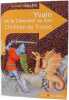
YVAIN OU LE CHEVALIER AU LION
BELIN EDUCATION 2008 192 pages 17 4x1x12 4cm. 2008. Broché. 192 pages.
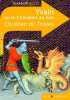
Etat correct
Chrétien de Troyes Trouvé Dominique
Reference : 500231033
(2008)
ISBN : 9782701148717
YVAIN OU LE CHEVALIER AU LION
BELIN EDUCATION 2008 192 pages 17 4x1x12 4cm. 2008. Broché. 192 pages.
Bon état
Chrétien de Troyes Trouvé Dominique
Reference : 500299987
(2008)
ISBN : 9782701148717
YVAIN OU LE CHEVALIER AU LION
BELIN EDUCATION 2008 192 pages 17 4x1x12 4cm. 2008. Broché. 192 pages.
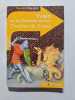
Très bon état
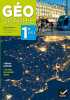
Geographie 1re L/ES/S
Editions Hatier 2015 320 pages 19 8x1 4x28cm. 2015. Broché. 320 pages.
Bon état
Cinéma 73D. W Griffith - Le cinéma norvégien - Cinéma et langage
N° 173 - Février 1973 - revue mensuelle illustrée - publié par la fédération française des ciné-clubs - petit in-8 - broché - 140 pages
bon état
Portraits de Fem Citati
GALLIMARD 2003 400 pages 11x2x17cm. 2003. pocket_book. 400 pages.
Bon état
Mind Matters. Studies of Medieval and Early Modern Intellectual History in Honour of Marcia Colish,
Turnhout, Brepols, 2010 Hardback, X+308 p., 156 x 234 mm. new ISBN 9782503527567.
Marcia Colish is one of the most influential scholars of the history of medieval and early modern thought, the author of numerous books and scores of articles in the field, as well as a pioneering President of the Medieval Academy of America. This volume honours her accomplishments with papers by her many colleagues, friends, and former students, who are themselves prominent scholars from across a range of disciplines. The chapters are diverse chronologically and topically, yet they are all stimulated by themes that Prof. Colish has explored during her long and distinguished career. They address the richness of European intellectual history between the twelfth and the sixteenth centuries, treating the multiple heritages of philosophy, theology, political theory, historiography, classical reception, and many other subjects to which her scholarship extends. The volume demonstrates the power of ideas in the development of European history generally, revealing that the careful study of the works of the 'mind' does indeed 'matter'. Languages : English.
Medieval Multilingualism The Francophone World and its Neighbours,
Turnhout, Brepols, 2011 Hardback, VIII+323 p., 15 b/w ill., 2 b/w tables, 156 x 234 mm. ISBN 9782503528373.
An investigation of the general subject of multilingualism in medieval England, France, and Italy with attention to the interaction among vernacular languages and between these and Latin. This volume contains essays on various aspects of multilingualism in medieval France, Italy, England, and the Low Countries. The fifteen contributions discuss the use of the different vernaculars and Latin in both literary and non-literary contexts, showing how cultural and social factors determined the choice of language for a particular purpose or type of text. The role of French in non-French contexts is a major theme of these essays: in the British Isles after the Norman Conquest, in Italy as a response to the need for mainly secular types of literature which did not exist in Italian, and in the Low Countries by virtue of geographic contiguity and change of rulers. Special attention is paid in the French context to the use of French and Occitan in areas of the South. Some essays examine specific cases or text-corpora, while others examine questions of multilingualism from more theoretical, linguistic, and rhetorical points of view. Together, they form an invaluable introduction to the topic of medieval multilingualism, illustrated by meticulously executed case-studies, which future work in the area will have to take into account. Languages : English, French.
HET VLAAMSCH OP HET CONGRES VAN MECHELEN. REDEVOERING EN VERSLAGEN,
, Gent, Siffer, 1891, Gebrocheerd, originele papieromslag en titelpagina met vignet, 145 x 230mm., 68pp.
Uitgave van het Davidsfonds Nr 75. In goede staat.
Net Force 7 Cyberpirates
LIVRE DE POCHE 2010 480 pages 11x2 6x17 8cm. 2010. pocket_book. 480 pages.
Bon état
Connectionism Concepts and Folk Psychology: The Legacy of Alan Turing Volume II (Mind Association Occasional Series)
OXFORD UNIV PR 1997 296 pages 13 97x2 06x21 59cm. 1997. Relié. 296 pages.
Très Bon Etat de conservation intérieur propre bonne tenue avec sa jaquette
Clarke Tom C. Kerr Rosamond Chaplin A.H. Anderson Dorothy
Reference : 100134197
(1977)
Names of Persons: National Usages for Entry in Catalogues
International Federation of Library Associations & Institutions 1977 203 pages 18 6x24x3cm. 1977. Broché. 203 pages.

Bon état couverture défraîchie ternie intérieur propre
Claude Barazer-Stefano Bogognini-Anne Denis-Brunos Gelas-Michèle Lalive d'Epinay-Nicole Ouri-Salomon Resnik Jean-Claude Rolland Andréas Schlanstein-Philippe Valon.
Reference : 11146
ISBN : 2848350075
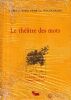
Le théâtre des Mots - "L'inconscient" Sigmund Freud, 1915
In Press In Press- Libres Cahiers pour la Psychanalyse (N°7) 2003 - Bel In-8 au format 15x21cm, élégante couverture caramel ornée d'un monogramme figurant un arbre d'où s'envolent des pages de papier-feuillage, titrage en rouge et noir, bel exemplaire ( petite tâche de café), 124 pages.
Les Libres cahiers pour la Pensée Freudienne prennent pour argument de chaque N° un texte de Freud et Rassemble les contributions d'auteurs (...).En s'adressant à ceux qu'attirent la pensée Freudienne les Cahiers Libres () s'efforcent de soutenir la communication analytique.Les boulversements apportés par la découverte de l'inconscient dans la compréhension des conduites humaines et le traitement de la souffrance psychique continuent de mettre à l'épreuve les textes de Freud et sa méthode.La présence de la Psychanalyse s'affirme par les conditions rigoureuses de sa pratique, dans les exigences de la formation des analyste et par la qualité des échanges qui animesnt la communauté analytique. Bon Etat Mise à jour du Samedi 27 Juin 2026. Paiement PayPal immédiat, Mondial Relay pour : France, Allemagne, Autriche, Belgique, Espagne, Italie, Portugal, Luxembourg, Pays-Bas, Pologne (Communiquer votre point ou locker si connu). Une participation supplémentaire peut être demandée pour les colis lourds hors France où les envois compris entre 5 et 25 kg sont dégressifs : 2 à 4 kilogrammes - 7.99 / 5 à 10 kg - 15.99 / 15 -25 kg - 25.99. Certaines de nos collections ( Vian, Céline, Camus (...) peuvent être expédiées en Franco de port. Pour linternational hors Europe (Suisse, Canada, Japon, Etats-Unis, les frais dexpéditions peuvent varier selon le poids (mise à jour : 1 juin 2026).

