 Write to the booksellers
-
Type
Book (3499)
Disk (1)
Magazine (41)
-
Latest
Last 24h (6)
Last 3 days (1)
Last month (37)
Last week (5)
-
Language
English (1)
French (3539)
Spanish (1)
-
Century
16th (1)
17th (2)
18th (19)
19th (78)
20th (1178)
21st (1416)
-
Countries
Belgium (468)
Canada (7)
China (4)
Côte d'Ivoire (1)
Denmark (4)
France (3017)
Greece (1)
Netherlands (4)
Switzerland (35)
-
Syndicate
ALAC (7)
CLAQ (2)
ILAB (294)
NVVA (3)
SLACES (3)
SLAM (276)
L' Assommoir (Folio)
Editions Flammarion 1998 576 pages 17 78x2 794x10 922cm. 1998. Broché. 576 pages.
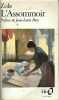
Bon état
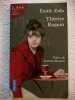
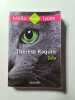
Therese Raquin (Petits Classiques Larousse)
Editions Larousse 2008 463 pages 12 4x1 4x17 8cm. 2008. Broché. 463 pages.
Très bon état
Therese Raquin (Petits Classiques Larousse)
Editions Larousse 2008 463 pages 12 4x1 4x17 8cm. 2008. Broché. 463 pages.


Bon état
Une Page D Amour (Ldp Classiques)
Le Livre de poche 2009 416 pages 17 6x2 2x10cm. 2009. pocket_book. 416 pages.
Bon état
Oeuvres & Themes: Madame Sourdis ET Autres Nouvelles
Editions Hatier 2006 160 pages 12 2x1x17 4cm. 2006. pocket_book. 160 pages.
Bon état
Au bonheur des dames
Hachette 2014 318 pages 17 526x1 778x12 192cm. 2014. Broché. 318 pages.

Bon état
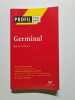
Profil d'une oeuvre: Germinal
Editions Hatier 2002 128 pages 10 6x1 2x17 6cm. 2002. mass_market. 128 pages.
Bon état
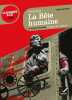
La bete humaine: suivi d'un parcours sur la figure du criminel
Editions Hatier 2013 576 pages 12 7x17 3x3cm. 2013. Broché. 576 pages.
Etat correct
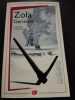
Germinal französische Ausgabe
Flammarion 2008 622 pages 17 4x3x10 8cm. 2008. mass_market. 622 pages.
Très bon état
Novi Testamenti Lexicon Graecum
Parisiis, Lethielleux 1911 xv + 646pp., cart.cover (marbled plates, leather spine, title engilded), 23cm.
Matthew Paris on the Mongol Invasion in Europe
, Brepols, 2022 Hardback, 469 pages, Size:156 x 234 mm, Illustrations:12 b/w, 1 col., 2 tables b/w., Language(s):English, Latin. ISBN 9782503595528.
Summary This is a novel, interdisciplinary study of the Mongol military campaign in Eastern Europe (1241-1242) ? the North, as thirteenth-century Europeans saw the region ? in the works of contemporary English chronicler, Matthew Paris of St Albans Monastery. Tracing the journey of his sources, the volume explores thirteenth-century information networks against the backdrop of the struggle between Emperor Frederick II and Pope Innocent IV. Parallel to the history of information, the subject of the study is the Chronica majora and its afterlife, Matthew's chronicle world where the sometimes fictitious (and often very real) episodes of the Mongol story unfold. Tracing major landmarks in the meta-history of the Chronica majora, the author wishes to emancipate Matthew Paris as a historian ? one in the series of a multitude of others who continue to write and rewrite the history of the Mongol invasion across centuries of historiography. The volume is a handy companion both to scholars of English historiography and those who want to read critically the oft-cited primary sources of the history of the Mongol military operations in Europe. TABLE OF CONTENTS List of Illustrations, Abbreviations Introduction Chapter 1. Inside the Book Mise-en-abîme Within and Without The North by the Northwest Chapter 2. Outside the Book The Book in the Scriptorium The Scriptorium in England England in the European Networks Chapter 3. Fright: Mongols in the North and East (1237-1240) 1237: Chaldeans, Medes, Persians, and Armenians 1238: Northbound to Hungaria major 1239: Dacia, Gothia, Frisia 1240: False Alarm and Irruption Chapter 4. Fight: Mongols in the Middle (1241) Holy War on the Mongols The First 1241 Cluster The Second 1241 Cluster Chapter 5. Flight: Rivaling Stories of Retreat (1243-1248) 1243: The Tartar Khan's Englishman 1244: Frederick's Triumph 1244: The Man from Russia 1245-1248: Endgame Chapter 6. Letters from the Afflicted Lands in the Additamenta Chapter 7. The Afterlife of Matthew's Mongol Story Chronicles and their Afterlife Back to the Future: Modern historiography Vice prologi Appendix 1: List of Manuscripts Manuscripts containing the Chronica majora and its fragments / continuations Manuscripts containing Matthew Paris's Flores historiarum, and its fragments / continuations Flores manuscripts listed in medieval catalogues Notes on transcription Further appendices Bibliography Index
Latinitatis medii aevi lexicon Bohemorum / Slovník stredoveké latiny v ceských zemích. II: C. Editio altera, aucta et emendata / Druhé, rozsírené a opravené vydání. Corpus Christianorum
, Brepols, 2026 Hardback, Pages: iv + 979, Size:155 x 245 mm, Languages: Latin, Czech, English. ISBN 9782503606996.
Summary The Dictionary of Medieval Latin in Czech Lands registers and explains the vocabulary of Medieval Latin as used in Czech lands since ca. 1000 CE to 1500 CE. It is based on ca. 800.000 excerpt sheets, drawn from literary, scholarly, and administrative texts. It takes into account not only published sources, but also the manuscript texts (esp. those containing philosophical, theological and scientific treatises, vocabularies, and administrative documents) that still remain unpublished. It also captures and explains the vocabulary of the late Middle Ages, not included in most similar dictionaries. It provides thorough and sufficiently informative data about the wide range and heterogeneity of means of expression to be found in Medieval Latin. It captures all phonological, morphological, syntactical, stylistic, prosodic and semantic divergences of Medieval Latin vocabulary inherited from the ancient era as compared with classical norms. It also provides an exhaustive analysis of newly?emerged Medieval Latin words. It is an indispensable tool for medievalists from various fields, especially those who focus on Central Europe. TABLE OF CONTENTS Latinitatis medii aevi lexicon Bohemorum. II: C
Latinitatis medii aevi lexicon Bohemorum / Slovník stredoveké latiny v ceských zemích. I: Praefatio, A-B Editio altera, aucta et emendata / Druhé, rozsírené a opravené vydání. Corpus Christianorum
, Brepols, 2026 Hardback, Pages: c + 794, Size:155 x 245 mm, Languages: Latin, Czech, English. ISBN 9782503606989.
Summary The Dictionary of Medieval Latin in Czech Lands registers and explains the vocabulary of Medieval Latin as used in Czech lands since ca. 1000 CE to 1500 CE. It is based on ca. 800.000 excerpt sheets, drawn from literary, scholarly, and administrative texts. It takes into account not only published sources, but also the manuscript texts (esp. those containing philosophical, theological and scientific treatises, vocabularies, and administrative documents) that still remain unpublished. It also captures and explains the vocabulary of the late Middle Ages, not included in most similar dictionaries. It provides thorough and sufficiently informative data about the wide range and heterogeneity of means of expression to be found in Medieval Latin. It captures all phonological, morphological, syntactical, stylistic, prosodic and semantic divergences of Medieval Latin vocabulary inherited from the ancient era as compared with classical norms. It also provides an exhaustive analysis of newly?emerged Medieval Latin words. It is an indispensable tool for medievalists from various fields, especially those who focus on Central Europe. TABLE OF CONTENTS Argumentum editionis secundae. Norma redigendi / P?edmluva k druhému vydání. Redak?ní zásady / Preface to the Second Edition. Editorial Principles Index compendiorum / Seznam zkratek / Abbreviations Index fontium / Seznam pramen? / Index of Sources Latinitatis medii aevi lexicon Bohemorum. I: A-B
Printemps Au Prater
LIVRE DE POCHE 2010 128 pages 17 4x1 6x10 8cm. 2010. pocket_book. 128 pages.
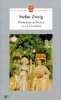
Très bon état - légères marques de lecture et/ou de stockage mais du reste en très bon état- expédié soigneusement depuis la France

