 Write to the booksellers
-
Type
Autograph (3)
Book (9386)
Magazine (20)
Manuscript (1)
Old papers (1)
Photographs (1)
-
Latest
Last 24h (7)
Last 3 days (1)
Last month (116)
Last week (1)
-
Language
English (7)
French (9375)
Italian (26)
Latin (4)
-
Century
16th (16)
17th (19)
18th (83)
19th (797)
20th (5013)
21st (604)
-
Countries
Belgium (876)
Canada (3)
Côte d'Ivoire (2)
France (7478)
Greece (3)
Switzerland (1050)
-
Syndicate
ALAC (3)
CLAM (1)
CLAQ (1)
CNE (2)
ILAB (7477)
NVVA (823)
SLACES (823)
SLAM (6496)
SNCAO (5)
IL CENACOLO DI LEONARDO
Nicola Moneta. 1959. In-18. Broché. Etat d'usage, Couv. légèrement passée, Dos satisfaisant, Intérieur acceptable. 55 pages. Illustré de nombreuses photos en noir et blanc et en couleur, dans et hors texte. Page de garde légèrement tachée.. . . . Classification Dewey : 450-Italien, roumain, rhéto-romain
Classification Dewey : 450-Italien, roumain, rhéto-romain

DEI DOVERI DELL'UOMO
Rizzoli. 1949. In-16. Broché. Bon état, Couv. convenable, Dos satisfaisant, Intérieur acceptable. 101 pages.. . . . Classification Dewey : 450-Italien, roumain, rhéto-romain
Biblioteca Universale, 60. Classification Dewey : 450-Italien, roumain, rhéto-romain
SCRITTI EDITI E INEDITI DI GIUSEPPE MAZZINI, LETTERATURA, 2 VOLUMI
G. Daelli, Milano. 1862. In-12. Relié. Etat d'usage, Couv. convenable, Dos satisfaisant, Rousseurs. 410 pages pour le tome I et 389 pages pour le tome II. Auteurs, titres, tomaisons et filets dorés sur les dos. Etiquettes de code sur les couvertures. Quelques tampons de bibliothèque. Fortes rousseurs et quelques mouillures.. . . . Classification Dewey : 450-Italien, roumain, rhéto-romain
Edizione diretta dall'autore. Classification Dewey : 450-Italien, roumain, rhéto-romain
Delle Origine Italiche. e della diffusione dell' incivilimento Italiano all' Egitto, alla Fenicia, alla Grecia e a tutte le nazioni asiatiche poste sul Mediterraneo
Milan, Guglielmini et Redaelli, 1840 in-8, [2] ff. n. ch., 432 pp., manque le feuillet d'errata, demi-basane cerise à coins, dos à larges nerfs orné de guirlandes et doubles caissons dorés, tranches mouchetées (reliure de l'époque).
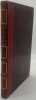
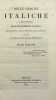
Edition originale (l'ouvrage fut réimprimé en 1846, en 1849, et en 2006) de cet ouvrage aux thèses surprenantes, qui prétendait que la civilisation s'était propagée non d'Orient en Occident, mais dans le sens inverse, et qui faisait de la péninsule italienne la source première de toutes les cultures du pourtour de la Méditerranée antique. Il va de soi que ces théories furent accueillies avec plus que de la méfiance par les érudits de l'époque. Angelo Mazzoldi (1799-1864), originaire de Montichiari, près de Brescia, fut toute sa vie un touche-à-tout, qui écrivit sur quantité de sujets hétérogènes.Seulement deux exemplaires de l'originale au CCF (BnF et Muséum d'histoire naturelle). - - VENTE PAR CORRESPONDANCE UNIQUEMENT - LIEN DE PAIEMENT, NOUS CONSULTER.
LA PASTORALE DELLA PARROCHIA MODERNA
Queriniana. 1965. In-8. Broché. Bon état, Couv. légèrement passée, Dos satisfaisant, Intérieur frais. 303 pages. Etiquette de code sur le dos. Tampons et annotations de bibliothèque sur le 1er plat et en page de titre.. . . . Classification Dewey : 450-Italien, roumain, rhéto-romain
'Pastorale e catechetica', 2. Classification Dewey : 450-Italien, roumain, rhéto-romain
ANTOLOGIA CARDUCCIANA - POESIE E PROSE - SCELTE E COMMENTATE DA GUIDO MAZZONI E GIUSEPPE PICCIOLA
NICOLA ZANICHELLI. 1918. In-12. Broché. Etat passable, Couv. défraîchie, Dos abîmé, Quelques rousseurs. 522 Pages. 1 illustration en noir et blanc sur le 1er plat. Quelques culs de lampe. Livre désolidarisé. Plats abimés. Quelques rousseurs sans conséquence pour la lecture.. . . . Classification Dewey : 450-Italien, roumain, rhéto-romain
Classification Dewey : 450-Italien, roumain, rhéto-romain
LA SOLIDARIETA' SOTERIOLOGICA DEGLI UOMINI CON CRISTO NEL PENSIERO DEI TEOLOGI CONTEMPORANEI
Editrice Salentina, Galatina. 1957. In-8. Broché. Bon état, Couv. convenable, Dos satisfaisant, Intérieur frais. 73 pages. Etiquettes de code sur le dos et le 1er plat. Tampons et annotations de bibliothèque sur le 1er plat et en page de titre. Dos muet.. . . . Classification Dewey : 450-Italien, roumain, rhéto-romain
Estratto dalla Tesi per il conseguimento della Laurea in S. Teologia. Classification Dewey : 450-Italien, roumain, rhéto-romain
Caccia al colombaccio fra querce e palombe
Editoriale Olimpia. 1986. In-8. Broché. Bon état, Couv. convenable, Dos satisfaisant, Intérieur frais. 335 pages. Nombreuses photos en couleurs hors texte, nombreuses illustrations monochromes dans et hors texte. Texte en italien. Couverture contrepliée. Dos insolé. Trois photos disponibles.. . . . Classification Dewey : 450-Italien, roumain, rhéto-romain
Classification Dewey : 450-Italien, roumain, rhéto-romain
FILIPPO E GIACOMO APOSTOLI NEL LORO SANTUARIO ROMANO
L'Apostoleion. 1982. In-8. Broché. Bon état, Couv. convenable, Dos satisfaisant, Intérieur frais. 101 pages. Illustré de nombreuses photos en noir et blanc dans et hors texte, et d'un plan en noir et blanc sur grande planche dépliable.. . . . Classification Dewey : 450-Italien, roumain, rhéto-romain
Il Sepolcro, Le Reliquie, Il Culto. Classification Dewey : 450-Italien, roumain, rhéto-romain
Historia del bandolerismo y de la camorra en la Italia meridional. Con las biografías de los guerrilleros catalanes Borges y Tristany.
Barcelona, Salvador Manero. 1864. Gross-8°. 633 S., 3 n.n. Bl. Mit 11 Tafeln und 1 mehrfach gefalteten gestochenen Karte. Halblederband der Zeit mit goldgeprägtem Rückentitel, illustrierter Originalbroschurvorderdeckel mit eingebunden.
Originalausgabe. - Früher Bericht über die Camorra und die politischen Verhältnisse zwischen Italien und Spanien in der Zeit der Karlistenkriege. - Einband an den Kanten berieben. Vorderdeckel mit Fleck in der unteren Ecke. Durchgehend stockfleckig. Die Karte mit Einriss. Titelblatt gelockert. - Mit dem seltenen Broschurvorderdeckel.
PETITE ANTHOLOGIE ITALIENNE TOME 1.
HATIER. 1930. In-12. Broché. Etat d'usage, Couv. défraîchie, Agraffes rouillées, Intérieur acceptable. 64 pages - annotations sur la dernière page au stylo - ouvrage essentiellement en italien.. . . . Classification Dewey : 450-Italien, roumain, rhéto-romain
Collection les classiques pour tous n°410 - Sommaire : Scuola e famiglia - racconti vari - divertimenti e ricordi. Classification Dewey : 450-Italien, roumain, rhéto-romain
en voyage
Salvy 1994 160 pages 12 4x1 2x19 2cm. 1994. Broché. 160 pages.
couverture légèrement défraîchie intérieur propre bonne tenue
Pierres de Florence.
Paris-Bruxelles, Editions Séquoia, 1960. 22 x 28, 130 pp., nombreuses illustrations en couleurs et en N/B, reliure d'édition pleine toile + jaquette, bon état (jaquette légèrement défraîchie).
"traduit de l'anglais par Jacques Houbart; préface de Jacques de Lacretelle."
La crisi dello Stato italiano Costume e vita politica nell'italia contemporanea
Riunitit. Septembre 1996. In-8. Broché. Bon état, Couv. convenable, Dos satisfaisant, Intérieur frais. 316 pages. Couverture contrepliée.. . . . Classification Dewey : 450-Italien, roumain, rhéto-romain
Texte écrit en italien. Classification Dewey : 450-Italien, roumain, rhéto-romain
IL CANE CHE CANTA
Arnoldo Mondadori. 1992. In-12. Broché. Bon état, Couv. convenable, Dos plié, Intérieur acceptable. 223 pages. Texte sur 2 colonnes.. . . . Classification Dewey : 450-Italien, roumain, rhéto-romain
'Il Giallo Mondadori', 2281. Classification Dewey : 450-Italien, roumain, rhéto-romain
"Della nuova disciplina sulla proibizione e sulla censura de' libri ovvero la costituzione "" officiorum"" brevemente commentata per M.C.G.- edizione seconda con giunte e correzioni"
Tipografia degli Artigianelli, Napoli. 1898. In-8. Broché. Etat passable, Couv. défraîchie, Dos abîmé, Quelques rousseurs. 101 pages. En italien et latin. Dos et second plat manquant. 1er plat désolidarisé. Etiquette de code et tampon de bibliothèque en page de titre. Petits pliures aux coins. Dernière page, de sommaire, volante et avec petite déchirure, sans réelle conséquence sur la lecture. Ouvrage partiellement débroché.. . . . Classification Dewey : 450-Italien, roumain, rhéto-romain
Edizione seconda con giunte e correzioni. Classification Dewey : 450-Italien, roumain, rhéto-romain
BALLO DI MORTE
Arnoldo Mondadori. 1991. In-12. Broché. Bon état, Couv. convenable, Dos satisfaisant, Intérieur acceptable. 191 pages. Texte sur 2 colonnes.. . . . Classification Dewey : 450-Italien, roumain, rhéto-romain
'Il Giallo Mondadori', 2197. Classification Dewey : 450-Italien, roumain, rhéto-romain
McLUHAN, T.C. (textes rassemblés par) - Photographies de Edward S. Curtis
Reference : 108177
(1977)
Almanacco Navale. 1977
1977 Editions Instituto Idrografico Della Marina, Genova - 1977 - Fort In-8, cartonnage bleu avec titre doré, sous jaquette papier et rhodoïd - 766 p. - Nombreuses reproductions photographiques et illustrations en N&B - Texte en italien

Bon état malgré bords de la jaquette légèrement jaunie par le temps - Coins du cartonnage légèrement tassés - Dos légèrement voilé
Geschichte der Ausbreitung und Unterdrückung der Reformation in Spanien Im sechsehnten Jahrhunderte. Aus dem Englischen des Dr. Thomas M’Crie übers. und mit Anmerkungen begeitet von Gustav Plieninger. Nest einer Vorrede von Dr. F. C. Baur.
Stuttgart, Brothage, 1835, in-8vo, XIV + 1 Bl. + 392 S., vereinzelt stockfleckig, Halb-Lederband d. Zeit. Titel und Fileten in gold auf Rücken. (Rückentitel: Die Reform in Spanien und Italien).

(SLACES, NVVA)
Phone number : 41 (0)26 3223808
EFFETTI CIVILI DELLA SENTENZA CANONICA DI NULLITA' DEL MATRIMONIO NELL'ORDINAMENTO GIURIDICO ITALIANO (DISSERTATIO)
Pontificia Universitas Lateranensis, Roma. 1999. In-8. Broché. Très bon état, Couv. fraîche, Dos impeccable, Intérieur frais. 254 pages. Dos muet.. . . . Classification Dewey : 450-Italien, roumain, rhéto-romain
Pontificia Universitas Lateranensis, Facultas Iuris Canonici. Dissertatio ad Lauream in Iure Canonico asseq. Classification Dewey : 450-Italien, roumain, rhéto-romain
Il risorgimento italiano nel teatro e nel cinema.
Editalia - roma. 1961. In-4. Relié. Etat passable, Tâchée, Dos satisfaisant, Fortes mouillures. 236 pages - fortes mouillures, moisissures, déchirures à l'intérieur de l'ouvrage altérant légèrement la lecture - ouvrage en italien - nombreuses illustrations en noir et blanc dans et hors texte - plats tâchés - coins frottés - jaquette abîmée.. Avec Jaquette. . . Classification Dewey : 450-Italien, roumain, rhéto-romain
Classification Dewey : 450-Italien, roumain, rhéto-romain
POESIE DI LORENZO DE' MEDICI
Barbèra, Bianchi e Comp., Firenze. 1859. In-32. Relié demi-cuir. Bon état, Couv. convenable, Dos fané, Quelques rousseurs. 464 pages. Gravure en noir et blanc en frontispice (portrait). Titre doré sur le dos. Etiquette de code sur la couverture. Quelques tampons de bibliothèque. Dos insolé.. . . . Classification Dewey : 450-Italien, roumain, rhéto-romain
Alcune Prose. Sonetti e Canzoni. Selve d'Amore. Poemetti... Classification Dewey : 450-Italien, roumain, rhéto-romain
Le siècle des Médicis.
Paris, Albin Michel, 1969, in-4to, 216 p., rich. ill. en couleurs, reliure en toile originale, avec jaquette.
(SLACES, NVVA)
Phone number : 41 (0)26 3223808
Italie, guide culturel en couleurs. Collection : Guide Nathan.
Paris, Fernand Nathan, 1978. 12 x 20, 831 pp., très nombreuses illustrations en couleurs, cartonnage d'édition imprimé, bon état.
L'ARTE NELL'INDUSTRIA, VOL II, ATLANTE (Lavori di legno e pastiglia, Lavori di metallo, Lavori di pietra, marmo, alabastro, ceramica, musaico, vetro, Lavori di osso e avorio, Lavori tessili ,carte da parati e cuoi decorati, Ricami, pizzi, cartelloni...)
Dottor Francesco Vallardi. Non daté. In-4. En feuillets. Etat passable, Plats abîmés, Dos abîmé, Intérieur acceptable. 159 planches de gravures en noir et blanc et en couleur. Accompagné de plusieurs grandes planches dépliables illustrées en noir et blanc. Couverture rigide d'origine très abîmé, le 1er plat étant détaché. Page de titre passée. Annotations au crayon en 1re page.. . Sous Emboitage. . Classification Dewey : 450-Italien, roumain, rhéto-romain
Ca. 1910. Lavori di legno e pastiglia, Lavori di metallo, Lavori di pietra, marmo, alabastro, ceramica, musaico, vetro, Lavori di osso e avorio, Lavori tessili ,carte da parati e cuoi decorati, Ricami, pizzi, cartelloni, stampe, ecc. Classification Dewey : 450-Italien, roumain, rhéto-romain

