 Write to the booksellers
-
Type
Autograph (3)
Book (9375)
Magazine (20)
Manuscript (1)
Old papers (1)
Photographs (1)
-
Latest
Last 3 days (4)
Last month (117)
Last week (8)
-
Language
English (7)
French (9364)
Italian (26)
Latin (4)
-
Century
16th (16)
17th (19)
18th (83)
19th (797)
20th (5016)
21st (607)
-
Countries
Belgium (864)
Canada (3)
Côte d'Ivoire (2)
France (7479)
Greece (3)
Switzerland (1050)
-
Syndicate
ALAC (3)
CLAM (1)
CLAQ (1)
CNE (2)
ILAB (7478)
NVVA (823)
SLACES (823)
SLAM (6497)
SNCAO (5)
Die Gründung der kommunistischen Partei Italiens.
Verlag der Kommunistischen Internationale, Hamburg, Carl Hoym, 1921, in-8°, 56 S., mit einigen Unterstreichungen, Original-Broschüre.
Enthält u.a. eine Rede des Verfassers auf dem Kongress der Sozialistischen Partei Italiens in Livorno, 16. Januar 1921.

(SLACES, NVVA)
Phone number : 41 (0)26 3223808
LIBERTA DI RELIGIONE DI STAMPA E D'ASSOCIAZIONE, ESAME STORICO-CRITICO DEGLI ARTICOLI XVIII, XIX e XX DELLA DICHIARAZIONE UNIVERSALE DEI DIRITTI DELL'UOMO
Pontificia Universitas Lateranensis, Roma. 1959. In-8. Broché. Bon état, Couv. convenable, Dos satisfaisant, Intérieur frais. 135 pages. Etiquette de code sur le dos. Tampons et annotations de bibliothèque sur le 1er plat et en page de titre.. . . . Classification Dewey : 450-Italien, roumain, rhéto-romain
Pontificia Universitas Lateranensis, Institutum Utriusque Iuris, Theses ad Lauream n. 137. Classification Dewey : 450-Italien, roumain, rhéto-romain

Manuel du voyageur en Italie ou Nouvelle Description de tout ce que ce pays offre de plus intéressant, de plus curieux et de plus instructif, sous le rapport des monuments antiques et modernes, sciences et arts, productions territoriales, climat, agriculture, commerce, industrie, population, moeurs et usage des habitans, etc. Nouvelle édition corrigée et augmentée.[Suivi de :] Livre de poste ou état général des postes de l'Italie et des pays voisins avec les règlemens et tarifs, suivi de la carte itineraire des routes desservies par la poste. (1826).
Milan, Jean Pierre Giegler, Libraire, 1826, pt. in-8vo, Titre gravé + XXIV + 672 p.; 72 p. + 1 grande carte générale et routière d’Italie (Milan, Giegler 1827 - dépl. 70x52 cm), cartonnage original. Titre et „Prix 10 francs“ impr. au dos. 1 charnière faible.
L’ouvrage publié anonymement. Selon Barbier & Quérard, Kalichoff, gentilhomme russe, est l'auteur supposé du "Manuel du voyageur en Italie."Très rare guide complet avec la très grande carte gravée des parties de la Suisse, la Valteline et le Tirol. Intéressant pour la Suisse avec la Route du Valais à Milan par le grand Saint-Bernard - du Valais à Milan par le Simplon & par le Saint Gothard - du Pays des Grisons à Milan. Avec une Table alphabétique des Villes, Montagnes et Lacs les plus remarquables... (Originally published in 1785. Ascribed by Barbier and Quérard to "Kalichoff, gentilhomme russe.") Image disp.
(SLACES, NVVA)
Phone number : 41 (0)26 3223808
THE HOLY KAMA ! Kamagurka
, Stichting Kunstboek, 2011 HB, 170 x 120 mm, 896 p, 1000 illustrations in colour / b/w, ENG. edition, . ISBN 9789058563996.
Multitalent Kamagurka begon zijn carrière als cartoonist bij het Belgische weekblad HUMO. Vandaag publiceert hij in talloze media in verschillende landen zoals Nederland (NRC Handelsblad, HP de tijd), Frankrijk (Charlie Hebdo, Hara Kiri, Le Canard enchaîné), UK (Squib, The Spectator, Deadpan), Duitsland (Titanic, Suddeutsche Zeitung, Zitty, Eulenspiegel), Oostenrijk (Die Presse), USA (The New Yorker, National Lampoon, RAW),. De feilloze tekenpen, het messcherpe inzicht en de speelse geest van cartoonist en kunstenaar Kamagurka staan garant voor een vlijmscherpe kijk op de wereld. Het grote publiek kent hem vooral als performer op radio, televisie of in het theater, vaak samen met Herr Seele, zijn levenslange metgezel. Kamagurka heeft meer dan 25 stripboeken op zijn naam, van Bert en Bobje tot Cowboy Henk. Tegenwoordig tekent Kamagurka niet alleen op papier en doek, maar ook op zijn iPad. The Holy Kama! is een 'best of' met meer dan 1000 tekeningen van de meester van het absurdisme. Een onuitputtelijke bijbel voor iedere Kamaliefhebber, voor op iedere hotelkamer en op elk nachtkastje. All-round artist Kamagurka started his career as a cartoonist for the Belgian magazine HUMO. Soon after, his multi-talent, discernable style, razor-sharp pen and absurdist humor attracted the attention of other media, resulting in a worldwide exposure in newspapers and magazines including NRC Handelsblad, Playboy, Esquire (the Netherlands); Charlie Hebdo, Hara Kiri (France); Squibb, The Spectator, Deadpan (UK); Titanic, Süddeutsche Zeitung, Zitty, Eulenspiegel (Germany); Die Presse (Austria); The New Yorker, National Lampoon, RAW (USA) and many more. Kamagurka wrote and acted in several radio, television and theatre shows, often performing alongside Herr Seele, his lifelong partner.
Tiziano Vecellio, surnommmé, Titien (1488/1490-1576). Collection : Maîtres de l'art italien.
Cologne, Könemann, 1998. 28 x 32, 140 pp., 143 illustrations en couleurs, reliure d'édition pleine toile+ jaquette, très bon état (sauf dos légèrement gauchi).
LA PSTORALE SPECIALIZZATA SECONDO L'ARCIVSCOVO ANTONIO GIULIANO NOWOWIEJSKI
Pontificia Università Lateranense. 1976. In-8. Broché. Bon état, Couv. convenable, Dos satisfaisant, Intérieur frais. Plaquette de 54 pages. Etiquette de code sur le 1er plat. Tampons et annotation de bibliothèque sur le 1er plat et en page de titre.. . . . Classification Dewey : 450-Italien, roumain, rhéto-romain
Pars Dissertationis ad Lauream. Classification Dewey : 450-Italien, roumain, rhéto-romain
LA FOLLIA DI LIEBERMAN
Arnoldo Mondadori. 1993. In-12. Broché. Très bon état, Couv. fraîche, Dos impeccable, Intérieur acceptable. 207 pages. Texte sur 2 colonnes.. . . . Classification Dewey : 450-Italien, roumain, rhéto-romain
'Il Giallo Mondadori', 2295. Classification Dewey : 450-Italien, roumain, rhéto-romain
LA PAURA CORRE SUL FILO
Arnoldo Mondadori. 1985. In-12. Broché. Bon état, Couv. convenable, Dos satisfaisant, Intérieur acceptable. 172 pages. Texte sur 2 colonnes.. . . . Classification Dewey : 450-Italien, roumain, rhéto-romain
'Il Giallo Mondadori', 1898. 'Cerchio Verde', La Rivista di Ellery Queen. Classification Dewey : 450-Italien, roumain, rhéto-romain
L'OROLOGIO LIQUEFATTO
Arnoldo Mondadori. 1992. In-12. Broché. Bon état, Couv. convenable, Dos satisfaisant, Intérieur acceptable. 143 pages. Texte sur 2 colonnes.. . . . Classification Dewey : 450-Italien, roumain, rhéto-romain
'Il Giallo Mondadori', 2262. Classification Dewey : 450-Italien, roumain, rhéto-romain
L'UOMO CHE CAMMINAVA COME UN ORSO
Arnoldo Mondadori. 1991. In-12. Broché. Etat d'usage, Couv. légèrement passée, Coiffe en tête abîmée, Intérieur acceptable. 175 pages. Texte sur 2 colonnes.. . . . Classification Dewey : 450-Italien, roumain, rhéto-romain
'Il Giallo Mondadori', 2198. Con l'ispettore ROSTNIKOV. Classification Dewey : 450-Italien, roumain, rhéto-romain
POVERA BUTTERFLY
Arnoldo Mondadori. 1991. In-12. Broché. Etat d'usage, Couv. convenable, Dos satisfaisant, Intérieur acceptable. 159 pages. Texte sur 2 colonnes. Page de titre déchirée, avec un manque sur son bord droit.. . . . Classification Dewey : 450-Italien, roumain, rhéto-romain
'Il Giallo Mondadori', 2211. Con Toby PETERS. Classification Dewey : 450-Italien, roumain, rhéto-romain
TOBY, EVA A I VECCHI SEPRENTI
Arnoldo Mondadori. 1993. In-12. Broché. Bon état, Couv. convenable, Dos satisfaisant, Intérieur acceptable. 159 pages. Texte sur 2 colonnes.. . . . Classification Dewey : 450-Italien, roumain, rhéto-romain
'Il Giallo Mondadori', 2316. Classification Dewey : 450-Italien, roumain, rhéto-romain
Kalabrien.
Hamburg, Friederichsen, de Gruyter & Co., 1930. Gross-8°. XXI, 378 S. Mit 51 Kartenskizzen (dv. 6 gef.), Diagrammen u. 68 Abb. auf 34 Tafeln. Orig.-Broschur (leicht lichtrandig). = "Hamburgische Universität, Abhandlungen aus dem Gebiet der Auslandskunde", Bd. 33, Reihe C. Naturwissenschaften, Band 10.
Unbeschnittenes Exemplar. Leicht gebräunt. - Einbandrücken gebräunt.
Weston's Westons : California and the West
, Bullfinch, 1994 Hardcover, 146 pages, ENG., 290 x 280 x 18 mm, in Fine Condition, dustjacket, Full page photographs b/w. ISBN 9780821221433.
"Seventy-one full-size (full-page) plates and sixty-eight smaller illustrations. All the prints are drawn from the collection of William H. Lane, who acquired them from the heirs of Edward Weston." The so-called Guggenheim photographs which Weston created between 1937 and 1939 as he travelled on a Guggenheim grant. The plates are gorgeous. Clean throughout; tight binding.
Chefs-d'oeuvre du musée des Beaux-Arts de Leipzig
Paris Musées, 1993. In-4, broché sous couverture rempliée et illustrée en couleur, 334 pp. Liste des artistes - Le musée des Beaux-Arts de Leipzig, Karl-Heinz Mehnert - Peintures et dessins allemands des XVe et XVIe siècles - Peintures et dessins hollandais du XVIIe siècle - Dessins italiens des XVIe et XVIIe siècles - Peintures ...
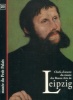
Illustrations en noir et blanc et planches couleur. --- Plus d'informations sur le site archivesdunord.com
Frans Masereel : Wir haben nicht das Recht zu schweigen - Les poètes contre la guerre
, Gollenstein Verlag, 2015 Hardcover, 140 pages / seiten, FR. / GER. edition, 305 x 215 mm, Neu / Nouveau, illustrations de n/b; s/w. ISBN 9783956330506.
Frans Masereel engagierte sich Zeit seines Lebens künstlerisch wie politisch für eine freie und solidarische Gesellschaft. Holzschnitte, Zeichnungen, Aquarelle und Gemälde waren seine Mittel, um soziale und politische Realitäten darzustellen und für Frieden und Gerechtigkeit einzutreten. Er selbst äußerte sich im Dezember 1961so: »Wollte man mit wenigen Worten den Inhalt - oder die Tendenz - meines Werkes zusammenfassen, könnte man sagen: es ist für die Unterdrückten,gegen die Unterdrücker, in allen Bereichen des gesellschaftlichen und geistigen Lebens, es ist für Brüderlichkeit unter allen Menschen, gegen diejenigen, die ein Interesse daran haben, die Menschen zu entzweien, es ist für jene, die den Frieden anstreben und gegen die Kriegshetzer.« Der Blick auf sein bewegtes Leben und das umfangreiche Werk, den Karl-Ludwig Hofmann und Peter Riede imit diesem Band bieten, soll mahnende Erinnerung an die beiden verheerenden Weltkriege sein, die durch eine Reihe von Gedenktagen verstärkt im Fokus einer breiteren Öffentlichkeit stehen, aber auch an all die anderen Kriege auf unserem Globus, die bis heute ein friedliches, gleichberechtigtes Miteinander der Menschheit verhindern. Der zweite Teil des Buches ist Masereels Kontakten zu Literaten gewidmet, seinen Beziehungen zu Autoren, die wie er die Schrecken des Krieges aufzeigten, deren Werke er illustrierte oder die bedeutsame Besprechungen seiner Bilderzyklen schrieben: u. a. René Arcos, Johannes R. Becher, Bertolt Brecht, Georges Duhamel, Hermann Hesse, Thomas Mann, Romain Rolland, Stefan Zweig. So wird auch das künstlerische Netzwerk sichtbar, in dem Kriegsgegner aus verschiedenen europäischen Staaten miteinander verbunden waren. Rund 170 Werke Masereels, sowie Fotos und Zeitdokumente, illustrieren den Band.
Vermeer. The Complete Works. 40th Ed.
, TASCHEN , 2021 Hardcover, 15.6 x 21.7 cm, 1.07 kg, 434 pages. ISBN 9783836587921.
Discover one of the most admired artists in history: Johannes Vermeer. With crisp, detailed reproductions and insightful essays, this volume spans his entire repertoire, showing Vermeer?s talent, his key place in the Dutch Golden Age, and his ability to tell a complete story in just one momentary gesture or expression.
Trecento Pictoriality: Diagrammatic Painting in Late Medieval Italy
, Brepols - Harvey Miller, 2023 Hardback, 367 pages, Size:220 x 280 mm, Illustrations:115 col., Language: English. ISBN 9781915487049.
Summary In dozens of monumental examples across central and northern Italy, late-medieval artists created complex diagrammatic paintings whose content was conveyed not through proto-perspectival spaces but rather through complex circles, trees, hierarchical stemmata, and winding pathways. Trecento Pictoriality is the first comprehensive study of the practice of monumental diagrammatic painting in late-medieval Italy, moving the study of diagrams from the manuscript page to the frescoed wall and tempera panel. Often placed alongside narrative, devotional, and allegorical paintings, the diagrammatic mode was one of a number of pictorial modes available to artists, patrons, and planners, with a unique ability to present complex content to viewers. While monumental diagrams may have sparked some of the experiences usually associated with diagrams in manuscripts, acting as machines for thought, scaffolds for memory, or tools for the visualization of complex concepts, their reception was also shaped by their presence in public spaces, their scale and aura as richly decorated works of monumental visual art, and their insertion into larger pictorial programs. Closely examining the visual and communicative strategies of these paintings expands the horizon of trecento art history beyond narrative and devotional painting, and shifts our understanding of all of the arts of the trecento, calling attention to issues of scale, visual rhetoric, pictorial ingenuity, and reception.
La grammatica della musica - La teoria, le forme e gli strumenti musicali - n°119.
Piccola Biblioteca Einaudi. 1969. In-12. Broché. Bon état, Couv. convenable, Dos satisfaisant, Intérieur frais. 239 pages - livre en italien - nombreuses illustrations, phrases musicales en noir et blanc dans le texte.. . . . Classification Dewey : 450-Italien, roumain, rhéto-romain
A cura di Giorgio Pestelli - livre en italien. Classification Dewey : 450-Italien, roumain, rhéto-romain
100 jaar trippen : De Vlaamse Toeristenbond 1922-2022
, Ertsberg, 2022 Paperback met flappen, 208 pag. NL, 260 x 215 mm, in Nieuwstaat, met talloze foto's / illustr. in kleur / z/w. ISBN 9789464369526.
Toerisme is niet meer weg te denken uit ons leven. Van korte citytrips, over lange wereldreizen tot een weekendje aan de kust: toerisme komt in diverse geuren en kleuren. Honderd jaar geleden was toerisme echter nog geen vanzelfsprekendheid voor het merendeel van de bevolking, en al zeker niet in het Nederlands. De Vlaamse Toeristenbond (VTB) bracht hier mee verandering in. De ?vereniging die haar volk leerde reizen? groeide in de twintigste eeuw uit tot een van de belangrijkste cultuurtoeristische verenigingen in België, en hielp zo de Vlaamse burger transformeren tot een toerist. 100 jaar trippen analyseert deze veranderingen, en graaft dieper in de complexe geschiedenis van de VTB. De VTB was immers meer dan alleen een ?toeristenbond?. Zijn invloed reikte tot in het kleinste Vlaamse dorpje. Gaande van natuurbescherming, over de aanleg van wandel- en fietspaden, tot het aanwakkeren van een Vlaamse (nationale) identiteit, 100 jaar trippen presenteert de rijke en diverse geschiedenis van de VTB, en toont hoe de vereniging ons al een eeuw lang aan het trippen brengt.
LA LINGUA ITALIANA PER STRANIERI
Un ouvrage de 320 pages, format 170 x 240 mm, broché, publié en 1976, Edizioni Guerra, bon état
Corso elementare ed intermedio
Phone number : 04 74 33 45 19
"LINGUA E VITA D'ITALIA - CORSO INTENSIVO D'ITALIANO CON LE 2 500 PAROLE PIU USATE E CON ELEMENTI DI CIVILTA - APPROCCIO SCIENTIFICO INTEGRATO (AUDIOVISIO/AUDIO-ORALE/FUNZIONALE) + 1 supplement ""CHIAVE DEGLI ESERCIZI"" - TEXTE EXCLUSIVEMENT EN ITALIEN."
"BELIN. 1983. In-8. Broché. Bon état, Couv. convenable, Dos satisfaisant, Intérieur frais. XIX + 360 pages - nombreuses photos et illustrations en noir et blanc et rouge dans et hors texte + 1 supplement ""CHIAVE DEGLI ESERCIZI"" de 29 pages.. . . . Classification Dewey : 450-Italien, roumain, rhéto-romain"
TEXTE EXCLUSIVEMENT EN ITALIEN. Classification Dewey : 450-Italien, roumain, rhéto-romain
La Lingua Italiana per stranieri con le 3000 parole piu usate nell'italiano d'oggi. Corso Elementare ed Intermedio (le 2000 parole piu usate). 4e edizione
Guerra. 1985. In-8. Broché. Bon état, Couv. convenable, Dos satisfaisant, Papier jauni. 510 pages. Texte en italien. Nombreuses annotations au crayon dans le texte. Nombreuses illustrations en couleur, dans et hors texte. Rousseurs.. . . . Classification Dewey : 450-Italien, roumain, rhéto-romain
Classification Dewey : 450-Italien, roumain, rhéto-romain
Raffaele Riario, Jacopo Galli, and Michelangelo's Bacchus, 1471*1572
, Brepols - Harvey Miller, 2025 Hardback, Pages: 407 pages, Size:220 x 280 mm Illustrations:37 b/w, 206 col., 3 maps color Language:English *new. ISBN 9781915487117.
Summary On Michelangelo?s first day in Rome, in June 1496, Cardinal Raffaele Riario asked him if he could create ?something beautiful? in competition with the antique. The twenty-one-year old sculptor responded to this unique challenge with the statue of Bacchus now in the Bargello museum. This statue, as well as the Sleeping Cupid which first brought Michelangelo to Riario?s attention, have long been shrouded in mystery, and the Bacchus as well as its patron have long suffered from critical censure. Through a comprehensive analysis of overlooked and previously-unpublished sources, this study sheds new light on the Sleeping Cupid, the Bacchus, and a fascinating period in the history of Renaissance Rome when the careers of Riario, Galli, and Michelangelo were closely intertwined. It considers the rise of the Riario dynasty starting with the election of Pope Sixtus IV in 1471, Riario?s partnership with Jacopo Galli in the reconstruction of the palace now known as the Palazzo della Cancelleria, the attempted sale of Michelangelo?s Sleeping Cupid in Rome as an antiquity, Riario?s patronage of the Bacchus, and the Bacchus?s display in the house of the Galli up until its sale to the Medici in 1572. Taking a broad, interdisciplinary perspective, it offers a fundamental reassessment of Cardinal Riario?s career as a patron, of Jacopo Galli?s role as an intermediary for both Riario and Michelangelo, and of Michelangelo?s collaboration with Riario and Galli. TABLE OF CONTENTS Author?s Preface Chapter 1: Introduction Chapter 2: The Rise of the Riario, 1471?1484 Chapter 3: Cardinal Riario, the Galli, and the Reconstruction of San Lorenzo in Damaso, 1484?1499 Chapter 4: Familiars, Humanists, and Preachers, 1480s?1490s Chapter 5: Artists, Antiquities, and a Vigna in Trastevere, 1480s?1490s Chapter 6: The Case of the Sleeping Cupid, 1496 Chapter 7: Raffaele Riario?s Bacchus, 1496?1497 Chapter 8: Jacopo Galli?s Bacchus, 1497?1505 Chapter 9: The Bacchus in the Houses of the Galli, 1505?1572 Epilogue Appendix I: English Translation and Latin Text of Bernardino Capella and Gaspare Manio de Clodiis, Eclogue and Panegyrics for Cardinal Riario Appendix II: Sources and Documents in the Original Language Bibliography Index
La voce delle ossa - thriller
MONDADORI / TEMPERANCE BRENNAN / RCS LIBRI S.P.A.. 2012. In-8. Relié. Bon état, Couv. convenable, Dos satisfaisant, Intérieur frais. 374 pages - en italien - jaquette légèrement passée. Avec Jaquette. . . Classification Dewey : 450-Italien, roumain, rhéto-romain
Classification Dewey : 450-Italien, roumain, rhéto-romain

