 Write to the booksellers
-
Type
Any type (1)
Book (15287)
Magazine (37)
Manuscript (1)
Music sheets (9)
-
Latest
Last 24h (6)
Last 3 days (1)
Last month (27)
Last week (6)
-
Language
Dutch (2)
English (6)
French (15046)
German (2)
Greek (10)
Italian (3)
Latin (261)
Spanish (2)
Swedish (3)
-
Century
16th (83)
17th (310)
18th (486)
19th (2732)
20th (4101)
21st (165)
-
Countries
Belgium (2808)
Canada (11)
Denmark (4)
France (7302)
Greece (3)
Netherlands (4974)
Switzerland (233)
-
Syndicate
ALAC (10)
CLAM (37)
CNE (1)
ILAB (5207)
NVVA (4)
SLACES (2)
SLAM (5136)
SNCAO (10)
Alberti de Bezanis abbatis S. Laurentii Cremonensis cronica. Primum ed. O. HOLDER-EGGER.
Hannover, Hahn, 1908.
XVIII,154 p. Wrs. 23 cm (MGH, Script. rer. Germ. 3) (Saec. XIV)(Paper on back worn)
ALBERTUS DE BRUDZEWO (& BIRKENMAJER Ludovicus Antonius, ed.)
Reference : W100954
(1900)
Commentariolum super theoricas novas planetarum Georgii Purbachii in studio generali cracoviensi per mag. Albertum de Brudzewo diligenter corrogatum A.D. MCCCCLXXXII
Cracoviae [Krakow], Typ. Universitatis Jagellonicae 1900 lxi + 170 pp., with some figures in text, "Post editionem principem mediolanensem A. MCCCCXCV ad fidem codicum praes. antissimorum denuo edendum curavit L.A. Birkenmajer", 24cm., text in Latin, original softcover, pages still uncut, in the series "Munera Saecularia Universitatis Cracovensis" vol.IV, good condition, rare, W100954
Ausgewählte Texte. Lateinisch-Deutsch. Herausgegeben und übersetzt von Albert Fries. Mit einer Kurzbiographie von Willehad Paul Eckert.
Darmstadt, Wissenschaftliche Buchgesellschaft, 1981.
XXXV,265 p. Paperback 21.5 cm (TzF, Texte zur Forschung) (Cover slightly used)
Alberti Magni Opera Omnia, Tomus XXV (25) pars I : De Natura Boni
Münster, Aschendorff 1974 xii + 146pp., 33cm., publisher's hardcover binding, spine in green leather with gilt lettering, well protected by publisher's cart. slipcase, small stamp on titlepage, text and interior are clean and bright, text in Latin, text printed in 2 columns, very good condition, weight: 1.2kg., F106935
ALBERTUS MAGNUS O.P. (& FRIES Albertus C.SS.R., KUBEL Wilhelmus & ANZULEWICZ Henricus, eds.)
Reference : F106936
(1993)
Alberti Magni Opera Omnia, Tomus XXV (25) pars II : Quaestiones
Münster, Aschendorff 1993 LVII + 364pp., 33cm., publisher's hardcover binding, spine in green leather with gilt lettering, well protected by publisher's cart. slipcase, small stamp on titlepage, text and interior are clean and bright, text in Latin, text printed in 2 columns, very good condition, weight: 1.9kg., F106936
Alberti Magni Opera Omnia, Tomus V (5) pars I: De Caelo et Mundo, ad fidem autographi edidit
Münster, Aschendorff 1971 xxiv + 342pp., with 3 plates of fac-similes out-of-text, 33cm., publisher's hardcover binding, spine in green leather with gilt lettering, well protected by publisher's cart. slipcase, small stamp on title page, text and interior are clean and bright, looks unread, text in Latin, text printed in 2 columns, very good condition, weight: 2kg., F106924
ALBERTUS MAGNUS O.P. (& OHLMEYER Albertus O.S.B., BACKES Ignatius & KUBEL Wilhelmus, eds.)
Reference : F106937
(1958)
Alberti Magni Opera Omnia, Tomus XXVI (26) : De Sacramentis, De Incarnatione, De Resurrectione
Münster, Aschendorff 1958 xxxiii + 424pp., 33cm., publisher's hardcover binding, spine in green leather with gilt lettering, well protected by publisher's cart. slipcase, 3 very small stamps, text and interior are clean and bright, text in Latin, text printed in 2 columns, very good condition, weight: 2.5kg., F106937
ALBERTUS MAGNUS O.P. (& SIEDLER Dionysius, KUBEL Wilhelmus & VOGELS Henricus Georgius, eds.)
Reference : F106939
(1978)
Alberti Magni Opera Omnia, Tomus XXXIV (34) pars I: Summa Theologiae sive de Mirabili Scientia Dei, Libri I pars I: Quaestiones 1-50A
Münster, Aschendorff 1978 xxxvi + 387pp., 33cm., publisher's hardcover binding, spine in green leather with gilt lettering, small stamp on title page, text and interior are clean and bright, text in Latin, text printed in 2 columns, very good condition, weight: 2kg., F106939
ALBERTUS MAGNUS O.P. (& SIEPMANN Ferdinandus & OSTLENDER Henricus, eds.)
Reference : F106933
(1952)
Alberti Magni Opera Omnia, Tomus XIX (19) : Postilla super Isaiam, Postillae super Ieremiam et Postillae super Ezechielem fragmenta
Münster, Aschendorff 1952 xxiv + 688pp., 33cm., publisher's hardcover binding, spine in green leather with gilt lettering, well protected by publisher's cart. slipcase, small stamp on titlepage, text and interior are clean and bright, text in Latin, text printed in 2 columns, very good condition, weight: 3.3kg., F106933
ALBERTUS MAGNUS O.P. (& SIMON Paulus & KUBEL Wilhelmus, eds.)
Reference : F118577
(1993)
Alberti Magni Opera Omnia, Tomus XXXVI (36) pars I: Super Dionysium De Caelesti Hierarchia
Münster, Aschendorff 1993 x + 276 + [5] pp. + 1 plate out-of-text, 33cm., publisher's hardcover binding, spine in green leather with gilt lettering, text and interior are clean and bright, text in Latin, text printed in 2 columns, very good condition, weight: 1.2kg., F118577
Albii Tibulli Carmina ex recensione Car. Lachmanni. Passim mutata. Explicuit Ludolphus Dissenius. Pars prior, disquisitiones de Vita et Poesi Tibulli. Carmina. Accedunt lectiones editionis Pinellianae nunc primum collatae. - Pars posteriori, Commentarium continens.
Gottingae (Göttingen), Typis et Impensis Librariae Dieterichianae (Dieterich) 1835, 210x140mm, CXCII - 128 + 476pages, reliure demi-toile. reliure frotté par endroits et rousseurs. Dos muet. Bel exemplaire.
texte en latin, Pour un paiement via PayPal, veuillez nous en faire la demande et nous vous enverrons une facture PayPal
Pursuit of Salvation. Community, Space, and Discipline in Early Medieval Monasticism - with a critical edition and translation of the Regula cuiusdam ad uirgines
, Brepols, 2021 Paperback, 687 pages, Size:210 x 270 mm, Illustrations:1 col., 3 tables b/w., Language(s):English, Latin. ISBN 9782503589602.
Summary The seventh-century Regula cuiusdam ad uirgines (Someone's Rule for Virgins), which was most likely written by Jonas of Bobbio, the hagiographer of the Irish monk Columbanus, forms an ideal point of departure for writing a new history of the emergence of Western monasticism understood as a history of the individual and collective attempt to pursue eternal salvation. The book provides a critical edition and translation of the Regula cuiusdam ad uirgines and a roadmap for such a new history revolving around various aspects of monastic discipline, such as the agency of the community, the role of enclosure, authority and obedience, space and boundaries, confession and penance, sleep and silence, excommunication and expulsion. TABLE OF CONTENTS Summary The book consists of two sections. The first is a critical edition and translation of the Regula cuiusdam ad uirgines, a seventh-century Frankish monastic rule for nuns, along with the short treatise De accedendo ad Deum, which most likely formed a part of the Regula cuiusdam ad uirgines. The second section is a study on the transformations and diversification of monastic theology, concepts of communal life and monastic discipline in the early medieval period. It revolves around the Regula cuisudam ad uirgines in its historical and intertextual context. The study is divided four parts that are related to the four key words of the title of the book (Community, Space, Discipline, and Salvation). Each part consists of a chapter that makes an argument about the place of the Regula cuiusdam ad uirgines in intertextual contexts and a chapter that applies these arguments in a historical inquiry. Introduction Section I: Edition and Translation of the Regua cuiusdam ad uirgines Section II: Study Part I: Community revolves around the question to what extent the monastic community can serve as an agent of the collective and individual pursuit of salvation Chapter 1: Quidam pater - quaedam mater? The Regula cuiusdam ad uirgines and its author provides a survey of the monastic milieu in which the Regula cuiusdam ad uirgines was written, discusses potential authors and stakeholders in the monastic foundation that may have been addressed by the Rule and shows on the basis of semantic and stylistic similarities and shared content and ideas that Jonas of Bobbio, the author of the Vita Columbani, is to be considered the author of the Regula cuiusdam ad uirgines as well. Chapter 2: The dying nuns of Faremoutiers: the regula in action argues that Jonas of Bobbio's description of the deaths of the nuns of Faremoutiers, which is a part of Book 2 of his Vita Columbani, and the Regula cuiusdam ad uirgines represent the same monastic program, once presented as a "narrated rule", once as a normative text. The Faremoutiers episodes are closely modelled after Book 4 of the Dialogi of Gregory the Great and can be read as a critical response to Gregory's eschatology and his notion of pursuing salvation by living a virtuous life. After having fleshed out the parallels and differences between the Dialogi and the Faremoutiers miracles, the chapter analyzes each episode of the Faremoutiers miracles, showing that Jonas wrote his monastic program in a highly sophisticated manner into stories describing the deaths occurring in the founding generation of nuns in Faremoutiers - deaths that were most likely still remembered by the primary audience of the Vita Columbani. Part II: Space discusses the role of space and boundaries for the monastic pursuit of salvation and explores the origins of the medieval cloister Chapter 3 The Regula cuiusdam ad uirgines, a supplement to Caesarius' Rule for Nuns? compares the provisions of Caesarius of Arles' Rule for Nuns with the Regula cuisudam ad uirgines and argues that Jonas wrote his Rule as an expansion and revision of Caesarius work: an "early medieval" update of a "late antique" monastic program, as it were. Chapter 4: Enclosure re-opened: Caesarius, Jonas, and the invention of sacred space discusses the evolution of Caesarius of Arles' notion of enclosure as salvific instrument and then shows how Jonas of Bobbio tried to face the aporias of Caeasarius' theology of enclosure by expanding it towards a system of total control of all physical, social and corporeal boundaries and the implementation of various enclosures. Part III: Discipline provides a historical survey of the evolution of various aspects of monastic discipline in early medieval monastic rules leading to the Regula cuiusdam ad uirgines. Chapter 5: The Regula Benedicti in seventh-century Francia explores the role of the Regula Benedicti in Frankish monasticism in the aftermath of Columbanus and shows how Jonas used and revised the Regula Benedicti and refuted some of his main theological premises. Chapter 6: The Regula cuiusdam ad uirgines and its context describes the history of the topics addressed in each chapter of the Regula cuiusdam ad uirgines and provides a detailed commentary to the Rule itself, showing how Jonas rewrote the Regula Benedicti. I discuss every chapter of the Rule but put a special emphasis on the following topics: abbatial authority, hierarchy, boundaries, love, confession, silence, work, sleep, excommunication, and family ties. Part IV: Salvation focusses on the short treatise De accedendo ad Deum which provides a unique theological rationale why monastic discipline enables monks and nuns to pray effectively and to attain eternal salvation. Chapter 7: De accedendo ad Deum - a lost chapter of the Regula cuiusdam ad uirgines? shows that De accedendo was most likely a lost chapter of the Regula cuiusdam ad uirgines and thus written by Jonas of Bobbio as well. Chapter 8: Prompto corde orandum: the theological program of De accedendo analyzes the theological argument that monastic discipline enable a nun or monk to approach God through prayer, which forms one of the most sophisticated early medieval responses to the challenge of the doctrine of prevenient grace and the "semi-Pelagian" debate. De accedendo essentially explains how the monastic pursuit of salvation works. Conclusion Three appendices provide textual evidence for ascribing the Regula cuiusdam ad uirgines to Jonas of Bobbio and to document the reception of the Regula cuiusdam ad uirgines in the eighth-century Life of Bertila. Bibliography of manuscripts, sources, and literature Index uerborum
Römische Poesie. Texte und Interpretationen.
Heidelberg, Lothar Stiehm, 1977.
371 p. Cloth. 23 cm
Neuere Alkaios-Papyri aus Oxyrhynchos.
Hildesheim, Olms, 1967.
VIII,241 p. Wrs. 21 cm (Spudasmata)
Emblemata Latinogallica. Les emblèmes Latin-Français.
Paris, Jean Richer, 1584. In-12 (134 x 77 mm), 8 ff. n. ch., 301 ff., 1 f. n. ch. Chagrin vert, double filet doré d'encadrement sur les plats, dos à nerfs richement orné, titre, auteur et date dorés, filet doré sur les coupes, tranches rouges, petite tache marginale au verso du feuillet 151 et au recto du feuillet 152, petit manque de papier au coin inférieur du feuillet 198, deux traits d’encre dans la marge au feuillet 217 (reliure du XIXe siècle).
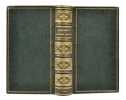
L'excellente traduction française par Claude Mignault (Talant, 1536–Paris, 1606), accompagnée de ses commentaires importants et de la vie de l’auteur.Les commentaires des Emblèmes apparurent après la mort d’André Alciat. “Celui du juriste Claude Mignault, publié pour la première fois à Paris en 1571 par Denys Dupré, étant le plus riche” (Andenmatten). Sa traduction accompagnée de ses commentaires fut publiée pour la première fois en 1583. Elle est, selon Brunet, “meilleure et plus exacte que les deux précédentes” traductions françaises. Elle fut rééditée en 1584 et 1587. Les exemplaires de ces trois éditions sont très rares.“Il existe jusqu’à présent plusieurs commentaires et traductions des emblèmes, mais très peu en langue française" (Andenmatten). Cet ensemble de poèmes allégoriques en latin d’inspiration mythologique comprend 211 emblèmes illustrés, gravés sur bois, organisés suivant un classement thématique : Dieu et la religion, les vertus, les vices, l’amour, la paix, le mariage…, et les arbres. Chaque emblème associe un titre, une gravure sur bois et une épigramme latine traduite en français qui permet d’expliciter l’image et de suggérer un sens moral — association de trois éléments "à laquelle l’école allemande a donné le nom d’emblema triplex" (Pierre Laurens). L'édition comprend un portrait d’Alciat gravé sur bois.André Alciat (Alzate, 1492-Pavie,1550) fut fondateur du droit humaniste, enseignant à Avignon et Bourges : "A la fois grand juriste, savant antiquaire et au surplus poète, inventeur d’une forme inédite qui rencontra un grand succès auprès d’un public lettré" (Pierre Laurens). Le protocole initié par Alciat, titre, image, texte, "devient immédiatement la caractéristique des livres d’emblèmes" (Pierre Laurens). Ce nouveau genre emblématique se développa au XVI et XVII et fut prisé par les humanistes, les poètes et les religieux. "Alciat condense les précieux trésors de sagesse et d’érudition de l’Antiquité dans une forme poétique" (Anne-Angélique Andenmatten). "Les Emblèmes d’Alciat pouvaient apparaitre comme des "épigrammes hiérogliphyques", équivalent moderne, humanistique, des Hyeroglyphica d’Horapollo, découverts en 1419 à Andros, édités en grec pour la première fois en 1505 par Alde, traduits et commentés par Fasanini, qui fut le maître d’Alciat à Pavie" (Pierre Laurens). Ex-libris manuscrit au monogramme "JC", daté de 1620.Bel exemplaire bien relié.Anne-Angélique Andenmatten, Les Emblèmes d’André Alciat, édition Peter Lang, thèse 2017, pp. 35-127-133. Pierre Laurens, L'invention de l'emblème par André Alciat et le modèle épigraphique : le point sur une recherche, Comptes rendus des séances de l'Académie des Inscriptions et Belles-Lettres, 2005 pp. 884-886-898. Brunet, I, col. 149.


Hetärenbriefe. Griechisch und deutsch. Übertragung von Wilhelm Plankl.
München, Ernst Heimeran, 1925.
(IV),(72),3 p. Half cloth 18 cm (Tusculum)(Rebound; boards with marbled paper; title in red and black)
Post uit Athene. Brieven van, aan en over hoeren, klaplopers, vissers en boeren. Geselecteerd, vertaald en toegelicht door H.L. VAN DOLEN.
Amsterdam, Ambo, 2000.
135 p. Paperback 20 cm (OiN Supplement 23)
Post uit Athene. Brieven van, aan en over hoeren, klaplopers, vissers en boeren. Selectie en vertaling Hein L. van Dolen.
Amsterdam, Ambo/Anthos, 2000.
48 p. Paperback. 20 cm (New Year's gift from Ambo/Anthos publishers to its staff and friends. In the same year Ambo brought a considerably augmented edition on the market)
Alcuins 'De Sanctis Euboricensis Ecclesiae', vers 1-604: de bronnen van een Carolingisch epos.
Rotterdam, Bronder, 1981.
IX,257 p. Wrs. 24 cm (Diss., Nijmegen)
Excerptiones super Priscianum
, Brepols, 2020 Hardback, ci + 262 pages, Size:155 x 245 mm, Illustrations:5 col., Language: Latin. ISBN 9782503588759.
Summary Conserv es dans quatre manuscrits, dont un palimpseste, du IXe si cle, les Excerptiones super Priscianum d'Alcuin constituent un t moin exceptionnel de la lecture de Priscien par le ma tre des ma tres . Cette mosa que d'extraits nous montre comment Alcuin r ordonne la lecture de Priscien dans la perspective r solument innovante de la syntaxe, rompant avec les utilisations ponctuelles qui pouvaient tre auparavant faites de l'Ars Prisciani, par exemple pour commenter Donat ou clairer tel point technique. Le caract re magistral de cette oeuvre tient au fait qu'Alcuin se r v le le seul avoir saisi que les seize premiers livres constituaient une prop deutique aux deux derniers et la ma trise qui lui permet de relier constamment les fils invisibles qui unissent les deux parties de l'ouvrage. L' dition critique est pr c d e d'une introduction et compl t e par une s rie d'annexes centr es sur la m thodologie d'Alcuin.
TERTULLIANI DE BAPTISMO
Pontificia Universitas Gregoriana, Roma. 1933. In-12. Broché. Etat d'usage, Tâchée, Dos satisfaisant, Intérieur frais. 58 pages. Etiquette de code sur le 1er plat. Tampons et annotations de bibliothèque sur le 1er plat et en page de titre.. . . . Classification Dewey : 470-Langues italiques. Latin
Textus et Documenta in Usum Exercitationum et Praelectionum Academicarum, Series Theologica, 10. Classification Dewey : 470-Langues italiques. Latin
Ars et commentarius. La grammaire dans le commentaire de Servius Virgile
, Brepols, 2022 Hardback, 324 pages, Size:155 x 245 mm, Illustrations:20 tables b/w., Language(s):French, English, Italian. ISBN 9782503593753.
Summary La grammaire pr sente dans le commentaire de Servius Virgile reste encore peu connue. M lang es de nombreuses notes de toutes sortes, les scolies grammaticales constituent des remarques ad locum et forment un discours fragment et n cessairement partiel. Les seize contributions du pr sent volume mettent en valeur ce contenu grammatical en s'int ressant la port e p dagogique, artigraphique et philologique de l'ars commentarii de Servius. TABLE OF CONTENTS Ars et commentarius. Pour une tude de la grammaire dans le commentaire virgilien de Servius (Alessandro Garcea) I. Aper u g n ral de la grammaire et de la p dagogie de Servius Qu'y a-t-il de grammatical dans le commentaire de Servius Virgile ? (Fr d rique Biville) Learning Latin Grammar with Servius (Frances Foster) La grammatica di Servio. Prime esplorazioni (Massimo Gioseffi) II. Les cat gories grammaticales La declinatio nel commento serviano a Virgilio (Concetta Longobardi) Gerunds, Supines and Participles: The modus gerundi in Servius' Vergil Commentaries and the Latin Grammarians (Robert Maltby) Quod ad omnes pertinet: The Impersonal in Servius' Commentaries (Juliana Wekel) Exempla elocutionum in Servio (Michela Rosellini) Servius et l'antiptose (Daniel Vallat) III. Les exemples linguistiques : mod les et anti-mod les I difetti del poeta: il soloecismus in Servio (Maria Luisa Delvigo) Servio e le Verrine (Paolo De Paolis) Frequency as an Indicator of Regular Language in Servius' Commentaries (Ute Tischer) IV. Les fronti res de l'ars commentarii Servius entre philologie et grammaire (Fabio Stok) Etymologia and Varronian Etymology in Servius (Jared Hudson) Cornutus' Fragments in the Virgil Commentarii of Servius (Gemma Bernad Ferrer) Concilier la perfection du texte virgilien et l' volution de la langue. Servius et les r flexions linguistiques de Caper et Asper (Janyce Desiderio) Index locorum antiquorum
Latin in Byzantium I. Late Antiquity and Beyond
, Brepols, 2019 Hardback, 564 pages, Size:155 x 245 mm, Illustrations:22 b/w, Languages: English, French, Italian. ISBN 9782503584928.
Summary 'Latin in Byzantium' explores the linguistic competence, cultural identity, and transmission of Latin texts in the 'noua Roma' between the fourth and the ninth centuries. Drawing together texts from a number of fields (e.g., law, grammar, religion, and tactics) and across a range of different forms (e.g., palaeographic, epigraphic, and papyrological), this important project provides scholars for the first time with an in-depth knowledge of both the Latin-speaking milieux in Byzantium, and of the contexts in which Latin was used. Crucially, the ancient sources studied in this volume are also analysed in their broader political and sociological context, providing rich material for study across different disciplines and making this volume an important resource for closing the gaps between literary and non-literary texts, history, and philology. TABLE OF CONTENTS Preface Rhomaika: Una introduzione - Guglielmo Cavallo General Framework Desuetudine longa? subeunt verba latina : The Transition From Late Antique to Medieval Byzantium and the Fall of Latin - Luigi Silvano Latin in Byzantium: Different Forms of Linguistic Contact - Alessandro Garcea Latin in the Empire: Texts and People La pratique du latin dans l' gypte de l'Antiquit tardive - Jean-Luc Fournet The Use of Latin in the Context of Multilingual Monastic Communities in the East - Claudia Rapp Writing Latin in Late Antique Constantinople - Gabriel Nocchi Macedo The Laws of the Language and the Language of the Laws La lingua degli ??????. Conoscenza e uso del latino nell'Oriente greco di iv secolo attraverso l'opera di Libanio - Andrea Pellizzari Asymmetric Exchange: Latin Speakers Learning Greek and Greek Speakers Learning Latin in Late Antiquity. On the Evidence of Grammars and Bilingual Texts - Juan Signes Codo er L'insegnamento di Prisciano - Michela Rosellini - Elena Spangenberg Yanes Sur un silence de Jean le Lydien - Marc Baratin Justinianus Latinograecus. Language and Law during the Reign of Justinian - Thomas Ernst van Bochove Latin as a Medium at the Service of the Power Le rituel des acclamations : de Rome "Byzance" - Fr d rique Biville L'univers grec et latin d'un po te africain : Corippe et Byzance - Vincent Zarini Latin Inscriptions in (Early) Byzantium - Andreas Rhoby Latin Texts as Sources La traduction du latin en grec Byzance : un aper u g n ral - Bruno Rochette Modelli latini per poemi greci? Sulla possibile influenza di autori latini sulla poesia epica tardoantica - Gianfranco Agosti Latin and the Chronicon Paschale - Christian Gastgeber Sulla conoscenza del latino nell'Oriente romano nel periodo tra Maurizio ed Eraclio (582-641): il caso degli storici-funzionari e di Giovanni di Antiochia - Umberto Roberto Latinismi e cultura letteraria nei frammenti di Pietro Patrizio: per un'indagine sul De cerimoniis e sugli Excerpta Historica Constantiniana - Laura Mecella Latin Literature in Johannes Malalas's Chronicle - Olivier Gengler Appunti per un lessico grecolatino tardoantico: la traduzione latina di Gregorio di Nazianzo trasmessa dal Laur. S. Marco 584 - Alessandro CaponeLatin Vocabulary Transmitted across Space and Time On the Use of Latin Legal Terminology in the Byzantine Legal Treatise De actionibus - Jos -Domingo Rodr guez Mart n Per lo studio dei rapporti tra istituzioni di giustiniano e libri basilici - Massimo Miglietta Latinit cach e Constantinople (VIe - moiti XIIIe si cles) - Peter Schreiner I latinismi nella lingua greca moderna - Johannes Niehoff-Panagiotidis Index of Names Index of Places
RENAISSANCE LATIN VERSE. An Anthology.
1979 / 560 pages. Relié avec jaquette. Editions Duckworth.
Good condition. Note that we have in France a preferential rate for shipments abroad. For a large volume the costs will not exceed 6 €
Vorbarocker Klassizismus und griechische Tragödie. Analyse der 'Antigone'-Übersetzung des M. Opitz. Sonderausgabe.
Darmstadt, WB, 1962.
(IV),63 p. Cl. 19 cm

