 Write to the booksellers
-
Type
Book (9915)
Engraving (8)
Magazine (12)
Maps (1)
Photographs (1)
-
Latest
Last 24h (3)
Last month (101)
Last week (2)
-
Language
English (4)
French (9896)
German (2)
Greek (28)
Italian (2)
Latin (4)
Swedish (1)
-
Century
16th (11)
17th (30)
18th (48)
19th (694)
20th (1775)
21st (114)
-
Countries
Belgium (1191)
Brazil (1)
Canada (7)
Côte d'Ivoire (5)
France (2891)
Greece (16)
Netherlands (5650)
Switzerland (175)
United Kingdom (1)
-
Syndicate
ALAC (7)
CLAM (35)
ILAB (1902)
NVVA (2)
SLACES (2)
SLAM (1817)
SNCAO (3)
Von Mykene bis Homer. Anfänge griechischer Literatur und Kunst im Lichte von Linear B.
München, Wien, Oldenbourg, 1960.
403 p.; 24 pls., fold. map. Cl.
Miscellanea Philologica Historica et Archaeologica in honorem Huberti Van De Weerd.
Brussel, 1948.
XXXV,594 p., ills. & pls. Wrs. (Festschrift. L'Antiquité Classique, XVII,1948)(46 essays in English, French & Dutch)
CLEOPATRE, sa vie et son temps
Paris Payot 1934 in 8 (23x14) 1 volume reliure demi basane marron à coins, dos à un nerf épais, lettres RL dorées au dos en queue, couverture illustrée conservée, 347 pages [2], avec des illustrations hors-texte, et cartes. Collection ''Bibliothèque historique''. Weigall Arthur, Ex-inspecteur Général des Antiquités du Gouvernement Egyptien. Bon exemplaire
Bon Reliure
SAPPHO DE LESBOS, sa vie et son époque
Paris Payot 1932 in 8 (23x14) 1 volume reliure demi basane marron à coins, dos à un nerf épais, lettres RL dorées au dos en queue, couverture illustrée conservée, 364 pages [1]. Traduction et avant-propos de Theo Varlet. Collection ''Bibliothèque historique''. Weigall Arthur, Ex-inspecteur Général des Antiquités du Gouvernement Egyptien. Bon exemplaire
Bon Couverture rigide
SAPPHO DE LESBOS, sa vie et son époque
Paris Payot 1932 in 8 (22,5x14) 1 volume broché, couverture illustréee, 364 pages [1], renfort d'adhésif sur le dos de la couverture. Traduction et avant-propos de Theo Varlet. Collection ''Bibliothèque historique''. Weigall Arthur, Ex-inspecteur Général des Antiquités du Gouvernement Egyptien. Bon exemplaire
Bon Broché
ALCESTE - EURIPIDE : TEXTE GREC AVEC UN COMMENTAIRE CRITIQUE ET EXPLICATIF ET UNE NOTICE.
HACHETTE ET CIE. 1891. In-8. Broché. Etat d'usage, Plats abîmés, Dos frotté, Mouillures. 88 pages. Trace de mouillures sans réelle conséquence sur la lecture.. . . . Classification Dewey : 480-Langues helléniques. Grec
Classification Dewey : 480-Langues helléniques. Grec


De dis ignotis observationes selectae
Halle, 1914 52pp., 22cm., text in Latin, Doctoral Dissertation (University of Halle), stamp at verso of title page, small defect at spine, text is clean and bright, K113501
ARISTOPHANIS COMOEDIAE - NOVA EDITIO STEREOTYPA - 3 TOMES - 1 + 2 + 3
SUMTIBUS ET TYPIS CAROLI TAUCHNITII. 1842. In-18. Broché. Bon état, Couv. convenable, Dos satisfaisant, Intérieur frais. 3 TOMES: IV + 364 + 344 + 251 pages.. . . . Classification Dewey : 480-Langues helléniques. Grec
TEXTE EXCLUSIVEMENT EN GREC. Classification Dewey : 480-Langues helléniques. Grec
Aristophanis Comoediae, 3 tomes
Lipsiae. 1842. In-16. Relié demi-cuir. Bon état, Couv. convenable, Dos à nerfs, Intérieur frais. 365p chaque tome, dos cuir bleu, papier marbré sur les plats, papier à la forme.. . . . Classification Dewey : 480-Langues helléniques. Grec
Nouvelle édition stéréotypeée, tome 1: Acharnense, Nubes, Vespae, tome 2: Pax, Aves, Zusae, tome 3: Ranae, Ecclesazusae, PLutus.Ouvrage en grec. Classification Dewey : 480-Langues helléniques. Grec
The elements of New Testament Greek. Based on the earlier work by H.P.V. Nunn.
1979 Cambridge University Press, Cambridge 1979. Un volume in-8 broché (paperback), XI et 267 pages. Bon état. Good condition.
La librairie est ouverte du mardi au samedi de 9h30 à 12h30 et de 13h30 à 19h00. Commandes par courriel ou téléphone. Envoi rapide, emballage soigné.
Von hellenischer Art und Kunst. Zwölf Vorträge.
Leipzig, E.A. Seemann, 1922.
(VIII),289,(6) p., illustrations. Hardbound 25 cm
Verkorte mythologie of fabelleer; voor schoolgebruik door C.H. Wenning, kostschoolhouder te Breda. Vijfde druk.
Zutfen, W.C. Wansleven, 1872.
VIII,96 p. Wrappers 16.5 cm (Cover worn and slightly stained; paper browning; name on title)
Rerum ab arabibus in Italia insulisque adjacentibus. Sicilia maxime, Sardinia atque Corsica gestarum commentarii
Leipzig, Fr.-Chr.-Wilh. Vogel, 1845 in-8, VI-346 pp., index, demi-veau marine, dos lisse orné de filets dorés, coins en vélin vert, tranches mouchetées (reliure de l'époque). Quelques rousseurs, mais bon exemplaire. Ex-libris du château de Dampierre.
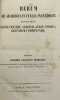
Le philologue Johann Georg Wenrich (1787-1847) était surtout spécialisé dans la littérature hébraïque et biblique. Cette contribution à la connaissance des influences arabes en Méditerranée occidentale est d'autant plus remarquable que le thème était encore très peu connu et exploité au milieu du XIXe siècle.Un seul exemplaire au CCF (BnF). - - VENTE PAR CORRESPONDANCE UNIQUEMENT - LIEN DE PAIEMENT, NOUS CONSULTER.
Gentse Stads en Baljuwsrekeningen. 1351-1364
Bruxelles, Palais des Académies, 1970 fort in-4, XXXI-682-[4]-V pp., index, bibliographie, bradel toile grise, plat supérieur orné (reliure de l'éditeur). 1 coin renforcé.
Retranscription par van Verveke, des comptes municipaux de Gand. - - VENTE PAR CORRESPONDANCE UNIQUEMENT - LIEN DE PAIEMENT, NOUS CONSULTER.
Tussen twee bronzen ruiters. Klassieken in Rusland, 1700-1855.
Baarn, Ambo, (1991).
366 p.; ills. Cloth 22 cm (Calder/Smith no. 411a, about the English translation of this book: 'an engrossing book that throughout sheds light on darkness. Most is the reception of Greece and Rome in Russia, the beginning of Russia's Europianization') (Including dustjacket)
Die Fachausdrücke des Ackerbaues bei den römischen Agrarschriftstellern.
Osnabrück, Friedrich Obermeyer, 1938.
VII,70 p. 23 cm (dissertation, Universität Münster) (First & last page foxed)
Archaïsche en archaïstische woordkunst.
Nijmegen, Utrecht, Dekker & v.d.Vegt, 1939.
(X),208 p. Wrappers. 24 cm (Dissertation) (Inquiries into the language of Apuleius, Fronto, Min. Felix and Cyprianus) (Cover slightly worn)
Hesperos. Studies in ancient Greek poetry. Presented to M.L. West on his seventieth birthday. Edited by P.J. Finglass, C. Collard & N.J. Richardson.
Oxford, OUP, 2007.
LVI,406 p. Hardback. 22.5 cm (Including dustjacket) (Some pencil underlinings in the bibliography)
Métrologie grecque et romaine. Nouvelle collection à l'usage des classes, N° XII.
Paris, Librairie Klincksieck, 1886. 11 x 17, 146 pp., reliure d'édition, pleine toile, très bon état.

