 Write to the booksellers
-
Type
Book (9923)
Engraving (8)
Magazine (12)
Maps (1)
Photographs (1)
-
Latest
Last 24h (9)
Last 3 days (3)
Last month (102)
Last week (1)
-
Language
English (4)
French (9904)
German (2)
Greek (28)
Italian (2)
Latin (4)
Swedish (1)
-
Century
16th (11)
17th (30)
18th (48)
19th (694)
20th (1776)
21st (114)
-
Countries
Belgium (1195)
Brazil (1)
Canada (7)
Côte d'Ivoire (5)
France (2895)
Greece (16)
Netherlands (5650)
Switzerland (175)
United Kingdom (1)
-
Syndicate
ALAC (7)
CLAM (35)
ILAB (1902)
NVVA (2)
SLACES (2)
SLAM (1817)
SNCAO (3)
Ambigua to John. Volume I: Translation
, Brepols, 2024 Paperback, 400 pages, Size:156 x 234 mm, Language(s):English, Greek. ISBN 9782503579467.
Summary In the Ambigua to John, the great early Byzantine monastic theologian and philosopher Maximus the Confessor (580 - 662) is at work in his most creative and expansive mode. Using difficult passages in Gregory Nazianzen as starting points for his thinking, Maximus draws together various strands of the theological and philosophical traditions he inherited and shapes an ever-moving, kaleidoscopic vision of the journey through the world of place, time, and materiality to final dynamic repose in eternity. Throughout the text, Maximus takes his readers along the many paths his own mind traveled to clarify this breathtaking reflection of the teachings of Scripture and the patristic tradition. In this translation of the first fully critical edition of Maximus's text, the streams of the Confessor's divine philosophy are revealed in their own right. This translation will be followed with the first full commentary on the Ambigua to John in English, to appear in Corpus Christianorum in Translation. The source text of this volume will appear in Corpus Christianorum, Series Graeca, 84. TABLE OF CONTENTS Introduction Bibliography The Ambigua to John Index of Scriptural References Index of Non-Biblical Sources General Index
Commentariorum in Regii Herculanensis Musei aeneas tabulas Heracleenses. I. Pars I. Qua prior Graeca inscriptio, agri Dionyso sacri dimensionem, partitionem, limites, locationes complectens, cum Britannico fragmento ferruminata, perpetuis adnotationibus illustrantur. Praemissis ad tabularum intelligentiam diatribis opportunissimis tribus. - II. Pars II. Qua tum Graeca altera Heracliensis inscriptio ad agrum Minervae Poliadi sacrum pertinens, tum vetustissimi legum Romanarum Digesti capita plura, coalescentia cum aere Britannico, illustrantur. Additis in fine collectaneis quibusdam & indicibus sane quam necessariis
Naples, Benedetto Gessari, 1754-1755 2 tomes en un vol. in-folio, XIV-600 pp. en numérotation continue, avec 10 planches dépliantes par Filippo De Grado d'après Michele Foschini, dont une carte de la Grande Grèce, index, manque le portrait-frontispice, veau fauve marbré, dos à nerfs cloisonné et fleuronné, encadrement de triple filet doré sur les plats, double filet doré sur les coupes, tranches rouges (reliure de l'époque). Coins inférieurs abîmés.
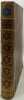
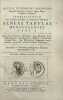
Unique édition de cet examen des inscriptions de deux tables de bronze découvertes parmi les premiers objets exhumés des fouilles balbutiantes d'Herculanum. En dépit de son importance, l'ouvrage n'eut pas en-dehors du Royaume de Naples l'écho que l'on aurait pu attendre : c'est que Herculanum n'était pas citée par Pline dans son récit de l'éruption du Vésuve (à la différence de Pompéi), et les découvertes pourtant capitales qui y furent faites n'éveillèrent pas beaucoup d'intérêt au-delà de l'Italie à l'exception notable du comte de Caylus.L'auteur, venant d'une famille modeste de Naples, entré par nécessité dans les Ordres, selon l'usage, s'acquit au cours du XVIIIe siècle la réputation du meilleur épigraphiste d'Italie. Il refusa plusieurs archevêchés offerts par le Roi de Naples pour se consacrer exclusivement à ses études.Brunet III, 1561. - - VENTE PAR CORRESPONDANCE UNIQUEMENT - LIEN DE PAIEMENT, NOUS CONSULTER.


In mutilum Campani amphitheatri titulum. aliasque nonnullas Campanas inscriptiones commentarius. Editio secunda auctior
Naples, Vincenzo Orsini, 1797 in-4, XL-201-[3] pp., avec 2 planches dépliantes "in fine", vélin rigide, dos lisse (reliure de l'époque). Grande mouillure infra-paginale aux premiers feuillets.
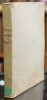
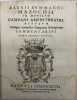
Réimpression posthume du premier ouvrage de Mazzocchi (1684-1771), publié en 1727, soit deux ans seulement après son arrivée à Rome, et qui connut un grand succès dans toute l'Europe. A la fin du XIXe siècle encore, Karl Julius Beloch (1854-1929) estimait qu'il s'agissait du meilleur ouvrage écrit sur l'histoire et la topographie de Capoue antique.L'auteur, venant d'une famille modeste de Naples, entré par nécessité dans les Ordres, selon l'usage, s'acquit au cours du XVIIIe siècle la réputation du meilleur épigraphiste d'Italie. Il refusa plusieurs archevêchés offerts par le Roi de Naples pour se consacrer exclusivement à ses études.Exemplaire de l'historien Camillo Minieri Riccio (1813-1882), directeur de l'Archivio di Stato di Napoli de 1874 à sa mort, avec vignette ex-libris contrecollée sur les premières gardes. - - VENTE PAR CORRESPONDANCE UNIQUEMENT - LIEN DE PAIEMENT, NOUS CONSULTER.
50 VERSIONS GRECQUES DE BACCALAUREAT SANS TRADUCTIONS - TROISIEME SERIE - 3E EDITION.
LIBRAIRIE VUIBERT. 1947. In-12. Broché. Etat d'usage, Couv. légèrement passée, Agraffes rouillées, Intérieur acceptable. 54 pages - étiquette collée sur le 2ème plat - quelques annotations et mots soulignés au stylo et au crayon à papier à l'intérieur de l'ouvrage sans réelle conséquence sur la lecture - ouvrage en grec.. . . . Classification Dewey : 480-Langues helléniques. Grec
Ouvrage en grec. Classification Dewey : 480-Langues helléniques. Grec
La Grèce par les textes - Tome 1 : Histoire.
Vuibert. 1934. In-12. Cartonné. Etat d'usage, 2ème plat abîmé, Dos satisfaisant, Papier jauni. 196 pages - texte en grec et en français - 2ème plat tâché.. . . . Classification Dewey : 480-Langues helléniques. Grec
texte en grec et en français. Classification Dewey : 480-Langues helléniques. Grec
SYNTAXE GRECQUE
LIBRAIRIE VUIBERT. 1949. In-8. Cartonné. Etat d'usage, Couv. partiel. décollorée, Dos abîmé, Intérieur frais. 271 pages. Dos fané et frotté.. . . . Classification Dewey : 480-Langues helléniques. Grec
Classification Dewey : 480-Langues helléniques. Grec
The living art of Greek tragedy.
Bloomington, Indianapolis, Indiana University Press, 2003.
XII,224 p. Paperback 23.5 cm
Progress into the past. The rediscovery of Mycenaean civilization.
N.Y., Ldn., MacMillan, Collier-MacMillan, (1967).
XX,476 p. ills. Cl. 24 cm
Sphagia-Sphakteria.
Athens, 1959.
37 p., 2 plates. Wrappers. 24.5 cm (Offprint 'PELOPONNÊSIAKA, tom. III) (Name cut from the right upper corner of the frontcover. Right lower corner of the frontcover and the first 5 leaves somewhat dog-eared)
Progress into the Past: The Rediscovery of Mycenaean Civilization (A Midland Book)
Indiana University Press 1990 558 pages 15 494x3 556x22 86cm. 1990. Broché. 558 pages. Cet ouvrage retrace l'histoire de la redécouverte et de l'étude de la civilisation mycénienne explorant les avancées archéologiques et historiques qui ont permis de reconstituer cette culture de l'Âge du bronze grec. Il examine les fouilles les interprétations et l'évolution des connaissances sur cette civilisation préhellénique
tranche ternie intérieur propre
Workbook for A Beginning-Intermediate Grammar of Hellenistic Greek IV. Exercises, Reading Assigments, Translation Notes.
n.d. Sources for Biblical Study, 6. Scholars Press, Missoula (Montana), n.d. 1 cahier A4 broché (softcover), 264 pages. Couverture pliée (folded cover), sinon bon état (good condition though).
La librairie est ouverte du mardi au samedi de 9h30 à 12h30 et de 13h30 à 19h00. Commandes par courriel ou téléphone. Envoi rapide, emballage soigné. La librairie est ouverte du mardi au samedi de 9h30 à 12h30 et de 13h30 à 19h00. Commandes par courriel ou téléphone. Envoi rapide, emballage soigné.
Eschine discours sur l'ambassade - Les cours de Sorbonne - Certificat d'études supérieures de grec.
Centre de documentation universitaire. 1954. In-4. Broché. Etat d'usage, Couv. légèrement passée, Dos abîmé, Papier jauni. 40 pages dactylographiées- papier jauni - dos partiellement absent.. . . . Classification Dewey : 480-Langues helléniques. Grec
Classification Dewey : 480-Langues helléniques. Grec
L'authenticité et la date du Prométhée enchaîné d'Eschyle
Neuchatel / Genève, Faculté des Lettres / Librairie E. Droz 1960 72pp., 24cm., dans la série "Université de Neuchatel, Recueil de travaux publiés par la Faculté des Lettres" fasc.29, br., non coupé, bel état, K69868
L'âme hellénique, d'après les vases grecs.
Paris, L'Artisan du Livre, 1932. 13 x 19, 191 pp., 45 illustrations, broché, très bon état.
Pindare le Dorien. Collection : Langages.
Neuchâtel, La Baconnière, 1962. 14 x 21, 474 pp., broché, couverture à rabats, très bon état.
Pèlerinages en Grèce.
Genève, Editions du Milieu, 1942. 14 x 19, 251 pp., 1 illustration, broché, bon état.
Recherches sur le Pythagorisme
Neuchatel, Université de Neuchatel 1922 105pp., Edition originale de 1922, dans la série "Recueil de travaux publiés par la faculté des lettres" fasc.9, 24cm., brochure originale, bon état, F105138
Thucydide et l'impérialisme athénien, suivi d'un choix d'études.
Neuchâtel, La Baconnière, 1964. 14 x 22, 143 pp., broché, non coupé, couverture à rabats, très bon état.
L'authenticité et la date du Prométhée Enchainé d'Eschyle. Université de Neuchatel. Thèse.
Neuchatel - Genève, Faculté des Lettres Neuchatel - Librairie E. Droz 1960, 235x160mm, 72pages, broché. Bel exemplaire.
Cachet de possesseur. Pour un paiement via PayPal, veuillez nous en faire la demande et nous vous enverrons une facture PayPal
Christus' oudste gewaad. Over de oorspronkelijkheid van de oudchristelijke kunst.
Baarn, Ambo, (1989).
341 p. Cl. 22 cm (OiN 49: 'Met passim vert. fragm.')
GEÔGRAPHIA THÊ ELLADOS (GREC)
Organismos Ekdoseôs Scholikôn Bibliôn. 1940. In-8. Relié. Etat d'usage, Couv. légèrement passée, Dos fané, Intérieur acceptable. 228 pages. Illustré de nombreuses photos et cartes en noir et blanc dans le texte. Texte en grec. Dos muet.. . . . Classification Dewey : 480-Langues helléniques. Grec
Dia tên a taxin tôn gymansiôn. Classification Dewey : 480-Langues helléniques. Grec

