 Write to the booksellers
-
Type
Book (9918)
Engraving (8)
Magazine (12)
Maps (1)
Photographs (1)
-
Latest
Last 24h (4)
Last 3 days (11)
Last month (101)
Last week (1)
-
Language
English (4)
French (9899)
German (2)
Greek (28)
Italian (2)
Latin (4)
Swedish (1)
-
Century
16th (11)
17th (30)
18th (48)
19th (695)
20th (1776)
21st (114)
-
Countries
Belgium (1195)
Brazil (1)
Canada (7)
Côte d'Ivoire (5)
France (2889)
Greece (16)
Netherlands (5650)
Switzerland (176)
United Kingdom (1)
-
Syndicate
ALAC (7)
CLAM (35)
ILAB (1903)
NVVA (2)
SLACES (2)
SLAM (1817)
SNCAO (3)
Traité de grammaire comparée des langues classiques
Librairie ancienne honoré champion 1927 in8. 1927. Relié. Traité philologique d'Henri Estienne qui défend la conformité et la supériorité de la langue française avec le grec présentant le français comme une langue savante et littéraire digne de cette filiation. L'ouvrage est divisé en trois livres examinant les expressions conformes et le vocabulaire français

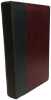
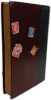
couverture défraîchie intérieur propre timbres collés sur le dernier plat
Ancient Corinth. A guide to the excavations. Sixth edition.
(Athens), American School of Classical Studies at Athens, 1954.
98 p.; 19 plates, 3 folding maps. Wrappers 21 cm
Ancient Corinth. A guide to the museum. 3rd edition.
Athens, American School of Classical Studies at Athens, 1956.
48 p.; 16 plates. Wrappers. 21 cm
CAMP II, J.McK. Gods and heroes in the Athenian Agora.
Athens, American School of Classical Studies, 1980.
(33) p.; ills. Wrs. 22 cm (Excavations of the Athenian agora, Picture book no. 19)
FRANTZ,A. The Middle Ages in the Athenian agora.
Princeton, American School of Classical Studies at Athens, 1961.
32 p.; ills. Wrs. 22 cm (Excavations of the Athenian agora, Picture book no. 7)
IMMERWAHR,S.A. Early burials from the Agora cemetries.
Princeton, 1973.
(36) p.; ills. Wrs. 22 cm (Excavations of the Athenian agora, Picture book no. 13)
LANG,M. Graffiti in the Athenian agora.
Princeton, American School of Classical Studies at Athens, 1974.
(34) p.; illustrations. Wrappers 22 cm (Excavations of the Athenian agora, Picture book no. 14)
LANG,M. Socrates in the agora.
Princeton, 1978.
(32) p.; ills. Wrs. 22 cm (Excavations of the Athenian agora, Picture book no. 17)
LANG,M. Socrates in the agora.
Princeton, 1978.
(32) p.; ills. Wrs. 22 cm (Excavations of the Athenian agora, Picture book no. 17)
MERITT,B.D. Inscriptions from the Athenian agora.
Princeton, 1966.
33 p.; ills. Stiff wrappers 21 cm (Excavations of the Athenian agora, Picture book no. 10)
NEILS,J. & S.V. TRACY. The games at Athens.
N.pl., 2003.
33 p.; ills. Wrs. 22 cm (Excavations of the Athenian agora, Picture book no. 25
SPARKES,B.A. & L. TALCOTT. Pots and pans of classical Athens.
Princeton, 1964.
32 p.; ills. Wrs. 21 cm (Excavations of the Athenian agora, Picture book no. 1)
The Athenian agora. A guide to the excavation and museum. Sec. ed. revised.
N.pl., 1962.
230 p.; 18 pls.; fold. map. Pb.
The Athenian agora. A guide to the excavation and museum. Third edition revised & enlarged.
(Athens), 1976.
338 p.; illustrations.; folding map. Paperback. 21 cm (Slightly worn)
THOMPSON,D.B. Miniature sculpture from the Athenian agora.
Princeton, American School of Classical Studies at Athens, 1959.
32 p.; ills. Wrs. 22 cm (Excavations of the Athenian agora, Picture book no. 3)
THOMPSON,D.B. Miniature sculpture from the Athenian agora.
Princeton, 1959.
32 p.; ills. Wrs. 22 cm (Excavations of the Athenian agora, Picture book no. 3)(Cover sl. worn)
THOMPSON,D.B. & R.E. GRISWOLD. Garden lore of ancient Athens.
Princeton, American School of Classical Studies at Athens, 1963.
37 p.; ills. Wrs. 22 cm (Excavations of the Athenian agora, Picture book no. 8)
THOMPSON,D.B. The Athenian agora. An ancient shopping center.
Princeton, 1971.
32 p.; ills. Wrappers 22 cm (Excavations of the Athenian agora, Picture book no. 12)
THOMPSON,H.A.. The Athenian agora, a short guide.
Athens, American School of Classical Studies, 1983.
32 p.; ills. Wrs. 22 cm (Excavations of the Athenian agora, Picture book no. 16)
THOMPSON,H.A. The Stoa of Attalos II in Athens.
Princeton, 1959.
32 p.; ills. Wrs. (Excavations of the Athenian agora, Picture book no. 2)
THOMPSON,H.A. The Stoa of Attalos II in Athens.
Princeton, 1959.
32 p.; ills. Wrs. 22 cm (Excavations of the Athenian agora, Picture book no. 2)
Sprachlicher und historischer Kommentar zu Ammianus Marcellinus XIV von P. DE JONGE.
Groningen, Bouma, 1972.
2 volumes in 1: (IV),149;(IV),148 p. Cloth 22 cm (Reprint edition 1935 & 1939)
Ammianus Marcellinus in die lig van die antieke geskiedskrywing.
Leiden, Luctor et Emergo, 1956.
(VII),144 p. Wrs. 24 cm (Diss.)
Rerum gestarum qui de XXXI supersunt, libri XVIII. Ope mss. codicum emendati ab Frederico Lindenbrogio & Henrico Hadrianoque Valesiis cum eorumdem integris observationibus & annotationibus, item excerpta vetera de Gestis Constantini & Regum Italiae. Omnia nunc recognita ab Jacobo Gronovio, qui suas quoque notas passim inseruit & necessariis ad Ammiani illustrationem antiquis nummis ac figuris exornari curavit
Leyde, Peer Vander Aa, 1693 in-4, [24] ff. n. ch. (titre, dédicace au Grand Duc Côme III, préfaces), 514 pp., [7] ff. n. ch. d'index, avec 18 planches hors-texte, dont un portrait-frontispice, 6 planches de médailles, 3 vues dépliantes et 8 portraits d'Empereurs en médaillon, demi-veau prune, dos lisse orné de filets et guirlandes dorés, ainsi que de larges fleurons et filets à froid, pièce de titre noire, tranches marbrées (rel. du XIXe siècle). Dos légèrement passé, rousseurs, mais bon exemplaire.
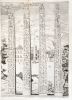
Faite d'après l'édition d'Adrien de Valois de 1681, cette belle impression fut pendant tout le XVIIIe siècle la meilleure que l'on eût d'Ammien Marcellin, dont l'importance pour la connaissance du IVe siècle n'est plus à établir.Brunet I, 237.Ex-libris Dampierre (Ducs de Luynes). - - VENTE PAR CORRESPONDANCE UNIQUEMENT - LIEN DE PAIEMENT, NOUS CONSULTER.


Ammonius Cohen S. Marc Matthews Garethb
Reference : 100124477
(1991)
ISBN : 0715622536
Ammonius: On Aristotle Categories (Ancient Commentators on Aristotle)
BRISTOL CLASSICAL PR 1991 178 pages 15 8x1 6x23 8cm. 1991. Relié. 178 pages.
comme neuf avec sa jaquette

