 Write to the booksellers
-
Type
Book (9917)
Engraving (8)
Magazine (12)
Maps (1)
Photographs (1)
-
Latest
Last 24h (1)
Last 3 days (12)
Last month (102)
Last week (1)
-
Language
English (4)
French (9898)
German (2)
Greek (28)
Italian (2)
Latin (4)
Swedish (1)
-
Century
16th (11)
17th (30)
18th (48)
19th (694)
20th (1776)
21st (114)
-
Countries
Belgium (1195)
Brazil (1)
Canada (7)
Côte d'Ivoire (5)
France (2889)
Greece (16)
Netherlands (5650)
Switzerland (175)
United Kingdom (1)
-
Syndicate
ALAC (7)
CLAM (35)
ILAB (1902)
NVVA (2)
SLACES (2)
SLAM (1817)
SNCAO (3)
MORPHOLOGIE HISTORIQUE de la LANGUE GRECQUE
Un ouvrage de 272 pages, format 155 x 240 mm, relié percaline bleue nuit, publié en 1940, J. de Gigord Editeur, bon état
A l'usage des candidats à la Licence ès Lettres et à l'Agrégation de Grammaire. 2e édition revue
Phone number : 04 74 33 45 19
Morphologie historique de la langue grecque à l'usage des candidats à la licence es lettres et à l'agrégation de grammaire.
J.de Gigord. 1936. In-8. Relié. Etat d'usage, Coins frottés, Coiffe en pied abîmée, Papier jauni. 272 pages - coiffes abîmées - nombreuses annotations au plume, crayon de couleur à l'intérieur de l'ouvrage ne gênant pas la lecture - annotation sur la page de titre - texte en français et en grec.. . . . Classification Dewey : 480-Langues helléniques. Grec
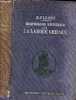
texte en français et en grec. Classification Dewey : 480-Langues helléniques. Grec


PRECIS de PHONETIQUE GRECQUE
Un ouvrage de 92 pages, format 155 x 240 mm, relié percaline bleue nuit, publié en 1941, J. de Gigord Editeur, bon état
A l'usage des candidats à la Licence ès Lettres et à l'Agrégation de Grammaire. 2e édition entièrement refondue
Phone number : 04 74 33 45 19
PRECIS de PHONETIQUE GRECQUE
Un ouvrage de 92 pages, format 150 x 230 mm, broché, publié en 1944, J. de Gigord Editeur, bon état
A l'usage des candidats à la Licence ès Lettres et à l'Agrégation de Grammaire. 3e édition revue et corrigée
Phone number : 04 74 33 45 19
PRECIS DE PHONETIQUE GRECQUE
J. DE GIGORD. 1947. In-8. Broché. Etat d'usage, Couv. légèrement passée, Dos plié, Intérieur frais. 92 pages.. . . . Classification Dewey : 480-Langues helléniques. Grec
Classification Dewey : 480-Langues helléniques. Grec
PRECIS DE PHONETIQUE GRECQUE - A L'USAGE DES CANDIDATS A LA LICENCE ES LETTRES ET A L'AGREGATION DE GRAMMAIRE.
J.DE GIGORD/4E EDITION. 1947. In-8. Broché. Etat d'usage, Couv. légèrement passée, Coiffe en tête abîmée, Papier jauni. 92 pages - ouvrage en français et en grec - nombreuses annotations au crayon à papier à l'intérieur de l'ouvrage.. . . . Classification Dewey : 480-Langues helléniques. Grec
Sommaire : prolégomènes - préliminaires - les sonantes consonnes - la sifflante - les occlusives - traitement des voyelles - phonétique syntactique etc... Classification Dewey : 480-Langues helléniques. Grec
Les harangues. Texte grec publié d'après les travaux les plus récents de la philologie avec un commentaire critique et explicatif, une introduction générale et des notices sur chaque discours par Henri Weil. Troisième édition, revue et complétée d’après des notes de l’Editeur par G. Dalmeyda.
Paris, Librairie Hachette et Cie 1912, 245x160mm, LXVIII - 484pages, broché. Cachet de possesseur sur le haut de la page de garde supérieure, couvertures détachées. A faire relier.
édition bilingue: français - grec ancien, Pour un paiement via PayPal, veuillez nous en faire la demande et nous vous enverrons une facture PayPal
METHODE POUR ETUDIER L'ACCENTUATION GRECQUE
Dezobry et E. Magdeleine, Paris. 1844. In-12. Relié. Etat d'usage, Tâchée, Dos satisfaisant, Rousseurs. 144 pages. Etiquette de code sur la couverture. 2e plat consolidé. Annotations d'époque en page de garde. Fortes rousseurs.. . . . Classification Dewey : 480-Langues helléniques. Grec
De l'accent. Déclinaisons... Classification Dewey : 480-Langues helléniques. Grec
Histoire de la littérature grecque.
Couverture rigide. Reliure toile de l'éditeur. 396 pages. Quelques passages soulignés.
Livre. Librairie Classique Paul Delaplane, Fin XIXe. Vers 1900.
Histoire de la littérature grecque.
Couverture rigide. Reliure toile de l'éditeur. 465 pages.
Livre. Librairie Classique Paul Delaplane, Vers 1900.
Histoire de la littérature grecque.
Couverture rigide. Reliure toile de l'éditeur. 396 pages.
Livre. Librairie Classique Paul Delaplane, Début XXe. Vers 1900.
Documents illustrating the reigns of Augustus & Tiberius
Oxford, Clarendon Press 1955 Oxford, Clarendon Press 1955. In-8 relié pleine toile cerise éditeur de XII + 171 pages. Parfait état
Toutes les expéditions sont faites en suivi au-dessus de 25 euros. Expédition quotidienne pour les envois simples, suivis, recommandés ou Colissimo.
Etudes grecques sur Virgile, ou recueil de tous les passages des poètes grecs imités dans les Bucoliques, les Géorgiques et l’Enéide, avec le texte latin et des rapprochements littéraires.
Paris, A. Delalain, Treuttel et Wurtz, 1825; 3 tomes in-8, veau réglisse, dos lisse à caissons décorés, titre doré, décor romantique à compartiments à froid, fer de collège doré (Lycée impérial de Bar-le-Duc), le tout dans un encadrement doré, roulette dorée sur les coupes des coins, tranches marbrées (A. Maillard à Bar-le-Duc); XII, 319 ; 448; 407 pp.
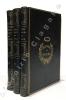
Très discrètes rousseurs. Bel exemplaire en reliure uniforme de qualité.
"Etudes grecques sur Virgile ou recueil sur tous les passages des poètes grecs imités dans les Bucoliques; les Géorgiques et l'Enéide (3 volumes); tomes 1, 2, et 3."
Paris, A. Delalain/ Treuttel et Wurtz, 1825. 13 x 20, 3 volumes, 319 + 448 + 407 pages, reliure dos cuir, tranches jaspées, bon état (rousseurs).
Bijdrage tot de Kennis der Grieksche Toponymie
H.J. Paris Amsterdam H.J. Paris 1929, In-8 broché, 100 pages. Texte en hollandais et en grec. Bon état.
Toutes les expéditions sont faites en suivi au-dessus de 25 euros. Expédition quotidienne pour les envois simples, suivis, recommandés ou Colissimo.
OUVRAGE EN GREC - PHOTO DISPONIBLE.
?. NON DATE. In-8. Relié. Etat d'usage, Coins frottés, Coiffe en tête abîmée, Intérieur frais. 210 pages - ouvrage en grec - 3 photo disponibles - coiffe en tête légèrement abîmée - quelques illustrations en monochrome dans et hors texte.. . . . Classification Dewey : 480-Langues helléniques. Grec
Ouvrage en grec. Classification Dewey : 480-Langues helléniques. Grec
Byzantine Historiographical Prefaces (4th?15th Centuries) A Study on the Praxis and Culture of Writing History in Byzantium
, Brepols - Harvey Miller, 2025 Paperback, Pages: 268 pages, Size:156 x 234 mm, Illustrations:6 tables b/w., Language(s):English, Greek , *new . ISBN 9782503612515.
In recent years a lively debate has developed on the features of Byzantine historiography. The increasingly dominant tendency today is to treat historical texts more as pleasant literary narratives than as systematic historical accounts of the political and military history of Byzantium. The present study aims to contribute to this debate by revisiting the voices of the Byzantine authors themselves, focusing on the extant historical prefaces from the Early, Middle, and Late Byzantine eras. This seemed timely, more than a century after the publication of ?einrich Lieberich?s fundamental work on Byzantine historiographical proems. Obviously, not all prefaces are of equal interest: some serve a purely conventional function, while others are composed more thoughtfully and merit more careful attention. The book?s goal is twofold: firstly, to outline the details of the prefatory function of the Byzantine historiographical proems as microtexts; secondly, to detect and evaluate the theoretical views expressed by the authors of each period regarding the genre of Byzantine historiography. This will expand our knowledge of how the Byzantines wrote (praxis) and thought (culture) about historiography. TABLE OF CONTENTS Preface Chronological list of proems of Byzantine Historiography discussed in this book with the location of their main presentation Introduction 1. Current research in Byzantine historiography: a few necessary observations 2. The Byzantines and historiography 3. The proems of Byzantine historiography in modern bibliography 4. Significance and function of a proem 5. Why and How to treat proems of Byzantine historiography separately 6. The proems of classical Greek, Hellenistic, and Roman historical works: an introduction to the narrative patterns and ideas available to Byzantine authors Chapter 1: The prefatory communication situation in Byzantine historiography 1a. Length: from zero to over hundreds words 1b. Location: preludial and sometimes internal 1c. Time of composition 1d. Person(s) addressed: educated friends and scholars, the emperor himself 1e. Authorship: the writer himself 1f. Form: title and boundaries 1g. Special generic features: metrical, epistolary and rhetorical proems 1h. Writing methods: originality and mimesis Chapter 2: The content of the preserved proems of Byzantine historiography: eloquence in the service of the author?s specific expectations 2a. A few introductory remarks 2b. The elaborated proems of Byzantine historiography: a detailed overview 3c. The conventionally functional proems of Byzantine historiography: an overview Chapter 3: Theoretical aspects of Byzantine historiography: the evidence of the proems 3a. The profile of the author 3b. The essence / value of history writing 3c. The practices of history?writing 3d. The profile of the reader/listener 3e. Conclusion: Final remarks and answers to current research questions Bibliography Index
Philippus monachus Dioptra, Pars I Prolegomena, Epistulae, Versus apologetici, Programma, Praefationes recentiores, Lamentationes
, Brepols - Harvey Miller, Hardback Pages: ccxxxvi + 42 p. Size:155 x 245 mm, Language(s):Greek, German. NEW. ISBN 9782503605166.
Summary The Dioptra was composed in the year 1095 by a monk named Philippos, who is sometimes referred to by the epithet "Monotropos", an archaising term meaning "monk". Two years after its initial composition, a second redaction appeared, featuring changes in language and meter, as well as textual transpositions. The main body of the Dioptra consists of four books comprising 7131 "political" verses (or 7217 in the second redaction). These verses take the form of a dialogue between the Soul and the Body, personified respectively as Mistress and Maid. The Mistress poses questions on theological and anthropological issues, which the Maid answers primarily by paraphrasing patristic and biblical passages. A catanyctic poem focused on contrition and penitence serves as either a prologue or an epilogue, depending on the redaction. This section, addressed to the soul, is known as Klauthmoi or Lamentationes. In addition, patristic excerpts collected by Philippos but not versified are transmitted as inserts, appendices or marginal scholia. The use of ?political? verse, the fictional personification of the interlocutors, and the text?s subtle sense of humor set the dialogue apart from the traditional Erotapokriseis genre. These distinctive features, combined with the topics addressed and the clarity of its language, contributed to the exceptional popularity of the Dioptra: no fewer than 80 Byzantine and post-Byzantine manuscripts transmit the work either in its entirety or in excerpts, while an additional nine manuscripts preserve Greek paraphrases. Die Dioptra wurde im Jahr 1095 von einem Mönch namens Philippos verfasst. Gelegentlich erscheint auch der Namenszusatz ?Monotropos" als Hinweis auf den Mönchsstand des Autors. Zwei Jahre danach entstand eine zweite Redaktion, die Eingriffe in Sprache und Metrik, sowie Textumstellungen aufweist. Den Hauptteil des Werkes bilden vier Bücher in 7134 (in der zweiten Redaktion 7217) ?politischen" Versen. Sie sind in Form eines Dialogs zwischen Seele und Körper, personifiziert als Herrin und Dienerin, verfasst. Die Herrin stellt Fragen zu theologischen und anthropologischen Themen, die die Dienerin beantwortet, indem sie größtenteils patristische und biblische Stellen paraphrasiert. Je nach Fassung als Prolog oder Epilog der Dioptra ist ein an die eigene Seele gerichtetes Bussgedicht (Klauthmoi / Lamentationes) überliefert. Darüber hinaus sind patristische Exzerpte, die Philippos sammelte, aber nicht in Versform brachte, als Einschübe, Anhänge oder Marginalscholia erhalten. Die ansprechende Thematik, die einfache Sprache, der ?politische" Vers, aber auch die durch die Personifizierung entstandene Fiktionalität, die den Dialog von Erotapokriseis unterscheidet, und nicht zuletzt ein gewisser Sinn für Humor trugen zur ungewöhnlich großen Popularität der Dioptra bei: 80 byzantinische und postbyzantinische Handschriften überliefern die Dioptra als Ganzes oder in Exzerpten. Weitere neun Handschriften überliefern griechischsprachige Paraphrasen. Der vorliegende erste Band umfasst die allgemeine und textkritische Einleitung, begleitet von einer vollständigen Bibliographie, sowie die kritische Edition der Vortexte und der Lamentationes. Der Hauptteil des Textes sowie die Indizes werden in zwei weiteren Bänden veröffentlicht. TABLE OF CONTENTS Prolegomena Epistula Philippi ad Callinicum Versus apologetici Programma Epistula Callinici ad Philippum Praefationes recentiores Lamentationes
Einführung in die antike Rhetorik und ihre Geschichte.
Darmstadt, Wissenschaftliche Buchgesellschaft, 1974.
107 p. Paperback 21 cm
Antike Lyrik.
Darmstadt, Wissenschaftliche Buchgesellschaft, 1970.
XIII,484 p. Cloth 22 cm (Ars interpretandi 2; back faded) (24 essays on Greek and Latin lyric by leading German and Austrian scholars)
Antieke geneeskunde. In teksten van Griekse en Latijnse auteurs vanaf Homerus tot het begin van de Middeleeuwen. Samengebracht en vertaald door -.
Antw., Amst., Standaard-Boekhandel, 1960.
439 p. Cl. 26 cm (No. 202 of 500 copies printed) (OiN 41)
Anti-Jewish Greek Texts in Late Medieval Crete. The Case of Manouel Savios and Angelos Gregorios
, Brepols, 2026 Paperback, Pages: 184, Size:170 x 240 mm, Language: English. ISBN 9789603711124.
Summary The present study explores Greek anti-Jewish writings in Venetian Crete within a framework of Christian-Jewish coexistence. Although Jews were economically and socially integrated, they encountered stereotypes and episodic violence grounded in inherited religious prejudice. Unlike Byzantium, Crete produced no systematic anti-Jewish polemic; hostile views surfaced sporadically in vernacular and didactic texts. Ecclesiastical conflicts among Orthodox, Catholics, and unionists eclipsed Jewish participation. In such a limited circulation of manuscripts of anti-Jewish content in late Venetian Crete, the texts of Manouel Savios and Angelos Gregorios constitute an exception. TABLE OF CONTENTS Preface List of Abbreviations Introduction I. Hemanuelis Savii disputatio contra Iudaeos (MS Lond. Add. 34060) 1. The manuscript 2. The scribe 3. The author 4. The treatise 5. The text II . Angeli Gregorii Iudaeorum quaestiones et rationes (MS ludwig XV 2) 1. The manuscript 2. The scribe 3. The author 4. The treatise 5. The text Appendix 1. Anonymous' Dialogus Adversus Iudaeos (MS Lambeth Palace 2794) 2. Archival documents 3. Tables of MSS Bibliography Indices 1. Index of Mss cited 2. Index of names
Catulli, Tibulli, Propertii carmina selecta. Uitgeg. en van aant. voorzien door P.J. ENK. 2e geheel herz. en verm. dr.
Zutphen, Thieme, 1927.
XX,284 p. Cloth (Some pencil)
Prolegomena, text and commentary.
Groningen. Bouma, 1980.
(X) 218 p. Cl. (Diss., trade ed.)
Prolegomena, text and commentary.
Groningen. Bouma, 1980.
(X) 218 p. Cloth. 24 cm (Diss., trade ed.)

