 Write to the booksellers
1345 books for « w a mozart »Edit
-
Type
Any type (2)
Artists book (6)
Book (1257)
Disk (3)
Magazine (2)
Music sheets (75)
-
Latest
Last month (2)
Last week (1)
-
Language
English (38)
French (1284)
German (21)
Italian (2)
-
Century
18th (1)
19th (55)
20th (228)
21st (17)
-
Countries
Belgium (50)
Canada (5)
Denmark (8)
France (1240)
Greece (1)
Switzerland (41)
-
Syndicate
ALAC (5)
CLAM (1)
CLAQ (2)
ILAB (961)
NVVA (4)
SLACES (4)
SLAM (929)
Topics
- Alsace (1)
- Artists (3)
- Austria (1)
- Autographs (7)
- Bach j. s. (14)
- Barber (4)
- Barbusse henri (1)
- Beaumarchais (3)
- Beethoven ludwig van (16)
- Biography (14)
- Bizet georges (2)
- Blaze (1)
- Bordeaux (4)
- Bordeaux henry (3)
- Borodine alexandre (2)
- Boschot adolphe (1)
- Caravaggio (1)
- Carmen (2)
- Chopin frédéric (9)
- Classical music (14)
- Comic strip (2)
- Communism (1)
- Debussy claude (1)
- Dedication (1)
- Don giovanni (1)
- Don juan (3)
- Donizetti (3)
- Dumesnil rené (2)
- Early printed books (3)
- Engraving (books about) (4)
- Figaro (1)
- Fine arts (4)
- Flute (2)
- Gallet louis (1)
- Germanic languages (19)
- Germany (2)
- Gluck (5)
- Gounod (2)
- Gretry (2)
- Guitar (1)
- Haendel georges (1)
- Haydn joseph (8)
- History (9)
- Hitler (1)
- Illustrated books (2)
- Industrial arts & crafts - fine arts (7)
- Italian (4)
- Koehler louis (1)
- Liszt (1)
- Literature (6)
- Lorenzo (3)
- Love (1)
- Manuscripts (4)
- Marx karl (1)
- Mendelssohn (7)
- Music (141)
- Musicology (3)
- Opera (63)
- Opera ballet (68)
- Orchestra (3)
- Paradise (2)
- Photography (2)
- Piano (24)
- Prokofiev (1)
- Purcell (1)
- Quartet (1)
- Review (2)
- Reviews (2)
- River (1)
- Rostand edmond (1)
- Salieri (1)
- Schmidt richard (1)
- Schubert f. (5)
- Schumann (3)
- Schumann hellmut (2)
- Scores (491)
- Scores pc (3)
- Songs (8)
- Sportsmen (3)
- Strauss richard (5)
- Tales (1)
- Tea (1)
- Teaching (5)
- Theatre (63)
- Translation (2)
- Various (6)
- Violin (8)
- Violin pc (3)
- Vivaldi (9)
- Wagner richard (5)
- Wallenstein (1)
- Willy (1)
- Xviii th century (1)
SONATES POUR PIANO ET VIOLON.
Enoch Paris Enoch SD (vers 1900), collection Litolff, In-4 de 92 pages, percaline éditeur marron. Premier feuillet détaché.
Toutes les expéditions sont faites en suivi au-dessus de 25 euros. Expédition quotidienne pour les envois simples, suivis, recommandés ou Colissimo.
SONATES POUR PIANO ET VIOLON.
Enoch Paris Enoch SD (vers 1900), In-4 de 284 pages. dernier feuillet détaché.
Toutes les expéditions sont faites en suivi au-dessus de 25 euros. Expédition quotidienne pour les envois simples, suivis, recommandés ou Colissimo.
SONATEN FUR PIANOFORTE UND VIOLINE
Leipzig C.F. Peters SD Leipzig C.F. Peters SD (vers 1890), In-4 demi chagrin noir, 248 pages. Trés bon état.
Herausgageben von Artur SCHNABEL und Carl FLESCH. Toutes les expéditions sont faites en suivi au-dessus de 25 euros. Expédition quotidienne pour les envois simples, suivis, recommandés ou Colissimo.
Revue La Table Ronde sur Mozart - Jacques Duron - Georges Piroué - Pierre Barbier - Hans Kühner - Roland-Manuel - H.-H. Stuckenschmidt - Yves Florenne - Bronislaw Horowicz - J.M. Gautier - Robert Poulet -J.-J. Kim - Claude Rostand - Félix Raugel
Reference : 87025
(1956)
Revue La Table Ronde n° 101 - Mai 1956 - Wolfgang Amadeus Mozart , (L'humain Mozart - Mozart et les siens - Mozart secret - Mozart et l'esprit français - Mozart européen -Don Juan à n'en plus finir - Mozart, homme de théâtre - Mozart fut-il un musicien d'église - Mozart et les intellectuels - Mozart et les Muses - Mozart et le disque -Paris fidèle au souvenir de Mozart)
Librairie Plon , La Table Ronde Malicorne sur Sarthe, 72, Pays de la Loire, France 1956 Book condition, Etat : Bon broché, sous couverture imprimée éditeur rouge grand In-8 1 vol. - 185 pages
1ere édition, 1956 Contents, Chapitres : Jacques Duron : Mozart - Georges Piroué : L'humain Mozart - Pierre Barbier : Mozart et les siens - Hans Kühner : Mozart secret - Roland-Manuel : Mozart et l'esprit français - H.-H. Stuckenschmidt : Mozart européen - Yves Florenne : Don Juan à n'en plus finir - Bronislaw Horowicz : Mozart, homme de théâtre - J.M. Gautier : Mozart fut-il un musicien d'église - Robert Poulet : Mozart et les intellectuels -J.-J. Kim : Mozart et les Muses - Claude Rostand : Mozart et le disque - Félix Raugel : Paris fidèle au souvenir de Mozart couverture à peine jaunie, avec d'infimes traces de pliures sans gravité sur les bords des plats, intérieur propre papier legerement jauni, cela reste un bon exemplaire
SONATEN FUR DAS PIANOFORTE. NEUE SORGFALTIG REVIDIRTE AUSGABE.
Leipzig SD (vers 1880 Leipzig SD (vers 1880), In-4 relié demi chagrin vert, dos à fleurons dorés. 221 pages. Portrait en frontispice. Les coins sont abimés mais l'intérieur et le dos sont en trés bon état.
Toutes les expéditions sont faites en suivi au-dessus de 25 euros. Expédition quotidienne pour les envois simples, suivis, recommandés ou Colissimo.
Les plus belles lettres de Mozart (Mozart et sa famille, Mozart et l'amour, Mozart vu par lui-même, Mozart et les interprètes, Jugements de Mozart)
Lausanne, Editions du Cervin 1956 80pp., 2e éd., 22cm., br.orig., dans la collection "Les documents célèbres" no.4, bon état, M82874
Le Don Juan de Mozart (Nouvelle édition, 1968 - Don Giovanni)
Editions Plon Malicorne sur Sarthe, 72, Pays de la Loire, France 1968 Book condition, Etat : Bon relié, cartonnage éditeur, sous jaquette imprimée éditeur, illustrée du manuscrit d'une partition In-8 1 vol. - 203 pages
nouvelle édition, 1968 Contents, Chapitres : Avant-propos de la nouvelle édition, daté d'août 1967 - Grandeur actuelle de Mozart (1935) - La mort du Commandeur - La fête chez Don Juan - Le travesti - Le cimetière - Le convive de Pierre - Conclusion - Mozart, illustrateur du mythe de Don Juan - Une expérience de mort dans l'art doué de la grâce - Pierre Jean Jouve est un poète, romancier et critique français né à Arras le 11 octobre 1887 et mort à Paris le 8 janvier 1976. Ce fut, dès 1938 et pendant son exil en Suisse, un important acteur de la résistance intellectuelle contre le nazisme, avec ses poèmes apocalyptiques de Gloire et de La Vierge de Paris. Parmi ses essais sur l'art et sur la musique, on notera pendant la guerre un important Don Juan de Mozart (1942, avec l'aide du musicien Fernand Drogoul) et ensuite un essai sur Wozzeck d'Alban Berg (écrit avec le compositeur Michel Fano, 1953). - Le Don Juan de Mozart de Pierre Jean Jouve est paru initialement en 1942. En 1942, après plusieurs écritures, Jouve publie Le Don Juan de Mozart qu'il dédie à la mémoire de Fernand Drogoul, l'ami musicien qui l'avait aidé à déchiffrer la partition, tué pendant les bombardements de 1940. L'étude de Jouve mêle une lecture très précise de la partition de l'opéra Don Giovanni de Mozart et une interprétation qui bénéficie de la connaissance qu'il a de l'uvre de Freud et de la pulsion de mort. (source : Wikipedia) jaquette à peine jaunie au dos notamment, infime trace de pliure au coin supérieur gauche du plat inférieur de la laquette, sinon très bon état, intérieur frais et propre, cela reste un bel exemplaire de la nouvelle édition de 1968
GUIBAL V.- Receuil de Partitions manuscrites pour violino secondo non paginé, arrangé en quatuor pour 2 violons alto et basse , partie violino secondo seule : ROSSINI le barbier de Seville arrangé en quatuors par Gambarc ? signés GUIBAL V.,- ROSSINI l'italienne à Alger - ROSSINI Tancrede - MOZART Don Juan - MOZART les noces de Figaro .
1 volume in4 reliure sd (vers 1840) demi basane rouge à petits coins,dos lisse titré "Quatuors tirés des opéras de ROSSINI et de MOZART" - GUIBAL V. en pied : 2 parties ROSSINI le barbier de Seville arrangé en quatuors par Gambarc ? signés GUIBAL V.- 1ere patrie -7 suites -12p.+2eme partie - 10 suites de 8 à 17 en 10p.; - relié à la suite ROSSINI l'italienne à Alger 1ere patrie 12p ;7 suites numérotées 8 à 24 + 2eme partie - 10p. suites 25 à 32 - relié à la suite : ROSSINI Tancrede 1ere patrie 14p ;7 suites numérotées 33 à 39 + 2eme partie - 12p. suites 40 à 47 relié avec MOZART Don Juan 1ere patrie : 24p ;12 suites numérotées 1 à 12 + 2eme partie : - 22p. suites 13 à 26 relié avec - MOZART les noces de Figaro . -13 suites numérotées 1 à 13 - 22p.
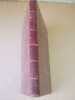

non paginé complet, semble inédit,bon etat. Remise de 20% pour toutes commandes supérieures à 200 €
Il Flauto Magico. Dramma giocoso in due atti. Messo in musica dal Signor W. A. Mozart. Edition dédiée aux souscripteurs par l'éditeur. Prix : 60 Fr. No. 3 de la Collection des Opéras de Mozart.
A Paris, Au Magasin de J. Frey, Artiste de l'Académie Royale, Editeur de Musique, Successeur de M.M. Mehul, Cherubini, Kreutzer, Rode et Comp/ie, Place des Victoires No. 8., 1821 (date de la souscription), 4° (34,5 x 25,5 cm), 3 ff. (première bl., titre gravé, portrait de Mozart lithographié), V pp. (liste des souscripteurs, personnages et sommaire de l'opéra), musique gravée : pp. 1 à 177 recto (atto 1°) et pp. 178 verso à page 373 (atto 2°), 1 f. bl., demi basane brune à coins, dos lisse riche décor rocaille, le premier plat porte les lettres dorées A. F. (reliure de l'époque).
RISM VI, 4774. KV 790. DEVRIES, LESUEUR II, 175-76 (J. Frey était actif sous cette adresse de 1812 à 1838. "... il [Frey] se distingue pour avoir été le premier éditeur français qui publia les opéras de Mozart dans le texte original et en partition".). Ici en texte en italien et français. Les plaques gravées ne sont pas numérotées. Un portrait de Mozart lithographié par Engelmann d'après A. Menut a été ajouté à cet exemlaire. Pages 177 verso et 178 recto blanches. Tampon de l'éditeur en bas de la page du titre et au recto de la page 178. Pages brunies (rousseurs) par endroits, discrets repères au crayon rouge (surtout pp. 1 à 9) et une petite annotation dans la marge (p. 240). Minime salisure sur la p.138. Nom de l'ancien propriétaire sur la page du titre. Reliure frottée et usagée (coiffes, coins, bords). Bon exemplaire dans une reliure typique de l'époque romantique.
Association française des amis de Mozart et des maîtres classiques
Reference : W1280GLW
ISBN : B0014LAWWU
Les Amis de Mozart : Vingt-cinquième anniversaire de l'Association française des amis de Mozart et des maîtres classiques (La Revue musicale) [Paperback] Association française des amis de Mozart et des maîtres classiques
Broché bon état . Pages non coupées . Couverture jaunie . 146 pages . 1981. Les Amis de Mozart : Vingt-cinquième anniversaire de l'Association française des amis de Mozart et des maîtres classiques.
Merci de nous contacter à l'avance si vous souhaitez consulter une référence dans notre boutique à Authon-du-Perche.
Recueil de 21 partitions gravées
(dont 2 de Mozart), de la fin du XVIIIe et du tout début du XIXe siècle, reliées en un volume petit in-folio oblong ; demi-basane à coins havane, dos à faux-nerfs dorés, pièce de titre rouge, roulette en pied (reliure de l’époque) ; ces partitions sont toutes sans date.1- Dalayrac (Nicolas-Marie) – Wolff : arrangement pour le piano forte, opéra de Mr. Dalayrac dit "le musicien poète", créé le 30 septembre 1805, tiré des Mille et une Nuits: Culistan ou le Hulla de Samarcande. Leipzig, A. Meysel ; 53 pp. Opéra qui est, selon Chouquet, "le plus important et le plus abouti" du compositeur. 2- Himmel (Friedrich, Heinrich ; 1765-1814) : Gesellschaftslied. Hambourg, Johann August Böhme ; 4 pp. Texte de Kotzebue. 3- Mozart (Wolfgang Amadeus ; 1756-1791) : Vergiss mein nicht. Hambourg, J. A. Böhme ; 6 pp. Idem pour clavier et guitare par Sterkel. Amsterdam, Kuntze ; 4 pp. 4- Grétry (André Ernest ; 1741-1813) : Aria : Verlasst dich jedermann o Richard o mein König ; aus der Oper Richard Löwenhertz. Hambourg, J. A. Böhme ; 6 pp. ; annotations manuscrites. 5- Zumsteg (Jean Rodolphe ; 1760-1802) : Reiter-Lied aus dem Wallenstein in Muzik gesetz von. S.l., s.n., s.d. ; 4 pp. 6- Becker et Hurka : Der Saenger. Hambourg, J. A. Böhme ; 4 pp. 7- [Sasse (Josepha, Rheine)] Arie : Was ist der Mensch ? halb Thier halb Engel ! für’s Forte Piano. Hambourg, J. A. Böhme ; 4 pp. 8- Hurka (Friedrich, Franz; 1762-1805) : Der Bauer an sienen durchlauchtigsten Tyrannen. Lied Wer bist du fürst ? Hambourg, J. A. Böhme ; 6 pp. 9- Himmel : Der Leyermann. Hambourg, J. A. Böhme ; 4 pp. 10 à 13- Himmel : Gesänge aus der Operette Fanchon das Leyermädchen. (N°9 ; 10 ; 7 ; 11) ; 20 pp. 14- Berton (Henri Montan ; 1767-1844) : Aline reine de Golconde (1803) ; air : Il reçut au sein de la gloire... Hambourg, idem ; 4 pp. 15- Berton (Henri Montan) : Montano et Stéphanie (1799) ; air : Oui c’est demain... Hambourg, idem ; 8 pp. 16- [Manuscrit] Le véritable amour, ou les tourmens de l’absence... Partition manuscrite de (2) ff. avec petit rabat en pied. 17- Plantate (Charles-Henri ; 1764-1839) : Air : Te bien aimer ô ma chère Zélie... (1791) ; Hambourg, J. A. Böhme ; 4 pp. 18- Mussini (Natale ; 1765-1837) : Ariette : Souvent l’amour nous prouve son Empire. Hambourg, idem ; 4 pp. 19- Saint-Simon (Mme) : La Déclaration. Romance : Dis-moi ce que j’éprouve... Hambourg, idem ; 4 pp. 20- Mozart : Favorite Walze. Hambourg, idem ; 4 pp. 21- Dussek (Jan Ladislav ; 1760-1812) : Deux anglaises et deux valses. S.l., s.n., s.d. ; 4 pp.
![Recueil de 21 partitions gravées . [Mozart]](https://static.livre-rare-book.com/pictures/CLA/16517_1_thumb.jpg)
Petits frottements d’usage, bel exemplaire de ce beau recueil qui concerne des compositeurs du XVIIIe et du début du XIXe siècles.


Clemenza di Tito. Opera seria in due Atti messo in Musica dal signor W. A. Mozart. Edition dédéie aux souscripteurs par l'éditeur. Prix 60 F. N° 4 de la Collection des operas de Mozart.
1822 demi-vélin vert à c., étiqu. mar. rouge, plats papier vert (usagé). in-4, titre, Vpp. (liste des souscripteurs, table), 378pp., 1 fac-simile dépliant entre ff. 195 et 196, P. J. Frey s.d. (1822)
K 621. Partition d'orchestre. texte italien et français. Un des sept opéras de Mozart publiés par Frey entre 1820 et 1825 en partition d'orchestre.Le fac-simile ajouté est intitulé : Fragmens d'une sonate à 4 mains en Ré majeur, manuscrite et de la copie de W. A. Mozart qui a été donné par sa sœur,…, à M. le baron de Frémont à St Gilgen le 7 février 1801".
Wolfgang Amadeus Mozart, Giambattista Cimador - Giambattista Cimador (1761-1805)
Reference : 27882
Trois Grandes Simphonies Composees par W: A: Mozart Arrangees pour Deux Violons, Deux Altos, Basse, Contrebasse et Flute La Flute Obligato ou Ad-libitum. ou Deux Violons, Deux Altos, Deux Basses et Flute La Flute toujours Obligato ou Ad-libitum. par J: B: Cimador ... [1.] Suite. Enregistre a la Bibliotheque Nationale- partie VIOLONCELLO
A Paris, Chez JANET et COTELLE, M.ds de Musique ordinaires du ROI et de la Famille Royale, au Mont d'Or Rue S.t Honore, N.o 125, pres celle des Poulies. Et Libraires, Rue Neuve des Petits Champs, N.o 17, vis-a-vis le Tresor Royal. L. Aubert Sculpsit. - Prix 21.fr- 1ère et 2ème Suite (Symphonies I à VI),19+19p.; ... (Paris, Janet et Cotelle, Imbault (pour certaines parties), [circa 1812, cot. 359 et 364])
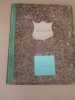
Jean-Baptiste Cimador, dit « le comte Cimador », né à Venise en 1761, se fixa à Londres vers 1791 pour y enseigner le chant. Indigné de ce que l'orchestre de Hay-Market refusa de jouer les symphonies de Mozart à cause des difficultés d'exécution qu'elles présentaient, il arrangea les six plus belles en sextuors à cordes, avec flûte ad libitum, et dans le plus grand respect de l'oeuvre de Mozart. C'est ce qui permit à ces symphonies d'accéder au grand succès qu'elles n'avaient pu obtenir. Cimador est mort à Londres vers 1808. Remise de 20% pour toutes commandes supérieures à 200 €
[Grand théâtre de Bordeaux - William Blake & Co.] - Grand Théâtre de Bordeaux ; LOMBARD, Alain (dir. artistique) ; Mozart ; Verdi ; Strauss ; Bartok
Reference : 46228
(1993)
Grand Théâtre de Bordeaux ( opéras : lot de 10 cahiers d'accompagnement de productions des années 1991 à 1993 ) : 2. Tristan und Isolde (Wagner) ; 3. Otelllo (Verdi) ; 4. Cosi fan tutte (Mozart) ; 5. Don Carlo, de Verdi ; 6. Die Zauberflöte de Mozart ; 7. Ballet-théâtre de Bordeaux (dir. Paolo Bortoluzzi) ; 8. Il Trittico de Puccini ; 9. Il trovatore, de Verdi ; 13. Ariadne auf Naxos, de Richard Straus ; 14. Boris Godounov, de Moussorgski ; 15. Le Mandarin Merveilleux - Le Château de Barbe-bleue (Bartok)
11 vol. in-4 br. oblongs, Grand théâtre de Bordeaux - William Blake & Co., ill. couleurs ou noir et blanc, 1991 à 1993, env. 45 pp. par vol. Liste des cahiers : 2. Tristan und Isolde (Wagner) ; 3. Otello (Verdi) ; 4. Cosi fan tutte (Mozart) ; 5. Don Carlo, de Verdi ; 6. Die Zauberflöte de Mozart ; 7. Ballet-théâtre de Bordeaux (dir. Paolo Bortoluzzi) ; 8. Il Trittico de Puccini ; 9. Il trovatore, de Verdi ; 13. Ariadne auf Naxos, de Richard Straus ; 14. Boris Godounov, de Moussorgski ; 15. Le Mandarin Merveilleux - Le Château de Barbe-bleue (Bartok)
Bon état. Poids de 4 Kg. Prix pour l'ensemble
Mozart.
Coll. "Agora" n° 56, Paris, éd. Presses Pocket, 1990, in-12, cartonnage souple, couv. portrait en coul. de Mozart éd., 368 pp., quelques reproductions de gravures et de partitions en noir, chronologie, index des œuvres citées, index des noms, Un livre qui va vous permettre de comprendre le génie de Mozart. Un incontournable ! Très bon état
Collection complette des oeuvres de piano par W. A. Mozart, gravée par Richomme. Volume 1 : Quatre trios pour le piano-forte par W. A. Mozart, et un Trio manuscrit pour piano, violon et violoncelle, par Charmes Desmoulins (daté 6 janvier 1822). Volume 2 : Trois Trios de Mozart, et un Duo pour piano et violon, deux Trios, une Sonate pour piano et violon obligé, et un Duo pour piano et corno-bassetto, par Charles Desmoulins.
Paris, Pleyel, s.d . 2 volumes in-4 oblong, (28)-(10) et (11)-(28) ff., reliure de l'époque demi-vélin vert à petits coins (reliures un peu frottées, défauts, manques à une pièce de titre). Ex-libris manuscrit : Charles des Moulins. Tampon humide : Ignace Pleyel.
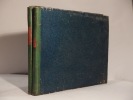
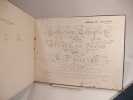
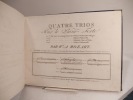
Partitions imprimées de 7 trios de Mozart, et partitions manuscrites de 2 duos, 3 trios et une sonate de Charles Desmoulins. * Voir photographies / See pictures. * Membre du SLAM et de la LILA / ILAB Member. La librairie est ouverte du lundi au vendredi de 14h à 19h. Merci de nous prévenir avant de passer,certains de nos livres étant entreposés dans une réserve.
Die Zauberflöte. Randzeichnungen zu Mozart's Handschrift
Berlin, Paul Cassirer 1924. 2° (Folio) OHLn. in Halbpergament-Optik (Ecken ganz leicht angestoßen) Großartige Folge von Slevogt-Illustrationen zu Wolfgang Amadeus Mozarts beliebtester Oper in Kupfertiefdruck. Für jeden Mozartfreund ein Genuß. - "Volksausgabe des XVII. Pan-Pressendrucks mit Reproduktionen der ganzseitigen Tafeln in Kupfertiefdruck, von Otto Felsing nach den Radierungen Slevogts gedruckt. Die Entstehung der Illustrationen ist einzigartig: Die Seiten der Originalpartitur Mozarts in der Berliner Staatsbibliothek wurden fotografiert und auf die Kupferplatte gebracht. Slevogt radierte dann direkt auf die Platte, indem er die virtuose Handschrift Mozarts mit seinen ebenso märchenhaften wie geheimnisvollen Illustrationen umspielte. Das Resultat dieses neuen Verfahrens ist eine ganz unmittelbare Symbiose zweier verschiedener künstlerischer Äußerungen, der Musik und der bildenden Kunst". - Rümann, Slevogt 67.
Contains no text, 47 full page illustrations being Slevogt's take on passage from Mozart autographed score of Magic Flute. Each plate contains a section of music in facsimile with drawings around it . Very striking. Good clean copy Remise de 20% pour toutes commandes supérieures à 200 €
Les sautes d'humour de Mozart père & fils
Payot (5/2023)
LIVRE A L’ETAT DE NEUF. EXPEDIE SOUS 3 JOURS OUVRES. NUMERO DE SUIVI COMMUNIQUE AVANT ENVOI, EMBALLAGE RENFORCE. EAN:9782228933353
MOZART Istvan Cohen Héléne Gal Mozart Festival Orchestra Médiaphone
Reference : 500001203
ISBN : 3379180902150
MOZART: Elvira Manigan: Concerto pour piano et Orchestre n° 20 & 21
Bella Musica 12x14x1cm. Sans date. CD.
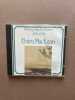

Bon état
Association franºaise des amis de Mozart et des ma«tres classiques
Reference : 7208
ISBN : B0014LAWWU
Les Amis de Mozart : Vingt-cinqui¿me anniversaire de l'Association franºaise des amis de Mozart et des ma«tres classiques (La Revue musicale)
Richard-Masse Broch D'occasion bon tat 01/01/1981 146 pages
RACCOLLA DI QUATRO ARIE,UN TERZETTO,UN QUARTETTO,E QUATTRO RECITATINI E SCENE. FORTE PIANO.
Schlesinger.(1824 ?).In-4 demi-relié.108 p.Fac-similé de Mozart.Portrait gravé de Mozart en frontispice par Blood.Gravure sur la page de titre.Dos orné de 8 triples filets dorés.Titre doré.BE.
Collection complette des Quatuors, Quintetti & Trio de A. Mozart.- 5 volumes Gravés par Richomme.COMPLET.
1809 Pleyel & Fils aîné, Paris ca 1809/1820,5 volumes gravés par Richomme.. Tall folio. 19th century marbled boards. Violin i: 2ff. (title, thematic catalogue), [1] (blank), 2-165; Violin II: 2ff. (title, index)k [1] (blank), 2-135; Viola I: 2ff. (title, index), 133; Viola II: 2ff. (title, index), [1] (blank), 2-51; Violoncello: 3ff. (title, thematic catalogue, index), 119 pp. Engraved. Contains K 157, 160, 173, 428, 458, 421, 465, 387, 464, 575, 589, 590, 499, 593, 614, 406, 478, Anh. B to 478, 515, 287, Anh. B to 271h, 174, 375, Anh. B to 375, 516, 407, Anh. B to 386c, 581, Anh. B to 581, 563. Bindings worn and partially detached, spines lacking; Slightly browned and soiled; some offsetting; lacking frontispiece portrait. Scarce. OCLC (1 copy only in U.S. libraries).
5 volumes in-f°(264 x 338mm) dos et plats de papier finement gaufrés et moirés, gardes marbrées. Page de titre gravée pour chaque volume, le 1er contient en outre le catalogue thématique de tous les quatuors, quintetti et trio formant la collection complette de Mozart ,dos manquant, le 2e, la table du second violon et le 3e la table du 2e alto.etc. Dos leg.abimés aux coiffes, mais reliures solides, rares rousseurs,mouillures en marge .Serie complète . KV 157, 160=159a, 173, 428=421b, 458, 421, 465, 387, 464, 575, 589, 590, 499, 593, 614, 406=516b, 478, 515, 287=271H, 174, 375, 516, 407=386c [Bearbeitung für Streichquintett], 563) Collection Complette des Quatuors, Quintetti & TrioKö7 Anh. D 9(d), S. 924; RISM M/MM 7467. - Komplette Folge der Pleyelsche Gesamtausgabe der Kammermusikwerke Mozarts (umfasst 13 Quartette, 10 Quintette und das Trio KV 563), zugleich Titelauflagen früherer Pleyel-Ausgaben ca. 1798ff. - Stimme der Violine I fehlt. Am Ende der Stimme der Violine II angebunden: Alternativstimme des Violoncello II (4 gest. S.) für KV 386c. Einbände lädiert. Stockfleckig und vereinzelt wasserrandig. (KV 157, 160=159a, 173, 428=421b, 458, 421, 465, 387, 464, 575, 589, 590, 499, 593, 614, 406=516b, 478, 515, 287=271H, 174, 375, 516, 407=386c [Bearbeitung für Streichquintett], 563) Collection Complette des Quatuors, Quintetti & Trio. Gravée par Richomme. [9 Hefte zusammengebunden]. Paris, Pleyel (Pl.Nrn. 544, 354, 355, 481, 545, 482, 483, 546, 547, 548) [ca. 1809ff.]. Stimmen (VlII, VlaI, VlaII, Vc): 135, 133, 51, 119 gest. S. Pp.d.Zt. [RARE PRINTED MUSIC] Remise de 20% pour toutes commandes supérieures à 200 €
A la gloire de Mozart.
Paris Editions de la Nouvelle Revue Critique 1938 1 vol. broché in-8, broché, 219 pp., frontispice et 30 planches (portraits, vignettes et reproductions de partitions). Bonne condition.
Mozart dans Mozart.
Paris Desclée de Brouwer, coll. "Temps et visages" 1948 1 vol. broché in-8, broché, 270 pp., musique notée. Couverture légèrement jaunie en bordure sinon très bonne condition.
Mozart.
Paris Gallimard, coll. "Leurs figures" 1951 1 vol. broché fort in-8, broché, non coupé, 526 pp. Traduit de l'allemand par Paule Pascali. Exemplaire du service de presse avec le prière d'insérer. Dos un peu taché, papier jauni mais bon exemplaire, non coupé.

