 Write to the booksellers
65 books for « suetonius »Edit
-
Type
Autograph (1)
Book (63)
Old papers (1)
-
Language
English (1)
French (60)
Latin (3)
Russian (1)
-
Century
16th (2)
17th (13)
18th (3)
19th (4)
20th (5)
-
Countries
Belgium (6)
Canada (1)
Denmark (8)
France (18)
Germany (2)
Netherlands (21)
Switzerland (8)
United States of America (1)
-
Syndicate
ILAB (21)
NVVA (3)
SLACES (3)
SLAM (8)
Topics
- Biography (2)
- Books from the xviiith (1)
- Classic literature (3)
- Dog (the) (1)
- Dressage (1)
- Early printed books (3)
- English (1)
- Greek (14)
- Historical biography (2)
- History (8)
- Hunting (1)
- Iconography (1)
- Incunabulum (1)
- Isaac (1)
- Latin (20)
- Literature (3)
- Lyons - rhone (69) (1)
- Philology (2)
- Roman history (2)
- Roman literature (1)
- Rome (4)
C. Suetonius Tranquillus, ex recensione Joannis Georgii Graevii, cum ejusdem animadversionibus, ut et commentario integro Laevini Torrentii, Isaaci Casauboni, & Theodori Marcilii, et cum notis ac numismatibus, quibus illustratus est a Carolo Patino. Accedunt notae selectiores aliorum. Editio tertia auctior & emendatior.
Utrecht (Trajecti ad Rhenum), Apud Guilielmum à Poolsum, 1708.
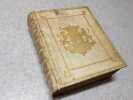
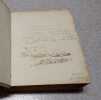
4to. 2 parts in 1: (XVI),829 (recte 807),(1 blank); 79,(4 index),(1 blank); 110,(153 index),(1 blank) p. Frontispiece. Vellum. 24 cm 'Prize copy with the manuscript prize' (Ref: STCN ppn 203443551; Schweiger 2,979; Ebert 21933; cf. Moss 2,631; cf. Dibdin 2,441; cf. Fabricius/Ernesti 2,458/59; Brunet 5,582; Spoelder p. 711, IJsselstein 2) (Details: Back with 5 raised bands. Binding gilt, and with the gilt coat of arms of IJsselstein on the boards. Including the prize. The frontispiece, dated 1703, depicts Suetonius at work at a desk in what looks like the Pantheon. Woodcut ornament on the title-page. Numerous woodcut illustrations of medals and coins in the text) (Condition: Vellum soiled and age-toned. All 4 decorative silk fastening ribbons worn away. Paper yellowing) (Note: The editor of the Suetonius edition is Johann Georg Graeve, or in Latin Johannes Georgius Graevius, 1632-1703. He was professor of Eloquence at Duisburg, from 1657 at Deventer and from 1661 at Utrecht, where he lived and worked for the last 40 years of his life. He limited his attention mainly to writers of Latin prose, Cicero, Suetonius, Caesar, Justinus, Florus. This scholar of international stature is remembered above all for his 'Inscriptiones antiquae', long time a standard edition. He is also famous for his three 'Thesauri', in which important works of previous leading scholars were collected and reprinted, the 'Thesaurus eruditionis scholasticae', the 12 folio volumes of the 'Thesaurus antiquitatum Romanarum', and the 9 volumes 'Thesaurus antiquitatum et historiarum Italiae'. Graevius produced 3 Suetonius editions, the first appeared in 1672, his second in 1691 and finally a third in 1703. This title on offer of 1708, is a reissue of the edition of 1703. Van Poolsum apparantly acquired the unsold copies of the 1703 edition, replaced only the first 2 leaves, and brought it again on the market under his own name. The text of Suetonius (the 'Vitae', 'De illustribus grammaticis liber' and 'De claris rhetoribus liber') is followed by 14 pages and 2 folding tables with inscriptions to illustrate the 'Lives', and 54 pages with the commentary of Graevius; then follows the commentary of 79 pages by Carolus Patinus, with nice illustrations of coins. This is followed by a 70 p. commentary of the Dutch scholar Theodorus Marcilius on Suetonius' biography of Vespasian. This is again followed by a small section with the prefaces to Suetonius by Politianus and Casaubon, and Vossius' article on Suetonius from 'De historicis Latinis'. Included is also the text of the 'Monumentum Ancyranum', with Isaac Casaubon's commentary; at the end a 153 page index compiled by Matthias Berneccerus Graevius inserted, as mentioned above, the entire commentary of Carolus Patinus, or Charles Patin, 1633-1693. In 1676 this Frenchman was appointed professor of philosophy at the university of Padua, and later of medicin and surgery. He made his fame however with his books on numismatics, and became a well known authority upon the subject of coins and medals. He published on Roman families and emperors on coins and medals. He possessed a collection of his own, because in Amsterdam in 1672 was published on his own expense his 'Thesaurus numismatum e Museo Caroli Patini'. (Handbuch Gelehrtenkultur der frühen Neuzeit, Berlin 2004, vol. 1, p. 497/8) Patin must also have been a wealthy man, because his own Suetonius edition of 1675 (Basel), which seems to be a 'spin off' of his great knowledge of imperial coins, was also printed on his own expense. The Roman historian Suetonius, born c. 69 A.D, is the most influential and best known biographer in the Latin language. He was appointed secretary to the emperor Hadrian, a job that gave him access to the imperial records and archive. He made good use of his sources, writing the Lives of the XII Caesars, or 'De vita Caesarum'. The collection consists of the biographies of 12 emperors, from Caesar, the founder of the imperial line, to Domitian. 'Suetonius, like Plutarch, believed that a person's character could be revealed in small and insignificant details'. He 'organized his Lives by topics (per species) rather than chronologically'. (The Classical Tradition, Cambr. Mass. 2010, p. 912/13) Beyond simplicity and clearness he has no stylistic pretentions. He quotes verbatim from documents he knew, and shows critical ability. 'The great number of scurrilous anecdotes in most of the lives may be due to the nature of his sources'. (OCD, 2nd ed. p. 1020/1) Of another of his works, 'De viris illustribus', a collection biographies of famous Roman authors, the lives of Lucan, Horace, Vergil and Terence have survived, and his 'Liber de illustribus grammaticis', and his 'De claris rhetoribus liber'. Suetonius was read in the Middle Ages. The Frank Einhard wrote a biography of Charlemagne along the lines of a Life of Suetonius. From the Renaissance onward Suetonius was neglected. Pioneering work was done by the French scholar Isaac Casaubon, who produced an excellent text and a valuable commentary. (Geneva 1595/1615) This work was continued by the Dutch scholar Graevius with his great Suetonius edition of 1672. This edition became, with her numerous reissues and revisions, the foundation for the widespread study of Suetonius in the Netherlands and in England, and in the next (18th) century the scholarly interest in Suetonius has been greater than ever before or since. This edition of 1708 is a reissue of the 3rd augmented and corrected edition. It contains the entire commentaries of Torrentius, Casaubon, with the notes of the Dutch scholar Theodorus Marcilius (Arnheimensis) and other leading scholars. Gibbon praised Suetonius for his strict dedication to historical truth. Nowadays 'historians of Rome take him more seriously than do literary critics'. (The Classical Tradition, Cambr. Mass., 2010, p. 913)) (Provenance: The prize was awarded to the 15 years old Barend van Lockhorst, for his diligence and his progress in Latin. The prize, dated 'Die ante cal. Mart. 1786', is signed by 3 curators, the alderman Johan Franco Beijen (See his Wikipedia article 'Johan Franco Beijen II), P. van der Meulen, and the mayor of IJsselstein, Johannes Tra Kranen, and the the rector, W.H. Oevering. Barend van Lockhorst van Bonlez, 1771-1831, born in Rotterdam, later became a wealthy landowner, with land in Holland, Limburg and Brabant. He was a member of the 'Departement van de Monden van de Maas', and member of the city council of Rotterdam) (Collation: *-2*4, A-5I4; chi1, 2A-K4, 2L2 (leaf 2L2 verso blank); 6A-7K4, (leaf 7K4 verso blank). 2 folding tables after p. 774) (Error in pagination: it jumps at p. 352 to 355, and from p. 730 to 751. Nothing is missing, all is complete) (Photographs on request) (Heavy book, may require extra shipping costs)
C. Suetonius Tranquillus, ex recensione Joannis Georgii Graevii, cum ejusdem animadversionibus, ut et commentario integro Laevini Torrentii, Isaaci Casauboni, & Theodori Marcilii, nec non selectis aliorum. Editio secunda auctior & emendatior.
The Hague (Hagae-Comitis), Apud Johannem a Velsen; Utrecht (Trajecti ad Rhenum), Typis Rudolphi a Zyll & Anthonii Schouten, 1691.
4to. 2 parts in 1: (XVI),822 (recte 800); 110,(153 index),(1 blank) p., frontispiece, 12 full-page engraved portraits of emperors, 1 folding plate showing an inscription. Half calf. 24.5 cm (Ref: STCN ppn 852709684; Schweiger 2,978; Ebert 21931; Moss 2,631; Dibdin 2,441; Brunet 5,582) (Details: Back gilt, and with a red morocco shield. Boards marbled. Frontispiece depicting Suetonius at work at a desk in the Pantheon. Woodcut printers' mark on the title, depicting 'Minerva Traiectina', who rests under an olive tree; a ribbon in the tree bears the motto: 'Pax artium altrix'. Each biography of a Roman emperor is preceded by an engraved portrait, made after a Roman coin. The text of Suetonius (the 'Vitae', 'De illustribus grammaticis liber' and 'De claris rhetoribus liber') is followed by 14 pages with inscriptions to illustrate the 'Lives', and 47 pages with the commentary of Graevius; added is a 70 p. commentary of the Dutch scholar Theodorus Marcilius on Suetonius' biography of Vespasian. After this a small section with the prefaces to Suetonius by Politianus and Casaubon, and Vossius' article on Suetonius from 'De historicis Latinis'. Included is also the text of the 'Monumentum Ancyranum', with Isaac Casaubon's commentary; at the end a 153 page index compiled by Matthias Berneccerus) (Condition: Wear to the extremities of the boards. A few small pieces of the marbled paper on both boards are gone. Front flyleaf removed. Small inscription on the front pastedown. Some slight foxing) (Note: The Roman historian Suetonius, born c. 69 A.D, is the most influential and best known biographer in the Latin language. He was appointed secretary to the emperor Hadrian, a job that gave him access to the imperial records and archive. He made good use of his sources, writing the Lives of the XII Caesars, or 'De vita Caesarum'. The collection consists of the biographies of 12 emperors, from Caesar, the founder of the imperial line, to Domitian. 'Suetonius, like Plutarch, believed that a person's character could be revealed in small and insignificant details'. He 'organized his Lives by topics (per species) rather than chronologically'. (The Classical Tradition, Cambr. Mass. 2010, p. 912/13) Beyond simplicity and clearness he has no stylistic pretentions. He quotes verbatim from documents he knew, and shows critical ability. 'The great number of scurrilous anecdotes in most of the lives may be due to the nature of his sources'. (OCD, 2nd ed. p. 1020/1) Of another of his works, 'De viris illustribus', a collection biographies of famous Roman authors, the lives of Lucan, Horace, Vergil and Terence have survived, and his 'Liber de illustribus grammaticis', and his 'De claris rhetoribus liber'. Suetonius was read in the Middle Ages. The Frank Einhard wrote a biography of Charlemagne along the lines of a Life of Suetonius. From the Renaissance onward Suetonius was neglected. Pioneering work was done by the French scholar Isaac Casaubon, who produced an excellent text and a valuable commentary. (Geneva 1595/1615) This work was continued by the Dutch scholar Graevius with his great Suetonius edition of 1672. This edition became, with her numerous reissues and revisions, the foundation for the widespread study of Suetonius in the Netherlands and in England, and in the next (18th) century the scholarly interest in Suetonius has been greater than ever before or since. This edition of 1691 is the first reissue, and contains the entire commentaries of Torrentius, Casaubon, with the notes of the Dutch scholar Theodorus Marcilius (Arnheimensis) and Jacobus Gronovius, and the Portugese humanist Achilles Statius, or Aquiles Estaço. Gibbon praised Suetonius for his strict dedication to historical truth. Nowadays 'historians of Rome take him more seriously than do literary critics'. (The Classical Tradition, Cambr. Mass., 2010, p. 913) Johann Georg Graeve, or in Latin Johannes Georgius Graevius, 1632-1703, was of German descent. He was professor of Eloquence at Duisburg, from 1657 at Deventer and from 1661 at Utrecht, where he lived and worked for the last 40 years of his life. He limited his attention mainly to writers of Latin prose, Cicero, Suetonius, Caesar, Justinus, Florus. This scholar of international stature is remembered for his 'Inscriptiones antiquae', long time a standard edition. He is also famous for his three 'Thesauri', in which important works of previous leading scholars were collected and reprinted, the 'Thesaurus eruditionis scholasticae', the 12 folio volumes of the 'Thesaurus antiquitatum Romanarum', and the 9 volumes 'Thesaurus antiquitatum et historiarum Italiae') (Provenance: On the front pastedown in ink in Dutch, 'Geschenk aan de bibliotheek van A.M.A. Meyer') (Collation: *-2*4; A-5H4; 6A-7K4 (leaf 7K4 verso blank); plates after 2*4, 110, 294, 366. 432, 492, 562, 567, 600, 619, 649, 660, folding plate after 762. Error in pagination: it jumps at 351 on the recto to 354 on the verso, and from 731 on the recto to 752 on the verso)) (Photographs on request) (Heavy book, may require extra shipping costs)
C. Suetonius Tranquillus, cum notis integris Jo. Bapt. Egnatii, Henrici Glareani, Laevini Torrentii, Fulvii Ursini, Isacii Casauboni, Jani Gruteri, Theod. Marcilii, Joannis Georgii Graevii, Caroli Patini, (qui ex numismatibus illustravit) & selectis aliorum curante Petro Burmanno, qui & suas adnotationes adjecit.
Amsterdam (Amstelaedami), Apud Janssonio-Waesbergios, 1736.
4to. 2 volumes: (IV, frontispiece & title),(XX),808;420,(2),(34 plates),202,(5 index numismaticum in Caroli Patini figuris & notis),(1 blank) p.; p. 421-492;(204 indices),(1),(3 blank) p. Brown morocco. 27 cm (Ref: STCN ppn 183108442; Schweiger 2,979/80; Dibdin 2,442/43: 'a very valuable edition'; Moss 2,632; Fabricius/Ernesti 2,459; Brunet 5,583; Graesse 6/1,523; Ebert 21937) (Details: Backs gilt and with 4 raised bands. Boards with gilt quadruple fillets. Marbled endpapers and edges. Frontispiece produced by W. Jong, it depicts Father Time unveiling a monument for Suetonius in the middle of a kind of Pantheon; in the foreground sits a crowned woman writing a book; at her feet the spoils won in battles. Title printed in red and black. Engraved printer's mark on the title, depicting a mole, flanked by Athena and Hermes; the motto reads: 'Vulgo caeca vocor, video sed acutius ipso'. Occasional small engraved illustrations in the text) (Condition: Joint of the lower board of volume 1 starting to split. The back of volume 2 has been expertly repaired and laid down on brown cloth, a small piece of the leather is gone. The endpapers of the second volume have been renewed with new marbled endpapers. Some slight foxing) (Note: The Roman historian Suetonius, born c. 69 A.D, is the most influential and best known biographer in the Latin language. He was appointed secretary to the emperor Hadrian, a job that gave him access to the imperial records and archive. He made good use of his sources, writing the Lives of the XII Caesars, or 'De vita Caesarum'. The collection consists of the biographies of 12 emperors, from Caesar, the founder of the imperial line, to Domitian. 'Suetonius, like Plutarch, believed that a person's character could be revealed in small and insignificant details'. He 'organized his Lives by topics (per species) rather than chronologically'. (The Classical Tradition, Cambr. Mass. 2010, p. 912/13) Beyond simplicity and clearness he has no stylistic pretentions. He quotes verbatim from documents he knew, and shows critical ability. 'The great number of scurrilous anecdotes in most of the lives may be due to the nature of his sources'. (OCD, 2nd ed. p. 1020/1) Of another of his works, 'De viris illustribus', a collection biographies of famous Roman authors, the lives of Lucan, Horace, Vergil and Terence have survived, and his 'Liber de illustribus grammaticis', and his 'De claris rhetoribus liber'. Suetonius was read in the Middle Ages. The Frank Einhard wrote a biography of Charlemagne along the lines of a Live of Suetonius. From the Renaissance onward Suetonius was neglected. Pioneering work was done by the French scholar Isaac Casaubon, who produced an excellent text and a valuable commentary. (Geneva 1595/1615) This work was continued by the Dutch scholar Johann Georg Graeve, or in Latin Johannes Georgius Graevius, 1632-1703, with his great Suetonius edition of 1672. This edition became, with her numerous reissues and revisions, the foundation for the widespread study of Suetonius in the Netherlands and in England, and in the next (18th) century the scholarly interest in Suetonius has been greater than ever before or since. Gibbon praised Suetonius for his strict dedication to historical truth. Nowadays 'historians of Rome take him more seriously than do literary critics'. (The Classical Tradition, Cambr. Mass., 2010, p. 913) This copious and excellent Suetonius edition of 1736 is a so-called 'Variorum' edition. It offers a 'textus receptus' which is widely accepted, accompanied with the commentary and the annotations of various specialists, taken, or excerpted from earlier useful, normative or renewing editions. Editions like these, 'cum notis Variorum', were useful, but never broke new ground. Their production was the specialty of Dutch scholars of the 17th and 18th century. The Dutch latinist Petrus Burmannus based his edition on that of Graevius of 1672. It contains the complete notes of the best commentators, such as Egnatius, Glareanus, Torrentius, Casaubon and Gruter, and selections and excerpts from others. Burmannus added also many excellent notes of his own. Petrus Burmannus, 1668-1741, was professor of Latin at the University of Utrecht from 1696, and at Leiden from 1715. As an editor Burmannus was an industrious manufacturer of 'Variorum' Editions. He confined himself to the Latin classics. He edited Phaedrus, Horace, Claudian, Ovid, Lucan, and the Poetae Latini Minores, Petronius, Quintilian and Suetonius. (Sandys 2, p. 343/5)) (Provenance: On the front flyleaf in ballpoint the name of 'Lennart Hakanson', 1939-1987, professor of Latin at the university of Uppsala) (Collation: Volume 1: pi2, *-2*4, 3*2; A-5I4. Volume 2: A-3F4, 3G2, chi1; (34 plates) A- 2C4 (verso leaf 2C4 blank); *3H2, 3H-4S4; chi2 (chi1 recto: binder's instruction; leaf chi1 verso and chi2 blank)) (Photographs on request) (Heavy set, may require extra shipping costs)
Histoire des douze Césars de Suétone, traduite par Henri Ophellot de la Pause. Avec des Mêlanges philosophiques & des notes.
Paris, Chez Saillant & Nyon, Libraires, 1771.
8vo. 4 volumes: CXXI,(1 blank),390,(4); (VIII),522; (IV),528; (VIII),383,(1 blank), 86,(2 blank) p. Half calf. 22 cm (Ref: Schweiger 2,984/85; Moss 2,638; Brunet 5,584; Graesse 6/1,525; Ebert 21957; Cioranescu 22813) (Details: Back with 5 raised bands. Title pages in red and black. Latin text with parallel French translation, with notes and 'mélanges philosophique') (Condition: Bindings scuffed. Backs rubbed and slightly damaged at the head and foot of the spine. Shields on the backs partly gone. Boards scratches. Tiny wormhole in the blank lower margin of the first 140 pages of the second volume only) (Note: The Roman historian Suetonius, born c. 69 A.D, is the most influential and best known biographer in the Latin language. He was appointed under the emperors Hadrian and Trajan to the secretarial posts of 'a studiis', 'a bibliothecis', and 'ab epistulis' of the palace administration, jobs that gave him access to the imperial archives. His Lives of the Emperors 'De vita Caesarum' gives the biographies of 12 emperors, from Caesar, the founder of the imperial line, to Domitian. 'Suetonius, like Plutarch, believed that a person's character could be revealed in small and insignificant details'. (The Classical Tradition, Cambr. Mass. 2010, p. 912/13) Beyond simplicity he has no stylistic pretentions. He quotes verbatim from documents he knew, and shows critical ability. 'The great number of scurrilous anecdotes in most of the lives may be due to the nature of his sources'. (OCD, 2nd ed. p. 1020/1) Suetonius was read in the Middle Ages. Einhard wrote a biography of Charlemagne along the lines of a Life of Suetonius. From the Renaissance onward he was neglected, until the edition of the French scholar Isaac Casaubon, Geneva 1595, who did pioneering work on the text of Suetonius. The great edition of 1672 of the Dutch scholar J.G. Graevius and its later revisions became the foundation for the widespread interest and study of Suetonius in the 18th century. Important for the reception of Suetonius is the article that the French philosopher Pierre Bayle wrote about him in his 'Dictionnaire Historique et Critique'. 'Bayle adopted a view of Suetonius that became commonplace in subsequent decades. He presented Suetonius as a model of candor, sincerity and impartiality. Suetonius reports without judgment, he tells what he knows without fear, and he flatters no one'. (G.W. Bowersock, 'From Gibbon to Auden: Essays on the Classical Tradition', Oxford 2009, p. 55) The English historian Gibbon also praised the Roman historian for his strict dedication to historical truth, and for composing the 'Lives' truthfully, without or prejudice. This view of Suetonius was also dominant in 18th century France. Apart from the scholarly works, two translations appeared in that century, one made by De la Harpe in 1770, and one in 1771, translated under the pseudonym Henri Ophellot de la Pause, an alias of the writer and philosopher of the Enlightenment, Jean-Baptiste-Claude Delisle de Sales, 1741-1816. He is best known for his 'De la Philosophie de la Nature' of 1770, which caused a scandal for professing atheism. 'Beginning in 1776, a faction in the French court began a campaign against De Sales, as a way of attacking the French philosophical movement more generally. Voltaire championed his defense, but De Sales was imprisoned in March 1777 for publishing a book deemed to be anti-royalist, an event that brought his works out of obscurity'. (Wikipedia, Delisle de Sales) The trial became a cause célébre in Europe and made him an international celebrity. The apparant parallel between the Roman and French court may explain De Sales' interest in the biographer Suetonius, who did not shrink from recording the dark sides and sordid details in the lives of the royals) (Collation: pi2, a-g8,ch2; A-2A8, 2B6 (minus blank leaf 2B6); pi4, A-2G8, 2H4, 2I-2K8,2L1; pi2, A-2F8, 2G4, 2H-2K8, 2L4; pi4, A-2A8 (leaf 2A8 verso blank), A-E8, 2F4 (leaf 2F4 blank)) (Photographs on request)
Caji Suetoniii Tranquilli Opera, et in illa commentarius Samuelis Pitisci, quo antiquitates romanae, tum ab interpretibus doctissimis, Beroaldo, Sabellico, Egnatio, Ursino, Grutero, Torrentio, Casaubono, Marcilio, Boxhornio, Graevio, Babelonio etiam explicatae, tum ab illis neglectae, ex auctoribus indoneis permultis, graecis & latinis, veteribus & recentioribus, perpetuo tenore explicantur.
Utrecht (Trajecti ad Rhenum), Ex Officina Francisci Halmae, Academiae typographi, 1690.
8vo. 2 volumes: (XL, including frontispiece),932; (II),924 p., 12 engraved portraits, and 28 plates, of which 1 folding, and 1 double page. Vellum 20 cm (Ref: STCN ppn 833699237; Schweiger 2,978; Didbin 2,442; Moss 2,632; Fabricius/Ernesti 2,459; Graesse 6/1,523; Ebert 21930: 'Beste Ausgabe für die Suite 'cum notis variorum'') (Details: 6 thongs laced through the joints. Frontispiece by G. Hoet and T. Mulder, depicting 'Roma triumphatrix'; she offers a crown to a seated emperor, in the foreground the Roman god Tiberinus and the she-wolf with Romulus and Remus. Title printed in red and black. Woodcut printer's mark on the title, motto 'vivitur ingenio', 'one lives in one's genius'. The portraits are probably engraved by Mulder; the folding plate, a 'triumphus' and 3 other plates are the work of painter and etcher Jan Luyken) (Condition: Vellum soiled and age-toned. Old and small ownership entry on both titles. The book lacks one leaf of the preliminary pages, leaf ***3, with 2 short laudatory poems by the Rector and a Praeceptor of the Schola Latina of Zutphen, the school of which Samuel Pitiscus was once Rector. It seems that the binder forgot to insert a new leaf for a leaf which had been cancelled) (Note: The Roman historian Suetonius, born c. 69 A.D, is the most influential and best known biographer in the Latin language. He was appointed secretary to the emperor Hadrian, a job that gave him access to the imperial records and archive. He made good use of his sources, writing the 'Lives of the XII Caesars'; 'De vita Caesarum' gives the biographies of 12 emperors, from Caesar, the founder of the imperial line, to Domitian. 'Suetonius, like Plutarch, believed that a person's character could be revealed in small and insignificant details'. He 'organized his Lives by topics (per species) rather than chronologically'. (The Classical Tradition, Cambr. Mass. 2010, p. 912/13) Beyond simplicity and clearness he has no stylistic pretentions. He quotes verbatim from documents he knew, and shows critical ability. 'The great number of scurrilous anecdotes in most of the lives may be due to the nature of his sources'. (OCD, 2nd ed. p. 1020/1) Of another of his works, 'De viris illustiribus', a collection biographies of famous Roman authors, of Lucan, Horace, Vergil and Terence have survived, and his 'Liber de illustribus grammaticis', and his 'De claribus rhetoribus liber'. Suetonius was read in the Middle Ages. The Frank Einhard wrote a biography of Charlemagne along the lines of a Live of Suetonius. From the Renaissance onward Suetonius was neglected, untill the great edition of 1672 of Graevius. Gibbon praised this Roman historian for his strict dedication to historical truth. His editor Samuel Pitiscus (Samuel Petiski), 1636-1727, a Dutch classicist of German origin, was rector at Zutphen and from 1685 of the Gymnasium Hieronymianum at Utrecht. He produced editions of Curtius Rufus (1685), Suetonius (1690), Aurelius Victor (1696), and Solinus (1689). He did also lexicographic work, and published a 'Lexicon Latino-Belgicum' (1725). He produced also in 1713 a 'Lexicon Antiquitatum Romanarum', and an edition in 1730 of Pomey's 'Pantheum Mythicum'. In this Suetonius edition Pitiscus also accepted some Lives nowadays ascribed to Suetonius, a 'Vita Juvenalis', 'Vita Persii' and 'Vita Plinii'. At the end we find also the fragments of Suetonius, followed by 17 pages with inscriptions concerning the 'Lives of the XII Caesars', and an edition of the 'Monumentum Ancyranum', with the learned commentary of Lipsius and Casaubon. Pitiscus was not a great scholar, but he skillfully excerpted, compared and contrasted his sources. His editions of Roman historians offer the 'textus receptus' accompanied with the commentary and the annotations of specialists, taken from earlier useful, normative or renewing editions. Nevertheless he added much useful observations of his own. Dibdin is very positive, the edition is, he says, 'adorned with a vast number of beautiful cuts, which not only illustrate Suetonius's history, but likewise give a great light to the Roman antiquities. The same antiquities are also farther explained by Pitiscus's learned perpetual commentary on Suetonius, and extracts of nearly 900 ancient and modern authors, which he has collected for that purpose'. Or Moss: 'This is a very excellent and valuable edition, in which the industry as well as the learning of the editor has been fully displayed'. Ernesti is less positive about the ungrateful task which this hardworking schoolmaster has fullfilled: 'nihil est, praeter compilationes superiorum commentariorum, Lexicorum item et aliorum librorum de rebus antiquariis'. It is just how you look at it. However, this industry paid off. When he died Pitiscus left the fortune of 10.000 guilders for the poor of Utrecht. (Van der Aa 15,336/38)) (Provenance: Below the printer's mark an inscription that declares: 'Inservio Studiis Joannis Bernsavii'. In Wikipedia we found a lemma of one Johannes Bernsau, 1674-1750, who was mayor of Elberfeld. And on '30 Septembris' of 1690, the year this book was published, one Johannes Bernsaw, Johannis Bernsavii filius, Elverfelda-Montanus', matriculated at the University of Duisburg) (Collation: Vol. 1: *-2*8, 3*4 (minus leaf 3*3, cancelled), chi1; A-3M8, 3N2; Vol. 2: pi1, A-3L8, 3M6) (Photographs on request)
Cajus Suetonius Tranquillus, ex recensione Francisci Oudendorpii, qui variantes lectiones, suasque animadversiones adjecit; intermixtis J.G. Graevii, et J. Gronovii, nec non ineditis Caroli Andreae Dukeri adnotationibus.
Leiden (Lugduni Batavorum), Apud Samuelem Luchtmans & filios, 1751.
8vo. 2 parts in 1: (XLIV),1024,(32, index) p.; frontispiece, 12 plates. Vellum 21 cm (Ref: STCN ppn 241753686; Schweiger 2,980; Dibdin 2,443; Moss 2,633 (corrects Dibdin); Fabricius/Ernesti 2,460: ' bene sane de Suetonio meritus'; Graesse 6,523; Ebert 21938: 'Eine durch neue krit. und exeget. Ausstattung sich sehr empfehlende Handausgabe'; 'Spoelder p. 685, Utrecht 5) (Details: Nice prize copy, without the prize. 6 thongs laced through the joints. Back with 7 gilt bands and rosettes. Boards with gilt floral borders, corner pieces, and the coat of arms of Utrecht. Frontispiece of H. van der Mij and J.v.d. Spijk, depicting a statue of 'Roma triumphatrix' on a pedestal, at the foot of which sits 'Historia' (Clio), pointing with her goose pen at the name of Oudendorp. Title in red and black. Engraved printer's mark on the title, a resting Athena, motto: 'Tuta sub Aegide Pallas'. Engraved coat of arms of Willem Karel Hendrik Friso, better known als prince of Orange William IV at the beginning of the dedicatio. 12 engraved plates with portraits of Roman emperors. At the end 4 pages with a stocklist of 'Auctores Classici' available at Luchtmans') (Condition: Without the prize. Vellum soiled and age-toned. All four decorative silk fastening ties gone) (Note: The Roman historian Suetonius, born c. 69 A.D, is the most influential and best known biographer in the Latin language. He was appointed under the emperors Hadrian and Trajan to the secretarial posts of 'a studiis', 'a bibliothecis', and 'ab epistulis' of the palace administration, jobs that gave him access to the imperial archives. His Lives of the Emperors 'De vita Caesarum' gives the biographies of 12 emperors, from Caesar, the founder of the imperial line, to Domitian. 'Suetonius, like Plutarch, believed that a person's character could be revealed in small and insignificant details'. He 'organized his Lives by topics (per species) rather than chronologically' (The Classical Tradition, Cambr. Mass. 2010, p. 912/13). Beyond simplicity he has no stylistic pretentions. He quotes verbatim from documents he knew, and shows critical ability. 'The great number of scurrilous anecdotes in most of the lives may be due to the nature of his sources'. (OCD, 2nd ed. p. 1020/1) Suetonius was read in the Middle Ages. Einhard wrote a biography of Charlemagne along the lines of a Life of Suetonius. From the Renaissance onward he was neglected, until the great edition of 1672 of Graevius. Gibbon praised this Roman historian for his strict dedication to historical truth. Nowadays 'historians of Rome take him more seriously than do literary critics' (The Classical Tradition, Cambr. Mass., 2010, p. 913) The Dutch classicist Frans van Oudendorp, 1696-1761, is called by Sandys 'the last of the great Latinists of the third age of scholarship'. (History of Classical scholarship' 2,454) He was a student at Leiden of Jacobus Gronovius, Jacobus Perizonius and Petrus Burmannus Sr., and in 1740 he was appointed professor of history and rhetoric at his own University. He produced a series of important editions of Latin classics, of Julius Sequens, Lucanus, Fronto, Caesar and Apuleius. (Van der Aa 14, 267/68) In the preface of his Suetonius Oudendorp declares that he is not a devotee of any text in particular, (nulli editioni addictus), but that he chose to follow the editions published by Graevius (1672, 1691, 1697 and 1702) and by Gronovius (1698), and that he followed his own judgement. He added also observations of several leading scholars, Casaubon, J.A. Ernesti, Petrus Burmannus Sr. and others. He consulted also 'haud sine fructu' several manuscripts for 'variae lectiones'. Oudendorp thanked in the preface also his Utrecht colleague Carolus Andreas Duker, 1660-1752, for lending him old editions of Suetonius, and for sending him his annotations for many places, especially the Lives of the Flavii) (Collation: pi2, *-2*8, 3*4; A-3V8, 3X2) (Photographs on request)
Cajus Suetonius Tranquillus, ad optimorum exemplarium fidem castigatus.
Leiden (Lugduni Batavorum), Apud S. et J. Luchtmans, 1767.
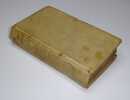
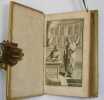
12mo. (VI),408 p. Vellum 14 cm (Ref: Schweiger 2,980; Ebert; 21938) (Details: The frontispiece depicts the author at a desk, having a book before him; he seems to discuss with an emperor (Trajan or Hadrian). In the background two rows with busts of emperors) (Condition: Binding age-toned and slightly soiled. Paper yellowing. One gathering loosening. Some small ink marks) (Note: The Roman historian Suetonius, born c. 69 A.D, is the most influential and best known biographer in the Latin language. He was appointed under the emperors Hadrian and Trajan to the secretarial posts of a studiis, a bibliothecis, and ab epistulis of the palace administration, jobs that gave him access to the imperial archives. His Lives of the Emperors De vita Caesarum offers the biographies of 12 emperors, from Caesar, the founder of the imperial line, to Domitian. 'Suetonius, like Plutarch, believed that a person's character could be revealed in small and insignificant details'. He 'organized his Lives by topics (per species) rather than chronologically' (The Classical Tradition, Cambr. Mass. 2010, p. 912/13). Beyond simplicity he has no stylistic pretentions. He quotes verbatim from documents he knew, and shows critical ability. 'The great number of scurrilous anecdotes in most of the lives may be due to the nature of his sources'. (OCD, 2nd ed. p. 1020/1) Suetonius was read in the Middle Ages. Einhard wrote a biography of Charlemagne along the lines of a Life of Suetonius. From the Renaissance onward he was neglected, until the great edition of 1672 by Graevius. Gibbon praised this Roman historian for his strict dedication to historical truth. Nowadays 'historians of Rome take him more seriously than do literary critics'. (The Classical Tradition, Cambr. Mass., 2010, p. 913) In the short preface to this edition of 1767 the publisher explains that he has noticed a demand for a handy pocket-Suetonius by schoolboys and men of letters (eruditis). He mentions three available scholarly editions, all excellent, that of Burmannus, of Ernesti and of Oudendorp. He compared (inter se comparatis), he goes on, the text of these three editions, and concludes that the best text to follow is of course that of Oudendorp of 1751 (Oudendorpiam omnium accuratissime textum constitutum habere). This choice does not come as a surprise, for Luchtmans was also the publisher of the 1751 edition of Oudendorp. The Dutch classicist Frans van Oudendorp, 1696-1761, is called by Sandys 'the last of the great Latinists of the third age of scholarship'. (History of Classical scholarship' 2,454) He was a student at Leiden of Jacobus Gronovius, Jacobus Perizonius and Petrus Burmannus Sr, and in 1740 he was appointed professor of history and rhetoric at his own University. He produced a series of important editions of Latin classics, of Julius Sequens, Lucanus, Fronto, Caesar and Apuleius. (Van der Aa 14, 267/68) In the preface of his Suetonius of 1751 Oudendorp declares that he is not a devotee of any text in particular, (nulli editioni addictus), but that he chose to follow the editions published by Graevius (1672, 1691, 1697 and 1702) and by Gronovius (1698), and that he followed his own judgement. He consulted also 'haud sine fructu' several manuscripts for 'variae lectiones') (Collation: pi3, A-P12, R10, S2) (Photographs on request)
XII Caesares: ex uetusto exemplari emendatiores multis locis. - [“ONE OF THE PRINCIPAL RENAISSANCE EDITIONS OF SUETONIUS’ LIVES OF THE TWELVE CAESARS”]
Paris, Ex officina Roberti Stephani, 1543. 8vo. In later half calf with gilt lettering to spine. Previous owner's name to front free end-paper (Poul Rubow, Danish screenplay writer). Wormtract in lower outer corner, far from affecting text. Underlined and annotated in margin in contemporary hand throughout. (16), 352, (2) pp.
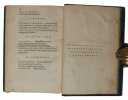
One of the most important Renaissance editions of Sueton’s Twelve Caesars. """"In this edition, "" says Ernesti, ""Stephen first made use of the famous Memmian MS. which may be said to form the basis of the present general text of Suetonius."""" (Dibdin II.440). In terms of the history of typography it also claims an important role since the types of Claude Garamond, here used in the italic, were to become dominant in France and to assume an important place in the typeface of the Western world. ""Another early example of an edition of a Latin classic in Robert Estiennes new italic type. This has long been recognized to be one of the principal Renaissance editions of Suetonius' Lives of the Twelve Caesars, it was edited by Robert himself, who claims to have established the text with the help of a vetustum exemplar, which is believed to be the Codex Memmianus, our oldest and best MS of Suetonius"". (Schreiber No. 71) The Twelve Caesars, is a set of twelve biographies of Julius Caesar and the first 11 emperors of the Roman Empire written by Gaius Suetonius Tranquillus. The group is: Julius Caesar (d. 44 BC), Augustus, Tiberius, Caligula, Claudius, Nero, Galba, Otho, Vitellius, Vespasian, Titus, Domitian (d. 96 AD).The work, written in AD 121 during the reign of the emperor Hadrian, was the most popular work of Suetonius, at that time Hadrian's personal secretary, and is the largest among his surviving writings. The Twelve Caesars was considered very significant in antiquity and remains a primary source on Roman history.Renouard, p. 58, No. 11.Schreiber, Estienne No. 71
CAIUS SUETONIUS TRANQUILLUS Cum annotationibus diversorum
Amsterodami ( Amsterdam ) Ex officina Plantiniana 1650 in 16 (12x6,5) 1 volume reliure plein veau fauve, dos lisse orné de riches caissons dorés, pièce de titre de maroquin rouge, filet doré sur les coupes, tranches peignées, page de titre gravée illustrée (engraved title), 369 pages, et 6 feuillets non chiffrés d'index in fine. Reliure XVIIIe. Bel exemplaire, belle et fraîche reliure ( Photographies sur demande / We can send pictures of this book on simple request )
Très bon Couverture rigide
Suetonius tranquillus de XII Cesaribus ex purgatus ab obscanitate et varie illustratus.
Rotomagi, le Boullenger 1706. 384 pages.Suétone (en latin Caius Suetonius Tranquillus) est un polygraphe et un érudit romain ayant vécu entre le Ier et le IIe siècle. Il est principalement connu pour sa Vie des douze Césars, qui comprend les biographies de Jules César à Domitien. Sa Vie des douze Césars présentent un grand intérêt pour l'historien de l'Antiquité, car elles nous donnent sur le premier siècle de l'empire des renseignements précieux.Reliure plein vélin de l'époque. Pas de rousseur. Bon état. Format in-12° (15x9).
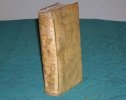
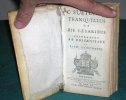
Cum Isaaci Casauboni Animadversionibus, Et Dissertationibus Politicis Ioh. Henr. Boecheri, Itemque Uberrimo Indice.
Argentorati, Ex Offic. Ioh. Philippi Mülbii, 1647. 4to. Recent full cloth w. leather title-label on back (Isacsons). Title-page in red and black, printer's device on t-p. Clean copy. 10, 352, (118), (1), 587, (1) pp.
Dibdin p. 440: ""Isaac Casaubon was the first who wrote a valuable commentary on Suetonius, and his edition is greatly to be preferred to every preceding. This commentary... is replete with various and profound learning, and is called by J. Scaliger ""the most perfect thing of the kind he has seen."" Both editors present us with many excellent observations and rules of criticism, but the LAST edition of 1647 is the fullest, and contains the fragments of Suetonius, and the dissertation by Boeclerus."" The first edition is from 1595-1615.
Zhizn' dvenadtsati tsezarey. In Russian /The Life of the Twelve Caesars
Short description: In Russian. Suetonius, Gaius Tranquill. The Life of the Twelve Caesars. A.S. Suvorin. You are welcome to reach out to us for a detailed description of the copies currently available. Delivery of this book may take longer than usual including extended processing and pre-shipping time, no expedited shipping is available. Please advise us if you have a set date or a deadline to receive your order.SKU4899170
CAIUS SUETONIUS TRANQUILLUS (DE VITA XII CAESARUM).
TOLOSAE. APUD PETRUM ROBERT, COLLEGII TOLOSANI SOCIETATIS JESU, TYPOGRAPHUM & BIBLIOPOLAM, SUB SIGNO NOMINIS JESU. SANS DATE. (CA 1714- 1750). IN-16 CARRE (9,5 X 11,5 CENTIMETRES ENVIRON) DE 394 PAGES + 10 FEUILLETS (INDEX), RELIURE D'EPOQUE PLEIN VELIN, TITRE MANUSCRIT A L'ENCRE NOIRE SUR DOS LISSE. EX-LIBRIS MANUSCRIT DATE DE 1750. PIERRE ROBERT EXERCA LE METIER D'IMPRIMEUR DE 1714 A 1763. BON EXEMPLAIRE.
SUETONIUS Caius Tranquillus ( SUETONE ) ,CASAUBON Isaac , BOECLER Johann Heinrich
Reference : 290
(1688)
CAIUS SUETONIUS TRANQUILLUS CUM ISAACI CASAUBONI ANIMADVERSIONIBUS ET DISSERTATIONIBUS POLITICIS IOH. HENR. BOECLERI , ITEMQUE UBERRIMO INDICE
Argentorati (Strasbourg) Sumptibus Iofiae Staedelii 1688 1 fort vol. in-4 ( 20,5 x 16 cm ) ( poids = 1,4 kg ) Titre-frontisp. , t. , (3) ff. , 352 , 587 pp. , (1) f. , 150 pp. , (58) ff. . Chacun des 3 auteurs principaux a sa propre pagination . En latin . Frontispice d ' après I. Schef gravé par P. Aubry . Une gravure dans le texte . Contient : - Epître dédicatoire Ad magnificum amplissimumque virum Dn. Danielem Imlinum iureconsultum ; - Ad benevolum lectorem ; - l 'oeuvre de Suétone c-à-d les Vies des 12 Césars , De illustribus grammaticis et De claris rhetoribus , Horatii Poetae vita , Caii Plinii vita , Fragmenta ; - Angeli Politiani Praefatio in Caium Suetonium ; - le chap. 31 du Livre III du De historicis latinis de Gérard Vossius ; - les Commentaires de Casaubon c-à-d Isaaci Casauboni in C. Suetonii Tranquilli De XII Caesaribus libros VIII animadversiones ; - le Syllabus auctorum & virorumque illustrium (...) ; - les Dissertations de Boecler c-à-d Ioh. Henri. Boecleri Dissertationes politicae in Caii Suetonii Tranquilli Caesares ; - Index in Svetonii Tranquilli Caesares (...) . Bandeaux , lettrines . Plein veau moucheté de l ' époque . Dos à 5 nerfs , caissons dorés , p. de titre absente ( le nom Svetonius toujours visible ) . Ex-libris représentant les 3 vertus théologales ( Tria haec ) . Première garde presque entièrement remplie d ' une écriture très fine relatant la vie des 3 principaux auteurs . Reliure quelque peu usagée , mais solide ; manques de cuir au mors sup. , à un caisson et aux coins . Premier f. bl. un peu décalé et f. de titre des Dissertations de Boecler détaché , mais présent . Des rousseurs , des cahiers jaunis et d' autres brunis . Travail de vers marginal de la p. 9 à la p. 104 de la première partie .
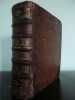
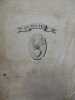
Edition strasbourgeoise de Suétone enrichie des commentaires d ' Isaac Casaubon et des Dissertations de Johann Heinrich Boecler . L ' humaniste , helléniste et érudit protestant Isaac CASAUBON ( Genève 1559 - Londres 1614 ) était considéré après Scaliger comme l ' homme le plus savant de son époque . Johann Heinrich BOECLER ( Cronheim 1611 - Strasbourg 1692 ) historien et érudit allemand , historiographe de Christine de Suède qui lui donna une chaire à l ' université d ' Uppsala , pensionné de plusieurs princes , enseigna l ' histoire à Strasbourg . " L' un des hommes les plus savans que l ' Allemagne eût produits jusqu ' alors dans la littérature grecque , latine , hébraïque , dans l ' histoire et dans la théorie de la politique et du droit public . " ( Barbier , Biographie Universelle classique ... 1829 , vol. 1 , p. 286 ).
Cajus Suetonius Tranquillus ad optimorum exemplarium fidem castigatus
Lugduni Batavorum [Leiden], Apud S. et J.Luchtmans 1767 [4bl], frontispice, [ii], 408, [4bl] pp., 14cm., text in latin, vellum, spine damaged, Good copy
Caius Suetonius Tranquillus.
Parisiis, Typographia Regia, MDCXLIV, 1644, pt. in-8vo, titre orné gravé + 5 ff. (vita) + 558 p. + 15 ff. (index), vignettes gravées de fin de chapitre & les portraits des césars, reliure d’époque en plein-veau, dos à nerfs orné de fleurons dorés avec pièce de titre en cuir rouge, tranches rouges, coiffes touchées, coins légèrement émoussés, charnière inf. fendillée.

(SLACES, NVVA)
Phone number : 41 (0)26 3223808
Caius Suetonius Tranquillus ad Optimas Editiones Collatus Praemittitur Notitia Literaria Accedit Index. Studiis Societatis Bipontinae. Editio Accurata.
Biponti (Zweibrücken), Ex Typographia Societatis, 1783; in-8 (193 x 120 mm.), vignette gravée sur page de titre, XXVI-433 pp., (27) ff. (index), reliure demi-veau marbré à coins, tranches rouges, dos, plats et coins frottés, ex-libris et inscriptions manuscrits sur page de garde, manque découpé de 10 sur 20 mm. en marge de la page de garde, intérieur en très bon état.

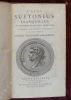

C. Suetonius Tranquilus, Et in tum commentariius, Exhibente Joanne SCHILDIO. Editio Quarta
1656 Lugduni Batavorume (Leiden), Ex officina Hackii (Hackius), 1656, in-8 de (40) pp.-852-(82) pp., un joli frontispice par R. Apersün et12 portraits gravés des césars à trois-quart de page, rel. d'ép. de plein maroquin rouille granité, dos à nerfs orné de fers dorés, plats décorés d'encadrements de triple-filets dorés avec fleurons d'angles, armes dorées frappées aux centres, tranches dorées, bel ex.
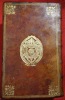
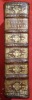
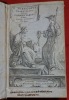
Reliure aux armes du Collège des chanoines réguliers de SAINTE GENEVIEVE.
C. Suetonius Tranqvillvs, Ex Recensione Joannis Georgii Graevii cum ejusdem Animadversionibus, ut et Commentario integro, Laevinii Torrentii, Isaaci Causaboni, & Theodori Marcilii, nec non Selectis Aliorum. Editio secunda auctior & emandatior.
Hagae-Comitis (Haag), Johannem à Velsen & Trajecti ad Rhenum (Utrecht), 1691. 4to. Contemp. full calf. Raised bands. Spine ends worn, titlelabel nearly gone..A nick in leather at lower compartment. Spine and covers somewhat worn. Engraved frontispiece. (14),822,110 pp. + Index. 12 engraved plates of portraits, 1 folded table and many textillustrations (coins). 2 old names removed from titlepage, no loss of letters. Internally clean.
The second edition of the estimated Graevius-edition, which was first printed in 1672.A reprint of the popular first edition appeared in 1697, but before that this enlarged edition of 1691 had appeared. In 1703 the third edition appeared, and in 1708 another edition appeared under a changed title.Dibdin II:441, Graesse: 6:522
De XII. Caesaribus Libri VIII. Isaacus Casaubonus recensuit: et Animadversionum libros adjecit ... Additi sunt & Suetonii libelli De illustribus grammaticis et de claris rhetoribus.
(Geneva), Stephanus Gamonetus, 1605. 4to. Contemp. full vellum. Binding a bit soiled. printers woodcut device on title-page. (40),191,315,(13),32,(20) pp. Old name cut from lower corner of title-page (no loss of letters). Some old names on title-page, among these the Danes A.B. Drachmann, Hartvig Frisch. Front free endpaper lacks. Internally clean.
A fine printed and early edition with Casaubon's commentaries.""Isaac Casaubon was the first who wrote a valuable commentary on Suetonius, and his edition is greatly to be preferred to every preceding""(Dibdin II:440).
C. Suetonius Tranquillus De XII Caesaribus. Ex recensione Joannis Georgii Graevi, Cum ejusdem animadversionibus, Ut & Comentario integrio Laevini Torrentii, et Isaaci Casavboni. His accedunt Notae Theodori Marcilii et Francisci Gvyeti, Nec non Index Matth
Trajecti ad Rhenum, Typis & ex Officina Gisberti a Zyll, Biblipolae, Anno 1672, 826 pages. Nec non Index Matthiae Bernecceri. Suivi de C. Suetonii Tranquilli Liber VIII. Sive Tres Imperatores Caesares Vaspasiani, interpretati, & emendati Theodoro Marcilio (112 pages).
NB. La librairie est fermée jusqu'à fin septembre. Les questions et commandes seront traitées début octobre.
Vitae caesarum quarum scriptores hi Suetonius Tranquillus, Dion Cassius, Aelius Spartianus, Iulius Capitolinus, Aelius Lampridius, Vulcatius Gallicanus, Trebellius Pollio, Flauius Vopiscus, Herodianus, Sex. Aurelius Victor, Pomponius Laetus, Io. Baptista Egnatius, Eutropij libri X. integritati pristinae redditi. Ammianus Marcellinus longe alius quàm antehac unquam / Annotationes D. Erasmi Rot. & Baptistae Egnatij in uitas Caess. Accesserunt in hac éditione Velleij Paterculi libri II. ab innumeris denuo uendicati erroribus. additio indice copiosissimo.
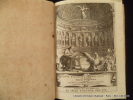
Basilea, Froben [au colophon: Basileae per Hieronymvm Frobenivm et Nic. Episcopvm mense Septembri, M.D.XLVI.], 1546. Petit in-folio de [20]-810-[2]bl. -[68]p., plein veau raciné brun, dos lisse orné de filets et lyres dorés, filets et roulettes dorés encadrant les plats (reliure première moitié dix-neuvième). Quelques rares annotations anciennes.
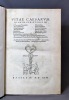
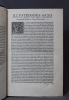
Orné de très nombreuses jolies lettrines historiées. L'intérêt évident de cette édition a été de rassembler l'ensemble des écrivains de l'antiquité qui ont écrit sur l'empire romain, non seulement Suetone, mais également de plus rares écrivains tel Dion Cassius (traduit par Merula), Herodianus (traduit par Angelo Ambrogini Poliziano), Spartianus ou Lampidius, Velleius Paterculus, Vulcatius Gallicanus, Amianus Marcellinus. Deux commentateurs : Erasme (mort en 1536) et Giovanni Battista Egnazio (1478-1553). Froben (1501-1563) est l'un des grands éditeurs de la renaissance et le digne successeur de Johann Froben, le premier de la dynastie qui établit son imprimerie à Bâle en 1491, c'est avec lui que fut lié et travailla Erasme et Jerôme Froben ne fit qu'en recueillir les fruits. Cette édition est l'alliance de Froben et Nikolaus Epicopius, son beau frère. Marque d'imprimeur sur la page de titre et au verso du dernier feuillet. Les feuillets Q8 (p. 471/472) et Xx6 sont blancs, mais sans manque, en revanche, à l'index final, le verso de Yy2 et le recto de Yy5 ne sont pas imprimés (on joint une copie imprimée de ces deux pages).
The Lives of the Caesars
Penguin Books UK
LIVRE A L’ETAT DE NEUF. EXPEDIE SOUS 3 JOURS OUVRES. NUMERO DE SUIVI COMMUNIQUE AVANT ENVOI, EMBALLAGE RENFORCE. EAN:9780241186893
The Lives of the Caesars
Penguin Books USA
LIVRE A L’ETAT DE NEUF. EXPEDIE SOUS 3 JOURS OUVRES. NUMERO DE SUIVI COMMUNIQUE AVANT ENVOI, EMBALLAGE RENFORCE. EAN:9780143107705
SUÉTONE (Caius Suetonius Tranquillus), Johann Schild, Sr (1595-1667).
Reference : PHO-2395
(1662)
C. Suetonius Tranquillus, Et in cum commentarius, exhibente Joanne Schildio. Editio quarta.
Leyde, Ex Officina Franciscii Hackii, 1662. Fort volume in-8(19,5x12cm), 14ff.-845pp.-44ff., veau époque, dos à nerfs avec titre, coiffes absentes, coins usés, frottements aux plats et aux coupes, charnières fendillées.
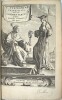
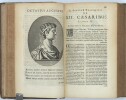
Édition de la Vie des douze Césars de Suétone avec les abondants commentaires de Johannes Schildius, philologue et théologien protestant allemand. Elle est ornée d'un titre-frontispice allégorique gravé en taille-douce par Reinier van Persyn, et de 12 portraits en médaillon dans le texte. La Vie des douze Césars demeure l'une des principales sources sur les empereurs romains depuis Jules César jusqu'à Domitien. Suétone, haut fonctionnaire appartenant à l'ordre équestre, proche de Pline le Jeune et protégé de l'empereur Hadrien, compose des biographies mêlant histoire politique, anecdotes de cour et portraits de caractère, lesquels servirent de modèles aux grands monarques français comme François Ier et Louis XIV. M-8B

