 Write to the booksellers
62 books for « statius »Edit
-
Century
16th (2)
17th (2)
18th (1)
19th (3)
-
Countries
Belgium (5)
France (15)
Netherlands (39)
Switzerland (3)
-
Syndicate
ILAB (7)
NVVA (1)
SLACES (1)
SLAM (6)
P. Papinii Statii Opera ex recensione et cum notis I. Frederici Gronovii.
Amsterdam (Amsterodami)., Typis Ludovici Elzevirii, 1653.
16mo. (VIII),424 p. Vellum 12 cm (Ref: This edition is 'the most significant stage in the evolution of the printed text of the Thebaid before the late nineteenth century.' (Berlincourt, Classical quarterly, 2016, 66 (1), 376-383); STCN ppn 852853726; Willems 1166; Bergman 2139; Rahir 1189; Copinger 4491; Schweiger 2,965; Dibdin 2,424; Fabricius/Ernesti 2,335; Moss 2,612; Ebert 21682: 'mit grossem Scharfblick und nach guten Hülfsmitteln verbessert'; Brunet 5,512) (Details: Engraved title: a battle scene from the Thebaid, the city of Thebes is in the background, the poet sits in front) (Condition: Vellum very slightly soiled. Occasional small verse numbers in the margins. A small tear in the outer margin of p. 49) (Note: His fluent and highly polished verse brought the Roman poet Publius Papinius Statius, ca. A.D. 45-96, to the court of the Roman emperor Domitianus. He is best known for his epic, the 'Thebaid', which tells the story of the civil war between the sons of Oedipus, Eteocles and Polynices, contesting power over the city of Thebes. The 'Achilleid', tells the story of the education of Achilles. Statius' 'Silvae' is a collection of 32 occasional poems addressed to his friends, celebrating their marriages etc. In his epic work there are frequent imitations of Vergil in word and thought.' (OCD, 2nd e. p. 1011/12) The Thebaid was extraordinary popular during the Middle Ages and the Renaissance. In Dante Statius even ascends to heaven. The 'Thebaid' was used by Boccaccio and Chaucer, and there appeared adaptations in Irish, French and Italian. Also Statius' 'Silvae' enjoyed a vigorous afterlife, and set a standard for the Neolatin poets of the 16th and 17th century. Composing occasional poetry in imitation of Statius was a common pastime among humanist classicists, e.g. Heinsius, Scriverius, Meursius, and in England Milton and Ben Jonson. The works of Statius were ably edited by the Dutch classicist of German origin Johann Friedrich Gronov, or Gronovius, 1611-1671, He was the successor of Heinsius at the University of Leiden, and was influenced by Vossius, Grotius, Heinsius & Scriverius. His editions mark an epoch in the study of Livy, of Seneca, Tacitus & Gellius. His interest to the textual criticism of Latin poetry was due to the discovery of the Florentine MS of the tragedies of Seneca. In his riper years 'the acumen exhibited in his handling of prose is also exemplified in his treatment of the text of poets such as Phaedrus and Martial, Seneca and Statius'. (Sandys, 'History of Classical Scholarship', 2,321) As an editor and commentator Gronovius played a pivotal role in the history of the works of Statius. This small and light book of 1653 weighs only 120 grams, it is indeed 'pondus non magnum', but especially the notes are 'satis ponderosae', that is, really important. They fill merely 68 pages at the end of this volume, and of these pages the notes to the 'Thebaid' fill only 41, and are concerned with little more than 200 passages. 'Their scope is almost entirely limited to the emendation of the text of Statius'. For the 'Thebaid' Gronovius consulted at least 11 manuscripts. 'The place given to conjecture, though clearly subordinate, is by no means negligible. These notes often involve other aspects as well: Gronovius broad conception of emendation leads him to tackle various questions, whenever they lend support to his views. (...) In his eyes, the dignity of critical studies does not lie in emendation itself, but in the comprehensive knowledge of ancient languages and cultures in which emendation should always be grounded; such knowledge enables the scholar to get the author's genius and thus restore the text from inside'. (V. Berlincourt, ''In pondere non magno satis ponderosae...' Gronovius and the printed tradition of the Thebaid' in 'The poetry of Statius', Leiden, Boston, Brill, 2008, p. 1-2. (Mnem. Suppl. 306) The Gronovius edition became during the 2 following centuries 'the undisputed foundation of almost every later edition until scholars at last began to base their work on a comprehensive study of the manuscript tradition, that is, until the second Teubner of Otto Müller in 1870'. (Berlincourt, p. 7.) His work exercised a great influence over later editors and commentators. 'There is little to find fault with in Gronovius' critical method, as illustrated by his notes, though it is of course still conceived of as being mere emendation of the textus receptus; usually his discussions are well informed, his arguments sound, and his judgement balanced'. (Berlincourt, p. 10) (Provenance: In pencil written elegantly on the front pastedown: 'Aan Lenus, 16 December 1945, Toet en Sem'. On the internet we found on the 20th of november 2012 a book (B. Constant, 'Le cahier rouge, ma vie', Amsterdam, Balkema, 1945) on offer by a Dutch antiquarian bookseller called Osmose. This bookseller gives Sem & Toet their surname. This book by Constant shows the following dedication: 'Aan Eg. zonder wiens hulp we de winter van '45 niet zoo goed waren doorgekomen. Toet en Sem Hartz'. This book once belonged to Samuel (Sem) Louis Hartz, 1912-1995, an important Dutch graphic designer of Jewish origin, who worked all his life for the firm of Enschedé. He married in 1936 Toet Juch, whom he had met at the 'Kunstacademie' at Amsterdam. They survived the war in hiding. (Database Joods Biografisch Woordenboek). Toet was still alive in 2007. Hartz has a lemma in Wikipedia. Here we find that he published in 1955 'The Elseviers and their contemporaries, an illustrated commentary'. For Enschedé Hartz designed poststamps and banknotes. The graphic designer Van Krimpen was one of his friends. In hiding Hartz designed the 'Emergo', a typeface for his own private press, the 'Tuinwijkpers'. Important parts of his personal archives now belong to the Library of the University of Amsterdam, and the Museum Meermanno-Westreenianum. Hartz apparantly knew Latin, for the occasional verse numbers in the margins are from his hand. At the end on the pastedown an old and elegant ownership entry in ink of 'Gerhardus ab Hoeclum'. There are several Gerards, or Gerrits van Hoeclum. The Van Hoeclums were an old and respected family in the Dutch province of Gelderland) (Collation: *4, A-2C8, 2D4) (Photographs on request)
P. Papinii Statii Opera ex recensione et cum notis I. Frederici Gronovii.
Amsterdam (Amsterodami)., Typis Ludovici Elzevirii, Sumptibus Societatis, 1653.
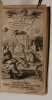
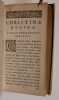
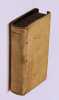
16mo. (VIII),424 p. Overlapping vellum 12 cm (Ref: This edition is 'the most significant stage in the evolution of the printed text of the Thebaid before the late nineteenth century.' (Berlincourt, Classical quarterly, 2016, 66 (1), p. 376-383); Willems 1166; Bergman 2139; Rahir 1189; Copinger 4491; Schweiger 2,965; Dibdin 2,424; Fabricius/Ernesti 2,335; Moss 2,612; Ebert 21682: 'mit grossem Scharfblick und nach guten Hülfsmitteln verbessert') (Details: Engraved title: a battle scene from the Thebaid, the city of Thebes is in the background, the poet in front) (Condition: Vellum slightly soiled. Small owner's inscription on the title) (Note: His fluent and highly polished verse brought the Roman poet Publius Papinius Statius, ca. A.D. 45-96, to the court of the Roman emperor Domitianus. He is best known for his epic, the 'Thebaid', which tells the story of the civil war between the sons of Oedipus, Eteocles and Polynices, contesting power over the city of Thebes. The 'Achilleid', tells the story of the education of Achilles. Statius' 'Silvae' is a collection of 32 occasional poems addressed to his friends, celebrating their marriages etc. In his epic work there are frequent imitations of Vergil in word and thought. (OCD, 2nd e. p. 1011/12) The Thebaid was extraordinary popular during the Middle Ages and the Renaissance. In Dante Statius even ascends to heaven. The 'Thebaid' was used by Boccaccio and Chaucer, and there appeared adaptations in Irish, French and Italian. Also Statius' 'Silvae' enjoyed a vigorous afterlife, and set a standard for the Neolatin poets of the 16th and 17th century. Composing occasional poetry in imitation of Statius was a common pastime among humanist classicists, e.g. Heinsius, Scriverius, Meursius, and in England Milton and Ben Jonson. The works of Statius were ably edited by the Dutch classicist of German origin Johann Friedrich Gronov, or Gronovius, 1611-1671, He was the successor of Heinsius at the University of Leiden, and was influenced by Vossius, Grotius, Heinsius & Scriverius. His editions mark an epoch in the study of Livy, of Seneca, Tacitus & Gellius. His interest to the textual criticism of Latin poetry was due to the discovery of the Florentine MS of the tragedies of Seneca. In his riper years 'the acumen exhibited in his handling of prose is also exemplified in his treatment of the text of poets such as Phaedrus and Martial, Seneca and Statius'. (Sandys, History of Classical Scholarship, 2,321) As an editor and commentator Gronovius played a pivotal role in the history of the works of Statius. This small and light book of 1653 weighs only 120 grams, it is indeed 'pondus non magnum', but especially the notes are 'satis ponderosae', that is, really important. They fill merely 68 pages at the end of this volume, and of these pages the notes to the Thebaid fill only 41, and are concerned with little more than 200 passages. 'Their scope is almost entirely limited to the emendation of the text of Statius'. For the Thebaid Gronovius consulted at least 11 manuscripts. 'The place given to conjecture, though clearly subordinate, is by no means negligible. These notes often involve other aspects as well: Gronovius broad conception of emendation leads him to tackle various questions, whenever they lend support to his views. (...) In his eyes, the dignity of critical studies does not lie in emendation itself, but in the comprehensive knowledge of ancient languages and cultures in which emendation should always be grounded; such knowledge enables the scholar to get the author's genius and thus restore the text from inside'. (V. Berlincourt, 'In pondere non magno satis ponderosae...' Gronovius and the printed tradition of the Thebaid' in: 'The poetry of Statius', Leiden, Boston, Brill, 2008, p. 1-2. (Mnem. Suppl. 306). The Gronovius edition became during the 2 following centuries 'the undisputed foundation of almost every later edition until scholars at last began to base their work on a comprehensive study of the manuscript tradition, that is, until the second Teubner of Otto Müller in 1870'. (Berlincourt, p. 7.) Gronovius' work exercised a great influence over later editors and commentators. 'There is little to find fault with in Gronovius' critical method, as illustrated by his notes, though it is of course still conceived of as being mere emendation of the textus receptus; usually his discussions are well informed, his arguments sound, and his judgement balanced'. (Berlincourt, p. 10)) (Provenance: On the lower margin of the title we read the name of one 'I.N. Arntzenius', 'J.N. Arnstzenius' or F.N. Arntzenius') (Collation: *4, A-2C8, 2D4) (Photographs on request)
Publii Papinii Statii Sylvarum lib. V, Thebaidos lib. XII, Achilleidos lib. II. Notis selectissimis in Sylvarum libros Domitii, Morelli, Bernartii, Gevartii, Crucei, Barthii, J.F. Gronovii Diatribe. In Thebaidos praeterea Placidi Lactantii, Bernartii, etc., quibus in Achilleidos accedunt Maturantii, Britannici, accuratissime illustrati a Joanne Veenhusen.
Leiden (Lugd. Batav.), Ex officina Hackiana, 1671.
8vo. (XXXII, including frontispiece),882,(30 index) p. Modern vellum. 21 cm (Ref: STCN ppn 840093780; Schweiger p. 965: 'Saubrer Abdr. des Gronovsch. Textes; mit guten Auszügen aus den Anmerkgg. früheren Erklärer, auch aus Gronov's diatribe. Ziemlich seltne Ausg.'; Dibdin 2,425: 'It is not only beautifully printed, ex offic. Hackiana, but is a very scarce, accurate, and valuable production'; Fabricius/Ernesti 2/336; Moss 2,613, praises its accuracy and its intrinsic merit; Brunet 5,512: 'assez recherchée'; Graesse 6/1,481; Ebert 21685) (Details: The frontispiece is engraved by P. Appelmans, it depicts the laureated poet writing his Thebaid; in the background battle and murder scenes from this poem. Woodcut printer's mark on the title, its depicts a soaring eagle, motto 'movendo'. Poems printed in italics, commentary in Roman type and printed in 2 colums at the lower half of the pages. Edges dyed red.) (Condition: The vellum has been cleansed, resulting in a slightly rough surface. Some slight and faint foxing) (Note: His fluent and highly polished verse brought the Roman poet Publius Papinius Statius, ca. A.D. 45-96, to the court of the Roman emperor Domitianus. He is best known for his epic, the 'Thebaid', which tells the story of the civil war between the sons of Oedipus, Eteocles and Polynices, contesting power over the city of Thebes. The 'Achilleid', tells the story of the education of Achilles. Statius' 'Silvae' is a collection of 32 occasional poems addressed to his friends, celebrating their marriages etc. 'The various episodes, highly coloured and rhetorical though they be, are generally successful regarded as separate wholes, the descriptive passages striking, and the narrative lively'. (OCD, 2nd edition, p. 1011/12) The 'Thebaid' enjoyed widespread medieval interest. There are more than hundred manuscripts extant. 'Survival of the 'Silvae' has been more precarious, apparantly dependent at one point on a single manuscript; the collection was rediscovered by Poggio Bracciolini on one of his book-hunting expeditions in 1417. Some poems in the collection have nevertheless enjoyed a vigorous afterlife - especially 1.2, an epithalamium that outdoes its Catullan precedent with a florid (and floral) extravagance that sets a new standard for the genre. (...) It provided a template for a wide tradition of wedding poems in the 16th and 17th centuries. The name of the collection also captured the early modern imagination, as we see, for instance, with Milton's 'Sylvarum liber' (1645), a selection of his Latin poems. When Ben Jonson included in his Works (1616) a collection of 15 poems named 'The Forest', he was bringing Statius' title into English'. (The Classical Tradition, Cambridge Massachusetts 2010, p. 908) In this 'Variorum' edition of Statius the German classical scholar Johannes Veenhusen of Bremen, 1643-1675, skillfully compared and contrasted the excerpted material of brighter minds. Such editions were very popular, and reissued more than once, because they contained everthing a student required. It offered the 'textus receptus' which was widely accepted, accompanied with the commentary and the annotations of specialists, taken from earlier useful, normative or renewing editions. Editions like these, 'cum notis Variorum', were useful, but never broke new ground. Veenhusen based his edition upon the best available edition, that of Johannes Friedrich Gronovius of 1653 (Amsterdam). Gronovius' text and the essential substance of his commentary was adopted by Veenhusen, and became through this 1671 edition the undisputed foundation of all later editions of Statius well into the first half of the 19th century) (Collation: *-2*-8, including frontispiece; A-3L8) (Photographs on request)
Opera
Apud Ioan. Pillehotte | Lugduni (Lyon) 1608 | 7.50 x 11.80 cm | relié
Edition lyonnaise de cet ouvrage réalisé par Ioannes Bernartius en 1593. Impression italique. Une première partie rassemble les trois grandes oeuvres de Statius et une seconde douée d'une page de titre les commentaires et notes de divers érudits. Reliure en plein vélin souple à rabats d'époque. Nom de l'auteur à la plume sur le dos. traces de lacets. 2 manques en page de titre, en marge haute, de chaque côté de la page. Une mouillure pâle courant sur la moitié de l'ouvrage, en marge basse. L'édition réunit les trois oeuvres poétiques de Statius connues, la Thébaïde contant l'histoire des fils d'Oedipe se confrontant pour le royaume de Thèbes (thème célèbre et souvent traité) ; le Sylvae, un ensemble de poèmes, et L'achilléide, qui conte en plusieurs épidodes l'histoire d'Achille, et qui restera inachevé. Statius fut au premier siècle de son ère un poète fort apprécié, sa postérité est marquée par son apparition dans la Divine comédie de Dante, où il apparaît comme un guide du purgatoire. - Photographies et détails sur www.Edition-Originale.com -

The works of Horace, transl. by FRANCIS, consisting of his Odes, Satires, Epistles and Art of Poetry. Also the works of Ovid, transl. by GARTH &c., containing Metamorphosis, Epistles, Amours, Art of Love, Remedy for love, and Art of beauty. Likewise Lewis's transl. of Statius.
Ldn., Doig & Stirling, 1816.
VI,886 p. H.calf 25 cm (Back gilt, boards & edges marbled; cover scuffed, title foxed; of Statius the Thebaid only)
# TITRE: Sylvarum - Thebaidos - Achlleidos
# AUTEUR: Publius Papinius Statius # ÉDITEUR: Apud Guiljelmum Lanss Coesium - Amsterodami (Amsterdam) # ANNÉE ÉDITION: 1624 # COUVERTURE: Plein veau vert - plats et dos ornés d'un semé de fleurs de lys doré et médaillon central portant le nom du propriétaire # DÉTAILS: In 16 (58x110mm) relié: page de titre gravée + 356pp + 2ff. Auteur de deux épopées: la Thébïde, l' Achilleïde (inachevée), et un recueil de circonstance: les Silves, Publius Statius Papinius a vécu de 40 à 96 après JC. Nom du propriétaire: Franciscus Marlot. # PHOTOS visibles sur www.latourinfernal.com
# ÉTAT: Dos refait à l'identique en veau brun?, coins lgt émoussés, tranches dorées
THEBAIS : Ofwel Oedipus' vloek
Leiden, Primavera Pers, 2012 Hardcover, 432 blz, Nederlands. ISBN 9789059971080.
Het epische gedicht Theba s van de Romeinse dichter Statius (1e eeuw na Chr.) beschrijft op meeslepende wijze de rampspoed waardoor Oedipus, diens huis en diens stad werden getroffen. De geschiedenis van Thebe is velen al bekend uit het werk van de Griekse tragediedichters; dit is de eerste complete Nederlandse vertaling van Statius? epos. Behalve de vertaling bevat dit boek een uitgebreid commentaar, een inleiding en diverse appendices waarin aandacht wordt besteed aan de context en receptie van dit invloedrijke gedicht.
The Silvae of Statius. Translated with introduction and notes by D.A. SLATER.
Oxf., Clarendon Press, 1908.
215 p. Cl. 18 cm
Togail na Tebe. The Thebaid of Statius. The Irish text, edited from 2 MSS. with introduction, translation, vocabulary, and notes by G. CALDER.
Cambr., CUP, 1922.
XXIV,431 p. Cl. 23 cm
The medieval Achilleid of Statius. Edited with introduction, variant readings and glosses.
Leiden, Brill, 1968.
XII,133 p. Cl. 24 cm
The influence of art on description in the poetry of P. Papinius Statius.
Baltimore, Furst, 1914.
103 p. Wrs. 23 cm (diss. Johns Hopkins Univ.)
Statius' Silvae. Critical and exegetical remarks with some notes on the Thebaid.
Lund, Gleerup, 1969.
174 p. Wrs. 24 cm (Uncut; author's dedication on frontcover)
Untersuchungen zur Erzählweise in Statius' Thebais.
Bonn, Habelt, 1971.
X,120 p. Stiff wrs. 21 cm (diss., München)
Prolegomena to an edition of the Scholia to Statius.
Leiden, E.J. Brill, 1969.
VIII,121 p. Stiff wrappers. 24 cm (Mnemosyne Supplement 8) (Lower margin slightly warped by moist)
Prolegomena to an edition of the Scholia to Statius.
Leiden, E.J. Brill, 1969.
VIII,121 p. Wrappers. 24 cm (Mnemosyne Supplement 8)
[STACE Publius Papinius Statius - Adrien Perier - Friedrich Lindenbrog - Lactantius Placidus].
Reference : 93503
(1600)
[Oeuvres] Papinii Surculi Statii Opera quae extant.Placidi Lactantii in Thebaida et Achilleida commentarius. Ex Bibliotheca Fr. Pithoei. I. C. Collatis MSS, veteribusque exemplaribus, recensuit, partim nunc primum edidit, Fr. Lindenbruch.
plantin 1600 Parisiis (Paris), Ex Officina Plantiniana (Plantin). Apud Hadrianum Perier, 1600, 1 volume in-8 de 222x145 mm environ, (4) ff. (Page de Titre avec marque typographique, Epitre dédicatoire, Avertissement lecteur, Privilege), 115 pages (Les silves), 512 pages/532 (Thebaide/Achilleide), 116 pages (Commentaires Domizio Calderino sur les Sylves). Il manque les 20 pages qui constitue la partie d'annotations d'Adrien Behotte sur la Thébaïde, l'Index de 12 pages, ainsi que le dernier feuillet avec la marque de l'imprimeur. Demi-basane granitée havane, dos à nerfs portant titres dorés sur pièce de titre rouge, tranches rouges. Des frottements sur les coupes, des mouillures, incomplet sinon bon état.
![[Oeuvres] Papinii Surculi Statii Opera quae extant.Placidi Lactantii in Thebaida et Achilleida commentarius. Ex Bibliotheca Fr. Pithoei. I. C. ...](https://static.livre-rare-book.com/pictures/DIO/93503_1_thumb.jpg)
![[Oeuvres] Papinii Surculi Statii Opera quae extant.Placidi Lactantii in Thebaida et Achilleida commentarius. Ex Bibliotheca Fr. Pithoei. I. C. ...](https://static.livre-rare-book.com/pictures/DIO/93503_2_thumb.jpg)
![[Oeuvres] Papinii Surculi Statii Opera quae extant.Placidi Lactantii in Thebaida et Achilleida commentarius. Ex Bibliotheca Fr. Pithoei. I. C. ...](https://static.livre-rare-book.com/pictures/DIO/93503_3_thumb.jpg)
Stace (Publius Papinius Statius) est un poète de langue latine de la Rome antique, né à Naples le 27 mars 40, mort en 96. Merci de nous contacter à l'avance si vous souhaitez consulter une référence au sein de notre librairie.
Opera ad optimas editiones collata. Edition accurata
Ex Typographia Societatis | Biponti 1785 | 13.50 x 22.50 cm | relié
Nouvelle édition Aux deux ponts des oeuvres de Stace. Reliure dans un cartonnage à la Bradel légèrement plus tardif, bleu marine. Dos lisse à filets. Pièce de titre en maroquin rouge. Frottements en coiffes, bordures et coins. Découpe en pied de la p. 25. Bon exemplaire. Vie de Stace par Gyraldi. Index de Fabricio Ernestino. Publius Papinius Statius fut un poète latin né à Naples au Ier siècle après J.C., les 3 oeuvres qui nous restent de lui sont les Sylvae, la Thébaïde et l'Achilléide qui sont 2 poèmes épiques. Sa popularité le fit apparaître dans la Divine comédie de Dante. - Photographies et détails sur www.Edition-Originale.com -
Education et totalitarisme. L'éducation dans les pays d'Europe centrale et orientale.
Broché, 24X17 cm, éditions les presses du réel. Livre neuf sous blister.
PUBLIUS PAPINIUS STATIUS [PUBLII PAPINII STATII] (AMAR J.A. & LEMAIRE N.E., eds.)
Reference : K72025
(1825)
P. Papinii Statii quae exstant omnia opera [complete in 4 volumes]
Parisiis [Paris], Lemaire 1825-1830 complete in 4 vols.: xl,704 + 586 + 608 + 668pp., 22cm., in the series "Bibliotheca classica latina sive collectio auctorum classicorum Latinorum cum notis et indicibus", cart.cover (spine in cloth, marbled plates), few foxing, else G, [text in Latin], K72025
François Furet. Révolution française, grande guerre, communisme.
Broché, 21X13 cm, 2011, 301 pages, les éditions du cerf. Très bon état.
Voyages en démocratie. Volume 1. Regards français sur le processus démocratique.
Broché, 21X14 cm, 2016, 241 pages, collection philosophie en cours, éditions kimé. Envoi de l'auteur, très bon état.
PRAETORIUS, Stephan (anfänglich v.) / ARNDT, Johann / STATIUS, Martin:
Reference : 128340aaf
Geistliche Schatzkammer der Glaubigen [Gläubigen] in welcher die Lehre vom wahren Glauben, Gerechigkeit, Seligkeit, Majestät, Herrlichkeit, christlichem Leben, und heilsamen Creuz der Kinder Gottes etc. Anfänglich von M. Stephan Prätorius (Pastor in Salzwedel) stückweise an den Tag gegeben, und Anno 1622 von Herrn Johann Arndt zusammengesuchet und zum Druck verordnet. Nunmehro mit besonderem Fleiß in richtige Ordnung gebracht, von M. Martin Statius, Prediger zu St. Johannis in Danzig. Vierte Auflage.
Reutlingen, bey Johannes Grözinger u. J.J. Mäcken d. Jüngern, 1807, in-8vo, 736 S., Original-Lederband d. Zeit, 1 (von 2) Schliessen. Rotschnitt.
Image disp.

(SLACES, NVVA)
Phone number : 41 (0)26 3223808
Le métier d'enseignant aujourd'hui et demain. Actes du colloque organisé par le CDIUFM et l'ENS-Lyon en 2012.
Broché, 24X15 cm, 2013, 287 pages, préface d'André Tournon, éditions l'harmattan. Très bon état.
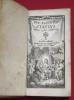
Denuo ac serio emendatus. Sylvarium, Thebaidos, Achilleidos (Les Sylves, La Thébaïde, L'Achilléide).
Amsterodami (Amsterdam), Apud Guiljemum Ianss : Caesium (Guillaume Jansson Blaeu/Willem Jansz Blaeu), 1624, 1 volume in-18 de 110x55 mm environ, 1 feuillet blanc, 1 page de titre gravée, 356 pages, (2) ff;. (de stato, elogia),1 feuillet blanc, reliure plein veau blond, dos lisse portant titre doré, encadré d'un double filet doré sur les plats et le dos. Quelques rousseurs et pages brunies, trous de ver dans la marge sur les dernières pages et petite mouillure, coins émoussés, dos avec plis léger et fente sur le mors,sinon bon état.
Stace (Publius Papinius Statius) est un poète de langue latine de la Rome antique, né à Naples le 27 mars 40, mort en 96. Merci de nous contacter à l'avance si vous souhaitez consulter une référence au sein de notre librairie.

