 Write to the booksellers
13 books for « salmasius c »Edit
-
Language
French (11)
Latin (2)
-
Topics
Binding w/arms (1)
Christianity (1)
Fashion (1)
Gold (1)
Greek (1)
History (3)
Latin (3)
Law (3)
Philology (3)
Protestantism (1)
Roman history (1)
-
Countries
Denmark (1)
France (7)
Netherlands (5)
-
Syndicate
ILAB (4)
NVVA (2)
SLAM (2)
Claudi Salmasii Viri Ill. Epistolarum liber primus. Accedunt de laudibus et vita ejusdem prolegomena. Accurante Antonio Clementio.
Leiden (Lugduni Batavorum), Ex typographia Adriani Wyngaerden, 1656.
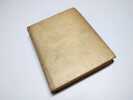
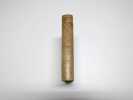
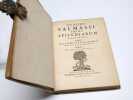
4to. (VIII),72;294,(2 privilegium); 67,(3); 77,(3 blank) p. Overlapping vellum 24 cm (Ref: STCN ppn 840276850; Brunet 6,18777; Ebert 20119; Graesse 6/1,249) (Details: Nice and clean copy. Woodcut printer's device on the title, depicting a man who tries to clime a tree, the motto reads: 'Ardua quae pulchra', a variant of the wellknown Platonic Adagium of Erasmus 'Difficiliora quae pulchra'. (Adagia 1012,II,I,12) Beautiful engraved portrait of Salmasius, executed and engraved by J. Tangena and I. Snijderhoef. Woodcut initials. At the end of p. 294 has been pasted a slip with 15 lines of corrigenda) (Condition: Vellum age-toned. Back soiled) (Note: The French scholar Claude de Saumaise, latinized Claudius Salmasius, 1588-1653, was a prolific author, and he distinguished himself in his editions as a textual critic and erudite commentator. He was easy to get along with, but murderous on paper. In 1623 he was appointed as the successor of Scaliger at the University of Leiden, a city he was going to hate. When his Leiden colleague Daniel Heinsius, 1580-1655, published his 'Sacrae Exercitationes ad Novum Testamentum' in 1639, Salmasius saw an opportunity to take 'revenge on the man he viewed as the leader of the coterie opposing him at Leiden'. (P.R. Sellin, 'Daniel Heinsius and Stuart England', Leiden/Oxford 1968, p. 43) In the preface of his 'De Modo Usurarum' of 1639 Salmasius ridiculed Heinsius' description of the 'koinê' as 'lingua Hellenistica'. A flurry of polemics followed. In this quarrel the printer Maire sided with Salmasius in his attempts to destroy Heinsius' integrity. (Idem, p. 47) The next step in the ongoing quarrel between Daniel Heinsius, once the favourite of Scaliger, and Salmasius, came in 1643, when Salmasius attacked Heinsius anonymously in his 'Funus linguae Hellenisticae'. And with a still fiercer attack in 'De Hellenistica commentarius, controversiam de lingua Hellenistica decidens', published in the same year, 1643, Salmasius mounted a full-scale assault on Heinsius' position on the 'koinê'. In it Salmasius contended that the language of the Greek Scriptures was not a separate dialect, but the ordinary Greek of his time. (Sandys, A History of Classical Scholarhip, N.Y., 1964, volume 2, 284/86) The letters of Salmasius were collected and edited by the young promising Dutch student theology Anthony Clement (Antonius Clementius), 1533-1657. (NNBW 1,606/07, and his article in encyclopedievanzeeland.nl) The collection, consisting of 125 letters written before 1638, opens with a biographic eulogy and a bibliography of Salmasius of 72 pages. The recipients of the letters are amongst others Johannes Beverovicius, Johannes Dallaeus, Jacobus Golius, J.F. Gronovius, H. Grotius, I.F. Peireskius, P. Puteanus, and I.G. Vossius. At the end of the 125th letter (p. 294) the editor announces a second volume of letters, till 1640. The project was however delayed, he tells, due to the sudden departure to Germany of the publisher Wyngaerden. Nothing came of it, owing to the premature death of the editor. The editor added after letter 125 two long treatises disguised as letters: Salmasius' 'Epistola de regionibus et ecclesiis suburbicariis', first published in 1619; and 'Claudii Salmasii ad Aegidium Menagium epistola, super Herode infanticida V.C. Tragoedia, et censura Balsacii'. This second letter is of interest concerning Salmasius controversy with Heinsius. It was first published in Paris in 1644, and is a polemic against Daniel Heinsius', biblical tragedy 'Herodes infanticida' (the Massacre of the Innocents), a tragedy that he published in Leiden in 1632. This tragedy was attacked in 1636 by the French polemicist, poet and literary theoretician J.-L. Guez de Balzac; and in 1642 a French minister, Jean de Croï, published a reaction on Balzac's fierce attack in defence of Heinsius. Which reaction lead to a long letter, written by a raging Salmasius, to the French poet and classical scholar Gilles Ménage (Aegidius Menagius), '(...) super Herode infanticida V.C. Tragoedia, et censura Balsacii', in which he came to the rescue of Balzac, and fiercely attacked his enemy Daniel Heinsius) (Collation: *-10*4 (including the portrait); A-2O4 (leaf 2O4 verso blank) ;a-h4, i2, chi1; A-K4 (leaf K4, & K3 verso blank)) (Photographs on request)
Funus Linguae Hellenisticae, sive Confutatio exercitationis de Hellenistis et Lingua Hellenistica. Cui libet exequias ire Hellenisticae, i, licet. Ecce illa iam effertur. (And from page 281: 'Ossilegium Hellenisticae, sive Appendix ad confutationem Exercitationis De Hellenistica')
Leiden (Lugduni Batavorum), Ex officina Ioannis Maire, 1643.

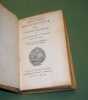
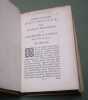
8vo. 390,(1 corrigenda),(1 blank) p. Vellum. 8vo. 16.5 cm. (Ref: Breugelmans 1643:10; Graesse 6,249; Berghman 704; Rahir 1920; Ebert 20118; Brunet 6, no. 10665; cf. Willems 558) (Details: 5 thongs laced through the joints. Woodcut printer's mark of Maire on the title, depicting a farmer who stamps a shovel into the ground; above his head the motto 'fac et spera'. Page 1-280: Funus Linguae Hellenisticae, page 281-390: Ossilegium Hellenisticae) (Condition: Vellum age-toned. One gathering foxed) (Note: The French scholar Claude de Saumaise, latinized Claudius Salmasius, 1588-1653, was a prolific author, and he distinguished himself in his editions as a textual critic and erudite commentator. He was easy to get along with, but haughty and murderous on paper. In 1623 he was appointed as the successor of Scaliger at the University of Leiden, a city he was going to hate. This Funus linguae Hellenisticae of 1643 is a stage in the ongoing quarrel between the Leyden professors Daniel Heinsius, once the favourite of Scaliger, and Salmasius. When Heinsius published his Sacrae Exercitationes ad Novum Testamentum in 1639 Salmasius saw an opportunity to take 'revenge on the man he viewed as the leader of the coterie opposing him at Leiden'. (P.R. Sellin, 'Daniel Heinsius and Stuart England', Leiden/Oxford 1968, p. 43) In the preface of his De Modo Usurarum of 1639 he ridiculed Heinsius' description of the koinê as 'lingua Hellenistica'. A flurry of polemics followed. In this quarrel the printer Maire sided with Salmasius in his attempts to destroy Heinsius' integrity. (Sellin p. 47) With his De lingua Hellenistica et origine ac dialectis graecae linguae of 1643 Salmasius mounted a full-scale assault on Heinsius position on the koinê, followed in the same year by a still fiercer attack, De Hellenistica commentarius, controversiam de linguae hellenistica decidens and this anonymously published attack on his colleague, the Funus Linguae Hellenisticae. In it Salmasius contended that the language of the Greek Scriptures was not a separate dialect, but the ordinary Greek of his time. (Sandys, A History of Classical Scholarhip, N.Y., 1964, volume 2, 284/86) Concerning the De Hellenistica commentarius, which was published by Elzevier, and the Funus Linguae Latinae, both written by Salmasius, we quote part of an excellent note of Willems, p. 138, no. 558: 'On appelait Hellénistes les Juifs dispersés parmi les Grecs, surtout ceux qui habitaient Alexandrie et parlaient habituellement le grec. Partant de là, certains savants, à l'exemple de Daniel Heinsius, dans son Aristarchus sacer s'étaient crus autorisés désigner sous le nom d'hellénistique le langage, mêlé d'expressions et de tours de phrases hébraïques, qui était usité parmi ces mêmes Juifs, et dans lequel sont écrits la version des Septante et le Nouveau Testament. Saumaise, qui trouvait l'expression impropre, composa ce gros volume (De Hellenistica commentarius) contre ceux qu'il appelle les Hellénisticaires, et notamment contre Daniel Heinsius, quoique celui-ci ne soit pas nominativement désigné. Il n'en resta pas là; car dès la même année il donna encore le Funus linguae hellenisticae, suivi de l'Ossilegium hellenisticae, Lugd. Bat., J. Maire, 1643. L'auteur a beau jeu pour démontrer que le terme d'hellénistique est inconnu à toute l'antiquité, que cette langue ne constitue pas à proprement parler un dialecte spécial, qu'il n'y a en grec que quatre dialectes, ou cinq si l'on y comprend la langue commune , &c. A cet égard son livre est plein de vues nouvelles et ingénieuses, dont les grammairiens ont fait leur profit. Mais le fait que les livres saints sont écrits en un idiome dont les mots sont grecs et la phrase hébraïque, n'en subsiste pas moins, et Saumaise en convient. (...) Quoi qu'il en soit, le mot qui échauffait si fort la bile de Saumaise a fait fortune, car les récents linguistes Matthiae, Kühner &c n'ont pas fait difficulté de l'admettre') (Provenance: On the front pastedown in pencil: 'J. v. Dijck') (Collation: A-2A8, 2B4 (leaf 2B4 verso blank)) (Photographs on request)
Claudii Salmasii Ad Johannem Miltonum responsio, opus posthumum.
London (Londoni), Typis Tho. Roycroft, Impensis Jo. Martin (etc.), 1660.
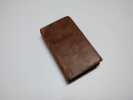
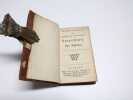
12mo. (IV),304,(4 blank) p. Contemporary calf. 16 cm (Ref: ESTC Citation No. R203484; Wing (2nd ed.) S736; Ebert 14095) (Details: Double blind fillet on back and boards. Red shield with gilt lettering in the second 'compartment') (Condition: Binding scuffed(Photographs on request) . Head of the spine damaged. First pastedown detached, pastedown at the end removed) (Note: The English Civil War (1642-1651) was a series of armed conflicts between Parliamentarians and Royalists, who supported King Charles I. The war ended with a Parliamentarian victory in 1651. The climax of the Civil War was the trial and execution of King Charles I on January 30, 1649. The monarchy was replaced with a Republic form of government, first the Commonwealth of England (1649-1653), and then the Protectorate under the rule of the dictator Oliver Cromwell, who died in 1658, and his son (1653-1659). Charles II, son of Charles I, went in exile. Cromwell's death in 1658 resulted in a political crisis, which led to the restoration of the monarchy, when the English Parliament resolved to invite the son of Charles I to return. He was proclaimed King in May 1660. In November 1649, 10 months after the beheading of Charles I, the French classical scholar Claudius Salmasius (Claude Saumaise, 1588-1653), who was professor at the University of Leiden, published at the request of the 19 years old king in exile Charles II a 'Defensio Regia pro Carolo I' (In defence of King Charles I). On the title page Charles II is called 'heredem et successorem legitimum'. It was brought on the market anonymously, and 'sumptibus regiis', by Elsevier at Leiden. The exiled King paid for the printing and rewarded Salmasius with £ 100. It is a defence of absolute monarchy and a fierce condemnation of the English Parliamentary system. The 'Defensio Regia pro Carolo I' came as a bombshell and provoked in 1651 a scathing reply from the English poet and polemist John Milton, 'Pro Populo Anglicano Defensio' (A Defense of the People of England). Milton, who was appointed under Cromwell 'Secretary for Foreign Tongues' in 1649, was responsible for the Republic's foreign correspondence in Latin, but it was also his task to produce propaganda for the new regime. Milton was ordered by the Council of State to write the 'Defence of the English People', to establish its legitimacy. In this work full of learned vituperation, Milton alludes to Salmasius' effeminacy, comparing him with the Greek mythological Hermaphrodite Salmacis, and he also attacks his wife, Anne Mercier, who wore, that was true, the trousers. The pure Latin prose and the evident learning made Milton's name in Europe. The English philosopher Thomas Hobbes, a contemporary, observes concerning both 'Defences': 'They are very good Latin both, and hardly to be judged which is better; and both very ill reasoning, hardly to be judged which is worse; like two declamations 'pro' and 'con', made for exercise only in a rhetoric school by one and the same man'. (Hobbes, Behemoth, Dialogue IV) Hobbes' opinion of this learned controversy is devastating: 'Where Europe thought it had witnessed the sharpest possible contest of principle between an opponent of regicide on one side and a defender of it on the other, Hobbes saw unwitting collusion between twin offpspring of the Reformation. (...) Nor is the remark about the excellence of their Latin offered in mitigation. On the contrary, it is intended to aggravate their offence. (...) Milton and Salmasius are condemned for exhibiting the (...) lethal combination of attributes: eloquence and ill reasoning'. (M. Dzelzainis, 'Milton's classical republicanism' in 'Milton and Republicanism', Cambridge 1995, p. 7) Salmasius prepared a reply (responsio) to Milton, but he did not live to finish it. It was published posthumously by his son at Dijon in 1660, a few months after the restoriation of Charles II, and reissued at London in September of the same year) (Collation: A-N12 (leaves N11 & N12 blank)) (Photographs on request)
Eikon basilike, vel, Imago Regis Caroli, in illis suis aerumnis et solitudine [Bound With] Defension Regia Pro Carolo I [Bound With] Pro Populo Anglicano Defensio
Den Haag Samuelis Broun 1649
Three works bound in one, in a contemporary French binding. Works are: Eikon basilike, vel, Imago Regis Caroli, in illis suis aerumnis et solitudine Hagae-Comitis (Den Haag) Samuelis Broun. 1649. Conforms to OCLC 60405083. Beautiful double page frontis engraving by Hollar. Text in Latin. Translation by John Earle. Attributed to Charles I and John Gauden. The book presents itself as the king's personal meditations, prayers, and reflections during his imprisonment, portraying him as a pious martyr steadfast in faith amid political turmoil [12], 272 pages. [Bound With] [SALMASIUS, CLAUDIUS] Defension Regia Pro Carolo I Ad Serenissimum Magnae Britannia Regem Carolum II. Filium natu majorem, Heredem & Successorem legitimum. Anonymous author & printer. 1649 Conforms to OCLC 70699080. 468 pages. Seems to be first edition but not clear. Claude Saumaise (Salmasius) was a French Humanist (1596-1653). This work is a defense of Charles I, (written shortly after his execution), supporting Absolute Monarchy and the Divine Right of Kings. [Bound With] MILTON, Joannis [John Milton], Angli Pro Populo Anglicano Defensio Contra Claudii Anonymi, alias Salmasii, Defensionem Regiam. Londini: Typis Du Gardianis, 1652. 192 pages. OCLC 933136975. Second (?) edition of this rebuttal of Saumaise (printed 1651) which was an important work for Milton, establishing his reputation, and celebrated as a victory over Salmasius's writing. The work, written in Latin is noted for its colourful invectives such as a 'dung-hill Frenchman' and indignant attacks on the French scholar. (With thanks for this Pat Marrin!) Wing, M2169. Binding has leather spine and vellum boards. These are somewhat bowed with age. Spine, with gilt titles and decoration is still attractive, but has a couple of small holes to the binding. Pages are clean and tidy throughout, with just a few foxing spots. Attractive armorial ex libris belonging to I.L.B. De Neve to the inside board. They were likely a member of the De Neve family, a name associated with the Low Countries. All works are 125 by 70mm (5 by 2Ÿ inches).
Funus Linguae Hellenisticae Sive Confutatio Exercitationis de Hellenistis et Lingua Hellenistica. Cui libet exequias ire Hellenisticae, i, licet. Ecce illa iam effertur.
Lugduni Batavorum Ex Officina Ioannis Maire, 1643, 1 volume in-12 de 160x100x30 mm environ, 3 ff.blancs, 390 pages, 1f. (errata),3 ff.,blancs, reliure aux armes, plein veau marbré fauve, dos à 4 nerfs portant titres dorés, orné de caissons à motifs dorés, armoiries dorées sur chaque plat, coupes dorées tranches finement mouchetées de rouge. Ors ternis, mors en partie fendus mais structure solide avec manque de cuir par endroits, une coiffe ébréchée, une coiffe arasée, des rousseurs rares et pages brunies.
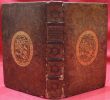
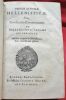
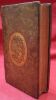
Claude Saumaise, Claudius Salmasius en latin, né le 15 avril 1588 à Semur-en-Auxois et mort le 3 septembre 1653 à Spa, est un humaniste et philologue français. Merci de nous contacter à l'avance si vous souhaitez consulter une référence au sein de notre librairie.
SAUMAISE,Claude (Claudius Salmasius en latin) - Caius Julius Solinus, Dit SOLIN.
Reference : 109830
Cl. SALMASII, Plinianae exercitationes in caii (caji julii) iulii solini, Polyhistora. Item Caii iulii solini polyhistor ex veteribus. Libris emendatus (tome I) - Cl. SALMASII, Plinianae Exercitationes in Caii Iuli Solini Polyhistora. Pars Altera (tome II), 2 volumes).
Parisiis, Apud Hieronymum Droüart via Iacobaea sub Scuto Solari, 1629, 2 volumes in-folio de 355x230cm environ, plein veau fauve d'époque, dos à 6 nerfs portant titres et tomaisons dorés sur pièces de titre havane, orné de caissons à fleurons dorés, encadrements des plats d'un double filet doré, tranches mouchetées, impression sur 2 colonnes par page (3colonnes dans l'index).Tome 1 : 1f.blanc, 26ff. ( faux-titre, titre avec vignette de titre à la marque de l'imprimeur : bouquet de chardons à la devise " Patere aut abstine, nul ne si frote", Serenissimae Venetorum reipublicae, prolegomena in solinum, Caii Iulii Solini grammatici polyhistor ab ipso edius et recognitus, C. Iulius solinus adventos), 824 pages, avec 20 figures gravées dans le texte. Trous de ver dans les marges et sur les contreplats, des rousseurs et pages brunies, un tampon sur la page de titre, - Tome 2 : page de titre avec de titre à la marque de l'imprimeur, tipographus lectoris, pagination continue sur les 2 volumes, tome II : 825 (numéroté 285 par erreur) à 1367 pages (addenda compris), +254 ff. ( Index rerum & verborum), avec 28 figures gravées dans le texte. Mouillure dans la marge des 16 premières pages (tome II), frottements, épidermures, rayures et traces d'adhésif sur le cuir, mors en partie fendus, coiffes manquantes, nombreuses erreurs de pagination mais aucun manque n'est à déplorer, des galeries de ver dans les marges, sans atteinte au texte. Texte en latin.
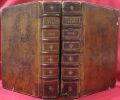
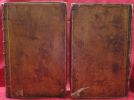
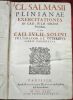
Claude Saumaise, Claudius Salmasius en latin, né le 15 avril 1588 à Semur-en-Auxois et mort le 3 septembre 1653 à Spa, est un humaniste et philologue français. Caius Julius Solinus, dit Solin en français, est un grammairien et compilateur d'expression latine, qui a vécu soit au IIIe siècle, soit au IVe. Merci de nous contacter à l'avance si vous souhaitez consulter une référence au sein de notre librairie.
Defensio Regia, pro Carolo I, ad Serenissimum Magnae Brittanniae regem Carolum II. Filium natu majorem, haeredem & successorem legitimum.
No place, Sumptibus regiis, (Leyde, Bonaventura et Abraham Elzevier) 1649. (2), 720 pp. 12mo. 19th-century calf, gilt floral ornaments on sides, spine gilt with gilt lettering, gilt inside dentelles, all edges gilt, binding signed at foot of spine: Bozerian jeune. Lalanne, Dictionnaire Historique de la France, vol. ii, p. 1637; Willems 658; Graesse, Tresor des Livres Rares et Precieux, vi, 249; not in BMSTC, French Books 1601-1700. One of various editions published in the year as its original publication in folio which was also published by the Elzeviers, and often reprinted. This is the work by which Salmasius is best remembered. It does not appear by whose influence he was induced to undertake the Defensio Regia, but Charles II defrayed the expense of printing, and presented the author with £ 100. The work provoked the famous reply by Milton Pro populo Anglicano defensio, contre Claudii anonymi, alias Salmasii, defensionem regiam. 'Claude Saumaise (1588-1658), l'un des plus célèbres érudits et critiques du XVIIe siècle. Il embrassa le protestantisme, alla s'établir à Leyde (1631), où il succéda comme professeur à Joseph Scaliger. Appelé en Suède par Christine, près de laquelle il séjourna un an, il retourna en Hollande. Sa réputation était immense parmi ses contemporains .....' (Lalanne, op.cit). - Very nice copy in a binding by Bozerian the Younger.


(NVVA, )
Phone number : 31 20 698 13 75
Defensio Regia, pro Carolo I, ad Serenissimum Magnae Brittanniae regem Carolum II. Filium natu majorem, haeredem & successorem legitimum.
Rothomagi, apud Ioannem Berthelin, Ioannemm Viret, Ioannem Du Bosc & Jacobum Besogne, 1650. (24), 681, (1, blank) pp. 12mo. Contemporary supple vellum, title handwritten on spine. Lalanne, Dictionnaire Historique de la France, vol. ii, p. 1637; this edition not in BMSTC, French Books 1601-1700. Originally published in 1649, and often reprinted. The work provoked the famous reply by Milton 'Pro populo Anglicano defensio, contre Claudii anonymi, alias Salmasii, defensionem regiam'. Where Salmasius defended Charles II, Milton defended the right of the people to try and execute an unjust king. 'Claude Saumaise (1588-1658), l'un des plus célèbres érudits et critiques du XVIIe siècle. Il embrassa le protestantisme, alla s'établir à Leyde (1631), où il succéda comme professeur à Joseph Scaliger. Appelé en Suède par Christine, près de laquelle il séjourna un an, il retourna en Hollande. Sa réputation était immense parmi ses contemporains.....' (Lalanne, op.cit.) - Handwritten annotations on first and last blanks.
(NVVA, )
Phone number : 31 20 698 13 75
Cl. Salmasii de subscribendis et signandis testamentis, item de antiquorum et hodiernorum sigillorum differentia tractatus contra D. Heraldum
Lvg. Batav. ( Leyde ) Ex officina Elseviriorum 1653 1 vol. in - 8 376 pp. (dont t. ) , (4) ff. n. ch. . En latin . Contient : Amicus Leidensis amico Amstelodamensi S. D. ; Ad lectorem in specimen Heraldi defricati ; Specimen confutationis animadversionum Desiderii Heraldi en XXXVIII chapitres ; Indiculus rerum & verborum . Titre en rouge et noir , marque typographique au solitaire ( Un arbre au tronc duquel s' entrelacent des rameaux de vigne et au dessous un homme debout avec ces mots : Non solus ) . Bandeaux , lettrines , un cul-de-lampe . Plein vélin à petit recouvrement de l' époque ; traces de lacets . Dos lisse , titre manuscrit à l' encre . Ex-libris armorié Testu de Balincourt , héritier de la bibliothèque de P. Guiraudi , Reinaudi et R. de Genas , avec la devise Vis leonis , collé au premier contreplat . Bon état . Petite tache verte très atténuée au plat sup. . Qqs rousseurs claires ; qqs ff. jaunis . Petite note manuscrite marginale ( deux ou trois mots ) p. 195 . ( Collat . complet )
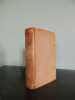
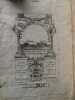
" C' est un traité utile & curieux , où l' on voit toutes les formalités que les Anciens employaient pour rendre leurs actes authentiques . Didier Hérault , que Saumaise y attaque , étoit avocat au Parlement de Paris , où il mourut en 1649 . " ( Mémoires pour servir à l' histoire littéraire des dix-sept provinces des Pays Bas .... , Imprimerie Académique , 1770 , vol. 3 , p. 320 , n° 43 ) . C' est ce que confirme Pierre Bayle dans son Dictionnaire historique et critique ( 1820 , T. VIII , p. 78 ) où il écrit au sujet de Desiderius Heraldus ( Hérault) : " M. de Saumaise et lui écrivirent l' un contre l' autre " . L' humaniste et phililogue Claude SAUMAISE ( 1588 - 1653 ) , professeur à Leyde , est célèbre , en effet , pour ses nombreuses oeuvres d' érudition et de polémiques . L' E. O. avait paru sous un titre un peu différent aussi à Leyde en 1648 ( Moréri , Le grand dictionnaire historique .... , Chez les Libraires associés , T. 9 , p. 187 ) ( P. Ch. Vander Meersch , Catalogue des livres et manuscrits rares et précieux ..... , Gand , 1839 , p. 86 , n° 1360 ) . ( Ch. Pieters , Annales de l' imprimerie elseverienne ou histoire de la famille des Elsevier .... , Gand , Annoot-Braeckman , 1831 , vol. 1 , p. 143 , n° 12 ) " La marque typographique prise par Isaac pour l'imprimerie de Leyde, est un arbre autour duquel un cep de vigne entrelace ses rameaux chargés de fruits, et au-dessous de l'arbre un homme debout avec ces mots : Non solus . Cette marque, quoique désignée soirs le nom du solitaire, était l'emblème de l'union fraternelle des Elsevier ." ( Paul Dupont , Histoire de l'imprimerie , T. II , Paris , Edouard Rouveyre, s. d. (1853) ).
[Ex Officina Elzeviriorum] - SALMASIUS, Claudius ; SAUMAISE, Claude ; COLVIUS, Andreas ; POLYANDER VAN KERCKHOVEN, Johannes
Reference : 60854
(1644)
Cl. Salmasii Epistola ad Andream Colvium : super Cap. XI. Primae ad Corinth. Epist. de Caesarie Virorum et Mulierum Coma [ Suivi de : ] Judicium & Consilium De Comae & Vestium usu et abusu, Deductum Ex. I ad Corint. cap. II.I ad Timoth & Tit. c.2 atque I Petr. cap. 3 a Iohanne Polyandro à Kerckhoven,S.S. Theol. Doct. ejudemsque Professore primatio in Academ. Leydensi [ Editions originales ]
1 vol. petit in-8 reliure de l'époque plein veau brun, dos à 5 nerfs orné, Ex Officina Elzeviriorum, Lugd. Batavor. [ Leyde ], 1644, 747 pp. (avec erreurs de pagination pages 143, 205, 556 et 600), 2 ff., 76 pp.. Rappel du titre complet : Cl. Salmasii Epistola ad Andream Colvium : super Cap. XI. Primae ad Corinth. Epist. de Caesarie Virorum et Mulierum Coma [ Suivi de : ] Judicium & Consilium De Comae & Vestium usu et abusu, Deductum Ex. I ad Corint. cap. II.I ad Timoth & Tit. c.2 atque I Petr. cap. 3 a Iohanne Polyandro à Kerckhoven,S.S. Theol. Doct. ejudemsque Professore primatio in Academ. Leydensi [ Editions originales ]
![Cl. Salmasii Epistola ad Andream Colvium : super Cap. XI. Primae ad Corinth. Epist. de Caesarie Virorum et Mulierum Coma [ Suivi de : ] Judicium & ...](https://static.livre-rare-book.com/pictures/CDL/60854_thumb.jpg)
![Cl. Salmasii Epistola ad Andream Colvium : super Cap. XI. Primae ad Corinth. Epist. de Caesarie Virorum et Mulierum Coma [ Suivi de : ] Judicium & ...](https://static.livre-rare-book.com/pictures/CDL/60854_2_thumb.jpg)
![Cl. Salmasii Epistola ad Andream Colvium : super Cap. XI. Primae ad Corinth. Epist. de Caesarie Virorum et Mulierum Coma [ Suivi de : ] Judicium & ...](https://static.livre-rare-book.com/pictures/CDL/60854_3_thumb.jpg)
Extraordinaire recueil réunissant l'édition originale de deux ouvrages (le plus important rédigé par l'érudit protestant d'origine bourguignonne Claude Saumaise) consacrés au sujet de la coupe et de la longueur des cheveux ! Imprimé en gros caractères, ces deux écrits se rattachent "à une polémique bizarre qui passionna et tint divisés durant des années les plus fameux docteurs de l'église évangélique hollandaise. Le roi Louis XIII, qui portait toute sa chevelure, avait introduit et fait prévaloir la mode des cheveux longs. Cette innovation choqua bon nombre de ministres protestants. S'appuyant sur un passage de la première épître de Paul au Corinthiens, ils tonnèrent en chaire contre une pratique qui leur paraissait entachée d'hérésie, et songèrent sérieusement à exclure de leurs temples les fauteurs du scandale. Un professeur d'Utrecht, Charles de Maets, se mit à la tête de cette croisade, et déduisit ses raisons dans un copieux recueil [ ... ] D'autres voix s'élevèrent en faveur de la tolérance [ Polyander rédigea la consultation que l'on trouve in fine dans ce volume ] Saumaise n'était pas homme à laisser passer une si belle occasion de déployer son érudition. Tout d'abord il se déclara le champion de la liberté des coiffures, et descendit dans l'arène armé [ de ce ] formidable factum [ ... ] Toute cette érudition fut dépensée en pure perte. Le public resta indifférent. En dépit des objurgations et des anathèmes, la mode prévalut, et chacun continua à se coiffer à sa guise" (Willems, 143 ). De la bibliothèque du magistrat, industriel et collectionneur Jean-Baptiste Gluc, baron de Saint-Port (1674-1748). Etat très satisfaisant (mq. en coiffes, rel. un peu frottée, bon état par ailleurs, ex-libris J. B. de S. Port). Papillon, Bibliothèque des Auteurs de Bourgogne, 262
Defensio Regia pro Carolo I. ad Serenissimum Magna Britanniae Regem Carolum II., Filium natu majorem, Heredem & Successorem legitimum.
No place, no printer, 1652. 12mo. Fine contemp. red full morocco, profusely gilt spine and covers. Inner gtilt dentelles. All edges gilt. Edges on covers gilt. (2),444 pp. A faint dampstain on some leaves in middle of the book.
This royalist tract tract, defending absolute monarchy, was attacked by John Milton in his famous ""Pro Populo Anglicano Defensio, contræ Claudii Anonymi, alias Salmasii Defensionem Regiam.""
Dissertatio de Foenore Trapezitico, in tres libros divisa
Leyde, J. Maire, 1640 ; 2 tomes en 1 volume in-12, veau brun marbré, dos à nerfs orné, tranches jaspées. (Reliure de l’époque) 52 ff. n. ch., 820 pp., 54 ff. (table) - 1 f. blanc, 202 pp.ÉDITION ORIGINALE du troisième livre de cet auteur concernant le prêt et l’usure, après De usuris liber (1638), De modo usurarum liber (1639). Avec ce texte en défense de la prise d’intérêt, Saumaise a suscité de vives controverses. Cioranesco 61-582.Suivi de : [ SAUMAISE (Claude.)] Diatriba de mutuo, non esse Alienationem. Adversus coprianum quemdam juris Doctorem. Auctore Alexio Massalia, Domino de Sancto Lupo. Leyde, Maire, 1640 ; 202 pp. ÉDITION ORIGINALE de ce texte en réponse au texte du juriste Cyprien Regnier, qui avait publié Aplog. pro manibus Petri Cunaei adv. Cl. Salmasium, Regnier répondit - Haag, IX, p. 165.Mors fendu et coiffes abîmées, intérieur très frais. De la bibliothèque de P. Guiraudi (ex-libris.)
FLORUS L. Annaeus. CL. SALMASIUS. addidit Lucium AMPELIUM. E cod. M. S. nunquam antehac editum.
Reference : 3514
(1657)
Epitome altera Historiae Romanae
Lugd. Batav. Apud I. Elzevirium. 1657. In-8 (13 x 8 cm), frontispice, 3 ff. 336 pp., 8 pp. index, reliuredu XIXe siècle maroquin bleu-marine, dos orné de filets, encadrements de filets et dentelles sur les plats, les coupes et intérieurs, tranches dorées. Ex-libris "de Boigne".
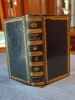
Exemplaire en bel état

