 Write to the booksellers
1040 books for « renan ernest »Edit
-
Type
Autograph (1)
Book (1034)
Old papers (1)
Photographs (5)
-
Latest
Last 3 days (13)
Last month (10)
Last week (3)
-
Language
French (1039)
Russian (2)
-
Century
19th (284)
20th (279)
21st (9)
-
Countries
Belgium (43)
Canada (4)
Denmark (17)
France (912)
Germany (4)
Greece (1)
Switzerland (58)
United States of America (2)
-
Syndicate
ALAC (4)
CLAM (2)
CLAQ (1)
ILAB (486)
NVVA (9)
SLACES (9)
SLAM (451)
SNCAO (10)
Topics
- Adolescence (3)
- Age (3)
- Arabic (3)
- Archaeology (3)
- Autographs (13)
- Barine arvède (2)
- Bible (10)
- Bibliophilism (8)
- Biography (12)
- Breton literature (4)
- Brittany (35)
- Catholicism (17)
- Christ (the) (22)
- Christianity (62)
- Churches (19)
- Collections (2)
- Drama (5)
- Early printed books (4)
- Esotericism (2)
- Ethic (4)
- Europe (2)
- First edition (60)
- French literature (6)
- Geography (8)
- Gospel (3)
- Hebraic literature (5)
- Hebraism (5)
- History (142)
- Illustrated books (5)
- Islam muslim (4)
- Israel (4)
- Italy (7)
- Judaism (judaica) (3)
- Language (3)
- Linguistics (3)
- Literature (3)
- Literature 19th century (8)
- Magazine (12)
- Manuscripts (10)
- Medicine (2)
- Memories (18)
- Memories (17)
- Middle ages (4)
- Newspapers press (15)
- Odd books (2)
- Paris (9)
- Philology (20)
- Philosophy (112)
- Photography (8)
- Pompeii (2)
- Psychology (8)
- Religions (68)
- Religions & spirituality (11)
- Reliure (12)
- Renan ernest (788)
- Reviews (13)
- Rome (6)
- Sciences (9)
- Signed binding (2)
- Speeches (2)
- Theatre (30)
- Theology (34)
- Travel (8)
- Various (8)
- Youth (4)
Ma soeur Henriette
Paris, Calmann-Lévy, 1895. 410 g In-8, plein maroquin, roulette intérieure, [2] ff., iii-96 pp., [1] f.. Illustré de 7 planches hors-texte en héliogravure d'après Henri Scheffer et Ary Renan ou d'après une photographie pour le portrait d'Henriette Renan. Première réimpression depuis la première édition très rare de 1862 qui n'était pas illustrée. Clouzot, 231; Vicaire, VI, 1015. Souvenirs où Renan évoque sa soeur Henriette ainsi que la ville de Tréguier, lieu de son enfance. Reliure signée H. Wood. Ex-libris George Stacey Albright. Dos passé, petites rousseurs, déchirure à une serpente. . (Catégories : Littérature, Bretagne, )
Vie de Jésus. - [PMM 352 - THE HISTORICAL CHRIST - WITH ORIGINAL LETTER FROM RENAN]
Paris, Michel Lévy Frères, 1863. Lex 8vo. Bound uncut with the original printed wrappers in a very nice and elegant half morocco binding with five raised bands and gilt author and title to spine (Trinckvel). Wrappers a bit soiled, and a small repair to margin of front wrapper. Lower right corner of first two leaves repaired, far from afecting lettering. Otherwise a fine copy. Original handwritten and signed letter from Renan inserted between front end-papers. Withe the half-title (""Histoire des Origines du Christianisme. Livre premier""). (4), LIX, (1), 462 pp. + (1) leaf (colophon).
True first edition of this seminal classic on the life of Jesus, which caused an immediate scandal when it appeared. Rare with the original wrappers. Renan's masterpiece constitutes the first attempt to write a biography of Jesus the man and strongly puts forth the notion that the Bible too can be subject to historical investigation and critical scrutiny. The 1 full page original handwritten and signed (E. Renan) letter is dated August 1869 is about a certain Mr. Bambal, who, Renan writes, has left made a very good impression on him and has been a great help during his candidacee. He praises him as an intlligent man. Renan furthermore mentions a book that he wishes to give to the brother of the addressee of the letter. The work enraged the Roman Catholic Church but was an immediate success in most of Europe. ""In six months sixty thousand copies of the French edition had been sold and edition succeeded edition. Renan regarded the book as the first of a series on the ""Origins of Christianity"", which he continued with ""The Apostles"" (1866), ""Saint Paul"" (1869), ""The Anti-Christ"" (1873), ""The Gospels"" (1877), ""The Christian Church"" (1879) and ""Marcus Aurelius"" (1881) but none of these emulated the success of the ""Life of Jesus""... Immediate success was partly a ""succès de scandale"" but this would not have kept the book alive. It is Renan's approach to the subject and his beautiful prose that gave it lasting eminence."" (PMM 352). This groundbreaking work analyses the personality of the man Jesus, -a figure created by Renan out of his mind, but based on historical sources. ""It is a pastoral idyll with the central figure a gentle, albeit oracular visionary, his power to work miracles a part of his unique personality -the son of man, but not the Son of God... In this great work it seems clear that the audience he has found was the one he sought: the general reading public rather than the limited coterie of scholars"" and there is no doubt of the fact or the degree of his success."" (PMM 352). ""C'est le livre plus célèbre d'Ernest Renan (1823-1892) et le premier volume de l'Hisoire des origines du Christianisme""... on peut considérer cette ""Vie de Jésus"" comme une oeuvre de vulgarisation: l'auteur cherche à déterminer ce qui, au point de vue ""scientifique"", est de créance dans la vie du Nazaréen?"" (Laffont-Bompiani IV:681). Apart from causing a world-wide scandal, the work was also a world-wide success, and no matter how many harsh words can be said about the historical and religious contents of the work, there is no doubt about the fact that it influenced the destiny of Catholicism decisively and that it is a masterpiece of 19th century French literature. It is very elegantly written and is renowned for its description of the historical setting, charming descriptions of sceneries, its penetrating psychological analysis and its overall style and class. ""Il faut ajouter que la ""Vie de Jésus"" compte au nombre des livres les mieux écrits de son temps"" le charme de la peinture des paysages, le pittoresque géneralement exact des évocations historiques, l'analyse pénétrante de l'âme des personnages, des seductions du style enfin, n'ont pas été pour rien dans le succès universel de cette oeuvre."" (Laffont-Bompiani IV:681). Ernest Renan (1823-1892) was a French philologist, philosopher and historian. His father died when he was aged five, and his mother wanted him to become a priest. Until he was about 16 years old, he was trained by the Church, but due to his investigative and truth-seeking nature as well as his studies (e.g. Hebrew), he was in doubt as to the historical truth of the Scriptures, and with the help of his sister he chose his own path in life. ""He studied intensively the languages of the Bible and filled a number of minor academic positions, frequently encountering difficulties because of the heterodoxy and outspokenness of his religious opinions."" (Printing and the Mind of Man 352). In 1840 he began studying philosophy and later philology, in 1847 he took his degree as Agrégé de Philosophie and became master at the Lycée of Vendome. After having returned from a mission to Italy in the year 1850 where he gathered material for his historical-philosophical masterpiece, ""Averroës et l'Averroisme"", he was offered employment at the ""Bibliothèque Nationale"" (at the manuscript department). In 1861 he was chosen to become professor of Hebrew at the Collège de France, but because the emperor refused to ratify the appointment (inspired by the Clerical party), he was not established in the chair untill 1870. In 1878 he was elected for the Academy. Renan is considered a scholar of the greatest excellence and an impressive writer.
Lettres Inédites d'Ernest Renan à ses éditeurs Michel & Calmann Lévy.
Calmann Lévy In-8, broché, couverture vert d'eau illustrée d'un portrait en camée au centre, 342 pages, ensemble fané et en bon état. Propre.
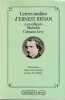
Pendant trente-six ans, de ses débuts dans le métier d'écrivain à sa mort, Ernest Renan est demeuré fidèle aux éditeurs qui lui avaient fait confiance, Michel et Calmann Lévy. Cette correspondance inédite comprend 549 lettres et restitue les années de collaboration, d'amitié puis d'intimité entre l'un des plus grands penseurs du xixe siècle et une famille d'éditeurs. Le scandale que représentera la publication de la Vie de Jésus retentit dans cette correspondance, tout comme les réactions de l'historien des Origines du Christianisme, préparant minutieusement le succès de ses livres, sûr d'être un écrivain de talent, s'attachant ensuite à poursuivre une oeuvre qui laisserait des traces indélébiles. A côté du penseur, de l'historien, on devine le spécialiste des métiers de la communication, l'intellectuel qui masque ses véritables rapports au monde de l'argent, engendrant un mythe durable, celui de l'homme de lettres sans attaches avec l'univers matériel.Les lieux et les êtres défilent au long de ces années 1856-1892. Les voyages en Orient, en Italie, en Bretagne suscitent des commentaires à chaud. Taine, Michelet, George Sand, le général Boulanger, le Prince Napoléon apparaissent sous un éclairage inhabituel. Tout un pan de la société du xixe siècle se découvre dans cette suite de lettres retraçant une aventure humaine dans un milieu fascinant, celui de l'édition. Bon Etat Mise à jour du Samedi 27 Juin 2026. Paiement PayPal immédiat, Mondial Relay pour : France, Allemagne, Autriche, Belgique, Espagne, Italie, Portugal, Luxembourg, Pays-Bas, Pologne (Communiquer votre point ou locker si connu). Une participation supplémentaire peut être demandée pour les colis lourds hors France où les envois compris entre 5 et 25 kg sont dégressifs : 2 à 4 kilogrammes - 7.99 / 5 à 10 kg - 15.99 / 15 -25 kg - 25.99. Certaines de nos collections ( Vian, Céline, Camus (...) peuvent être expédiées en Franco de port. Pour linternational hors Europe (Suisse, Canada, Japon, Etats-Unis, les frais dexpéditions peuvent varier selon le poids (mise à jour : 1 juin 2026).
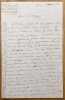
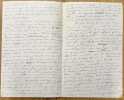
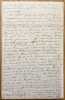
Lettre autographe signée à Alfred Maury (4 pages sur un bi-feuillet in-8, Rome, 9 avril 1850).
1850 1 vol. en feuilles Superbe lettre à son ami Alfred Maury (1817-1892), qui semble inédite, écrite lors de son séjour de huit mois en Italie (1849-1850). Profitant de l'occupation de Rome par les troupes françaises, l'Académie des Inscriptions et Belles-Lettres envoie le jeune Renan explorer les bibliothèques romaines auparavant inaccessibles aux chercheurs français.Dans ses "Souvenirs", Maury écrit sur sa rencontre avec Renan en 1849 : "Quelques mois ne s'étaient pas écoulés que nous étions devenus amis presque intimes...". Jean Pommier écrit "Les deux hommes eurent en commun l'indépendance d'esprit et le goût des recherches d'érudition. Ils furent employés l'un après l'autre à la Bibliothèque de la rue de Richelieu, se trouvèrent confrères à l'Académie des Inscriptions et collègues au Collège de France, où Mr Maury succéda à Mr J.-D. Guigniaut le 23 novembre 1862 dans la chaire d'histoire et morale qui avait été celle de Mr Michelet (...). Il mourut la même année que Renan (1892), huit mois avant son ami" (Cahiers Ernest Renan n° 1).Le ton de cette lettre démontre sans aucun doute un respect mutuel et une grande affection entre les deux jeunes gens : "Vous ne sauriez croire quelle joie me causent vos douces et affectueuses paroles, isolé comme je suis dans un pays où je peux sympathiser avec si peu de vivants. Il y a seulement un point qui me fait quelque peine dans vos chères lettres, ce sont les compliments que vous croyez devoir m'adresser et les précautions oratoires que vous employez pour me donner vos excellents avis. Ne sommes-nous point encore assez amis, mon cher, pour que l'assurance de notre affection réciproque soit le seul compliment que nous nous adressions ?".Cette affectueuse mise au point faite, Renan aborde son travail sur les langues sémitiques laissé en suspens à son départ pour l'Italie, et dont il a confié le manuscrit à Maury. Il pense que cet essai, pour lequel il lui prit "une démangeaison malencontreuse de le publier, mauvaise idée dont le voyage d'Italie mit heureusement une distance", sera à reprendre à son retour pour en faire "l'histoire intérieure des procédés de la langue sémitique". Ce travail fut finalement publié en 1855.Car pour l'heure, Renan a pour projet de quitter Rome pour Padoue afin de se consacrer à l'histoire de l'averroïsme : "Ce sujet s'est singulièrement élargi pour moi durant mon voyage : il est presque devenu dans mon esprit l'histoire de l'incrédulité au Moyen-Age. Or vous savez que vers la fin du Moyen-Age et à la Renaissance, l'averroïsme se cantonna dans les écoles de Padoue et Venise, ou plutôt que l'averroïsme fut là ce que le platonisme fut pour les libres penseurs de Florence...".Renan poursuit sa lettre en évoquant ses rencontres avec plusieurs érudits italiens et ses trouvailles bibliographiques.

Vie de Jésus. - [PMM 352 - THE HISTORICAL CHRIST]
Paris, Michel Lévy Frères, 1863. Bound totally uncut w. the orig. wrappers, also the back, in a near cont. green marbled cardboardbdg. w. red gilt title- and tome-labels to back. Capitals w. traces of use and back a bit faded, but otherwise nice and solid. Wrappers lightly soiled. Woodcut portrait of Renan inserted as frontispiece (not called for). W. half-title (""Histoire des Origines du Christianisme. Livre premier""). A very nice and clean copy, -only a couple of leaves w. very minor brownspotting. (4), LIX, 462 pp. + (1) leaf (colophon).
True first edition of this seminal classic on the life of Jesus, which caused an immediate scandal when it appeared. Rare with the original wrappers. Renan's masterpiece, which constitutes the first attempt to write a biography of Jesus the man and strongly puts forth the notion that the Bible too can be subject to historical investigation and critical scrutiny. The work enraged the Roman Catholic Church but was an immediate success in most of Europe. ""In six months sixty thousand copies of the French edition had been sold and edition succeeded edition. Renan regarded the book as the first of a series on the ""Origins of Christianity"", which he continued with ""The Apostles"" (1866), ""Saint Paul"" (1869), ""The Anti-Christ"" (1873), ""The Gospels"" (1877), ""The Christian Church"" (1879) and ""Marcus Aurelius"" (1881) but none of these emulated the success of the ""Life of Jesus""... Immediate success was partly a ""succès de scandale"" but this would not have kept the book alive. It is Renan's approach to the subject and his beautiful prose that gave it lasting eminence."" (PMM 352). This groundbreaking work analyses the personality of the man Jesus, -a figure created by Renan out of his mind, but based on historical sources. ""It is a pastoral idyll with the central figure a gentle, albeit oracular visionary, his power to work miracles a part of his unique personality -the son of man, but not the Son of God... In this great work it seems clear that the audience he has found was the one he sought: the general reading public rather than the limited coterie of scholars"" and there is no doubt of the fact or the degree of his success."" (PMM 352). ""C'est le livre plus célèbre d'Ernest Renan (1823-1892) et le premier volume de l'Hisoire des origines du Christianisme""... on peut considérer cette ""Vie de Jésus"" comme une oeuvre de vulgarisation: l'auteur cherche à déterminer ce qui, au point de vue ""scientifique"", est de créance dans la vie du Nazaréen?"" (Laffont-Bompiani IV:681). Apart from causing a world-wide scandal, the work was also a world-wide success, and no matter how many harsh words can be said about the historical and religious contents of the work, there is no doubt about the fact that it influenced the destiny of Catholicism decisively and that it is a masterpiece of 19th century French literature. It is very elegantly written and is renowned for its description of the historical setting, charming descriptions of sceneries, its penetrating psychological analysis and its overall style and class. ""Il faut ajouter que la ""Vie de Jésus"" compte au nombre des livres les mieux écrits de son temps"" le charme de la peinture des paysages, le pittoresque géneralement exact des évocations historiques, l'analyse pénétrante de l'âme des personnages, des seductions du style enfin, n'ont pas été pour rien dans le succès universel de cette oeuvre."" (Laffont-Bompiani IV:681). Ernest Renan (1823-1892) was a French philologist, philosopher and historian. His father died when he was aged five, and his mother wanted him to become a priest. Until he was about 16 years old, he was trained by the Church, but due to his investigative and truth-seeking nature as well as his studies (e.g. Hebrew), he was in doubt as to the historical truth of the Scriptures, and with the help of his sister he chose his own path in life. ""He studied intensively the languages of the Bible and filled a number of minor academic positions, frequently encountering difficulties because of the heterodoxy and outspokenness of his religious opinions."" (Printing and the Mind of Man 352). In 1840 he began studying philosophy and later philology, in 1847 he took his degree as Agrégé de Philosophie and became master at the Lycée of Vendome. After having returned from a mission to Italy in the year 1850 where he gathered material for his historical-philosophical masterpiece, ""Averroës et l'Averroisme"", he was offered employment at the ""Bibliothèque Nationale"" (at the manuscript department). In 1861 he was chosen to become professor of Hebrew at the Collège de France, but because the emperor refused to ratify the appointment (inspired by the Clerical party), he was not established in the chair untill 1870. In 1878 he was elected for the Academy. Renan is considered a scholar of the greatest excellence and an impressive writer.
Vie de Jésus. Huitième édition.
Paris, Michel Lévy Frères, 1863. Royal 8vo. Nice cont. solid black hcalf w. five raised bands and gilt title to back. Half-title (""Histoire des Origines du Christianisme. Livre premier"") browned, otherwise only occational brownspotting. A nice and solid copy.. (4), LIX, 459, (2) pp. + (1) leaf (colophon).
Printed the same year as the first edition (also Paris, Michel Lévy Frères). The work caused immediate scandal when it appeared. Renan's masterpiece, which constitudes the first attempt to write a biography of Jesus the man and strongly puts forth the notion that the Bible too can be subject to historical investigation and critical scrutiny. The work enraged the Roman Catholic Church but was an immediate success in most of Europe. ""In six months sixty thousand copies of the French edition had been sold and edition succeeded edition. Renan regarded the book as the first of a series on the ""Origins of Christianity"", which he continued with ""The Apostles"" (1866), ""Saint Paul"" (1869), ""The Anti-Christ"" (1873), ""The Gospels"" (1877), ""The Christian Church"" (1879) and ""Marcus Aurelius"" (1881) but none of these emulated the success of the ""Life of Jesus""... Immediate success was partly a ""succès de scandale"" but this would not have kept the book alive. It is Renan's approach to the subject and his beautiful prose that gave it lasting eminence."" (PMM 352). This groundbreaking work analyses the personality of the man Jesus, -a figure created by Renan out of his mind but based on historical sources. ""It is a pastoral idyll with the central figure a gentle, albeit oracular visionary, his power to work miracles a part of his unique personality -the son of man, but not the Son of God... In this great work it seems clear that the audience he has found was the one he sought: the general reading public rather than the limited coterie of scholars"" and there is no doubt of the fact or the degree of his success."" (PMM 352). ""C'est le livre plus célèbre d'Ernest Renan (1823-1892) et le premier volume de l'Hisoire des origines du Christianisme""... on peut considérer cette ""Vie de Jésus"" comme une oeuvre de vulgarisation: l'auteur cherche à déterminer ce qui, au point de vue ""scientifique"", est de créance dans la vie du Nazaréen?"" (Laffont-Bompiani IV:681). Apart from causing a world-wide scandal, the work was also a world-wide success, and no matter how many harsh words can be said about the historical and religious contents of the work, there is no doubt about the fact that it influenced the destiny of Catholocism decisively and that it is a masterpiece of 19th century French literature. It is very elegantly written and is renowned for its description of the historical setting, charming descriptions of sceneries, its penetrating psychological analysis and its overall style and class. ""Il faut ajouter que la ""Vie de Jésus"" compte au nombre des livres les mieux écrits de son temps"" le charme de la peinture des paysages, le pittoresque géneralement exact des évocations historiques, l'analyse pénétrante de l'âme des personnages, des seductions du style enfin, n'ont pas été pour rien dans le succès universel de cette oeuvre."" (Laffont-Bompiani IV:681). Ernest Renan (1823-1892) was a French philologist, philosopher and historian. His father died when he was aged five, and his mother wanted him to become a priest. Until he was about 16 years old, he was trained by the Church, but due to his investigative and truth-seeking nature as well as his studies (e.g. Hebrew), he was in doubt as to the historical truth of the Scriptures, and with the help of his sister he chose his own path in life. ""He studied intensively the languages of the Bible and filled a number of minor academic positions, frequently encountering difficulties because of the heterodoxy and outspokenness of his religious opinions."" (Printing and the Mind of Man 352). In 1840 he began studying philosophy and later philology, in 1847 he took his degree as Agrégé de Philosophie and became master at the Lycée of Vendome. After having returned from a mission to Italy in the year 1850 where he gathered material for his historical-philosophical masterpiece, ""Averroës et l'Averroisme"", he was offered employment at the ""Bibliothèque Nationale"" (at the manuscript department). In 1861 he was chosen to become professor of Hebrew at the Collège de France, but because the emperor refused to ratify the appointment (inspired by the Clerical party), he was not established in the chair untill 1870. In 1878 he was elected for the Academy. Renan is considered a scolar of the greatest excellence and an impressive writer.
Vie de Jésus.
Berlin, Jul. Springer, 1863. 8vo. nice cont. twotoned hcalf w. gilt back. Internally only occational minor brownspotting. Old owner's name to front free endpaper (""Madme Rothe née Roux""). (4), XLII, 327 pp.
The Berlin-edition of the seminal work, which was immensely influential on European thought, philosophy, history and religion from the date of its appearance. The first edition appeared in Paris in the same year, and the Berlin-edition appeared about simultaneously.The work caused an immediate scandal when it appeared. Renan's masterpiece, which constitudes the first attempt to write a biography of Jesus the man and strongly puts forth the notion that the Bible too can be subject to historical investigation and critical scrutiny. The work enraged the Roman Catholic Church but was an immediate success in most of Europe. ""In six months sixty thousand copies of the French edition had been sold and edition succeeded edition. Renan regarded the book as the first of a series on the ""Origins of Christianity"", which he continued with ""The Apostles"" (1866), ""Saint Paul"" (1869), ""The Anti-Christ"" (1873), ""The Gospels"" (1877), ""The Christian Church"" (1879) and ""Marcus Aurelius"" (1881) but none of these emulated the success of the ""Life of Jesus""... Immediate success was partly a ""succès de scandale"" but this would not have kept the book alive. It is Renan's approach to the subject and his beautiful prose that gave it lasting eminence."" (PMM 352). This groundbreaking work analyses the personality of the man Jesus, -a figure created by Renan out of his mind but based on historical sources. ""It is a pastoral idyll with the central figure a gentle, albeit oracular visionary, his power to work miracles a part of his unique personality -the son of man, but not the Son of God... In this great work it seems clear that the audience he has found was the one he sought: the general reading public rather than the limited coterie of scholars"" and there is no doubt of the fact or the degree of his success."" (PMM 352). ""C'est le livre plus célèbre d'Ernest Renan (1823-1892) et le premier volume de l'Hisoire des origines du Christianisme""... on peut considérer cette ""Vie de Jésus"" comme une oeuvre de vulgarisation: l'auteur cherche à déterminer ce qui, au point de vue ""scientifique"", est de créance dans la vie du Nazaréen?"" (Laffont-Bompiani IV:681). Apart from causing a world-wide scandal, the work was also a world-wide success, and no matter how many harsh words can be said about the historical and religious contents of the work, there is no doubt about the fact that it influenced the destiny of Catholocism decisively and that it is a masterpiece of 19th century French literature. It is very elegantly written and is renowned for its description of the historical setting, charming descriptions of sceneries, its penetrating psychological analysis and its overall style and class. ""Il faut ajouter que la ""Vie de Jésus"" compte au nombre des livres les mieux écrits de son temps"" le charme de la peinture des paysages, le pittoresque géneralement exact des évocations historiques, l'analyse pénétrante de l'âme des personnages, des seductions du style enfin, n'ont pas été pour rien dans le succès universel de cette oeuvre."" (Laffont-Bompiani IV:681). Ernest Renan (1823-1892) was a French philologist, philosopher and historian. His father died when he was aged five, and his mother wanted him to become a priest. Until he was about 16 years old, he was trained by the Church, but due to his investigative and truth-seeking nature as well as his studies (e.g. Hebrew), he was in doubt as to the historical truth of the Scriptures, and with the help of his sister he chose his own path in life. ""He studied intensively the languages of the Bible and filled a number of minor academic positions, frequently encountering difficulties because of the heterodoxy and outspokenness of his religious opinions."" (Printing and the Mind of Man 352). In 1840 he began studying philosophy and later philology, in 1847 he took his degree as Agrégé de Philosophie and became master at the Lycée of Vendome. After having returned from a mission to Italy in the year 1850 where he gathered material for his historical-philosophical masterpiece, ""Averroës et l'Averroisme"", he was offered employment at the ""Bibliothèque Nationale"" (at the manuscript department). In 1861 he was chosen to become professor of Hebrew at the Collège de France, but because the emperor refused to ratify the appointment (inspired by the Clerical party), he was not established in the chair untill 1870. In 1878 he was elected for the Academy. Renan is considered a scolar of the greatest excellence and an impressive writer.
Vie de Jésus. - [PMM 352 - THE HISTORICAL CHRIST]
Paris, Michel Lévy Frères, 1863. 8vo. Orig. green hcloth w. gilt spine. Upper back hinge cracked and spine a bit crooked. Corners a bit bumped. A very nice copy w. only occasional minor brownspotting. Old owner's inscription to title-page. W. half-title (""Histoire des Origines du Christianisme. Livre premier""). (4), LIX, (1), 462, (2) pp.
![Vie de Jésus. - [PMM 352 - THE HISTORICAL CHRIST]. "RENAN, ERNEST.](https://static.livre-rare-book.com/pictures/LLX/35937_1_thumb.jpg)
![Vie de Jésus. - [PMM 352 - THE HISTORICAL CHRIST]. "RENAN, ERNEST.](https://static.livre-rare-book.com/pictures/LLX/35937_2_thumb.jpg)
True first edition of this seminal classic on the life of Jesus, which caused an immediate scandal when it appeared. Renan's masterpiece, which constitutes the first attempt to write a biography of Jesus the man and strongly puts forth the notion that the Bible too can be subject to historical investigation and critical scrutiny. The work enraged the Roman Catholic Church but was an immediate success in most of Europe. ""In six months sixty thousand copies of the French edition had been sold and edition succeeded edition. Renan regarded the book as the first of a series on the ""Origins of Christianity"", which he continued with ""The Apostles"" (1866), ""Saint Paul"" (1869), ""The Anti-Christ"" (1873), ""The Gospels"" (1877), ""The Christian Church"" (1879) and ""Marcus Aurelius"" (1881) but none of these emulated the success of the ""Life of Jesus""... Immediate success was partly a ""succès de scandale"" but this would not have kept the book alive. It is Renan's approach to the subject and his beautiful prose that gave it lasting eminence."" (PMM 352). This groundbreaking work analyses the personality of the man Jesus, -a figure created by Renan out of his mind, but based on historical sources. ""It is a pastoral idyll with the central figure a gentle, albeit oracular visionary, his power to work miracles a part of his unique personality -the son of man, but not the Son of God... In this great work it seems clear that the audience he has found was the one he sought: the general reading public rather than the limited coterie of scholars"" and there is no doubt of the fact or the degree of his success."" (PMM 352). ""C'est le livre plus célèbre d'Ernest Renan (1823-1892) et le premier volume de l'Hisoire des origines du Christianisme""... on peut considérer cette ""Vie de Jésus"" comme une oeuvre de vulgarisation: l'auteur cherche à déterminer ce qui, au point de vue ""scientifique"", est de créance dans la vie du Nazaréen?"" (Laffont-Bompiani IV:681). Apart from causing a world-wide scandal, the work was also a world-wide success, and no matter how many harsh words can be said about the historical and religious contents of the work, there is no doubt about the fact that it influenced the destiny of Catholicism decisively and that it is a masterpiece of 19th century French literature. It is very elegantly written and is renowned for its description of the historical setting, charming descriptions of sceneries, its penetrating psychological analysis and its overall style and class. ""Il faut ajouter que la ""Vie de Jésus"" compte au nombre des livres les mieux écrits de son temps"" le charme de la peinture des paysages, le pittoresque géneralement exact des évocations historiques, l'analyse pénétrante de l'âme des personnages, des seductions du style enfin, n'ont pas été pour rien dans le succès universel de cette oeuvre."" (Laffont-Bompiani IV:681). Ernest Renan (1823-1892) was a French philologist, philosopher and historian. His father died when he was aged five, and his mother wanted him to become a priest. Until he was about 16 years old, he was trained by the Church, but due to his investigative and truth-seeking nature as well as his studies (e.g. Hebrew), he was in doubt as to the historical truth of the Scriptures, and with the help of his sister he chose his own path in life. ""He studied intensively the languages of the Bible and filled a number of minor academic positions, frequently encountering difficulties because of the heterodoxy and outspokenness of his religious opinions."" (Printing and the Mind of Man 352). In 1840 he began studying philosophy and later philology, in 1847 he took his degree as Agrégé de Philosophie and became master at the Lycée of Vendome. After having returned from a mission to Italy in the year 1850 where he gathered material for his historical-philosophical masterpiece, ""Averroës et l'Averroisme"", he was offered employment at the ""Bibliothèque Nationale"" (at the manuscript department). In 1861 he was chosen to become professor of Hebrew at the Collège de France, but because the emperor refused to ratify the appointment (inspired by the Clerical party), he was not established in the chair untill 1870. In 1878 he was elected for the Academy. Renan is considered a scholar of the greatest excellence and an impressive writer.
Vie de Jésus. - [PMM 352 - THE HISTORICAL CHRIST]
Paris, Michel Lévy Frères, 1863. Royal 8vo. Bound in a nice contemporary red halfcalf with five raised bands to spine, with blindstamped borders to compartments. A very nice copy, also with the often lacking half-title (""Histoire des Origines du Christianisme. Livre premier""). (4), LIX, 462 pp. + (1) leaf (colophon).
True first edition of this seminal classic on the life of Jesus, which caused an immediate scandal when it appeared. Renan's masterpiece, which constitudes the first attempt to write a biography of Jesus the man and strongly puts forth the notion that the Bible too can be subject to historical investigation and critical scrutiny. The work enraged the Roman Catholic Church but was an immediate success in most of Europe. ""In six months sixty thousand copies of the French edition had been sold and edition succeeded edition. Renan regarded the book as the first of a series on the ""Origins of Christianity"", which he continued with ""The Apostles"" (1866), ""Saint Paul"" (1869), ""The Anti-Christ"" (1873), ""The Gospels"" (1877), ""The Christian Church"" (1879) and ""Marcus Aurelius"" (1881) but none of these emulated the success of the ""Life of Jesus""... Immediate success was partly a ""succès de scandale"" but this would not have kept the book alive. It is Renan's approach to the subject and his beautiful prose that gave it lasting eminence."" (PMM 352). This groundbreaking work analyses the personality of the man Jesus, -a figure created by Renan out of his mind but based on historical sources. ""It is a pastoral idyll with the central figure a gentle, albeit oracular visionary, his power to work miracles a part of his unique personality -the son of man, but not the Son of God... In this great work it seems clear that the audience he has found was the one he sought: the general reading public rather than the limited coterie of scholars"" and there is no doubt of the fact or the degree of his success."" (PMM 352). ""C'est le livre plus célèbre d'Ernest Renan (1823-1892) et le premier volume de l'Hisoire des origines du Christianisme""... on peut considérer cette ""Vie de Jésus"" comme une oeuvre de vulgarisation: l'auteur cherche à déterminer ce qui, au point de vue ""scientifique"", est de créance dans la vie du Nazaréen?"" (Laffont-Bompiani IV:681). Apart from causing a world-wide scandal, the work was also a world-wide success, and no matter how many harsh words can be said about the historical and religious contents of the work, there is no doubt about the fact that it influenced the destiny of Catholocism decisively and that it is a masterpiece of 19th century French literature. It is very elegantly written and is renowned for its description of the historical setting, charming descriptions of sceneries, its penetrating psychological analysis and its overall style and class. ""Il faut ajouter que la ""Vie de Jésus"" compte au nombre des livres les mieux écrits de son temps"" le charme de la peinture des paysages, le pittoresque géneralement exact des évocations historiques, l'analyse pénétrante de l'âme des personnages, des seductions du style enfin, n'ont pas été pour rien dans le succès universel de cette oeuvre."" (Laffont-Bompiani IV:681). Ernest Renan (1823-1892) was a French philologist, philosopher and historian. His father died when he was aged five, and his mother wanted him to become a priest. Until he was about 16 years old, he was trained by the Church, but due to his investigative and truth-seeking nature as well as his studies (e.g. Hebrew), he was in doubt as to the historical truth of the Scriptures, and with the help of his sister he chose his own path in life. ""He studied intensively the languages of the Bible and filled a number of minor academic positions, frequently encountering difficulties because of the heterodoxy and outspokenness of his religious opinions."" (Printing and the Mind of Man 352). In 1840 he began studying philosophy and later philology, in 1847 he took his degree as Agrégé de Philosophie and became master at the Lycée of Vendome. After having returned from a mission to Italy in the year 1850 where he gathered material for his historical-philosophical masterpiece, ""Averroës et l'Averroisme"", he was offered employment at the ""Bibliothèque Nationale"" (at the manuscript department). In 1861 he was chosen to become professor of Hebrew at the Collège de France, but because the emperor refused to ratify the appointment (inspired by the Clerical party), he was not established in the chair untill 1870. In 1878 he was elected for the Academy. Renan is considered a scolar of the greatest excellence and an impressive writer.
Vie de Jésus. - [PMM 352 - THE HISTORICAL CHRIST]
Paris, Michel Lévy Frères, 1863. Royal 8vo. Bound in a very nice contemporary red half calf with five raised bands to spine, blindstamped borders to compartments and gilt title. Light occassional brownspotting, but overall a very nice, clean and tight copy, in- as well as externally. With the half-title present (""Histoire des Origines du Christianisme. Livre premier""). (4), LIX, (1), 462 pp. + (1) leaf (colophon).
![Vie de Jésus. - [PMM 352 - THE HISTORICAL CHRIST]. "RENAN, ERNEST.](https://static.livre-rare-book.com/pictures/LLX/52577_1_thumb.jpg)
![Vie de Jésus. - [PMM 352 - THE HISTORICAL CHRIST]. "RENAN, ERNEST.](https://static.livre-rare-book.com/pictures/LLX/52577_2_thumb.jpg)
True first edition of this seminal classic on the life of Jesus, which caused an immediate scandal when it appeared - Renan's masterpiece, which constitudes the first attempt to write a biography of Jesus the man and strongly puts forth the notion that the Bible too can be subject to historical investigation and critical scrutiny. The work enraged the Roman Catholic Church but was an immediate success in most of Europe. ""In six months sixty thousand copies of the French edition had been sold and edition succeeded edition. Renan regarded the book as the first of a series on the ""Origins of Christianity"", which he continued with ""The Apostles"" (1866), ""Saint Paul"" (1869), ""The Anti-Christ"" (1873), ""The Gospels"" (1877), ""The Christian Church"" (1879) and ""Marcus Aurelius"" (1881) but none of these emulated the success of the ""Life of Jesus""... Immediate success was partly a ""succès de scandale"" but this would not have kept the book alive. It is Renan's approach to the subject and his beautiful prose that gave it lasting eminence."" (PMM 352). This groundbreaking work analyses the personality of the man Jesus, -a figure created by Renan out of his mind but based on historical sources. ""It is a pastoral idyll with the central figure a gentle, albeit oracular visionary, his power to work miracles a part of his unique personality -the son of man, but not the Son of God... In this great work it seems clear that the audience he has found was the one he sought: the general reading public rather than the limited coterie of scholars"" and there is no doubt of the fact or the degree of his success."" (PMM 352). ""C'est le livre plus célèbre d'Ernest Renan (1823-1892) et le premier volume de l'Hisoire des origines du Christianisme""... on peut considérer cette ""Vie de Jésus"" comme une oeuvre de vulgarisation: l'auteur cherche à déterminer ce qui, au point de vue ""scientifique"", est de créance dans la vie du Nazaréen?"" (Laffont-Bompiani IV:681). Apart from causing a world-wide scandal, the work was also a world-wide success, and no matter how many harsh words can be said about the historical and religious contents of the work, there is no doubt about the fact that it influenced the destiny of Catholocism decisively and that it is a masterpiece of 19th century French literature. It is very elegantly written and is renowned for its description of the historical setting, charming descriptions of sceneries, its penetrating psychological analysis and its overall style and class. ""Il faut ajouter que la ""Vie de Jésus"" compte au nombre des livres les mieux écrits de son temps"" le charme de la peinture des paysages, le pittoresque géneralement exact des évocations historiques, l'analyse pénétrante de l'âme des personnages, des seductions du style enfin, n'ont pas été pour rien dans le succès universel de cette oeuvre."" (Laffont-Bompiani IV:681). Ernest Renan (1823-1892) was a French philologist, philosopher and historian. His father died when he was aged five, and his mother wanted him to become a priest. Until he was about 16 years old, he was trained by the Church, but due to his investigative and truth-seeking nature as well as his studies (e.g. Hebrew), he was in doubt as to the historical truth of the Scriptures, and with the help of his sister he chose his own path in life. ""He studied intensively the languages of the Bible and filled a number of minor academic positions, frequently encountering difficulties because of the heterodoxy and outspokenness of his religious opinions."" (Printing and the Mind of Man 352). In 1840 he began studying philosophy and later philology, in 1847 he took his degree as Agrégé de Philosophie and became master at the Lycée of Vendome. After having returned from a mission to Italy in the year 1850 where he gathered material for his historical-philosophical masterpiece, ""Averroës et l'Averroisme"", he was offered employment at the ""Bibliothèque Nationale"" (at the manuscript department). In 1861 he was chosen to become professor of Hebrew at the Collège de France, but because the emperor refused to ratify the appointment (inspired by the Clerical party), he was not established in the chair untill 1870. In 1878 he was elected for the Academy. Renan is considered a scolar of the greatest excellence and an impressive writer.
Lettres du Séminaire 1838-1846.
Paris, Calmann-Lévy, 1902 In-8, broché, couverture imprimée (dos fendu recollé), 350 pp.

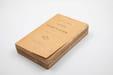
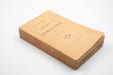
Edition originale. "Ces lettres furent adressées par Ernest Renan [agé de 15 ans en 1838] à sa mère, alors quil était aux séminaires de Saint-Nicolas, dIssy et de Saint-Sulpice [...]. Elles peignent dune manière toute différente les années de jeunesse dErnest Renan" (Préface). De la bibliothèque de Marie-France Guillermine, conservatrice du musée Ernest-Renan de Tréguier. Bon état intérieur. Bon état
Ernest Renan et l'étranger.
Paris, Les Belles-Lettres, 1928 In-8, broché (dos recollé), 446 pp.
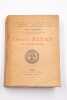
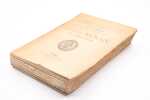
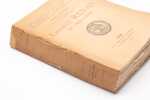
"Ce livre sur Renan est né d'un cours public professé à Strasbourg" par l'auteur. De la bibliothèque de Marie-France Guillermine, conservatrice du musée Ernest-Renan de Tréguier. Bon exemplaire, intérieur frais. Bon état
Ernest Renan. Fragments intimes et romanesques
C. Lvy Broch D'occasion bon tat 01/01/1914 355 pages
LE LIVRE DE JOB. TRADUIT DE L’HÉBREU PAR ERNEST RENAN. MEMBRE DE L'INSTITUT. ÉTUDE SUR L'AGE ET LE GRAND CARACTÈRE DU POÈME.
Édition originale. In-8, pleine percaline verte, titre doré sur pièce de titre brune, rehaussée de liserés doré. Couverture conservée. 200pp. CALMAN LÉVY. PARIS. Dos conserver .Très bon état.

RENAN - Ernest : philologue et critique Français, né à Tréguier en 1823, mort le 2 octobre 1892 à Paris. Étude dans un collège tenue par des prêtres, destiné a l'état ecclésiastique comme beaucoup d'enfant de la pieuse et grave Bretagne. A 16, Ernest Renan entre au petit séminaire dirigé par l'abbé Dupanloup, trois an plus tard il va compléter son instruction religieuse chez les Sulpiciens. Frais d'envoi à prévoir. Merci.
Lot de 3 livres: Ernest Renan.
Paris, Garnier, 1925, in-8vo, VII + 371 p., brochure originale.
1) LASSERRE, Pierre: La jeunesse d’Ernest Renan. Histoire de la crise religieuse au XIXe siècle. tome premier. 371 p. 2) WEILER, Maurice: Pour connaître la pensée de Renan. 221 p. 3) PSICHARI, Jean: Ernest Renan. Jugements & Souvenirs. 368 p.,

(SLACES, NVVA)
Phone number : 41 (0)26 3223808
Averroes et l'Averroïsme. Essai historique.
Paris, Durand, 1852. Royal 8vo. Uncut in the orig. wrappers, back crudely repaired w. blank paper-strip, lacking upper part. Tears to edges of wrappers and lacking lower right corner of front wrapper and first free blank leaf (partly pasted down). Dampstaining and brownspotting throughout. W. half-title. (4), XII, 367 pp.
First edition of Renan's first book, -the seminal work that placed the study of Renaissance philosophy on the philosophical map and earned Renan a doctorate of letters. This work constitutes the first proper monograph on the great Islamic philosopher, Ibn Rush, also called Averroes, who is considered the greatest commentator on the works of Aristotle, and it is principally because of this work that the great philosopher and scientist is seriously appreciated in Europe today. Besides dealing with Averroes himself, Renan studies the development and different branches of Averroism, focusing on the Jewish, Scholastic and Paduan ones. His focus on the Paduan Averroism (16th century) in this work has meant that Renaissance philosophy was finally given a role of its own in the history of philosophy, -it is with this work that the philosophy of the Renaissance is taken seriously in the study of philosophy.""Memoirs on semitic languages and on the study of Greek in the Middle Ages were crowned by the Académie in 1848 and 1849 but do not seem to have been published. Renan's first book, published in 1852, was, in fact, ""Averroes et l'Averroïsme"" (see 24) which earned him a doctorate of letters."" (PMM 352). Renan has always been admired for his sharp mind, his great abilities and courage, but for the same reasons he was feared by many. ""Dés 1852 il signalait dans la préface de son Averroës comme le trait caractéristique du dix-neuvième siècle la substitution de la méthode historique dans toutes les études relatives à l'esprit humain. Cette substitution est légitime"" mais elle serait dangereuse si elle allait jusqu'à proscrire la théologie et la métaphysique... "" (N.B.G. (1862) 51:984). Ernest Renan (1823-1892) was a French philologist, philosopher and historian. His father died when he was aged five, and his mother wanted him to become a priest. Until he was about 16 years old, he was trained by the Church, but due to his investigative and truth-seeking nature as well as his studies (e.g. Hebrew), he was in doubt as to the historical truth of the Scriptures, and with the help of his sister he chose his own path in life. ""He studied intensively the languages of the Bible and filled a number of minor academic positions, frequently encountering difficulties because of the heterodoxy and outspokenness of his religious opinions."" (Printing and the Mind of Man 352). In 1840 he began studying philosophy and later philology, in 1847 he took his degree as Agrégé de Philosophie and became master at the Lycée of Vendome. After having returned from a mission to Italy in the year 1850 where he gathered material for his historical-philosophical masterpiece, ""Averroës et l'Averroisme"", he was offered employment at the ""Bibliothèque Nationale"" (at the manuscript department). In 1861 he was chosen to become professor of Hebrew at the Collège de France, but because the emperor refused to ratify the appointment (inspired by the Clerical party), he was not established in the chair untill 1870. In 1878 he was elected for the Academy. Renan is considered a scolar of the greatest excellence and an impressive writer.
Averroes et l'Averroïsme. Essai historique. - [DISCOVERING RENAISSANCE PHILOSOPHY]
Paris, Durand, 1852. 8vo. Contemporary half calf with of wear. Spine worn, lacking parts of capitals, and back hinge very weak. Usual brownspotting due to the paper quality. (4), XII, 367 pp.
First edition of Renan's first book, -the seminal work that placed the study of Renaissance philosophy on the philosophical map and earned Renan a doctorate of letters. This work constitutes the first proper monograph on the great Islamic philosopher, Ibn Rush, also called Averroes, who is considered the greatest commentator on the works of Aristotle, and it is principally because of this work that the great philosopher and scientist is seriously appreciated in Europe today. Besides dealing with Averroes himself, Renan studies the development and different branches of Averroism, focusing on the Jewish, Scholastic and Paduan ones. His focus on the Paduan Averroism (16th century) in this work has meant that Renaissance philosophy was finally given a role of its own in the history of philosophy, -it is with this work that the philosophy of the Renaissance is taken seriously in the study of philosophy.""Memoirs on semitic languages and on the study of Greek in the Middle Ages were crowned by the Académie in 1848 and 1849 but do not seem to have been published. Renan's first book, published in 1852, was, in fact, ""Averroes et l'Averroïsme"" which earned him a doctorate of letters."" (PMM 352). Renan has always been admired for his sharp mind, his great abilities and courage, but for the same reasons he was feared by many. ""Dés 1852 il signalait dans la préface de son Averroës comme le trait caractéristique du dix-neuvième siècle la substitution de la méthode historique dans toutes les études relatives à l'esprit humain. Cette substitution est légitime"" mais elle serait dangereuse si elle allait jusqu'à proscrire la théologie et la métaphysique... "" (N.B.G. (1862) 51:984). Ernest Renan (1823-1892) was a French philologist, philosopher and historian. His father died when he was aged five, and his mother wanted him to become a priest. Until he was about 16 years old, he was trained by the Church, but due to his investigative and truth-seeking nature as well as his studies (e.g. Hebrew), he was in doubt as to the historical truth of the Scriptures, and with the help of his sister he chose his own path in life. ""He studied intensively the languages of the Bible and filled a number of minor academic positions, frequently encountering difficulties because of the heterodoxy and outspokenness of his religious opinions."" (Printing and the Mind of Man 352). In 1840 he began studying philosophy and later philology, in 1847 he took his degree as Agrégé de Philosophie and became master at the Lycée of Vendome. After having returned from a mission to Italy in the year 1850 where he gathered material for his historical-philosophical masterpiece, ""Averroës et l'Averroisme"", he was offered employment at the ""Bibliothèque Nationale"" (at the manuscript department). In 1861 he was chosen to become professor of Hebrew at the Collège de France, but because the emperor refused to ratify the appointment (inspired by the Clerical party), he was not established in the chair untill 1870. In 1878 he was elected for the Academy. Renan is considered a scolar of the greatest excellence and an impressive writer.
Histoire du peuple d'Israël
Édition originale de L’Histoire du peuple d’Israël de Renan. « Important. Recherché sur grand papier » (Clouzot). Bel exemplaire du tirage de tête, sur Japon, aux couvertures et dos conservés. 5 volumes grand in-8 de : I/ (2) ff., XXIX, 455 pp ; II/ (2) ff., IV, 545 pp ; III/ VII, 527 pp ; IV/ (2) ff., 411 pp ; V/ (2) ff., 427 pp. Demi-chagrin brun à coins, dos à nerfs orné de fleurons dorés, exemplaire non rogné, couvertures et dos conservés. 249 x 208 mm. Renan, Ernest. Histoire du peuple d’Israël. Paris, Calmann Lévy, 1887-1893. Édition originale « recherchée » (Clouzot). Carteret, II, 258 ; Clouzot, 234 ; Vicaire, VI, 1032-1033. L’un des 30 premiers exemplaires du tirage de tête, sur Japon. Il porte le numéro 22. « Important. Recherché sur grand papier » (Clouzot). Cette Histoire témoigne de la passion qui domina toute la vie de Renan : l’étude des origines de la civilisation. Partant des époques et des traditions les plus anciennes, l’étude est poussée jusqu’à la vie du peuple hébreu sous la domination romaine : elle se propose de retracer l’histoire d’une race dans son unité fondamentale et de suivre les phases de son développement. Montrer le développement religieux du peuple d’Israël, dégager les principes qui se sont combinés pour former l’âme d’Israël, assigner à ce peuple étonnant sa véritable place dans l’œuvre collective de la civilisation humaine, tel est le but véritable poursuivi par M. Renan. Intellectuel français, philosophe et historien, Joseph Ernest Renan (1823-1892), dans la lignée du Darwinisme, étudie les religions d’un point de vue ethnologique, de manière critique et scientifique, afin de comprendre leurs origines et leur influence sur les civilisations. Ses travaux seront vivement condamnés par l’Eglise catholique. « L’œuvre de Renan, fort discutée pour son interprétation purement rationaliste de l’histoire religieuse, est célèbre en ce qu’elle soutient, contre les négations du positivisme, l’importance du facteur religieux dans l’évolution humaine » (Dictionnaire des œuvres). « Personnage multiple, intelligence à facettes, Renan, qui parut en son temps le type du négateur, aura été également un convertisseur ; il a attiré nombre d’esprits hors du christianisme, mais il a été aussi à l’origine du dilettantisme mystique de la fin du siècle. Il critiquait les dogmes, mais, presque seul parmi les grands écrivains de son temps, il entretenait la sensibilité chrétienne. Ayant formé la « génération du relatif », il donnait en même temps à cette génération la curiosité et même l’angoisse religieuses » (Dictionnaire des auteurs). « Ce qui lui appartient, j’en suis sûr, c’est l’art avec lequel il anime le passé lointain, c’est l’intelligence qu’il nous donne de l’antique Orient dont il connait si bien le sol et les races, c’est son talent de peindre les paysages et les figures, c’est sa finesse à discerner, à défaut de certitudes, le probable et le possible, c’est enfin son don particulier de plaire, de charmer, de séduire » (Anatole France). Il est enrichi de deux lettres autographes.
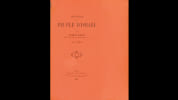
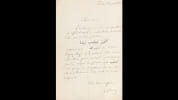
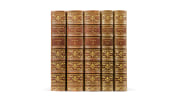
édition_originale japon
Ma soeur Henriette.
Paris, Calmann-Lévy, In-8, cartonnage imprimé, pièce de titre maroquin noir au dos, III-96 pp., planches hors texte.


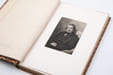
Avec 5 illustrations d'après Henri Scheffer et Ary Renan. Réimpression textuelle de la plaquette tirée à 100 exemplaires uniquement en 1862 : "Henriette Renan ; Souvenir pour ceux qui l'ont connue". De la bibliothèque de Marie-France Guillermine, conservatrice du musée Ernest-Renan de Tréguier. Très bon état intérieur, très frais, grand de marges. Bon état
Lettres intimes 1842-1845 précédées de Ma soeur Henriette.
Paris, Calmann Lévy, 1896 In-8, demi-toile à la Bradel, dos lisse orné d'un fleuron doré, pièce de titre de maroquin rouge, 408 pp.


Edition originale de la correspondance entre Ernest Renan et sa soeur Henriette. De la bibliothèque de Marie-France Guillermine, conservatrice du musée Ernest-Renan de Tréguier. Bon exemplaire, très frais. Bon état
L'âme celtique de Renan.
New Haven et Paris, Yale University Press, Presse Universitaires de France 1959 In-8, broché, couverture imprimée (tachée et fatiguée), 254 pp.
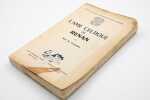
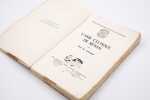
"Cette étude peut, croyons-nous, livrer la clef d'un secret : les apparentes contradictions qui juxtaposent en Renan, de façons paradoxales, l'idéalisme rêveur, le dilettantisme amusé et un scepticisme qui semple parfois toucher au nihilisme" (Introduction). Importante bibliographie en fin. Exmplaire richement annoté de la main de Marie-France Guillermine, conservatrice du musée Ernest-Renan de Tréguier. Bon état intérieur. Etat correct
Histoire littéraire de la France au quatorzième siècle. Discours sur l'état des lettres par Victor LE CLERC. Discours sur l'état des Beaux-Arts par Ernest RENAN. Seconde édition.
1865 Paris, Michel Lévy, 1865. Deux volumes, grand in-8, brochés, XVIII-548 + 429 pages. Non rogné. VICAIRE, VI, 1018. Première édition in-8. Ces discours ont paru pour la première fois en 1862, dans le tome XXIV de l'histoire littéraire de la France. Bon exemplaire.
Bon exemplaire , hormis infimes manques aux dos Remise de 20% pour toutes commandes supérieures à 200 €
L’Abbesse de Jouarre. L'édition originale de l'Abesse de Jouarre, de Renan
L’un des 25 premiers exemplaires imprimés sur papier du Japon. Paris, Calmann Lévy, 1886.In-8 de (2) ff., vi pp. de préface, (1) f., 110 pp., (1) f., (1) f.bl. Relié en plein maroquin brun janséniste à grain long, dos à nerfs, double filet doré sur les coupes, doublures de reps bordeaux ornées de nombreux filets dorés, gardes de reps bordeaux, tranches dorées, non rogné avec témoins, couvertures conservées. Reliure signée de Canape R. D. 243 x 155 mm.
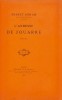
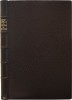
Édition originale de ce roman d’Ernest Renan, l’un des 25 exemplaires de tête sur Japon. Vicaire, Manuel de l’amateur, 1032 ; Bibliothèque de Backer, 2129 ; Carteret, II, 258. « L’Abbesse de Jouarre est la seule pièce de Renan au sujet de laquelle la question d’une représentation ait été sérieusement posée. Son histoire a donc l’intérêt d’une expérience. […] Impossible d’éviter « la couleur locale » ; l’action est un épisode de la Révolution française : il faut bien jouer en costumes du temps et recréer autour des personnages le climat de la Terreur. De fait, même si la fable inventée par Renan n’est pas une histoire vraie, elle est une histoire vraisemblable. Renan insistait volontiers sur ce point qui distingue le quatrième drame des trois précédents. « Je ne connais, écrit-il un jour, aucun récit du temps de la Révolution qui présente la donnée même que j’ai essayé de mettre en action dans l’Abbesse de Jouarre. » Mais, « quant à l’état psychologique des prisons du temps de la Terreur, et au développement que prirent, dans ce milieu terrible, les intrigues amoureuses, je n’ai rien dit qui ne soit tout à fait conforme à l’histoire. Les textes sont innombrables… » Cette fable est l’aventure de Julie Constance de Saint-Florent, abbesse de Jouarre, religieuse sans la foi mais strictement fidèle à ses vœux, aventure en deux époques. Quelques jours après la bataille de Fleurus, le 25 juin 1794, Julie est en prison dans l’ancien Collège du Plessis ; elle revient du Tribunal révolutionnaire ; l’exécution est pour le prochain matin. L’homme qui l’aime et qu’elle aime, le marquis d’Arcy, est dans la même prison et sera, demain, dans la même charrette. Les vœux de l’abbesse les avaient séparés : la mort imminente les délie de tout devoir […] Or, le lendemain matin, le nom de Julie Constance de Saint-Florent n’est pas sur la liste des condamnés qui doivent partir pour l’échafaud […]. » (H. Gouhier, Renan auteur dramatique, pp. 67-87). Bel exemplaire grand de marges relié en maroquin doublé de reps bordeaux, avec les couvertures orange imprimées conservées.
Etudes d'Histoire religieuse.
P., Michel Lévy, 1858, in-8°, xxviii-432 pp, quatrième édition revue et corrigée, reliure demi-maroquin vert, dos à 5 nerfs soulignés à froid, titres et année en queue dorés, tête dorée, couv. conservées, ex. très bien relié vers 1920 mais dos uniformément passé (tourné couleur crème) et lég. sali, plats en partie passés, qqs rousseurs, bon état, ex-libris Gabriel Puaux
Les religions de l'antiquité. L'histoire du peuple d'Israël. Les historiens critiques de Jésus. Mahomet et les origines de l'islamisme. La Vie des Saints. L'auteur de l'Imitation de Jésus-Christ. Jean Calvin. Channing et le mouvement unitaire aux Etats-Unis. M. Feuerbach et la nouvelle école hégélienne. La Tentation du Christ, par M. Ary Scheffer. — Ce recueil témoigne de la recherche que Renan n'a cessé de poursuivre et d'approfondir dans sa critique et son analyse rationnelle des phénomènes religieux. Il s'est attaché à comprendre à la fois le socle judaïque du christianisme et les premiers développements des communautés chrétiennes. Mais le travail du critique devient nécessairement histoire des idées et des courants de pensée, si bien qu'il s'élargit dans le temps et l'espace et touche Mahomet, Jean Calvin, Feuerbach... Enfin, l'aspect proprement méthodologique n'est pas absent des préoccupations de Renan qui se révèle ici l'un des premiers sociologues des religions. — "Toutes les origines sont obscures, les origines religieuses encore plus que les autres, et il n'est point d'études qui exigent plus que celles-là une grande culture intellectuelle unie à une singulière finesse d'esprit et à une haute impartialité critique. M. Ernest Renan a déjà donné plus d'une preuve remarquable de ces rares et précieuses qualités, mais jamais peut-être elles n'ont paru si réelles que dans ses études d'histoire religieuse. Plusieurs des sujets traités par M. Renan n'appartiennent point, il est vrai, à l'époque du moyen âge, objet particulier de cette revue ; nous croyons néanmoins devoir recommander à l'attention de nos lecteurs le beau travail de M. Renan sur Mahomet et les origines de l'islamisme. C'est là un des plus grands faits, sinon le plus grand de l'histoire du moyen âge, et nulle part nous ne l'avons vu étudié avec tant de pénétration et exposé d'une façon si pleine de netteté et de lumière. (...) Disons encore, tout en nous bornant au moyen âge, que d'autres morceaux de ce volume, tels que ceux sur la vie des saints et sur l'auteur de l'Imitation de Jésus-Christ, portent l'empreinte des solides et brillantes qualités qui ont déjà valu à M. Renan un rang si distingué parmi les érudits français. Il est bien rare, en effet, de trouver chez un même homme une érudition si profonde, un esprit si ingénieux et si flexible, une intelligence et un sentiment si vif des choses du passé rehaussés encore par un véritable talent d'écrivain..." (Claude Guigue, Bibliothèque de l'École des chartes, 1858) Désormais les frais d'envoi sont de 6 € seulement pour les livres jusqu'à 1 kg (colissimo suivi), pour la France métropolitaine.
LE LIVRE DOR DE RENAN
1903 reliure demi toile marron-clair in-quarto, dos long + pièce de titre sur fond havane avec un titre frappé or, tête lisse, illustrations : gravures + clichés + fac-similés (courrier - pages décriture), 219 pages, 1903 Paris A. Joanin et Compagnie Editeurs,
- très bon état -

