 Write to the booksellers
18418 books for « raymond »Edit
-
Type
Any type (2)
Art print (1)
Autograph (16)
Book (17556)
Disk (2)
Drawings (5)
Engraving (3)
Magazine (44)
Manuscript (3)
Maps (1)
Music sheets (740)
Old papers (2)
Photographs (36)
Postcards (7)
Posters (5)
-
Latest
Last 24h (8)
Last 3 days (23)
Last month (434)
Last week (22)
-
Language
Dutch (26)
English (37)
French (18346)
German (1)
Portuguese (1)
Russian (12)
-
Century
16th (10)
17th (11)
18th (31)
19th (239)
20th (10129)
21st (667)
-
Countries
Belgium (934)
Brazil (2)
Canada (131)
China (10)
Côte d'Ivoire (40)
Denmark (24)
France (16307)
Germany (28)
Greece (7)
Italy (2)
Netherlands (1)
Switzerland (919)
United Kingdom (2)
United States of America (16)
-
Syndicate
ALAC (105)
CLAM (75)
CLAQ (43)
CNE (22)
ILAB (7675)
NVVA (122)
SLACES (121)
SLAM (7245)
SNCAO (55)
Topics
- Abellio raymond (68)
- Alsace (138)
- Ampelography - wines (62)
- Aquitaine (84)
- Archaeology (173)
- Architecture (203)
- Aron raymond (284)
- Autographs (175)
- Belgium (78)
- Biography (192)
- Burgundy (71)
- Cartier raymond (135)
- Chandler raymond (102)
- Children’s books (83)
- Christianity (60)
- Christmas (65)
- Cinema (142)
- Cogniat raymond (125)
- Comic strip (161)
- Cooking (113)
- Dedication (169)
- Detective novels (54)
- Drawings (120)
- Dumay raymond (113)
- Economics (105)
- Education (56)
- English (75)
- Escholier raymond (286)
- Esotericism (73)
- Fine arts (224)
- First edition (471)
- Fox (65)
- French literature (52)
- Furon raymond (63)
- Gastronomy (59)
- Genealogy (61)
- Geography (152)
- Greece (59)
- Guerin raymond (61)
- Helvética (62)
- History (677)
- Humour anecdotes (89)
- Industrial arts & crafts - fine arts (80)
- Italy (51)
- Las vergnas raymond (58)
- Law (120)
- Literature (1299)
- Magazine (100)
- Medicine (199)
- Middle ages (46)
- Military arts (73)
- Navy (81)
- Newspapers press (205)
- Oulipo (61)
- Ourcel raymond (127)
- Painters (127)
- Painting (115)
- Paris (169)
- Pataphysics (75)
- Philosophy (264)
- Photography (205)
- Pléiade & album de la (58)
- Poetry (275)
- Poincaré raymond (226)
- Policy (189)
- Provence (59)
- Psychology (123)
- Queneau raymond (1091)
- Radiguet raymond (113)
- Raymond marcel (57)
- Recouly raymond (103)
- Regionalism (222)
- Religions (177)
- Review (272)
- Reviews (159)
- Ritter raymond (94)
- Romanic art (50)
- Roussel raymond (67)
- Sciences (92)
- Scores (780)
- Sculpture (52)
- Sociology (72)
- Songs (695)
- Souplex raymond (51)
- Surrealism (47)
- Switzerland (85)
- Theatre (120)
- Theology (91)
- Travel (69)
- Various (129)
- Viticulture (56)
- War (421)
- Wine (94)
- Zodiac (57)
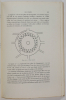
Précis d'urbanisme moderne
Paris, Dunod, 1934. 615 g In-8 broché, [2] ff., 239 pp., 149 figures in-texte.. Peu courant. . (Catégories : Architecture, Urbanisme, )
La présentation des vins
Paris, Bureau du Moniteur Vinicole, (Vers 1935). 40 g In-8, agrafé, 39-[1] pp.. Ex-libris J. L. C. . (Catégories : Oenologie, )
La mise en bouteille des vins
Paris, Bureau du Moniteur Vinicole, (Vers 1940). 40 g In-8, agrafé, 37-[1] pp., [1] ff.. Ex-libris J. L. C. . (Catégories : Oenologie, )
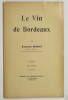
Le vin de Bordeaux
Paris, Bureau du Moniteur Vinicole, (1937). 35 g In-8, agrafé, 37-[1] pp., [1] ff.. Ex-libris J. L. C. Petites déchirures sur la couverture. . (Catégories : Oenologie, )
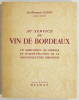
Au service du vin de Bordeaux. Un demi siècle de défense et d'organisation de la vini-viticulture girondine
Bordeaux, Imprimeries Delmas, 1956. 665 g In-8 broché, 391-[1] pp., illustrations hors-texte.. . (Catégories : Oenologie, Vin, )
Architectural Details 1938.
Tokyo, Antonin Raymond Seisho-Kwan 4-Chome Ginza, 1938. 4to (300 x 240 mm). In the original cloth covered board with spiral spine. With white title paper label to front board. Front board with a few stains. Previous owner’s stamp (Arkitekt Georg Fischer) to upper inner margin of front free end-paper. Both author’s printed signatures including a list of names from his staff and pupils to title-page. Internally fine. 116 pp. Printed in 1000 copies.
First edition of Antonin’s famous work published the same year he ended his Japanese period and returned to USA. Antonin played a pivotal role in the dissemination of modern architecture in the Japan. His initial work with American architects Cass Gilbert and Frank Lloyd Wright gave him an insight into the use of concrete that he would refine throughout his career, taking these innovations with him to Tokyo where he explored it’s use and integration with traditional Japanese building techniques. Antonin Raymond (1888-1976) was a prominent Czech-American architect now primarily known for his significant contributions to modern architecture in Japan.In 1919, Raymond relocated to Tokyo, Japan, where he would spend the majority of his career and make a lasting impact on the architectural landscape of the country. He was invited by the Japanese government to work as a consultant and advisor on contemporary architecture. Along with his wife, Noémi Pernessin Raymond, who was also an architect, Raymond established an architectural firm called ""Raymond and Raymond.""One of Raymond's most notable projects is the iconic Imperial Hotel in Tokyo, completed in 1923. The hotel showcased his ability to merge Western architectural techniques with traditional Japanese craftsmanship, resulting in a groundbreaking design that successfully withstood the devastating 1923 Great Kanto Earthquake. The Imperial Hotel became a symbol of Raymond's architectural prowess and innovation. After World War II, Raymond returned to the United States but maintained connections with Japan. He continued his architectural practice and also worked as a professor at the University of Hawaii. Raymond received numerous accolades for his contributions to architecture, including the Order of the Sacred Treasure, a prestigious honor bestowed upon him by the Japanese government in recognition of his significant achievements.

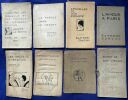
Ensemble de 8 volumes.
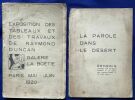
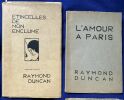
- Étincelles de mon enclume. Seconde édition. Extraits de conférences et d'articles sélectionnés par Aia Bertrand. Paris, Éditions Akademia Raymond Duncan, 1957. Broché, bon état, complet du portrait de l’auteur. - L’amour à Paris. Conférence donnée le 22 janvier 1932 sténographiée par Aventine de Bourguesdon. Paris, Éditions Akademia Raymond Duncan, s.d. Broché, en bon état. - Prometheus (Les grands crucifiés). Conférence à l’Université philosophique Paris le 16 mars 1919. Imprimé à l’œuvre Raymond Duncan, s.d. Broché en mauvais état. Bois gravés de Menalkas Duncan. - Les moyens de grève. Conférence prononcée par Raymond Duncan à la Bourse du travail de Paris, le 5 mai 1912, sous la présidence de Georges Yvetot. Paris, imprimé à L'Akademia Raymond Duncan, 1914. Broché, mauvais état, débroché. - Les travaux d’Hèraklès. Conférence par Raymond Duncan à l'Université philosophique Paris 9 mars 1919. Imprimé à l'Oeuvre Raymond Duncan 21 rue Bonaparte Paris, s.d. Broché, sali, état moyen. Bois gravés de Menalkas Duncan. - Échos de mon atelier. Imprimé à la main par Raymond Ducan, 31 rue Bonaparte, Paris, 1919. Broché, sali et débroché. - Exposition des tableaux et des travaux de Raymond Duncan. Galerie La Boëtie, Paris mai-juin 1920. Broché, sali. Bois gravés de Menalkas Duncan. - La parole dans le désert. Genesis chantée par Raymond Duncan à la salle des Agriculteurs le 22 avril 1920. Broché, couverture salie.
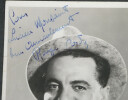
Carte des Studios Piaz de Raymond Frau dit Raymond Dandy, dédicacée.
Belle carte en noir et blanc du Studio Piaz, représentant Raymond Frau dit Raymond Dandy, au format 9 x 14 cm. Superbe état. Carte dédicacée par Raymond Frau dit Raymond Dandy qui fut Clown, acteur et chanteur.
Vente exclusivement par correspondance. Le libraire ne reçoit, exceptionnellement que sur rendez-vous. Il est préférable de téléphoner avant tout déplacement.Forfait de port pour un livre 10 € sauf si épaisseur supérieure à 3 cm ou valeur supérieure ou égale à 100 €, dans ce cas expédition obligatoire au tarif Colissimo en vigueur. A partir de 2 livres envoi en colissimo obligatoire. Port à la charge de l'acheteur pour le reste du monde.Les Chèques ne sont plus acceptés.Pour destinations extra-planétaire s'adresser à la NASA.Membre du Syndicat Lusitanien Amateurs Morues
Carton d'invitation à l'exposition des tuniques par Raymond Duncan
Théâtre Raymond Duncan | Paris s. d. [1922] | 12.50 x 12.50 cm | une feuille
Rare carton d'invitation pour assister à l'exposition des tuniques créées par Raymond Duncan, dans le théâtre-galerie qu'il fonda au 34, rue du Colisée, du 25 Avril au 1er Juin 1922. Bel et rare exemplaire. Raymond Duncan, frère de la célèbre danseuse Isadora Duncan, installa en 1911 à Paris une académie sur le modèle de Platon : «Raymond Duncan était fasciné par la Grèce antique depuis son enfance : l'esthétique et le mode de vie qu'il promouvait à l'Akademia étaient empreint de cette influence. La presse de l'époque glosait notamment sur les vêtements portés par Raymond Duncan et ses disciples : des tuniques « à la grecque » qu'il / qu'elle.s fabriquaient eux-mêmes. Derrière le ridicule supposé de cet accoutrement, ces tuniques unisexes était une manière d'abolir les différences de sexes et de classes sociales. Raymond Duncan aurait adopté cette tenue après que son cocher se soit vu refuser l'accès à une plage à cause de sa livrée qui trahissait son statut social. La vie de l'Akademia s'organisait autour de nombreuses activités : danse, musique, tissage, gymnastique, artisanat, filage, chant orphique, langue et philosophie grecques. Ces cours regroupaient des élèves extérieur.e.s - qui payaient selon leurs possibilités - et les membres de la communauté vivant entre ses murs pour quelques jours, quelques mois ou quelques années. Logé.e.s et nourri.e.s - selon le régime végétarien promu par Duncan -, ces dernier.ère.s, en contrepartie, participaient à l'économie de la communauté en fabriquant des sandales, en filant la laine, en tissant des tuniques sur des métiers primitifs. Ces artefacts étaient ensuite vendus - à des prix élevés - dans la boutique de l'Akademia situé rue du Faubourg Saint-Honoré.» (Journal de l'exposition Akademia: Performing Lifeà la Villa Vassilieff, 2018) - Photographies et détails sur www.Edition-Originale.com -

Invitation aux représentations des danses d'Orient créées par Jeanne Ronsay et Toshi Komori à l'Akadémia de Raymond Duncan
Akadémia Raymond Duncan | Paris s. d. [1922] | 12.50 x 12.50 cm | une feuille
Rare carton d'invitation pour assister à la représentation des danses d'Orient créées par Jeanne Ronsay et Toshi Komori, à l'Akadémia de Raymond Duncan le 20 Février 1922. * Bel et rare exemplaire comportant une modification de la date de la représentation initialement prévue le 6 Février. Ces danses furent interprétées par Dara Manda, Souka Hati, Carola Perrier, La petite Jeanine, Charrat et le danseur Tranki. Raymond Duncan, frère de la célèbre danseuse Isadora Duncan, installa en 1911 à Paris une académie sur le modèle de Platon : «Raymond Duncan était fasciné par la Grèce antique depuis son enfance : l'esthétique et le mode de vie qu'il promouvait à l'Akademia étaient empreint de cette influence. La presse de l'époque glosait notamment sur les vêtements portés par Raymond Duncan et ses disciples : des tuniques « à la grecque » qu'il / qu'elle.s fabriquaient eux-mêmes. Derrière le ridicule supposé de cet accoutrement, ces tuniques unisexes était une manière d'abolir les différences de sexes et de classes sociales. Raymond Duncan aurait adopté cette tenue après que son cocher se soit vu refuser l'accès à une plage à cause de sa livrée qui trahissait son statut social. La vie de l'Akademia s'organisait autour de nombreuses activités : danse, musique, tissage, gymnastique, artisanat, filage, chant orphique, langue et philosophie grecques. Ces cours regroupaient des élèves extérieur.e.s - qui payaient selon leurs possibilités - et les membres de la communauté vivant entre ses murs pour quelques jours, quelques mois ou quelques années. Logé.e.s et nourri.e.s - selon le régime végétarien promu par Duncan -, ces dernier.ère.s, en contrepartie, participaient à l'économie de la communauté en fabriquant des sandales, en filant la laine, en tissant des tuniques sur des métiers primitifs. Ces artefacts étaient ensuite vendus - à des prix élevés - dans la boutique de l'Akademia situé rue du Faubourg Saint-Honoré.» (Journal de l'exposition Akademia: Performing Lifeà la Villa Vassilieff, 2018) - Photographies et détails sur www.Edition-Originale.com -
GUREME (Raymond), avec Isabelle Ligner.
Reference : 122899
(2011)
ISBN : 9782702142219
Interdit aux nomades.
Calmann-Lévy, 2011, in-8°, 235 pp, broché, couv. illustrée, soulignures et marques au stylo en marges, sinon bon état
À 85 ans, Raymond Gurême est l’un des rares survivants d’une page occultée de l’histoire de France : celle de l’internement sur son sol de familles « nomades », de 1940 à 1946. Né en 1925 dans une caravane, comme ses ancêtres, Raymond a suivi leurs pas sur la piste du cirque familial dans lequel il était clown et acrobate ; ses parents étaient également à la tête d’un cinéma ambulant. Mais, dès 1940, sa famille est victime des persécutions de Vichy à l’égard des Tsiganes, considérés comme d’éternels « étrangers errants ». Raymond et ses proches seront tout d’abord enfermés dans des conditions terribles au camp de Darnétal, en Seine-Maritime, avant d’être transférés à Linas-Montlhéry dans l’Essonne. Là, ils vivent séparés du monde, sans nourriture, sans hygiène, sans chauffage. Raymond, digne descendant des Fils du vent, refuse de se laisser enfermer : il réussit toujours à s’échapper de maisons de redressement, de camps d’internement, en France et de camps de travail en Allemagne. Pour survivre, il met à profit ses talents d’acrobate pour se nachave (« s’évader » en romani), et son humour de clown lui évite de perdre espoir dans les pires situations. À 18 ans, il rejoint la Résistance et participe activement à la libération du pays. Cela ne lui vaudra aucune reconnaissance. Aujourd’hui, comme pour mieux témoigner de la souffrance des siens, Raymond, patriarche de 15 enfants et de 150 descendants sur trois générations, s’est ancré avec sa famille à seulement quelques kilomètres du camp de Linas-Montlhéry où des années plus tôt il vécut un véritable enfer. Son récit passionnant se lit comme un roman d’aventures, tant ce personnage haut en couleur a défié la mort à de multiples reprises. — Né dans une caravane, Raymond marche dans les pas de ses ancêtres sur la piste du cirque familial. Tout disparait brutalement lorsque sa famille est enfermée, sur ordre de la police française dans les camps de Darnétal, près de Rouen, puis de Linas-Monthéry, dans l'Essonne. Là, la famille Gurême vit coupée du monde, sans nourriture, sans hygiène, sans chauffage. Mais Raymond réussit à s'en échapper et entre dans la Résistance. Il ne retrouvera les siens que neuf ans plus tard. Aujourd'hui, ce patriarche d'une famille de 15 enfants et de 150 descendants brise soixante-dix ans de silence pour dénoncer les discriminations toujours vives à l'égard des nomades. Un témoignage exceptionnel pour comprendre la tragédie des tsiganes de France. Désormais les frais d'envoi sont de 6 € seulement pour les livres jusqu'à 1 kg (colissimo suivi), pour la France métropolitaine.
Dessin original encre de chine Roman-Photo Télé Poche
Très beau dessin original à l'encre de Chine lavis non signé mais par Raymond (?) [attribué à Raymond Poïvet] Grand format dessin 28,5 x 19 cm environ sur carton 32 x 25,5 cm Dessin non signé mais faisant partie d'une histoire intitulée "Jeux d'ombres" pour laquelle d'autres dessins sont signés Raymond Sujet : scène de roman noir. Dessin original exécuté pour un roman-photos publié dans le programme TV Télé Poche n°47 (numéro du 30 novembe 1966 - deuxième année de parution de ce périodique pour la télévision) Annotations autour du dessin (voir photos). Cachet en marge. Très beau dessin par un maître du genre que nous pensons être Raymond Poïvet malgré l'absence de signature. Le style du lavis ainsi que la publication dans laquelle il a paru ainsi que la date nous laisse penser qu'il s'agit d'une oeuvre originale de Raymond Poïvet (1910-1999). Raymond Poïvet, auteur de BD et planches diverses pour revues, livres, etc. était reconnu comme un maître du lavis d'encre. Rare et superbe. Voir nos autres dessins originaux en boutique.
![Dessin original encre de chine Roman-Photo Télé Poche. Raymond (?) [attribué à Raymond Poïvet]](https://static.livre-rare-book.com/pictures/AMO/amo-3558_1.jpg?w=830&h=600)
![Dessin original encre de chine Roman-Photo Télé Poche. Raymond (?) [attribué à Raymond Poïvet]](https://static.livre-rare-book.com/pictures/AMO/amo-3558_1_thumb.jpg)
![Dessin original encre de chine Roman-Photo Télé Poche. Raymond (?) [attribué à Raymond Poïvet]](https://static.livre-rare-book.com/pictures/AMO/amo-3558_2_thumb.jpg)
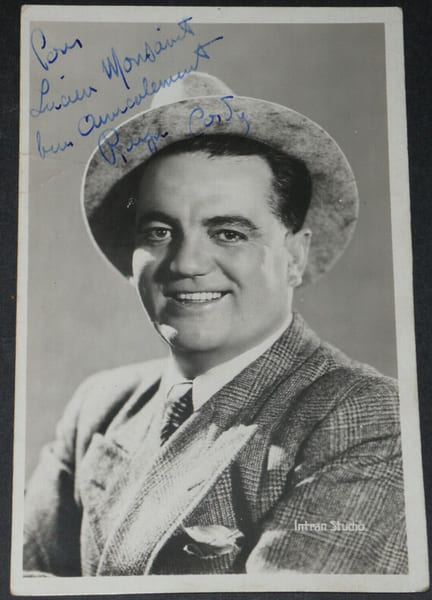
Raymond CORDY - PHOTOGRAPHIE CARTE POSTALE, NOIR ET BLANC, dédicacée et signée
Raymond CORDY - PHOTOGRAPHIE CARTE POSTALE, NOIR ET BLANC, dédicacée et signée Acteur Raymond CORDY - PHOTOGRAPHIE CARTE POSTALE, NOIR ET BLANC, Acteur, il joue dans les films des années 30 aux années 50. Il a notamment joué avec Brigitte Bardot dans Les Grandes Manoeuvres 1955, interprétant le rôle de son père photographe. Dimensions : 14,1 x 9 cm État : Voir photos pour plus de détails. Nombre de pages : 1 page Raymond CORDY Victor Raymond Cordioux dit Raymond Cordy, né le 9 décembre 1898 à Vitry-sur-Seine et mort le 23 avril 1956 dans le 18e arrondissement de Paris, est un acteur français.
Petitjean Armand Aron Raymond Crossman Richard Howard Strafford Millet Raymond Guyonnet Ren
Reference : 24140VPPG
ISBN : B001D4MWWG
Le Dieu des tn¿bres : Ethe God that failede par Arthur Koestler Ignazio Silone Richard Wright Andr Gide Louis Fischer Stephen Spender. Introduction de Richard Crossman. Postface de Raymond Aron. Traductions par Armand Petitjean Ren Guyonnet et Raymond Millet
Gnrique Broch D'occasion tat correct 01/01/1950 150 pages
100 artistes du Hainaut se sont de nouveau fait tirer le portrait par le photographe Raymond Saublains. Ces photos ont ete rassemblees dans un album "L'Oeil dans l'atelier - Les Artistes du Hainaut II"
, IP Editions, 2011 relie, cartone, 116 pages au format 25 x 24 cm, 101 photographies en bichromie, couverture cartonnee. Avant-propos de Georges Vercheval et notices biographiques. ISBN 9782875090232.
Raymond Saublains photographie les artistes, La, Raymond se reconnait. ? Je suis ne pres de la premiere maison du peuple de Belgique. A la Basse-Hestre. Et puis, par hasard je suis arrive au militantisme et au syndicalisme. ? Un engagement qui l?a amene loin. ? C?est, apres quelques detours, comme ca que je suis arrive a la province, aux Affaires Culturelles. ? C?est la que demarre la carriere de photographe de Raymond, quand ? il met sur pied un secteur audiovisuel qu?il dirigera ?, toujours selon sa biographie. ? Non, pas vraiment, retorque-t-il encore, j?ai toujours ete interesse par la photo. Mon premier cliche date de 1952. J?ai photographie Big Bill Broonzy, un jazzman. ? Depuis, le monde de la photo a bien evolue et Raymond avec lui. ? Je suis passe au numerique qui est plein de possibilites. Je me suis aussi mis a la retouche sur ordinateur, une etape obligatoire. Par contre, certaines choses n?ont pas change. Je photographie toujours les jazzmen et les artistes. Et je travaille toujours en noir et blanc. ? C?est d?ailleurs la photographie en noir et blanc que Raymond enseigne depuis 20 ans aux passionnes du coin.? La photo en noir et blanc a plus de cachet. Je dois construire mes images, en penser la lumiere et faire ressortir les contrastes. ? Une passion somme toute logique pour un homme lui aussi plein de contrastes... de l?avant-propos de Georges Vercheval. Liste des artistes ; Phil ABRAHAM, Catherine AMATHEU, Manu ANCIAUX , Paul ANDRE, Pol AUTHOM, Johan BAUDART, Eloi BAUDIMONT, Alain BORNAIN, Roger CANTRAINE, Raoul CAUVIN, Pol CHARLES, Dominique CORNIL, Michel COUTURIER, Alain DARTEVELLE, Jean-Claude DE RUDDER, Gabriel DEBLANDER, Maryline DEBLIQUY, Patrick DELPERDANGE, Laurence DERVAUX, Jean-Paul DESSY, Nathalie DOYEN, Franco DRAGONE, Jean-Luc DUBART, Philippe DUBIT, Andre-Paul DUCHATEAU, Monique DUSSAUSSOIS, Francois EMMANUEL, Luc ETIENNE, Patrick EVERAERT, Jean-Luc FAUCONNIER, Mario FERRETTI, Nadine FIEVET, Claude FOUBERT, Claude GALAND, Bruno GERARD, Xavier HANOTTE , Nicole HAUREZ, Benedicte HENDERICK, Rene HENOUMONT, Veronique HOET, Francoise HOUDART, Rene HUIN, Jacques IEZZI, Francis JACOBS, Robert JOLY, Isabelle KABATU, Thierry KNAUFF, Claude LAROCK, Jeannine LARUELLE, Ariane LE FORT, Jacky LECOUTURIER, Eric LEDUNE, Gabriel LEFEBVRE, Lionel LHOTE, Francois LIENARD, Francoise LISON - LEROY, Malika MADI, Michel MAINIL, Cecile MASSART, Olivier MASSET-DEPASSE, MATADOR, Philippe MATHY, Michael MATTHYS, Jacques MERCIER, Thierry MICHEL, Johan MUYLE, Andrea NEVE, Carl NORAC, Colette NYS - MAZURE, Juan PAPARELLA, Sylvie PICHRIST, Francoise PIRART, Annie PREAUX, Marc QUAGHEBEUR, Bruno ROBBE, Sylvie RONFLETTE, Jean-Jacques ROUSSEAU, Richard ROUSSELET, Claudine RUELLE, Girolamo SANTOCONO, Philippe SAUCEZ, Louis SAVARY, Jean-Pierre SCOUFLAIRE, SERDU (Serge DUHAYON), Olivier SONCK, Pierre STAQUET, Marin STREBELLE, Fredy TAMINIAUX, Thierry TILLIER, Bernard TIRTIAUX, Pascale TISON, Raphael VAN LERBERGHE, Nathalie VAN LIPPEVELDE, Pol VANDROMME, Stephane VEE, Jacques VIESVIL, Lionel VINCHE, Marie-Jose VISEUR, Michel VOITURIER, Deborah WATTELAINE, Marthe WERY
BRUMES SUR LA BRIERE par RAYMOND DAGOBERT - 1930 - (Commentaires par Jean-Armand BREGEON) + une Aquarelle originale INEDITE en couleurs signée au crayon en bas à droite : "Raymond Dagobert, rue à Fédrun - Brière (loire-inférieure) Etude pour Brumes sur la Brière" + fusain original sur calque (pêche en brière) non signé par J.-A BREGEON + un fusain original sur bristol : "lavoir avec femme lavant en Brière" signé en bas à droite par J.-A BREGEON + CARTE de Souscription deux volets, illustré en rouge et noir par Dagobert
nantes Mignon-Massart 1930 1 in-folio cartonnage un album, cartonnage in-folio Editeur (28,5 x 37,5 cm), En feuillets sous couverture crème illustrée rempliée sur cartonnette, 1ère de couverture illustrée en gris, argent et vert par Raymond DAGOBERT, album in-folio tiré à 120 ex., un des 70 Exemplaires sur papier vergé à barbe thé des papeteries Prioux. Signature à la main sur chaque planche (N°100), Illustré de 15 bois en couleurs par Raymond Dagobert (signature à la mine de plomb en bas à droite de chaque dessin), Collationné complet, 1930 Nantes, de Lajartre imprimeur pour Mignon-Massart Editeur, + JOINT une aquarelle originale en couleurs signée au crayon en bas à droite : Raymond Dagobert, rue à Fédrun - Brière (loire-inférieure) Etude pour Brumes sur la Brière....cette aquarelle INEDITE renforce le caractère UNIQUE de ce recueil déjà trés Rare + fusain original sur calque (pêche en brière) non signé par J.-A BREGEON + un fusain original sur bristol : "lavoir avec femme lavant en Brière" signé en bas à droite par J.-A BREGEON + CARTE de Souscription deux volets, illustré en rouge et noir par Dagobert, format : 10 x 14 cm, faite en 1929, annonçant la Parution de Brumes sur la Brière pour Paques 1930, la vente en souscription et l'Exposition des Originaux du 15 au 31 Octobre 1929 à la Galerie Mignon-Massart, 10, rue Boileau, Nantes,
Commentaires par J.-A BREGEON......Table des Planches : 1.- Le Pont de Méan, 2.- Les Forges de Trignac, 3.- Le Moulin du Pintré, 4.- Vieille Cour à Saint-Lyphard, 5.- Le Marais au Soleil Couchant, 6.- Rue au Pintré, 7.- Les Canards, 8.- Une Couline à Fédrun, 9.- Vieux Chemin au Pintré, 10.- Le Marais en Hiver, 11.- Les Blins au Repos, 12.- Chemin de Ceinture à Mazin, 13.- L'Extraction de la Tourbe, 14.- Le Foëneur, 15.- Débit à Fedrun......... TRES RARE EDITION...... + AQUARELLE UNIQUE .......................SUPERBE........................EN PARFAIT ETAT (AS NEW CONDITION). parfait état
Scénario du FILM "SUR LE BANC", Réalisation : Robert Vernay - 1955
1955 un tirage dupliqué du scénario Tapuscrit, broché demi-toile verte in-quarto (21,5 x 27,5 cm), dos toilé muet insolé (spine without title), note manuscrite à l'encre brune, en haut du premier plat : "Monsieur SOUPLEX", imprimé d'un seul côté, chaque réplique de "La Hurlette" (Rôle de Raymond Souplex) est noté d'une parenthèse au crayon rouge, 138 pages, 1955, tirage exécuté au dupplicateur par le studio de la copie (Mme Lucienne Sottier), 24, rue de Vintimille Paris 9ème,
Fiche technique : Réalisation : Robert Vernay, Scénario : Raymond Souplex, Dialogues : Raymond Souplex , Avec Raymond Souplex, Jane Sourza, Julien Carette..... Synopsis : Ayant élu domicile sur un banc, " La Hurlette " et Carmen vivent sans souci, au jour le jour. " La Hurlette " doit hériter d'une grosse somme d'argent à condition d'avoir un domicile et d'exercer un métier. Réussissant, à grand peine, à satisfaire les clauses de cet héritage, il devient riche et part à Cabourg accompagné de Carmen et d'un fidèle ami. Le jeu aura raison de son magot et le couple retrouvera ses vieilles habitudes... Et son banc.....Exemplaire de RAYMOND SOUPLEX qu'il à coché lui même au crayon rouge......Rareté.....en bon état(good condition).
Pages choisies d'"Impressions d'Afrique" et de Locus Solus. Avec "La Critique et Raymond Roussel"
Paris Librairie Alphonse Lemerre 1918 In-12 Broché Edition originale
Edition originale collective. Petit manque en couverture, mais exemplaire comportant "La Critique et Raymond Roussel", cahier de 16 pages monté en tête du volume. Ce texte a été broché selon le bon désir de Roussel sur certains exemplaires de ses ouvrages. Bon exemplaire 0
Ensemble de documents relatifs à Raymond Queneau
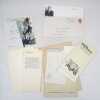
Ensemble de documents relatifs à Raymond Queneau envoyé à Jean Cortot par les éditions Gallimard : 1- Numéro 3 du bulletin des Amis de Valentin Bru : "Deux contes par Raymond Queneau", décembre 1977, un des 30 exemplaires tirés. 2- Numéro 5 du bulletin des Amis de Valentin Bru, septembre 1978, un des 30 exemplaires tirés. 3- 2 affiches annonçant Les Exercices de style de Queneau au Petit Montparnasse,en 1980, un ticket et deux critiques de ce spectacle découpées dans les journaux. 4- Une convocation pour l'assemblée générale de l'association des Amis de Valentin Bru en 1980. 5- Un prospectus annonçant une exposition Queneau à la bibliothèque municipale de Rouen en 1980. 6- Une invitation à la IIIe semaines des Amitiés littéraires. 7- Plaquette reproduisant les bandes horizontales de Cent mille milliards de poèmes, publiée à l'occasion de l'exposition Queneau à la Bibliothèque municipale de Thionville. 8- Prospectus annonçant le 1er colloque international Raymond Queneau à Verviers en 1982. 9- Une invitation à un vernissage des oeuvres de Jean-Marie Queneau à la galerie Anne Colin 10- Prospectus annonçant l'exposition Queneau à la Bibliothèque royale Albert Ier de Buxelles en 1975. 11 Prospectus annonçant une bibliographie Queneau publié par les éditions Gemini. 12- Lettre autographe signée de Claude Rameil à Jean Cortot. Levallois-Perret, 12 avril 1980. 1 p. in-4 sur papier à en-tête de l'Association des amis de Valentin Bru. Il remercie l'artiste pour l'envoi d'un Onomagramme pour la couverture de la revue Temps mêlés. Enveloppe jointe. 13- Lettre autographe signée de Claude Rameil à Jean Cortot. Levallois-Perret, 10 mai 1980. 1 p. in-4 sur papier à en-tête de l'Association des amis de Valentin Bru. Il lui envoie plusieurs numéros du bulletin de l'Association des amis de Valentin Bru. Enveloppe jointe. 14- Lettre autographe signée de Claude Rameil à Jean Cortot. Levallois-Perret, 27 avril 1980. 1 p. in-8. Rameil envoie l'article de Queneau sur André Frénaud. 15- Lettre autographe signée de Claude Rameil à Jean Cortot. Lieurey, 27 juin 1999. 1 p. in-4. Il évoque une entrevue de Jean-Michel Ribes à propos de Queneau et d'une préface que ce dernier aurait écrit pour l'une de ses pièces. Enveloppe jointe. 16- Prospectus pour l'exposition des gouaches de Queneau à la galerie Jean Peyrole en juin 1996 et une carte de Peyrole avec quelques mots de sa main. Enveloppe jointe. 17- Carte de voeu peinte et signée par Jean-Marie Queneau. Enveloppe jointe. 18- Deux photocopies des deux premiers numéros du bulletin des Amis de Valentin Bru ("Premier état des inédits de Raymond Queneau" mai 1977; "Queneau en 1977" octobre 1977. 2 vol. in-8, non paginés). 19- Carton d'invitation au vernissage de l'exposition Queneau à la Bibliothèque royale Albert Ier le 1er octobre 1975;. * Membre du SLAM et de la LILA / ILAB Member. La librairie est ouverte du lundi au vendredi de 14h à 19h. Merci de nous prévenir avant de passer,certains de nos livres étant entreposés dans une réserve.
PHOTOGRAPHIE ORIGINALE : LE PHOTOGRAPHE DE THARON : RAYMOND COLLET SALUE (JABOUNE) JEAN NOHAIN LORS DE SA VENUE A THARON AVEC LA TOURNEE DU CIRQUE SPIROU : LE TRAIN DE LA GAIETE - ETE 1962 - RAYMOND COLLET - PHOTOGRAPHE A THARON, (FONDS COLLET),
THARON 1962 une photographie originale en noir, format : 24 x 18 cm, tharon 1962, RAYMOND COLLET - PHOTOGRAPHE A THARON, (FONDS COLLET),
.Superbe Photographie ........en trés bon état (very good condition). en trés bon état
( Beaux-Arts ) - Jean Schmitt - Raymond Moretti - Francisco Hidalgo - Léonid Pliouchtch.
Reference : 15178
(1979)
Tout ce qu'on peut dire sur Moretti est parfaitement exact. ( Avec belle dédicace de Raymond Moretti ).
Editions Le Centurion 1979. In-4 cartonnage éditeur de 126 pages au format 28 x 21,5 cm. Couverture avec portrait photo de Raymond Moretti par Francisco Hidalgo. Dos carré. Plats et intérieur frais, malgré d'infimes frottis et tassements aux coins. Préface de Léonid Pliouchtch. Excellente monographie sur l'artiste, accompagnée de nombreux dessins et reproductions de tableaux, en noir et blanc et en couleurs, in et hors texte, par Raymond Moretti, avec aussi de très nombreuses photos. Edition originale en très bel état général. Rare exemplaire orné d'une belle dédicace autographe, signée, de Raymond Moretti.

Vente exclusivement par correspondance. Le libraire ne reçoit, exceptionnellement que sur rendez-vous. Il est préférable de téléphoner avant tout déplacement.Forfait de port pour un livre 10 € sauf si épaisseur supérieure à 3 cm ou valeur supérieure ou égale à 100 €, dans ce cas expédition obligatoire au tarif Colissimo en vigueur. A partir de 2 livres envoi en colissimo obligatoire. Port à la charge de l'acheteur pour le reste du monde.Les Chèques ne sont plus acceptés.Pour destinations extra-planétaire s'adresser à la NASA.Membre du Syndicat Lusitanien Amateurs Morues
( Bandes Dessinées ) - Alex Raymond - Pierre Couperie - André Franquin - Edgar Pierre Jacobs - Claude le Gallo - Georges Fronval - Raymond Poïvet - Roger Lecureux.
Reference : 29261
Revue Phénix, bandes dessinées / science-fiction / aventure / espionnage, n° 3 : Spécial Alex Raymond - Fascicules Populaires + première partie d'une aventure des Pionniers de l'Espérance " Les Forbans de l'Espace "
Editions S.E.R.G / Revue Phénix n° 3 de 1967. In-4 broché de 96 pages au format 27 x 18,5 cm. Couverture illustrée par Georges Rémi dit Hergé. Dos carré muet. Plats et intérieur frais. Etudes par Pierre Couperie, Maurice Horn, Claude Le Gallo, Georges Fronval, sur Alex Raymond, Edgar Pierre Jacobs, André Franquin, Lucky Luke, Les Fascicules Populaires, etc. Photos, documents, bibliographie et bandes dessinées. Contient la première partie d'une aventure des Pionniers de l'Espérance " Les Forbans de l'Espace " par Raymond Poïvet et Roger Lecureux. Superbe état de fraicheur. Edition originale.

Vente exclusivement par correspondance. Le libraire ne reçoit, exceptionnellement que sur rendez-vous. Il est préférable de téléphoner avant tout déplacement.Forfait de port pour un livre 10 € sauf si épaisseur supérieure à 3 cm ou valeur supérieure ou égale à 100 €, dans ce cas expédition obligatoire au tarif Colissimo en vigueur. A partir de 2 livres envoi en colissimo obligatoire. Port à la charge de l'acheteur pour le reste du monde.Les Chèques ne sont plus acceptés.Pour destinations extra-planétaire s'adresser à la NASA.Membre du Syndicat Lusitanien Amateurs Morues
France De Raymond Depardon
, Seuil, 2010 Hardcover, 336 pages, Texte en Francais, 310 x 275 x 45 mm, Nouveau !!, dans un tui solide ; photographies couleur pleine page., beau livre avec des photos bien prises ! ISBN 9782021009941.
Ce livre est n du d sir tr s ancien de Raymond Depardon de photographier la France, avec v rit , en guettant les traces de l'homme sur le territoire, un peu la mani re dont le photographe Walker Evans - admir de Raymond Depardon - a photographi les Etats-Unis au d but du XX me si cle. Les photographies sont prises, comme au tout d but de l'histoire de cet art, l'aide d'une chambre pos e sur un pied, contrainte qui a aid l'artiste ne faire qu' " une " photographie de chaque lieu, assumer l'angle de vue, voir frontalement. Raymond Depardon a visit presque toutes les r gions de France, dans un fourgon am nag . Il s'est totalement impr gn des lieux. Il s'est concentr sur les sous-pr fectures - espace jusque-l fui par l'artiste, d sormais saisi du d sir de le comprendre, afin de voir quelle tait la relation de l'homme son espace de vie. L'album regroupe trois cents photographies en couleurs, grand format. Il est assorti d'une pr face de Raymond Depardon. C'est la France r elle. Le livre est co dit avec la BNF. Les photographies y feront l'objet d'une grande exposition
L'Homme des départs immobiles. [Accompagné d'images de Raymond Gid.]
Paris, GLM, septembre 1934, in volume grand in-8° carré (215 x 208 mm) non paginé, relié à la Bradel, titre en mauve sur dos de box gris, plats de toile parme, grandes lettres en papier gris formant les initiales "GLM" collées sur les plats, gardes de papier bleuté, couvertures et dos conservés. Reliure de Mercher.Les exemplaires se présentaient en feuillets libres réunis par deux attaches parisiennes ce qui explique les deux petits trous au fond des cahiers.
Ce fragment, première partie de "L'Homme des départs immobiles" est illustré de huit dessins de Raymond Gid reproduits au trait. Le texte et les dessins sont imprimés au seul recto des feuillets.Edition originale tirée à 150 exemplaires numérotés : 5 sur vellum (1-5), 20 sur Lafuma (6-25) & 125 sur Hélio (26-150), le n° 63. Très bel exemplaire de cet exercice typographique dû aux talents conjugués de GLM et du graphiste Raymond Gid et magnifié par la reliure d'Henri Mercher, en parfaite osmose avec l'ouvrage. Henri Mercher (1912-1976), relieur d'art ayant exercé dans son atelier au 18, rue Visconti à Paris de 1937 à sa mort. Il avait repris cet atelier à Canape chez qui il était entré en 1930 en tant que jeune ouvrier doreur. (Fléty; p. 126) Coron : Les éditions GLM, 1923-1974, n° 50.
Où la mémoire s'attarde.
Odile Jacob, 1997, gr. in-8°, 373 pp, index, broché, couv. illustrée, bon état. On joint une coupure de presse de 2007 sur Raymond Aubrac
Héros de la Résistance, adjoint du chef de l'Armée secrète, plusieurs fois arrêté, plusieurs fois évadé, Raymond Aubrac est l'un des derniers survivants du rendez-vous de Caluire, au cours duquel Jean Moulin fut arrêté. Sur ces événements et son parcours politique après-guerre, ses rencontres avec de Gaulle, ses quelques années auprès des communistes, son rôle essentiel dans les négociations secrètes qui ont accompagné la guerre du Viêt-nam, ses travaux au sein de l'ONU, il apporte ici un témoignage inédit, essentiel pour l'histoire de notre temps. — "Ceux qui attendaient avec impatience la publication des Mémoires de Raymond Aubrac ne seront pas déçus par ce livre tout en réserve et en pudeur contenue, qui retrace un demi-siècle d'histoire proche – et pas n'importe laquelle – : un « parcours de vie » compris entre les années de formation, autour de 1930 et celles de la retraite active venue à la FAO, en 1976. Comme un certain nombre d'élèves de grandes écoles de même milieu bourgeois que lui, il avait été très tôt attiré par le Parti communiste, mais il ne franchira définitivement le pas qu'après son entrée dans la Résistance, qu'il rejoint, à Lyon, dès l'automne 1940, au côté de l'impavide Lucie, sa jeune femme, dont il avait fait connaissance avant-guerre dans des centres d'étudiants communistes. En 1941, Raymond Aubrac occupe une place importante au sein du mouvement Libération-sud avec Emmanuel d'Astier, mais il accède aussi à des postes de responsabilité dans la coordination des mouvements de zone sud: à l'automne 1942, le général Delestraint le charge des problèmes d'armement de la future Armée secrète, et c'est à ce titre qu'il deviendra un des interlocuteurs privilégiés de Jean Moulin, avec lequel il sera arrêté à Caluire, le 21 juin 1945. Il nous donne ici un témoignage saisissant de sa vie de condamné à mort en sursis, entre les mains du sinistre Barbie, qui le poursuivra de sa haine par-delà la mort, quelque cinquante ans plus tard, dépité d'avoir été joué par l'évasion spectaculaire du « boulevard des Hirondelles » montée de toutes pièces par Lucie Aubrac. On trouve ici aussi d'utiles indications sur le séjour que Raymond fit à Alger auprès du gouvernement provisoire. Il décrit son accueil mitigé dans les sphères officielles et son envoi comme commissaire de la République de la Libération à Marseille : une entreprise périlleuse, rapidement interrompue par un rappel (janvier 1945), et que ne compensera pas dans son cœur la réussite du déminage de la France entre la fin de cette année et 1948..." (Claude Lévy, Vingtième Siècle, revue d'histoire, 1997) Désormais les frais d'envoi sont de 6 € seulement pour les livres jusqu'à 1 kg (colissimo suivi), pour la France métropolitaine.

