 Write to the booksellers
131 books for « papini »Edit
-
Latest
Last 3 days (1)
Last month (1)
-
Century
19th (1)
20th (66)
21st (10)
-
Countries
Belgium (8)
Canada (1)
France (112)
Netherlands (1)
Switzerland (9)
-
Syndicate
ALAC (1)
ILAB (58)
SLAM (57)
Topics
- Architecture (1)
- Babel (2)
- Belief (1)
- Bernanos georges (1)
- Biography (5)
- Catholicism (6)
- Cayrol jean (1)
- Children’s books (2)
- Christ (the) (3)
- Christianity (4)
- Claudel paul (1)
- Dante alighieri (1)
- Decoration (1)
- Early printed books (3)
- Esotericism (2)
- Faith (1)
- First edition (1)
- Florence (1)
- Furniture (1)
- Furniture (2)
- Genealogy (2)
- Germanic languages (1)
- Hackney (1)
- Hermeticism (2)
- Historical general points (1)
- History (8)
- Italian (7)
- Italian literature (2)
- Italy (3)
- Jacob (1)
- Lamp (1)
- Language (1)
- Latin (1)
- Literature (11)
- Opera (1)
- Opera ballet (1)
- Painters (1)
- Painting (1)
- Panama (1)
- Papini giovanni (50)
- Paris (1)
- Patrice de la tour du pin (1)
- Philosophy (4)
- Photography (1)
- Poetry (1)
- Policy (2)
- Regionalism (1)
- Religions (9)
- Review (2)
- Satanism (1)
- Saturn (1)
- School (1)
- Symbolism (2)
- Tea (1)
- Theology (4)
- Town planning (1)
- Translation (1)
- Vatican city (1)
- Williams tennessee (1)
Une odyssée intellectuelle entre Dieu et Satan. Giovanni Papini (1881-1956). I. L'homme.
P., Lethielleux, 1973, in-8°, 182 pp, broché, bon état
Premier volume (sur 3) de la monumentale thèse française de Lovreglio (I. L'Homme ; II. La Pensée ; III. L'Ecrivain). Une étude exhaustive sur l'écrivain Giovanni Papini, dont l'oeuvre considérable (plus de 60 titres !) et la personnalité multiforme dominèrent la première moitié du XXe siècle de l'autre côté des Alpes, à l'égal de D'Annunzio, de vingt ans son aîné. Ce premier volume décrit l'homme et ses étranges revirements : son athéisme virulent, ses expériences spirituelles et religieuses sans cesse partagées entre l'amour de Dieu et la séduction de Satan, à travers l'occultisme, le spiritisme, la théosophie et le bouddhisme, avant sa conversion, innatendue, au catholicisme (Histoire du Christ), suivie, trente ans plus tard, d'un sursaut vers une forme d'hérésie curieuse (Le Diable) ; enfin, une mort très chrétienne. Autres aspects de cet "aventurier de l'esprit" : son unique et grand amour pour Giacinta, sa prodigieuse fécondité intellectuelle, son action au sein du mouvement futuriste et son talent de critique... Janvier Lovreglio a bien connu Papini et a correspondu avec lui pendant plusieurs années. Le ton très vivant du témoignage rehausse l'intérêt de cette étude indispensable pour qui désire connaître l'Italie artistique et littéraire des cinquante premières années du XXe siècle. Désormais les frais d'envoi sont de 6 € seulement pour les livres jusqu'à 1 kg (colissimo suivi), pour la France métropolitaine.
Michel ange. [Paperback] Papini Giovanni
BROCHE EN BON ETAT. Michel ange. Papini Givanni Flammarion,1950. 518 PAGES.
Merci de nous contacter à l'avance si vous souhaitez consulter une référence dans notre boutique à Authon-du-Perche.
Une odyssée intellectuelle entre Dieu et Satan. Giovanni Papini (1881-1956).
Ed. P. Lethielleux, 1973. In-8 br. Premier volume : L'Homme. E.O. Envoi autographe de Janvier Lovreglio. Lettre autographe de deux pages de Lovreglio et documents joints.
![Une odyssée intellectuelle entre Dieu et Satan. Giovanni Papini (1881-1956).. [PAPINI (Giovanni)] LOVREGLIO (Janvier).](https://static.livre-rare-book.com/pictures/AIC/29010_1_thumb.jpg)
Le Diable -
Paris - Flammarion 1954 in 12 br 315 pp trad. de l'Italien par René Patris ouvrage censuré par le Saint Siège lors de sa sortie pour hétérodoxie manifeste. rech.
bande annonce jointe,annoté, Remise de 20% pour toutes commandes supérieures à 200 €
Le Diable -
Paris - Flammarion 1954 in 12 br 315 pp trad. de l'Italien par René Patris ouvrage censuré par le Saint Siège lors de sa sortie pour hétérodoxie manifeste. rech.
Remise de 20% pour toutes commandes supérieures à 200 €
Le Miroir qui fuit. Choisi et présenté par Jorge Luis Borges. Traduction par Nino Frank.
S.l. Retz et Franco Maria Ricci 1978 1 vol. broché in-8 étroit, broché, couverture rempliée illustrée, 140 pp. Première édition française de ce choix avec introduction de Borges. Tirage limité sur vergé Fabriano. En bon état.
Michel ange. [Paperback] PAPINI, Giovanni
PHOTOS SUR DEMANDE
Merci de nous contacter à l'avance si vous souhaitez consulter une référence dans notre boutique à Authon-du-Perche.
Saint Augustin [Paperback] PAPINI, Giovanni
Sous papier crital. Couverture différente. 1930.
Merci de nous contacter à l'avance si vous souhaitez consulter une référence dans notre boutique à Authon-du-Perche.
Un homme fini - Traduction de Georges Petit et Charles Dessart - Troisi¿me dition revue et corrige
Charles Dessart Broch D'occasion bon tat 01/01/1942 331 pages
Lettres aux hommes du Pape Clestin VI. Traduit par Juliette Bertrand. Prface de Marcel Brion. Editions du Pavois. Biblioth¿que internationale. 1948. Broch. 267 pages. (Religion Catholicisme Pape Clestin VI)
Editions du Pavois. Broch D'occasion tat correct 01/01/1948 150 pages
Histoire du Christ
2010 Paris, éditions de Fallois / L'Âge d'homme, 2010 15,5 x 22,5 cm, 462 pp Neuf car service de presse
Nouvelle traduction de Gérard Genot Préface de François Livi.
Lettres aux hommes du pape Celestin VI
1948 Paris, éditions du Pavois, 1948, In douze,267 pp, broché,bon état,
traduit par J.Bertrand. Coll. "Bibliothèque Intenationale".
Histoire du Christ.
Paris Payot 1946 1 vol. relié in-12, demi-basane havane, dos à faux-nerfs orné de filets dorés en encadrement, tête dorée, couverture conservée, XXV + 454 pp. Bon exemplaire.
L'étonnant Monsieur Papini. Préface de Daniel Rops.
1959 Paris, Fayard, 1959, in 8, broché, 298 pages
...................... Photos sur demande ...................


Phone number : 04 77 32 63 69
Une odyssée intellectuelle entre Dieu et Satan. Giovanni Papini (1881-1956). III : L'écrivain.
1978 P., Lethielleux, 1978, in 8° broché, 270 pages.
...................... Photos sur demande ...................
Phone number : 04 77 32 63 69
Michel Ange flammarion
Editions Flammarion 1950 1950. Giovanni Papini - Michel Ange / Flammarion 1950
P. Papini Stati --- Tehbaidos liber decimus - Mnemosyne bibliotheca classica batava / edited with a commentary by R.D. Williams
E.J. Brill 1972 in8. 1972. Broché.
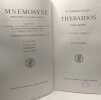
Bon état tranche ternie sous papier de soie annotations en haut du premier plat
HISTOIRE DU CHRIST.
Paris, Payot, 1926 13.9x19.2 cm., 454 pp., traduction francaise de Paul-Henri Michel, relie demi-maroquin bleu a coins, filet dore cernant les plats de pap., dos a 5 nerfs et finnement fleuronnes dores (decor floral), tete doree, couverture imprimee d'editeur. Relie par Laurent Peeters - Anvers.
Concerto fantastique : toutes les nouvelles.
Age d'Homme L'Age d'Homme, 2009, 603 p., broché, coins des plats cornés, haut du dos émoussé, page de garde froissée, bon état pour le reste.
Traduit de l'italien par Gérard Genot. Merci de nous contacter à l'avance si vous souhaitez consulter une référence au sein de notre librairie.
( Bibliothèque de Babel - Editions Panama ) - Giovanni Papini - Jorge-Luis Borgès.
Reference : 20937
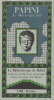
Le Miroir qui fuit. ( La Bibliothèque de Babel n° 3 )
Franco-Maria Ricci / Editions Panama Bibliothèque de Babel n° 3 de 2006. In-8 broché de 142 pages au format 22,4 x 12 cm sous magnifique couverture illustrée. Préface de J.L Borgès ( directeur de collection ). Edition originale chez l'éditeur. Réédition de ce titre paru en 1978 chez F.M.Ricci. Etat proche du neuf.
Vente exclusivement par correspondance. Le libraire ne reçoit, exceptionnellement que sur rendez-vous. Il est préférable de téléphoner avant tout déplacement.Forfait de port pour un livre 10 € sauf si épaisseur supérieure à 3 cm ou valeur supérieure ou égale à 100 €, dans ce cas expédition obligatoire au tarif Colissimo en vigueur. A partir de 2 livres envoi en colissimo obligatoire. Port à la charge de l'acheteur pour le reste du monde.Les Chèques ne sont plus acceptés.Pour destinations extra-planétaire s'adresser à la NASA.Membre du Syndicat Lusitanien Amateurs Morues
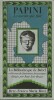
Le Miroir qui Fuit. ( La Bibliothèque de Babel n° 7 ).
Editions Franco-Maria Ricci / Bibliothèque de Babel n° 7 de 1978. In-8 broché de 140 pages au format 12 x 22,5 cm. Magnifique couverture rempliée, illustrée. Dos carré. Plats et intérieur frais. Préface inédite de Jorge-Luis Borgès, qui fut directeur de cette éphèmere collection. Tirage unique à 4000 exemplaires numérotés sur vergé ( n° 575 ). Edition originale en superbe état général.
Vente exclusivement par correspondance. Le libraire ne reçoit, exceptionnellement que sur rendez-vous. Il est préférable de téléphoner avant tout déplacement.Forfait de port pour un livre 10 € sauf si épaisseur supérieure à 3 cm ou valeur supérieure ou égale à 100 €, dans ce cas expédition obligatoire au tarif Colissimo en vigueur. A partir de 2 livres envoi en colissimo obligatoire. Port à la charge de l'acheteur pour le reste du monde.Les Chèques ne sont plus acceptés.Pour destinations extra-planétaire s'adresser à la NASA.Membre du Syndicat Lusitanien Amateurs Morues
Fioretti di San Francesco con oot capitoli aggiunti le consederazioni sulle stimmate le due regole e il cantico del sole
Libreria editrice Fiorentina. 1923. In-12. Relié demi-cuir. Etat d'usage, Couv. légèrement passée, Mors fendus, Papier jauni. 287 pages. Texte en Italien. Nombreuses rousseurs. 4 nerfs au dos frottés. Filets, fleurons et titre en doré au dos. Ex-libris à l'encre en page de faux titre. Nombreuses planches illustrées en noir et blanc. Coins émoussés.. . . . Classification Dewey : 450-Italien, roumain, rhéto-romain
Illustrations par Giotto. Préface par G. Papini. Classification Dewey : 450-Italien, roumain, rhéto-romain

