 Write to the booksellers
6508 books for « p fr bruno de j m »Edit
-
Type
Any type (1)
Book (6341)
Magazine (6)
Music sheets (153)
New book (3)
Old papers (2)
Photographs (2)
-
Latest
Last 24h (4)
Last 3 days (2)
Last month (80)
Last week (14)
-
Language
Dutch (9)
English (7)
French (6449)
German (9)
Italian (9)
Russian (25)
-
Century
16th (1)
17th (1)
18th (9)
19th (62)
20th (2560)
21st (1466)
-
Countries
Belgium (325)
Canada (35)
Côte d'Ivoire (19)
Denmark (8)
France (5539)
Germany (2)
Greece (1)
Netherlands (2)
Switzerland (544)
United Kingdom (8)
United States of America (25)
-
Syndicate
ALAC (31)
CLAM (26)
CLAQ (7)
CNE (2)
ILAB (2593)
NVVA (81)
SLACES (81)
SLAM (2400)
SNCAO (5)
Topics
- Alsace (19)
- Archaeology (33)
- Architecture (99)
- Autographs (17)
- Barber (22)
- Belgium (25)
- Biography (58)
- Brazil (32)
- Bruno g. (46)
- Children’s books (108)
- Christianity (35)
- Christmas (18)
- Cinema (28)
- Collections (16)
- Comic strip (129)
- Cooking (49)
- Culinary art (21)
- Dauphiné (29)
- Dedication (45)
- Detective novels (38)
- Drawings (28)
- Economics (58)
- Education (100)
- Education - morals (60)
- English (43)
- Ethic (19)
- Fashion (22)
- Fine arts (91)
- First edition (68)
- Fischer bruno (35)
- Fox (35)
- Gay lussac (67)
- Geography (43)
- Germanic languages (50)
- Gibert (34)
- Greece (19)
- Guide books (40)
- Helvética (46)
- History (250)
- Humour anecdotes (20)
- Industrial arts & crafts - fine arts (26)
- Iron (23)
- Islam muslim (17)
- Italian (28)
- Italy (34)
- Journalism (36)
- Law (38)
- Linnean society of lyons (35)
- Literature (649)
- Lyons and area (35)
- Lyons college (35)
- Lyons college pc (35)
- Lyons revue (35)
- Magazine (67)
- Masure bruno (53)
- Medicine (56)
- Middle ages (17)
- Museums (16)
- Music (22)
- Navy (21)
- Newspapers press (104)
- Painters (20)
- Painting (41)
- Paris (35)
- Philosophy (101)
- Photography (126)
- Poetry (78)
- Policy (83)
- Professions guilds (19)
- Provence (17)
- Psychiatry neurology (25)
- Psychoanalysis (37)
- Psychology (108)
- Racine jean (20)
- Reading vocabulary (51)
- Regionalism (57)
- Religions (108)
- Review (66)
- Reviews (79)
- Sciences (42)
- Scores (170)
- Sculpture (36)
- Social sciences (20)
- Sociology (40)
- Songs (136)
- Switzerland (40)
- Tea (26)
- Teaching (21)
- Theatre (25)
- Theology (40)
- Travel (27)
- Various (42)
- Vintage (17)
- Viticulture (17)
- War (46)
- Weil simone (25)
- Wine (20)
- Youth (38)
( Bandes Dessinées ) - Bruno Di Sano - Jean-Claude Smit-le-Bénédicte dit Mythic - François Walthéry.
Reference : 31243
(2023)
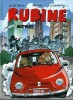
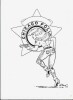
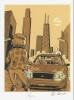
Rubine, tome 15 : Midway. ( Tirage spécial à 1000 exemplaires, embossé " Tirage limité " avec un ex-libris, encarté en frontispice, signé par Mythic et Bruno Di Sano + un marque-page + un ex-libris signé par Mythic et Bruno Di Sano + un magnet collector de 10 cm de diamètre + un magnifique dessin original en noir, signé de Bruno Di Sano ).
Editions du Tiroir 2023. In-4 cartonnage éditeur de 48 pages au format 29 x 22 cm. Couverture illustrée alternative. Dos carré. Plats et intérieur frais. Dessins en couleurs de Bruno Di Sano sur scénario de Jean-Claude Smit-le-Bénédicte dit Mythic, d'après les personnages créées par François Walthéry. Un des 1000 exemplaires du tirage spécial, embossé " Tirage limité ", contenant un ex-libris, encarté en frontispice, signé par Mythic et Bruno Di Sano + un marque-page + un ex-libris signé par Mythic et Bruno Di Sano et un magnet collector de 10 cm de diamètre. Etat de neuf. Rare édition originale sous cette forme. Epuisé. Précieux exemplaire enrichi d'un magnifique dessin original en noir, signé de Bruno Di Sano, sur feuille volante.
Vente exclusivement par correspondance. Le libraire ne reçoit, exceptionnellement que sur rendez-vous. Il est préférable de téléphoner avant tout déplacement.Forfait de port pour un livre 10 € sauf si épaisseur supérieure à 3 cm ou valeur supérieure ou égale à 100 €, dans ce cas expédition obligatoire au tarif Colissimo en vigueur. A partir de 2 livres envoi en colissimo obligatoire. Port à la charge de l'acheteur pour le reste du monde.Les Chèques ne sont plus acceptés.Pour destinations extra-planétaire s'adresser à la NASA.Membre du Syndicat Lusitanien Amateurs Morues
( Bandes Dessinées ) - Maurice de Bevere, dit Morris - René Goscinny - Bruno Thielleux dit Brüno.
Reference : 33221
(2025)
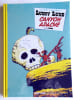
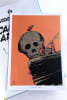
Les Aventures de Lucky Luke en noir et blanc, tome 15 : Canyon Apache. ( Tirage limité et numéroté à 1300 exemplaires en version timbrée, avec ex-libris hommage de Brüno ).
Editions Black & White 2025. In-4 cartonnage éditeur de 65 pages au format 25 x 35 cm. Couverture illustrée. Contient l’intégralité de l’album en version noir et blanc avec dessins de Morris sur scénario de René Goscinny, enrichi de 16 pages de cahier graphique couleur reprenant des reproductions de planches originales, des croquis et illustrations rares, des références cinématographiques, l’inventaire le plus exhaustif possible des couvertures du journal Le Moustique réalisées par Morris, l’indication bibliographique ou audiovisuelle systématique des informations citées dans les articles, et des anecdotes peu connues, de nombreux repères chronologiques sur l’histoire de l’Ouest en relation avec le récit concerné. Tirage limité et numéroté à 1300 exemplaires en version timbrée avec ex-libris hommage de Bruno Thielleux dit Brüno ( n° 486 ). Etat de neuf. Edition originale. Epuisé.

Vente exclusivement par correspondance. Le libraire ne reçoit, exceptionnellement que sur rendez-vous. Il est préférable de téléphoner avant tout déplacement.Forfait de port pour un livre 10 € sauf si épaisseur supérieure à 3 cm ou valeur supérieure ou égale à 100 €, dans ce cas expédition obligatoire au tarif Colissimo en vigueur. A partir de 2 livres envoi en colissimo obligatoire. Port à la charge de l'acheteur pour le reste du monde.Les Chèques ne sont plus acceptés.Pour destinations extra-planétaire s'adresser à la NASA.Membre du Syndicat Lusitanien Amateurs Morues
( Bandes Dessinées ) - Bruno Di Sano - Jean-Claude Smit-le-Bénédicte dit Mythic - François Walthéry.
Reference : 25717
(2023)
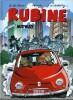
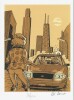
Rubine, tome 15 : Midway. ( Tirage spécial à 1000 exemplaires, embossé " Tirage limité " avec un ex-libris, encarté en frontispice, signé par Mythic et Bruno Di Sano + un marque-page + un ex-libris signé par Mythic et Bruno Di Sano + un magnet collector de 10 cm de diamètre ).
Editions du Tiroir 2023. In-4 cartonnage éditeur de 48 pages au format 29 x 22 cm. Couverture illustrée alternative. Dos carré. Plats et intérieur frais. Dessins en couleurs de Bruno Di Sano sur scénario de Jean-Claude Smit-le-Bénédicte dit Mythic, d'après les personnages créées par François Walthéry. Un des 1000 exemplaires du tirage spécial, embossé " Tirage limité ", contenant un ex-libris, encarté en frontispice, signé par Mythic et Bruno Di Sano + un marque-page + un ex-libris signé par Mythic et Bruno Di Sano et un magnet collector de 10 cm de diamètre. Etat de neuf. Rare édition originale sous cette forme. Epuisé.

Vente exclusivement par correspondance. Le libraire ne reçoit, exceptionnellement que sur rendez-vous. Il est préférable de téléphoner avant tout déplacement.Forfait de port pour un livre 10 € sauf si épaisseur supérieure à 3 cm ou valeur supérieure ou égale à 100 €, dans ce cas expédition obligatoire au tarif Colissimo en vigueur. A partir de 2 livres envoi en colissimo obligatoire. Port à la charge de l'acheteur pour le reste du monde.Les Chèques ne sont plus acceptés.Pour destinations extra-planétaire s'adresser à la NASA.Membre du Syndicat Lusitanien Amateurs Morues
Ueber die Lehre des Spinoza in Briefen an den Herrn Moses Mendelssohn. Neue vermehrte Auflage. - [THE FIRST EVER TRANSLATION OF BRUNO'S ""DE UNO ET CAUSA""...]
Breslau, Gottl. Löwe, 1789, 8vo. Very beautiful contemporary red full calf binding with five raised bands and gilt green leather title-label to richly gilt spine. elaborate gilt borders to boards, inside which a ""frame"" made up of gilt dots, with giltcorner-ornamentations. Edges of boards gilt and inner gilt dentelles. All edges gilt. Minor light brownspotting. Marginal staining to the last leaves. Engraved frontispiece-portrait of Spinoza, engraved title-vignette (double-portrait, of Lessing and Mendelssohn), engraved end-vignette (portrait of Jacobi). Frontispiece, title-page, LI, (1, -errata), 440 pp. Magnificent copy.
First edition thus, being the seminal second edition, the ""neue vermehrte Auflage"" (new and expanded edition), which has the hugely important 180 pp. of ""Beylage"" for the first time, which include the first translation into any language of any part of Giordano Bruno's ""de Uno et Causa..."" (pp. 261-306) as well as several other pieces of great importance to the ""Pantheismusstreit"" and to the interpretation of the philosophy of Spinoza and Leibniz, here for the first time in print. The present translation of Bruno seems to be the earliest translation of any of Bruno's works into German, and one of the earliest translations of Bruno at all - as far as we can establish, the second, only preceded by an 18th century translation into English of ""Spaccio della bestia trionfante"". It is with the present edition of Jacobi's work that the interest in Bruno is founded and with which Bruno is properly introduced to the modern world. Jacobi not only provides what is supposedly the second earliest translation of any of Bruno's works ever to appear, he also establishes the great influence that Bruno had on two of our greatest thinkers, Spinoza and Leibnitz. It is now generally accepted that Spinoza founds his ethical thought upon Bruno and that Lebnitz has taken his concept of the ""Monads"" from him. It is Jacobi who, with the second edition of his ""Letters on Spinoza..."", for the first time ever puts Bruno where he belongs and establishes his position as one of the key figures of modern philosophy and thought. Bruno's works, the first editions of which are all of the utmost scarcity, were not reprinted in their time, and new editions of them did not begin appearing until the 19th century. For three centuries his works had been hidden away in libraries, where only few people had access to them. Thus, as important as his teachings were, thinkers of the ages to come were largely reliant on more or less reliable renderings and reproductions of his thoughts. As Jacobi states in the preface to the second edition of his ""Letters on Spinoza..."", ""There appears in this new edition, under the title of Appendices (""Beylage""), different essays, of which I will here first give an account. The first Appendix is an excerpt from the extremely rare book ""De la causa, principio, et Uno"", by Jordan Bruno. This strange man was born, one knows not in which year, in Nola, in the Kingdom of Naples"" and died on February 17th 1600 in Rome on the stake. With great diligence Brucker has been gathering information on him, but in spite of that has only been able to deliver fragments [not in translation]. For a long time his works were, partly neglected due to their obscurity, partly not respected due to the prejudice against the new opinions and thoughts expressed in them, and partly loathed and suppressed due to the dangerous teachings they could contain. On these grounds, the current scarcity of his works is easily understood. Brucker could only get to see the work ""De Minimo"", La Croce only had the book ""De Immenso et Innumerabilibus"" in front of him, or at least he only provides excerpts from this [also not in translation], as Heumann does only from the ""Physical Theorems"" [also small fragments, not in translation]"" also Bayle had, of Bruno's metaphysical works, himself also merely read this work, of which I here provide an excerpt."" (Vorrede, pp. (VII)-VIII - own translation from the German). Jacobi continues by stating that although everyone complains about the obscurity of Bruno's teachings and thoughts, some of the greatest thinkers, such as Gassendi, Descartes, ""and our own Leibnitz"" (p. IX) have taken important parts of their theorems and teachings from him. ""I will not discuss this further, and will merely state as to the great obscurity (""grossen Dunkelheit"") of which people accuse Bruno, that I have found this in neither his book ""de la Causa"" nor in ""De l'Infinito Universo et Mondi"", of which I will speak implicitly on another occasion. As to the first book, my readers will be able to judge for themselves from the sample (""Probe"") that I here present. My excerpt can have become a bit more comprehensible due to the fact that I have only presented the System of Bruno himself, the ""Philosophia Nolana"" which he himself calls it, in its continuity... My main purpose with this excerpt is, by uniting Bruno with Spinoza, at the same time to show and explain the ""Summa of Philosophy"" (""Summa der Philosophie"") of ""En kai Pan"" [in Greek characters - meaning ""One and All""]. ... It is very difficult to outline ""Pantheism"" in its broader sense more purely and more beautifully than Bruno has done."" (Vorrede pp. IX-XI - own translation from the German). So not only does Jacobi here provide this groundbreaking piece of Bruno's philosophy in the first translation ever, and not only does he provide one of the most important interpretations of Spinoza's philosophy and establishes the importance of Bruno to much of modern thought, he also presents Bruno as the primary exponent of ""pantheism"", thereby using Bruno to change the trajectory of modern thought and influencing all philosophy of the decades to come. After the second edition of Jacobi's ""Ueber die Lehre des Spinoza"", no self-respecting thinker could neglect the teachings of Bruno"" he could no longer be written off as having ""obscure"" and insignificant teachings, and one could no longer read Spinoza nor Leibnitz without thinking of Bruno. It is with this edition that the world rediscovers Bruno, never to forget him again.WITH THE FIRST EDITION OF ""UEBER DIE LEHRE DES SPINOZA"" (1785), JACOBI BEGINS THE FAMOUS ""PATHEISMUSSTREIT"", which focused attention on the apparent conflict between human freedom and any systematic, philosophical interpretation of reality. In 1780, Jacobi (1743-1819), famous for coining the term nihilism, advocating ""belief"" and ""revelation"" instead of speculative reason, thereby anticipating much of present-day literature, and for his critique of the Sturm-und-Drang-era, had a conversation with Lessing, in which Lessing stated that the only true philosophy was Spinozism. This led Jacobi to a protracted and serious study of Spinoza's works. After Lessing's death, in 1783 Jacobi began a lengthy letter-correspondende with Mendelssohn, a close friend of Lessing, on the philosophy of Spinoza. These letters, with commentaries by Jacobi, are what constitute the first edition of ""Ueber die lehre des Spinoza"", as well as the first part of the second edition. The second edition is of much greater importance, however, due to greatly influential Appendices. The work caused great furor and the enmity of the Enlightenment thinkers. Jacobi was ridiculed by his contemporaries for attempting to reintroduce into philosophy belief instead of reason, was seen as an enemy of reason and Enlightenment, as a pietist, and as a Jesuit. But the publication of the work not only caused great furor in wider philosophical circles, there was also a personal side to the scandal which has made it one of the most debated books of the period: ""Mendelssohn enjoyed, as noted at the outset, a lifelong friendship with G. E. Lessing... Along with Mendelssohn, Lessing embraced the idea of a purely rational religion and would endorse Mendelssohn's declaration: ""My religion recognizes no obligation to resolve doubt other than through rational means"" and it commands no mere faith in eternal truths"" (Gesammelte Schriften, Volume 3/2, p. 205). To pietists of the day, such declarations were scandalous subterfuges of an Enlightenment project of assimilating religion to natural reason... While Mendelssohn skillfully avoided that confrontation, he found himself reluctantly unable to remain silent when, after Lessing's death, F. H. Jacobi contended that Lessing embraced Spinoza's pantheism and thus exemplified the Enlightenment's supposedly inevitable descent into irreligion.Following private correspondence with Jacobi on the issue and an extended period when Jacobi (in personal straits at the time) did not respond to his objections, Mendelssohn attempted to set the record straight about Lessing's Spinozism in ""Morning Hours"". Learning of Mendelssohn's plans incensed Jacobi who expected to be consulted first and who accordingly responded by publishing, without Mendelssohn's consent, their correspondence - ""On the Teaching of Spinoza in Letters to Mr. Moses Mendelssohn"" - a month before the publication of ""Morning Hours"". Distressed on personal as well as intellectual levels by the controversy over his departed friend's pantheism, Mendelssohn countered with a hastily composed piece, ""To the Friends of Lessing: an Appendix to Mr. Jacobi's Correspondence on the Teaching of Spinoza"". According to legend, so anxious was Mendelssohn to get the manuscript to the publisher that, forgetting his overcoat on a bitterly cold New Year's eve, he delivered the manuscript on foot to the publisher. That night he came down with a cold from which he died four days later, prompting his friends to charge Jacobi with responsibility for Mendelssohn's death.The sensationalist character of the controversy should not obscure the substance and importance of Mendelssohn's debate with Jacobi. Jacobi had contended that Spinozism is the only consistent position for a metaphysics based upon reason alone and that the only solution to this metaphysics so detrimental to religion and morality is a leap of faith, that salto mortale that poor Lessing famously refused to make. Mendelssohn counters Jacobi's first contention by attempting to demonstrate the metaphysical inconsistency of Spinozism. He takes aim at Jacobi's second contention by demonstrating how the ""purified Spinozism"" or ""refined pantheism"" embraced by Lessing is, in the end, only nominally different from theism and thus a threat neither to religion nor to morality."" (SEP).The Beylagen, which are not included in the 1785 first edition and only appear with the 1789 second edition, include: I. Auszug aus Jordan Bruno von Nola. Von der Ursache, dem Princip und dem Einen (p. 261-306) II. Diokles an Diotime über den Atheismus (p. 307-327) translation of Lettre ... sur l'Athéisme by F. Hemsterhuis.

Opera ea quae ad adinventam ab ipso ertem universalem, Scientiarum Artiumque omnium breui compendio, firmaque memoria apprehendendarum, locupletissimaque vel oratione ex tempore pertractandarum, pertinent. Ut et In eandem quorumdam interpretum scripti... - [SPARKING LEIBNIZ' DREAM OF A UNIVERSAL ALGEBRA]
Argentinae (i.e Strassburg], Lazarus Zetzner, 1598. 8vo. Very nice 19th century half calf with richly gilt spine. Some browning and spotting, but overall a nice copy. Many woodcut diagrams in the text. Woodcut printer's device to title-page. (24), 992, (32) pp.
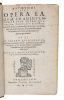
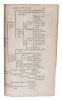
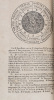
Scarce first edition of this seminal publication, which is practically solely responsible for the spreading of both Lullism and Bruno's mnemonic theories in the 17th century. This publication constitutes the standard work on Lull for more than a century and it directly influenced the most significant thinkers of the following century, e.g. Leibnitz, whose dream of a universal algebra was stimulated by the reading of Lull (and Bruno) in the present publication.""In 1598, while the philosopher from Nola (i.e. Bruno) was in prison in Rome, Johann Heinrich Alsted together with the printer Lazarus Zetzner in Strasburg, published a great collection of the works by Raymond Lull and the most significant commentaries on Lullism, among them also some treatises by Bruno. Since then, Bruno's mnemonics was a basic component of all attempts made in the seventeenth century to set up a universal science on the basis of a theory of combinations interpreted in terms of Neo-Platonism... It was also Leibniz who was one of the first to assume similarities between Bruno's theory of the infinite and the Cartesian theory of vortices in an undetermined and infinite universe"" Leibniz had had the opportunity to read these treatises in his capacity as librarian of the Herzog August Library in Wolfenbüttel"". (Blum, p. 110). ""From another of Pierce's Lists we know that he possessed an important collection of Lullian and Lullist texts, namely the Renaissance edition by the famous Strasbourg editor Lazarus Zetzner: ""Raymundi Lulli Opera ea quae ad adinventam ab ipso Artem universalem... pertinent"" (printed first in 1598, then 1609, 1617 and, by his heirs, in 1651). This edition, which was very influential - the young Leibniz, for instance, acquainted himself with Llull through this anthology-, contains several works by Llull himself as well as those Renaissance commentaries on his works by Agrippa of Netteshein, Giordano Bruno..."" (Fidora, p. 181).This highly influential publication of Lull's ""Opera"" through which Leibniz and many of his contemporaries got acquainted with Lull and Bruno, contains seven genuine works by Lull (including the two most important works of the last period of the Art, the ""Ars brevis"" and the ""Ars magna""), four works falsely attributed to Lull, Agrippa's ""In Artem Brevem"" - and Bruno's four highly important commentaries on Lull, being the ""De Lulliano specierum scrutinio"" (pp. 685-97), ""De Lampade combinatoria Lulliana"" (pp. 698-755), ""De Progressu Logicae venationis"" (pp. 756-62) and ""De Lampade venatoria logicurum"" (pp. 763-806), which constitute Bruno's most important logical treatises and his seminal writings on mnemonics. The four treatises originally appeared separately in 1587 and 1588 respectively, and all appear here for the second time (apart from the ""De progressu"", which also appeared together with the first printing of the ""De Lampade venatoria logicorum"" the following year and here thus appears for the third time). The first printings of these works are of impossible scarcity and hardly obtainable. These four groundbreaking works appear together for the first time in the present publication and it is through this second printing of them that 17th century thinkers such as Leibniz got acquainted with them. Raymond Lull (ca. 1232-1315) was one of the most important and influential philosophers and logicians of his time. He is considered a pioneer of several fields of science, now most notably computation theory. His works sparked Leibniz' interest in the field and drove him to his seminal invention. Lull invented an ""art of finding truth"" (often in Lullism referred to as ""The Art""), which centuries later, when read in the present publication, stimulated Leibnitz' dream of a universal algebra. Lull applied this art to basically all subjects studied at the Medieval Universities. ""Lull's metaphysics worked a revolution in the history of philosophy"" (The Cambridge History of Renaissance Philosophy, p. 548). Giordano Bruno (1548-1600) is one of the most significant thinkers of modern times. He prepared the way for the rise of modern philosophy and became a forerunner of modern philosophy and science. His logical commentaries and mnemonic treatises were of special importance to the emerging logic of the 17th century and it is his version of Lullism that comes to dominate this significant strand of thought for more than a century. Having been arrested in 1592 due to alleged heresy, Bruno was subjected to a 6 year long trial that finally condemned him to hanging in 1600, two years after the publication of the four works that came to secure his influence over the following century. ""Bruno burned for philosophy"" he was killed for moral, physical, and metaphysical views that terrified and angered authorities."" (Copenhaver & Schmitt, p. 315).""By far the greatest figure of this generation was Giordano Bruno (1548-1600), whose interest in Llull dates almost exclusively from his sojurns in France and Germany. His activities in this field, which he combined with his other aspects of Reniassance philosophy, are too complex to be treated in any detail here. Suffice it to say with Frances Yates that ""the three strands of the Hermetism, the mnemonics, the Lullism are all interwoven in Bruno's complex personality, mind and mission""...""Perhaps the most important event of Lulliasm of this period was not the appearance of any new figure or work but the publication of an anthology by Lazarus Zetzner of Strasburg, entitled ""Raymundi Lullii, opera ea quae ad adinventam ab ipso Artem universalem"", which, for the next century or so, was to become the standard work on Llull. It is therefore instructive in understanding seventeenth-century Lullism... The first edition of this anthology appeared in Strasburg in 1598. It was reprinted in 1609... reprinted in 1617 and again in 1651... This mixture of Llull, pseudo-Llull, and Renaissance commentaries, emphasizing a general art of discourse, constituted the ""package"" in which Llull was presented to seventeenth-century readers, including Leibniz (note 33: it was apparently the first edition of 1598 that Leibniz read), and it must be kept in mind when discussing their version of Llull."" (Bonner, pp. 67-68). Bruno's works, the first editions of which are all of the utmost scarcity, were generally not reprinted in Bruno's lifetime and new editions of them did not begin appearing until the 19th century. For three centuries his works had been hidden away in libraries, where only few people had access to them. One very significant exception is the four treatises that we find in the present publication. They are among the only of Bruno's treatises to be published again before the 19th century, and as they don't appear again on their own, but here, in THE most important publication of Lull's writings for more than a century, it is through this second printing of these four works that Bruno comes to have his primary influence upon 17th century philosophy and science. His separate publications were simply not accessible to thinkers like Leibniz and could thus not be studied. Also therefore, Zetzners' 1598 publication of Lull and Bruno together proved to be of seminal importance, not only to the spreading of Lullism, but just as much to the spreading of Bruno's even more important theories. ""Raymond Lull (ab. 1232 - 1315), Majorcan writer, philosopher, memorycian (he was later to become a great source of inspiration for Giordano Bruno), logician, and a Franciscan tertiary. He wrote the first major work of Catalan literature. Recently-surfaced manuscripts show him to have anticipated by several centuries prominent work on elections theory. He is sometimes considered a pioneer of computation theory, especially given his influence on Gottfried Leibniz. He is also well known also as a glossator of Roman Law. Lull taught himself Arabic with the help from a slave. As a result, he wrote his ""Ars Magna"", which was intended to show the necessary reasons for the Christian faith. To promote his theory and test its effectiveness, he went to Algiers and Tunis. At the age of 82, in 1314, Lull traveled again to North Africa, where an angry crowd of Muslims stoned him in the city of Bougie. Genoese merchants took him back to Mallorca, where he died at home in Palma the following year."". (Thorndyke)Giordano Bruno was born in Nola in Southern Italy in 1548, and entered the Dominican order in Naples at the age of 18. While pursuing theological studies, he also thoroughly studied the ancient philosophers and began doubting some of the teachings of the Catholic Church. When he was in Rome in 1576, these doubts became known to the authorities of his order, and an indictment for heresy was prepared against him. Before he could be arrested, he escaped and began a long journey which took him to many European countries, among these England, where his most important works are published, until in 1592 he was denounced to the Inquisition and arrested. In 1593 he was taken to Rome, imprisoned, and subjected to a 6 year long trial. He firmly refused to recant his philosophical opinions, and in 1600 he was condemned for heresy, sentenced to death, and burned alive.SALVESTRINI NR. 1.See:Anthony Bonner: Doctor Illuminatus. A Ramon Llull Reader, 1993.Paul Richard Blum: Giordano Bruno. An Introduction, 2012.The Cambridge History of Renaissance Philosophy.Alexander Fidora: Peirce's Account of the Categories and Ramon Llull.
( Bandes Dessinées ) - Bruno Gazzotti - Luc Warnant - Philippe Tome.
Reference : 25056
(1995)
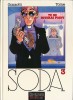
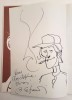
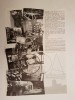
Soda, tome 3 : Tu ne Buteras Point. ( Complet du Poster, signé + dessin original dédicacé de Bruno Gazzotti ).
Editions Dupuis / Collection " Repérages " 1991. In-4 cartonnage éditeur de 46 pages au format 21,5 x 30 cm. Couverture et dessins de Bruno Gazzotti sur scénarios de Tome. Les planches 1 à 11 sont dessinées par Luc Warnant. Coins avec infimes tassements. Intérieur frais. Superbe état général. Exemplaire bien complet du poster, avec au recto un texte de Philippe Tome expliquant le changement de dessinateur et au verso des illustrations de Bruno Gazzotti. De plus ce dernier à signé le poster au bas. Edition originale, enrichie d'un magnifique dessin original, signé par Bruno Gazzotti, représentant " Soda ". Rare avec le poster.
Vente exclusivement par correspondance. Le libraire ne reçoit, exceptionnellement que sur rendez-vous. Il est préférable de téléphoner avant tout déplacement.Forfait de port pour un livre 10 € sauf si épaisseur supérieure à 3 cm ou valeur supérieure ou égale à 100 €, dans ce cas expédition obligatoire au tarif Colissimo en vigueur. A partir de 2 livres envoi en colissimo obligatoire. Port à la charge de l'acheteur pour le reste du monde.Les Chèques ne sont plus acceptés.Pour destinations extra-planétaire s'adresser à la NASA.Membre du Syndicat Lusitanien Amateurs Morues
Souvenirs et anecdotes de M/O de Bruno.
S.l., s.d. 7 parties in-folio, [29] ff. n. ch., en feuilles.
![Souvenirs et anecdotes de M/O de Bruno.. [MANUSCRIT]. [BRUNO (Adrien-François de)].](https://static.livre-rare-book.com/pictures/CFT/234516_1_thumb.jpg)
![Souvenirs et anecdotes de M/O de Bruno.. [MANUSCRIT]. [BRUNO (Adrien-François de)].](https://static.livre-rare-book.com/pictures/CFT/234516_2_thumb.jpg)
![Souvenirs et anecdotes de M/O de Bruno.. [MANUSCRIT]. [BRUNO (Adrien-François de)].](https://static.livre-rare-book.com/pictures/CFT/234516_3_thumb.jpg)
Intéressant ensemble de notes transcrivant des souvenirs épars du général Adrien-François de Bruno (1771-1861), qui s'illustra pendant les guerres napoléoniennes, et en particulier au service du roi Louis Bonaparte en Hollande (1806-1810).On n'a pas affaire ici à une narration continue, mais à une suite d'épisodes sans lien, correspondant à diverses périodes de la vie de Bruno, et regroupés sous quelques têtes de chapitres (que nous transcrivons plus bas). En bref, des matériaux pour un projet de rédaction sans doute plus important, mais qui n'a pas vu le jour. L'écriture est régulière, moyennement lisible, comportant de nombreuses ratures et biffures. L'examen de détail ne peut faire exclure des enjolivements rétrospectifs et des confusions de date (e.g. il est malaisé de rattacher exactement la mission de Saint-Just et Lebas du III avec un commandement précis de Kléber ; l'anecdote du IV ne peut se placer en cohérence avec ce qui est raconté de l'engagement de Bruno en II, etc.). Probablement, le général était fort âgé quand il dicta ces notes, car il est certain qu'il ne les rédigea pas lui-même, comme le fait savoir l'introduction du VII : "Peu studieux dans son enfance, aimant désordonnément le plaisir , le mouvement et les émotions d'une vie aussi agitée qu'active, M/O n'avait jamais eu le goût de la plume et sa répugnance pour l'écriture avait fini par devenir telle que souvent il négligeait les affaires les plus importantes, faute de pouvoir se décider à mettre de l'encre sur une feuille de papier". Dans ce contexte, la mention M/O que l'on rencontre aux titres de plusieurs de ces souvenirs ainsi qu'au titre général semble signifier "mon oncle", ce qui signifierait que le secrétaire était un des enfants ou petits-enfants de sa soeur Marie-Blanche de Milanges (cf. infra). C'est lui qui suggéra à Bruno de rédiger des mémoires, selon la vogue qui poussait les acteurs de la période napoléonienne à coucher par écrit leurs exploits.On a donc, par ordre chronologique :I. Famille et naissance de M/O : [2] ff. n. ch. "Ma famille est originaire d'Allemagne. J'ignore par quel concours de circonstances, il se fit que l'un de mes ayeux alla s'établir à Naples. Il y mit au monde trois fils qui se dispersèrent de divers côtés. L'un se fixa en France, l'autre en Savoie, le troisième passa aux Indes orientales et s'établit à Chandernagor dans les possessions françaises". C'est ce dernier fils, Antoine de Bruno (1708-1757), qui est le grand-père du narrateur ; il serait mort décapité au cours d'une guerre interne à la Birmanie. Son fils unique, Louis de Bruno (1739-1814) eut à son tour trois enfants de son mariage avec Marie-Josèphe Law de Clapernon, parente de Law de Lauriston, dont le dernier est notre narrateur, Adrien-François de Bruno (né le 10 juin 1771 à Pondichéry). Quand ce dernier approcha ses cinq ans, ses parents décidèrent en 1776 de revenir se fixer en France.II. Fuite en Auvergne, arrestation, entrée au service : [8] ff. n. ch. "Mes parents me destinant au service militaire, aussitôt que je fus engagé, on me mit à l'École d'artillerie de La Fère. J'étais aspirant d'artillerie quand la révolution de 1789 éclata. Mon frère aîné [Jean-Jacques de Bruno, 1768-1790] était déjà au service avant moi et officier dans le régiment de hussards de Lauzun lorsque ce régiment, travaillé par l'esprit révolutionnaire, se révolta contre ses officiers et les massacra. Mon malheureux frère fut au nombre des victimes". À la suite de ces événements, le père d'Adrien le retira de La Fère et toute la famille quitta Paris pour se réfugier en Auvergne, dans la propriété de la soeur d'Adrien, Marie-Blanche, qui avait épousé Amable de Milanges (1765-1818) et habitait une propriété sise entre Gannat et Aigueperse. Imprudent dans ses paroles, le jeune Adrien fut bientôt recherché dans la région comme contre-révolutionnaire exalté : caché dans les bois de Randan, il fut rapidement convoyé vers la Vendée où il pensait s'engager dans les rangs des insurgés. Mais, dénoncé par une servante suspicieuse au comité local, il fut incarcéré et ne dut son salut qu'à son engagement dans la Légion de la Nièvre, qui alla bientôt servir à Landrecies. Rien n'est dit de l'engagement ultérieur du jeune homme dans la cavalerie du 4e Régiment de Hussards, où il commença réellement sa carrière militaire (en septembre 1793).III. Anecdote du général Kléber : [2] ff. n. ch. "On sait que le général Kléber, au milieu des grandes qualités qui le distinguaient, avait la manie d'affecter les manières et le langage des soldats républicains d'alors et de ne parler que par F... et par B..., suivant la mode d'alors". Suit une conversation salée que Kléber aurait eue à un dîner en compagnie des conventionnels Saint-Just et Philippe Lebas, représentants en mission auprès de l'Armée du Nord (avril 1794), et qui portait sur la difficulté de prendre la parole devant la Convention nationale.IV. Anecdote de Taupin, soldat de Bercheny : [5] ff. n. ch. "C'était en 1793, au milieu de la Terreur ; j'étais dans le Régiment de hussards de Bercheny, caché sous un nom supposé, et simple soldat après avoir été officier d'artillerie. Notre régiment ainsi que tous les régiments de hussards qui dataient d'avant la Révolution, était à peu près entièrement composé d'Allemands et le peu de Français qui s'y trouvaient étaient l'objet de la jalousie, de l'animadversion ou des vexations de leurs camarades d'origine différente". Où le jeune soldat Bruno prend la défense d'un bûcheron de la Nièvre enrôlé dans le corps et qui servait de souffre-douleur aux soldats allemands.V. Les magistrats de Soleure : [6] ff. n. ch. "Pendant la campagne de Suisse de l'année 179.., j'étais déjà major et je commandais par intérim le 12e Régiment de Hussards, ci-devant Bercheny. Le général Ney (plus tard maréchal) m'avoit envoyé pour occuper la ville de Soleure et avoit placé sous mes ordres, outre mon régiment, un bataillon d'infanterie. Je me trouvai donc en quelque sorte chef d'un corps d'armée et telle était alors la terreur inspirée par le nom français dans le pays que, lorsque j'entrai dans la ville, toutes les autorités vinrent au devant de moi, l'avoyer en tête, en protestant de leur dévouement à la France, ainsi que de leur empressement à faire tout ce qui pourrait m'être agréable". Suit un long exposé du traitement alternativement hautain et servile des autorités municipales en fonction respectivement de l'effacement ou de la rigueur des manières employées à leur égard.VI. Les bouts de chandelle : [4] ff. n. ch. Il s'agit d'une anecdote sur Louis Bonaparte, alors Roi de Hollande (Bruno était devenu devient en juillet 1806 aide de camp de Louis Bonaparte, fut nommé colonel en septembre 1806, puis général major en avril 1807, enfin en novembre 1808, lieutenant-général et grand écuyer de la couronne). "Au milieu de ses bizarreries, de ses petites méchancetés et de ses faussetés, le Roi Louis avait cependant quelquefois des accès d'indulgence et même de générosité. En voici une preuve qu'il me donna dans une circonstance assez grave. Je revenais de la mission difficile et même périlleuse qu'il m'avait confiée en 1808 pour le Roi de Danemark". Paraissant à moitié ivre devant le Roi, et rabâchant une opposition à un projet d'économies qualifié d'"économies de bouts de chandelles", il ne fut cependant pas sanctionné.VII. M/O à Waterloo : [2] ff. n. ch. Après une longue introduction sur la répugnance du général à écrire, surtout pour se mettre en avant, suit une brève anecdote sur une charge à la tête de sa brigade de cuirassiers à Waterloo, qui fut par erreur attribuée au général Milhaud.ON JOINT : Arbre généalogique de la famille de Bruno (un dépliant in-folio de 41 x 52 cm). - - VENTE PAR CORRESPONDANCE UNIQUEMENT - LIEN DE PAIEMENT, NOUS CONSULTER.

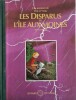
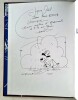
Une Aventure de Vick et Vicky, tome 3 : Les Disparus de l'Île-aux-Moines. ( Tirage limité hors commerce à 940 exemplaires numérotés et signés à la main par l'auteur, avec en plus un dessin original de Bruno Bertin ).
Editions P'Tit Louis / Collection " Une Aventure de Vick et Vicky " tome 3 de 1998. In-4 cartonnage éditeur de 48 pages au format 29,5 x 22,5 cm. Couverture illustrée. Dos carré, toilé vert, avec titre doré. Plats et intérieur frais. Couvertures, pages de garde, dessins en couleurs et scénario de Bruno Bertin. Un des 940 exemplaires hors commerce, numérotés et signés à la main par l'auteur, qui a aussi écrit manuellement le dépôt légal et le ISBN. Rare édition originale en tirage de tête et en superbe état général. Exemplaire enrichi d'un joli dessin original signé de Bruno Bertin.
Vente exclusivement par correspondance. Le libraire ne reçoit, exceptionnellement que sur rendez-vous. Il est préférable de téléphoner avant tout déplacement.Forfait de port pour un livre 10 € sauf si épaisseur supérieure à 3 cm ou valeur supérieure ou égale à 100 €, dans ce cas expédition obligatoire au tarif Colissimo en vigueur. A partir de 2 livres envoi en colissimo obligatoire. Port à la charge de l'acheteur pour le reste du monde.Les Chèques ne sont plus acceptés.Pour destinations extra-planétaire s'adresser à la NASA.Membre du Syndicat Lusitanien Amateurs Morues
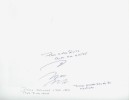
( Photographie - Tirages Argentiques signés ) - Pierre Seghers - Bruno de Monès.
Reference : 11546
(1983)
Magnifique portrait photographique de Pierre Seghers par Bruno de Monès.( Tirage vintage, limité, signé et dédicacé par Bruno de Monès ).
Magnifique portrait de Pierre Seghers, publié dans le " Magazine littéraire " de décembre 1983. Il s'agit ici d'un tirage vintage des années 80 au format ( marges comprises ) 24 x 30 cm. Tirage argentique, barité, sur cartoline. Epreuve en parfait état. Tirage justifié au dos, légendé, daté, signé et dédicacé par Bruno de Monès.
Vente exclusivement par correspondance. Le libraire ne reçoit, exceptionnellement que sur rendez-vous. Il est préférable de téléphoner avant tout déplacement.Forfait de port pour un livre 10 € sauf si épaisseur supérieure à 3 cm ou valeur supérieure ou égale à 100 €, dans ce cas expédition obligatoire au tarif Colissimo en vigueur. A partir de 2 livres envoi en colissimo obligatoire. Port à la charge de l'acheteur pour le reste du monde.Les Chèques ne sont plus acceptés.Pour destinations extra-planétaire s'adresser à la NASA.Membre du Syndicat Lusitanien Amateurs Morues
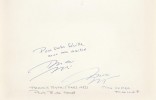
( Photographie - Tirages Argentiques signés ) - Francis Ryck - Bruno de Monès.
Reference : 11603
(1983)
Magnifique portrait photographique de Francis Ryck par Bruno de Monès. ( Tirage vintage, limité, signé et dédicacé par Bruno de Monès ).
Magnifique portrait de Francis Ryck, publié dans le " Magazine littéraire " de mars 1983. Il s'agit ici d'un tirage vintage des années 80 au format ( marges comprises ) 24 x 30 cm. Tirage argentique, barité, sur cartoline. Epreuve en parfait état. Tirage justifié au dos, légendé, daté, signé et dédicacé par Bruno de Monès.

Vente exclusivement par correspondance. Le libraire ne reçoit, exceptionnellement que sur rendez-vous. Il est préférable de téléphoner avant tout déplacement.Forfait de port pour un livre 10 € sauf si épaisseur supérieure à 3 cm ou valeur supérieure ou égale à 100 €, dans ce cas expédition obligatoire au tarif Colissimo en vigueur. A partir de 2 livres envoi en colissimo obligatoire. Port à la charge de l'acheteur pour le reste du monde.Les Chèques ne sont plus acceptés.Pour destinations extra-planétaire s'adresser à la NASA.Membre du Syndicat Lusitanien Amateurs Morues
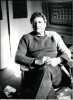
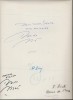
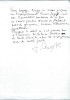
( Photographie - Tirages Argentiques signés ) - Francis Ryck - Bruno de Monès.
Reference : 14509
Magnifique portrait photographique de Francis Ryck par Bruno de Monès. ( Tirage vintage, limité, signé et dédicacé par Bruno de Monès ).
Magnifique portrait de Francis Ryck, publié dans le " Magazine littéraire ". Il s'agit ici du tirage vintage original des années 80 au format ( marges comprises ) 32 x 23,5 cm. Tirage argentique, barité, sur cartoline. Epreuve en parfait état. Tirage justifié au dos, légendé, daté, signé et dédicacé par Bruno de Monès, avec les annotations pour la publication dans le journal. On joint la photocopie manuscrite autographe d'une lettre que Francis Ryck avait adressé au photographe.
Vente exclusivement par correspondance. Le libraire ne reçoit, exceptionnellement que sur rendez-vous. Il est préférable de téléphoner avant tout déplacement.Forfait de port pour un livre 10 € sauf si épaisseur supérieure à 3 cm ou valeur supérieure ou égale à 100 €, dans ce cas expédition obligatoire au tarif Colissimo en vigueur. A partir de 2 livres envoi en colissimo obligatoire. Port à la charge de l'acheteur pour le reste du monde.Les Chèques ne sont plus acceptés.Pour destinations extra-planétaire s'adresser à la NASA.Membre du Syndicat Lusitanien Amateurs Morues
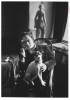
( Photographie - Tirages Argentiques signés ) - Roland Topor - Bruno de Monès
Reference : 23798
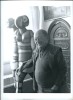
Magnifique portrait photographique de Roland Topor et son chien par Bruno de Monès. ( Epreuve d'artiste en tirage vintage, limité à 30 exemplaires, signé, par Bruno de Monès ).
Magnifique portrait de Roland Topor, datant des années 1980, pris à son domicile parisien, et publiée dans le " Magazine littéraire ". Il s'agit ici d'un tirage postérieur au format ( marges comprises ) 30,2 x 41 cm. Tirage argentique, barité, sur cartoline. Epreuve en parfait état. Tirage à 30 exemplaires, justifié au dos " Epreuve d'artiste " numéroté 07/30, légendé, daté et signé par Bruno de Monès.
Vente exclusivement par correspondance. Le libraire ne reçoit, exceptionnellement que sur rendez-vous. Il est préférable de téléphoner avant tout déplacement.Forfait de port pour un livre 10 € sauf si épaisseur supérieure à 3 cm ou valeur supérieure ou égale à 100 €, dans ce cas expédition obligatoire au tarif Colissimo en vigueur. A partir de 2 livres envoi en colissimo obligatoire. Port à la charge de l'acheteur pour le reste du monde.Les Chèques ne sont plus acceptés.Pour destinations extra-planétaire s'adresser à la NASA.Membre du Syndicat Lusitanien Amateurs Morues
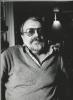
( Photographie - Tirages Argentiques signés ) - Michel Lebrun - Bruno de Monès
Reference : 23800
(1980)
Magnifique portrait photographique de Michel Lebrun par Bruno de Monès. ( Epreuve d'artiste en tirage vintage, limité, signé, par Bruno de Monès ).
Magnifique portrait de Michel Lebrun, datant des années 1980, pris à son domicile parisien, et publiée dans le " Magazine littéraire ". Il s'agit ici du tirage original au format ( marges comprises ) 24 x 31 cm. Tirage argentique avec annotations au verso pour l'imprimeur. Tirage noté " épreuve d'artiste ", légendé, et signé 2 fois par Bruno de Monès, au verso. Petite tache dans la marge inférieure gauche, sinon épreuve en superbe état.
Vente exclusivement par correspondance. Le libraire ne reçoit, exceptionnellement que sur rendez-vous. Il est préférable de téléphoner avant tout déplacement.Forfait de port pour un livre 10 € sauf si épaisseur supérieure à 3 cm ou valeur supérieure ou égale à 100 €, dans ce cas expédition obligatoire au tarif Colissimo en vigueur. A partir de 2 livres envoi en colissimo obligatoire. Port à la charge de l'acheteur pour le reste du monde.Les Chèques ne sont plus acceptés.Pour destinations extra-planétaire s'adresser à la NASA.Membre du Syndicat Lusitanien Amateurs Morues
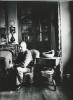
( Photographie - Tirages Argentiques signés ) - Jean Herman dit Jean Vautrin - Bruno de Monès
Reference : 23801
(1980)
Magnifique portrait photographique de Jean Herman dit Jean Vautrin par Bruno de Monès. ( Epreuve d'artiste en tirage vintage, limité, signé par Bruno de Monès ).
Magnifique portrait de Jean Herman dit Jean Vautrin, datant des années 1980, pris à son domicile parisien, et publiée dans le " Magazine littéraire ". Il s'agit ici du tirage original au format ( marges comprises ) 24 x 31 cm. Tirage argentique avec annotations au verso pour l'imprimeur. Tirage noté " épreuve d'artiste ", légendé, et signé 2 fois par Bruno de Monès, au verso. Epreuve en superbe état.
Vente exclusivement par correspondance. Le libraire ne reçoit, exceptionnellement que sur rendez-vous. Il est préférable de téléphoner avant tout déplacement.Forfait de port pour un livre 10 € sauf si épaisseur supérieure à 3 cm ou valeur supérieure ou égale à 100 €, dans ce cas expédition obligatoire au tarif Colissimo en vigueur. A partir de 2 livres envoi en colissimo obligatoire. Port à la charge de l'acheteur pour le reste du monde.Les Chèques ne sont plus acceptés.Pour destinations extra-planétaire s'adresser à la NASA.Membre du Syndicat Lusitanien Amateurs Morues
( Photographie - Tirages Argentiques signés ) - Léo Malet - Bruno de Monès
Reference : 26068
(1983)
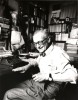
Magnifique portrait photographique de Léo Malet par Bruno de Monès. ( Epreuve d'artiste en tirage vintage, limité, signé et dédicacé par Bruno de Monès ).
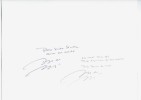
Magnifique portrait du romancier, publié dans le " Magazine littéraire " d'avril 1983. Il s'agit ici du tirage argentique original, sans marges, au format 28 x 35 cm. Tirage argentique, barité, sur cartoline. Epreuve tirée par l'artiste, justifié au dos et enrichie d'une dédicace autographe, signée par Bruno de Monès. Collection personnelle.
Vente exclusivement par correspondance. Le libraire ne reçoit, exceptionnellement que sur rendez-vous. Il est préférable de téléphoner avant tout déplacement.Forfait de port pour un livre 10 € sauf si épaisseur supérieure à 3 cm ou valeur supérieure ou égale à 100 €, dans ce cas expédition obligatoire au tarif Colissimo en vigueur. A partir de 2 livres envoi en colissimo obligatoire. Port à la charge de l'acheteur pour le reste du monde.Les Chèques ne sont plus acceptés.Pour destinations extra-planétaire s'adresser à la NASA.Membre du Syndicat Lusitanien Amateurs Morues
Bruno Vekemans, Kinshasa - Congo
, Antwerp, 2008., 300 x 235 mm, 112p, Eng./ Fr./ NL/ Germ. ed. Hardback (relie) ISBN 9789077207192.
In December 2005, Bruno Vekemans decided for the first time in his oeuvre to create an extensive series of artworks on a particular theme. In May of 2006 Bruno Vekemans stayed in Kinshasa, Congo - 2 months prior to the first round of the first democratic elections in 40 years - to prepare for a series of gouaches, oils on canvas and verres eglomises. His physical presence and the emotional experience of this study trip to Kinshasa made an overwhelming impression on Bruno Vekemans, both as a person and as an artist. He allowed this project to occupy two years of his life. At the centre of it all lies authenticity.Bruno Vekemans is a personality, and, beyond that, a man with a great deal of respect for other people, both in his daily life and as subjects.He retains everything of the authentic artist, and has been painting since the age of seven. Throughout his career, Vekemans has always maintained that he does not like to theorise or even philosophise about his work. His life and his mission are simply to paint. That reflexive response reveals how his art is a highly intuitive and everyday activity to him.The black people portrayed in Kinshasa have an individuality and naturalness no longer apparent in West Europeans. They are not affected; neither are they influenced by the media: qualities that enable Bruno Vekemans to portray them in their full glory. He gives the Congolese a starring role.The image material - photos and film - collected as a sort of sketchbook for this series, is "genuine" and experienced by the artist.This art book recreates that Kinshasa Congo experience for the reader, not only through its text, but also and above all through its images.Dvd included (4,5 minuten Vekemans in Kinshasa-Congo)
( Bandes Dessinées ) - Maurice de Bevere, dit Morris - René Goscinny - Bruno Thielleux dit Brüno.
Reference : 33292
(2025)
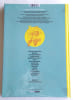
Les Aventures de Lucky Luke en noir et blanc, tome 15 : Canyon Apache. ( Tirage limité et numéroté à 1300 exemplaires ).
Editions Black & White 2025. In-4 cartonnage éditeur de 65 pages au format 25 x 35 cm. Couverture illustrée. Contient l’intégralité de l’album en version noir et blanc avec dessins de Morris sur scénario de René Goscinny, enrichi de 16 pages de cahier graphique couleur reprenant des reproductions de planches originales, des croquis et illustrations rares, des références cinématographiques, l’inventaire le plus exhaustif possible des couvertures du journal Le Moustique réalisées par Morris, l’indication bibliographique ou audiovisuelle systématique des informations citées dans les articles, et des anecdotes peu connues, de nombreux repères chronologiques sur l’histoire de l’Ouest en relation avec le récit concerné. Tirage limité et numéroté à 1300 exemplaires. Etat de neuf. Edition originale. Epuisé.

Vente exclusivement par correspondance. Le libraire ne reçoit, exceptionnellement que sur rendez-vous. Il est préférable de téléphoner avant tout déplacement.Forfait de port pour un livre 10 € sauf si épaisseur supérieure à 3 cm ou valeur supérieure ou égale à 100 €, dans ce cas expédition obligatoire au tarif Colissimo en vigueur. A partir de 2 livres envoi en colissimo obligatoire. Port à la charge de l'acheteur pour le reste du monde.Les Chèques ne sont plus acceptés.Pour destinations extra-planétaire s'adresser à la NASA.Membre du Syndicat Lusitanien Amateurs Morues
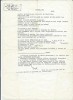
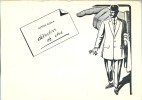
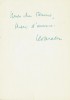
Page tapuscrite avec annotations de l'auteur + carte de visite de Nestor Burma, dédicacé, destinée au photographe Bruno de Monès.
Précieux ensemble de deux documents de Léo Malet. Une page tapuscrite avec cachet comportant l'adresse de Léo Malet. Cette page décrit l'itinéraire pour se rendre de Paris en voiture jusqu'à chez l'écrivain à Chatillon. Elle est rédigée avec beaucoup d'humour et comporte des annotations manuscrites de l'auteur. On joint la fameuse carte de visite de Nestor Burma, détective de choc avec au verso une dédicace autographe, signée de Léo Malet. Cet ensemble était destiné au photographe Bruno de Monès, pour qu'il effectue le fameux et magnifique portrait photographique de Léo Malet, publié dans le " Magazine littéraire " d'avril 1983. De toute rareté.
Vente exclusivement par correspondance. Le libraire ne reçoit, exceptionnellement que sur rendez-vous. Il est préférable de téléphoner avant tout déplacement.Forfait de port pour un livre 10 € sauf si épaisseur supérieure à 3 cm ou valeur supérieure ou égale à 100 €, dans ce cas expédition obligatoire au tarif Colissimo en vigueur. A partir de 2 livres envoi en colissimo obligatoire. Port à la charge de l'acheteur pour le reste du monde.Les Chèques ne sont plus acceptés.Pour destinations extra-planétaire s'adresser à la NASA.Membre du Syndicat Lusitanien Amateurs Morues
[ Courrier de Bruno Carranza au librairie français Edouard Dentu, datée de San José de Costa-Rica, Agosto 25 de 1868 ] Courrier imprimé avec adresse ("Impreso H. J. E. Dentu, Galerie d'Orléans, Palais Royale") et intitulé manuscrit à la plume, marque postale et surcharge GB 2FPK : "San José de Costa-Rica, Agosto 25 de 1868. Senor M. J. E. Dentu, Paris, Mui Senor mio, Habiendo fundado en esta ciudad, desde ha muchos anos, un establiciemento de ciencias i artes &c. i deseandi estar continuamente al corriente de las nuevas producciones en cada uno de estos ramos, invito a U. para que con la direccion de "Libreria del Album" San Jose de Costa Rica me remita todos los catalogis que sucesivamente vaya publicando. Estae establicimiento bien conocido en el pais i colocado en un punto central mui ventajoso, es el unico i mas a propositio para asegurar buen exito a los periodicos, tantos politicos como literarios, que se le recomendaran i para dar a conocer en esta Republica las obras nuevas en todo jenero. Me suscribo de U. atento i Servidor. Bruno Carranza".
1 document imprimé grand in-8 de 2 pp., 1868, titre et adresse remplis à la plume. Rappel du titre complet : [ Courrier de Bruno Carranza au librairie français Edouard Dentu, datée de San José de Costa-Rica, Agosto 25 de 1868 ] Courrier imprimé avec adresse ("Impreso H. J. E. Dentu, Galerie d'Orléans, Palais Royale") et intitulé manuscrit à la plume, marque postale et surcharge GB 2FPK : "San José de Costa-Rica, Agosto 25 de 1868. Senor M. J. E. Dentu, Paris, Mui Senor mio, Habiendo fundado en esta ciudad, desde ha muchos anos, un establiciemento de ciencias i artes &c. i deseandi estar continuamente al corriente de las nuevas producciones en cada uno de estos ramos, invito a U. para que con la direccion de "Libreria del Album" San Jose de Costa Rica me remita todos los catalogis que sucesivamente vaya publicando. Estae establicimiento bien conocido en el pais i colocado en un punto central mui ventajoso, es el unico i mas a propositio para asegurar buen exito a los periodicos, tantos politicos como literarios, que se le recomendaran i para dar a conocer en esta Republica las obras nuevas en todo jenero. Me suscribo de U. atento i Servidor. Bruno Carranza".
![[ Courrier de Bruno Carranza au librairie français Edouard Dentu, datée de San José de Costa-Rica, Agosto 25 de 1868 ] Courrier imprimé avec adresse ...](https://static.livre-rare-book.com/pictures/CDL/44283_thumb.jpg)
Bruno Carranza Ramírez (San José, 5 de octubre de 1822 - ibídem, 25 de enero de 1891) fue presidente de Costa Rica, con el título de Jefe Provisorio de la República, del 27 de abril al 9 de agosto de 1870. Participó también en diversas actividades empresariales y comerciales. Fue propietario de fincas cafetaleras, una librería y una botica, entre otros negocios. Henri-Justin Edward Dentu, nacido y muerto en París (21 octubre 1830 hasta 13 abril 1884) es un famoso editor francés y librero. Bon état
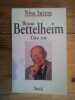
Nina Sutton Biografía Bruno bettelheim Una Vida
Editions Sutton 1995 1995. Nina Sutton Biografía Bruno Bettelheim: Una Vida (1995 Tbe ) La descripción de este producto se ha traducido automáticamente. Si tiene alguna pregunta al respecto por favor póngase en contacto con nosotros. gran volumen de bolsillo 758 páginas de las ediciones de Stock 1995 con galería de fotos en muy buen estado ; completo y sólido sin rasgaduras ni anotaciones interior limpio y fresco muy pocos pliegues en la cubierta Cómo pudo el nazismo salvar a los niños locos? Este enigma está en el corazón de la vida de Bruno Bettelheim. De ahí las pasiones y disputas que siempre han despertado al hombre y su trabajo. Del psicoanalista más famoso después de apenas no sabíamos casi nada. En cinco años de investigación apasionada Nina Sutton ha explorado los archivos ha interrogado a los testigos y actores de esta vida extraordinaria para volver sobre todas las etapas de un destino en el que se refleja el siglo XX. Infancia en la Viena de Freud; antisemitismo; la muerte prematura del padre obligando al joven a abandonar sus estudios de filosofía; un primer matrimonio doloroso; un análisis comenzó con Richard Sterba. El Anschluss pone fin a todo eso. El 2 de junio de 1938 Bruno Bettelheim fue enviado a Dachau luego a Buchewald. Es en este universo de muerte que paradójicamente Bettelheim-le- psicoanalista el que entendió el valor de la vida psíquica. El sobreviviente se dará a sí mismo la misión de distribuir esta riqueza. Bettelheim liberado es exiliado en América en la década de 1940. Todo parece nuevo en su segunda vida: idioma trabajo familia. Pero viejas heridas formaron bien el famoso Doctor B. The Orthogenic School su trabajo sobre el autismo sobre las relaciones entre padres e hijos sobre el totalitarismo su interpretación de los cuentos de hadas: todo su trabajo se asemeja a una larga lucha contra la muerte y la locura. Con emoción rigor y una notable intuición de los trucos que puede jugar el inconsciente Nina Sutton decodificó pacientemente las hermosas historias de Bruno Bettelheim y escuchó a sus amigos y a sus adversarios para encontrar el hilo de una pelea en la que nada de eso. Es humano no es extraño. El 12 de mars de 1990 la depresión finalmente se impuso al deseo de vivir de Bruno Bettelheim. Pero incluso su suicidio no puede ocultar esta evidencia: su trabajo es el de un hombre que nunca ha dejado de luchar por la vida. vea muchos otros libros en mi tienda. para Francia y Bélgica los costos de envío aumentan muy poco o nada en caso de compras múltiples. Perlenbook empresa Siret n ° 49982801100010. RCS Lure Tgi 499828911 N ° GESTION 2007 A 111. Creado por
Très bon état
( Musique - Bob Dylan ) - Neal Adams - Chris le Vraux - Bruno Léandri - Richard Belfer - Christian Gattinoni - Collectif.
Reference : 24004
(1977)
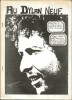
Gazette du Club Bob Dylan, n° 3 : Au Dylan Neuf. ( Micro-tirage artisanal ).
Edité par Sigma à Bordeaux sans date ( 1977 ). In-8 agrafé, non paginé, d'environ 30 pages, au format 29,5 x 21 cm. Couverture illustrée d'un portrait de Bob Dylan. Plats et intérieur assez frais. Fanzine tiré à petit nombre d'exemplaires, de façon artisanale, entiérement consacré à Bob Dylan avec au sommaire : Au Dylan neuf - Sarah - Bob Dylan Antistar - Dylan et moi par Bruno Léandri - Polémiques à propos de Tarantula par Richard Belfer - Bob Dylan et Woody Guthrie, ainsi qu'une bande dessinée de 9 pages, en noir, illustrée par Neal Adams, sur scénario de Tony Hendra et Sean Kelly, intitulée : The Ventures of Zimmerman. Textes par Chris le Vraux ( directeur du magazine ), Bruno Léandri, Richard Belfer, Christian Gattinoni, Bob Dylan, etc. Illustrations en noir. Bel état général. Rarissime édition originale.
Vente exclusivement par correspondance. Le libraire ne reçoit, exceptionnellement que sur rendez-vous. Il est préférable de téléphoner avant tout déplacement.Forfait de port pour un livre 10 € sauf si épaisseur supérieure à 3 cm ou valeur supérieure ou égale à 100 €, dans ce cas expédition obligatoire au tarif Colissimo en vigueur. A partir de 2 livres envoi en colissimo obligatoire. Port à la charge de l'acheteur pour le reste du monde.Les Chèques ne sont plus acceptés.Pour destinations extra-planétaire s'adresser à la NASA.Membre du Syndicat Lusitanien Amateurs Morues
Bruno Vekemans Kinshasa - Congo.
, Antwerp, 2008., Hardback, 300 x 235 mm, 112p, Eng./ Fr./ NL/ Germ. ed. ISBN 9789077207192.
In December 2005, Bruno Vekemans decided for the first time in his oeuvre to create an extensive series of artworks on a particular theme. In May of 2006 Bruno Vekemans stayed in Kinshasa, Congo - 2 months prior to the first round of the first democratic elections in 40 years - to prepare for a series of gouaches, oils on canvas and verres eglomises. His physical presence and the emotional experience of this study trip to Kinshasa made an overwhelming impression on Bruno Vekemans, both as a person and as an artist. He allowed this project to occupy two years of his life. At the centre of it all lies authenticity.Bruno Vekemans is a personality, and, beyond that, a man with a great deal of respect for other people, both in his daily life and as subjects.He retains everything of the authentic artist, and has been painting since the age of seven. Throughout his career, Vekemans has always maintained that he does not like to theorise or even philosophise about his work. His life and his mission are simply to paint. That reflexive response reveals how his art is a highly intuitive and everyday activity to him.The black people portrayed in Kinshasa have an individuality and naturalness no longer apparent in West Europeans. They are not affected; neither are they influenced by the media: qualities that enable Bruno Vekemans to portray them in their full glory. He gives the Congolese a starring role.The image material - photos and film - collected as a sort of sketchbook for this series, is "genuine" and experienced by the artist.This art book recreates that Kinshasa Congo experience for the reader, not only through its text, but also and above all through its images.Dvd included (4,5 minuten Vekemans in Kinshasa-Congo)
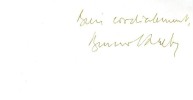
Bill Evans live. Portrait. ( Avec dédicace, non nominative, de Bruno Krebs )
Editions L'Arpenteur 2005. In-8 broché de 98 pages au format 13 x 21,5 cm. Couverture avec titre imprimé. Complet de la bande annonce avec photo de Bill Evans par Tom Copi. Excellent portrait du grand pianiste de Jazz, Bill Evans. Liste des enregistrements du pianiste, ayant inspirés l'auteur, en fin d'ouvrage. Edition originale état superbe, proche du neuf. Exemplaire enrichi d'une dédicace, non nominative, signée, de Bruno Krebs.

Vente exclusivement par correspondance. Le libraire ne reçoit, exceptionnellement que sur rendez-vous. Il est préférable de téléphoner avant tout déplacement.Forfait de port pour un livre 10 € sauf si épaisseur supérieure à 3 cm ou valeur supérieure ou égale à 100 €, dans ce cas expédition obligatoire au tarif Colissimo en vigueur. A partir de 2 livres envoi en colissimo obligatoire. Port à la charge de l'acheteur pour le reste du monde.Les Chèques ne sont plus acceptés.Pour destinations extra-planétaire s'adresser à la NASA.Membre du Syndicat Lusitanien Amateurs Morues
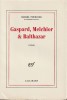
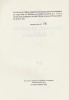
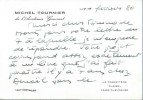
Gaspard, Melchior & Balthazar. ( Tirage numéroté sur vélin d'arches + Carte de visite grand format avec superbe dédicace autographe signée par Michel Tournier, recto-verso, adressée à Bruno de Monès.
Editions Gallimard 1980. In-8 broché de 274 pages au format 14,5 x 21,5 cm. Couverture rempliée avec titre imprimé. Dos carré. Plats et intérieur parfaits, avec ex-libris de l'ancien propriétaire collé en page de garde. Complet du papier cristal d'origine. Un des 65 exemplaires numérotés sur pur vélin d'arches ( n° 76 ), après 35 sur hollande. Etat superbe proche du parfait. Edition originale enrichie d'une carte de visite grand format 14,5 x 10,5 cm avec superbe dédicace autographe signée, recto-verso, de Michel Tournier, adressée au photographe Bruno de Monès et datée du 11 février 1980. Belle provenance.
Vente exclusivement par correspondance. Le libraire ne reçoit, exceptionnellement que sur rendez-vous. Il est préférable de téléphoner avant tout déplacement.Forfait de port pour un livre 10 € sauf si épaisseur supérieure à 3 cm ou valeur supérieure ou égale à 100 €, dans ce cas expédition obligatoire au tarif Colissimo en vigueur. A partir de 2 livres envoi en colissimo obligatoire. Port à la charge de l'acheteur pour le reste du monde.Les Chèques ne sont plus acceptés.Pour destinations extra-planétaire s'adresser à la NASA.Membre du Syndicat Lusitanien Amateurs Morues

