 Write to the booksellers
204 books for « orwell george »Edit
-
Latest
Last 24h (1)
Last 3 days (2)
Last month (75)
Last week (1)
-
Language
French (186)
Russian (18)
-
Century
20th (73)
21st (14)
-
Countries
Belgium (4)
Canada (2)
Denmark (3)
France (110)
Switzerland (67)
United States of America (18)
-
Syndicate
ALAC (2)
ILAB (66)
NVVA (1)
SLACES (1)
SLAM (60)
Topics
- Animals (1)
- Cinema (2)
- Comic strip (2)
- First edition (3)
- Huxley aldous (1)
- Jacob (1)
- Literary review (1)
- Literature (1)
- Memories (1)
- Orwell georges (195)
- Police (1)
- Policy (1)
- Psychoanalysis (1)
- Review (1)
- Shapes & colours (1)
- Spanish war (2)
- Totalitarianism (1)
- Version (1)
- War (2)
- Wash tint (1)
- Woolf virginia (1)
Kolhosp Tvaryn(i.e. “a Collective Farm of Animals” - being Animal Farm). - [FIRST UKRANIAN TRANSLATION OF ANIMAL FARM - WITH THE ONLY SURVIVING PREFACE TO THE WORK BY ORWELL HIMSELF]
(Munich), Prometheus, (1947). Original printed pictorial wrappers. In excellent condition with just slight edge wear and a small bump to upper capital. Internally also en very nice condition. Bookseller stamp to front free end-paper: Ukranian Book Store, Edmonton, Alberta. With portrait of Orwell after the preface.
Scarce first edition of the first Ukrainian translation of Animal Farm, being the only edition of Orwell’s masterpiece with a personal preface written by the author. Needless to say, Animal Farm constitutes one of the most important literary works of the 20th century. The satirical-political masterpiece magnificently reflects the events leading up to the Russian Revolution and brilliantly caricatures Stalinism. As Orwell himself put it, with this work, he deliberately tried ""to fuse political purpose and artistic purpose into one whole"". (Orwell, ""Why I Write""). Animal Farm brilliantly portrays not only the corruption of the revolution, but also how traits of human character themselves corrupt society. The greatest flaw of revolution is not the corrupt leadership on its own, but also the greed, indifference, ignorance, shortsightedness, wickedness, etc. that govern the individuals that make up the masses. George Orwell’s (1903-1950) Animal Farm was translated into Ukrainian by Ihor Ševcenko (1922-2009) – a Polish-born Ukrainian scholar, at the time residing in Germany – under the pseudonym Ivan Cherniatyns’kyi. The book was published by the Ukrainian publisher Prometheus in Munich in 1947. The Ukrainian title, Kolhosp Tvaryn (i.e. eng.: “A Collective Farm of Animals”) – a reference to Stalin’s collective farms (kolkhozy) – is deliberately not a literal translation, and “[a] brief examination of Ševcenko’s translation reveals that while his choices were distinctly loyal to the original English text, they simultaneously deepen the political allegory and expand the fairy tale tradition of the novel by domesticating certain aspects of the text through specific references to the Soviet Union and Ukrainian folktales.” (Gor, 2025, p. 18). The text “offered momentary solidarity, unity, and comfort to displaced Ukrainians through its loyal translation and parallel intentions between the source text and the translation” (Gor, 2025, pp. 3-4). At the time of the publication of Animal Farm, Ševcenko was regularly participating in the intellectual spheres of the Ukrainian Displaced Persons camps in Munich. There, he began sight-translating (i.e. without preparation) Animal Farm for camp residents. In April 1946, he wrote to Orwell requesting permission to publish the novel in Ukrainian. Among other things, he wrote to Orwell that ""‘Soviet refugees were my listeners. The effect was striking. They approved of almost all your interpretations. They were profoundly affected by such scenes as that of animals singing ""Beasts of England"" on the hill. Here I saw that apart from their attention being primarily drawn on detecting ""concordances"" between the reality they lived in and the tale, they visibly reacted to the absolute values of the book, to the tale types, to the underlying convictions of the author and so on. Besides, the mood of the book seems to correspond with their own actual state of mind... [T]he attitude of the Western World in many recent issues roused serious doubts among our refugees, who wondered how it were possible that nobody “knew the truth”’...Your bookhas solved the problem."" (Szewczenko to Orwell, 11 April 1946, XVIII, 236). Orwell immediately agreed to the translation, refused any royalties, and later also agreed to write a preface for it (Tatara, 2012"" Gor, 2025, p. 14). ""Although ‘frightfully busy’ Orwell did write this preface, which forever remained his most detailed explanation of the motives behind the “fairy story”. (Masha Karp: On the Ukranian Trnaslation of Animal Farm, the Orwell Foundation, 2022). The Ukrainian edition is especially interesting, not only because of its genesis, but also because it is the only edition of Orwell’s masterpiece with a personal preface written by the author, with the most detailed explanation of the motives behind the Animal Farm. In this context, it is worth noting that Orwell’s original version of the preface in English has been lost, and the only version surviving is the one he wrote for the Ukrainian translation. For the first edition in English, Orwell had intended to include his essay “Freedom of the Press” as a preface, but this was possibly rejected by the publishers. Overall, Orwell faced many obstacles when first publishing Animal Farm: It was rejected for almost a year by publishers, afraid of the criticism of England’s Soviet ally (Gor, 2025), and a preface never appeared. The small Ukranian printing press Promethius managed a print-run of 5.000 copies of the first edition of the Ukranian translation, but a mere 2.000 ended up being distributed throughout DP camps in and around Munich. The remaining copies were confiscated by the US military, who feared that it would be considered anti-Soviet propaganda and would jepardize the relationship with Stalin as the ally, who had helped defeat Hitler. The Americans thus handed over the confiscated copies to the Soviet authorities, who desctroyed them. Animal Farm was written between late 1943 and early 1944, when the wartime alliance with the Soviet Union was at its height and Stalin was held in highest esteem in Britain, among both the people and intelligentsia. Not surprisingly, it was initially rejected by both British and American publishers, and the publication of it was thus delayed. When it did appear, it became a great commercial success, however, probably not least due to the soon to follow Cold War. In his Ukranian preface, Orwell explains that 'It was of the utmost importance to me that people in Western Europe should see the Soviet régime for what it really was. Since 1930 I had seen little evidence that the USSR was progressing towards anything that one could truly call Socialism. On the contrary, I was struck by clear signs of its transformation into a hierarchical society, in which the rulers have no more reason to give up their power than any other ruling class. ""Having explained ‘why ‘totalitarianism is completely incomprehensible… to the workers and intelligentsia in a country like England’, Orwell named as the aim of his book ‘the destruction of the Soviet myth …essential’, he insisted, ‘for a revival of the Socialist movement’. (Orwell Foundation, 2022). The work is generally considered one of the best and most influential literary productions of the 20th century. The original subtitle ""A Fairy Story"" was dropped when the book was published in the United States, and all but one of the translations omitted it. References: Chalupa, Andrea (2012, March 7). How ‘Animal Farm’ Gave Hope to Stalin’s Refugees. Andrea Chalupa. Tatara, Halyna. (2012, July 31). George Orwell and the Ukrainian refugees: the untold story of Animal Farm. Ukrainian Institute London. The Orwell Foundation. (2022, March 15). Masha Karp on the Ukrainian translation of Animal Farm. The Orwell Foundation. The Orwell Foundation. Preface to the Ukrainian Edition of Animal Farm. Gor, Diana. (2025). Found in Translation: George Orwell's Animal Farm in Ukrainian. [Capstone project, Stanford University].
Dans le ventre de la baleine et autres essais. 1931-1940
Ivrea Paris, Éditions Champ Libre - Éditions Ivrea, 1998. In-12 broché de 348 pages, Traduit de l'anglais par Anne Krief, Michel Petris et Jaime Semprun. Premier volume de la célèbre série en quatre tomes des Essais, articles, correspondances de George Orwell, coéditée et diffusée par les Éditions Ivrea (structure ayant succédé aux éditions Champ Libre créées par Gérard Lebovici). Cet ouvrage rassemble les écrits critiques, politiques et autobiographiques de George Orwell rédigés entre 1931 et 1940. Il est célèbre pour son essai éponyme « Dans le ventre de la baleine » (Inside the Whale, 1940), où Orwell analyse l'attitude des intellectuels et écrivains des années 1930 (notamment Henry Miller) face à la montée des totalitarismes et à l'engagement politique. La traduction française est due au cercle de Jaime Semprun (Éditions de l'Encyclopédie des Nuisances), garantissant une rigueur stylistique et politique fidèle à la prose orwellienne. Bon état

Toutes les expéditions sont faites en suivi au-dessus de 25 euros. Expédition quotidienne pour les envois simples, suivis, recommandés ou Colissimo.
Homage to Catalonia. With an introduction by Bob Edwards.
London The Folio Society 1970 1 vol. relié in-8, cartonnage bradel illustré d'une reproduction photographique en noir et blanc sur les plats, tête rouge, étui cartonné rouge, 214 pp., index. Edition anglaise illustrée de 8 planches de reproductions photographiques en noir hors-texte par Robert Capa, Bob Edwards, Fox photos... montrant la guerre civile espagnole, les combats, Orwell dans les tranchées d'Aragon ou encore les milices républicaines. Dans une maquette soignée, en bonne condition.

Nineteen Eighty-Four. A Novel.
New York, Harcourt, Brace and Compagny, 1949, in-8vo, 314 p., + 2 leave prospect of the Book-Of-The-Month Club, with portrait of Orwell and text by Henry Seidel Canby ‘is this what our world is coming to?, orig. cloth with blue dustjacket with inside mention ‘Book-of-the-month club selection $3.00, with a printed caricature of Orwell by George Holland on back panel.
"..Depicts, with very great power, the horrors of a well-established totalitarian regime.. It is important that the Western World should be aware of these dangers.." - Bertrand Russell. Unclipped blue dust jacket. some light wear, In all fine copy. This distinguised novel will be remembered as one of the most imporant and moving works of fiction to be published in this generation. Image disp.

(SLACES, NVVA)
Phone number : 41 (0)26 3223808
Tragédie birmane. Traduit de l'anglais par Billot de Saix.
Paris Nagel, "Collection des Grands Romans Etrangers" 1946 1 vol. Broché in-12, broché, 342 pp. Edition originale française avec mention fictive sur le second plat. Saviez-vous qu'Orwell, de son vrai nom Eric Arthur Blair, était né à Motihari, en Inde ? D'origine modeste, il reçut une bourse pour étudier à Eton, en Angleterre, mais en 1922 il préféra s'enrôler dans la police impériale indienne en Birmanie. "Tragédie birmane" est le récit de cette expérience et constitue surtout une condamnation de l'impérialisme.
Chroniques du temps de la guerre (1941-1943)
Gérard Lebovici / Champ Libre, 1988, in-8 br. (14,5 x 24), 262 p., présenté et traduit par Claude Noël, photo sur le plat sup., couverture à rabats, bon état.
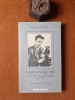
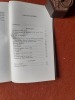
De 1941 à 1943, Orwell fut engagé par le service indien de la BBC destiné à porter une bonne parole culturelle et politique aux sujets du bon roi George VI du sous-continent asiatique. Esprit libre entre tous, Orwell se passionna rapidement pour sa tâche. Du côté culturel, il s’attacha à faire mieux connaître des auteurs comme Jack London, Jonathan Swift, Bernard Shaw, Shakespeare ou Oscar Wilde. Il improvisa des dialogues autour d’œuvres d’Anatole France et H.G. Wells. Du côté politique, il tint une chronique hebdomadaire commentant la situation militaire sur le front de l’Est. Cette expérience lui fit prendre conscience de l’importance de la propagande dans le monde contemporain. Elle est directement à l’origine des deux chefs-d’œuvre qu’il écrivit ensuite : La ferme des animaux et 1984. À travers ces écrits de circonstance, on retrouve le génie d’Orwell à l’état originel. Voir le sommaire sur photos jointes.
ET VIVE LASPIDISTRA ! Traduit de langlais par Yvonne Davet.
1960 N.R.F. 1960. In-8° broché. 331 pages. E.O française. S.P.
/// Bon état.
Homenatge a Catalunya un testimoni sobre la revolucio espanyola - Colleccio Hores de Catalunya.
"Ediciones Ariel. 1972. In-8. Broché. Etat d'usage, Tâchée, Dos satisfaisant, Papier jauni. 218 pages - ex dono à l'encre et une étiquette collée sur la page de faux titre - livre en catalan - couverture contrepliée - jaquette tâchée - plats et contre plats tâchés - en supplément une coupure de presse en espagnol "" evocando a George Orwell por Jorge Semprun"".. Avec Jaquette. . . Classification Dewey : 449.9-Catalan"
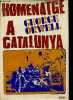
Introduccio de Lionel Trilling - Traduccio catalana de Ramon Folch i Camarasa - Colleccio Hores de Catalunya. Classification Dewey : 449.9-Catalan
Et vive l'aspidistra ! Traduit de l'anglais par Yvonne Davet.
Paris Gallimard 1960 1 vol. Broché in-8, broché, 337 pp. Edition originale française sur papier ordinaire. En bonne condition.
Une histoire birmane.
Paris Ivrea 2008 1 vol. broché in-8, broché, couv. à rabats, 377 pp. (petite salissure à la couverture, sans gravité) Traduit de l'anglais par Claude Noël. Tirage de 2008. Bon état.
Tragédie birmane
Les éditions Nagel, coll. « Collection des Grands Romans étrangers » 1946 In-12. Broché sous couverture imprimée, 342 pp. Couverture ternie, petites taches sur le premier plat de couverture, intérieur en bon état.
édition originale en français. Premier roman de George Orwell, directement inspiré de son expérience d'ancien fonctionnaire britannique en Birmanie. Bon état d’occasion
Animal farm- a fairy story by George Orwell
A signet classi/NAL. 1959. In-12. Broché. Etat d'usage, Coins frottés, Dos fané, Papier jauni. 128 pages. Texte en anglais. Quelques rousseurs. Légèrement désolidarisé.. . . . Classification Dewey : 420-Langue anglaise. Anglo-saxon
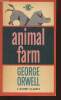
Introduction par C.M. Woodhouse. Classification Dewey : 420-Langue anglaise. Anglo-saxon
Kammerat Napoleon. Illustreret af Sys Gaugin. - [FIRST DANISH EDITION OF ""ANIMAL FARM""]
Vilhelm Priors Forlag, 1947. Uncut, unopened in the original illustrated wrappers. A bit of wear to extremities, otherwise a very fine copy. Illustrated in colours.
First Danish edition of one of the most important literary works of the 20th century, the satirical-political masterpiece that so magnificently reflects the events leading up to the Russian Revolution and brilliantly caricatures Stalinism. As Orwell himself put it, with this work, he deliberately tried ""to fuse political purpose and artistic purpose into one whole"". (Orwell, ""Why I Write""). ""Animal Farm"" brilliantly portrays not only the corruption of the revolution, but also how traits of human character themselves corrupt society. The greatest flaw of revolution is not the corrupt leadership on its own, but also the greed, indifference, ignorance, shortsightedness, wickedness, etc. that govern the individuals that make up the masses. The work was written between late 1943 and early 1944, when the wartime alliance with the Soviet Union was at its height and Stalin was held in highest esteem in Britain, among both the people and intelligentsia. Not surprisingly, it was initially rejected by both British and American publishers, and the publication of it was thus delayed. When it did appear (1945), it became a great commercial success, however, probably not least due to the soon to follow Cold War. The work is generally considered one of the best and most influential literary productions of the 20th century.
Kammerat Napoleon. Illustreret af Sys Gaugin. - [FIRST DANISH EDITION OF ""ANIMAL FARM""]
Vilhelm Priors Forlag, 1947. Uncut in the original wrappers. Wrappers with a few nicks and a tears. 10 cm long tear to spine. Internally fine and clean.
First Danish edition of one of the most important literary works of the 20th century, the satirical-political masterpiece that so magnificently reflects the events leading up to the Russian Revolution and brilliantly caricatures Stalinism. As Orwell himself put it, with this work, he deliberately tried ""to fuse political purpose and artistic purpose into one whole"". (Orwell, ""Why I Write""). ""Animal Farm"" brilliantly portrays not only the corruption of the revolution, but also how traits of human character themselves corrupt society. The greatest flaw of revolution is not the corrupt leadership on its own, but also the greed, indifference, ignorance, shortsightedness, wickedness, etc. that govern the individuals that make up the masses. The work was written between late 1943 and early 1944, when the wartime alliance with the Soviet Union was at its height and Stalin was held in highest esteem in Britain, among both the people and intelligentsia. Not surprisingly, it was initially rejected by both British and American publishers, and the publication of it was thus delayed. When it did appear (1945), it became a great commercial success, however, probably not least due to the soon to follow Cold War. The work is generally considered one of the best and most influential literary productions of the 20th century.
1984 Spanish Edition edicion definitiva avalada por The Orwell Estate
Penguin Random House Espagnol
LIVRE A L’ETAT DE NEUF. EXPEDIE SOUS 3 JOURS OUVRES. NUMERO DE SUIVI COMMUNIQUE AVANT ENVOI, EMBALLAGE RENFORCE. EAN:9786073844321
Orwell on Truth
Harvill Secker
LIVRE A L’ETAT DE NEUF. EXPEDIE SOUS 3 JOURS OUVRES. NUMERO DE SUIVI COMMUNIQUE AVANT ENVOI, EMBALLAGE RENFORCE. EAN:9781787300521
Animal Farm: A Fairy Story(Subtitle): Also Including in Two Appendices Orwell's Proposed Preface And the Preface to the Ukrainian Edition (Twentieth Century Classics S.)
Penguin Classics 1989 144 pages 10 922x1 016x17 526cm. 1989. Broché. 144 pages.
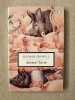
Bon état
Fugitive from the Camp of Victory.
London, Secker & Warburg, (1961). Un vol. au format pt in-8 (203 x 137 mm) de 160 pp. Reliure d'édition de plein cartonnage amande, sous jaquette imprimée.
![Fugitive from the Camp of Victory.. REES (Richard) - [ORWELL (George)].](https://static.livre-rare-book.com/pictures/BLS/30513_1_thumb.jpg)
First edition / first printing. ''Without aiming at biography, Sir Richard does throx light on Orwell's work and thought by relating them to the events of his life, and in a short final chapter he gives some personal recollections of the man which are themselves illuminating''. Très légères marques d'usage au dos de la jaquette. Ex-libris manuscrit en tête du premier feuillet (blanc). Du reste, bonne condition.
Hommage à la Catalogne
Editions Ivréa 1995, in-8 broché, couverture ocre à rabats, 294 p. (dos passé à l'orangé, sinon très bon état ; épuisé dans la collection) Un des témoignages les plus connus sur la guerre d'Espagne, d'une grande justesse de ton ; engagé aux côtés des républicains, Orwell donne de précieux renseignements sur la mainmise des communistes au détriment des anarchistes.
Tragédie birmane,. traduit par Guillot de Saix,
Paru le 31 août 1946 , Nagel, coll. « Collection des grands romans étrangers » 1946 Deuxième édition de la version de française de la même année,d’édition que l’originale. In-12 broché 18,8 cm sur 11,5. 342 pages. Papier bruni, quatrième de couverture salie, noircie, sinon assez bon état d’occasion.
Etat correct d’occasion
DOXN AND OUT IN PARIS AND LONDON
Penguin Books. 1975. In-12. Broché. Etat d'usage, Couv. légèrement passée, Dos frotté, Papier jauni. 188 pages.. . . . Classification Dewey : 420-Langue anglaise. Anglo-saxon
Novel. Orwell embarked on his first atempt to confront the world of poverty and failure... Classification Dewey : 420-Langue anglaise. Anglo-saxon
ET VIVE L'ASPIDISTRA !
Paris : Éditions Champ Libre, 1982. Broché 22x12,5 cm, 337 pages.
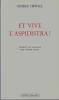
Sans doute le plus curieux d'Orwell, ce texte met en place une réflexion autour de l'argent par le prisme d'une étude de caractère, celle d'un écrivain raté, Gordon Comstock, humilié dans son enfance par sa pauvreté, tombant adulte dans une misère plus grande qui l'appauvrit moralement, intellectuellement et sentimentalement, le forçant à la solitude et au caractère sordide d'une telle existence.
Chroniques du temps de la Guerre (1941 - 1943).
P., Editions Gérard Lebovici, Champ Libre, 1988, 1 vol. in-8 (242 x 147) broché sous couverture à rabats illustrée d'un portrait photographique de Orwell, de 262 pp. + table. Dos insolé, très bel exemplaire par ailleurs.
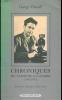
Présenté et traduit par Claude Noël.
Tels, tels étaient nos plaisirs et autres essais 1944 - 1949
Ivrea Paris, Éditions Champ Libre - Éditions Ivrea, 2005. In-12 broché de 313 pages, Traduit de l'anglais par Anne Krief, Michel Petris et Jaime Semprun. La traduction française est due au cercle de Jaime Semprun (Éditions de l'Encyclopédie des Nuisances), garantissant une rigueur stylistique et politique fidèle à la prose orwellienne. Bon état

Toutes les expéditions sont faites en suivi au-dessus de 25 euros. Expédition quotidienne pour les envois simples, suivis, recommandés ou Colissimo.
Ecrits politiques 1928 - 1949. Sur le socialisme, les intellectuels & la démocratie
Agone Agone, 2009. In-8 broché de 401 pages. Bon état

Toutes les expéditions sont faites en suivi au-dessus de 25 euros. Expédition quotidienne pour les envois simples, suivis, recommandés ou Colissimo.

