Write to the booksellers
3941 books for « muller w »Edit
-
Type
Autograph (1)
Book (3919)
Engraving (2)
Magazine (7)
Music sheets (11)
Photographs (1)
-
Latest
Last 3 days (2)
Last month (178)
Last week (2)
-
Language
English (6)
French (3918)
German (6)
Greek (1)
Russian (10)
-
Century
16th (6)
17th (2)
18th (38)
19th (321)
20th (1422)
21st (347)
-
Countries
Belgium (264)
Canada (7)
China (1)
Côte d'Ivoire (6)
Denmark (119)
France (2797)
Germany (1)
Greece (5)
Netherlands (35)
Switzerland (693)
United Kingdom (4)
United States of America (9)
-
Syndicate
ALAC (7)
CLAM (6)
CLAQ (2)
CNE (2)
ILAB (1673)
NVVA (226)
SLACES (226)
SLAM (1237)
SNCAO (5)
Topics
- Alps (21)
- Alsace (126)
- Ampelography - wines (22)
- Animals (13)
- Aquitaine (10)
- Archaeology (74)
- Architecture (39)
- Belgium (12)
- Bibliography (9)
- Biography (42)
- Birds (9)
- Botany (24)
- Brittany (10)
- Children’s books (53)
- Christianity (19)
- Cooking (22)
- Dauphiné (27)
- Dedication (12)
- Detective novels (11)
- Dictionaries (12)
- Drawings (12)
- Early printed books (19)
- Economics (29)
- Education (23)
- Education - morals (12)
- Egypt (17)
- Entomology (13)
- Essays (10)
- Ethic (11)
- Europe (13)
- Fashion (9)
- Fine arts (40)
- First edition (25)
- Fishing (10)
- Florence (25)
- Forez (10)
- Geography (40)
- Germanic languages (170)
- Germany (41)
- Greece (15)
- Greek (15)
- Helvética (183)
- History (215)
- Hugo victor (13)
- Hydrotherapy (9)
- Ile de france (9)
- Illustrated books (9)
- India (10)
- Industrial arts & crafts - fine arts (20)
- La tour du pin (10)
- Latin (12)
- Law (28)
- Linguistics (17)
- Literature (351)
- Magazine (25)
- Medicine (58)
- Military arts (31)
- Muller charles (48)
- Muller eugène (73)
- Müller herta (11)
- Muller jean (29)
- Muller joseph-emile (27)
- Muller martine marie (26)
- Muller rené (19)
- Music (9)
- Navy (13)
- Newspapers press (31)
- Painters (21)
- Painting (14)
- Palaeontology (9)
- Philology (13)
- Philosophy (66)
- Photography (22)
- Poetry (10)
- Policy (17)
- Printing (9)
- Psychiatry neurology (14)
- Psychology (35)
- Reboux paul (27)
- Regionalism (22)
- Religions (49)
- Review (14)
- Reviews (27)
- Russia (9)
- Scandinavian literature (10)
- Sciences (30)
- Scores (33)
- Songs (13)
- Sports (11)
- Switzerland (183)
- Theatre (17)
- Theology (37)
- Travel (28)
- Various (26)
- Viticulture (16)
- War (38)
- Wine (26)
- Youth (36)
- Zoology (12)
- Zurich (17)
Heurs et malheurs du Dauphiné drames et joies d'u
Memoire de l'histoire 2000 2000. ouvrage broché 417 pages aux éditions de Borée 2000 ; édition originale RARE. en TRES BON ETAT complet et solide sans déchirures ni annotations; intérieur impeccable propre et encore frais comme neuf; au pire quelques (rares) petites traces de pliures sur la couverture ça reste un BEL ouvrage. Le Dauphiné est une terre d'histoire. Le peuple dauphinois un tantinet frondeur toujours fier et vaillant s'est souvent retrouvé dans la rue notamment lors de la célèbre journée des Tuiles de 1788 saluée dans les manuels d'histoire comme le point de départ de la Révolution française. D'autres événements joyeux ou tragiques relevant de l'histoire ou du fait-divers émaillent son passé. Véritable mémoire de Grenoble et du Dauphiné Claude Muller raconte les grandes et petites heures de sa province. Il en fut parfois le témoin privilégié. D'autres lui furent relatées. Et aucun article ou document d'époque n'a échappé à la vigilance de ce journaliste passionné par les heurs et malheurs du Dauphiné. Biographie: Claude Muller journaliste et historien a signé plus de 4 000 chroniques historiques dans le Dauphiné libéré ainsi que dans de multiples magazines de la presse écrite et parlée. Membre de l'Académie delphinale vice-président de la Société des Ecrivains dauphinois il est également l'auteur d'une quinzaine d'ouvrages qui fondent son autorité dans la littérature historique du Dauphiné. Claude Muller n'en a pas fini de faire revivre les belles et mémorables histoires du temps jadis

Très bon état
Mon chien de garde et moi
Hachette 1976 1976. Guide pratique sur l'éducation et la vie avec un chien de garde publié en 1976 par Hachette dans la collection 'Mon animal et moi'. L'ouvrage de François Muller spécialiste des animaux aborde les aspects concrets de la relation entre le maître et son chien de garde

Bon état
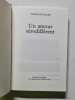
Un amour sérodifférent
FRANCE LOISIRS Sans date. Isabelle Muller raconte son histoire d'amour avec un homme séropositif qu'elle a rencontré à 26 ans et qu'elle a choisi d'épouser. Le livre publié en 1995 est un témoignage sans concessions sur sa passion mêlant larmes et joies dureté et tendresse

Bon état
Les ronces de fer Blaireau se cache les pas légers de la folie A tout jamais
Sélection du Livre Sans date. Les Ronces de fer est un roman de Martine-Marie Muller publié en 2000. Il s'inscrit dans la production littéraire de l'auteure connue pour sa plume à la fois ardente rude et sensible
Bon état
Catherine ganz muller Les amoureux du square Bayard Poche
2001 2001. Catherine Ganz-Muller: Les amoureux du square/ Bayard Poche 2001

Etat correct
Lange Muller Lange Muller Bostock D. Chamber Philharmonic Of Bohemia
Reference : 30490
(2003)
ISBN : 4011222205933
Symphonies n°1 & 2
Scandinavian Classics 2003 14x12x1cm. 2003. CD. Traduit de Sénès Florence - Illustrations de Jankovics györgy
très bon état d'ensemble - envoi rapide et soigné dans une enveloppe à bulle depuis France
Marie-France MULLER Marie-France MULLER
Reference : 300014355
(2011)
ISBN : 9782813203144
Catherine ganz muller Girls' stories Nos belles histoires de filles
2011 2011. Catherine Ganz-Muller - Girls' Stories: Nos (belles ) histoires de filles 2011
Bon état
L'Alsace : Texte par Henri Muller. Photographies par Pierre Tetrel Jacques Fronval Robert Laeuffer Yan
Éditions Sun impr. G. Lang 1962 104 pages 1962. 104 pages.
CLEM 2500ex HC Amis du Livre Strasb
Sans date. Henry Muller CLEM 2500ex HC Amis du Livre Strasb
Good bye Shirley Librairie des champs élysées
1971 1971. Paul Muller: Good bye Shirley / Librairie des Champs-Élysées 1971

Bon état
Good bye Shirley Club des masques
1978 1978. Paul Muller - Good bye Shirley / Club des Masques 1978
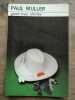
Bon état
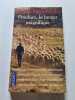
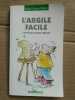
Terre-Mégère [Relié] by Muller Martine-Marie
France loisirs 1997 310 pages 19x12x2cm. 1997. Broché. 310 pages.
![Terre-Mégère [Relié] by Muller Martine-Marie. Muller Martine-Marie](https://static.livre-rare-book.com/pictures/IGE/53078_thumb.jpg)
légères marques de lecture et/ou de stockage mais du reste en très bon état - Envoi rapide et soigné dans une enveloppe à bulle depuis France
![Terre-Mégère [Relié] by Muller Martine-Marie. Muller Martine-Marie](https://static.livre-rare-book.com/pictures/IGE/300009833_thumb.jpg)
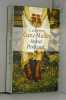
Anna Pencoat de Catherine Ganz-Muller (2016)
France Loisirs 2016 400 pages 15x21x2cm. 2016. Broché. 400 pages.
Très bon état
Über den glatten Hai des Aristoteles, und über die Verschiedenheiten unter den Haifischen un Rochen in der Entwickelung des Eies. [In: Abhandlungen der Königlichen Akademie der Wissenschaften zu Berlin. Aus dem Jahr 1840]. - [ESTABLISHING ARISTOTLE AS THE FOUNDER OF BIOLOGICAL SCIENCE]
Berlin, 1842. 4to. Entire volume of ""Abhandlungen""... and ""Mathamatische Abhandlungen""... 1840 present. Contemporary yellow boards with a vellum-like spine. Handwritten title to spine. A bit of wear and soiling to extremities, and corners bent. Internally fine and clean. Stamp to title-page (Dom-Gymnasium Magdeburg, also stamped out). Pp. (187)- 257 + 6 plates, two of which are folded. Text very nice, bright, and clean, plates with a bit of brownspotting. [Entire volume: (6), XVII, (5), 400 pp. + 10 plates, 4 of which are coloured + (4), 137 pp.].
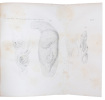
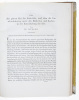
First printing of this foundational work, which established the acceptance, by the modern world, of Aristotle as the founder of biological science. It is due to the present work that modern encyclopaedias will now conclude that ""Aristotle is properly recognized as the originator of the scientific study of life."" (SEP). Apart from its importance to the modern view of Aristotle, the present paper was also central to Müller's construction of a natural system of the fishes. For centuries, the authority of Aristotle in matters of science and biology was unrivalled, but with modern science, the advancement of exact knowledge, and modern man's ability to investigate the smallest of details, Aristotle's scientific and zoological works increasingly came to be viewed as not properly belonging to the exact sciences. Many biologists would claim that his observations were fanciful and incorrect, not constituting any real scientific value. This view completely changed with the publication of the present paper, by the renowned zoologist Müller.In his ""Historia Animalium"", Aristotle had described a phenomenon in a shark, which no modern zoologist believed to be true. Had it been true, our classification among sharks and fish would need to be different, as this fanciful observation would completely alter our view of the shark as such. Müller, in the present treatise, was the first to actually prove Aristotle's observation to be true, thereby altering the modern conception of Aristotle, earning him the respect that he truly deserved as the first scientific biologist and as the originator of the scientific study of life. ""Müller placed the Cyclostomata among the fishes. He was thus led to study the sharks... A further product of this investigation was ""Über den glatten Hai des Aristoteles"" (1842). In ""Historia animalium"", Aristotle had reported that the embryos of the ""so-called smooth shark"" are attached to the uterus of the mother by a placenta, as is the case among mammals. Rondelet had described such a shark in 1555 and Steno had observed one in 1673 off the coast of Tuscany, but it had not been referred to in more recent times. Müller was the first who was able to corroborate the earlier testimony.In conjunction with the study of the shark, Müller constructed a natural system of the fishes based on work as painstaking as it was perceptive."" (DSB).Johannes Peter Müller (1801-58) was one of the most important physiologists and zoologists of the 19th century. He made a vast number of important discoveries, and his unusual and empirical approach to his subjects made him one of the most influential scientists of the century. ""Müller introduced a new era of biological research in Germany and pioneered the use of experimental methods in medicine. He overcame the inclination to natural-philosophical speculation widespread in German universities during his youth, and inculcated respect for careful observation and physiological experimentation. He required of empirical research that it be carried out ""with seriousness of purpose and thoughtfulness, with incorruptible love of truth and perseverance."" Anatomy and physiology, pathological anatomy and histology, embryology and zoology-in all these fields he made numerous fundamental discoveries. Almost all German scientists who achieved fame after the middle of the nineteenth century considered themselves his students or adopted his methods or views. Their remarks reveal his preeminent position in medical and biological research. Helmholtz, one of his most brilliant students, termed Müller a ""man of the first rank"" and stated that his acquaintance with him had ""definitively altered his intellectual standards""."" (DSB).

Flora Fridrichsdalina sive Methodica descriptio Plantarum in Agro Fridrichsdalensi simulque per Regnum Daniae crescentium cum Characteribus genericis & specificis...ac Speciebus pluribus in Dania nuper detectis. - [ALL DANISH PLANTS]
Argentorati (Strassburg), J.G. Bauer, 1767. 8vo. Nice contemporary half calf with five raised bands and gilt lines to spine. Wear to spine and capitaks and slightly split at hinges, but still tight. A bit of brownspotting throughout. Smukt velbevaret samt. hldrbd. med ophøjede bind, rig rygforgyldning og skindtitel. XVIII, 238, (22) pp. + two folded engraved plates (one being the folded map of Furesøen, Lyngby-og Bagsværd Sø).
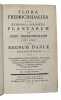
The very rare first edition of Müller’s floral magnum opus, which according to his own statements contains a description of all known plants in Denmark, of which Müller prides himself with having discovered and described no less than 300. Müller participated in the production of the monumental “flora Danica” with its magnificent plates of all Danish plants, but the present work is the only work of botany that he himself published, namely of the flora of the Schulin Estate. “Otto Friedrich Muller (1730-1784) was born in Copenhagen, the son of the court trumpeter, a German man who had moved to Denmark. With a ready and lively intelligence, he received an excellent education admitted to the University of his hometown at the age of 18, according to the custom of the time he initially studied theology (the Danish university had only three courses of study: theology, law, medicine), then moved to law he had excellent skills in various fields, including music. However, he did not graduate, because for economic reasons in 1753 he abandoned his studies to enter the service of the Schulin family as a tutor to the heir of the house, who was orphaned at an early age. He lived with the Schulin for about twenty years, mostly on their Friedrichsdalin estate, near Copenhagen. Beginning in 1758, using Linnaeus' books, he began to study natural sciences as a self-taught student, both out of passion and to teach his pupil. Starting in 1761, he procured a microscope. His first scientific publication was a catalogue of insects from the Schulin estate, Fauna insectorum Fridrichsdalina (1764). Between 1765 and 1767, during a trip to Europe with his pupil, he visited many countries in central and southern Europe and was able to attend scientific circles, making contacts and lasting friendships. A man of the world, well accustomed to courtiers since childhood, through a strategy of targeted promotion (knowledge of eminent scientists, publication of previous works in support of his candidacy) he managed to be admitted into many European scientific societies. A Strasbourg published his only work of botany, a catalogue of the flora of the Schulin estate, Flora Fridrichsdalina (1767). During the journey, thanks to the various meetings, his interests finally shifted from botany to zoology, in particular to the study of invertebrates, of which he became perhaps the greatest expert of his time. In 1771 - his pupil was then 24 years old - he left the Schulin and thanks to Oeder's recommendation he was hired at the State Archives the office was renovated in 1772 after the fall of Struensee and Müller and, although he retained a small pension, he lost his place. His marriage to the wealthy Norwegian widow Anna Catharina Paludan resolved his economic problems once and for all from that moment on, he was able to devote himself full-time to scientific work. An important piece of his research was the Estate of Drobak, on the Gulf of Oslo, owned by his wife, where the scientist spent the summers from 1774 to 1778, focusing in particular on the study of marine micro-fauna. He was assisted by a team that included draughtsmen and engravers (one of the best painters was his younger brother, Christian Friedrich, who, in addition to illustrating some of his brother's works, years later collaborated with Vahl on the third tranche of Flora Danica) and a number of students, recruited in an ingenious way. Every year, Müller made an advertisement in the newspapers to recruit them and paid them for the journey from Copenhagen to Oslo. Beginning in 1771, publications also multiplied, mainly dedicated to different classes of invertebrates, before then little known. In the meantime, Müller had presented to the court the project of a Fauna Danica, to pair with Flora Danica, of which he was appointed curator after Oeder's departure. The countryside in Norway and, later, when arthritis forced him to give it up, the coasts of Denmark, including the islands, allowed him to collect specimens for both works. In 1776 he anticipated the content of his great zoological work with Zoologiæ Danicae Prodromus, which listed, classified and briefly described all the animal species of the kingdom of Denmark-Norway, a work of epochal importance for the innovative classification of invertebrates. Two folio volumes of Fauna Danica followed in 1777 and 1786, with 40 plates (the other two volumes would be completed and published by various curators many years after his death). Between 1776 and 1784 five files of Flora Danica were also released. However, an important work on infusers (small single-celled organisms that develop in plant infusions, belonging to various classes, especially protozoa) remained unfinished (and was completed by O. Fabricius). In 1784, after a decade of intense work, Müller died at the age of fifty.” (D. D. Damkaer, The Copepodologist's Cabinet, A Biographical and Bibliographical History).