 Write to the booksellers
3814 books for « muller a h »Edit
-
Type
Autograph (1)
Book (3789)
Disk (1)
Drawings (2)
Engraving (2)
Magazine (7)
Music sheets (11)
Photographs (1)
-
Latest
Last 3 days (5)
Last month (95)
Last week (2)
-
Language
English (6)
French (3789)
German (7)
Greek (1)
Latin (1)
Russian (10)
-
Century
16th (6)
17th (2)
18th (37)
19th (324)
20th (1386)
21st (283)
-
Countries
Belgium (277)
Canada (7)
China (1)
Côte d'Ivoire (6)
Denmark (118)
France (2662)
Germany (1)
Greece (5)
Netherlands (35)
Switzerland (689)
United Kingdom (4)
United States of America (9)
-
Syndicate
ALAC (7)
CLAM (6)
CLAQ (2)
CNE (2)
ILAB (1663)
NVVA (226)
SLACES (226)
SLAM (1229)
SNCAO (5)
Topics
- Adam (9)
- Alps (21)
- Alsace (129)
- Ampelography - wines (20)
- Animals (12)
- Aquitaine (10)
- Archaeology (74)
- Architecture (51)
- Belgium (12)
- Bibliography (9)
- Biography (38)
- Botany (24)
- Brittany (10)
- Children’s books (55)
- Christianity (19)
- Cooking (20)
- Dauphiné (27)
- Dedication (12)
- Detective novels (11)
- Dictionaries (11)
- Drawings (14)
- Early printed books (15)
- Economics (28)
- Education (22)
- Education - morals (12)
- Egypt (18)
- Entomology (13)
- Ethic (11)
- Europe (13)
- Fine arts (39)
- First edition (27)
- Fishing (10)
- Florence (24)
- Forez (10)
- Geography (40)
- Germanic languages (170)
- Germany (41)
- Greece (16)
- Greek (15)
- Helvética (182)
- History (220)
- Hugo victor (12)
- Hydrotherapy (9)
- Ile de france (9)
- Illustrated books (9)
- India (10)
- Industrial arts & crafts - fine arts (21)
- La tour du pin (10)
- Latin (12)
- Law (28)
- Linguistics (19)
- Literature (268)
- Magazine (25)
- Medicine (57)
- Military arts (32)
- Muller charles (48)
- Muller eugène (72)
- Müller herta (11)
- Muller jean (27)
- Muller joseph-emile (28)
- Muller martine marie (23)
- Muller rené (19)
- Music (11)
- Navy (13)
- Newspapers press (31)
- Painters (21)
- Painting (15)
- Palaeontology (9)
- Pastiche (10)
- Philology (14)
- Philosophy (65)
- Photography (21)
- Poetry (10)
- Policy (17)
- Printing (9)
- Psychiatry neurology (14)
- Psychology (35)
- Reboux paul (27)
- Regionalism (22)
- Religions (49)
- Review (14)
- Reviews (27)
- Russia (9)
- Scandinavian literature (10)
- Sciences (37)
- Scores (33)
- Shapes & colours (9)
- Songs (13)
- Sports (10)
- Switzerland (182)
- Theatre (17)
- Theology (37)
- Travel (28)
- Various (27)
- Viticulture (18)
- War (39)
- Wine (25)
- Youth (25)
- Zoology (12)
- Zurich (17)
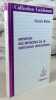
Initiation aux méthodes de la statistique linguistique.
Broché, 21X13 cm, 1993, 185 pages, éditions Champion. Couverture un peu défraichie, bon état.
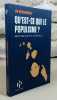
Qu'est-ce que le populisme ? Définir enfin la menace.
Broché, 21X13 cm, 2016, 183 pages, éditions premier parallèle. Très bon état.
Le Cidre et Le Poiré
Argentan F.Muller 1893 3 volumes In-8 paginé 425- 624 - 5-144 ( Année 1893-1894) + (1) - 5-468 -(2)- 5-472 + ( année 1894-96 ) + 257- 384 - (2)- 384 - 5-383 pp ( Année 1898-1900 ) ( 1 carte dépliante )
Bons Pleine Toile
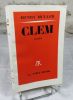
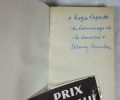
Clem.
Broché, 18X12 cm, 219 pages, 1960, la table ronde éditeur. Envoi de l'auteur, des annotations au stylo.
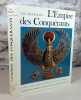
Le monde égyptien, les pharaons. Tome II : L'empire des conquérants (l'Egypte au nouvel empire 1560-1070);
reliure toile rouge de l'éditeur sous jaquette, signet, 28X22 cm, 1980/79/80, 338 pages, nombreuses illustrations en noir et en couleurs, collection l'univers des formes, éditions nrf Gallimard. Très bon état.
Histoire De La Musique Allemande
Paris PAYOT 1943 In-8 326 pp, dos gauchi, papier jauni, traduit de l'allemand de J. Gaudefroy-Demonbynes
Acceptable Broché à raba
Frédéric Brack
Paris Hubert 1823 2 volumes In-12 6 tomes en 2 vol. in-12, 3 ff + 201 + 203 + 204 + 3 + 268 + 276 pp. coins émoussés.
Moyen Demi Basane
Uber Den Bau Des Pentacrinus Caput Medusae,
Berlin Kôniglichen akademie Der Wissenschaften 1843 In-folio text in german , 72 p avec 6 planches en noir montées sur onglets dépliantes, avec des piqurtes et des impacts sur le papier en début d'ouvrage, à très grandes marges, planches au format,
Très Moyen Brochage Muet
Joyaux De Sculpture : Reims
Paris Éditions D'art La Balance 1955 GRAND In-8 30 pp + 84 planches
Correct Broché à raba
Cinq Mois Aux Indes, De Bombay à Colombo
Paris Floury 1924 In-8 dos en mauvais état, 314 pp, illustrations hors texte
Moyen Broché à raba
Mon Système Pour Les Enfants
Paris Editions Pierre Lafitte 1912 Plaquette In-8 87 pp, photos education physique pour les bébés et les enfants
Bon Broché à raba
Voyage En Alsace et En Lorraine
Rouen Mégard et Cie 1857 In-12 Étroit 240 pp, Bibliothèque morale de la Jeunesse. Frontispice et 3 gravures hors-texte. Plats passés, frottés avec fines coupures sur les coupes ; dos manquant, restauration au scotch ; partiellement débroché ; rousseurs
Moyen Broché à raba
La Seconde Guerre De Trente Ans 1914-1945
Bruxelles & Paris Edition Universelle et Desclées De Brouwer 1947 In-8 569 pp environ + tables pli en dernière partie d'ouvrage, ex. non coupé
Correct Broché à raba
Rembrandt
Paris Somogy 1968 Petit In-8 carré 271 pp - imprimé sur papier HELIOMA
Bon Broché à raba
Über den glatten Hai des Aristoteles, und über die Verschiedenheiten unter den Haifischen un Rochen in der Entwickelung des Eies. [In: Abhandlungen der Königlichen Akademie der Wissenschaften zu Berlin. Aus dem Jahr 1840]. - [ESTABLISHING ARISTOTLE AS THE FOUNDER OF BIOLOGICAL SCIENCE]
Berlin, 1842. 4to. Entire volume of ""Abhandlungen""... and ""Mathamatische Abhandlungen""... 1840 present. Contemporary yellow boards with a vellum-like spine. Handwritten title to spine. A bit of wear and soiling to extremities, and corners bent. Internally fine and clean. Stamp to title-page (Dom-Gymnasium Magdeburg, also stamped out). Pp. (187)- 257 + 6 plates, two of which are folded. Text very nice, bright, and clean, plates with a bit of brownspotting. [Entire volume: (6), XVII, (5), 400 pp. + 10 plates, 4 of which are coloured + (4), 137 pp.].
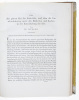
First printing of this foundational work, which established the acceptance, by the modern world, of Aristotle as the founder of biological science. It is due to the present work that modern encyclopaedias will now conclude that ""Aristotle is properly recognized as the originator of the scientific study of life."" (SEP). Apart from its importance to the modern view of Aristotle, the present paper was also central to Müller's construction of a natural system of the fishes. For centuries, the authority of Aristotle in matters of science and biology was unrivalled, but with modern science, the advancement of exact knowledge, and modern man's ability to investigate the smallest of details, Aristotle's scientific and zoological works increasingly came to be viewed as not properly belonging to the exact sciences. Many biologists would claim that his observations were fanciful and incorrect, not constituting any real scientific value. This view completely changed with the publication of the present paper, by the renowned zoologist Müller.In his ""Historia Animalium"", Aristotle had described a phenomenon in a shark, which no modern zoologist believed to be true. Had it been true, our classification among sharks and fish would need to be different, as this fanciful observation would completely alter our view of the shark as such. Müller, in the present treatise, was the first to actually prove Aristotle's observation to be true, thereby altering the modern conception of Aristotle, earning him the respect that he truly deserved as the first scientific biologist and as the originator of the scientific study of life. ""Müller placed the Cyclostomata among the fishes. He was thus led to study the sharks... A further product of this investigation was ""Über den glatten Hai des Aristoteles"" (1842). In ""Historia animalium"", Aristotle had reported that the embryos of the ""so-called smooth shark"" are attached to the uterus of the mother by a placenta, as is the case among mammals. Rondelet had described such a shark in 1555 and Steno had observed one in 1673 off the coast of Tuscany, but it had not been referred to in more recent times. Müller was the first who was able to corroborate the earlier testimony.In conjunction with the study of the shark, Müller constructed a natural system of the fishes based on work as painstaking as it was perceptive."" (DSB).Johannes Peter Müller (1801-58) was one of the most important physiologists and zoologists of the 19th century. He made a vast number of important discoveries, and his unusual and empirical approach to his subjects made him one of the most influential scientists of the century. ""Müller introduced a new era of biological research in Germany and pioneered the use of experimental methods in medicine. He overcame the inclination to natural-philosophical speculation widespread in German universities during his youth, and inculcated respect for careful observation and physiological experimentation. He required of empirical research that it be carried out ""with seriousness of purpose and thoughtfulness, with incorruptible love of truth and perseverance."" Anatomy and physiology, pathological anatomy and histology, embryology and zoology-in all these fields he made numerous fundamental discoveries. Almost all German scientists who achieved fame after the middle of the nineteenth century considered themselves his students or adopted his methods or views. Their remarks reveal his preeminent position in medical and biological research. Helmholtz, one of his most brilliant students, termed Müller a ""man of the first rank"" and stated that his acquaintance with him had ""definitively altered his intellectual standards""."" (DSB).

Flora Fridrichsdalina sive Methodica descriptio Plantarum in Agro Fridrichsdalensi simulque per Regnum Daniae crescentium cum Characteribus genericis & specificis...ac Speciebus pluribus in Dania nuper detectis. - [ALL DANISH PLANTS]
Argentorati (Strassburg), J.G. Bauer, 1767. 8vo. Nice contemporary half calf with five raised bands and gilt lines to spine. Wear to spine and capitaks and slightly split at hinges, but still tight. A bit of brownspotting throughout. Smukt velbevaret samt. hldrbd. med ophøjede bind, rig rygforgyldning og skindtitel. XVIII, 238, (22) pp. + two folded engraved plates (one being the folded map of Furesøen, Lyngby-og Bagsværd Sø).
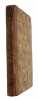
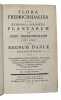
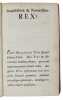
The very rare first edition of Müller’s floral magnum opus, which according to his own statements contains a description of all known plants in Denmark, of which Müller prides himself with having discovered and described no less than 300. Müller participated in the production of the monumental “flora Danica” with its magnificent plates of all Danish plants, but the present work is the only work of botany that he himself published, namely of the flora of the Schulin Estate. “Otto Friedrich Muller (1730-1784) was born in Copenhagen, the son of the court trumpeter, a German man who had moved to Denmark. With a ready and lively intelligence, he received an excellent education admitted to the University of his hometown at the age of 18, according to the custom of the time he initially studied theology (the Danish university had only three courses of study: theology, law, medicine), then moved to law he had excellent skills in various fields, including music. However, he did not graduate, because for economic reasons in 1753 he abandoned his studies to enter the service of the Schulin family as a tutor to the heir of the house, who was orphaned at an early age. He lived with the Schulin for about twenty years, mostly on their Friedrichsdalin estate, near Copenhagen. Beginning in 1758, using Linnaeus' books, he began to study natural sciences as a self-taught student, both out of passion and to teach his pupil. Starting in 1761, he procured a microscope. His first scientific publication was a catalogue of insects from the Schulin estate, Fauna insectorum Fridrichsdalina (1764). Between 1765 and 1767, during a trip to Europe with his pupil, he visited many countries in central and southern Europe and was able to attend scientific circles, making contacts and lasting friendships. A man of the world, well accustomed to courtiers since childhood, through a strategy of targeted promotion (knowledge of eminent scientists, publication of previous works in support of his candidacy) he managed to be admitted into many European scientific societies. A Strasbourg published his only work of botany, a catalogue of the flora of the Schulin estate, Flora Fridrichsdalina (1767). During the journey, thanks to the various meetings, his interests finally shifted from botany to zoology, in particular to the study of invertebrates, of which he became perhaps the greatest expert of his time. In 1771 - his pupil was then 24 years old - he left the Schulin and thanks to Oeder's recommendation he was hired at the State Archives the office was renovated in 1772 after the fall of Struensee and Müller and, although he retained a small pension, he lost his place. His marriage to the wealthy Norwegian widow Anna Catharina Paludan resolved his economic problems once and for all from that moment on, he was able to devote himself full-time to scientific work. An important piece of his research was the Estate of Drobak, on the Gulf of Oslo, owned by his wife, where the scientist spent the summers from 1774 to 1778, focusing in particular on the study of marine micro-fauna. He was assisted by a team that included draughtsmen and engravers (one of the best painters was his younger brother, Christian Friedrich, who, in addition to illustrating some of his brother's works, years later collaborated with Vahl on the third tranche of Flora Danica) and a number of students, recruited in an ingenious way. Every year, Müller made an advertisement in the newspapers to recruit them and paid them for the journey from Copenhagen to Oslo. Beginning in 1771, publications also multiplied, mainly dedicated to different classes of invertebrates, before then little known. In the meantime, Müller had presented to the court the project of a Fauna Danica, to pair with Flora Danica, of which he was appointed curator after Oeder's departure. The countryside in Norway and, later, when arthritis forced him to give it up, the coasts of Denmark, including the islands, allowed him to collect specimens for both works. In 1776 he anticipated the content of his great zoological work with Zoologiæ Danicae Prodromus, which listed, classified and briefly described all the animal species of the kingdom of Denmark-Norway, a work of epochal importance for the innovative classification of invertebrates. Two folio volumes of Fauna Danica followed in 1777 and 1786, with 40 plates (the other two volumes would be completed and published by various curators many years after his death). Between 1776 and 1784 five files of Flora Danica were also released. However, an important work on infusers (small single-celled organisms that develop in plant infusions, belonging to various classes, especially protozoa) remained unfinished (and was completed by O. Fabricius). In 1784, after a decade of intense work, Müller died at the age of fifty.” (D. D. Damkaer, The Copepodologist's Cabinet, A Biographical and Bibliographical History).
Die papierfabrikation und deren maschinen.
Güntter=Staib, Biberach=RiB "Württemberg 1930-1933-1938-1940, 5 vol. in-4. Toile noire éditeur, titrée sur les plats; dos du tome 2 détachédé, colorations, frottements sur les mors et coins, ors des dos passés.(CXXII)-(10 kg.).
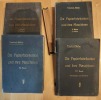
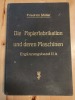
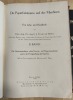
Friedrich Müller wurde 1865 als Sohn des Philipp Müller und dessen Ehefrau Dorothea Kerlinger im pfälzischen Weidenthal geboren. Er besuchte die Lateinschule in Grünstadt[1] und studierte Maschinenbau an der TH München von 1884 bis 1888. Nach dem erfolgreichen Abschluss des Studiums ging er zur Maschinenfabrik Hemmer in Neidenfels, einem Papiermacherdorf zwischen Neustadt an der Weinstraße und Kaiserslautern. Es folgte eine weitere berufliche Station bei der Firma Banning und Setz (später: Banning und Seybold) in Düren. Im Alter von 34 Jahren wurde er Technischer Direktor der aus der Papierfabrik von Keferstein & Sohn in Kröllwitz hervorgegangenen, 1871 von Ludwig Lehmann als Aktiengesellschaft neu gegründeten Cöllwitzer Actien-Papier-Fabrik in Halle (Saale).[2] Müller versuchte in dieser Funktion, vor allem die Wirtschaftlichkeit des Produktionsbetriebes zu verbessern und die Betriebskosten zu senken. Er vereinfachte und modernisierte die Dampf- und Kraftanlagen und sorgte für eine Elektrifizierung der gesamten Fabrik. Nach dem überraschenden Tod von Adolf Pfarr im Dezember 1912 wurde Müller im April 1913 zunächst Honorarprofessor an der TH Darmstadt. Er erhielt die Maschinenbauprofessur VII. Dies war die erste Professor für Papierfabrikation in Darmstadt. Müller war in Darmstadt kein Unbekannter, denn er war bereits vor 1905 Mitglied eines Ausschusses des Vereins Deutscher Papierfabrikanten, der an der Gründung des ersten Lehrstuhls für Papierfabrikation an der TH Darmstadt beteiligt war. 1920 wurde die Professur in eine außerordentliche Professur umgewandelt. Drei Jahre später wurde daraus eine ordentliche Professur für Papierfabrikation und deren Maschinen. Friedrich Müller verantwortete experimentelle Forschungsarbeiten im größeren Stil und führte ein Papiermaschinenpraktikum ein. Sein Lehrdeputat umfasste u. a. die Bereiche „Maschinen der Papierfabrikation“ und „Anlagen für Papier-, Holzstoff- und Zellstofffabrikation“. Seine umfassenden Kenntnisse legte er in dem vierbändigen Werk „Die Papierfabrikation und deren Maschinen“ nieder, das zum Standardwerk wurde. Der Ruf des Darmstädter Lehrstuhls nahm unter seiner Leitung im In- und Ausland erheblich zu. Im März 1931 wurde Müller emeritiert. Er starb im Oktober 1941 im Alter von 76 Jahren in Darmstadt. Seit 1889 war er mit Auguste Gaeckler verheiratet.
Wort und Bild in der Niederlandischen Kunst und literatur des 16. und 17. Jahrhunderts,
, Erftstadt, Lukassen Verlag, 1984, Gebunden, Deckeltitelvergoldung, Ruckentitelvergoldung, Original-Schutzumschlag illustriert koloriert, 31x22cm, 314pp, illustriert s/w. ISBN 3923769040.
Contents: J. MULLER HOFSTEDE, "Wort un Bild": Fragen zur Signifikanz und Realitat in der hollandischen Malerei des 17. Jahrhunderts. K. PORTEMAN, Nederlandse embleemtheorie van Marcus Antonius Gillis(1566) tot Jacob Cats (1618). H. MIEDEMA, Tekst en afbeelding als bronnen bij historisch onderzoek. J. BECKER, "De Duystere Sin van de Geschilderde Figueren": zum Doppelsin in Ratsel, Emblem und Genrestuck. B. SCHNACKENBURG, Das Bild des bauerlichen Lebens bei Adriaen van Ostade. Th. VIGNEAU-WILBERG, Hofische Minne und Burgermoral in der Graphik um 1500. P.W.M. VAN DER SLUYS, Invloed van emblematiek, hieroglyfiek en deviezenkunst in het werk van Jonker Jan van der Noot. E. McGRATH, Rubens"s "Susanna and the Elders" and moralizing inscriptions on prints. E. DUVERGER, Voruntersuchungen zur Literatur las Inspirationsquelle fur die flamische Bildteppichkunst des 17.Jahrhunderts. Chr. BROWN, Allegory and symbol in the work of Anthony van Dyck. J. MUYLLE, "Pier den Drol". K. van Mander en P. Breughel. Bijdrage tot de literaire receptie van P. Breughels werk ca. 1600. A.J. GELDERBLOM, Een ereplaats voor een versleten jurk: de interpretatie van de titelgravure in Coornherts "Wercken" van 1630. K. RENGER, Verhaltnis von Text und Bild in der Graphik. (Beobachtungen zu Missverhaltnissen). H. VEKEMAN, Taufe in Feuer und Wasser. Jan Luyken und Jacob Bohme. Chr. TUMPEL, Die Rezeption der judischen Altertumer des Flavius Josephus in den hollandischen Historiendarstellungen des 16. und 17. Jahrhunderts. A. SMITMANS, Probleme des Bildsinns bei Rembrandt. H.J. RAUPP, "Trucidata Innocentia". Die Verurteilung des Oldenbarnevelt bei Joost van den Vondel und Cornelis Saftleven. A. KEERSMAEKERS, Rederijkers-Rebusblazoenen in de 16- en 17e eeuw. G. UNVERFEHRT, Christliches Exempel und profane Allegorie. Zum Verhaltnis von Wort und Bild in der Graphik der Boschnachfolge. J. MULLER HOFSTEDE, Non Saturatur Oculus Visu. Zur Allegorie des Gesichts" von Peter Paul Rubens und Jan Brueghel D.A. REGISTER. Guter Zustand.
Undersøgelse om Machiavelli som Skribent, især med Hensyn til Bogen om Fyrsten. Et Forsøg i den høiere historiske Kritik. - [THE FIRST REAL CONTRIBUTION TO MACHIAVELLI LITERATURE IN DENMARK]
Odense, 1839. 8vo. Lovely green full patterned cloth with a single gilt line-border to boards and double gilt lines to spine - presumably a gift-binding. Hinges and capitals worn with loss of cloth. Light wear along edges. Light occasional brownspotting and a few pencil-underlinings and light pencil-notes. Old owner's name to front free end-paper (Oldenburg). (4), 127, (1) pp.

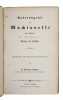
First edition of the first real contribution to Machiavelli literature in Denmark, defining the way that Machiavelli was viewed in Scandinavia. The author Caspar Pauldan-Müller (1805-1882) was one of the most important Danish historians of his time and brother of the famous Danish poet Frederik Paludan-Müller. ""The explicit revaluation of ""The Prince"" in Scandinavia had already taken place during the Romantic Age, thanks to the Danish historian Caspar Peter Paludan-Müller (1805-1882), and particularly to his essay ""Undersögelse om Machiavelli som Skribent, især med Hensyn til Bogen om Fyrsten. Et Forsøg i den høiere historiske Kritik"". The first Danish translation of the whole work dates back to only 1876."" (Roberto de Pol: The First Translations of Machiavelli's Prince, p. 249). The work is still of the utmost importance, not only because of Paludan Müller’s own, original interpretation of “The Prince” and Machiavelli's historical importnace, but also because Paludan-Müller here considers a very large number of publications written about Machiavelli throughout the three preceding centuries, contributing significantly the reception history of both Machiavelli and The Prince. As the historian Erslev later noted in his overview of Danish literature, this work would presumably also internationally have been considered a very important contribution to Machiavelli literature, had it been published in a more widely read language than Danish. The work was recently (2020) republished (in a modernized Danish), for the first time since its original appearance in 1839.
Tim Van Laere in conversation with Fien Muller and Hannes Van Severen
Reference : 66576
MULLER VAN SEVEREN - Frames
, Tim Van Laere Gallery, 2025 hardcover, 122 pages, Numerous black & white and color illustrations in and outside the text.quadrilingual: English, Dutch, French, Italian. 26-21cm *new ISBN 9789464004328.
Tim Van Laere Gallery presents Frames, Muller Van Severen's first solo exhibition at the gallery. Over the past 15 years, Muller Van Severen has developed a synergistic body of work that continually explores the boundaries between sculpture and functional object. This exhibition is the first time they present a series of works that are all unique. The exhibition Frames can be seen as a total installation, an all-encompassing universe of form, color, light, reflection and transparency. More than 30 works are brought together in the monumental space of Tim Van Laere Gallery, in which the artist duo searches for the most essential sculptural impact through minimal intervention. For Frames, Muller Van Severen always starts from a single plate, from which openings and depths arise through cutting and folding that not only provide space for functions, but also bridge the gap between reality and imagination. From the flat surface of a plate, a sculpture emerges that moves between abstraction and figuration. With Frames, Muller Van Severen creates a fictional world of images, in which alternative intrinsic meanings and possibilities are expressed, balancing between realism and surrealism.
Physiologie du système nerveux ou recherches et expériences sur les diverses classes d'appareils nerveux, les mouvemens, la voix, la parole, les sens et les facultés intellectuelles. Traduite de l'allemand, sur la troisième édition, par A.J.L. Jourdan -- PREMIERE EDITION FRANCAISE
P., Baillière, 1840, 2 volumes in 8 reliés en demi-chagrin vert, dos ornés de filets dorés (reliures de l'époque), (accroc à une coiffe, petites auréoles sans gravité dans les marges supérieures des derniers feuillets du tome 2 et dans les marges supérieures des planches, accroc à une coiffe), T.1 : 6pp., 640pp., T.2 (2), 644pp., 4 PLANCHES dépliantes, 80 figures dans le texte
---- PREMIERE EDITION FRANCAISE ---- Traduction par JOURDAN de la partie consacrée à la physiologie du système nerveux du Traité de physiologie de J. Muller A LAQUELLE IL A AJOUTE ET TRADUIT UN OPUSCULE DE J. MULLER sur la compensation des forces physiques dans l'organe vocal de l'homme (Ueber die compensation der physischen kroeste am menchlichen stimmorgen, Berlin, 1839) ---- "A classical and a standard Work in Neurology". (MacHenry french ed.) ---- "Muller was responsable for a remarkable advance in neurophysiology : confirmation of the Bell-Magendie law by means of a simple experiment performed on the frog. He established experimentally that the first and second branches of the trigeminal nerve are sensory and that the third branch contains, in addition to sensory fibers, motor fibers for the jaw muscles. He also asserted, again on the basis of his own research, that the glossopharyngeal and vagus nerves are of the mixed type. This research led to the first comprehensive scientific conception of the nervous system as a unit. In 1833 Muller studied the phenomena of reflection, by which he meant the involuntary transition - occurring in the spinal cord or brain - of excitation from the centripetally conducting nerves to the centrifugally conducting ones. He also describes coughing, sneezing, hiccuping, vomiting and ejaculation as reflex arcs located along the spinal cord and medulla oblongata, thereby contributing a fundamental new insight into the study of such phenomena. With his reflex theory Muller was able to explain many processes in the human organism and was also able to demonstrate his ideas on animals - an achievement that his era, so fond of experimentation, considered of no less importance.". (DSB IX pp. 570/571) ---- Haymaker pp. 243/247**3822/H3-3824/CART8
"MÜLLER, JOHANNES & THEODOR SCHWANN. - THE DISCOVERY OF PEPSIN, THE FIRST KNOWN ANIMAL ENZYME & THE ""FIBRES OF REMAK""
Reference : 45406
(1836)
Versuche über die künstliche Verdauung des geronnenen Eiweisses (Müller & Schwann) (+) Ueber das Wesen des Verdauungsprocesses (Schwann). 2 paers.
Berlin, G. Eichler, 1836. In ""Archiv für Anatomie, Physiologie und Wissenschaftliches Medicin Herausgegeben von Johannes Müller"". Jahrgang 1836. Pp. 66-89 a. pp. 90-139. The entire volume offered in its 6 parts (in 5), all 5 issues uncut with orig. printed warppers. (2),CCXXIV,390 pp. and 15 engraved plates. The 2 first issues with a faint dampstain to lower part of leaves and plates.
First appearance of an importent paper in the history of biology, in which Schwann describes his discovery and isolation of pepsin, the substance in the stomach that aids digestion of eggwhite. It is the FIRST KNOWN ANIMAL ENZYME. The paper appeared at the same time in ""Annalen der Physik und Chemie. Hrsg. von J.C. Poggendorff"".Theodor Schwann (1810-1882) was a great German physiologist, pathologist, and experimenter. One of the founders of the cell doctrine and of the idea of the living nature of yeast. Born at Neuss, near Düsseldorff. A catholic, educated in the Jesuit Gymnasium in Cologne. Intended for the church but took to medicine. He was a pupil of Johannes Müller and a collegueand lifelong friend of J. Henle, the anatomist. In Berlin Schwann was Johannes Müller's assistent for five years, and it was then that he discovered pepsin in 1836 (the paper offered).Parkinson ""Breakthroughs"" 1836 B. - Garrison & Morton no. 991.The first paper offered, written together with Johannes Müller records the preliminary investigaions leading to the discovery of Pepsin. - Garrison & Morton no. 990.The volume also contains another famous paper by ROBERT REMAK ""Vorläufige Mittheilung microscopischer Beobachtungen über den innern Bau der Cerebrospinalnerven und über die Entwicklung ihrer Formenelemente. (Hierzu Tafel IV). Pp. 145-161. This paper contains the first announcement of his DISCOVERY OF ""FIBRES OF REMAK"", the non-medullated nerve-fibres. (Garrison & Morton no. 1260.
Zoologia Danica seu Animalium Daniae et Norvegiae rariorum ac minus notorum Descriptiones et Historia. Volumen I-IV. (Auctore O.F. Müller. - Vol. III: P.C. Abildgaard - IV: P.C. Abildgaard, M. Vahl, J.S. Holten, J. Rathke). - [THE ZOOLOGICAL COUNTERPART TO FLORA DANICA]
Havniae (København), N. Möller (et Filii) og N. Christensen, 1788-1806. Folio. Bound in two contemporary half calf bindings (vol. 1-4) with single gilt lines to spines. Gilt leather-title-label. Small tear to upper part of one hinge of vol. I. Marbled paper over boards. Spines with light signs of wear. Four engraved title-vignettes. (2),VI,52 (4),56 (4),71,(1)" (6),46 pp. + 160 engraved plates (complete). Both plates and text have been printed on thick, heavy paper and are in excellent condition. Vol. II, however has a bit of marginal brownspotting to the first text-leaves. A few plates with minor, vague, marginal brownspotting. Apart from the 160 plates in b/w as issued, there is an unusual ""appendix volume"" that contains the first 120 plates (I-CXX) of the work, corresponding to the plates of vols. I-III, in beautiful ORIGINAL HAND-COLOURING. Furthermore, the binding has belonged to our famous zoologist OTTO FABRICIUS (internationally renowned for his ""Fauna Groenlandica"" (1780) ). At the foot of every plate, Fabricius has added species- and figure-determination in his own hand, outside of the print. That these denominations are in Fabricius' hand is evident from a handwritten note on the front free end-paper: ""The designations here written are added by the zoologist professor Otto Fabricius, at whose auction this work is bought by H.B. Melcior."" (""De her anførte skrevne benævnelser ere tilföiede af Zoologen professor Otto Fabricius, paa hvis Auktion dette værk er kiöbt af H.B. Melcior.""). Melchior was a teacher at Herlufsholm and founded the natural history collections of the school. On the front free end-paper there is a stamp from the library of the school (Herlufsholms Bibliotek). This collection is bound in a contemporary full mottled calf binding with richly gilt spine. Small holes to boards. Binding with some wear. The plates are fine and fresh.
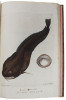
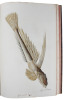
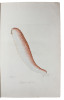
Complete copy (of all that appeared) of this extremely rare work, which constitutes the highlight of Danish zoological literature of the 18thy century. The work was meant to be a counterpart to Bibliotheca Danica, but it was never completed. Here we have the work with the Latin text and all the plates that were issued. The publishing began already in 1777, when Müller issued the plates for the first two volumes separately, with no text. The publishing history is complicated, but it is thoroughly described in Jean Anker's monograph about the work (1950). The work describes the marine fauna in Denmark and Norway, and according to Anker, it is a foundational work of marine biology. Müller was one of the first to make widespread use of a bottom scraper - ""Müller must therefore be regarded as one of the real pioneers in marine biology"" (Anker). There are only very few copies of the work which have all plates in hand-coloured condition. In the present copy, all issued plates are present in b/w, and in addition we have plates 1-120 in hand-coloured condition. Bibl. Danica II,168. - Jean Anker ""Otto Friderich Müller's Zoologia Danica"" (1950) - Nissen ZBI,2932.- Gosch, Afd. III, pp. 176-80.
[HEIMETSPROCH, VUM BARABLI] - MULLER (Germain), HIRLE (Mario) -
Reference : 201902187
S' ESCHTE VUM BARABLI.
Strasbourg, Germain Muller, 1994 ; in-4, 28-2 cassettes, cartonnage de l'éditeur. En très bon état sous boitage contient deux cassettes - contient un journal - cassette n°1 durée 53'18" : un wenn's katze rajt (1961) 40 johr barabli (1986) accent aigu (1956-1957) einer wo's wisse will (1985) les martyrs (1961) m'r redde au elsassich (1961) nostradamus (1982) d'roos (1982) - cassette n°2 durée 68'18" : franzle mit'rand (1982) d'schwarzarweiter (1982) d'letscht wachpritsch (1966) d'reserv (1965) am rand vun de manif (1982) unser unzertrennli landel (répétition filmée 1986) Dans ce coffret, les uns trouveront les souvenirs du temps passé, avec ses bonheurs, ses temps forts mais aussi ses soucis, les autres découvriront une époque mal connue, celle de la transition d'un monde alsacien vers une région: l'Alsace. une rétrospective de la presse régionale présente les "Une", les pubs, les nouvelles politiques, sportives et artistiques des années des sketches, que vous retrouverez dans les deux vidéo-cassettes, ainsi que les dessins d'un artiste aujourd'hui disparu, André Wenger. - Texte en français et en alsacien. - Elisabeth Best, Christiane Charel, Dinah Faust, Valérie Schwarz, Anne Wenger, Yvette Wieber, Robert Breysach, Charles Falck, Christian Hahn, Charles Lobstein, Jacques Martin, Germain Muller, Patrice Muller, Michel Pierrat, Daniel Weber, René Wieber - en tirage limité et collection non rééditée.
En très bon état sous boitage contient deux cassettes - contient un journal - cassette n°1 durée 53'18" : un wenn's katze rajt (1961) 40 johr barabli (1986) accent aigu (1956-1957) einer wo's wisse will (1985) les martyrs (1961) m'r redde au elsassich (1961) nostradamus (1982) d'roos (1982) - cassette n°2 durée 68'18" : franzle mit'rand (1982) d'schwarzarweiter (1982) d'letscht wachpritsch (1966) d'reserv (1965) am rand vun de manif (1982) unser unzertrennli landel (répétition filmée 1986) Dans ce coffret, les uns trouveront les souvenirs du temps passé, avec ses bonheurs, ses temps forts mais aussi ses soucis, les autres découvriront une époque mal connue, celle de la transition d'un monde alsacien vers une région: l'Alsace. une rétrospective de la presse régionale présente les "Une", les pubs, les nouvelles politiques, sportives et artistiques des années des sketches, que vous retrouverez dans les deux vidéo-cassettes, ainsi que les dessins d'un artiste aujourd'hui disparu, André Wenger. - Texte en français et en alsacien. - Elisabeth Best, Christiane Charel, Dinah Faust, Valérie Schwarz, Anne Wenger, Yvette Wieber, Robert Breysach, Charles Falck, Christian Hahn, Charles Lobstein, Jacques Martin, Germain Muller, Patrice Muller, Michel Pierrat, Daniel Weber, René Wieber - en tirage limité et collection non rééditée.

