 Write to the booksellers
24 books for « most »Edit
-
Type
Book (23)
Magazine (1)
-
Language
Dutch (2)
French (22)
-
Century
18th (2)
19th (6)
20th (7)
21st (3)
-
Countries
Belgium (3)
Denmark (8)
France (11)
Switzerland (2)
-
Syndicate
CLAM (2)
ILAB (17)
SLAM (5)
"BERZELIUS, JÖNS JACOB. - ONE OF THE MOST IMPORTENT WORKS IN THE HISTORY OF CHEMISTRY- GERMAN VERSION.
Reference : 43628
(1811)
Versuch, die bestimmten und einfachen Verhältnisse anzufinden, nach welchen die Bestandtheile der unorganischen Natur mit einander verbunden sind. Erste Hälfte. (+) Zweite Hälfte. (+) Erste Fortsetzung des Versuchs, die bestimmten...(+) Zweite Fortse...
Halle, Rengerschen Buchhandlung, 1811, 1811, 1812. Without wrappers as published in ""Annalen der Physik. Herausgegeben von Ludwig Wilhelm Gilbert"", Bd. 37, Drittes u. Viertes Stück + Bd. 38, Sechtes Stück + Bd. 40, Zweites u. Drittes Stück. The entire issues offered (5 issues). With titlepage to vol. 37, 38 a. 40. Pp. 233-480 a. 3 engraved plates., pp. 121-236 a. 2 engraved plates., pp. 117-348 a. 1 engraved plate. Berzelius's papers: pp. 249-337 a. 415-472.- Pp. 161-226. - Pp. 162-208 a. 235-330..
The papers represents one of the first announcements of Berzelius' discovery of the fixed chemical proportions, determining the weights and valencies of the various constituent elements in inorganic compounds. The papers were published at the same time in German (both here in Annalen and in Schweiger's Journal), and in French. By running many hundreds of analysis of chemical compounds he gave so many examples of the law of definite proportions that the world of chemistry could no longer doubt its validity, and in so doing he gave experimental evidence to the atomic theory. He hereby laid a solid fundation for the further development of chemistry.According to Söderbaum (Jac. Berzelius, 2, p.12) ""It was a giant work, one of the most importent in the history of chemistry, which was here presented. One is even more impressed when one remembers that it was a pioneer undertaking in every sense of the term. Analytic and synthetic methods existed before Berzelius' time, to be sure, but there were no precise methods of the sort which he required. They all had to be elaborated at the cost of time and labour.""(J. Erik Jorpes ""Jac. Berzelius"", p.45).""In general Berzelius's efforts were directed toward the consolidation and extension of the atomic theory. He improved chemical analysis and determined the composition of a large number of compounds, thus verifying the laws of constant and multiple proportions and furnishing the most accurate equivalent weights then available. By ingenious methods he arrived at the correct atomic composition of most common substances, and thus was enabled to draw up (in 1826) a table of atomic weights very nearly identical with the modern one.""(Leicester & Klicktein ""A Source Book in Chemistry"", p. 258).Parkinson ""Breakthroughs"", 1810-20 C.

"BERZELIUS, JÖNS JACOB. - ONE OF THE MOST IMPORTENT WORKS IN THE HISTORY OF CHEMISTRY - THE FRENCH VERSION.
Reference : 46030
(1811)
Essais sur les proportions déterminées dans lesquelles se trouvent réunis les élémens de la nature inorganiques. (+) Suite des experiences sur les proportions déterminées, d'après lesquelles les élémens de la nature inorganique s'unissent... (In all...
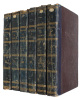
Paris, Chez J. Klostermann fils, 1811-12. Bound in 6 contemp. hcalf. Gilt spines, slightly rubbed. Wear to top of spines. In: ""Annales de Chimie, ou Recueil de Mémoires concernant la Chemie"" Tome 78, 79, 80, 81, 82 and 83. (Entire volumes offered). The 14 parts: (Tome 78:) pp. 5-37, 105-132, 217-242. - (Tome 79:) pp. 113-142, 233-264. - (Tome 80:) pp. 5-37, 225-258. - (Tome 81:) pp. 5-36, 278-303. - (Tome 82:) pp. 5-33, 113-125, 225-72. (Tome 83:) pp. 5-35 a. pp. 117-127. With in all 3 engraved plates. Some scattered brownspots.
The papers represents one of the first announcements of Berzelius' discovery of the fixed chemical proportions, determining the weights and valencies of the various constituent elements in inorganic compounds. The papers were published at the same time in Swedish, German (both here in Annalen and in Schweiger's Journal), and in French. By running many hundreds of analysis of chemical compounds he gave so many examples of the law of definite proportions that the world of chemistry could no longer doubt its validity, and in so doing he gave experimental evidence to the atomic theory. He hereby laid a solid fundation for the further development of chemistry. A reprint is found in Ostwald's Klassiker der exakten Wissenschaften, No. 35.According to Söderbaum (Jac. Berzelius, 2, p.12) ""It was a giant work, one of the most importent in the history of chemistry, which was here presented. One is even more impressed when one remembers that it was a pioneer undertaking in every sense of the term. Analytic and synthetic methods existed before Berzelius' time, to be sure, but there were no precise methods of the sort which he required. They all had to be elaborated at the cost of time and labour.""(J. Erik Jorpes ""Jac. Berzelius"", p.45).""In general Berzelius's efforts were directed toward the consolidation and extension of the atomic theory. He improved chemical analysis and determined the composition of a large number of compounds, thus verifying the laws of constant and multiple proportions and furnishing the most accurate equivalent weights then available. By ingenious methods he arrived at the correct atomic composition of most common substances, and thus was enabled to draw up (in 1826) a table of atomic weights very nearly identical with the modern one.""(Leicester & Klicktein ""A Source Book in Chemistry"", p. 258).Parkinson ""Breakthroughs"", 1810-20 C.
vivre au pays de La Motte-Turriers dans la première moitié du siècle
M. et L. Most ,1994, in-4 de 136 pages ,illustrations in-texte et hors-texte ,broché ,Bon état , .Isbn : 9782950770318.(2 photos du livre sur mon site https://www.vieuxlivre.fr) .Les frais de port pour la France sont offerts à partir de 25 euros d'achat (Mondial relay ). (colissimo suivi +6,90 ).
"CAVENDISH, HENRY. - WEIGHING THE WORLD - THE MOST IMPORTENT ADDITION TO GRAVITATION THEORY SINCE NEWTON.
Reference : 43865
(1799)
Versuche über die Dichtigkeit der Erde zu Bestimmen. Erläutert vom Herausgegeber (Gilbert). (Experiments to determine the Density of the Earth.).
Halle, Rengerschen Buchhandlung, 1799. Without wrappers. In ""Annalen der Physik. Herausgegeben von Ludwig Wilhelm Gilbert"", Bd. 2, Erstes Stück. (The entire issue offered). Titlepage to vol. 2. Pp. 1-118 a. 2 folded engraved plates. Cavendish's paper: pp. 1-62. (the torsion balance of Michell shown on the plates).
First German edition of Cavendish's famous paper in which he calculated the weight of the earth and determined its mass. He also, as the first, observed gravitational motion of minute portions of matter. He estimates the earth's mass to 6,6 x 10 to the potential of 24 kg. The original paper ""Experiments to determine the Density of the Earth"" appeared in Philosophical Transaction, 1798.""Cavendish published five papers between 1784 and 1809...With one exception they were comparatively minor productions....The exception was his determination of the density of the earth or weighing of the world in 1798, by means of John Michell's torsion balance. The apparatus consisted of two lead balls on either end of a suspended beam" these movable balls were attracted by a pair of stationary lead balls. Cavendish calculated the the force of attraction between the balls fro the observed period of oscillation of the balance and deduced the density of the earth from the force. He found it to be 5.48 times that of water. Cavendish was the first to observe gravitational motions induced by comparatively minute portions of ordinary matter...By weighing the world he rendered the law of gravitation complete. The law was no longer a proportionally statement but a quantitatively exact one" this was the most importent addition to the science of gravitation since Newton.""(DSB III, p. 158.).
"WILSON, C.T.R. - THE MOST ORIGINAL AND WONDERFUL INSTRUMENT IN SCIENTIFIC HISTORY - WILSON'S CLOUD CHAMBER.
Reference : 45816
(1913)
Über die Expansionsapparat zur Sichtsbarmachung der Bahnen ionisierender Teilchen in Gasen, und über einige mittels dieses Apparats gewonnene Ergebnisse. Mit 23 Figuren im Text und auf 5 Tafeln. (Eingegangen 6. Oktober 1912). (On an Expansion Apparatu...
Leipzig, S. Hirzel, 1913. 8vo. Orig. printed wrappers, no backstrip. Wrappers loose. In ""Jahrbuch der Radioaktivität und Elektronik"", 10. bd., Heft 1. Pp. 1-138 (entire issue offered). Wilson's paper: pp. 34-54, textillustrations, showing apparatus and 5 photographic plates, showing ionizing by Alpha-, Beta- and Röntgen- radiation).
Together with the English version - published 1912 in the Proceedings of the Royal Society - this is Wilson's main paper relating ""that the track of an ionizing particle might be made visible and photographed by condensing water of the ions which is liberated"". The first trails were obtained in 1911 where he submitted a short note of this to the Proceedings. In the offered paper he published the first tracks made by the ionizing particles of alpha, beta and Röntgen-rays. This, Wilson Cloud-Chamber, became an extremely valuable instrument of fundamental research, the discovery of the positron in 1932 and the kaon in 1963 were made by using cloud chambers as detectors.""But the whole course of the particle appears infinitely more clearly by the method invented by C.T.R. Wilson in 1911 and named after him. The radiation is allowed to enter an expansion-chamber, containing a gas saturated with water vapour. A sudden expansion of the chamber cools the gas, and cloud-drops are then formed instantly around the ions produced along the tracks of the particles. By suitable illumination these tracks can be made to stand out clearly as if they had been described by luminous projectiles. The ""Altmeister"" of modern nuclear physics, Lord Rutherford, once called the Wilson chamber ""the most original and wonderful instrument in scientific history"".""Thomson Rees Wilson (1869-1959), a Scottish physicist, is credited with inventing the cloud chamber. Inspired by sightings of the Brocken spectre while working on the summit of Ben Nevis in 1894, he began to develop expansion chambers for studying cloud formation and optical phenomena in moist air. Very rapidly he discovered that ions could act as centers for water droplet formation in such chambers. He pursued the application of this discovery and perfected the first cloud chamber in 1911. In Wilson's original chamber the air inside the sealed device was saturated with water vapor, then a diaphragm is used to expand the air inside the chamber (adiabatic expansion). This cools the air and water vapor starts to condense. When an ionizing particle passes through the chamber, water vapor condenses on the resulting ions and the trail of the particle is visible in the vapor cloud. Wilson, along with Arthur Compton, received the Nobel Prize in Physics in 1927 for his work on the cloud chamber. (Wikipedia).
"AMPÈRE, ANDRÉ-MARIE. - ""ONE OF THE MOST CELEBRATED MEMOIRS IN THE HISTORY OF NATURAL PHILOSOPHY""
Reference : 48082
(1825)
Mémoire sur une nouvelle Expérience électrodynamique, sur son application à la formule qui représente l'action mutuelle de deux élemend de conducteurs voltaïques, et sur de nouvelles conséquences déduites de cette formule. (Lu à l'Academie royale de...
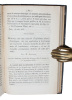
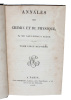
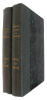
Paris, Crochard, 1825. 8vo. Bound in 2 uniform later hcloth. Gilt lettering to spines. In: ""Annales de Chimie et de Physique, Par MM. Gay-Lussac et Arago."", tome 29 a. 30. - 448 pp. and 3 folded engraved plates + 448 pp. and 2 folded engraved plates. (The entire volumes offered). Ampère's papers: pp. 381-404 (tome 29) + Suite pp. 29-41 (tome 30) + ""Lettre à Gerhardi"": pp. 373-381 (tome 29). Some scattered brownspots.
First appearance of this famous memoir, in which Ampère presented his collected results on electrodynamics to the French Academy, creating the foundation of 19th century developments in electricity and magnetism. In the words of James Clark Maxwell, ""We can scarcely believe that Ampère really discovered the law of action by means of the experiments which he describes. We are led to suspect, what, indeed, he tells us himself, that he discovered the law by some process which he has not shown us, and that when he had afterwards built up a pefect demonstration he removed all traces of the scaffolding by which he raised it.""The offered memoir was published BEFORE the famous ""Theorie mathématique des phénomènes électro-dynamiques uniquement déduite de L'expérience"", which did not appear until 1827. That 1827-Memoire incorporates, together with a new presentation of Ampère's results from 1820, 1822, 1823, the offered memoir (1825). (Horblit: 100 - Dibner: 62).""From 1814 until 1820 Ampére did not perform the kind of research that would have made it into the annals of the histrory of science, but on September 11, 1820 when he heard Francois Arago speak about Oersted's work, he got fresh inspiration and started the work that made him famous. Arago related how Oersted had found that a steady electric current influences the orientation of a compass needle. After a weak Ampère had determined experimentally that that two straight, parallel, and current-carrying, wires execute a force on each other. The magnitude of the force is inversely proportional to the distance between the wires and proportional to the strenghts of the current..... During the following years he continued his researches, both experimentally and theoretically. he built an instrument for measuring electricity that later was developed into the galvanometer. Finally in 1825 he presented his collected results to the Academy IN ONE OF THE MOST CELEBRATED MEMOIRS IN THE HISTORY OF NATURAL PHILOSOPHY (The paper offered)."" (Citizen's Compendium, p. 2). - Norman No 47.The volumes contain many other notable papers by: Wöhler, Fresnel, Marcet, Berzelius, Felix Savart, De la Rive, Braconnet, Boussingault, Magnus, Poncelet, Vaugelin, Poisson, Gay-Lussac, Faraday, Laplace etc.
"CAVENDISH, HENRY. - WEIGHING THE WORLD - THE MOST IMPORTENT ADDITION TO GRAVITATION THEORY SINCE NEWTON.
Reference : 48206
(1799)
Versuche über die Dichtigkeit der Erde zu Bestimmen. Erläutert vom Herausgegeber (Gilbert). (Experiments to determine the Density of the Earth.).
(Halle, Rengerschen Buchhandlung, 1799). Without wrappers. In ""Annalen der Physik. Herausgegeben von Ludwig Wilhelm Gilbert"", Bd. 2, Erstes Stück. (The entire issue offered). 1-118 a. 2 folded engraved plates. Cavendish's paper: pp. 1-62. (the torsion balance of Michell shown on the plates).
First German edition of Cavendish's famous paper in which he calculated the weight of the earth and determined its mass. He also, as the first, observed gravitational motion of minute portions of matter. He estimates the earth's mass to 6,6 x 10 to the potential of 24 kg. The original paper ""Experiments to determine the Density of the Earth"" appeared in Philosophical Transaction, 1798.""Cavendish published five papers between 1784 and 1809...With one exception they were comparatively minor productions....The exception was his determination of the density of the earth or weighing of the world in 1798, by means of John Michell's torsion balance. The apparatus consisted of two lead balls on either end of a suspended beam" these movable balls were attracted by a pair of stationary lead balls. Cavendish calculated the the force of attraction between the balls fro the observed period of oscillation of the balance and deduced the density of the earth from the force. He found it to be 5.48 times that of water. Cavendish was the first to observe gravitational motions induced by comparatively minute portions of ordinary matter...By weighing the world he rendered the law of gravitation complete. The law was no longer a proportionally statement but a quantitatively exact one" this was the most importent addition to the science of gravitation since Newton.""(DSB III, p. 158.).The issue contains further papers by Ritter, Chladni et al.
"BERNARD, CLAUDE - ""THE MOST COMPLETE STATEMENT OF THE FUNCTION OF THE PANCREAS""
Reference : 49471
(1856)
Mémoire sur le pancréas et sur le role du suc pancréatique dans les phénomènes digestifs, particulièrement dans la digestion des matières grasses neutres.
(Paris, Mallet-Bachelier), 1856. 4to. No wrappers. In: ""Supplément aux Comptes rendus hebdomadaires des séances de l’Académie des sciences"", Tome Premier. With half-title and title-page to Tome I. Pp. 379-563 and 9 engraved plates (4 handcoloured). A punched stamp to lower margin of title-page. Clean and fine.
First printing of this celebrated memoir in which Bernard describes his importent invesigations on the function of the liver, the pancreas and the pancreatic juices.""In 1846 Bernard began studying the pancreatic juices and their role in digestion,.... By observing the processes of digestion in dogs and rabbits, and by experimentation with pure pancreatic juices collected from temporary pancreatic fistulae, Bernard was able to show that pancreatic juices made fats absorbable by breaking them down into fatty acids and glycerine. In 1856 he published his most complete statement of the function of the pancreas, ""Mémoire sur le pancréas et sur le role du suc pancréatique dans les phénomènes digestifs, particulièrement dans la digestion des matières grasses neutres."" This appered in Volume I of the supplement to the ""Comptes rendus hebdomadaires des séances de l’Académie des sciences"", and it was also published as a separate edition in book form.""(Norman p. 247).Norman ""One Hundred Books Famous in Medicine"", No 67 B. -
"JOULE, J.P. (JAMES PRESCOTT) - ONE OF THE MOST IMPORTENT IMPROVEMENTS OF THE STEAM-ENGINE.
Reference : 47108
(1862)
On the Surface-condensation of Steam. Received October 10, - Read December 13, 1860.
(London, Taylor and Francis, 1862). 4to. No wrappers as extracted from ""Philosophical Transactions"" 1862 - Vol. 151. Pp. 133-160, 1 large textillustration.
First appearance of Joule's paper in which he describes his importent improvement of the Steam-Engine, using the principles of the first law of thermodynamics which he himself helped to establish.""In addition, numerous other researches stand to Joules credit -- the work done in compressing gases and the thermal changes they undergo when forced under pressure through small apertures (with Lord Kelvin), the change of volume on solution, the change of temperature produced by the longitudinal extension and compression of solids, etc. It was during the experiments involved by the first of these inquiries that Joule was incidentally led to appreciate the value of surface condensation in increasing the efficiency of the steam engine. A new form of condenser was tested on the small engine employed, and the results it yielded formed the starting-point of a series of investigations which were aided by a special grant from the Royal Society, and were described in an elaborate memoir presented to it on the 13th of December 1860 (the paper offered). His results, according to Kelvin, led directly and speedily to the present practical method of surface-condensation, one of the most important improvements of the steam engine, especially for marine use, since the days of James Watt. Joule died at Sale on the 11th of October 1889.""(NNDB)
Thomas l'incrédule.
Editions du Félin, coll. "L'autre scène" 2009 1 vol. broché in-8, broché, 299 pp., index. Traduit de l'américain par Isabelle Wienand. Excellent état.

La peste religieuse
Imprimerie Habert (Paris) (1892) Plaquette 8 x 12,5 de 32 pages - Texte anonyme traduit de lallemand par Jean Most Très bon état non coupé
Schadeatlas archieven
2007 Metamorfoze Hardcover Fine 3rd Edition
Langue: néerlandais. Atlas des dommages archives outil pour réaliser un inventaire des dommages Relié, 155 x 225 mm, 136 pp, beaucoup d'illustrations, en bon état [Cette description peut avoir été traduite par une IA.]
Schadeatlas archieven
2007 Metamorfoze Hardcover Fine 3rd Edition
Langue: néerlandais. Atlas des dommages archives outil pour réaliser un inventaire des dommages Relié, 155 x 225 mm, 136 pp, beaucoup d'illustrations, en bon état [Cette description peut avoir été traduite par une IA.]
La muerte chupa camara - Coleccion Huella de Sangre n°4.
Tempore. 1998. In-8. Broché. Bon état, Couv. convenable, Dos satisfaisant, Intérieur frais. 198 pages - livre en espagnol.. . . . Classification Dewey : 460-Langues espagnole et portugaise
Coleccion Huella de Sangre n°4. Classification Dewey : 460-Langues espagnole et portugaise
Encyklopädie der gesammten Volksmedicin, oder Lexikon der vorzüglichsten und wirksamsten Haus- und Volksarzneimittel aller Länder. Nach den beste Quellen und nach dreissigjährigen, im In- und Auslande selbst gemachten zahlreichen Beobachten und Erfahrungen aus dem Volksleben gesammelt und herausgegeben.
Leipzig, F.A. Brockhaus 1843. Gross-8°. XXIX, 815 S., 1 S. Verbesserungen. Pappband der Zeit mit goldgeprägtem Rückenschild und Marmorpapierbezügen.
Vgl. Hirsch IV, 293. - Originalausgabe. - In der Originalausgabe recht seltenes, gut bearbeitetes Werk zur Volksmedizin. Mit Bibliographie und Index erschlossen. Im Anhang mit Kapiteln über "Hülfe bei Vergiftung und Scheintod", "Benutzung einer Haus- und Reiseapotheke", "Hülfe bei schnell tödtenden Krankheiten" u.a.m. - Papierbezug an den Rückenkanten aufgeplatzt. Deckel beschabt. Stellenweise leicht fleckig. Die ersten 80 Seiten mit schwachem Wasserrand am oberen Rand.
Revolutionäre Kriegswissenschaft together with The Beast of Property. With a new introduction by Frederic Trautmann.
Millwood, Kraus Reprint 1983. 8°. VIII, 74, 15 S. Originalleinwand.
"History of Political Violence". - Reprint der Ausgaben New York 1884 bzw. 1885.
La peste religieuse. Supplément à l'Idée libre.
Couverture souple. Broché. 16 pages. 12 x 16 cm.
Périodique. Editions de l'Idée Libre, Octobre 1928.
The Immaculate Heart of Mary.
Catholic Truth Society. may 1955. In-12. Broché. Bon état, Couv. convenable, Dos satisfaisant, Intérieur frais. 16 pages.. . . . Classification Dewey : 420-Langue anglaise. Anglo-saxon
Classification Dewey : 420-Langue anglaise. Anglo-saxon
THE SCHOOL OF LIFE, AND OTHER ESSAYS
Burns Oates & Washbourne Ltd.. 1920. In-16. Relié. Etat d'usage, Couv. légèrement passée, Dos satisfaisant, Intérieur acceptable. 150 pages. Tranche de tête dorée.. . . . Classification Dewey : 420-Langue anglaise. Anglo-saxon
Loneliness. Cravings. Prayer. Trouble... Classification Dewey : 420-Langue anglaise. Anglo-saxon
PSYCHOLOGIE SPORTIVE
MASSON. 1981. In-8. Broché. Bon état, Couv. convenable, Dos satisfaisant, Intérieur frais. 110 pages.. . . . Classification Dewey : 150-Psychologie
Classification Dewey : 150-Psychologie
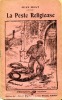
La peste religieuse
Edition du "Réveil Ouvrier" (Nancy - 1905) - Plaquette agrafée 11 x 17,3 de 16 pages - Couverture de Valéry Müller - Bon état
PSYCHOLOGIE SPORTIVE.
Paris, Masson Editeur, collection monographies de médecine du sport, 1981, broché, 16x24 cm, 110 pages, figures .
Bon état.
DOE, Erik van der ( editor ) - Peter van der Most e.a. (samenstellers) :
Reference : 53679
Archives Damage Atlas. A tool for assessing damage.
The Hague, Metamorfoze, 2010, in-8°, oblong format, publisher's cased binding. ISBN 9789081159234..
La vie au pays de La Motte-Turriers dans la première moitié du siècle -
chez l'auteur, 1993, in-4 br. (14,5 x 21,5), 191 p., préface de Pierre Magnan, avec la collaboration de Paul-Yvon Armand, abondante iconographie n. et b., très bon état.
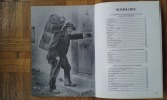
Voir le sommaire sur photos jointes.

