 Write to the booksellers
1432 books for « johnson »Edit
-
Type
Any type (1)
Book (1375)
Magazine (5)
Maps (15)
Music sheets (35)
Photographs (1)
-
Latest
Last 3 days (1)
Last month (9)
Last week (1)
-
Language
English (32)
French (1397)
Italian (1)
Russian (2)
-
Century
17th (1)
18th (12)
19th (57)
20th (632)
21st (179)
-
Countries
Belgium (75)
Canada (10)
China (2)
Côte d'Ivoire (7)
Denmark (13)
France (1145)
Greece (1)
Netherlands (4)
Switzerland (169)
United Kingdom (3)
United States of America (3)
-
Syndicate
ALAC (8)
CLAM (8)
CLAQ (2)
CNE (1)
ILAB (613)
NVVA (13)
SLACES (13)
SLAM (557)
SNCAO (2)
Topics
- Abraham (5)
- Africa (8)
- Agriculture (4)
- Ampelography - wines (16)
- Archaeology (7)
- Architecture (13)
- Asia - orient (3)
- Atlas (4)
- Biography (6)
- Birds (5)
- Boswell (6)
- Botany (6)
- Children’s books (10)
- China (6)
- Christianity (4)
- Clock-making (3)
- Comedy (4)
- Comic strip (7)
- Cooking (15)
- Dedication (3)
- Detective novels (22)
- Dictionaries (5)
- Drama (5)
- Drawings (5)
- Early printed books (5)
- Economics (4)
- Economics (11)
- Education (6)
- Education - morals (3)
- England (5)
- English (49)
- English literature (12)
- Entomology (13)
- Ferry jules (6)
- Ferry-johnson barbara (8)
- Fine arts (22)
- First edition (9)
- Fishes (5)
- Flora (4)
- Flowers (3)
- Geography (10)
- Germanic languages (10)
- Germany (4)
- Guide books (8)
- Guittoneau ben (7)
- History (43)
- Hunting (6)
- India (3)
- Industrial arts & crafts - fine arts (5)
- Johnson charles (5)
- Joyce james (7)
- King robert (3)
- Language (4)
- Literature (103)
- Magazine (5)
- Maps (15)
- Military arts (4)
- Miller (4)
- Napoleon i (4)
- Navy (8)
- Newspapers press (6)
- North america (15)
- Oenology (7)
- Painters (4)
- Painting (6)
- Paris (4)
- Philosophy (8)
- Photography (22)
- Poetry (7)
- Policy (6)
- Religions (9)
- Review (6)
- Reviews (6)
- Revue de l'art (3)
- Science fiction (6)
- Sciences (6)
- Scores (38)
- Sculpture (5)
- Sociology (5)
- Songs (33)
- Spying (9)
- Sugar (3)
- Tales (5)
- Tea (5)
- Theology (4)
- Thriller (5)
- Translation (5)
- Travel (8)
- United kingdom (5)
- United states (14)
- Various (8)
- Viticulture (43)
- War (21)
- Williams tennessee (5)
- Wine (55)
- Woods & woods’ price lists (3)
- Youth (4)
Behaviour of the Firm under Regulatory Constraint. - [THE AVERCH-JOHNSON EFFECT]
[No place], The American Economic Association, 1955. Lex8vo. In the original printed wrappers. In ""The American Economic Review"", Vol. VII, December, No. 5. Entire issue offered. Light wear to extremities, otherwise fine and clean. Pp. 1052-69. [Entire issue: (5), 996-1258 pp. + advertisement].
First printing of Averch and Johnson's seminal paper in which they introduced in what was to become known as the ""Averch-Johnson effect"". The paper was one of the most cited and influential papers in microeconmocs during the 60ies. ""The Averch-Johnson effect is produced when fair rate of return regulation encourages a firm to invest more than is consistent with the minimization of its costs. This can happen when the allowed rate of return exceeds the cost of capital, since the difference between the two represents pure profit. Detailed descriptions of actual regulatory processes may be useful in suggesting guides for action, since actual outcomes depend as much on political and bureaucratic necessity as they do on economic analysis and 'rational' benefit-cost estimates."" (The New Palgrave).""Averch and Johnson's famous paper from the early 1960s asks the simple question: If we assume that regulation acts to instantaneously adjust prices so as to maintain a constant target return on a firm's capital stock, what incentives does the firm have to choose an efficient combination of inputs? Averch and Johnson show, using fairly straightforward maths, that if the regulator sets the regulatory rate of return above the firm's true cost of capital, the regulated firm has an incentive to choose too much capital relative to labour - that is, there will be an inefficient capital-labour ratio. This observation sparked off a large empirical and theoretical literature exploring what came to be known as the 'Averch-Johnson' or 'A-J' effect.The Averch-Johnson model assumed an extreme form of what is known as 'rate of return' or 'cost of service' regulation in which prices are continuously and rapidly adjusted so as to yield the desired return on capital stock. In reality, rate of return regulation as it was historically practiced in the US always involved an element of 'regulatory lag' - that is, a period of time before prices were adjusted to reflect changes in costs. This regulatory lag gives rise to some desirable incentives, as discussed furtherbelow. Even in 1962 it was recognised that allowing higher ex post rates of return was necessary to induce desirable incentives. Averch and Johnson note: ""We have been told by representatives in both the industry and in regulatory agencies that justification exists for allowing a return in excess of cost to give firms an incentive to develop and adopt cost-saving techniques. If the firm is left only indifferent as among a wide range of activities it has no positive incentive to minimize costs for any given activity.""Averch and Johnson's paper was, for a while at least, very widely cited, often incorrectly. The A-J effect later came to be synonymous with 'gold-plating' and with general inefficiency of the regulated firm. But these ideas cannot be strictly attributed to Averch and Johnson. Averch and Johnson only highlighted a potential tendency towards an inefficient mix of capital and labour - but they made no mention of the tendency to simply spend too much on all inputs - so-called 'x-inefficiency' as discussed further below."" (biggar, The Fifty Most Important Papers in the Economics of Regulation).

Gareth Edwards Aaron Taylor-Johnson Bryan Cranston Ken Watanabe Elizabeth Olsen Sally Hawkins Juliette Binoche David Strathairn Gareth Edwards Aaron Taylor-Johnson Bryan Cranston Ken Watanabe Sally Hawkins Juliette Binoche Elizabeth Olsen Bryan Cranston David Strathairn Aaron Taylor-Johnson
Reference : 67564
ISBN : 5051889457954
Godzilla [DVD + Copie digitale]
Warner Bros 18x14x1cm. Sans date. DVD.
![Godzilla [DVD + Copie digitale]. Gareth Edwards Aaron Taylor-Johnson Bryan Cranston Ken Watanabe Elizabeth Olsen Sally Hawkins Juliette Binoche ...](https://static.livre-rare-book.com/pictures/IGE/67564_thumb.jpg)
French edition. ZONE 2 EUROPE. Le boitier présente des traces de stockage et d'usure mais le DVD reste en bon état de fonctionnement. Envoyé dans un emballage adapté depuis la France
Scarlett Alice Johnson Jack Gordon Michael Jibson Elen Rhys Joshua Richards Vern Raye Chris Crow Scarlett Alice Johnson Jack Gordon Chris Crow Elen Rhys Jack Gordon Joshua Richards Michael Jibson Scarlett Alice Johnson Vern Raye
Reference : 78687
(2017)
ISBN : 3662207001401
Panic Button
Filmedia 2017 18x14x1cm. 2017. DVD.

ZONE 2 EUROPE - Le dvd présente des marques d'utilisation mais reste en tres bon état d'ensemble - Expédition soignée sous blister dans une enveloppe à bulles depuis la France
Dwayne Johnson Kelly Hu Bernard Hill Grant Heslov Michael Clarke Duncan Chuck Russell Dwayne Johnson Kelly Hu Michael Clarke Duncan Chuck Russell Dwayne Johnson Bernard Hill Grant Heslov Kelly Hu
Reference : 78847
(2017)
ISBN : 3259190318090
Le Roi Scorpion
Universal Pictures France 2017 18x14x1cm. 2017. DVD.

Zone 2 - Le DVD présente des marques d'utilisation sur le boitier et le CD mais reste en très bon état d'ensemble. Expédition soignée sous blister dans une enveloppe à bulles
Olsen and Johnson - Evans Ray,Levison Jay,Olsen and Johnson - Evans Ray,Olsen and Johnson,Levison Jay
Reference : 108685
(1940)
Partition de la chanson : G'bye now Hellzapoppin
Broadcast Music 1940
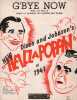
Bon état Format Américain Guitare,Piano
Une mosquée à Munich. Les nazis, la CIA et la montée des Frères musulmans en Occident.
JC Lattès, 2011, in-8°, 382 pp, traduit de l'anglais, notes, sources, broché, bon état

En recrutant les musulmans soviétiques pour combattre Staline, Hitler n'imaginait pas que cette alliance se répercuterait jusqu'aux événements du 11 Septembre. Car, après la guerre, les services secrets américains et ouest-allemands vont à leur tour s'appuyer sur les mêmes réseaux et les mêmes hommes pour lutter contre le communisme durant la guerre froide. A travers cette enquête passionnante, Ian Johnson reconstitue l'accumulation de maladresses stratégiques et politiques qui permit à l'islam radical d'installer sa première tête de pont en Occident. Et comment de la paisible mosquée de Munich, une communauté musulmane influente et impénétrable a pu organiser ses futures actions. Ian Johnson dresse le portrait des principaux acteurs de cette histoire méconnue, notamment celui de Gerhard Von Mende, ancien nazi qui dirigea un bureau de propagande ouest-allemand et celui de Said Ramadan – le père de Tariq –, principal dirigeant en exil des Frères musulmans, lié de près aux services secrets occidentaux. "Une mosquée à Munich", qui analyse avec une lucidité rare la rencontre désastreuse entre l'Occident et l'islam radical, se révèle aussi captivant qu'indispensable pour comprendre les erreurs commises hier et aujourd'hui vis-à-vis des islamistes. — "Lorsque la nouvelle se répandit que les pirates de l’air du 11 Septembre avaient vécu en Europe, le journaliste Ian Johnson se demanda comment des partisans d’un islam radical avaient pu s’implanter en Occident. La plupart des explications avancées jusqu’ici font état du soutien des États-Unis aux combattants islamistes d’Afghanistan, vingt ans plus tôt. Ian Johnson, lui, s’est penché sur le début de la Guerre froide en racontant l’histoire méconnue de musulmans soviétiques passés dans le camp allemand pendant la Seconde Guerre mondiale. En devenant de par la volonté des agents nazis un outil de propagande antisoviétique, ils établirent à leur insu un lien ténu, dont nul n’aurait alors imaginé les conséquences, entre l’islam politique et l’Occident. Pendant que les agents des services de renseignement ouest-allemands et américains luttaient en vue de s’assurer le contrôle de cette communauté musulmane influente mais impénétrable – dont le combat clandestin s’organisait depuis la paisible mosquée de Munich – l’islam radical installa sa première tête de pont en Occident. En s’appuyant sur un nombre impressionnant de sources (dont certaines accessibles depuis peu seulement aux chercheurs), Une Mosquée à Munich s’attache à un érudit nazi ayant pris la tête d’un réseau d’espions dans l’après-guerre, à des dirigeants musulmans du monde entier, dont certains, membres des Frères Musulmans, et à des agents de la CIA naïfs résolus à employer une nouvelle arme contre le communisme : l’islam. Une Mosquée à Munich – une analyse d’une lucidité rare de l’espionnage en temps de Guerre froide, doublée d’un récit révélateur de la rencontre désastreuse entre l’Occident et l’islam radical – s’avère aussi captivant qu’indispensable si l’on souhaite comprendre les erreurs encore commises vis-à-vis des islamistes aujourd’hui." Désormais les frais d'envoi sont de 6 € seulement pour les livres jusqu'à 1 kg (colissimo suivi), pour la France métropolitaine.
Collezione Johnson di Medaglie. 3 volumes
Johnson, Cesare & Rodolfo Martini: Collezione Johnson di Medaglie. 3 volumes. Milan: Edizioni S. Johnson, 1990. I. Sec. XV-XVI-XVII. II. Secolo XVIII. III. Sec. ZXVIII (Stierle-Z). 1064 pages, illustrated throughout in black & white. Edition limited to 400 copies. Hardcover. 30x23cms.
[revue] Objets et Mondes tome XIII [tome 13] fascicule 2 (Auteurs: A. BHATTACHARYYA, Thomas F. JOHNSON, Martine QUENTRIC, Henri LHOTE, Jean-Paul ROUX, Solange THIERRY, Elie VERNIER)
Reference : 13977084
[revue] Objets et Mondes tome 13 [tome XIII] fascicule 2. Eté 1973. A. BHATTACHARYYA. Substrat anthropologique des danses chhau de Purulia. - Thomas F. JOHNSON. Musical instruments and dance uniforms in Southern Africa. - Martine QUENTRIC. Notes sur les coutumes vestimentaires des Kalash du Pakistan. - Henri LHOTE. Dalle gravée de la chaîne des Ergab (Algérie). - Jean-Paul ROUX. Turquie d'hier et d'aujourd'hui. - Solange THIERRY. Présence de la Turquie. Arts et traditions populaires d'Anatolie. - Elie VERNIER. Une pièce rare de Madagascar.
Paris: Musée de l'Homme, Museum National d'Histoire Naturelle, 1973 in-4, nombreuses illustrations. Broché, cachet, très bon état. Sommaire: A. BHATTACHARYYA. Substrat anthropologique des danses chhau de Purulia. - Thomas F. JOHNSON. Musical instruments and dance uniforms in Southern Africa. - Martine QUENTRIC. Notes sur les coutumes vestimentaires des Kalash du Pakistan. - Henri LHOTE. Dalle gravée de la chaîne des Ergab (Algérie). - Jean-Paul ROUX. Turquie d'hier et d'aujourd'hui. - Solange THIERRY. Présence de la Turquie. Arts et traditions populaires d'Anatolie. - Elie VERNIER. Une pièce rare de Madagascar.
[revue] Objets et Mondes tome 13 [tome XIII] fascicule 2. Eté 1973. A. BHATTACHARYYA. Substrat anthropologique des danses chhau de Purulia. - Thomas F. JOHNSON. Musical instruments and dance uniforms in Southern Africa. - Martine QUENTRIC. Notes sur les coutumes vestimentaires des Kalash du Pakistan. - Henri LHOTE. Dalle gravée de la chaîne des Ergab (Algérie). - Jean-Paul ROUX. Turquie d'hier et d'aujourd'hui. - Solange THIERRY. Présence de la Turquie. Arts et traditions populaires d'Anatolie. - Elie VERNIER. Une pièce rare de Madagascar. (Paris: Musée de l'Homme, Museum National d'Histoire Naturelle, 1973). [M.C.: revue, Ethnologie, Inde, Algérie, Pakistan, Afrique du Sud, ethnomusicologie, Turquie, Madagascar]
Hugh Johnson's Pocket Wine Book 2003
Mitchell Beazley 2002 288 pages 20x9x2cm. 2002. Relié jaquette. 288 pages.

Très Bon Etat intérieur très frais trace étiquette haut 1e plat jaquette
Lucina sine concubitu. Ou la génération solitaire
Paris, Frédéric Henry, 1865, in-12, XXXVI-165-[2] pp, Demi-basane verte, dos à faux nerf orné de petits fleurons, Réédition de cet ouvrage plein d'humour du XVIIIe s, qui moque la théorie de la génération spontanée en se présentant sous la pompe d'un titre latin, Lucina sine concubitu, soit "Accouchement sans coït". Cette édition, publiée avec une introduction et des notes de J. Assézat, constitue le premier numéro d'une collection de "Singularités physiologiques", qui n'en a eu que deux. John Hill (1714) fut d'abord acteur, puis apothicaire, avant de devenir un auteur prolifique, signant près d'une centaine d'ouvrages variés : romans, pamphlets politiques ou encore traités de botanique. En 1750, après avoir échoué à intégrer la Royal Society de Londres, il lance une campagne virulente contre cette institution. En janvier, il commence par adresser à ses membres ce traité sous la forme d'une lettre signée Abraham Johnson ? Lucina sine concubitu. A letter humbly address'd to the Royal Society ? saisissant le prétexte de leur intérêt pour les recherches sur la nature. Dans cet écrit, il se moque des débats de l'époque, notamment ceux portant sur le mariage et la morale sexuelle, ainsi que sur les théories scientifiques comme le préformationnisme ou la parthénogenèse. Johnson serait ainsi l'inventeur d'une "machine cylindro-catoptrico-rotundo-cancavo-convexe"* destinée à recueillir des animalcules dans l'atmosphère; le médecin fictif les aurait ainsi administrés à une femme de chambre qui serait tombée enceinte et aurait mis au monde un enfant. Johnson en déduit que le rapport sexuel devient superflu dans la procréation, rendant le mariage inutile, voire nuisible, et enfin qu'il serait souhaitable d'interdire toute copulation pendant un an, afin de préserver des maladies vénériennes et lever le soupçon d'adultère (Fraser). Bon exemplaire. Pages un peu jaunies. Fraser, Kevin J. "John Hill and the Royal Society in the Eighteenth Century." Notes and Records of the Royal Society of London 48, no. 1 (1994): 43-67]. Vicaire VII, 559. * P. 50 de la présente édition. Couverture rigide
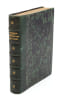
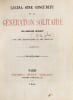
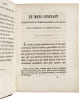
Bon XXXVI-165-[2] pp.

Hai tou Sophokleous Tragodiai sozomenai hepta. Sophoclis Tragoediae quae extant septem, additae sunt lectiones variantes, et notae viri doctissimi T. Johnson in quatuor tragoedias
Excudebat R. Foulis | Glasguae (Glascow) 1745 | 16.50 x 20.50 cm | relié
Edition rare, des sept tragédies de Sophocle en grec avec des notes en fin d'ouvrages de Thomas Johnson pour Electre, Ajax, Antigone et les Trachiniennes. Les notes de Johnson étaient auparavant parues en 1705. Cette édition a également été publiée en 2 volume in 8, mais dans une moins bonne impression, celle-ci se distinguant par sa qualité qui l'apparente aux impressions de Baskerville. Impression soignée, à grandes marges. Reliure en plein veau d'époque moucheté. Dos lisse orné de 5 fers et d'étoiles. Coiffes et coins restaurés. Triple filet d'encadrement. tranches dorées. - Photographies et détails sur www.Edition-Originale.com -
J.J. Johnson quintergy. Live at the village vanguard (CD)
PolyGram CD 1991 "1 CD ""J.J. Johnson quintergy. Live at the village vanguard"" de J. J. Johnson, 1. When the saints go marching in 2. Blue bossa 3. Doc wa here 4. Bud's blues 5. Quintergy 6. Lament 7. Why Indianapolis-why not Indianapolis? 8. It's all right with me 9. Coppin' the bop 10. Nefertiti 11. You've changed 12. Commutation ; légères traces sur le boîtier, très bon état. Livraison a domicile (La Poste) ou en Mondial Relay sur simple demande."

The Iliad of Homer; VOLUME 1 + 2 --- 3e édition + The Odyssey of Homer; VOLUME 1 + 2 --- 3e édition
J. Johnson 1809 in8. 1809. Relié. 4 volume(s). The Iliad of Homer translated into English blank verse with copious alterations and notes prepared for the press by the translator William Cowper esq. and published with a preface by his kinsman J. Johnson: VOLUME 1 + 2 --- 3e édition The Odyssey of Homer Translated Into English Blank Verse with Copious Alterations and Notes Prepared for the Press By the Translator William Cowper Esq. And Published with a Preface By His Kinsman J. Johnson LL.B.: VOLUME 1 + 2 --- 3e édition
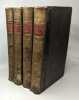
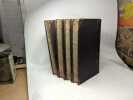
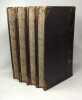
cuirs frottés accrocs coins émoussés manque en bas du dos du volume 1 de Odyssey premier plat du volume I de l'Iliad quasiment détaché ex-libris dans l'intérieur des plats intérieurs propres par ailleurs
Johnsoniana; or, a Supplement to Boswell: Being, Anecdotes and Sayings of Dr. Johnson. Collected by Piozzi, Hawkins, Tyers, (et al.).
London, John Murray, 1836. 8°. XXII, 530 S. Mit gest. Frontispiz-Porträt, gest. fig. Titel, und 43 gest. Tafeln, davon 1 doppelblattgross. Halbleder d. Zt. mit Rückenvergoldung, Kupfgoldschnitt.
Gesammelte Anekdoten und Aussprüche von Samuel Johnson (1709-1784), als Nachtrag zu Boswell's "The Life of Samuel Johnson" (EA 1791). Zusammengetragen u.a. aus den Werken von Joshua Reynolds, nach dessen Gemälden einige der Stiche angefertigt sind; ferner Samuel Pepys und der Maler Knowles. - Frontispiz und gest. Titel lose, dieser stärker fleckig, sonst nur vereinzelte unbedeutende Stockflecken.
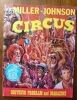
Programme de cirque Miller-Johnson Circus 1973
1973. Etats-Unis Miller-Johnson Circus 1973- Agrafé 22 cm x 28 cm 28 pages - Ills sépia couleurs et N&B in et hors-texte - Texte en américain sur les nombreux artistes dont Lothar The Washek dua Sensational Parker Dante Sandy Dobritch etc. ainsi que sur Cliff Vargas et Parley Baer -Très bon état
Voyage dans les Hébrides. Traduit de l'anglais et annoté par Marcel Le Pape avec la collaboration de Marc Le Pape. Introduction de Maurice Denuzière.
La Diffèrence, 1991, in-8°, 482 pp, 16 pl. de gravures hors texte, index, broché, jaquette illustrée, bon état
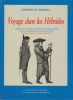
La renommée littéraire soude à jamais les destins de Samuel Johnson et de James Boswell. L'irascible lexicographe anglais et son patient biographe écossais apparaissent, pour les lecteurs de tous les temps, comme d'inséparables duettistes. Chacun passe, aux yeux de la postérité, pour le faire-valoir de l'autre. Le premier n'a-t-il pas offert au second, par sa vie et ses oeuvres, matière à rédiger le modèle absolu de la biographie ? Cette complicité inavouée trouve peut-être sa meilleure illustration dans deux oeuvres, jusque-là inédites, dans leur intégralité, en français : les comptes rendus juxtaposés, et souvent discordants, du voyage que les deux hommes firent ensemble, en Ecosse et aux îles Hébrides, du 18 août au 22 novembre 1773. Ils imposèrent, cet été-là, à leur amitié l'épreuve à laquelle peu résistent : une cohabitation permanente de trois mois dans l'inévitable promiscuité des étapes. Quand ils entreprirent ce voyage, Samuel Johnson, célébrité nationale, était âgé de soixante-quatre ans ; James Boswell de trente-trois. L'un, lourd vieillard goutteux, affligé de mélancolie cyclothymique, d'indolence constitutionnelle, et maniaque de surcroît, n'avait aucun goût pour l'imprévu. L'autre se présentait comme un gaillard infatigable, hâbleur, curieux de tout et jouisseur. Il avait visité la Hollande, l'Allemagne, la France, la Suisse, l'Italie et la Corse, fréquenté les princes allemands, Rousseau, Voltaire et Paoli. Les voyageurs furent soumis aux aléas de moyens de transport hasardeux : chaises de poste, charrettes, barques, chevaux, poneys et, parfois, quand leur bateau ne pouvait accoster, épaules de Highlanders rustauds et dévoués ! Ils connurent, en parcourant les Highlands et en visitant plusieurs îles - Skye, Raasay, Mull, Coll, Ulva, Inchkenneth, et Icolmkill - des aventures cocasses et beaucoup des "incommodités" prévues et annoncées par Boswell. Ils durent accepter la vermine des auberges, les soupes immangeables, les cabotages dans la tempête, les longues chevauchées sur les landes désolées et brumeuses, les pluies obstinées, les vents cinglants. Ils se réjouirent parfois de festins rustiques chez les lairds, seigneurs des îles, de réceptions chaleureuses au foyer de modestes paysans, d'échanges lyriques avec des bardes nationalistes et entendirent souvent, un peu trop souvent au goût de Samuel Johnson, sonner les cornemuses. Désormais les frais d'envoi sont de 6 € seulement pour les livres jusqu'à 1 kg (colissimo suivi), pour la France métropolitaine.
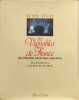
Guide atlas vignobles france
Robert laffont 1992 280 pages in4. 1992. Relié avec jaquette. 280 pages. Guide Atlas des Vignobles de France est un ouvrage de référence sur les vins et vignobles français co-écrit par Hugh Johnson et Hubrecht Duijker publié chez Robert Laffont. Il présente les crus viticulteurs bonnes tables et hôtels avec des cartes et illustrations en couleurs
Très bon état jaquette légèrement usée
Dornan Jamie Johnson Dakota Ehle Jennifer Taylor-Johnson Sam
Reference : 500323614
(2015)
ISBN : 3760121800343
D.a.n.c.e ! le défi de sa vie [Blu-ray] (NEUF SOUS BLISTER)
Zylo 2015 13 76x1 48x18 03cm. 2015. Broché.
![D.a.n.c.e ! le défi de sa vie [Blu-ray] (NEUF SOUS BLISTER). Dornan Jamie Johnson Dakota Ehle Jennifer Taylor-Johnson Sam](https://static.livre-rare-book.com/pictures/IGE/500323614_thumb.jpg)
Neuf
Foley James Dornan Jamie Johnson Dakota Johnson Eric
Reference : 500327417
(2019)
ISBN : 5053083193003
Cinquante nuances plus claires Blu-Ray [édition spéciale longue + version cinéma] (NEUF SOUS BLISTER)
Universal 2019 13 6x17x1 2cm. 2019. blu_ray.
![Cinquante nuances plus claires Blu-Ray [édition spéciale longue + version cinéma] (NEUF SOUS BLISTER). Foley James Dornan Jamie Johnson Dakota Johnson ...](https://static.livre-rare-book.com/pictures/IGE/500327417_thumb.jpg)
Neuf
Shadow of Keynes: Understanding Keynes Cambridge and Keynesian Economics
Blackwell Publishers 1978 253 pages in8. 1978. Cartonné jaquette. 253 pages.
Très Bon Etat de conservation intérieur propre bonne tenue
Panoramas contemporáneos de la teoría económica -- I: Dinero interés y bienestar II: Crecimiento y desarrollo
Alianza universidad 1970 in8. 1970. Broché. 2 volume(s). Il s'agit d'un recueil d'articles académiques en trois volumes dont le premier volume analysé ici est intitulé 'Dinero interés y bienestar'. Il rassemble des contributions d'économistes renommés comme Harry G. Johnson Martin Bronfenbrenner et G.L.S. Shackle sur des thèmes centraux de la théorie économique contemporaine des années 1970 notamment la politique monétaire la théorie de l'inflation le rôle de l'intérêt et l'économie du bien-être
Bon état tranches un peu ternies intérieurs propres
Johnson Dwayne Black Jack Hart Kevin Johnson Dwayne Kasdan Jake
Reference : 500394917
ISBN : 3333299313115
Jumanji 2 : next level [Blu-ray] [FR Import] (NEUF SOUS BLISTER)
Sony Pictures 13 5x17 2x1 2cm. Sans date. blu_ray.
![Jumanji 2 : next level [Blu-ray] [FR Import] (NEUF SOUS BLISTER). Johnson Dwayne Black Jack Hart Kevin Johnson Dwayne Kasdan Jake](https://static.livre-rare-book.com/pictures/IGE/500394917_thumb.jpg)
Neuf
Johnson Dwayne Black Jack Hart Kevin Johnson Dwayne Kasdan Jake
Reference : 500467042
ISBN : 3333299313115
Jumanji 2 : next level [Blu-ray] [FR Import] (NEUF SOUS BLISTER)
Sony Pictures 13 5x17 2x1 2cm. Sans date. blu_ray.
![Jumanji 2 : next level [Blu-ray] [FR Import] (NEUF SOUS BLISTER). Johnson Dwayne Black Jack Hart Kevin Johnson Dwayne Kasdan Jake](https://static.livre-rare-book.com/pictures/IGE/500467042_thumb.jpg)
Neuf
LUCINA SINE CONCUBITU - LUCINE AFFRANCHIE DES LOIX DU CONCOURS. "Lettre adressée à la Société Royale de Londres, dans laquelle on prouve, par une évidence incontestable, tirée de la raison et de la pratique, qu'une femme peut concevoir et accoucher, sans avoir de commerce avec aucun homme". Traduit de l'Anglois d'Abraham Johnson.
Sans lieu [Londres]. Sans nom d'éditeur. 1750. 116 x 178 mm. Reliure cartonnage, dos de basane. X + 57 pages. E.O. française. Reliure légèrement usagée. Mouillures pâles à quelques pages, sans gravité. Bon exemplaire.
1ère édition française, à la même date que l'E.O. anglaise. Très rare à cette date (plus fréquent à la date de 1752, augmenté de "Concubitus sine Lucina"). Gay-Lemmonyer, II, 917.
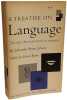
A Treatise on Language
University of California Press 1959 in12. 1959. Broché. A Treatise on Language d'Alexander Bryan Johnson est un ouvrage philosophique sur le langage initialement publié en 1836. Il s'agit d'une version élargie et révisée de son travail antérieur The Philosophy of Human Knowledge (1828) basé sur des conférences données à Utica en 1825. L'édition analysée est une édition critique publiée par University of California Press
Bon état marque de feutre sur le haut de la tranche intérieur propre

