 Write to the booksellers
651 books for « jean serge »Edit
-
Type
Book (564)
Magazine (13)
Music sheets (74)
-
Latest
Last 3 days (1)
Last month (7)
Last week (15)
-
Language
English (1)
French (650)
-
Century
16th (1)
20th (344)
21st (80)
-
Countries
Belgium (19)
Canada (4)
Denmark (1)
France (605)
Switzerland (22)
-
Syndicate
ALAC (4)
ILAB (236)
NVVA (1)
SLACES (1)
SLAM (230)
Topics
- Aquitaine (4)
- Aragon (4)
- Archaeology (7)
- Architecture (5)
- Aslan (3)
- Autographs (14)
- Aviation (2)
- Belgium (3)
- Biography (3)
- Brittany (4)
- Children’s books (6)
- China (3)
- Christmas (8)
- Cinema (10)
- Cocteau jean (9)
- Colette (4)
- Comic strip (28)
- Communism (5)
- Dance & ballet (8)
- Dancing (6)
- Dedication (4)
- Dictionaries (4)
- Dupuy (3)
- Economics (5)
- Education (7)
- Education - morals (3)
- Fantastic (5)
- Film-maker (14)
- Fine arts (5)
- First edition (22)
- Florence (4)
- Forez (3)
- Fox (5)
- Game (3)
- Geography (6)
- Hackney (6)
- Helvética (3)
- History (20)
- Kaufmann (5)
- Khmer art cambodia (2)
- Law (6)
- Literary review (4)
- Literature (33)
- Magazine (3)
- Manuscripts (13)
- Mathematics (3)
- Medicine (6)
- Métal hurlant (4)
- Motor vehicle (8)
- Music (3)
- Navy (4)
- News (4)
- Newspapers press (7)
- Opera ballet (4)
- Pacifism (14)
- Pain (3)
- Painters (4)
- Paris (7)
- Philosophy (4)
- Photography (10)
- Picasso (3)
- Poetry (42)
- Poitou (6)
- Policy (8)
- Psychoanalysis (12)
- Raphael (4)
- Regionalism (24)
- Review (83)
- Reviews (23)
- River (3)
- Rock (7)
- Romance languages (3)
- Savignac (7)
- Science fiction (5)
- Scores (68)
- Scout (3)
- Serge jean (25)
- Sociology (5)
- Songs (69)
- Sports (4)
- Surrealism (5)
- Switzerland (3)
- Tea (5)
- Theatre (5)
- Theory (3)
- Travel (3)
- Various (6)
- Waltz (7)
- War (5)
- Wind (3)
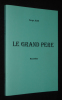
Le Grand Père
Jean Serge Dos carré collé 2004 In-8 (14,7 x 20,6 cm), dos carré collé, 121 pages, recueil de nouvelles ; très bon état. Livraison a domicile (La Poste) ou en Mondial Relay sur simple demande.
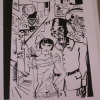
Le dessinateur Serge
Editions Technica Broché In-12 (12.5x17.5 cm), broché, sous couverture et sous chemise cartonnée muette, présentation par Jean Galtier-Boissière, non paginé, un des 300 exemplaires numérotés sur couché rose, n°184 ; coiffes un peu frottées, coins et coiffes de la chemise frottés, dos de la chemise insolé, assez bon état. Livraison a domicile (La Poste) ou en Mondial Relay sur simple demande.
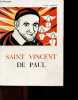
Saint vincent de paul, l'ambassadeur des pauvres - l'histoire dorée pour nos enfants
APOSTOLAT DES EDITIONS. 1964. In-8. Broché. Etat d'usage, Couv. légèrement passée, Dos satisfaisant, Quelques rousseurs. 148 pages - nombreux dessins en noir/blanc, dans et hors texte, par serge ZAGLI. . . . Classification Dewey : 235-Les saints
Classification Dewey : 235-Les saints
Sous le panache des fumées noires... le Nord vu de Lyon
L'édition régionaliste | Lille 1927 | 13.50 x 22 cm | agrafé
Edition originale. Bel et rare exemplaire. - Photographies et détails sur www.Edition-Originale.com -


Phone number : 01 56 08 08 85
Le monde cheminot à Périgueux - Une communauté perdue.
Fanlac. 2005. In-12. Broché. Bon état, Couv. convenable, Dos satisfaisant, Intérieur frais. 127 pages - quelques photos en noir et blanc hors texte en fin d'ouvrage.. . . . Classification Dewey : 908.447-Régionalisme : Aquitaine
Classification Dewey : 908.447-Régionalisme : Aquitaine
Contrats de mariage passés par devant les notaires de Mouscron (milieu du XVIIe siècle-octobre 1796). Société d'Histoire de Mouscron et de la Région.
Mouscron, Société d'Histoire, 1997. 21 x 30, 97 pages, broché, couverture en papier, doublée d'une couverture en plastique, très bon état.
Relévé détaillé des inventaires après décès conservés dans des archives notariales et scabinales de Mouscron (1640-1796). Archives de l'Etat à Tournai, instruments de recherche à tirage limité, N° 5.
Bruxelles, Archives de l'Etat, 1995. 21 x 30, 361 pages, broché, couverture en papier, doublée d'une couverture en plastique, très bon état.
Les cheminots à l'assaut du ciel : 1920, la grande grève à Périgueux
Fanlac. 2006. In-12. Broché. Bon état, Couv. convenable, Dos satisfaisant, Intérieur frais. 125 pages.. . . . Classification Dewey : 908.447-Régionalisme : Aquitaine
Classification Dewey : 908.447-Régionalisme : Aquitaine
DE LILLE A VARSOVIE, IMPRESSIONS DE VOYAGE
L'Alliance Franco-Polonaise. 1929. In-8. Broché. Bon état, Couv. convenable, Dos satisfaisant, Intérieur bon état. 37 pages. Illustré de dessins en noir et blanc. Ouvrage de bibliothèque avec code collé sur le 1er plat et petit tampon en page de titre.. . . . Classification Dewey : 910.4-Voyages
Illustrations de E. Butor. Classification Dewey : 910.4-Voyages
DE LILLE A VARSOVIE.
DE L'ALLIANCE FRANCO-POLONAISE DU NORD DE LA FRANCE ET DES AMIS DE LA POLOGNE. 1929. In-8. Broché. Bon état, Couv. convenable, Dos satisfaisant, Intérieur frais. 37 pages agraffées illustrées denombreus dessins en noir et blanc et d'une photo.. . . . Classification Dewey : 910-Géographie générale. Voyages
Impressions de voyage illustrées par E. BUTOR. Classification Dewey : 910-Géographie générale. Voyages
LE MONDE CHEMINOT A PERIGUEUX UNE COMMUNAUTE PERDUE.
FANLAC. 2005. In-12. Broché. Bon état, Couv. convenable, Dos satisfaisant, Intérieur frais. 127 pages - quelques illustrations en noir et blanc hors texte légendées.. . . . Classification Dewey : 908.447-Régionalisme : Aquitaine
Classification Dewey : 908.447-Régionalisme : Aquitaine
Coup d'État sanglant en Haïti : procès d'une démocratie bloquée
Les Éditions Lachicotte Enr. In-8 Broché Montréal 1990
Très bon Signé par l'auteur 73 pages. Pli à la couverture arrière. Dédicace en page de garde.
"APOLLINAIRE, GUILLAUME - PICASSO (ILLUSTR.) - JEAN COCTEAU - LÉON BAKST - SERGE DIAGHILEV.
Reference : 60103
(1917)
BALLETS RUSSES. PROGRAMME. PARIS 1917. Les Ballets Russes a Paris. Représentations Exceptionelles avec le gracieux Concours des Artistes de M. Serge de Diaghilew. - Programme des Ballets Russes. Les Ballets Russes à Paris. Saison - Mai 1917. [Guillau... - [HAND-PAINTED BY PICASSO - COINING ""SURREALISM""]
Paris, Mai 1917. Folio. Original illustrated extra wrappers (with a picture by Picasso on the front and the décor for ""Baba Iaga"" on the back)"" original illustrated wrappers for ""Théatre du Chatelet"" (drawing by André Marty on front, and advertisements on back) in grey and red"" original illustrated coloured wrappers for ""Programme des Ballets Russes"" (front wrapper illustrated by Picasso with the Chinaman-costume from ""Parade""). A bit of soiling to the extra-wrappers and small professional restorations to upper front cover and top of spine (this barely noticeable) as well as to blank margin of back wrapper. Apart from that, an excellent and very well perserved copy with only slight browning to some leaves. Apart from the described wrappers and extra-wrappers, there are, in all, 24 leaves with -mostly photographic- illustrations (four of them with original hand-colouring on top) and 6 leaves of text.With the original errata-leaf laid in loose, stating also that the illustrations ""Femmes de bonne humeaur"" and ""Parade"" have been hand-painted by Carlos Socrate, after the designs of Bakst and Picasso, and that the front wrapper for ""Parade"" (the Chinaman) has been handpainted by Picasso himself.
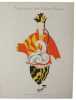
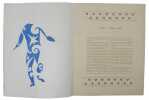
Scarce original printing of this seminal avantgarde-publication, the May 1917 ""Théatre du Chatelet""- publication that presents Diaghilev's ""Ballets Russes"" in Paris - here containing the entire separate publication mainly devoted to Jean Cocteau's groundbreaking ballet ""Parade"" - being one of the most important publications in the history of modern art. It is here, in his presentation-article to ""Parade"" that Apollinaire coins the term ""surrealism"" and thus lays the foundation for the seminal cultural movement that Bréton came to lead. Furthermore, the ballet ""Parade"" represents a historical collaboration between several of the leading artistic minds of the early twentieth century: Erik Satie, Jean Cocteau, Pablo Picasso, Léonide Massine, and Serge Diaghilev, and is famous, not only for its contents and its music, but also for its magnificent costumes designed by Picasso, the drawings of which are presented in the present publication for the first time - most famously the front cover for the ""Parade""-programme, which depicts the ""Costume de Chinois du ballet ""PARADE""/ Aquarelle de Picasso"", an etching with original, stunning pochoir-colouring (hand-painted by Picasso himself!).It is the 1917 ballet ""Parade"" - the first of the modern ballets - originally presented for the first time in the present publication, that marks Picasso's entry into the public and bourgeois institutions of ballet and theatre and presents Cubism on the stage for the first time. The present publication constitutes an outright revolution in the history of art, theatre, and ballet.Several variants of this spectacular publication exist, but the one we have here is as original and complete as it comes, containing the entire contents of the different variants. We not only have the extremely scarce and fragile dust-wrapper and the equally scarce illustrated coloured double-wrappers (front: ""Peinture de Picasso"""" back: Décor de Larionow pour le ballet ""BABA IAGA""""), but also the entire 1917 ""Théatre du Chatelet""-programme (in original illustrated wrappers) with the entire separate ""parade""-issue -also entitled ""Programme des Ballets Russes""- (also in original illustrated wrappers), with more than 20 leaves of photographic illustrations containing pictures of the actors and actresses, also in their spectacular avant-garde-costumes, Bakst's portrait of Leonide Massine, Picasso's portrait of Stavinski, Bakst's portrait of Picasso, Picasso and Massine in the ruins of Pompei, Picasso's drawings of a scene from ""Parade"" and of Massine, as well as several (mostly humorous) advertisements. But more importantly, we have, apart from the above-mentioned famous Chinaman by Picasso, in original pochoir-colouring, the other famous etching by Picasso ""Costume d'acrobate du ballet ""Parade""/ Aquarelle de Picasso"", also in original pochoir-colouring (bright blue), the seminal presentation-article by Apollinaire, which coins the term ""surrealism"" (see bottom of description for full translation of this groundbreaking preface), the two ""Les Femmes de Bonne Humeur""-figures by Bakst, Constanza and Battista, printed and heightened in gold (pochoir), the printed costume by Larionow, ""Les contes russes"", which is with original bright red and blue pochoir-colouring, and the ""Le Mendiant""-costume by Bakst for ""Parade"", and, of course, the texts by Bakst (on choreography and décor), Georges-Michel (Ballets Russes after the War), as well as the texts for the various ballets (listing the actors and their rôles as well as a resume of the plot). "" ""Tact in audacity consists in knowing how far we may go too far."" Jean Cocteau, poet, writer, and arts advocate, made this statement in his 1918 manifesto, The Cock and Harlequin. Cocteau, in collaboration with Erik Satie and Pablo Picasso, discovered ""how far"" to ""go too far"" in the circus-like ballet Parade-one of the most revolutionary works of the twentieth century. Parade incorporates elements of popular entertainment and uses extra-musical sounds, such as the typewriter, lottery wheel, and pistol, combining them with the art of ballet. Cocteau wrote the scenario for the one-act ballet and contracted the other artists. Satie wrote the score to the ballet, first in a piano four-hands version and then in full orchestration, while Picasso designed the curtain, set, and costumes. Later, Léonide Massine, a dancer with the Ballet Russes, was brought in as the choreographer. Serge Diaghilev's Ballet Russes premiered the ballet Parade on May 18, 1917. The program notes for the ballet were written by the poet Apollinaire. They became a manifesto of l'esprit nouveau or ""the new spirit"" which was taking hold in Paris during the early twentieth-century. Apollinaire described the ballet Parade as ""surrealistic,"" and in doing so created a term which would develop into an important artistic school."" (Tracy A. Doyle, Erik Satie's ballet PARADE, p. 1).When the French poet and army officer Guillaume Apollinaire wrote the program notes For ""Parade"", he created the manifesto of the ""l'esprit nouveau"" - ""the new spirit"". Cocteau had called the ballet ""realistic"", but Apollinaire took it an important step further and described it as ""surrealistic"", thus coining a term that would soon develop into an important artistic movement. With Picasso, Apollinaire had established the aesthetic principals of Cubism and was considered a leader in the European avant-garde. ENGLISH TRANSLATION OF APOLLINAIRE'S PROGRAMME NOTES TO ""PARADE"": ""Definitions of Parade are blossoming everywhere, like the lilac bushes of this tardy spring...It is a scenic poem transposed by the innovative musician Erik Satie into astonishingly expressive music, so clear and simple that it seems to reflect the marvelously lucid spirit of France. The cubist painter Picasso and the most daring of today's choreographers, Léonide Massine, have here consummately achieved, for the first time, that alliance between painting and dance, between the plastic and mimetic arts, that is a herald of the more comprehensive art to come. There is nothing paradoxical about this. The Ancients, in whose lives music played such an important role, were totally unaware of harmony, which constitutes the very basis of modern music. This new alliance - I say new, because until now scenery and costumes were linked only by factitious bonds - has given rise, in Parade, to a kind of surrealism, which I consider to be the point of departure for a whole series of Manifestations of the New Spirit that is making itself felt today and that will certainly appeal to our best minds. We may expect it to bring about profound changes in our arts and manners through universal joyfulness, for it is only natural, after all, that they keep pace with scientific and industrial progress. Having broken with the choreographic tradition cherished by those who used to be known, in Russia, under the strange name 'balletomanes', Massine has been careful not to yield to the temptation of pantomime. He has produced something totally new-a marvelously appealing kind of dance, so true, so lyrical, so human, and so joyful that it would even be capable (if it were worth the trouble) of illuminating the terrible black sun of Dürer's Melancholy. Jean Cocteau has called this a realistic ballet. Picasso's cubist costumes and scenery bear witness to the realism of his art. This realism - or this cubism, if you will - is the influence that has most stirred the arts over the past ten years. The costumes and scenery in Parade show clearly that its chief aim has been to draw the greatest possible amount of aesthetic emotion from objects. Attempts have often been made to return painting to its barest elements. In most of the Dutch painters, in Chardin, in the impressionists, one finds hardly anything but painting. Picasso goes further than any of them. This is clearly evident in Parade, a work in which one's initial astonishment is soon replaced by admiration. Here the aim is, above all, to express reality. However, the motif is not reproduced but represented-more precisely, it is not represented but rather suggested by means of an analytic synthesis that embraces all the visible elements of an object and, if possible, something else as well: an integral schematization that aims to reconcile contradictions by deliberately renouncing any attempt to render the immediate appearance of an object. Massine has Adapted himself astonishingly well to the discipline of Picasso's art. He has identified himself with it, and his art has become enriched with delightful inventions, such as the realistic steps of the horse in Parade, Formed by two dancers, one of whom does the steps of the forelegs and the other those of the hind legs. The fantastic constructions representing the gigantic and surprising features of The Managers, far from presenting an obstacle to Massine's imagination, have, one might say, served to give it a liberating impetus. All in all, Parade will change the ideas of a great many spectators. They will be surprised, that is certain" but in a most agreeable way, and charmed as well Parade will reveal to them all the gracefulness of the Modern movements, a gracefulness they never suspected. A magnificent vaudeville Chinaman will make their imaginations soar" the American Girl cranking up her imaginary car will express the magic of their daily lives, whose wordless rites are celebrated with exquisite and astonishing agility by the acrobatin blue and white tights.""
( Bandes Dessinées ) - Jean Giraud dit Moebius - Jean-Claude Gal - Serge Clerc - Roy Krenkel - Jeff Jones - A. Chomet - P. Ghielmetti.
Reference : 2601
(1978)
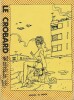
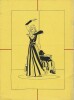
Fanzine Le Crobard, numéro 2 de 1978, spécial : Jean Giraud dit Moebius - Jean-Claude Gal - Serge Clerc - Roy Krenkel - Jeff Jones.
Editions du Genou 1978 / Fanzine " Le Crobard " n° 2 de 1978. In-4 agrafé de 42 pages au format 26,5 x 19,5 cm. Couvertures illustrées en noir par Jean Giraud dit Moebius. Plats et intérieur frais. Fanzine en petit tirage édité par A. Chomet, P. Ghielmetti et J.L. Ruault qui ne connut que 2 numéros, dont ce numéro spécial avec dessins inédits en noir de Jean Giraud dit Moebius, Jean-Claude Gal, Serge Clerc, Roy Krenkel et Jeff Jones. Rare édition originale, surtout dans un tel état général de fraicheur.
Vente exclusivement par correspondance. Le libraire ne reçoit, exceptionnellement que sur rendez-vous. Il est préférable de téléphoner avant tout déplacement.Forfait de port pour un livre 8,50 €, sauf si épaisseur supérieure à 3 cm ou valeur supérieure ou égale à 100 €, dans ce cas expédition obligatoire au tarif Colissimo en vigueur. A partir de 2 livres envoi en colissimo obligatoire. Port à la charge de l'acheteur pour le reste du monde.Les Chèques ne sont plus acceptés.Pour destinations extra-planétaire s'adresser à la NASA.Membre du Syndicat Lusitanien Amateurs Morues
[REVUE] Anouar Abd-El-Malek, Theodor W. Adorno, Kostas Axelos, Georges Balandier, Roger Bastide, Pierre Bernard, Jacques Berque, Norman Birnbaum, Frédéric Bon, Wlodzimierz Brus, Michel-Antoine Burnier, Pablo Gonzalès Casanova, Jean-Paul Charnay, Jean Chesneaux, René Depestre, Jean Duvignaud, Joseph Gabel, Roger Garaudy, Lucien Goldmann, Georges Gurvitch, Robert Jaulin, Serge Jonas, Cesare Luporini, Henri Lefèbvre, Jacques Lombard, René Lourau, Georg Lukacs, Herbert Marcuse, Karl Marx, Serge Moscovici, Pierre Naville, Jean Piaget, Jean Piel, Jacques Rancière, Wilhelm Reich, Jorge Semprun, Jan Szczepanski, Karel Teige, C. Wright Mills, Jean Ziegler...
Reference : 19425
L'homme et la société, revue internationale de recherches et de synthèses sociologiques, du N° 1 au N° 28, juillet 1966 - juin 1973. 27 fascicules (dont un numéro double) in-8°, brochés.
[19425]
[Barbacanne; Philippe Lorin; Richard Mandin; Serge Pons; Michel Raffaelli; Georges Rolland; Pierre Trofimoff ] - MALRIEU Jean; SARDOU Maurice; PLASSE Bernard; TODRANI Jean; DELUY Henri; VITON Jean-Jacques; TOURSKY Alexandre Barbacanne; Philippe Lorin; Richard Mandin; Serge Pons; Michel Raffaelli; Georges Rolland; Pierre Trofimoff
Reference : 38150
SEPT PEINTRES SEPT POETES
Marseille Galerie Da Silva 1963 in 8 (20,5x12,5) 1 volume broché, couverture rempliée, non paginé, avec 7 illustrations hors-texte. Barbacanne / Jean Malrieu; Philippe Lorin / Maurice Sardou; Richard Mandin / Bernard Plasse; Serge Pons/ Jean Todrani; Michel Raffaelli / Henri Deluy; Georges Rolland / Jean-Jacques Viton; Pierre Trofimoff / Alexandre Toursky. Tirage limité à 500 exemplaires sur papier vergé d'Ingres. Bel exemplaire ( Photographies sur demande / We can send pictures of this book on simple request )
Très bon Broché Ed. numérotée
[PEYTARD] Jacques Bourquin, Daniel Jacobi, Robyn Newkymet, Serge Goffart, Pierre Malandain, Paul Sadrin, Eddy Roulet, Ghislaine aas, Henri Mitterand, Marie Miguet-Ollagnier, Roger Barny, Catherine Mason, Michel Apel-Muller, André Chauvin, John Pier, Michel Charolles, François Migeot, Héliane Kholer, Jean Bessière, Lois Nathan, André Petitjean, Claude Condé, Lionel Follet, Bernard Couty, Jean-Blaise Grize, Denise Mieville, Yves Gentilhomme, Jean-Pierre Kaminker, Henri Boyer, Marie-Anne Mochet, Iva Cintrat, Robert Condat, Yves Gilli, Élisabeth Lhote, Christiane Owusu-Sarpong, Serge Sauvageot, Pierre Fresnault-Deruelle, Régis Labourdette, Gisèle Holtzer, Mongi Madini, Michel Otten, Jean-Michel Adam, Léon Robel, Bernard Mallet, Jacques Cortes, Franck Sainte-Martine, Jacques Bourquin, Michel Arrivé, Michel Dabene, Louis Porcher, Maryvonne Masselot, Dominique Bourgain, Émile Genouvier, Roger Beaumont, Monique Lebre, Charles Bried, Maurice Riguet.
Reference : 6458
MELANGES OFFERTS À JEAN PEYTARD.
Besançon, Annales littéraires de l'université, 1993. Deux volumes in-8, brochés.
[6458]
Lama Serge - Datin Jacques,Dona Alice,Petit Jean-Claude,Gilbert Yves,Lama Serge - Marouani Eddy,Lama Serge
Reference : 95402
(1974)
Partition de la chanson : Serge Lama Album de partitions adapté pour orgues éléctriques ou électronique s 12 accords, Serge Lama, titres: - Je suis malade - Les p'tites femmes de Pigalle - Ah ! - Le gibier manqué - Mon ami, mon maître - Charivari, charivari - Tous les auf wiedersehen - La braconne - Une île - Chez moi
Plein Soleil 1974
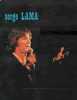
Bon état Format Coquille Orgue
Lama Serge - Datin Jacques,Dona Alice,Petit Jean-Claude,Davies Ray,Gilbert Yves - Lama Serge,Chauvier Serge
Reference : 79957
(1999)
Partition de la chanson : Album "Top" Serge Lama 10 titres : - Chez moi - D'aventure en aventure - Femme, femme, femme - Les glycines - Je suis malades - Marie la Polonaise - Les P'tites femmes de Pigalle - Superman - Le temps de la rengaine - Une île
Beuscher Paul 1999

Bon état Grand format Piano
Multi-Artistes Serge Lama Alice Dona Jacques Datin Jean-Claude Petit Maxime Le Forestier Ray Davies Yves Gilbert Jean Morlier Jean-Claude Petit Serge Lama
Reference : 28697
(1984)
ISBN : 0042282250520
D'aventures en aventures
Mercury 1984 8x8x3cm. 1984. CD.

French edition - expédié soigneusement depuis la France dans enveloppe à bulles
DELUY (Henri) - GIRAUDON (Liliane) - VITON (Jean-Jacques) - Anna Akhmatova, Gérard Arseguel, Jean-Christophe Bailly, Nanni Balestrini, Charles Bernstein, Hélène Bessette, Julien Blaine, Jean-François Bory, Trisha Brown, Augusto de Campos, Merce Cunningham,Jean Daive, Henri Deluy, Oliviers Devers, Emily Dickinson, André Gaillard, Christian Garcin, Isabelle Ginot, Joseph Guglielmi, Sylvain Itkine, Serge Gavronsky, Liliane Giraudon, Michelle Grangaud, Bernard Heidsieck, Emmanuel Hocquard, Susan Howe, Ernst Jandl, Jacques Jouet, Roger Laporte, Emmanuel Levinas, Mina Loy, Hubert Lucot, Harry Mathews, Pier Paolo Pasolini, Boris Pasternak, Anne Portugal, Nathalie Quintane, Charles Reznikoff, Jacques Roubaud, Edoardo Sanguineti, Jude Stéfan, Gertrude Stein, Jean Todrani, Jean Tortel, Marina Tsvetaieva, Alain Veinstein, Jean-Jacques Viton, Catherine Weinzaepflen, Ludwig Wittgenstein, Fabienne Yvert, Annie Zadek, Louis Zukofsky, etc.
Reference : 42301
If - N°1 à 36, août 1992 - septembre 2012 -
Marseille, comité de rédaction: Henri Deluy, Jean-Charles Depaule (jusqu’au n°14), puis Liliane Giraudon et Jean-Jacques Viton. 36 fascicules brochés 16x24cm sous couvertures illustrées en couleurs. Le numéro 28 est numéroté 27+1. Édition originale. 36 numéros en 36 livraisons. Tête de série. Importante revue de poésie qui prend la suite de Banana Split. La publication continue et atteint à ce jour 54 numéros. Textes de Anna Akhmatova, Gérard Arseguel, Jean-Christophe Bailly, Nanni Balestrini, Charles Bernstein, Hélène Bessette, Julien Blaine, Jean-François Bory, Trisha Brown, Augusto de Campos, Merce Cunningham,Jean Daive, Henri Deluy, Oliviers Devers, Emily Dickinson, André Gaillard, Christian Garcin, Isabelle Ginot, Joseph Guglielmi, Sylvain Itkine, Serge Gavronsky, Liliane Giraudon, Michelle Grangaud, Bernard Heidsieck, Emmanuel Hocquard, Susan Howe, Ernst Jandl, Jacques Jouet, Roger Laporte, Emmanuel Levinas, Mina Loy, Hubert Lucot, Harry Mathews, Pier Paolo Pasolini, Boris Pasternak, Anne Portugal, Nathalie Quintane, Charles Reznikoff, Jacques Roubaud, Edoardo Sanguineti, Jude Stéfan, Gertrude Stein, Jean Todrani, Jean Tortel, Marina Tsvetaieva, Alain Veinstein, Jean-Jacques Viton, Catherine Weinzaepflen, Ludwig Wittgenstein, Fabienne Yvert, Annie Zadek, Louis Zukofsky, etc. Bon état -
“Le temps n'est plus de la bohème”.
Stock / Kian, 1991, gr. in-8°, 347 pp, broché, couv. illustrée, bon état
Edith Piaf, Simone Signoret, Jeanne Moreau, Juliette Gréco et aussi Francis Carco, Louis Jouvet, Joseph Kessel, Jean Renoir, Robert Hossein, Jacques Brel et Georges Brassens... Telles sont parmi d'autres, les grandes figures du Paris évoquées par l'auteur. Jean Serge fut directeur du théâtre des Bouffes du Nord, pionnier de la radio d'après-guerre, journaliste, il a aussi dirigé pendant vingt ans le service "Promotion et Spectacles" d'Europe 1. A l'inverse de tant de livres de souvenirs, celui-ci fait découvrir des aspects méconnus des grands artistes de ce siècle rencontrés par l'auteur et ne met pas en avant la personnalité de ce dernier. On y croise aussi Antonin Artaud, Jean Genet, Michel Simon, Léo Ferré, etc., tels que Jean Serge les a perçu en travaillant à leurs cotés. Une promenade passionnante dans le XXe siècle artistique.
[PROUST] Pierre Abraham, Pierre Clarac, Michel Mouligneau, Pierre Paraf, Bernardette Morand, Évelyne Moine, Yves Sandre, François-Xavier Nicolas, Hubert Juin, Charles-Henry Reymont, Lionel Mirisch, Marie-Louise Coudert, Serge Behar, Henri Bonnet, Thérèse Ballet Lynn, Philippe Kolb, Colette Cosnier, Nelly Stéphane, Serge Gaubert, Annie Barnes, Giorgetto Giorgi, Marilène Clément, Roger Bordier, Jean-Noël Vuarnet, Victoria Acheres, Patrick Gauthier, Georges Dupeyron, Albert Fournier, Georges Blanc. Autres textes de Gilette Ziegler, Raymonde Temkine, Maurice Bouvier-Ajam, Michel Cosem, Jean-Jacques Fol, Jacques Gaucheron, Charles Gilbert, Jean-Pierre Han, Christiane Mérigon, Louis Simon.
Reference : 13962
Centenaire de Marcel Proust.
Europe, N°496-497, Les éditeurs français réunis, août septembre 1970. In-8°, broché.
[13962]
( Communisme - Anarchie ) - Victor Serge - Jean. P. Samson - Rirette-Maîtrejean - Julian Gorkin.
Reference : 29287
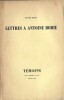
Lettres à Antoine Borie.
Suisse, Cahiers Indépendants, Témoins, VIème année. N° 21 de Février 1959. In-12 agrafé de 42 pages au format 21 x 13,5 cm. Couverture avec titre imprimé. Dos et bords des plats insolés. Intérieur frais. Photographie en noir de Victor Serge en frontispice. Préface de Jean. P. Samson. En fin d'ouvrage on trouve deux témoignages sur Victor Serge, avec photographie de ce dernier, par Rirette-Maîtrejean et Julian Gorkin. Liste avec l'œuvre de Victor Serge en dernière page. Rarissime édition originale, très fragile, en superbe état général de fraicheur.
Vente exclusivement par correspondance. Le libraire ne reçoit, exceptionnellement que sur rendez-vous. Il est préférable de téléphoner avant tout déplacement.Forfait de port pour un livre 8,50 €, sauf si épaisseur supérieure à 3 cm ou valeur supérieure ou égale à 100 €, dans ce cas expédition obligatoire au tarif Colissimo en vigueur. A partir de 2 livres envoi en colissimo obligatoire. Port à la charge de l'acheteur pour le reste du monde.Les Chèques ne sont plus acceptés.Pour destinations extra-planétaire s'adresser à la NASA.Membre du Syndicat Lusitanien Amateurs Morues
SERGE (pseudonyme de Maurice Féaudiérre) - Lithographies de Serge, Dignimont, Lucien Boucher et Jean Oberlé
Reference : 106717
(1951)
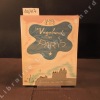
Le vagabond de Paris
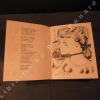
1951 Editions Librairie des Champs-Elysées - 1951 - In-8, broché, sous couverture plastique, feuillets non coupés, couverture lithographie couleurs de l'auteur - 135 pages - Lithographie en frontispice en couleurs de Dignimont + 9 lithographies de Lucien Boucher, Jean Oberlé et Serge. - Envoi de l'auteur (dédicace) en page de titre
Bon état - Dos insolé avec menus frottements au niveau des coins

