 Write to the booksellers
841 books for « j p mayer »Edit
-
Type
Autograph (2)
Book (827)
Magazine (1)
Maps (2)
Music sheets (6)
Photographs (3)
-
Latest
Last 3 days (1)
Last month (41)
-
Language
Dutch (1)
English (4)
French (806)
German (3)
Russian (27)
-
Century
17th (1)
18th (20)
19th (46)
20th (375)
21st (47)
-
Countries
Belgium (56)
Brazil (1)
Canada (8)
Côte d'Ivoire (3)
Denmark (16)
France (646)
Germany (2)
Greece (2)
Netherlands (3)
Switzerland (74)
United Kingdom (2)
United States of America (28)
-
Syndicate
ALAC (7)
CLAM (3)
CLAQ (3)
ILAB (418)
NVVA (14)
SLACES (14)
SLAM (356)
SNCAO (3)
Topics
- Alsace (3)
- Ampelography - wines (3)
- Animals (4)
- Archaeology (4)
- Architecture (5)
- Argus (3)
- Army (3)
- Autographs (5)
- Balzac honoré de (4)
- Bible (4)
- Biography (5)
- Cartomancy (3)
- Ceramic (3)
- Children’s books (11)
- Cinema (7)
- Collections (5)
- Contemporary look (6)
- Cooking (4)
- Dedication (6)
- Dictionaries (6)
- Early printed books (3)
- Earth (3)
- Economics (14)
- Education (4)
- Education - morals (4)
- Einstein (7)
- England (5)
- Europe (3)
- Fine arts (10)
- First edition (3)
- Furniture (6)
- Furniture (6)
- Gardens (6)
- Geography (8)
- Germanic languages (32)
- Germany (4)
- Guide books (3)
- Hebraic literature (3)
- Heiferman ronald (3)
- Helvética (6)
- History (46)
- Hugo victor (3)
- Humour anecdotes (7)
- India (3)
- Industrial arts & crafts - fine arts (11)
- Jaurès jean (3)
- Journalism (6)
- Landscaping (4)
- Law (6)
- Literature (24)
- Magazine (8)
- Manuscripts (3)
- Maps (3)
- Marot clément (3)
- Medicine (9)
- Metro goldwyn-mayer (7)
- Military arts (3)
- Museums (4)
- Music (7)
- Newspapers press (16)
- Opera (5)
- Opera ballet (6)
- Painting (10)
- Philosophy (9)
- Phone directory (11)
- Photography (22)
- Physics (5)
- Poetry (6)
- Policy (19)
- Political economy (3)
- Portraits (3)
- Psychology (5)
- Religions (9)
- Repertory post office directory (11)
- Review (6)
- Reviews (8)
- Sciences (5)
- Scores (10)
- Sculpture (11)
- Senegal (3)
- Shermer david (3)
- Socialism (3)
- Sociology (4)
- Songs (5)
- Sports (7)
- Switzerland (10)
- Tea (6)
- Theatre (7)
- Theology (5)
- Travel (4)
- United kingdom (6)
- Various (8)
- War (10)
- Wine (3)
"MAYER, J.R. (JULIUS ROBERT). - THE FIRST STATEMENT OF THE CONSERVATION OF ENERGY.
Reference : 46883
(1842)
Bemerkungen über die Kräfte der unbelebten Natur.
Heidelberg, C.F. Winter, 1842. Bound in a nice later hcalf. Raised bands, titlelabel with gilt lettering. In: ""Annalen der Chemie und Pharmacie. herausgegeben von Friedrich Wóhler und Justus Liebig"", Vol. 42. (6),356 pp. Mayer's paper: pp. 233-240. Volume 42 is offered bound together with vol. 41. (8),376 pp. a. 1 folded plate. (This volume contains importent cehemical papers by Kolbe, Cahours, Kopp, Wöhler, Laurent and Liebig (the first printing of Liebig's famous work on animal physiology and pathology)
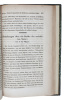
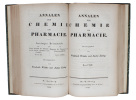
First printing of one of the most important papers in physics, chemistry and physiology in the 19th century. The paper is the first to propose an equivalence of all forms of energy, including heat, and a conservation of total energy. Although Mayer was the first to set forth the general law of the conversation of energy (the first thermodynamical law), it was James Joule who first put the law on firm footing. ""The paper of 1842 (the paper offered) set out Mayer’s definitive view on the conservation of force and established his claim to priority"" historically the paper also provides insight into the processes through which Mayer arrived at his theory.""(DSB).""Originally trained as a physician, mayer did not enjoy medical practice. About 1840 he began to be interested in physics and he entered thhe field of research, ... In 1842 he not only presented a figure for the mechanical equivalent of heat, but he also clearly presented his belief in the conversation of energy. He had some difficulty getting his paper on the subject published but Liebig finally accepted for the importent journal he edited. Though Mayer was five years ahead of Joule his paper aroused no interest, and in the end it was Joule, with his imposing experimental background. who received credit for working out the mechanical equivalent of heat. And it was Helmholtz who recieved credit for announcing the law of conservation of energy because he announced it so much more systematically. Yet Mayer went further than either of the other two, for he included living phenomena in the realm of energy conservation (a daring step in a decade when vitalism, with its view that the laws of inanimate nature did not apply to living systems, was still a considerable force). Mayer argued that solar energy was the ultimate source of all energy on earth, both living and non-living. He further suggested that solar energy was derived from the slow contraction of the sun, or by the fall of meteors into the sun, in either case kinetic energy being converted to radiant energy.""(Asimov)""After 1860, Mayer was finally given the recognition he deserved. Many of his articles were translated into English, and such well-known scientists as Rydolph Clausius in Germany and John Tyndall in England began to champion Mayer as the founder of the law of the conservation of energy.""(Alan Lightman ""Great Ideas in Physics"", p. 8).Parkinson ""Breakthroughs"" 1842 P. - Magee ""A Source Book in Physics"", p. 196 ff. - Dibner: 157 (listing the offprint with a different title) - PMM: 330 (offprint-version). - Garrison & Morton: 606.
On the Origin of Elements. - [THE DISCOVERY OF THE NUCLEAR SHELL MODEL AND ""MAGIC NUMBERS""]
Lancaster, American Institute of Physics, 1949. Lex8vo. Volume 76, October 15, No. 8, 1949 of ""The Physical Review"", Second Series. Entire volume offered. In the original printed blue wrappers. Previous owner's name to vaguely stamped to top right corner of front wrapper. Minor traces of wear to extremities and a few small tears to spine. Overall a very nice and clean copy. Pp. 1226-1231. [Entire issue: Pp. 1005-1274].
First printing of Mayer's seminal paper which led to the finding of ""magic number"" and the Goeppert-Mayer ""shell model"". Marie Goeppert-Mayer and Marie Curie are the only two women to have received the Nobel Prize in Physics.The nuclear shell model is partly analogous to the atomic shell model which describes the arrangement of electrons in an atom. The nuclear shell model describes the structure of the nucleus in terms of energy based on the Pauli exclusion principle.""With Edward Teller in 1947, Marie Goeppert-Mayer began work on the origin of elements, which led to the finding that stable elements contained what would become known as ""magic numbers"", or patterns in the number of particles their nuclei contain. This ultimately led Goeppert-Mayer to the ""shell model"" of the nucleus - the theory that atomic nuclei owe their stability to the existence of relatively fixed ""shells"" or orbits upon which proton and neutrons travel. While other physicists also had envisioned a shell model, there was no convincing evidence until Marie Goeppert-Mayer, acting on a suggestion made by Enrico Fermi, and German scientist H. H. D. Jensen, working simultaneously but seperatly, discovered that spin-orbit coupling occurred within nuclei."" (Cullen-DuPont, Kathryn. Encyclopedia of women's history in America, 2000, p. 102) ""When Teller and I worked on a paper on the origin of elements, I stumbled over the magic numbers. We found that there were a few nuclei which had a greater isotopic as well as cosmic abundance than our theory or any other reasonable continuum theory could possible explain. Then I found that those nuclei had something in common: they either had 82 neutrons, whatever the associated proton number, or 50 neutrons. Eighty-two and fifty are "" magic "" numbers. That nuclei of this type are unusually abundant indicates that the excess stability must have played a part in the process of the creation of elements."" (Marie Goeppert-Mayer's Nobel Lecture, December 12, 1963)
Die organische Bewegung in ihrem Zusammenhange mit dem Stoffwechsel. Ein Beitrag zur Naturkunde. - [EXPANDING THE ""CONSERVATION-OF ENERGY"" PRINCIPLE]
Heilbronn, C. Drechsler'schen Buchhandlung, 1845. 8vo. Nice later hcalf bound to style (pastiche). Marbled covers. Richly gilt spine, titlelabel with gilt lettering. (2),112,(2) pp. Title-page with some brownspots, some scattered brownspots. Printed on good paper.
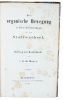
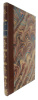
Scarce first edition - Mayer's MAGNUM OPUS - of this his most original and comprehensive paper, privately printed, BEEING THE WORK THAT FOR THE FIRST TIME INCLUDED LIVING PHENOMENA IN THE REALM OF ENERGY CONSERVATION. In this work Mayer again set out the physical basis of his theory, - in 1842 he was the first to present a figure for the mechanical equivalent of heat, and also stated his belief in the conservation of energy - ""this time extending the ideal of force conservation to magnetic, electrical, and chemical forces. In Die organische Bewegung he described the basic force conversions of the organic world. Plants convert the sun’s heat and light into latent chemical force" animals consume this chemical force as food" animals then convert that force to body heat and mechanical muscle force in their life processes.""(DSB).Mayer submitted this paper to Liebig's Annalen but it was rejected by an assistant editor. The assistant's advice was to try Poggendorff's Annalen, but mayer did not care to foloow that publication route again. In the end, he published the paper privately, and hoped to gain recognition by distribiting it widely. But beyond a few brief journal listings, the paper, Mayer's magnum opus, went unnoticed.""After 1860, Mayer was finally given the recognition he deserved. Many of his articles were translated into English, and such well-known scientists as Rydolph Clausius in Germany and John Tyndall in England began to champion Mayer as the founder of the law of the conservation of energy.""(Alan Lightman ""Great Ideas in Physics"", p. 8).
CONVERSATIONS : Hedendaagse en historische meesters in gesprek / Contemporary and Historical Masters in Dialogue.
, Hannibal Books, 2023 softcover, 284 x 240 mm, NL / ENG edition, 160 pag., NEW / NIEUW, illustr. in kleur / z/w - colour / b/w. ISBN 9789464666809.
Unieke kruisbestuiving tussen hedendaagse en historische meesters in het Antwerpse Museum Mayer van den Bergh. Museum Mayer van den Bergh nodigt dit najaar 15 hedendaagse kunstenaars uit om in dialoog te gaan met hun imposante collectie. De werken van Bram Demunter, Marcel Dzama, Adrian Ghenie, Kati Heck, Leiko Ikemura, Edward Lipski, Jonathan Meese, Ryan Mosley, Muller Van Severen, Tobias Pils, Tal R, Ben Sledsens, Dennis Tyfus, In s van den Kieboom en Rinus Van de Velde worden naast de wereldberoemde Dulle Griet van Pieter Bruegel geplaatst, maar ook naast de portretten van Cornelis De Vos en Alessandro Allori, stillevens van Antwerpse meesters zoals Dani l Seghers en werken van Jacob Jordaens, Joachim Patinir en Gerard de Lairesse. Enkele kunstenaars lieten zich ook rechtstreeks inspireren tot het maken van nieuw werk, waaronder Jonathan Meese, Tal R, Ben Sledsens, Bram Demunter, Rinus Van de Velde en Dennis Tyfus. Publicatie bij de tentoonstelling Conversations in Museum Mayer van den Bergh, Antwerpen, van 10 november 2023 tot 3 maart 2024. Unique cross-fertilisation between contemporary and historical masters in the Antwerp Museum Mayer van den Bergh This autumn, Museum Mayer van den Bergh invites 15 contemporary artists to enter into a dialogue with its impressive collection. The works of Bram Demunter, Marcel Dzama, Adrian Ghenie, Kati Heck, Leiko Ikemura, Edward Lipski, Jonathan Meese, Ryan Mosley, Muller Van Severen, Tobias Pils, Tal R, Ben Sledsens, Dennis Tyfus, In s van den Kieboom and Rinus Van de Velde are placed alongside Pieter Bruegel?s world-famous Dulle Griet (?Mad Meg?), but also next to the portraits of Cornelis De Vos and Alessandro Allori, still lifes by Antwerp masters such as Dani l Seghers and works by Jacob Jordaens, Joachim Patinir and Gerard de Lairesse. A number of artists have also been directly inspired to create new work, including Jonathan Meese, Tal R, Ben Sledsens, Bram Demunter, Rinus Van de Velde and Dennis Tyfus. Publication accompanying the exhibition Conversations in Museum Mayer van den Bergh, Antwerp, from 10 November 2023 to 3 March 2024.
Dieter Rot Gesammelte Werke in 20 Bände. KATALOG 1970.
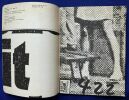
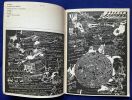
[Hansjörg Mayer]. Verlagsverzeichnis 1970. Dieter Rot Gesammelte Werke in 20 Bänden. Stuttgart – London – Reykjavik, Wasserverlag (Water Press), vormals Edition Hansjörg Mayer, 1970. 23 x 17 cm, non paginé [48 pp.] : illustrations. Plaquette agrafée. Fines piqûres pâles sur la couverture, sinon bel état. [Avec :] Edition Hansjörg Mayer. Katalog 1968. Stuttgart, Edition Hansjörg Mayer, 1968. 23 x 17 cm, non paginé [62 pp.] : illustrations. Plaquette agrafée, bel état. Rares catalogues du célèbre éditeur, avec notices illustrées précisant les formats, les tirages et les prix.Dieter Rot, Emmett Williams, Herman de Vries, Robert Filliou, Reinhard Döhl, Ludwig Harig, Franz Mon, Sigfried Cremer, Wolfgang Schmidt, Frieder Nake, Mary Vieira, Andre Thomkins, Eduardo Paolozzi, Karl Gestner, Stefan Wewerka, Hansjörg Mayer…

Corin Mayer, Anna Simon. Marx. A Graphic Biography In Russian /Korin Mayer, Ann
Corin Mayer, Anna Simon. Marx. A Graphic Biography In Russian /Korin Mayer, Anna Simon. Marks. Graficheskaya biografiya Series: Graphic Biographies of M.: Mann, Ivanov, and Farber 2018. We have thousands of titles and often several copies of each title may be available. Please feel free to contact us for a detailed description of the copies available. The delivery of this book might be delayed beyond the usual timeframe due to extended processing and preparation before shipment, and faster shipping options are not offered. Please inform us if you need the order by a certain date or have a deadline. SKUalbd579f03263084664

Album des députés au Corps législatif. Photographies d'après nature par Mayer et Pierson, Photographes de S. M. l'Empereur.
Paris, , 1857-1862. 197 photographies format cabinet (87 x 53 mm) montées dans un album in-4 (280 x 210 mm), chagrin rouge, dos lisse, tranches dorées, plats décorés de 2 fermoirs en bronze ciselés et dorés (reliure de l'époque).
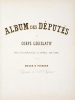
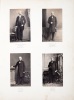
Trombinoscope complet des 197 portraits des députés du Corps législatif de la session 1857-1862.Les photographies des marquis de Verclos (Vaucluse) et d'Hérambault (Pas-de-Calais) n'ont pas été jointes comme dans tous les exemplaires rencontrés.Parmi les députés, figurent les Comtes de Morny (président), Boissy d'Anglas, Granier de Cassagnac, Marrast, d'Ornano, le banquier Charles Laffite, Reinach, De Vinck, etc.Mayer et Pierson, société de photographie fondée par les frères Mayer, Louis Frédéric et Ernest Léopold Mayer et par Pierre Louis Pierson en 1855. En 1861, Louis Frédéric se sépare de son frère puis en 1865, Pierson reste seul propriétaire de la firme qui fut cédée en 1873 à Adolphe Braun.Très bel exemplaire.

Julius Robert Mayer. ‘Klassiker der Naturwissenschaften’, hrsg. v. Lothar Brieger-Wasservogel, Band 1.
Leipzig, Theodor Thomas, 1905, gr. in-8°, Porträt-Frontispiz + VI + 210 S., mehrheitlich unaufgeschnitten, leicht Stockfleckig, illustrierte Original-Broschüre.
Robert Julius Mayer (1814-1878) was one of the early formulators of the principle of the conservation of energy. ... Existing biographies of Mayer tend to whiggishness; one of the better ones is S. Friedländer, Julius Robert Mayer (Leipzig, 1905). Dictionary of Scientific Biography IX/235-240.

(SLACES, NVVA)
Phone number : 41 (0)26 3223808
MAYER, ALFRED M. - ATOMIC STRUCTURES REVEAILED BY MAGNETIC EXPERIMENTS.
Reference : 47150
(1878)
A Note on experiments with floating Magnets showing the motions and arrangements in a plane of freely moving bodies, acted on by forces of attraction and repulsion" and serving in the study of the directions and motions of the lines of magnetic force...
(New Haven), 1878. Both issues with modern blank wrappers. In: The American Journal of Science and Arts"", Third series Vol. 15, No 88 and Vol. 16, No. 94. Pp. 245-524 and pp. 247-334 (2 entire issues offered). Mayer's papers: pp. 276-277 with textfig., pp. 247-256 with 2 pp. of illustrations.
First appearance of the papers in which Mayer describes his invention of the method of floating tiny magnets in a magnetic field, used in the early twentieth century as a key to discovering or illustrating atomic structure.""Mayer is most remembered (and cited) for his experiments in which magnetized needles were inserted into corks, which were then ftoated on water with their south poles upward, under the north pole of a powerful electromagnet. Under these conditions, certain definite stable configurations were observed “which suggested the manner in which atoms of molecules may be grouped in the formation of definite compounds and which illustrated various properties of the constitution of matter. These experiments won high praise from Kelvin ... and were later used by J. J. Thomson (Electricity and Matter [New Haven, 1904], ... and others as a key to the way in which a characteristic number of electrons might be arranged within the atoms of each chemical element in relation to the periodic table. Mayer thus made a small but significant contribution to the theory of atomic structure."" (DSB)Issue 94 of vol. 16 contains an importent paper by HENRY A. ROWLAND ""Research on the Absolute Unit of Electrical Resistance"", pp. 281-291, in which he established an authoritative figure for the absolute value of the Ohm. - Wheeler Gift: 3967.
Voyages du Capitaine Gulliver, en divers pays éloignés. [Relié avec] Asgill, ou Les Désordres de la guerre civile
À La Haye, chez Jean Swart, 1773, 1784, in-12, 2 ouvrages en 1 vol. : [Swift] 3 parties, [8]-XVI-154 pp, [4]-181 pp, [20]-238 pp. et 6 pl. ; [Mayer] XII-130 pp. et 3 cartons [96*], Vélin à petits recouvrement dans le goût du temps, Nouvelle édition illustrée des Voyages de Gulliver, traduits de l'anglais par l'abbé Desfontaines (1685-1745), publiée sans le nom de l'auteur. Elle comporte, à la fin, les observations ou la clef du voyage. L'ouvrage est illustré de six figures naïves, non signées, gravées sur cuivre. Cette édition est rare. En fin de volume a été reliée la rare édition originale d'Asgill, ou Les Désordres de la guerre civile : Ce roman de Charles-Joseph de Mayer (1751-1802) s'appuie sur un incident réel, survenu au cours de la guerre d'Indépendance, l'affaire Charles Asgill : ce jeune officier anglais, prisonnier des américains, avait été condamné à mort par tirage au sort, en représailles du meurtre du capitaine américain Huddy par le loyaliste Richard Lippincott. En huit mois, il fut conduit trois fois à la potence; trois fois, Washington fit reculer la sentence, en espérant que l'armée royale livre Lippincott, conformément à l'ordre du roi Georges III. L'affaire prit une dimension internationale lorsque la mère d'Asgill, ainsi que le gouvernement français, pourtant allié des Américains, intervinrent auprès de Washington et du Congrès américain : sous la pression diplomatique, notamment de la part du roi Louis XVI et de Marie-Antoinette, Asgill fut finalement libéré le 7 novembre 1782. L'année suivant la publication du livre de Mayer, la même histoire fut reprise dans une pièce de théâtre par Louis-Edme Billardon de Sauvigny, qui fut contraint de changer les noms des protagonistes de l'affaire (Abdir, drame en quatre actes et en vers. Paris, 1785). Bon exemplaire. Reliure moderne à l'imitation. Cohen, Supplément, p. 252, pour l'édition de Swart 1778. Couverture rigide
Bon 2 ouvrages en 1 vol. :
Bernau Lutz, Mayer Adolf-Ernst. Acupressure: Pain Relief: A Practical Guide to
Bernau Lutz, Mayer Adolf-Ernst. Acupressure: Pain Relief: A Practical Guide to Point Massage Technique. In Russian /Bernau Lutts, Mayer Adolf-Ernst. Akupressura: izbavlenie ot boli: Prakticheskoe rukovodstvo po tekhnike tochechnogo massaa. Series: A Council Without a Visit. Mon.Paradox. 1998. We have thousands of titles and often several copies of each title may be available. Please feel free to contact us for a detailed description of the copies available. The delivery of this book might be delayed beyond the usual timeframe due to extended processing and preparation before shipment, and faster shipping options are not offered. Please inform us if you need the order by a certain date or have a deadline.SKUalbcf4817739421d3c7

Mayer A.V. Chemical and Technical Dictionary (German-English-French-Russian) In
Mayer A.V. Chemical and Technical Dictionary (German-English-French-Russian) In Russian /Mayer A.V. Khimiko-tekhnicheskiy slovar (nemetsko-angl.-frants.-russkiy) Translated by Prof. B. N. Menshutkin and Prof. M. A. Bloch Leningrad Onti-Khimteret 1937. We have thousands of titles and often several copies of each title may be available. Please feel free to contact us for a detailed description of the copies available. The delivery of this book might be delayed beyond the usual timeframe due to extended processing and preparation before shipment, and faster shipping options are not offered. Please inform us if you need the order by a certain date or have a deadline.SKUalbcc248797ffaa27ff

Romashina S. Ya., Mayer A. A. Educational Facilitation: Essence and Ways of Imp
Romashina S. Ya., Mayer A. A. Educational Facilitation: Essence and Ways of Implementation in Education. In Russian /Romashina S. Ya., Mayer A. A. Pedagogicheskaya Fasilitatsiya: sushchnost i puti realizatsii v obrazovanii. Series: The Quality of Education. Vita Press. 2010. We have thousands of titles and often several copies of each title may be available. Please feel free to contact us for a detailed description of the copies available. The delivery of this book might be delayed beyond the usual timeframe due to extended processing and preparation before shipment, and faster shipping options are not offered. Please inform us if you need the order by a certain date or have a deadline. SKUalbb754823ef7eeee03

Vues en Égypte, d'après les dessins originaux en la possession de Sir Robert Ainslie, pris durant son ambassade a Constantinople par Louis Mayer.
Londres, Bowyer, 1802 In-folio (480 x 339 mm), 2 ff. n. ch., 109 pp., 48 pl., 1 f. n. ch. Demi-maroquin rouge à petits coins, dos lisse orné de roulettes et fleurons dorés, quelques rares frottements (reliure de l'époque).


Édition originale de la traduction française.Ambassadeur d'Angleterre à Constantinople de 1776 à 1792, Sir Robert Ainslie contribua à la diffusion des connaissances sur les pays qu'il visitait. Simple amateur, il sut intelligemment combler son manque de formation d'orientaliste. Il n'hésita pas à engager le talentueux dessinateur romain, Luigi Mayer, qui avait été l'élève de l'un des plus grands artistes de son temps, Giovanni Battista Piranesi. C'est en 1792, avant de rentrer en Europe avec son commanditaire, que Luigi Mayer visita l'Égypte, la Caramanie et la Palestine. Il exécuta des dessins de grande qualité, qui furent finement gravés par Thomas Milton et publiés à Londres dès 1801.L'ouvrage est illustré de 48 planches finement aquarellées, les mêmes que pour l'édition anglaise."Ces vues embrassent tous les monuments qui illustrent encore la Basse-Egypte ; le nilomètre ; les pyramides ; les antiquités d’Alexandrie, de Rosette, de Boulac et de Memouf ; le château du Caire ; la salle de Joseph, etc… Mais ces vues ne se bornent pas aux objets inanimés de l’art : l’artiste a fait le plus heureux choix de ce que les êtres vivants du pays offrent de plus piquant. Il a dessiné les exercices des Mameluks à cheval, l’un d’eux manœuvrant dans la cour de Mourad-Bey ; un bal égyptien ; une foire égyptienne ; un bey dans son grand costume ; celui des dames du Caire et de leurs esclaves ; une danse de jeunes filles, aussi avec leur costume ; un paysan égyptien avec sa famille ; un Arabe-Bedouin et sa femme ; un berger égyptien, etc…La beauté de l’exécution, dans les planches, répond à l’intérêt des sujets qui y sont traités : elles pourront fournir aux artistes et aux antiquaires des objets d’études et de recherches. Le style du texte est clair et précis : il est magnifiquement imprimé. L’ouvrage, en un mot, est un des plus beaux monuments de la typographie et de la gravure anglaises." (Boucher de la Richarderie).Très bon exemplaire en reliure de l'époque.Boucher de la Richarderie, Bibliothèque universelle des voyages, IV, p. 364. Blackmer, n° 1097. Colas, Bibliographie du costume, n° 2019. Brunet, III, col. 1556.
Mayer A.A., Tageev B.L. Noon expeditions. In Russian /Mayer A.A., Tageev B.L.
Mayer A.A., Tageev B.L. Noon expeditions. In Russian /Mayer A.A., Tageev B.L. Poludennye ekspeditsii. Essays. Series: A Rare Book. M. Voizdat 1998. Contact us for details or to request photos of available books. Delivery of this book could take longer than normal due to additional handling time before shipping, and no rush delivery options are available. Please let us know if you have a specific date by which you need to receive your order.SKUalb8f57580caa6b6c4d
Album des Députés au Corps Législatif. Photographies d'après nature, par Mayer & Pierson, Photographes de S.M. l'Empereur.
1 album in-4 (28,5 x 22,5 cm en reliure) reliure éditeur plein chagrin rouge, beaux fermoirs ciselés et dorés, toutes tranches dorées, Mayer et Pierson, s.d. [ 1857-1862 ], 1 f. blanc, 1 f. (titre), 50 feuillets sous serpente recueillant 197 photographies positives sur papier albuminé d'après des négatifs sur verre au collodion, au format carte de visite
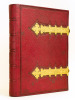
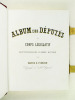
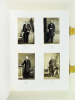
Magnifique album bien complet (avec une photographie supplémentaire) présentant les portraits en pied de l'ensemble des Députés au Corps législatif pour la Ire législature du Second Empire, de 1857 à 1862 (qq. taches noires sur le cuir, mais néanmoins un très bel album). Comme à l'habitude, les portraits d'Hérambault (Pas-de-Calais) et du Marquis de Verclos (Vaucluse) sont manquants, mais la photo du Baron de Ravinel (Vosges) a été rajoutée. On reconnaît Morny, et beaucoup d'héritiers tels Ouvrard, Murat, Suchet, Caulaincourt, etc...
Mayer A.A. Introducing Children to Social Reality: A Parenting Approach. In Rus
Mayer A.A. Introducing Children to Social Reality: A Parenting Approach. In Russian /Mayer A.A. Vvedenie detey v problemy sotsialnoy deystvitelnosti. Rodinovedcheskiy podkhod. St. Petersburg Childhood Press 2012. 272 You are welcome to reach out to us for a detailed description of the copies currently available. Delivery of this book may take longer than usual including extended processing and pre-shipping time, no expedited shipping is available. Please advise us if you have a set date or a deadline to receive your order.SKUalb37bda8a166b3559c
Goldstein E.I., Mayer A.K. Inductive Capacity Smoothing Filters. In Russian /Go
Goldstein E.I., Mayer A.K. Inductive Capacity Smoothing Filters. In Russian /Goldshteyn E.I., Mayer A.K. Induktivno-emkostnye sglazhivayushchie filtry. Tomsk Publishing House of Tomsk, 1982, 221 p. You are welcome to reach out to us for a detailed description of the copies currently available. Delivery of this book may take longer than usual including extended processing and pre-shipping time, no expedited shipping is available. Please advise us if you have a set date or a deadline to receive your order.SKUalb29e175810549c007
Andronov A.A., Leontovich E.A., Gordon I.I., Mayer A.G. Qualitative theory o
Andronov A.A., Leontovich E.A., Gordon I.I., Mayer A.G. Qualitative theory of dynamic systems of the second order. In Russian /Andronov A.A., Leontovich E.A., Gordon I.I., Mayer A.G. Kachestvennaya teoriya dinamicheskikh sistem vtorogo poryadka. M. Science 1966. 568s. We have thousands of titles and often several copies of each title may be available. Please feel free to contact us for a detailed description of the copies available. SKUalb6f9de0ac55bf6913.
Mayer A.V. Chemical and Technical Dictionary (German-English-French-Russian). V
Mayer A.V. Chemical and Technical Dictionary (German-English-French-Russian). Volume 1. In Russian /Mayer A.V. Khimiko-tekhnicheskiy slovar (nemetsko-angl.-frants.-russkiy). Tom 1. Translation edited by B. N. Menshutkin, M. A. Bloch, L. Khimtheoretizdat. 1937. 870s. We have thousands of titles and often several copies of each title may be available. Please feel free to contact us for a detailed description of the copies available. SKUalb6730ec4cdf54f458.
La Photographie considérée comme art et comme industrie. Histoire de sa Découverte, ses progrès, ses applications, son avenir
Paris, L. Hachette et Cie, 1862, in-8, 244 pp, Broché, couverture imprimée, Édition originale de cette monographie exhaustive consacrée à la photographie sous tous ses aspects : historique, technique, artistique, industriel et même légal. Elle est l'oeuvre des deux photographes Pierre-Louis Pierson et Louis-Ernest Mayer. Avec le frère de Mayer, Louis-Frédéric, ils fondent la maison Mayer & Pierson. Ils possédaient un atelier sur le Boulevard des Capucines et comptaient Rossini, la comtesse de Castigilone, Napoléon III ainsi que d'autres têtes couronnées européennes parmi leur clientèle. Dos fendu, couverture défraîchie, quelques petites et pâles rousseurs. Couverture rigide
Bon 244 pp.
Mayer A. A. Sketches and Essays of the Akhal-Tekin Expedition 1880-1881 (From th
Mayer A. A. Sketches and Essays of the Akhal-Tekin Expedition 1880-1881 (From the Memories of the Wounded). In Russian (ask us if in doubt)/Mayer A. A. Nabroski i ocherki Akhal-Tekinskoy ekspeditsii 1880 - 1881 ( Iz vospominaniy ranenogo ). Short description: In Russian (ask us if in doubt).Kronstadt Kronstadt Bulletin 1886 261c. We have thousands of titles and often several copies of each title may be available. Please feel free to contact us for a detailed description of the copies available. SKUalb1442466bdc6e9dd4
Mayer A.A. Sketches and Essays of the Akhal-Tekin Expedition 1880-1881. From the
Mayer A.A. Sketches and Essays of the Akhal-Tekin Expedition 1880-1881. From the Memories of the Wounded In Russian (ask us if in doubt)/Mayer A.A. Nabroski i ocherki Akhal-Tekinskoy ekspeditsii 1880 1881. Iz vospominaniy ranennogo Short description: In Russian (ask us if in doubt).Second Edition: Rybinsk: Falk Typolithography 1895 302s. We have thousands of titles and often several copies of each title may be available. Please feel free to contact us for a detailed description of the copies available. SKUalb9312c794f6807207
(Ansicht von:) Schaffhausen. (Mit Rheinbrücke rechts im Bild. Oben Text mit Wappen: Dierweil Gott meine Hoffnung ist So furcht ich keiner feinden ist).
19x29 cm (Kupferplatte), Original Kupferstich mit 2 Strophen unterm Bild “Wann Gottes raine Lehr, wann freündliche geberden...” Rechts unten +JohHeinrich Mayer delin. Conrad Meyer exec. 1 Blatt unter Passepartout Übereckvergoldeter Rahmen.
image disp.
(SLACES, NVVA)
Phone number : 41 (0)26 3223808
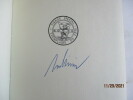
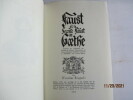
[ Tony Johannot, Jean-Paul Laurens &Alexander von Liezen-Mayer] - Goethe, Johann Wolfgang von Goethe - Traduction de Gérard de Nerva- Illustrations de Tony Johannot, Jean-Paul Laurens & Alexander von Liezen-Mayer
Reference : 47705
Faust et le Second Faust de Goethe
Rispoli Nicolas - 01/01/1979 -Tirage spécial, exemplaire de tête signé - In-8, 14 x 21 cm - Poids 0,5 kilo - 246 & 165 pages + suite des 28 Illustrations de Tony Johannot, Jean-Paul Laurens & Alexander von Liezen-Mayer - Bon exemplaire
Cnformément à nos conditions générales de vente :Les frais de port sont affichés à titre indicatif. Il se peut que nous devions vous contacter pour vous informer du coût de laffranchissement supplémentaire en fonction du poids et du nombre de livres, surtout pour les envois internationaux Cependant vu l'augmentation des tarifs postaux à l'internationale, nous pouvons expédier les ouvrages en point relais MONDIAL RELAY pour les pays suivants : Allemagne, Autriche, Belgique, Espagne, Italie, Luxembourg, Pays-Bas, Pologne, et Portugal. Merci de nous indiquer en retour le point relais choisi ainsi que votre numéro de téléphone mobile & adresse Courriel pour assurer le suivi du colis.N'hésitez pas à nous interroger.In accordance with our general terms and conditions of sale:Shipping costs are displayed for informational purposes only. We may need to contact you to inform you of the additional postage costs depending on the weight and number of books, especially for international shipments.However, given the increase in international postal rates, we can ship books via Mondial Relay to the following countries: Germany, Austria, Belgium, Spain, Italy, Luxembourg, Netherlands, Poland, and Portugal. Please provide us with your chosen Mondial Relay point, as well as your mobile phone number and email address to ensure package tracking.Please feel free to contact us with any questions

