 Write to the booksellers
588 books for « h i bell »Edit
-
Type
Book (572)
Engraving (8)
Music sheets (8)
New book (1)
-
Latest
Last 24h (43)
Last month (1)
-
Language
English (8)
French (580)
Russian (1)
-
Century
17th (1)
18th (6)
19th (59)
20th (231)
21st (46)
-
Countries
Belgium (43)
Canada (3)
China (2)
Côte d'Ivoire (2)
Denmark (10)
France (458)
Germany (1)
Switzerland (68)
United Kingdom (1)
United States of America (1)
-
Syndicate
ALAC (3)
CLAM (4)
ILAB (208)
NVVA (5)
SLACES (5)
SLAM (180)
Topics
- American literature (3)
- Ampelography - wines (4)
- Andersen hans christian (3)
- Animals (3)
- Archaeology (6)
- Architecture (2)
- Assembly (31)
- Atlas (3)
- Bible (2)
- Biography (6)
- Books from the xviiith (2)
- Brittany (2)
- Carpenter (3)
- Children’s books (5)
- China (2)
- China (4)
- Comic strip (26)
- Commune (2)
- Computer science (2)
- Contemporary look (2)
- Cooking (4)
- Coral (2)
- Druids (3)
- Electricity (2)
- England (6)
- English (6)
- English literature (4)
- Engravings (3)
- Fashion (5)
- Fielding helen (2)
- Fine arts (4)
- First edition (7)
- Flanders (24)
- Flowers (2)
- Genealogy (2)
- Geography (6)
- Gold (28)
- Hackney (3)
- Haiti (2)
- History (20)
- Hoefer hans (2)
- Hugo victor (3)
- Illustrated books (2)
- Industrial arts & crafts - fine arts (2)
- Invertebrates (3)
- Ireland (2)
- Italian (2)
- Language (3)
- Latin (3)
- Law (3)
- Leisure (3)
- Literature (53)
- Magazine (33)
- Mathematics (8)
- Medicine (7)
- Melville herman (3)
- Méry (2)
- Motor vehicle (9)
- Mountaineering climbing (2)
- Newspapers press (4)
- Paris (3)
- Philosophy (3)
- Photography (3)
- Physics (4)
- Plate (3)
- Policy (4)
- Regency (31)
- Religions (7)
- Review (2)
- Reviews (3)
- Science fiction (5)
- Sciences (6)
- Scores (9)
- Sexuality (2)
- Socialism (2)
- Songs (7)
- Surgery (6)
- Tales (3)
- Tea (33)
- Theatre (2)
- Theology (5)
- Tibet (4)
- Tibet pc (4)
- Translation (6)
- Turkey - ottoman empire (2)
- United kingdom (5)
- Various (5)
- Viticulture (5)
- War (3)
- Wine (7)
- Woolf virginia (3)
- Zoology (4)
Cours complet de chirurgie théorique et pratique. Traduit de l'anglais sur la quatrième et dernière édition par Ed. Bosquillon. Avec quatre-vingt-dix-neuf planches. [4 premiers volumes seulement sur 6].
Paris: Théophile Barrois le Jeune, an IV [1796 ère vulgaire] 4 vol. in 8 (manquent les t. 5 et 6), xvi-326 pages, 11 planches; iv-267 pages, 13 planches; iv-308 pages, 14 planches; iv-248 panches, 23 planches. Rel. demi basane, dos lisse orné, dos passé et coiffes lég. usées. Les 63 planches se dépliant représentent de nombreux instruments de chirurgie.
Cours complet de chirurgie théorique et pratique. Traduit de l'anglais sur la quatrième et dernière édition par Ed. Bosquillon. Avec quatre-vingt-dix-neuf planches. [4 premiers volumes seulement sur 6]. (Paris: Théophile Barrois le Jeune, an IV [1796 ère vulgaire]). [M.C.: Médecine, instruments de chirurgie]
"BELL, ALEXANDRE (ALEXANDER) GRAHAM. - BELL, ALEXANDER GRAHAM. - ""THE GREATEST INVENTION I HAVE EVER MADE"": THE PHOTOPHONE.
Reference : 48149
(1880)
De la Production et de la Reproduction du Son par la Lumière. Mémoire lu à l'Association américaine pour l'avancement des Sciences, au Congrès de Boston, le 27 août 1880. (+) Les Récepteurs photophoniques de Sélénium. (Cette Note fait suite au M´wem...
Paris, G. Masson, 1880. 8vo. Contemp. hcalf, raised bands, gilt spine. Light wear along edges. Small stamps on verso of titlepage. In: ""Annales de Chimie et de Physique"", 5e Series, Tome 21. 576 pp. and 2 folded engraved plates. (Entire volume offered). Bell's paper: 399-430. With 11 fine textillustrations (showing the apparatus). Clean and fine.
First French version of ""On the Production and Reproduction of Sound by Light"" (the French version published in November and the English in October 1880) of this importent paper in which Bell describes his and Charles Sumner Tainter's, his assistent, invention of the Photophone or Radiophone, THE PROGENITOR OF MODERN FIBER OPTICS. This invention made possible the world's FIRST WIRELESS TELEPHONE MESSAGE, and the first call was sent from the Franklin Scool to the window of Bell's laboratory, some 213 meter away.Also with Breguet's importent paper on the Selenium used in the technology.""On June 3, 1880, Alexander Graham Bell transmitted the first wireless telephone message on his newly invented ""photophone."" Bell believed the photophone was his most important invention. The device allowed for the transmission of sound on a beam of light. Of the eighteen patents granted in Bell's name alone, and the twelve he shared with his collaborators, four were for the photophone. Bell's photophone worked by projecting voice through an instrument toward a mirror. Vibrations in the voice caused similar vibrations in the mirror. Bell directed sunlight into the mirror, which captured and projected the mirror's vibrations. The vibrations were transformed back into sound at the receiving end of the projection. The photophone functioned similarly to the telephone, except the photophone used light as a means of projecting the information, while the telephone relied on electricity."" (Mary Bellis).The first successful attempts were based upon the properties of selenium: ""The electric resistance of which varies with the degree of illumination to which it is exposed. Hence, given a transmitting instrument, such as a flexible mirror, by which the vibrations of a sound could throw into vibrations a beam of light, a receiver, consisting of sensitive selenium, forming part of an electric circuit with a battery and a telephone, should suffice to translate the varying intensities of light into corresponding varying intensities of electric current, and finally into vibrations of the telephone disk audible once more as sound."" (Prescott, George. Bell's Electric Speaking Telephone. 313 p.).

"BELL, ALEXANDER GRAHAM. - ""THE GREATEST INVENTION I HAVE EVER MADE"": THE PHOTOPHONE.
Reference : 46951
(1880)
On the Production and Reproduction of Sound by Light. (Read before the American Association for the Advancement of Science, in Boston, August 27, 1880).
(New Haven), 1880. 8vo. Modern plain wrappers. In: American Journal of Science"", Third series, Vol. XX, No. 118, October 1880. Frontispiece-plate. Pp. 257-352 (entire issue offered). Bell's paper: pp. 305-324 and 11 textillustrations. A small stamp to verso of plate and the first leaf.
First printing of this important paper in which Bell describes his and Charles Sumner Tainter's, his assistent, invention of the Photophone or Radiophone, THE PROGENITOR OF MODERN FIBER OPTICS. This invention made possible the world's FIRST WIRELESS TELEPHONE MESSAGE, and the first call was sent from the Franklin Scool to the window of Bell's laboratory, some 213 meter away.""On June 3, 1880, Alexander Graham Bell transmitted the first wireless telephone message on his newly invented ""photophone."" Bell believed the photophone was his most important invention. The device allowed for the transmission of sound on a beam of light. Of the eighteen patents granted in Bell's name alone, and the twelve he shared with his collaborators, four were for the photophone. Bell's photophone worked by projecting voice through an instrument toward a mirror. Vibrations in the voice caused similar vibrations in the mirror. Bell directed sunlight into the mirror, which captured and projected the mirror's vibrations. The vibrations were transformed back into sound at the receiving end of the projection. The photophone functioned similarly to the telephone, except the photophone used light as a means of projecting the information, while the telephone relied on electricity."" (Mary Bellis).The first successful attempts were based upon the properties of selenium: ""The electric resistance of which varies with the degree of illumination to which it is exposed. Hence, given a transmitting instrument, such as a flexible mirror, by which the vibrations of a sound could throw into vibrations a beam of light, a receiver, consisting of sensitive selenium, forming part of an electric circuit with a battery and a telephone, should suffice to translate the varying intensities of light into corresponding varying intensities of electric current, and finally into vibrations of the telephone disk audible once more as sound."" (Prescott, George. Bell's Electric Speaking Telephone. 313 p.).
De la production du son par l'energie radiante. - [FIRST FRENCH PUBLICATION OF BELL'S PHOTOPHONE]
Paris, Imprimerie Gauthier-Villars, 1881. 8vo. Contemporary half calf, raised bands, gilt spine. Light wear along edges. Two small stamps on verso of title-page, and one on verso of last plate. In ""Annales de Chimie et de Physique"", Cinquiéme Series - Tome XXIII. 576 pp. + 3 plates. G. Bell's paper: pp. 397-432, pp. and 14 figures of experimental apparatus etc. The entiree volume offered. Fine and clean copy.
First publication of the first French translation of Bell's ""On the Production and Reproduction of Sound by Light: the Photophone"", originally published in 1880. The device allowed for the transmission of sound on a beam of light, and Bell himself regarded this, not the telephone, to be his most important invention.""In the importance of the principles involved, I regard the photophone as the greatest invention I have ever made"" greater than the telephone."" Bell said in a 1921 interview. The photophone was the world's first wireless telephone communication and thereby anticipated Marconi's invention with several years.The first successful attempts were based upon the properties of selenium: ""The electric resistance of which varies with the degree of illumination to which it is exposed. Hence, given a transmitting instrument, such as a flexible mirror, by which the vibrations of a sound could throw into vibrations a beam of light, a receiver, consisting of sensitive selenium, forming part of an electric circuit with a battery and a telephone, should suffice to translate the varying intensities of light into corresponding varying intensities of electric current, and finally into vibrations of the telephone disk audible once more as sound."" (Prescott, George. Bell's Electric Speaking Telephone. 313 p.).Bell was so excited by his invention and its possibilities that he proposed that his second daughter should bear the name of the invention: Photophone. Fortunately for her, her mother was not quite as enthusiastic about the invention.
Voyages depuis St. Pétersbourg en Russie, dans diverses contrées de l'Asie ; À Pékin, à la suite de l'Ambassade envoyée par le Czar Pierre I, à Kamhy, Empereur de la Chine ; à Ispahan en Perse, avec l'Ambassadeur du même prince, à Schah Hussein, Sophi de Perse ; à Derbent en Perse, avec l'armée de Russie, commandée par le Czar en personne ; à Constantinople, par ordre du comte Osterman, chancelier de Russie, & de M. Rondeau, ministre d'Angleterre à la Cour de Russie. On y a joint une description de la Sibérie, & une carte des deux routes de l'auteur entre Moscow & Pékin () Traduits de l'Anglois par M. *** [Eidous]. Avec des remarques historiques, géographiques, &c.
Robin | Paris 1766 | 9.5 x 16.6 cm | 3 volumes reliés
Édition originale de la traduction française ornée d'une carte dépliante dans le premier volume (cf Cordier, Sinica, 2094. Quérard I, 260. Manque à Schwab et à Atabey. Blackmer (111) ne possédait que l'édition anglaise (Travels from St. Petersburg in Russia, to diverse parts of Asia, Glasgow, 1763). Reliures en plein veau fauve marbré, dos à cinq ornés de doubles caissons dorés et décorés, pièces de titre de maroquin brun ou vert (pour le deuxième volume), pièces de tomaison de maroquin rouge, roulettes dorées sur les coiffes, gardes et contreplats de papier à la cuve, filets dorés sur les coupes, tranches marbrées, certains coins émoussés reliures de l'époque.* Petits trous sur le premier plat du premier volume, quelques frottements sans gravité sur les plats. * Le médecin écossais John Bell (1691-1780) se rend à Saint-Pétersbourg en Russie, où un compatriote écossais parvient à le faire nommer médecin d'Artemy Volynsky, homme d'État récemment nommé ambassadeur pour la Perse. Les pp. 125 à 362 du tome II contiennent le "Journal de la résidence de M. Lange, Agent de Sa Majesté Impériale de toutes les Russies, Pierre I, à la Cour de Pékin, en 1721 & 1722. Contenant ses négociations". Les pp. 263 à 332 du tome III contiennent la "Relation de mon Voyage de Pétersbourg à Constantinople, & de-là à Pétersbourg, dans les années 1737 & 1738". La belle carte dépliante donne la Route entre Moscow et Pekin tenue par S.E. Leoff Vassilich Ismayloff en 1719, 1720 et 1721. "Bell spent about 25 years in Russia, in the diplomatic service of the Czar, from 1714. He then settled in Constantinople for a few years as a merchant, returning to Scotland c. 1746. He made several journeys to the Levant for diplomatic reasons including two to Persia in 1715-18 and 1722, and a journey to Constantinople in 1737-8. He was in touch with Sir Everard Fawkener, Peysonnel and other figures of diplomatic importance in Turkey" [Leonora Navari]. - Photographies et détails sur www.Edition-Originale.com -

Héva et la ferme de l'Orange. précédées d'une étude littéraire sur Méry par Georges Bell.
1857 Paris : Arnauld de Vresse, [1857] 1 vol.in12 reliure demi toile epoque,dos lisse titré, XXVII-248 + 4 (catalogue editeur janvier 1858) p.,bon etat,rousseurs
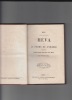
Georges Bell est le pseudonyme de Joachim-Pantaléon Hounau (1824-1889), critique littéraire au journal Paris. Fils de Henry Michel Hounau , docteur en médecine, et de Catherine Lever, il avait été condamné à la déportation par la Cour de Bourges à la suite de la journée du 15 mai 1848 ; après son retour en France, il se consacra entièrement à la littérature.- Joachim Hounau participa activement aux évènements de février 1848 et devint l'un des principaux rédacteurs de La Commune de Paris à l'instar de François Favre, rédacteur au Peuple de Proudhon. Un temps collaborateur au Mousquetaire d'Alexandre Dumas, Georges Bell y rédige des articles de critique littéraire et devint un ami intime de Gérard de Nerval. Remise de 20% pour toutes commandes supérieures à 200 €
BELL G.- PAGES DE LA VIE DE GERARD DE NERVAL L'Artiste, Journal de la Littérature et des Beaux-Arts.1855, texte en originale complet paru en livraisons.
1855 L'Artiste, Journal de la Littérature et des Beaux-Arts.1855,IN4 broché, en 4 livraisons complétes,fascicules en feuilles sous chemises jaunes, trés rare, réédité ÉTUDES CONTEMPORAINES -GERARD DE NERVAL PA R GEORGES BELL -PARIS VICTOR LECOU, ÉDITEUR 1855- LIBRARIE DE LA SOCIÉTÉ DES GENS DE LETTRES 10, vue du Bouloi,
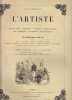
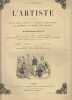
Joachim Hounau participa activement aux évènements de février 1848 et devint l'un des principaux rédacteurs de La Commune de Paris à l'instar de François Favre, rédacteur au Peuple de Proudhon. Un temps collaborateur au Mousquetaire d'Alexandre Dumas, Georges Bell y rédige des articles de critique littéraire et devint un ami intime de Gérard de Nerval. Remise de 20% pour toutes commandes supérieures à 200 €
SPIEGEL VAN DE WERELD. DE GESCHIEDENIS VAN DE BEELDENDE KUNST.
Amsterdam, Athenaeum - Polak & Van Gennep , 2007 Gebonden, donkergrijs karton met zilveropdruk op rug, witte papieromslag, 195 x 265mm., 496pp., zeer uitgebreide kleurillustratie. ISBN 9789025363727.
Wat is de beeldende kunst en waar komt ze vandaan? Waarom bestaat ze en hoe verandert de kunst in de loop van de tijd? Op deze vragen geeft Julian Bell ons de antwoorden in het nieuwe standaardwerk over kunstgeschiedenis. Vanaf de eerste impulsen om ruw materiaal een vorm te geven tot en met het ontstaan van eigentijdse installaties hebben mensen de neiging gevoeld tot het maken van beelden. Stijlen en perioden zijn elkaar opgevolgd en het loont de moeite dwarsverbanden tussen schijnbaar ver uit elkaar liggende tradities te leggen. De schilder Bell gebruikt een heel scala aan voorwerpen, van dagelijks tot onbekend, om bloot te leggen hoe de kunst voortkomt uit onze gemeenschappelijke ervaring, hoe zij het menselijk tekort weerspiegelt, hoe zij als een spiegel laat zien wat ons werkelijk bezighoudt. Bell vermijdt de gebaande paden en hij kiest voor een letterlijk mondiaal perspectief. Vertaald door Victor Kuijper en Annelies Roeleveld. Nieuw boek.
"BELL, ALEXANDER GRAHAM. - THE PHOTOPHONE AND SPECTRAL ANALYSIS.
Reference : 48148
(1880)
Sur l'application du photophone à l'étude des bruits qui ont lieu à la surface solaire. Note présentée par M. Janssen au nom de Alex. Graham Bell.
(Paris, Gauthier-Villars), 1880. 4to. No wrappers. In: ""Comptes Rendus Hebdomadaires des Séances de L'Academie des Sciences"", Tome 91, No 18. Pp.(698-) 736. (Entire issue offered). Bell's paper: pp. 726-727.
First printing of the paper in which Bell speculates how his and Tainter's invention of the Photophone or Radiophone could have a wider use. He pondered the photophone's possible scientific use in the spectral analysis of artificial light sources, stars and sunspots. He later also speculated on its possible future applications, though he did not anticipate either the laser or fiber-optic telecommunications:""Can Imagination picture what the future of this invention is to be!.... We may talk by light to any visible distance without any conduction wire.... In general science, discoveries will be make by the Photophone that are undreamed of just now."" Not long after its invention laboratories within the Bell System continued to improve the photophone in the hope that it could supplement or replace expensive conventional telephone lines. Its earliest non-experimental use came with military communication systems during World War I and II, its key advantage being that its light-based transmissions could not be intercepted by the enemy.
Carte postale photographique signée de Marie Bell
S. n. | s. l. s. d. [circa 1925] | 9.50 x 13.50 cm | une feuille verso
Carte postale photographique représentant l'actrice et femme de théâtre Marie Bell, légèrement de face, prise dans le studio Lorelle. Bel exemplaire. Signature manuscrite de Marie Bell en dessous de son portrait. - Photographies et détails sur www.Edition-Originale.com -
BELL TELEPHONE MANUFACTURING COMPANY - Antwerpen - België ( editor ) :
Reference : 17845
Bell Telephone Manufacturing Company 1882 - 1982. Antwerpen - België. Een Belgische vennootschap geassocieerd met ITT .
2. Antwerpen, Bell Telephone Manufacturing company, 1982, in-4°, ca (150) nn pp with many ills. (some in colour), brown publisher's cloth, no dustwrapper, but nice copy. Text in Dutch, boek in het Nederlands. Describes the history of the company which was founded by Graham Bell as the headquarters for Europe of the original Ma Bell of the USA. In 1992 the company was still part of ITT..
BELL TELEPHONE MANUFACTURING COMPANY - Antwerpen - België ( editor ) :
Reference : 40837
Bell Telephone Manufacturing Company 1882 - 1982. Antwerpen - België. Een Belgische vennootschap geassocieerd met ITT .
0. Antwerpen, Bell Telephone Manufacturing company, 1982, in-4°, ca (150) nn pp with many ills. (some in colour), brown publisher's cloth, with dustwrapper, one page with marginal damage but still a nice copy. Text in Dutch, boek in het Nederlands. Describes the history of the company which was founded by Graham Bell as the headquarters for Europe of the original Ma Bell of the USA. In 1982 the company was still part of ITT..
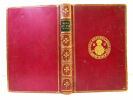
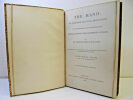
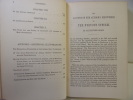
The Hand; its mechanism and vital endowments, as evincing design and illustring the Power, wisdom and goodness of god
Illustrations: Illustrated throughout with text illustrations. Bell's classic work on the hand illustrated with his own small vignettes, discusses the hand's anatomy, phsyiology, bio-mechanics and compartive anatomy, as well as its utility and adaptive importance, the sense of touch, and related topics. Charles Bell (1774-1842), Scottish surgeon, anatomist, physiologist, neurologist, artist and philosophical theologian. he is noted for the difference between sensory nerves and motor nerves in the spinal chord. He is also noted for describing Bell's palsy. In 1829 Francis Egerton, eighth Earl of Bridgewater, died and in his will, he left a large sum of money to the President of the Royal Society of London. The will stipulated the money was to be used to write, print and publish one thousand copies of a work On the Power, Wisdom, and Goodness of God. The President of the Royal Society Davies Gilbert appointed eight gentlemen to write separate treatises on the subject. In 1833, he published the fourth Bridgewater Treatise, The Hand: Its Mechanism and Vital Endowments as Evincing Design. Bell published four editions of The Hand. [-See Wiki from more info]. Citations: Garrion-Morton: Book in very good condition, 22x15cm, leather, 260pp. Illustrations. London, Nelle & Daldy, York Street, 1870 ref/19
La Belle Assemblée or, Bell's Court and Fashionable Magazine Addressed Particularly to the Ladies,John Bell, publisher
Reference : 25586
(1807)
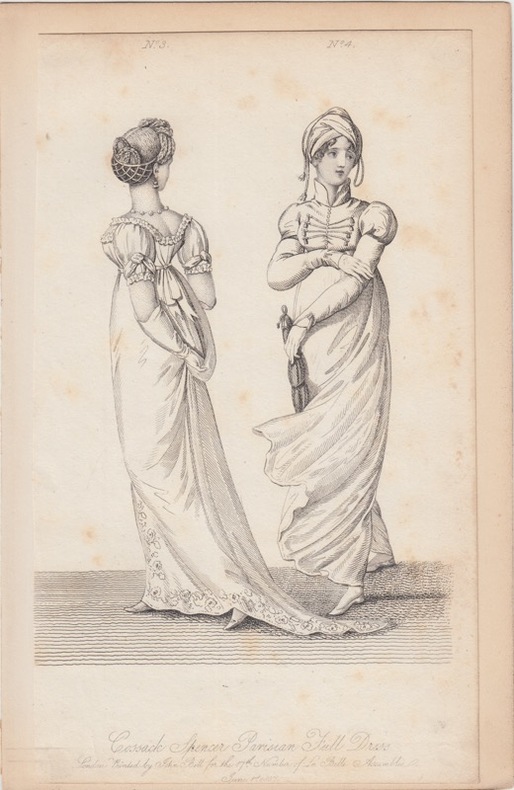
Cossack Spencer Parisian full dress - june 1807,Fashions for 1807 from La Belle Assemblee N°17
1807 London,la belle assemblée fashionable magazine,J.BELL 1807 - black and white print,line engraving,
bon etat Remise de 20% pour toutes commandes supérieures à 200 €
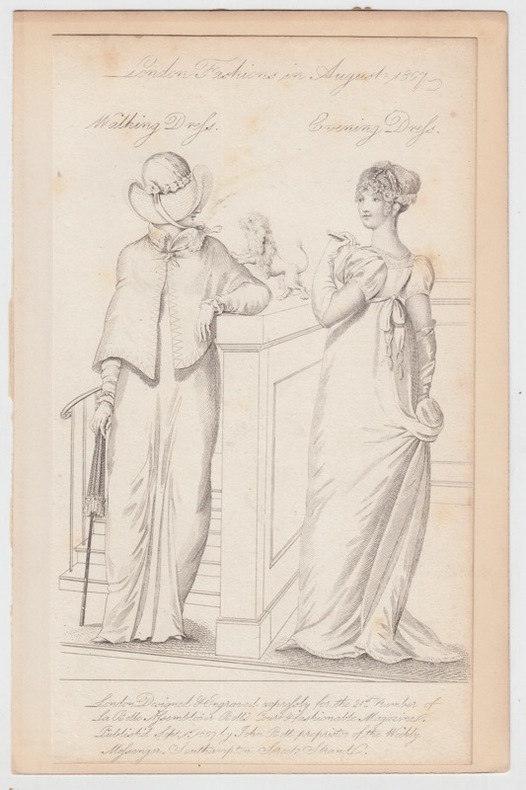
La Belle Assemblée or, Bell's Court and Fashionable Magazine Addressed Particularly to the Ladies,John Bell, publisher
Reference : 25587
(1807)
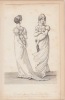
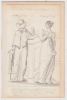
London Fashion in August 1807,walking dress - Evening Dress from La Belle Assemblee Fashions for 1807 from La Belle Assemblee
1807 London,la belle assemblée fashionable magazine,J.BELL 1807 - black and white print,line engraving,
bon etat Remise de 20% pour toutes commandes supérieures à 200 €
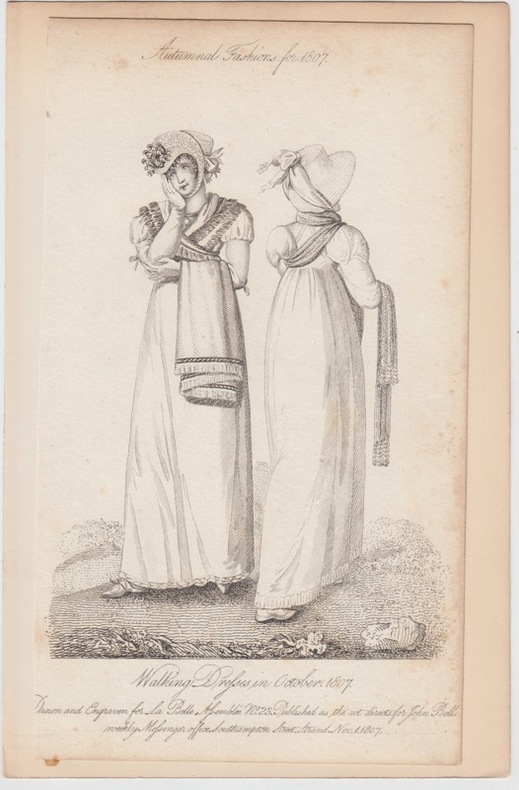
La Belle Assemblée or, Bell's Court and Fashionable Magazine Addressed Particularly to the Ladies,John Bell, publisher
Reference : 25588
(1807)
Walking dress in October 1807, Autumnal Fashions for 1807 from La Belle Assemblee Fashions for 1807 from La Belle Assemblee
1807 London,la belle assemblée fashionable magazine,J.BELL 1807 - black and white print,line engraving,
bon etat Remise de 20% pour toutes commandes supérieures à 200 €
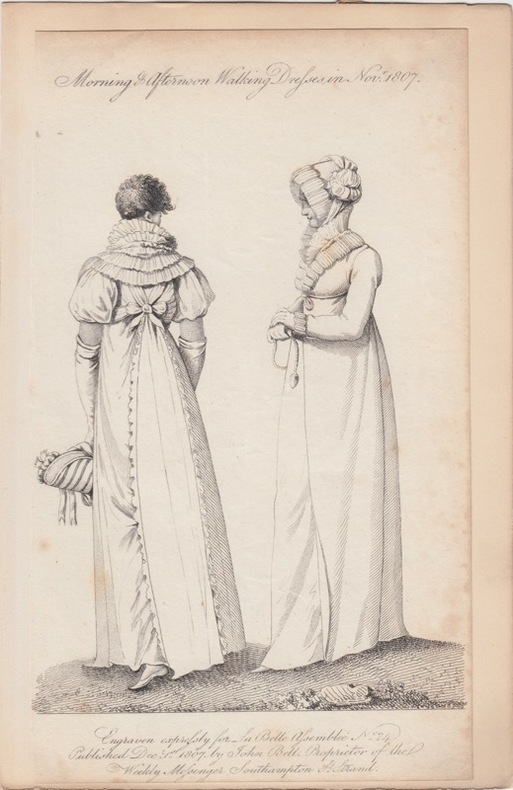
La Belle Assemblée or, Bell's Court and Fashionable Magazine Addressed Particularly to the Ladies,John Bell, publisher
Reference : 25589
(1807)
Morning & Afternoon Walking dress in Nov.1807, N°224 from La Belle Assemblee Fashions for 1807 from La Belle Assemblee
1807 London,la belle assemblée fashionable magazine,J.BELL 1807 - black and white print,line engraving,
bon etat Remise de 20% pour toutes commandes supérieures à 200 €
La Belle Assemblée or, Bell's Court and Fashionable Magazine Addressed Particularly to the Ladies,John Bell, publisher
Reference : 25590
(1807)
Parisian fashion taken ......
1807 London,la Belle Assemblée fashionable magazine,J.BELL 1807 - black and white print,line engraving,
bon etat Remise de 20% pour toutes commandes supérieures à 200 €
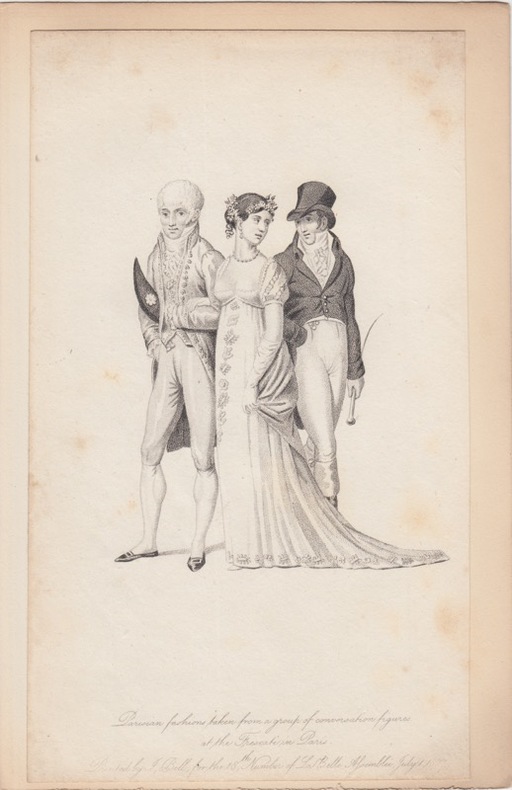
La Belle Assemblée or, Bell's Court and Fashionable Magazine Addressed Particularly to the Ladies,John Bell, publisher
Reference : 25591
(1807)
London Fashion in July 1807,walking dress - Evening Dress from La Belle Assemblee Fashions for 1807 from La Belle Assemblee
1807 London,la belle assemblée fashionable magazine,J.BELL 1807 - black and white print,line engraving,
bon etat Remise de 20% pour toutes commandes supérieures à 200 €
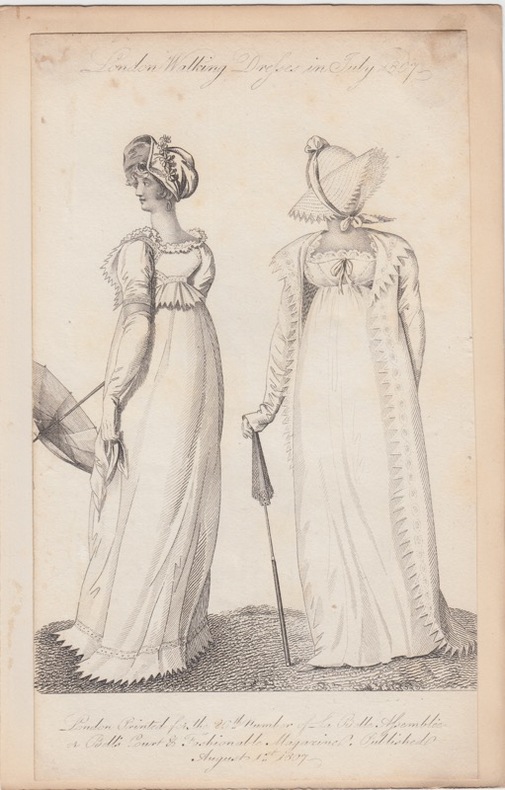
La Belle Assemblée or, Bell's Court and Fashionable Magazine Addressed Particularly to the Ladies,John Bell, publisher
Reference : 25592
(1807)
Walking dress in Nov.1807, N°22 from La Belle Assemblee Fashions for 1807 from La Belle Assemblee
1807 London,la Belle Assemblée fashionable magazine,J.BELL 1.10. 1807 - black and white print,line engraving,taches
bon etat Remise de 20% pour toutes commandes supérieures à 200 €
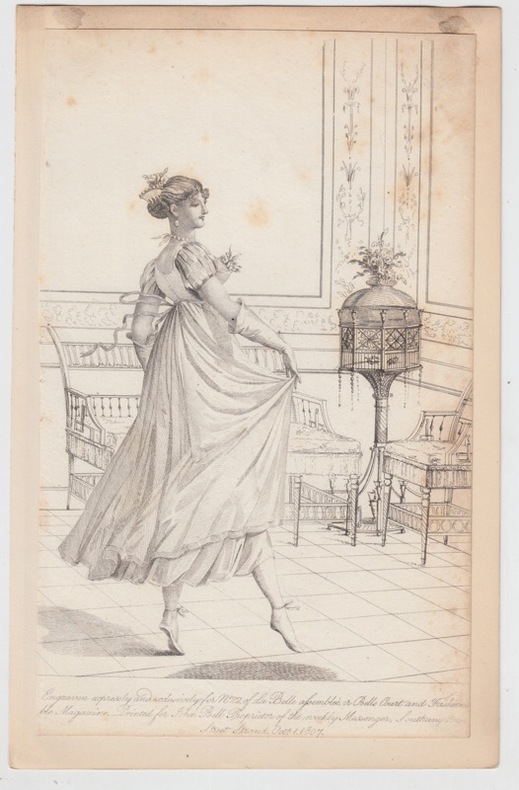
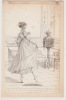
La Belle Assemblée or, Bell's Court and Fashionable Magazine Addressed Particularly to the Ladies,John Bell, publisher
Reference : 25593
(1808)
Opera &Full dresses - Nov.1808, N°31 from La Belle Assemblee Fashions for 1808 from La Belle Assemblee
1808 London,la Belle Assemblée fashionable magazine,J.BELL 1808 - black and white print,line engraving,
bon etat Remise de 20% pour toutes commandes supérieures à 200 €
La Belle Assemblée or, Bell's Court and Fashionable Magazine Addressed Particularly to the Ladies,John Bell, publisher
Reference : 25594
(1807)
Walking & full dress for the present month from La Belle Assemblee Fashions for 1807 from La Belle Assemblee
1807 London,la Belle Assemblée fashionable magazine,J.BELL (1807) - black and white print,line engraving,taches
bon etat Remise de 20% pour toutes commandes supérieures à 200 €
La Belle Assemblée or, Bell's Court and Fashionable Magazine Addressed Particularly to the Ladies,John Bell, publisher
Reference : 25595
(1808)
London evening dress for march - april 1808, from La Belle Assemblee Fashions for 1808 from La Belle Assemblee
1808 London,la Belle Assemblée fashionable magazine,J.BELL 1808 - black and white print,line engraving,
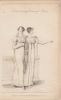
bon etat Remise de 20% pour toutes commandes supérieures à 200 €
La Belle Assemblée or, Bell's Court and Fashionable Magazine Addressed Particularly to the Ladies,John Bell, publisher
Reference : 25596
(1808)
evening dresses in april 1808, from La Belle Assemblee Fashions for 1808 from La Belle Assemblee
1808 London,la Belle Assemblée fashionable magazine,J.BELL may 1808 - black and white print,line engraving,
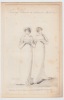
bon etat Remise de 20% pour toutes commandes supérieures à 200 €
La Belle Assemblée or, Bell's Court and Fashionable Magazine Addressed Particularly to the Ladies,John Bell, publisher
Reference : 25597
(1808)
evening full dresses back & front 1808, from La Belle Assemblee Fashions for 1808 from La Belle Assemblee
1808 London,la Belle Assemblée fashionable magazine,J.BELL dec. 1808 - black and white print,line engraving,
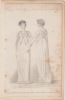
bon etat Remise de 20% pour toutes commandes supérieures à 200 €

