 Write to the booksellers
53 books for « grundtvig n f s »Edit
-
Century
19th (49)
20th (3)
-
Topics
Andersen hans christian (2)
Bibliography (1)
Denmark (1)
Economics (1)
Economics (1)
Ethnography (1)
Folklore (1)
History (11)
Literature (6)
Philosophy (1)
Religions (3)
Scandinavian (3)
Scandinavian literature (28)
-
Countries
Denmark (49)
France (3)
Switzerland (1)
-
Syndicate
ILAB (51)
SLAM (1)
Kirkens Gienmæle mod Professor Theologiæ Dr. H. N. Clausen. - [GRUNDTVIG'S FEIDE-SKRIFT]
Kiøbenhavn, 1825. 8vo. I et senere halvshirtbind. Gennemgående brunplettet. X, 47 pp.
Den yderst sjældne originaludgave af skriftet, der egentlig skulle have været en anmeldelse af professor H. N. Clausens værk ""Catholicismens og Protestantismens Kirkeforfatning"", men som i stedet blev et egentligt Feidebrev, hvori Grundtvig stærkt injurierende angriber Clausen for hans kirkesyn. Grundtvig tabte den efterfølgende retssag anlagt af Clausen og blev idømt livsvarig censur, der dog blev ophævet i 1837. Pamfletten vakte stor opstandelse i København og blev genoptrykt adskillige gange.

Bjowulfs Drape. Et Gothisk Helte=Digt fra forrige Aar=Tusinde af Angel = Saxisk paa danske Riim ved Nik. Fred. Sev. Grundtvig. - [BEOWULF IN THE FIRST TRANSLATION INTO ANY MODERN LANGUAGE AND THE SECOND APPEARANCE OVERALL]
Kjøbenhavn, Andreas Seidelin, 1820. 8vo. Lovely contemporary half calf with richly gilt spine. Spine with some rubbing, but still very nice, tight, and completely unrestored. Internally remarkably clean and fresh with only the slightest of occasional brownspotting. Old owner's gift-inscription to front free endpaper dated 1858. Printed on good paper (in Danish the so-called ""writing paper"") and with good margins. An excellent copy. LXXIV, 325 pp.
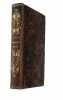
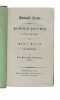
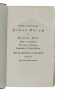
The highly important first translation into any modern language - and overall the second edition to appear - of the seminal Gothic tale that is Beowulf. This monumental work appeared merely five years after the first printing of the text (in Latin, 1815) and 13 years before the first English edition of Beowulf. With this edition, Grundtvig founded the study of Beowulf. ""In the British Library there is a manuscript, its edges scorched and brittle, of ""Beowulf"", one of the very earliest poems in English and its first great literary masterpiece. It exists only in this one vellum codex and has survived for a thousand years, telling of an even earlier time, when the heroic age still was remembered by a Christian audience....In 1786, an Icelandic scholar, came to the [British] Museum, looking for documents relating to Denmark, where the first part of ""Beowulf"" takes place. He made two complete copies of the manuscript, the first time this had been done, one by a professional copyist and the other, himself, and returned to Copenhagen to study them.But then calamity. Denmark was occupied during the Napoleonic Wars and, in 1807, the English bombarded Copenhagen... [The] manuscript for an edition of ""Beowulf"", which just had been completed, was destroyed."" The two transcripts were saved, however, work on them was begun again, and in 1815 the first printed edition of ""Beowulf"" appeared, in Latin, printed in Copenhagen.In 1820 the first translation of the seminal poem appeared, that into Danish, translated by the great Danish author Grundtvig, sparking the interest in Beowulf that persists until this day. In 1833, the first English edition of Beowulf appeared.
Bjowulfs Drape. Et Gothisk Helte=Digt fra forrige Aar=Tusinde af Angel = Saxisk paa danske Riim ved Nik. Fred. Sev. Grundtvig.
Kjøbenhavn, Andreas Seidelin, 1820. 8vo. In contemporary half cloth. Wear to hinges, missing some of the cloth, especially to top of spine. Some brownspotting to first leaves, but a good and sturdy copy. Printed on good paper and with good margins. LXXIV, 325 pp.
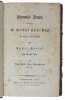
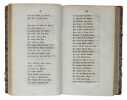
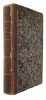
The highly important first translation into any modern language - and overall the second edition to appear - of the seminal Gothic tale that is Beowulf. This monumental work appeared merely five years after the first printing of the text (in Latin, 1815) and 13 years before the first English edition of Beowulf. With this edition, Grundtvig founded the study of Beowulf. ""In the British Library there is a manuscript, its edges scorched and brittle, of ""Beowulf"", one of the very earliest poems in English and its first great literary masterpiece. It exists only in this one vellum codex and has survived for a thousand years, telling of an even earlier time, when the heroic age still was remembered by a Christian audience....In 1786, an Icelandic scholar, came to the [British] Museum, looking for documents relating to Denmark, where the first part of ""Beowulf"" takes place. He made two complete copies of the manuscript, the first time this had been done, one by a professional copyist and the other, himself, and returned to Copenhagen to study them.But then calamity. Denmark was occupied during the Napoleonic Wars and, in 1807, the English bombarded Copenhagen... [The] manuscript for an edition of ""Beowulf"", which just had been completed, was destroyed."" The two transcripts were saved, however, work on them was begun again, and in 1815 the first printed edition of ""Beowulf"" appeared, in Latin, printed in Copenhagen.In 1820 the first translation of the seminal poem appeared, that into Danish, translated by the great Danish author Grundtvig, sparking the interest in Beowulf that persists until this day. In 1833, the first English edition of Beowulf appeared.
Grundtvig og Ingemann. Brevvexling 1821-1859, udgiven og indledet af Svend Grundtvig.
Kjøbenhavn, Forlagt af Samfundet til den Danske Litteraturs Fremme, 1882. 8vo. Indbundet i et senere rødt halvshirtingbind med forgyldt rygtitel. En smule ubetydeligt slid ved kapitæler og ydre false. Enkelte spredte brunpletter, ellers ren og pæn indvendig. LX,(2),328 pp.
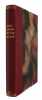
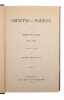
Eksemplaret har tilhørt den danske litterat og professor Paul V. Rubow (1896-1972) og bærer hans navnetræk på forsatsbladet.
Imod den lille Anklager, det er Prof. H.C. Ørsted, med Beviis for at Schellings Philosophie er uchristelig, ugudelig og løgnagtig. - [""MODSIGELSENS GRUNDSÆTNING""]
Kjøbenhavn, Seidelin, 1815. 8vo. Indbundet i et pænt, samtidigt marmoreret papbind. En smule slid ved kapitæler og permer. Ryg og forperm falmede. Hjørner stødte. Tidligere ejers navnetræk på titelbladet. Ren og pæn indvendig. 227,(1: errata) pp.
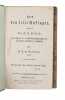
Originaltrykket af Grundtvigs sjældne indlæg i striden med Ørsted om Schellings identitetsfilosofi. Det er her Grundtvig introducerer sin argumentationsform ud fra ""Modsigelsens Grundsætning"" som forsvar for et kristent livssyn.
(ANDERSEN, H.C., N. F. S. GRUNDTVIG, H. P. HOLST og andre).
Reference : 60277
(1849)
Festen for Adam Oehlenschlæger. Den 14. November 1849.
(København), Bianco Luno, (1849). 8vo. Sort halvshirtbind med marmoreret papir over permer. Stregforgyldning på ryg. Forgyldt titeletiket på forpermen. Noget brunplettet, særligt de første og sidste blade. Gammelt ejernavn på titelblad.
Originaludgaven med bidrag af H.C. Andersen, Grundtvig, Holst m. fl.
Høinordens Rigskrøniker fra Middelalderen, fordanskede af N.F.S. Grundtvig. 2 Bd. (1. Danmarks Krønike af Saxe Runemester. Anden Udgave. 2. Norges Konge=Krønike af Snorre Sturlesøn. Anden Udgave.).
Kjøbenhavn, Michaelsen & Tillge, (1855-) 65. 2 samt. hldrbd. med rygforgyldning. Lille revne i nederste del af fals på bd. 2. Rygge med lidt brugsspor. (12),818(10),847 pp.
Skribenten Nik. Fred. Sev. Grundtvigs literaire Testamente. Kbh., 1827.
Ubeskåret i det orig. bogtrykte blå omsl. Omsl. m. enkelte mindre revner. Et nr. i blyant på foromsl. Første og sidste blade m. brune pletter.
Originaludgave. Det er i dette værk, Grundtvig giver den berømte selv-karakteristik. Han Skriver bl.a.: ""See, her er Nøglen til mine Gjemmer, her er Lede=Traaden i min Troi=Borg, her er Forklaringen over mit Chaos (...) her er Regnskabet for min Uvidenskabelighed og mit vilde Fornuft=Had, her er Grunden til mine Lovtaler over Norden""...
Skribenten Nik. Fred. Sev. Grundtvigs Literaire Testamente. Kbh., 1827.
Orig. bogtrykt blåt omsl. Særdeles friskt ekspl.
Den sjældne originaludgave, hvor Grundtvig giver sin berømte selvkarakteristik, han skriver bl.a."" ""Fredelighed er vel mig kun halv naturlig, nemlig som Bog=Orm""...
Nyaars=Morgen. Et Rim.
Kjøbenhavn, Schultz, 1824. 12mo. Nydeligt samtid. hldrbd. med rygforgyldning. Ryg med ganske lette brugsspor.XXII,156 pp.
Originaludgaven. Dette malmulde digt, hvori Grundtvig beskriver sin åndelige udvikling, er ligeledes manifestationen af hans poetiske gennembrud, i en periode hvor han følte sig ""liflig gjennemglødet"".
Roskilde=Saga til Oplysning af Roskilde=Riim.
København, Andreas Seidelin, 1814. Lille 8vo. Samtidigt hldrbd. med rygforgyldning og skindtitel. Lid spredte brunpletter. Gl. ejernavn på forsatsen: F.L. Grundtvig.
Originaludaven.
ELVESKUD
Thieles Bogtrykkeri. 1881. In-16. Broché. Etat d'usage, Couv. convenable, Coiffe en pied abîmée, Intérieur acceptable. 95 pages. Texte en danois. Envoi manuscrit vraisemblable de l'auteur au dos du 1er plat. Annotations au crayon dans le texte.. . . . Classification Dewey : 490-Autres langues
Overblik ved S. Grundtvig. Dansk, Svensk, Norsk, Færøsk, islandsk, skotsk, vendisk, fransk, bretonsk... Classification Dewey : 490-Autres langues

Furubotn Eirik Grundtvig Richter Rudolf
Reference : 100138472
(2000)
ISBN : 0472086804
Institutions and Economic Theory: The Contribution of the New Institutional Economics (Economics Cognition and Society)
The university of Michigan Press 2000 in8. 2000. Broché.
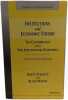
Très bon état intérieur propre
L'école pour la vie
Broche, en excellent etat. Vrin, collection Philosophie de l education, 2018. 242 pp. Photos sur demande.
Merci de nous contacter à l'avance si vous souhaitez consulter une référence dans notre boutique à Authon-du-Perche.
Hvem er den falske Prophet? Hvem forvirrer Folket? Svar til Recensenten i Litt. Tid. No. 12 og 13.
Kiøbenhavn, A. Seidelin, 1814. 8vo. Indbundet i et senere helpapbind. Rygstrimmel delvist bortslidt. Gennemgående brunplettet. XIV, 64, (2) pp.

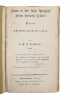
Det sjælde originaltryk af Grundtvigs stridsskrift, rettet imod H. C. Ørsted.
Udsigt over Verdens=Krøniken fornemmelig i det Lutherske Tidsrum.
Kjøbenhavn, A. Seidelin, 1817. 8vo. Ubeskåret i det originale hollanderede bind, beklædt med nyere blåt papir. Nyere håndskrevet rygtiteletiket. Navnetræk på indersiden af forperm. Ren og pæn indvendig. XLIV, 675, (1: errata) pp.
Prøver af Snorres og Saxos Krøniker i en ny Oversættelse samt et Ord til Danske og Norske. Kbh., 1815. + En mærkelig Spaadom ogsaa om Dannemark efter en gammel Haandskrift. Kbh., 1814. + Helligtrekongerlyset eller Tre Dages Hændelser paa Dannemarks Hø...
K., 1814, 1815 og 1834. Indb. i ét samt. hshirtbd. Indimellem en smule brunplettet.
7 originaludgaver, herimellem nogle sjældent forekommende.
Dänische Volksmärchen. Nach bisher ungedruckten Quellen erzählt. Uebersetzt von Willibald Leo.
2 Bände in 1 Band. Leipzig, Verlag von Joh. Ambr. Barth. 1878-1879. Klein-8°. XV, 328 S.; 2 Bl., 308 S., 4 Bl. Anzeigen. Lederband der Zeit mit etwas Rückenvergoldung.
Einband leicht berieben. Vortitelblatt verso mit einem kleinen geklebten Einriss am oberen Seitenrand und Abklatschspur auf Titelblatt.
Jule-Sang i Dronning Caroline Amalias Asyl.
(København, 1838). 8vo. I blankt papomslag med håndskreven titeletiket på foromslaget. Pæn og ren.
Originaltrykket.
Bibliografi over N.F.S. Grundtvigs Skrifter. 4 Bd. (Incl. Rettelser, Tilføjelser og Register).
Kbhvn., 1948-54. Frisk heftet eksemplar.
Krønike=Riim til Børne=Lærdom med Indledning og Anmærkninger. Kbh., 1829.
Indb. i samt. slidt helldrbd.. Kapitæler slidt, ryg m. brugsspor. Nogle brune pletter.
Originaludgave.
Krönike-Riim til Levende Skolebrug med Oplysninger. Anden forøgede Udgave. Kbh., 1842.
Samt. hldrbd. m. brugsspor. Her og der lidt brune pletter.
2.udgaven m. adskillige nye digte.
Budstikke i Höinorden. K., 1864. + Trøstebrev til Danmark. Andet Oplag. K., 1864.
Ét senere hshirtbd. Ren.
1 originaludgave.
Danske Kæmpeviser til Skolebrug, udvalgte og tillæmpede. Andet Oplag. K., 1875.
Samt. hldrbd. m. rig rygforgyldn. Lidt brunplettet. Ryg ligt slidt, hjørner stødte.
Kvædlinger eller Smaakvad. Kbh., 1815.
Ubeskåret, orig. hollanderet bagomsl, senere blankt foromsl., dele af den orig. ryg bevaret. Titelbl. beskåret. Her og der lidt brunplettet.
Originaludgave.

