 Write to the booksellers
2356 books for « graham b »Edit
-
Type
Artists book (1)
Book (2355)
Magazine (1)
Music sheets (15)
-
Latest
Last 24h (1)
Last 3 days (1)
Last month (23)
-
Language
Dutch (1)
English (26)
French (2325)
Russian (20)
-
Century
18th (2)
19th (21)
20th (1373)
21st (251)
-
Countries
Belgium (110)
Canada (11)
China (1)
Côte d'Ivoire (1)
Denmark (21)
France (2060)
Germany (1)
Greece (1)
Netherlands (4)
Switzerland (139)
United Kingdom (3)
United States of America (20)
-
Syndicate
ALAC (10)
CLAM (7)
CLAQ (3)
ILAB (1077)
NVVA (7)
SLACES (7)
SLAM (1021)
SNCAO (1)
Topics
- Africa (4)
- Architecture (8)
- Aviation (3)
- Ballard james graham (4)
- Bibliophilism (3)
- Biography (6)
- Bruyère (66)
- Chemistry (13)
- Children’s books (64)
- Christ (the) (3)
- Christianity (8)
- Christmas (4)
- Cinema (7)
- Civilisation (4)
- Comedy (7)
- Computer science (3)
- Dance & ballet (4)
- Dancing (4)
- Decoration (5)
- Detective novels (41)
- Drama (4)
- Early printed books (11)
- England (14)
- English (36)
- English literature (15)
- Erotic (20)
- Ethic (5)
- Fantastic (6)
- Fine arts (15)
- First edition (11)
- Fisher max & alex (4)
- Fleury (6)
- Flora (4)
- Flowers (3)
- Foreign literature (7)
- Fruits (4)
- God (3)
- Great britain (6)
- Greene graham (539)
- Guide books (5)
- Harlequin (4)
- History (39)
- Industrial arts & crafts - fine arts (8)
- Joyce james (9)
- Language (4)
- Legends (6)
- Leisure (4)
- Literature (315)
- Masterton graham (27)
- Mexico mayas (5)
- Miller (4)
- Miracles (3)
- Motor vehicle (9)
- Motor vehicles / motor bikes (5)
- Mountaineering climbing (4)
- Music (5)
- Newspapers press (3)
- Painting (4)
- Paris (5)
- Philosophy (7)
- Photography (12)
- Physics (4)
- Poetry (4)
- Policy (4)
- Religions (8)
- Review (6)
- Reynolds graham (4)
- Robin (3)
- Romance (19)
- Science fiction (20)
- Sciences (4)
- Sciences & technique (3)
- Scores (18)
- Sculpture (4)
- Songs (18)
- Sports (4)
- Sports (4)
- Spying (31)
- Suspense (5)
- Swift graham (25)
- Tea (12)
- Theatre (9)
- Theology (9)
- Thriller (5)
- Translation (9)
- Travel (4)
- United kingdom (15)
- United states (6)
- Various (14)
- War (10)
- Wash tint (7)
- Webster graham (3)
- Youth (12)
Monsignor Quichotte
Robert laffont / Club Express 1982 273 pages in8. 1982. broché. 273 pages. Monsignor Quichotte est un roman de Graham Greene qui raconte les aventures d'un prêtre naïf et de son ami un ancien maire communiste à travers l'Espagne post-franquiste. Greene combine habilement comédie et drame dans une parodie moderne de Don Quichotte explorant des thèmes philosophiques sérieux sous un ton léger
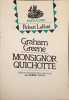
Etat correct
Rocher de Brighton
Editions Rencontre Société Coopérative 1965 481 pages in8. 1965. reliure editeur. 481 pages. Roman noir de Graham Greene publié en 1938 qui suit Pinkie Brown un jeune bandit de dix-sept ans dans sa quête de vengeance après l'assassinat de son chef de gang. L'histoire se déroule dans le décor de bord de mer de Brighton où trahison meurtre et vengeance s'entremêlent opposant des personnages comme Ida (représentant le bien) et Pinkie (incarnant le mal)
Bon état
La Puissance et la Gloire
France loisirs 1978 315 pages in8. 1978. relie jaquette. 315 pages. Roman de Graham Greene qui suit un prêtre alcoolique et lâche traqué dans le Mexique des années 1930 pendant la persécution anticléricale explorant les thèmes de la grâce divine de la rédemption et du courage face à la mort
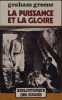
Bon état
Un américain bien tranquille
Le guilde du livre 1957 237 pages in8. 1957. reliure editeur pleine toile. 237 pages. Roman de Graham Greene publié en 1957 se déroulant au Vietnam au début des années 1950 pendant la guerre coloniale française. Il met en scène l'affrontement entre le journaliste britannique Thomas Fowler et l'idéaliste américain Alden Pyle explorant les dilemmes moraux dans un contexte de guerre et de passions humaines
Très bon état
Voyages avec ma tante
ROBERT LAFFONT 1970 354 pages in8. 1970. reliure editeur. 354 pages. Le roman raconte l'histoire d'Henry Pulling un banquier retraité menant une vie paisible et routinière dont l'existence est bouleversée par l'arrivée de sa tante excentrique Augusta. Elle l'entraîne dans une folle poursuite à travers le monde de la Turquie à l'Amérique du Sud loin de son quotidien ennuyeux
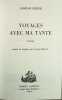
Très bon état
La Taille des plantes
Gründ 1983 95 pages 12x21x1cm. 1983. Reliure editeur cartonnée. 95 pages. Guide pratique de jardinage publié en 1983 par les éditions Gründ qui explique comment réussir la taille des plantes. L'ouvrage de 95 pages est illustré en couleurs et fait partie de la collection "Pour réussir"
Bon état
Jesus: The Evidence
MacMillan 1985 186 pages 13x1 4x19 4cm. 1985. Broché. 186 pages.

couverture usagée intérieur en très bon état
Jesus: The Evidence
Weidenfeld & Nicolson 1984 208 pages 18 4x2 4x23 6cm. 1984. cartonné avec jaquette. 208 pages.
jaquette légèrement frottée aux extrémités
Jack Brabham Tony Brooks Jim Clark Fangio Enzo Ferrari Graham Hill Mike Hawthorn Innes Ireland Stirling Moss
Reference : 4612
(1965)
La course automobile
Robert Laffont 1965 311 pages in8. 1965. Broché couverture rempliée. 311 pages.
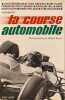
Bon état coiffe supérieure légèrement abimée
Une histoire d'amour Camilla la maitresse du Roi
Editions du rocher 1994 302 pages in8. 1994. broché. 302 pages.
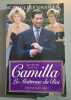
Très bon état
Le fond du problème numeroté 2981/3500
Club du livre du mois 1954 338 pages in8. 1954. reliure editeur. 338 pages.
Très bon état
La puissance et la gloire
Pavillons Robert Laffont 1951 348 pages petit in8. 1951. Broché couverture souple d'origine. 348 pages.
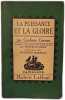
Etat correct
Monsignor Quichotte
Robert Laffont 1982 274 pages in8. 1982. Couverture rigide avec jaquette. 274 pages.
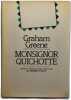
Bon état jaquette insolée
La puissance et la gloire/ exemplaire numeroté
Club du livre du mois 1957 312 pages in8. 1957. reliure pleine toile sous rhodoid. 312 pages.
Bon état
"GRAHAM, THOMAS. - ""SO MUCH HAS SELDOM BEEN ACCOMPLISHED BY A SINGLE INVESTIGATION""
Reference : 46362
(1833)
Researches on the Arseniates, Phosphates, and Modifications of Phosphoric Acid. Received January 29. Read June 19, 1833.
(London, Richard Taylor, 1833). 4to. No wrappers as extracted from ""Philosophical Transactions"" 1833 - Part II. Pp. 253-284. Clean and fine.
First appearance of a main paper in the history of chemistry. ""Graham's major contribution to inorganic chemistry is presented in a paper entitled ""Researcheson thee Arseniates, Phosphates....."" 1833 (the paper offered)...his elucidation of the differences between the three phosphoric acids and his discovery of their polybasicity provided Liebig with the clue to the modern concept of polybasic acids...""(A Source Book in Chemistry p. 333).Graham’s major contribution to inorganic chemistry is his paper !Researches on the Arseniates, Phosphates, and Modifications of Phosphoric Acid,"" in which he elucidated the differences between the three phosphoric acids. This research and the style of the paper are reminiscent of Joseph Black’s work on magnesia and the alkalies carried out in Glasgow eighty years earlier. Graham’s discovery of the polybasicity of these acids provided Justus Liebig with the clue to the modern concept of polybasic acids. Of this classic work the eminent German chemist and historian of chemistry Albert Ladenburg has said, ""so much has seldom been accomplished by a single investigation.""(DSB) ""In the Preface to...Graham's papers...Dr. Angus Smith has indicated in precise...language Graham's position in that chain of thinkers which includes Leucippus, Lucretius, Newton and Dalton (Thorpe)""Thomas Graham, the Scottish Chemist, first president of the Chemical Society of London, and one of the chief founders of physical chemistry. He formulated Graham's Law of diffusion relating the rate of diffusion of gases to their densities, discovered and named the process of dialysis used for separating colloids from crystalloids, studied the three forms of phosphoric and arsenics acids that led to the developpement of the concept of polybasic acids, a major contribution to inorganic chemistry (the paper offered).

512 , par Graham Oakley
Paris Albin-Michel Jeunesse 1981 in-4 oblong cartonné un album, reliure bradel cartonnée in-quarto à l'italienne, couverture illustrée en couleurs par Graham OAKLEY, Album-jeu : Livre à système d'images sans texte, les images coupées en deux sont à varier pour des résultats frôlant le surréalisme, illustré en couleurs par Graham OAKLEY, Non paginé, 1981 Paris Albin-Michel Jeunesse Editeur,
Note : Ed. française de « Graham Oakley's magical changes ». - Chaque page est partagée en son milieu dans le sens de la largeur, formant 2 fascicules l'un au-dessus de l'autre......... RARE.....en trés bon état (very good condition). en trés bon état
Researches on the Arseniates, Phosphates, and Modifications of Phosphoric Acid. Received January 29. Read June 19, 1833.
(London, Richard Taylor, 1833). 4to. No wrappers as extracted from ""Philosophical Transactions"" 1833 - Part II. Pp. 253-284. Clean and fine.
First appearance of a main paper in the history of chemistry. ""Graham's major contribution to inorganic chemistry is presented in a paper entitled ""Researcheson thee Arseniates, Phosphates....."" 1833 (the paper offered)...his elucidation of the differences between the three phosphoric acids and his discovery of their polybasicity provided Liebig with the clue to the modern concept of polybasic acids...""(A Source Book in Chemistry p. 333).""In the Preface to...Graham's papers...Dr. Angus Smith has indicated in precise...language Graham's position in that chain of thinkers which includes Leucippus, Lucretius, Newton and Dalton (Thorpe)""Thomas Graham, the Scottish Chemist, first president of the Chemical Society of London, and one of the chief founders of physical chemistry. He formulated Graham's Law of diffusion relating the rate of diffusion of gases to their densities, discovered and named the process of dialysis used for separating colloids from crystalloids, studied the three forms of phosphoric and arsenics acids that led to the developpement of the concept of polybasic acids, a major contribution to inorganic chemistry (the paper offered).
On the Motion of Gases. Received June 18, - Read June 18, 1846. (+) On the Motion of Gases. Part II. Received JJune 21, - Read June 21, 1849.
(London, Richard and John E. Taylor, 1846 a. 1849). 4to. No wrappers as extracted from ""Philosophical Transactions"" 1846 . Pp. 573-631 a. 3 engraved plates + 1849. Pp. 349-391. Clean and fine.
First appearance of the papers in which he announced his famous Law of Effusion. Graham's Law shows the relationship between the molar or molecular mass of a gas and the rate at which it will effuse. Effusion is the process of gas molecules escaping through tiny holes in their container. He showed experimentally that the ratio of the rates of effusion of two gases is equal to the square root of the inverse ratio of their molecular masses or densities and the effusion rate of a gas is inversely proportional to the square root of its molecular mass.Thomas Graham, the Scottish Chemist, first president of the Chemical Society of London, and one of the chief founders of physical chemistry. He formulated Graham's Law of diffusion relating the rate of diffusion of gases to their densities, discovered and named the process of dialysis used for separating colloids from crystalloids, studied the three forms of phosphoric and arsenics acids that led to the developpement of the concept of polybasic acids, a major contribution to inorganic chemistry.
Catalogue de l'exposition Paul Graham.
Dublin. The Douglas Hyde Gallery, 2012. In-8 reliure pleine toile éditeur rouge. Photographies en couleurs de P. Graham. Préface de J. Hutchinson. E.O. Signature autographe de Paul Graham sur la page de titre.
![Catalogue de l'exposition Paul Graham.. [PHOTOGRAPHIE] [GRAHAM (Paul)] HUTCHINSON (John).](https://static.livre-rare-book.com/pictures/AIC/29166_1_thumb.jpg)

Graham Greene ou le bord vertigineux des choses. Tome I : 1904-1939.
Laffont, 1991, fort gr. in-8°, 744 pp, traduit de l'anglais, 32 pl. de photos hors texte, notes, index, broché, couv. illustrée, bon état (Coll. Biographies sans masque). Seul volume traduit en français
Graham Greene, sans nul doute l'un des plus grands romanciers de notre époque, a toujours tenu sa vie privée à l'abri d'un certain mystère protecteur. Néanmoins, il a pris la décision réfléchie de permettre à Norman Sherry de consulter en toute liberté ses lettres et ses carnets, autorisant cette biographie aussi franche qu'exhaustive. L'ouvrage se présente en deux volumes : le premier, que voici, couvre la vie de Graham Greene de sa naissance jusqu'à la Deuxième Guerre mondiale. Norman Sherry a rencontré Graham Greene pour la première fois, il y a quatorze ans, grâce à une passion partagée pour Conrad. Depuis lors, il en est venu à très bien connaître l'écrivain, personnellement, mais aussi à travers de nombreuses conversations avec ses plus proches relations, amis et associés. Au coeur de ce premier volume – les trente-cinq premières années – une remarquable série de lettres écrites par Greene à sa femme Vivien, pour laquelle il s'est converti au catholicisme. Elles nous montrent un jeune Greene inconnu : passionné et romantique, obsédé par l'omniprésence du mal, tenté de mettre sa vie en jeu. Sherry nous éclaire aussi, avec des détails d'une précision fascinante, sur les combats menés par Greene pour apprendre son métier et devenir écrivain ; il retrace enfin ses multiples voyages et séjours à travers le monde, notamment en Afrique et au Mexique, où il s'était rendu avant la guerre – nous entraînant au plus profond du territoire étrange et inquiétant que Greene avait fait sien. Ainsi le "Greene" de Norman Sherry est-il – à la mesure de l'auteur de La Puissance et la Gloire – l'une des grandes biographies littéraires d'aujourd'hui. (4e de couverture) Désormais les frais d'envoi sont de 6 € seulement pour les livres jusqu'à 1 kg (colissimo suivi), pour la France métropolitaine.
Graham greene Le dixième homme France loisirs
1985 1985. Graham Greene: Le dixième homme/ France Loisirs 1985 . Graham Greene: Le dixième homme/ France Loisirs 1985
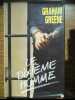
Bon état
Chroniques de l'Art Vivant - Aimé Maeght et Jean Clair - Gilles et Christine Larrain - Jean-Christophe Amman sur Urs Lüthi et Luciano Castelli - Jean-François Lyotard sur Lindner - Gilbert Gatellier sur Gina Pane - Irmeline Lebeer sur Dan Graham - Marie-Claude Volfin - Jean-Noël Vuarnet sur Pierre Klossowski - Jacques Lepage - Alain Clerval - Philippe du Vignal et Jules Cordières - Lise Brunel - Daniel Caux sur Luc Ferrari - Jeannot Lapin
Reference : CAV-41
(1973)
Chroniques de l'Art Vivant n° 41 - Juillet 1973 - Le corps 2 - Les corps étranges - Le temps des idoles (travestis) - Le corps ambigu, le travestissement sur Urs Lüthi et Luciano Castelli - Le corps vénal, les filles machines folles de Lindner - Gina Pane - Dan Graham - Atelier d'artiste - Lettres, le corps et la monnaie perverse, sur Pierre Klossowski - Exposition André Malraux - Textruction - La grande bouffe -Théâtre, Le palais des merveilles et Jules Cordières - Danse, le langage du corps, à travers la danse indienne, africaine, et occidentale - Danses organiques de Luc Ferrari - Cinéma, La maman, la putain et le petit lapin
Maeght Editeur - Chroniques de l'Art Vivant Ferce sur Sarthe, France 1973 Book Condition, Etat : Bon broché, sous couverture imprimée éditeur, illustrée d'une photographie montage de Gilles Larrain, une tête d'homme avec un voile In-4 carré 1 vol. - 40 pages
très nombreuses illustrations en noir et blanc 1ere édition Contents, Chapitres : Jean Clair : Les corps étranges - Gilles et Christine Larrain : Le temps des idoles (travestis) - Jean-Christophe Amman : Le corps ambigu, le travestissement comme expression et comme symptôme, Urs Lüthi, Luciano Castelli - Jean-François Lyotard : Le corps vénal, les filles machines folles de Lindner - Gilbert Gatellier : Un humanisme du corps, Gina Pane - Irmeline Lebeer : Le corps matériau perceptuel, Dan Graham suivi d'un entretien avec Dan Graham - Marie-Claude Volfin : L'atelier d'artiste (suite des numéros 39 et 40), les nouveaux ateliers - Jean-Noël Vuarnet : Lettres, le corps et la monnaie perverse, sur Pierre Klossowski - Exposition André Malraux à la Fondation Maeght, 13 juillet au 30 septembre à Saint-Paul - Jacques Lepage : Textruction - Alain Clerval : La grande bouffe chez nos grands pères, Eros et Agape au 19eme siècle - Philippe du Vignal : Théâtre, Le palais des merveilles suivi d'un entretien avec Jules Cordières - Lise Brunel : Danse, le langage du corps, à travers la danse indienne, africaine, et occidentale (table ronde) - Daniel Caux : Les danses organiques de Luc Ferrari avec un entretien - Jeannot Lapin : Cinéma, La maman, la putain et le petit lapin, fable expérimentale - Actualités et publicités
"BELL, ALEXANDRE (ALEXANDER) GRAHAM. - BELL, ALEXANDER GRAHAM. - ""THE GREATEST INVENTION I HAVE EVER MADE"": THE PHOTOPHONE.
Reference : 48149
(1880)
De la Production et de la Reproduction du Son par la Lumière. Mémoire lu à l'Association américaine pour l'avancement des Sciences, au Congrès de Boston, le 27 août 1880. (+) Les Récepteurs photophoniques de Sélénium. (Cette Note fait suite au M´wem...
Paris, G. Masson, 1880. 8vo. Contemp. hcalf, raised bands, gilt spine. Light wear along edges. Small stamps on verso of titlepage. In: ""Annales de Chimie et de Physique"", 5e Series, Tome 21. 576 pp. and 2 folded engraved plates. (Entire volume offered). Bell's paper: 399-430. With 11 fine textillustrations (showing the apparatus). Clean and fine.
First French version of ""On the Production and Reproduction of Sound by Light"" (the French version published in November and the English in October 1880) of this importent paper in which Bell describes his and Charles Sumner Tainter's, his assistent, invention of the Photophone or Radiophone, THE PROGENITOR OF MODERN FIBER OPTICS. This invention made possible the world's FIRST WIRELESS TELEPHONE MESSAGE, and the first call was sent from the Franklin Scool to the window of Bell's laboratory, some 213 meter away.Also with Breguet's importent paper on the Selenium used in the technology.""On June 3, 1880, Alexander Graham Bell transmitted the first wireless telephone message on his newly invented ""photophone."" Bell believed the photophone was his most important invention. The device allowed for the transmission of sound on a beam of light. Of the eighteen patents granted in Bell's name alone, and the twelve he shared with his collaborators, four were for the photophone. Bell's photophone worked by projecting voice through an instrument toward a mirror. Vibrations in the voice caused similar vibrations in the mirror. Bell directed sunlight into the mirror, which captured and projected the mirror's vibrations. The vibrations were transformed back into sound at the receiving end of the projection. The photophone functioned similarly to the telephone, except the photophone used light as a means of projecting the information, while the telephone relied on electricity."" (Mary Bellis).The first successful attempts were based upon the properties of selenium: ""The electric resistance of which varies with the degree of illumination to which it is exposed. Hence, given a transmitting instrument, such as a flexible mirror, by which the vibrations of a sound could throw into vibrations a beam of light, a receiver, consisting of sensitive selenium, forming part of an electric circuit with a battery and a telephone, should suffice to translate the varying intensities of light into corresponding varying intensities of electric current, and finally into vibrations of the telephone disk audible once more as sound."" (Prescott, George. Bell's Electric Speaking Telephone. 313 p.).

