 Write to the booksellers
11917 books for « george a »Edit
-
Type
Autograph (7)
Book (11689)
Disk (2)
Drawings (1)
Engraving (8)
Magazine (32)
Manuscript (1)
Maps (5)
Music sheets (151)
New book (1)
Old papers (5)
Photographs (11)
Postcards (1)
Posters (3)
-
Latest
Last 24h (7)
Last 3 days (11)
Last month (642)
Last week (18)
-
Language
Albanian (1)
Dutch (21)
English (127)
French (11484)
German (6)
Italian (1)
Japanese (1)
Latin (1)
Russian (274)
Spanish (1)
-
Century
16th (4)
17th (19)
18th (151)
19th (1000)
20th (5325)
21st (658)
-
Countries
Belgium (739)
Brazil (10)
Canada (77)
China (47)
Côte d'Ivoire (22)
Denmark (227)
France (9529)
Germany (41)
Greece (15)
Switzerland (911)
United Kingdom (20)
United States of America (279)
-
Syndicate
ALAC (65)
CLAM (78)
CLAQ (20)
CNE (4)
ILAB (5334)
NVVA (124)
SLACES (124)
SLAM (4648)
SNCAO (7)
Topics
- Archaeology (57)
- Architecture (41)
- Autographs (43)
- Balzac honoré de (26)
- Barber (164)
- Belgium (32)
- Berry (65)
- Besson george (36)
- Bibliophilism (33)
- Biography (98)
- Children’s books (85)
- China (30)
- China (75)
- Christianity (31)
- Christmas (54)
- Cinema (53)
- Civilisation (29)
- Comic strip (61)
- Customs (26)
- Dedication (31)
- Delamare george (32)
- Detective novels (94)
- Drawings (29)
- Duruy george (32)
- Early printed books (62)
- Economics (96)
- Egypt (39)
- Eliot george (134)
- England (66)
- English (266)
- English literature (29)
- Esotericism (28)
- Ethnology (63)
- Fine arts (138)
- First edition (312)
- French literature (33)
- Fronval george (79)
- Geography (193)
- Germanic languages (30)
- Gershwin georges (62)
- Helvética (38)
- History (368)
- Illustrated books (45)
- Industrial arts & crafts - fine arts (37)
- Langelaan george (34)
- Literature (836)
- Mathematics (45)
- Medicine (65)
- Mérédith george (64)
- Mikes george (41)
- Military arts (26)
- Music (34)
- Navy (39)
- Newspapers press (59)
- Orwell georges (203)
- Painters (50)
- Painting (61)
- Paris (54)
- Philosophy (136)
- Photography (88)
- Pléiade & album de la (29)
- Poetry (64)
- Policy (49)
- Psychology (53)
- Regionalism (45)
- Religions (100)
- Review (76)
- Reviews (76)
- Rock (40)
- Rock (38)
- Romanticism (26)
- Russia (31)
- Sand george (1658)
- Savage george (27)
- Sciences (53)
- Scores (187)
- Sculpture (28)
- Sociology (45)
- Songs (134)
- Spying (45)
- Steiner george (72)
- Switzerland (38)
- Tea (66)
- Theatre (74)
- Theology (38)
- Translation (37)
- Travel (61)
- United kingdom (62)
- United states (64)
- Ussr (27)
- Various (84)
- Waldemar george (63)
- War (122)
- Women (the) (26)
- Youth (41)
Progress and Poverty. An Inquiry into the Cause of Industrial Depressions, and of Increase of Want with Increase of Wealth - the Remedy. Author's Edition. - [""UNDOUBTEDLY THE MOST REMARKABLE AND IMPORTANT BOOK OF THE PRESENT CENTURY""]
San Francisco, Wm M.Hinton & Co, 1879. 8vo. In the original full cloth binding with gilt lettering to spine and a bit of blindstamping to boeards. A bit of light spotting to front board, spine faded, and capitals worn. Hinges internally a bit weak, and a professional closed tear to cloth at spine, barely noticeable. All in all an excellent copy in this fragile original binding. Internally very nice and clean. With the bookplate of Grove L. Johnson to inside of front board. (4), 512 pp.
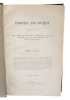
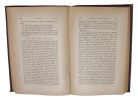
The exceedingly scarce first edition, printed in merely 200 copies (namely the ""Author's edition), of one of the most influential books ever published. Henry George's masterpiece of social reform, ""Progress and Poverty"", founded the ideology known as ""Georgism"", from which the worldwide social reform movement arose. The work initiated the Progressive Era and had a larger impact and ""a wider distribution than almost all other books on political economy put together"", as John Dewey put it (John Dewey's Foreword to Geiger's ""The Philosophy of Henry George"" (1933)). ""The present century has been marked by a prodigious increase in wealth-producing power. The utilization of steam and electricity, the introduction of improved processes and labor-saving machinery, the greater subdivision and grander scale of production, the wonderful facilitation of exchanges, have multiplied enormously the effectiveness of labor.At the beginning of this marvelous era it was natural to expect, and it was expected, that labor-saving inventions would lighten the toil and improve the condition of the laborer"" that the enormous increase in the power of producing wealth would make real poverty a thing of the past"", is how Henry George introduces his grandiose work of social reform. But though people naturally expected labor-saving inventions to improve working- and living conditions for all, quite the opposite was the case. As towns and cities grew - and grow - and new technologies continually improve methods of production and exchange, so misery, poverty and crime continued - and continues - to increase. Henry George magnificently pointed out the association of progress with poverty and how that precisely came to be the cause of our social and political difficulties. He pointed out, how this problem, if unsolved, would mean the downfall of civilization. And he provided the remedy - ""Deduction and induction have brought us to the same truth: Unequal ownership of land causes unequal distribution of wealth. And because unequal ownership of land is inseparable from the recognition of individual property in land, it necessarily follows that there is only one remedy for the unjust distribution of wealth: we must make land common property."" More precisely, Henry George proposed a single tax on land values.Henry George's revolutionary first book, ""Progress and Poverty"" sold millions of copies and became a world-wide bestseller. In sales, it exceeded all other books except the Bible during the 1890s. The first edition, however, was only printed in 200 copies, designated ""Author's Edition"" and is very scarce - not least in the original binding.""During the 1890s George, author of the 1879 bestseller Progress and Poverty, was the third most famous American, after Mark Twain and Thomas Edison. In 1896 he outpolled Teddy Roosevelt and was nearly elected mayor of New York.""""When Progress and Poverty first came out in 1879, it started a worldwide reform movement that in the US manifested in the fiercely anti-corporate Populist Movement in the 1880s and later the Progressive Movement (1900-1920). Many important anti-corporate reforms came out of this period, including the Sherman Antitrust Act (1890), a constitutional amendment allowing Americans to elect the Senate by popular vote (prior to 1913 the Senate was appointed by state legislators), and the country's first state-owned bank, The Bank of North Dakota (1919)."" (Stuart Jeanne Bramhall: Karl Marx vs Henry George, 2013).And the work continued to exercise its enormous influence throughout the Western world. According to a survey among British parliamentarians in 1906, the work was more popular than Walter Scott, John Stuart Mill, and William Shakespeare, and there is almost no end to the line of famous thinkers, who describe ""Progress and Poverty"" as life-changing, including George Bernard Shaw, Friedrich Hayek, H. G. Wells, and Leo Tolstoy, who like Winston Churchill, John Dewey, Bertrand Russell and many others claimed that it was impossible to refute Henry George on the land question. Philip Wicksteed characterized the book as ""by far the most important work in its social consequences that our generation or century [1882] has seen"", Alfred Russel Wallace hailed it as ""undoubtedly the most remarkable and important book of the present century,"" and placed it above Darwin's ""Origin of Species"", Albert Einstein concluded ""Men like Henry George are rare unfortunately. One cannot imagine a more beautiful combination of intellectual keenness, artistic form and fervent love of justice. Every line is written as if for our generation"", etc., etc. PROVENANCE: Grove Lawrence Johnson (1841 -1926) was an American attorney and politician from California. In addition to serving in both houses of the state legislature, Johnson also served as a United States Representative.

Blätter für die Kunst. Begründet von Stefan George. Herausgegeben von Carl August Klein.
(Erste) - Elfte und zwölfte Folge in 11 Bänden. Berlin, gedruckt bei F. Cynamon, (ab Folge 5) bei Otto v. Holten. 1894 -1919. Gross-8°. Jeder Band 156 S. Bd. 1: Späterer Kalblederband mit Rückenschild. Bd. 2: Illustrierter Originalleinwand. Bd. 3: Etwas späterer Halbleinwandband mit 2 goldgeprägten Rückenschildern. Bd. 4: Pergamentband der Zeit. Bd. 6: Halbpergamentband mit goldgeprägtem Rückentitel. Bd. 5, 7-11/12 in Originalpappbänden.
Landmann Landmann 15ff. - Kirchner III, 23249. - Diesch 2633. - Vollständige Folge der wichtigsten literarischen Zeitschrift des George Kreises mit Beiträgen von Stefan, George, Hugo von Hofmannsthal, Ludwig Klages, Karl Wolfskehl u.v.a. - Die 1. Folge hier im Nachdruck von 1914, ebenso wie der erste Druck in 100 Exemplaren gedruckt. Mit dem seltenen nur in 100 Exemplaren gedruckten und numerierten 8. Folge. - Von den vielfach fehlenden Beilagen sind vorhanden: Folge 2: Schlittgen: Porträt von George. Originalradierung; Musikbeilage 4 S. von Karl Hallwachs aus Lieder im geschmack eines fahrenden spielmanns von Stefan George; Fernand Khnopff: "Eine tote Stadt". Reproduktion einer Zeichnung; Aug. Donnay: Mater Amabilis, Zeichnung; Leo Samberger: Appassionata, nach einem Ölbild; Musikbeilage 9 S.: Entführung von Kurt Peters - Folge 3: Melchior Lechter, Zeichnung für ein Glasfenster. Folge 11/12: Ankündigung der Nummer, Faltblatt mit Randläsuren. - 2 der 6 Pappbände mit erneuerten Rücken, die anderen mit kleinen Anrissen. Band 2 im seltenen von Th.Th. Heine illustrierten Leinenband. Band 1 beschnitten. Mit verschiedenen, zum Teil wichtigen Provenienzen: Folge 3: Marcus Behmer, mit handschriftlichem Besitzvermerk. Folge 7: Bernt von Heiseler mit Exlibris und handschriftlichem Besitzvermerk. Folge 8: Numeriert 75. - Es fehlt in der 7. Folge eine Tafel mit Dichterporträts. - Im Band der 3. Folge zusätzlich eingebundnen: 4. Folge, I. - II. Band (somit doppelt vorhanden). - Als Beilage: Verzeichnis der Erscheinungen der Blaetter fuer die Kunst mit einer Inhaltsangabe sämtlicher Hefte. Berlin, fuer das Jahr 1904. 10 n.n. Bl. Druck bei O.v on Holten in Rot und Blau auf Büttenpapier. Originalbroschur mit Fadenheftung. Gedruckt in 300 Exemplaren. S. Landmann 219. - Wenn auch nicht einheitlich gebunden in dieser Vollständigkeit, Zustand und Provenienzen ein bemerkenswertes Exemplar.
Kolhosp Tvaryn(i.e. “a Collective Farm of Animals” - being Animal Farm). - [FIRST UKRANIAN TRANSLATION OF ANIMAL FARM - WITH THE ONLY SURVIVING PREFACE TO THE WORK BY ORWELL HIMSELF]
(Munich), Prometheus, (1947). Original printed pictorial wrappers. In excellent condition with just slight edge wear and a small bump to upper capital. Internally also en very nice condition. Bookseller stamp to front free end-paper: Ukranian Book Store, Edmonton, Alberta. With portrait of Orwell after the preface.
Scarce first edition of the first Ukrainian translation of Animal Farm, being the only edition of Orwell’s masterpiece with a personal preface written by the author. Needless to say, Animal Farm constitutes one of the most important literary works of the 20th century. The satirical-political masterpiece magnificently reflects the events leading up to the Russian Revolution and brilliantly caricatures Stalinism. As Orwell himself put it, with this work, he deliberately tried ""to fuse political purpose and artistic purpose into one whole"". (Orwell, ""Why I Write""). Animal Farm brilliantly portrays not only the corruption of the revolution, but also how traits of human character themselves corrupt society. The greatest flaw of revolution is not the corrupt leadership on its own, but also the greed, indifference, ignorance, shortsightedness, wickedness, etc. that govern the individuals that make up the masses. George Orwell’s (1903-1950) Animal Farm was translated into Ukrainian by Ihor Ševcenko (1922-2009) – a Polish-born Ukrainian scholar, at the time residing in Germany – under the pseudonym Ivan Cherniatyns’kyi. The book was published by the Ukrainian publisher Prometheus in Munich in 1947. The Ukrainian title, Kolhosp Tvaryn (i.e. eng.: “A Collective Farm of Animals”) – a reference to Stalin’s collective farms (kolkhozy) – is deliberately not a literal translation, and “[a] brief examination of Ševcenko’s translation reveals that while his choices were distinctly loyal to the original English text, they simultaneously deepen the political allegory and expand the fairy tale tradition of the novel by domesticating certain aspects of the text through specific references to the Soviet Union and Ukrainian folktales.” (Gor, 2025, p. 18). The text “offered momentary solidarity, unity, and comfort to displaced Ukrainians through its loyal translation and parallel intentions between the source text and the translation” (Gor, 2025, pp. 3-4). At the time of the publication of Animal Farm, Ševcenko was regularly participating in the intellectual spheres of the Ukrainian Displaced Persons camps in Munich. There, he began sight-translating (i.e. without preparation) Animal Farm for camp residents. In April 1946, he wrote to Orwell requesting permission to publish the novel in Ukrainian. Among other things, he wrote to Orwell that ""‘Soviet refugees were my listeners. The effect was striking. They approved of almost all your interpretations. They were profoundly affected by such scenes as that of animals singing ""Beasts of England"" on the hill. Here I saw that apart from their attention being primarily drawn on detecting ""concordances"" between the reality they lived in and the tale, they visibly reacted to the absolute values of the book, to the tale types, to the underlying convictions of the author and so on. Besides, the mood of the book seems to correspond with their own actual state of mind... [T]he attitude of the Western World in many recent issues roused serious doubts among our refugees, who wondered how it were possible that nobody “knew the truth”’...Your bookhas solved the problem."" (Szewczenko to Orwell, 11 April 1946, XVIII, 236). Orwell immediately agreed to the translation, refused any royalties, and later also agreed to write a preface for it (Tatara, 2012"" Gor, 2025, p. 14). ""Although ‘frightfully busy’ Orwell did write this preface, which forever remained his most detailed explanation of the motives behind the “fairy story”. (Masha Karp: On the Ukranian Trnaslation of Animal Farm, the Orwell Foundation, 2022). The Ukrainian edition is especially interesting, not only because of its genesis, but also because it is the only edition of Orwell’s masterpiece with a personal preface written by the author, with the most detailed explanation of the motives behind the Animal Farm. In this context, it is worth noting that Orwell’s original version of the preface in English has been lost, and the only version surviving is the one he wrote for the Ukrainian translation. For the first edition in English, Orwell had intended to include his essay “Freedom of the Press” as a preface, but this was possibly rejected by the publishers. Overall, Orwell faced many obstacles when first publishing Animal Farm: It was rejected for almost a year by publishers, afraid of the criticism of England’s Soviet ally (Gor, 2025), and a preface never appeared. The small Ukranian printing press Promethius managed a print-run of 5.000 copies of the first edition of the Ukranian translation, but a mere 2.000 ended up being distributed throughout DP camps in and around Munich. The remaining copies were confiscated by the US military, who feared that it would be considered anti-Soviet propaganda and would jepardize the relationship with Stalin as the ally, who had helped defeat Hitler. The Americans thus handed over the confiscated copies to the Soviet authorities, who desctroyed them. Animal Farm was written between late 1943 and early 1944, when the wartime alliance with the Soviet Union was at its height and Stalin was held in highest esteem in Britain, among both the people and intelligentsia. Not surprisingly, it was initially rejected by both British and American publishers, and the publication of it was thus delayed. When it did appear, it became a great commercial success, however, probably not least due to the soon to follow Cold War. In his Ukranian preface, Orwell explains that 'It was of the utmost importance to me that people in Western Europe should see the Soviet régime for what it really was. Since 1930 I had seen little evidence that the USSR was progressing towards anything that one could truly call Socialism. On the contrary, I was struck by clear signs of its transformation into a hierarchical society, in which the rulers have no more reason to give up their power than any other ruling class. ""Having explained ‘why ‘totalitarianism is completely incomprehensible… to the workers and intelligentsia in a country like England’, Orwell named as the aim of his book ‘the destruction of the Soviet myth …essential’, he insisted, ‘for a revival of the Socialist movement’. (Orwell Foundation, 2022). The work is generally considered one of the best and most influential literary productions of the 20th century. The original subtitle ""A Fairy Story"" was dropped when the book was published in the United States, and all but one of the translations omitted it. References: Chalupa, Andrea (2012, March 7). How ‘Animal Farm’ Gave Hope to Stalin’s Refugees. Andrea Chalupa. Tatara, Halyna. (2012, July 31). George Orwell and the Ukrainian refugees: the untold story of Animal Farm. Ukrainian Institute London. The Orwell Foundation. (2022, March 15). Masha Karp on the Ukrainian translation of Animal Farm. The Orwell Foundation. The Orwell Foundation. Preface to the Ukrainian Edition of Animal Farm. Gor, Diana. (2025). Found in Translation: George Orwell's Animal Farm in Ukrainian. [Capstone project, Stanford University].
Vorlesungen über die Experimental-Physik nach ihrem gegenwärtigen Zustande. 2 vols. - [RARE FIRST GERMAN TRANSLATION]
Leipzig, Crusius, 1798 & 1799. 8vo. Uniformly bound in two contemporary half calf bindings. Light wear to extremities, spine slightly soiled. Internally very fine and clean. XVI, 686 pp. + 7 folded plates VIII, 774 pp. + 16 folded plates.
![Vorlesungen über die Experimental-Physik nach ihrem gegenwärtigen Zustande. 2 vols. - [RARE FIRST GERMAN TRANSLATION]. ADAMS, GEORGE.](https://static.livre-rare-book.com/pictures/LLX/60998_1_thumb.jpg)
![Vorlesungen über die Experimental-Physik nach ihrem gegenwärtigen Zustande. 2 vols. - [RARE FIRST GERMAN TRANSLATION]. ADAMS, GEORGE.](https://static.livre-rare-book.com/pictures/LLX/60998_2_thumb.jpg)
![Vorlesungen über die Experimental-Physik nach ihrem gegenwärtigen Zustande. 2 vols. - [RARE FIRST GERMAN TRANSLATION]. ADAMS, GEORGE.](https://static.livre-rare-book.com/pictures/LLX/60998_3_thumb.jpg)
Rare first German translation of Adam’s ‘Lectures on natural and experimental philosophy’ arguably his most important and influential work covering a wide range of topics, including mechanics, optics, electricity, magnetism, and astronomy. George Adams was a prominent figure in the field of mathematical and scientific instrument making serving as the principal instrument maker during the mid-eighteenth century.. In 1756, he was appointed as the instrument maker to the Prince of Wales who would later become George III. He continued to hold this position when George ascended to the throne in 1760.
Treatment of Pernicious Anemia by a Special Diet. (Offprint from ""The Journal of the American Medical Association"", Aug. 14, 1926, Vol. 87, pp. 470-476). - [NOBEL PRIZE IN MEDICINE 1934 - ""ONE OF THE LANDMARKS IN THE HISTORY OF THERAPEUTICS""]
Chicago, American Medical Association, 1926. 8vo. Offprint in the original printed wrappers. Previous owner's name to top right corner of front wrapper. A very fine and clean copy. 19 pp.
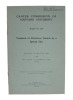
First printing, in the scarce offprint, of Minot and Murphy's seminal Nobel Prize winning paper which ""ranks as one of the greatest modern advances in [anemia] therapy."" (GM). Minot and Murphy shared the Nobel Prize in Physiology or Medicine in 1934 with George Whipple ""for their discoveries concerning liver therapy in cases of anaemia"". ""The brilliant discovery by Minot and Murphy in 1926, demonstrating the dramatic effectiveness of liver preparations in pernicious anemia, forms one of the landmarks in the history of therapeutics."" (Satoskar, Pharmacology and Pharmacotherapeutics).""Prompted by pathologist George Whipple's research on the feeding of liver to anemic dogs, Minot and Murphy fed liver to their patients. In a now famous 1926 paper [the present], they announced its miraculous benefits for forty-five otherwise doomed souls."" (Wailoo, Drawing Blood: technology and Disease Identity in Twentieth-Century America). Up until the 1920'ies, pernicious anemia (also known as ""blood thinning"" disease) was a fatal disease, for which there was no cure. People who developed pernicious anemia - characterized by dangerously low counts of red blood cells - were left exhausted, hospitalized, and without the hope of being cured. ""Minot’s work and that of numerous pupils during the decade after 1926 initiated a new era in clinical hematology by replacing the largely morphologic studies of the blood and of the blood-forming and blood-destroying organs with dynamic measurements of their functions."" (DSB).In the early 1920s, most doctors believed that pernicious anemia was caused by a toxic substance in the body, and they prescribed doses of arsenic, transfusions, or removal of the spleen as treatments. But after these remedies were administered, patients had relapses, and death was inevitable. Across the world, 6,000 lives a year were lost to the scourge of pernicious anemia.""In 1923, Minot met William P. Murphy, who had graduated from Harvard Medical School in 1922 and who was to become an assistant instructor at Harvard Medical School in 1924. In their investigations to find a cure for pernicious anemia, Minot believed that research by George Whipple, a researcher whom he had known while both were at Johns Hopkins Hospital, was particularly significant. Whipple had completed experiments in which he bled dogs to make them anemic. Then he determined which foods restored their red blood cells. His results showed that red meat and certain vegetables were effective treatments, but liver was the best treatment. Minot wondered if Whipple's findings with dogs could be duplicated in humans. He and Murphy were determined to try it, and proceeded to do so with their private patients. Observing an increase in the patients' red blood cell counts, they thought they were on the right track, and decided to try the experiment with hospitalized patients which eventually led to their landmark discovery."" (The Harward University Gazette, 1998).After Minot and Murphy's verification of Whipple's results in 1926, pernicious anemia victims ate or drank at least one-half pound of raw liver, or drank raw liver juice, every day. This continued for several years, until a concentrate of liver juice became available.The active ingredient in liver remained unknown until 1948, when it was isolated by chemists Karl A. Folkers.Garrison & Morton: 3140
A Diet Rich in Liver in the Treatment of Pernicious Anemia. Study of one Hundred and Five Cases.
Chicago, American Medical Association, 1927. 8vo. Offprint in the original printed wrappers. A fine and clean copy. 25 pp.
First printing, in the scarce offprint, of Minot and Murphy's paper, published the year after their landmark Nobel Prize winning 1926-paper, in which they elaborate on their 1926-study and record further observations. Minot and Murphy shared the Nobel Prize in Physiology or Medicine in 1934 with George Whipple ""for their discoveries concerning liver therapy in cases of anaemia"". ""The brilliant discovery by Minot and Murphy in 1926, demonstrating the dramatic effectiveness of liver preparations in pernicious anemia, forms one of the landmarks in the history of therapeutics."" (Satoskar, Pharmacology and Pharmacotherapeutics).""Prompted by pathologist George Whipple's research on the feeding of liver to anemic dogs, Minot and Murphy fed liver to their patients. In a now famous 1926 paper [the present], they announced its miraculous benefits for forty-five otherwise doomed souls"" (Wailoo, Drawing Blood: technology and Disease Identity in Twentieth-Century America). Up until the 1920'ies, pernicious anemia (also known as ""blood thinning"" disease) was a fatal disease, for which there was no cure. People who developed pernicious anemia - characterized by dangerously low counts of red blood cells - were left exhausted, hospitalized, and without the hope of being cured. ""Minot's work and that of numerous pupils during the decade after 1926 initiated a new era in clinical hematology by replacing the largely morphologic studies of the blood and of the blood-forming and blood-destroying organs with dynamic measurements of their functions."" (DSB).In the early 1920s, most doctors believed that pernicious anemia was caused by a toxic substance in the body, and they prescribed doses of arsenic, transfusions, or removal of the spleen as treatments. But after these remedies were administered, patients had relapses, and death was inevitable. Across the world, 6,000 lives a year were lost to the scourge of pernicious anemia.""In 1923, Minot met William P. Murphy, who had graduated from Harvard Medical School in 1922 and who was to become an assistant instructor at Harvard Medical School in 1924. In their investigations to find a cure for pernicious anemia, Minot believed that research by George Whipple, a researcher whom he had known while both were at Johns Hopkins Hospital, was particularly significant. Whipple had completed experiments in which he bled dogs to make them anemic. Then he determined which foods restored their red blood cells. His results showed that red meat and certain vegetables were effective treatments, but liver was the best treatment. Minot wondered if Whipple's findings with dogs could be duplicated in humans. He and Murphy were determined to try it, and proceeded to do so with their private patients. Observing an increase in the patients' red blood cell counts, they thought they were on the right track, and decided to try the experiment with hospitalized patients which eventually led to their landmark discovery."" (The Harward University Gazette, 1998).After Minot and Murphy's verification of Whipple's results in 1926, pernicious anemia victims ate or drank at least one-half pound of raw liver, or drank raw liver juice, every day. This continued for several years, until a concentrate of liver juice became available.The active ingredient in liver remained unknown until 1948, when it was isolated by chemists Karl A. Folkers.Garrison & Morton: 3140
Dans le ventre de la baleine et autres essais. 1931-1940
Ivrea Paris, Éditions Champ Libre - Éditions Ivrea, 1998. In-12 broché de 348 pages, Traduit de l'anglais par Anne Krief, Michel Petris et Jaime Semprun. Premier volume de la célèbre série en quatre tomes des Essais, articles, correspondances de George Orwell, coéditée et diffusée par les Éditions Ivrea (structure ayant succédé aux éditions Champ Libre créées par Gérard Lebovici). Cet ouvrage rassemble les écrits critiques, politiques et autobiographiques de George Orwell rédigés entre 1931 et 1940. Il est célèbre pour son essai éponyme « Dans le ventre de la baleine » (Inside the Whale, 1940), où Orwell analyse l'attitude des intellectuels et écrivains des années 1930 (notamment Henry Miller) face à la montée des totalitarismes et à l'engagement politique. La traduction française est due au cercle de Jaime Semprun (Éditions de l'Encyclopédie des Nuisances), garantissant une rigueur stylistique et politique fidèle à la prose orwellienne. Bon état

Toutes les expéditions sont faites en suivi au-dessus de 25 euros. Expédition quotidienne pour les envois simples, suivis, recommandés ou Colissimo.
Signs and Symbols Illustrated and Explained: In a Course of Twelve Lectures on Free-Masonry. New Edition.
London, Sherwood, Gilbert and Piper, 1837. 8vo. Bound in a contemporary richly decorated full calf binding, elaborately tooled in gilt with Masonic symbolism. The covers are framed by blind-tooled fillets. At the center of each board appears a radiant sunburst composed of finely gilt rays, in the center a an open bible with the square and compasses, the principal emblem of Freemasonry. The corners are decorated with smaller symbolic tools and emblems, while the upper boards feature gilt sun and crescent moon motifs. All edges marbled. Edges of boards, spine and hinges with wear. Verso of front board stating “J. A. Grantham, Wincle, Chechire”. In hand: “Gift of F. P. Reynold”. Internally with light occasional brownspotting. XV, (1), 272, 6, (2) pp.
Rare second edition of one of the classic nineteenth-century works on Masonic symbolism. In a series of twelve lectures George Oliver examines and interprets the most important emblems, allegories and ritual symbols of Freemasonry, including the square and compasses, the sun and moon, the Temple of Solomon and the symbolic tools of the various degrees. Oliver’s writings were very influential in shaping the Victorian understanding of Masonic symbolism and the philosophical interpretation presenting Freemasonry as a moral and allegorical system rooted in biblical and ancient traditions. ""Oliver George (1782–1867), topographer and writer on freemasonry, was descended from an ancient Scottish family, some members of which came to England in the reign of James I, and were subsequently settled at Clipstone Park, Nottinghamshire. He was born at Papplewick, Nottinghamshire, on 5 Nov. 1782, and, after receiving a liberal education at Nottingham, he became in 1803 second master of the grammar school at Caistor, Lincolnshire. Six years afterwards he was appointed to the headmastership of King Edward's grammar school at Great Grimsby. He was ordained deacon in 1813, and priest in 1814" and in July 1815 Bishop Tomline collated him to the living of Clee, when his name was placed on the boards of Trinity College, Cambridge, by Dr. Bayley, subdean of Lincoln and examining chaplain to the bishop, as a 'ten-year man.' In the same year he was admitted as surrogate, and a steward of the clerical fund. He had been elected deputy past grand master of masons for Lincolnshire in 1832, and in 1840 he was appointed an honorary member of the grand lodge of Massachusetts, with the rank of deputy grand master.” (Dictionary of National Biography)
George Sand à Nohan
Editions Albert Morancé, vers Editions Albert Morancé, vers 1970 . In-12 broché de 24 pages illustrées bon état
![George Sand à Nohan . SAND George ]](https://static.livre-rare-book.com/pictures/MAS/149638_1_thumb.jpg)
Toutes les expéditions sont faites en suivi au-dessus de 25 euros. Expédition quotidienne pour les envois simples, suivis, recommandés ou Colissimo.
Ovid's Metamorphosis. Englished by G. S. - [THE EARLIEST ENGLISH POETRY WRITTEN IN THE NEW WORLD]
London, Robert Young, 1628. 12mo. Bound in a worn contemporary full calf binding. Gilt lines to spine and boards. Spine and boards rubbed and cracked, and corners bumped, but binding tight and sturdy. Notes to front free endpaper in a near-contemporary hand. Engraved title-page, nearly detached and torn through the center (reinforced from verso). Evenly browned, otherwise clean internally. (25), 445,(18) pp.
The exceedingly scarce second complete edition of the English poet and colonist George Sandys' celebrated translation of Ovid's 'Metamorphoses' (the first being London, 1626). In 1621 Sandys took up the post of treasurer of the colony of Virginia. By the time he reached Virginia, he had already completed a translation of the first five books (out of 15) of the 'Metamorphoses', which - according to tradition - was published in 1621" but with no surviving copies of this edition, its existence remains a matter of speculation. In 1947, however, a copy of what appears to be the second edition of this 'ghost', also printed in 1621, was found 'in a barrow in front of an obscure bookshop' (McManaway, 1948, 'The First Five Bookes of Ovids Metamorphosis, 1621, ""Englished by Master George Sandys""'). During his treasurership, he translated the remaining ten books and published a full translation in 1626 with William Stansby in London, the edition upon which the present is based. With the exception of the first five books, translated before he reached the US, Sandys' translation thus constitutes the earliest significant poetic output written in the New World. With only 11 copies recorded by OCLC, the present edition is by far the most uncommon of the complete editions.
Blätter für die Kunst. Begründet von Stefan George. Herausgegeben von Carl August Klein.
Fünfte Folge. Berlin, gedruckt bei Otto v. Holten. 1900/01. Gross-8°. 2 n.n. Bl. Titel und Inhalt, 156 S. Privater Halbpergamentband mit goldgeprägtem Rückentitel.
Landmann 163. - Originalausgabe. - Die erste bei Otto von Holten gedruckte Nummer. Mit Texten von Stefan George, Paul Gerardy, Waclaw Lieder, Karl Wolfskehl, Ludwig Klages, Leopold Andrian, Karl Bauer, K.G. Vollmoeller, Friedrich Gundolf, Ernst Hardt, Lothar Treuge, August Oehler, Felix Maltz. - Schönes Exemplar.
Blätter für die Kunst. Begründet von Stefan George. Herausgegeben von Carl August Klein.
Sechste Folge. Berlin, gedruckt bei Otto v. Holten. 1902/03. Gross-8°. 2 n.n. Bl. Titel und Inhalt, 156 S. Privater Ganzpergamentband mit Kopfgoldschnitt.
Landmann 203. - Originalausgabe. - Mit Texten von Stefan George, Paul Gerardy, Hugo von Hofmannsthal, Karl Wolfskehl, Ludwig Klages, Friedrich Gundolf, Henry Heiseler u.a. - Titel mit handschriftlichem Besitzvermerk und Titelrückseite mit Besitzerstempel von Marcus Behmer. - Die letzten Seiten mit schwachem Wasserrand. Buchblock leicht gewellt.
Blätter für die Kunst. Begründet von Stefan George. Herausgegeben von Carl August Klein.
Siebente Folge. Berlin, gedruckt bei Otto v. Holten. 1904. Gross-8°. 156 S. Privater grüngrauer Halbkalblederband mit Ecken, goldgeprägtem Rückentitel und Kopfgoldschnitt.
Landmann 221. - Titelrückseite mit handschriftlicher Widmung in verschiedenen Farben von Melchior Lechter "an Edith als Ostergruss 1912". Mit grosser Wahrscheinlichkeit handelt es sich um Edith Andreae, Gattin von Fritz Andreae. Die Andreae waren ein Berliner Sammlerehepaar, das mehrere wichtige Werke von Lechter besass. Edith Andreae war die Schwester von Walther Rathenau und dessen Nachlassverwalterin. Mit Texten von Melchior Lechter aus "Sieben Nächte am mystischen Quell", Stefan George, Hugo von Hofmannsthal, Paul Gérardy, Karl Wolfskehlt, Friedrich Gundolf, Henry Heiseler, Rudolf Panwitz u.a. - Ohne die lose beigelegte Tafel, die offenbar fast immer fehlt. - Einbandrücken leicht verblasst und fleckig.
Blätter für die Kunst. Begründet von Stefan George. Herausgegeben von Carl August Klein.
Achte Folge. Berlin, gedruckt bei Otto v. Holten. 1908/09 (recte Februar 1910). Gross-8°. 156 S. Bedruckter Originalkartonband.
Landmann 316. - Neben der ersten Nummer die seltenste Veröffentlichung der Zeitschrift. Gedruckt in 100 numerierten Exemplaren, hier die handschriftlich bezeichnete Nr. 43 für Richard Schmitz. "Der vorliegende Abdruck ist nur als beigabe zur neunten folge für die mitglieder des engeren kreises gedacht". Die Texte wurden bereits im dritten Ausleseband bei Bondi gedruckt. Texte von George, Carl August Klein, Karl Wolfskehl, Ludwig Derleth, Friedrich Gundolf, Lothar Treuge u.a. - Titelblatt zusätzlich mit dem Besitzerstempel von "Richard Ferdinand Schmidt, München" versehen. Schmitz (1876-1950) war Maler und der Bruder von Oskar A.H. Schmitz. - Rücken gebräunt. Deckel mit Lichtspuren. Ecken leicht geknickt.
Blätter für die Kunst. Begründet von Stefan George. Herausgegeben von Carl August Klein.
Neunte Folge. Berlin, gedruckt bei Otto v. Holten. 1910. Gross-8°. 2 n.n. Bl. Titel und Inhalt, 156 S. Privater Halbpergamentband mit rotem goldgeprägtem Rückenschild.
Landmann 317. - Originalausgabe. - Erschien gleichzeitig mit der seltenen, nur in 100 Exemplaren gedruckten Folge Acht. Mit Texten von Stefan George, Albert Verwey, Karl Wolfskehl, Ludwig Derleth, Friedrich Gundolf u.a. - Titel mit handschriftlichem Besitzvermerk "Robert R. Schmidl, 1912". - Rückenschild leicht berieben. - Fleckenlos.
Faust's Metamorphoses. Poems. Illustrated by Stanley William Hayter.
Paris, The New Review Editions 1932. 19,5x26 cm. 62 S. Mit 6 ganzseitigen Radierungen. In privatem rotem Halbmaroquinband mit goldgeprägtem Rückentitel. Die Umschläge der Originalbroschur mit eingebunden.
Black-Moorhead 55-60. - Originalausgabe. - No 6/100 mumerierten Exemplaren, im Impressum vom Autor und Künstler signiert. - Mit einem Vorwort von Samuel Putnam. - George Reavey (1907-1976), Sohn eines Nordiren und einer Russin, wurde 1930 der erste literarische Agent von Samuel Beckett in Paris, der erste, der die Gedichte von Paul Eluard in Englisch herausgab und einer der wichtigsten Übersetzer russischer Literatur. - Eine der ersten Illustrationsarbeiten Hayters, der seit 1927 in Paris lebte. Er gründete und leitete die später unter dem Namen "Atelier 17" weltberühmt gewordene Künstlerpresse. - Ganz wenige vereinzelte kleine Stockflecken. - Schönes Exemplar. Black-Moorhead 55-60. - Edition originale. - Non 6/100 exemplaires numérotés, signés par l'auteur et l'artiste. - Avec un avant-propos de Samuel Putnam. - George Reavey (1907-1976), fils d'un Irlandais du Nord et d'un Russe, devient en 1930 le premier agent littéraire de Samuel Beckett à Paris, le premier à publier les poèmes de Paul Eluard en anglais et un des plus importants traducteurs de la littérature russe. - Une des premières illustrations de Hayter, qui vit à Paris depuis 1927. Il fonda et dirigea la presse de l'artiste, qui devint plus tard mondialement connue sous le nom d'"Atelier 17". - Très peu de petites taches de rousseurs isolées. - Belle copie.
Fluxnewsletter, march 1967.
(New York), 1967. 20,5 x 26 cm. 4 Blatt Xerox Kopie mit Klammerheftung.
s. Hendricks, Fluxus etc/ Addendea I. S. 172-175. - Originalausgabe. Das interne Informationsorgan der Fluxusbewegung. Der Verteiler mit den Namen der Abonnenten umfasst 28 zum Teil überraschende Namen wie: Eric Andersen, Ayo, George Brecht, Ken Friedman, Per Kirkeby, Milan Knizak, Mosset (Olivier?), Riddle, Chieko Shiomi, Ben Vauter, Robert Filliou u.a. - Verzeichnet die "Past Flux-Projects, realized in 1966" und vor allem "Flux-Projects planned for 1967." Die Newsletter erschienen beriets 1961 und 1962 in Wiesbaden. Als Verfasser wird selbstverständlich Maciunas angenommen. Der vorliegende Text endet hier aber mit "George" = Brecht. - Die Newsletters sind von grösster Seltenheit.
Zur Quantentheorie des Atomkernes. Mit 5 Abbildungen. - [ALFA-DECAY EXPLAINED]
Berlin, Julius Springer, 1928. 8vo. Bound in contemporary half cloth with marbled boards and gilt lettering to spine. In ""Zeifschrift für Physik, 51 Band., 1928"", VII, (1), 903 pp.]. (Entire volumeoffered). Library stamp to front free end-paper. A fine and clean copy. [Gamow:] Pp. 204-212..
First printing of Gamow's seminal paper in which he explained alfa-decay for the first time. By 1928, George Gamow had solved the theory of the alpha decay via tunneling. The alpha particle is trapped in a ""potential well"" by the nucleus. In classic physics, it is forbidden to escape, but according to the then newly discovered principles of quantum mechanics, it has a tiny (but non-zero) probability of ""tunneling"" through the barrier and appearing on the other side to escape the nucleus. Gamow solved a model potential for the nucleus and derived from first principles a relationship between the half-life of the decay, and the energy of the emission. Alpha particles were first described in the investigations of radioactivity by Ernest Rutherford in 1899.Parkinson 507.""One of the first applications of quantum tunneling was by the physicist George Gamow in 1928, soon after the development of quantum mechanics. Alpha particles, which consist of two protons and two neutrons, are emitted by some nuclei. For example, ordinary uranium, 238U, with a lifetime of 4.5 billion years, decays by emitting an alpha particle.For decades alpha decay had presented a problem: the emitted alpha particles seemed to have too little energy to get out of the nucleus. The Coulomb barrier arises from the combined effect of the Coulomb repulsion between the alpha particle and the nucleus (both positively charged) and the nuclear force that attracts the two particles. The energy of the emitted alpha particle is less than the top of this barrier. Classically, the particle would be unable to get out of the nucleus, but it obviously does.Gamow suggested that alpha particles tunnel through the barrier. If so, the half-life of the decay should depend on the width and height of the barrier, and it does: the lower and thinner the barrier, the greater the chance of penetrating it. As the alpha particle's energy increases, the particle sees both a lower and thinner barrier so the probability of getting through increases extremely rapidly. For example, the energies of the alphas emitted by 232Th and 212Po are 4.05 MeV and 8.95 MeV, respectively, while their respective half-lives are 14 billion years and 0.3 millionth of a second. Thus, a factor of about two in energy produces a difference in half-lives of sixteen orders of magnitude (that is, sixteen powers of ten)!"" (Rigden, Building Blocks of Matter: A Supplement to the Macmillan Encyclopedia of , p. 393).
Zur Quantentheorie des Atomkernes. Mit 5 Abbildungen.
Berlin, Julius Springer, 1928. Without wrappers. In ""Zeifschrift für Physik, 51 Band., Dritte und Viertes Heft. Titlepage to Bd. 51. Pp. 165-308.(Entire issue offered). Gamov's paper: pp. 204-12., textillustr. A stamp on titlepage.
First printing of Gamow's first major contribution to physics, his theory of alpha-decay.By 1928, George Gamow had solved the theory of the alpha decay via tunneling. The alpha particle is trapped in a ""potential well"" by the nucleus. In classic physics, it is forbidden to escape, but according to the then newly discovered principles of quantum mechanics, it has a tiny (but non-zero) probability of ""tunneling"" through the barrier and appearing on the other side to escape the nucleus. Gamow solved a model potential for the nucleus and derived from first principles a relationship between the half-life of the decay, and the energy of the emission. Alpha particles were first described in the investigations of radioactivity by Ernest Rutherford in 1899.""One of the first applications of quantum tunneling was by the physicist George Gamow in 1928, soon after the development of quantum mechanics. Alpha particles, which consist of two protons and two neutrons, are emitted by some nuclei. For example, ordinary uranium, 238U, with a lifetime of 4.5 billion years, decays by emitting an alpha particle.For decades alpha decay had presented a problem: the emitted alpha particles seemed to have too little energy to get out of the nucleus. The Coulomb barrier arises from the combined effect of the Coulomb repulsion between the alpha particle and the nucleus (both positively charged) and the nuclear force that attracts the two particles. The energy of the emitted alpha particle is less than the top of this barrier. Classically, the particle would be unable to get out of the nucleus, but it obviously does.Gamow suggested that alpha particles tunnel through the barrier. If so, the half-life of the decay should depend on the width and height of the barrier, and it does: the lower and thinner the barrier, the greater the chance of penetrating it. As the alpha particle's energy increases, the particle sees both a lower and thinner barrier so the probability of getting through increases extremely rapidly. For example, the energies of the alphas emitted by 232Th and 212Po are 4.05 MeV and 8.95 MeV, respectively, while their respective half-lives are 14 billion years and 0.3 millionth of a second. Thus, a factor of about two in energy produces a difference in half-lives of sixteen orders of magnitude (that is, sixteen powers of ten)!"" (Rigden, Building Blocks of Matter: A Supplement to the Macmillan Encyclopedia of , p. 393).Parkinson ""Breakthroughs"", 1928 P.
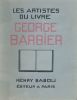
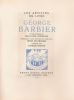
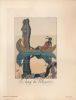
Les artistes du livre. George Barbier
Henry Babou éditeur Paris, Henry Babou éditeur, 1929. In-8 carré broché, couverture bleue à rabats, 52 pages. Illustré de 18 dessins en noir et en couleurs dans le texte et de 11 planches hors-texte, dont 7 en couleurs. Dixième volume de la collection Les artistes du livre, publié sous la direction de Marcel Valotaire. Etude critique de Jean-Louis Vaudoyer, précédée d'une lettre préface en vers par Henri de Régnier, portrait par Charles Martin. Tirage à 700 exemplaires, celui-ci n°494 sur vélin blanc des papèteries Johannot.
Toutes les expéditions sont faites en suivi au-dessus de 25 euros. Expédition quotidienne pour les envois simples, suivis, recommandés ou Colissimo.
Two masonic certificates certifying that Brother George Henry Jenvey was made a Mason. - [MASONIC CERTIFICATE]
Portland, December, 5929 (1929). Two folios (405 x 315). Single printed leaf with manuscript additions. Signed ""G. H. Jenvey"", with seal of masonry and engraved figures. Signed by the Grand Secretary, or Chief Executive, of the United Grand Lodge of England ""P. Colville Smith"". Fine and clean, folded. 2 ff.
![Two masonic certificates certifying that Brother George Henry Jenvey was made a Mason. - [MASONIC CERTIFICATE]. "(GEORGE HENRY JENVEY)](https://static.livre-rare-book.com/pictures/LLX/63237_1_thumb.jpg)
![Two masonic certificates certifying that Brother George Henry Jenvey was made a Mason. - [MASONIC CERTIFICATE]. "(GEORGE HENRY JENVEY)](https://static.livre-rare-book.com/pictures/LLX/63237_2_thumb.jpg)
Two rare masonic document certifying Brother Jenvey first was made brother in the Portland Chapter No. 1037 and 1034.
Das Jahr der Seele. Handschrift des Dichters.
Düsseldorf, Helmut Küpper. 1968. 8°. 48 n.n. S. Originalhalbleinwandband. Innendeckel des Hinterdeckel mit montiertem, zum Teil korrigierten Druckvermerk in Schuber
Im Jubiläumsjahr 1968 von der Stefan George Stiftung herausgegeben. Auflage 1000 Exemplare.
Mémoires de sir George Buchanan, ancien ambassadeur d'Angleterre en Russie (1910-1917)
Payot Paris, Payot, 1925. In-8 broché de 308 pages. Manque en bas du dos mais interieur frais. Bon état.
Toutes les expéditions sont faites en suivi au-dessus de 25 euros. Expédition quotidienne pour les envois simples, suivis, recommandés ou Colissimo.
George Grosz & Mario Vargas Llosa
Flohic Flohic Editions, 1992. Grand In-4 broché sous jaquette illustrée rempliée de pages. Nombreuses reproductions Bon état
![George Grosz & Mario Vargas Llosa. GROSZ George ]](https://static.livre-rare-book.com/pictures/MAS/181817_1_thumb.jpg)
Toutes les expéditions sont faites en suivi au-dessus de 25 euros. Expédition quotidienne pour les envois simples, suivis, recommandés ou Colissimo.
Blätter für die Kunst. Begründet von Stefan George. Herausgegeben von Carl August Klein.
Elfte und zwölfte Folge. Berlin, gedruckt bei Otto v. Holten. 1919. Gross-8°. 320 S. Bedruckter Originalkartonband.
Landmann 456. - Die letzte Nummer und die einzige Doppelnummer der in unregelmässigen Folgen seit 1892 erschienenen literarischen "Zeitschrift im "verlag des herausgebers" mit " geladenem lesekreis". Zum 25. Erscheinungsjahr war für 1917 eine Jubiläumsnummer geplant. Offenbar war für eine Nummer zu viel, aber für zwei Nummern zu wenig Stoff vorhanden. Wie bimmer ei den späteren Nummern erschienen die Beiträge ohne die Verfassernamen. Im vorliegenden Exemplar sind die Namen der Verfasser mit den Initialen in Bleistift angegeben. Nach Landmann wurden von dieser Nummer 2000 Exemplare gedruckt. - Vorderdeckel mit Kratzspur. Obere äussere Ecke leicht gestaucht. Innenfalz mit Japanpapier verstärkt. - Gutes unbeschnittenes Exemplar.

