Write to the booksellers
396 books for « engels friedrich »Edit
-
Latest
Last 24h (8)
Last 3 days (1)
Last month (10)
Last week (1)
-
Language
French (282)
Russian (114)
-
Century
19th (3)
20th (169)
21st (4)
-
Countries
Belgium (11)
Denmark (8)
France (247)
Switzerland (16)
United States of America (114)
-
Syndicate
ILAB (146)
NVVA (3)
SLACES (3)
SLAM (135)
Topics
- Cogniot georges (1)
- Commune (1)
- Communism (35)
- Communism (39)
- Correspondences (4)
- Dialectic (1)
- Economics (1)
- Engels friedrich (118)
- Ethic (2)
- Family (2)
- Feminism (1)
- Fine arts (1)
- First edition (1)
- Germanic languages (21)
- Germany (4)
- Hegel (2)
- Helvética (1)
- History (5)
- Hitler (1)
- Lénine (3)
- Leninism (1)
- Literature (9)
- Lorenzo (1)
- Marriage (2)
- Marx karl (154)
- Miller (1)
- Newspapers press (1)
- Philosophy (77)
- Policy (6)
- Political economy (5)
- Religions (1)
- Socialism (26)
- Sociology (1)
- Switzerland (1)
- Theatre (4)
- Trade unionism (1)
- Translation (2)
- War 70/71 (1)
- Willy (1)
- Zazzo rené (1)
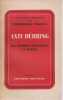
Oeuvres complètes de Friedrich Engels: Anti-Dühring. M. E. Düring bouleverse la science,
Editions Sociales, 1956, 512 p., broché, couverture un peu défraîchie, trace de pli sur le dos, passages signalés au crayon, état correct.
Manifeste du Parti Communiste suivi de Fac-similé de l'édition originale de février 1848,
Champ Libre, 1983, 72 pp. et 23 pp., traduction par Laura Lafargue, revue et annotée par F. Engels, broché, couverture très légèrement frottée, état très correct.
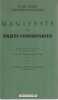
Manifeste du Parti Communiste,
Editions Sociales, Classiques du Marxisme, 1963, 61 pp., broché, passages signalés au crayon, traces d'usage, tarnches brunies, dos frotté, couverture partiellement insolée, état correct.
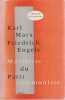
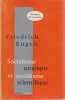
Socialisme utopique et socialisme scientifique,
Editions sociales, Classiques du marxisme, 1963, 104 pp., broché, tranches brunies, traces d'usage, dos un peu abîmé, état correct.
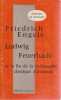
Ludwig Feuerbach et la fin de la philosophie classique allemande,
Editions sociales, "Classiques du marxisme", 1970, 91 p., poche, couverture légèrement défraîchie, passages signalés au crayon, état correct.
L'idéologie allemande: Critique de la philosophie allemande,
Editions Sociales, 1976, 620 pp., présentée et annotée par Gilbert Badia, broché, très légères traces d'usage, bon état.

Correspondance, Tome III (3) : 1891-1895,
Editions Sociales, 1959, 594 pp., broché, tranches et dos brunis, une tache sur le dos, un pli sur la quatrième de couverture, traces d'usage, état correct.
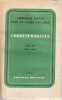
Correspondance, Tome II (2) : 1887 - 1890,
Editions Sociales, 1957, 462 pp., broché, tranches et dos brunis, deux petits plis sur la quatrième de couverture, traces d'usage, état correct.
Þróun jafnaðarstefnunnar draumsýn verður að vísindum [i.e. Icelandic ""The development of social policy: a dream becomes a science""] - [FIRST ICELANDIC ""SOCIALISM""]
Akureyri, Jafnaðarmannafélag [i.e. Icelandic: ""the Socialist association""] Akureyrar, 1928 8vo. (130 x 192 mm). Uncut in the original printed red wrappers with a bit of wear to edges and a newer, simple paper spine. A couple of notes in light pencil, otherwise clean and fresh. 79 pp.
Exceedingly scarce first edition of the first Icelandic translation of Engels' impactful work Socialism: Utopian and Scientific, referred to by Hunt as ""the Bible of global communism"" (2009: 3). With this influential pamphlet, Engels set out to make the definitive introduction to scientific socialism. Basing it on the three chapters from his book Herrn Eugen Dühring's Umwälzung der Wissenschaft (1878) – also known as Anti-Dühring – he here wished to reproduce the most topical excerpt from the theoretical section of the book, that of strictly scientific socialism. Engels put them together himself and asked Paul Lafargue (1842-1911), Karls Marx' son-in-law, to translate the work into French and add some extra remarks. Anti-Dühring had been serialized in a German newspaper between 1877 and 1878 as a polemical response to the works of Eugen Dühring (1833-1921) – a philosophy lecturer at the University of Berlin, whose brand of socialism was making significant inroads into German social democracy. He criticized Marx and Engel's centralism and economic determinism, while proposing a gradualist political programme (Hunt 2009: 295). Engels' response ""went beyond the usual Marx-Engels invective into a broader definition and defence 'of the dialectical method and the communist world outlook' [...]. All of Engel's great gifts as a propagandist and popularizer were on display as he countered the allure of Dühring with a pacey, engaging and comprehensible explanation of the science of Marxism"" (Hunt 2009: 296). The reception of the pamphlet was a success: Engels ""proudly described it making a 'regular revolution' and 'tremendous impression' in France."" (2009: 300) As the French translation proved to be extremely popular and gained a widespread audience, Engels considered it important to translate it into other languages as well, turning it into a veritable propaganda pamphlet. Indeed, the work became extremely popular and was translated into numerous languages, exercising profound influence upon the theory of socialism throughout Europe.OCLC locates merely two copies in libraries worldwide, both being in Denmark. References and further reading: Gissurarson, Hannes Hólmsteinn. (2021). Communism in Iceland, 1918–1998. Reykjavik: Social Science Research Institute at the University of Iceland. (tilføjes 63244) The Frock-Coated Communist: The Revolutionary Life of Friedrich Engels. London: Allen Lane.Guðmundsson, Steinþór. (1928). Fr. Engels. Þróun jafnaðarstefnunnar. Rjettur: Tímarit um þjóðfelags- og menningarmál , 13. árg. 1928, 1. hefti, pp. 125.26. https://timarit.is/page/4089270#page/n122/mode/2up

Die heilige Familie oder Kritik der kritischen Kritik. Gegen Bruno Bauer & Consorten. - [THE COLLABORATION THAT WOULD CHANGE THE WORLD]
Frankfurt a. M., 1845. 8vo. Contemporary black half calf. Professionally rebacked. Title-page somewhat dusty and re-hinged. VIII, 335, (1) pp.
Incredibly scarce first edition of one the most significant political publications of the 19th century, the first joint work of Marx and Engels, leading to a life-long association that would change the world. ""The Holy Family"" is one of the most fundamental works in the history of communism and contains the first formulations of a number of fundamental theses of dialectical and historical materialism. For instance, it is here that the idea of mass/the people as the actual maker of the history of mankind is put forth for the first time and here that Marx shows that communism is the logical conclusion of materialistic philosophy.The work became incredibly influential and caused great uproar. Lenin claimed that it was this work that laid the foundations for scientific revolutionary materialist socialism.At the end of August, 1844, Engels passed through Paris,on his way to Manchester. It was here that he met Marx (then for the second time).Marx suggested that the two of them should write a critique of Young Hegelian trend of thought then very popular in academic circles. They decided to co-author the foreword and divided up the other sections between them. Engels had already finished his chapters before leaving Paris after 10 days. Marx had the larger share of work, which he completed by the end of November 1844.The general title, ""The Holy Family"", was added at the suggestion of the publisher Lowenthal, being a sarcastic reference to the Bauer brothers and their supporters."" ""The Holy Family, or Critique of Critical Critique. Against Bruno Bauer and Co."" is the first joint work of Karl Marx and Frederick Engels. At the end of August 1844 Marx and Engels met in Paris and their meeting was the beginning of' their joint creative work in all fields of theoretical and practical revolutionary activity. By this time Marx and Engels had completed the transition from idealism to materialism and from revolutionary democratism to communism. The polemic The Holy Family was written in Paris in autumn 1844. It reflects the progress in the formation of Marx and Engels's revolutionary materialistic world outlook.In ""The Holy Family"" Marx and Engels give a devastating criticism of the subjectivist views of the Young Hegelians from the position of militant materialists. They, also criticize Hegel's own idealistic philosophy: giving credit for the rational element in his dialectics, they criticize the mystic side of it.The Holy Family formulates a number of fundamental theses of dialectical and historical materialism. In it Marx already approaches the basic idea of historical materialism - the decisive role of the mode of production in the development of society. Refuting the idealistic views of history which had dominated up to that time, Marx and Engels prove that of themselves progressive ideas can lead society only beyond the ideas of the old system and that ""in order to carry out ideas men are needed who dispose of a certain practical force."" (See p. 160 of the present edition.) The proposition put forward in the book that the mass, the people, is the real maker of the history of mankind is of paramount importance. Marx and Engels show that the wider and the more profound a change taking place in society is the more numerous Me mass effecting that change will Re Lenin especially stressed the importance of this thought and described it as one of the most profound and most important theses of historical materialism.The Holy Family contains the almost mature view of the historic role of the proletariat as the class which, by virtue of its position in capitalism, ""can and must free itself"" and at the same time abolish all the inhuman conditions of life of bourgeois society, for ""not in vain does"" the proletariat ""go through the stern but steeling school of labour. The question is not what this or that proletarian, or even the whole of the proletariat at the moment considers as its aim. The question is what the proletariat is, and what, consequent on that being, it will be compelled to do."" (pp. 52-53.)A section of great importance is ""Critical Battle against French Materialism"" in which Marx, briefly outlining the development of materialism in West-European philosophy, shows that communism is the logical conclusion of materialistic philosophy.The Holy Family was written largely under the influence of the materialistic views of Ludwig Feuerbach, who was, responsible to a great extent for Marx's and Engels's transition from idealism to materialism"" the work also contains elements of the criticism of Feuerbach's metaphysical and contemplative materialism given by Marx in spring 1845 in his Theses on Feuerbach. Engels later defined the place of The Holy Family in the history of Marxism when he wrote: ""The cult of abstract man, which formed the kernel of Feuerbach's new religion, had to be replaced by the science of real men and of their historical development. This further development of Feuerbach's standpoint beyond Feuerbach was inaugurated by Marx in 1845 in The Holy Family."" (F. Engels, Ludwig Feuerbach and the End of Classical German Philosophy.)The Holy Family formulates some of the basic principles of Marxist political economy. In contrast to the Utopian Socialists Marx bases the objective inevitability of the victory of communism on the fact that private property in its economic motion drives itself towards its downfall.The Holy Family dates from a period when the process of the formation of Marxism was not yet completed. This is reflected in the terminology used by Marx and Engels. Marxist scientific terminology was gradually elaborated and defined by Marx and Engels as the formation and development of their teaching progressed."" (Introduction to the work by Foreign Languages Publishers)""The book made something of a splash in the newspapers. One paper noted, that it expressed socialist views since it criticised the ""inadequacy of any half-measures directed at eliminating the social ailments of our time."" The conservative press immediately recognized the radical elements inherent in its many arguments. One paper wrote that, in The Holy Family, ""every line preaches revolt... against the state, the church, the family, legality, religion and property."" It also noted that ""prominence is given to the most radical and the most open communism, and this is all the more dangerous as Mr. Marx cannot be denied either extremely broad knowledge or the ability to make use of the polemical arsenal of Hegel's logic, what is customarily called 'iron logic.'Lenin would later claim this work laid the foundations for what would develop into a scientific revolutionary materialist socialism."" (Marx Archive).
Bibliothèque socialiste internationale publiée sous la direction d'Alfred Bonnet, III-IV-V. Le Capital. Critique de l'économie politique. Avec une préface de Friedrich Engels. I. Livre II : Le procès de circulation du capital. - II.-III. Livre III : Le procès d'ensemble de la production capitaliste. Traduit à l'Institut des sciences sociales de Bruxelles par Julian Borchardt et Hippolyte Vanderrydt
Paris, V. Giard & E. Brière, 1900 - 1902 3 forts vol. in-8, [2] ff. n. ch., XXII pp., 591 pp. ; [2] ff. n. ch., XXIV pp., 521 pp., 16 pp. de catalogue Giard & Brière ; [2] ff. n. ch., [496] pp. mal chiffrées 596, demi-chagrin cerise, dos à nerfs ornés de filets dorés, tranches mouchetées, couvertures conservées (reliure de l'époque). Léger accroc en coiffe inférieure du vol. II, coins abîmés.
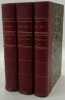
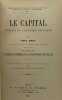
Édition originale de la traduction française des livres II et III du Capital. Pour comprendre l'absence du livre I dans cette publication, il faut se souvenir des conditions dans lesquelles cette oeuvre majeure vit le jour : à la mort de Marx en 1883, seul le livre I était paru (en 1867 pour l'originale allemande, au tirage de 1000 exemplaires ; en août 1873 - mai 1875 pour l'excellente version française de Jules Roy, à laquelle Marx lui-même a personnellement et activement collaboré). Par la suite, les brouillons de l'auteur ont été utilisés et retravaillés par Engels pour publier les livres II et III, parus respectivement en 1885 et 1894 dans leur texte allemand. C'est ce texte de Engels qui fait l'objet de la présente traduction ; la séparation d'avec le livre I que les interprètes n'ont pas jugé bon de retraduire se justifie à la fois éditorialement et scientifiquement : seul le livre I peut être considéré comme l'oeuvre de Marx (et c'est d'ailleurs le seul à être utilisé par les économistes, qui y voient avec raison l'aboutissement de l'école classique, et le dépassement des paradoxes ricardiens) ; les livres II et III sont trop le reflet des conceptions de Engels (et notamment le matérialisme dialectique) pour être sans examen rigoureux attribués tel quel au théoricien.Ex-libris manuscrit Pierre Quesnay, demeurant 85, boulevard du Port-Royal à Paris. - - VENTE PAR CORRESPONDANCE UNIQUEMENT - LIEN DE PAIEMENT, NOUS CONSULTER.

MARX (Karl), ENGELS (Friedrich), LENINE (Vladimir Ilitch) / FREVILLE (Jean).
Reference : 19298
Sur la famille.
Paris, Editions sociales internationales, "Les Grands textes du marxisme", 1938 1 volume In-8° (14 x 22,7cm) Broché sous couverture grise imprimée en rouge et noir. 134p., 1 feuillet. Bon état sauf petits défauts de brochage: petite fente (2 cm) à la couture de 2 feuilles, 1 feuille à demi débrochée dans le dernier cahier.
Peu courante 1ère édition de ce recueil d'extraits de textes de Karl MARX, Friedrich ENGELS et LENINE choisis, traduits et présentés par Jean FREVILLE (1895-1971) écrivain membre du P.C.F., critique littéraire à "L'Humanité", regroupés par thèmes: 1/ Historique: extraits de "L'Origine de la famille [...]" d'ENGELS; 2/ Vie de la famille ouvrière sous le régime capitaliste, travail des femmes et des enfants: extraits de "La Situation de la classe laborieuse en Angleterre" d'ENGELS et du "Capital"; 3/ Droits des femmes et des enfants: extraits de "Propriété privée et communisme", de "La Sainte famille" et de "L'Idéologie allemande" de MARX, de "Principes du communiste", de "Le Bouleversement de la science par Monsieur Eugène Dühring", de "L'Origine de la famille [...]" d'ENGELS, du "Manifeste du Parti Communiste" (des 2) et de textes de LENINE; 4/ Révolution socialiste et égalité hommes-femmes: textes de Lénine; en annexes, extraits de textes de Jenny MARX , Wilhelm LIEBKNECHT et Franz MEHRING sur la famille de Marx, de "La Question de la femme" de Paul LAFARGUE, et de "Notes de mon carnet" de Clara ZETKIN sur "Lénine et la question sexuelle"; index des noms.
La Campagne constitutionnelle en Allemagne – La Guerre des paysans. Traduit par Bracke (A. M. Desrousseaux).
P., Alfred Costes, 1936, in-12, xiv-331 pp, notice du traducteur, une carte dépliante hors texte, broché, bon état (Oeuvres complètes de Fr. Engels)
Dans La Campagne constitutionnelle, Engels décrit l’histoire du soulèvement en Bade et au Palatinat en juin-juillet 1849. Il ne se réfère qu’à ses observations directes. Il avait pris part à l’insurrection comme adjoint du chef militaire. Recherche des éléments économiques et sociaux qui ont déterminé les événements en dernière instance. Critique de la petite bourgeoisie incapable de décision nette, de l’absence de centralisation du mouvement et de l’indifférence de la population rurale. Engels reproche aux chefs d’avoir omis de gagner les paysans en abolissant les obligations féodales. On a dit avec raison de cet écrit qu’il est « par son style brillant, par l’observation aiguë et par la hauteur et la grandeur de ses vues, un chef-d’œuvre de prose descriptive allemande » (cf. Gustav Mayer, Engels, Eine Biographie). Ecrit par Engels pour la Nouvelle Gazette Rhénane, revue politique et économique, publiée à Londres sous la direction de Marx, et imprimée à Hambourg, ce périodique succéda à la Nouvelle Gazette Rhénane, quotidien de Cologne, qui avait dû cesser de paraître parce que le gouvernement prussien avait expulsé Marx, son rédacteur en chef. – La Guerre des paysans en Allemagne est l'étude des facteurs économiques et de l’opposition des classes, qui formaient le fond du soulèvement paysan, à l’époque de la Réforme et du capitalisme primitif. Le rôle des paysans dans la révolution sociale. L’ouvrage appartient aux travaux entreprise par Marx et Engels, après l’échec de la révolution de 1848, pour l’étude des lignes de force qui déterminent les mouvements révolutionnaires en général. Ecrit en été 1850, publié dans la Nouvelle Gazette Rhénane, revue économique et politique, numéro double, 5-6 novembre 1850. En 1870, le Volksstaat (L’Etat populaire) de Leipzig publia de nouveau La Guerre des paysans. La même année, elle fut rééditée en volume, avec une préface d’Engels, qui contient un passage important sur le petit paysan et l’ouvrier agricole, alliés au prolétariat (...) Le 31 décembre 1884, Engels écrivit à son ami Sorge à New York : « Je remanie à fond ma Guerre des paysans. Elle est en passe de devenir la clef de voûte de toute l’histoire de l’Allemagne. C’est un gros travail. Mais tous les travaux préliminaires sont terminés ». Cette promesse qui prouve l’importance attribuée par Engels aux paysans dans l’évolution historique ne fut pas tenue. La publication des manuscrits du capital II et III absorba ses forces et son temps, pendant à peu près dix ans. Désormais les frais d'envoi sont de 6 € seulement pour les livres jusqu'à 1 kg (colissimo suivi), pour la France métropolitaine.
Friedrich Engels. Textes : Choisis et annots par Jean Kanapa
Editions sociales Broch D'occasion bon tat 01/01/1968 528 pages
La Guerre civile en France 1871 (La Commune de Paris).
Paris, Editions Sociales, "Les Eléments du communisme", 1946 1 volume In-8° (13,3 x 21cm) Broché sous couverture grise imprimée en bleu nuit. 97p., 1feuillet. Bon état.
Texte de Karl MARX (1818-1883) précédé d'une introduction de Friedrich ENGELS et des "Premier" et "Second Manifeste[s] du Conseil général" (de la 1ère Internationale: textes de Karl MARX) sur la guerre franco-prussienne (23 juillet et 9 septembre 1870) et suivi de lettres de Karl MARX et de Friedrich ENGELS sur la Commune de Paris; index des noms.
Friedrich Engels Profile. Eine Auslesen aus seinen Werken und Briefen.
Wuppertal-Barmen, Peter Hammer, 1970 14 x 21, 412 pp., broché, bon état
Herausgegeben von HIRSCH Helmut, mit einem Geleitwort von Johannes RAU
Frdric Engels. La Campagne constitutionnelle en Allemagne : . La Guerre des paysans en Allemagne. Traduit par Bracke A.-M. Desrousseaux
Gnrique Broch D'occasion bon tat 01/01/1936 331 pages
Engels - l'origine de la famille de la propriete privee et de l'etat - Collection Essentiel n°13
EDITIONS SOCIALES. 1983. In-12. Broché. Etat d'usage, Couv. légèrement passée, Dos satisfaisant, Rousseurs. 319 pages. . . . Classification Dewey : 100-PHILOSOPHIE ET DISCIPLINES CONNEXES
ENGELS FRIEDRICH - BONTE PIERRE + MAINFROY CLAUDE (annotations, presentation) - STERN JEANNE + MAINFROY CLAUDE (traduction) Classification Dewey : 100-PHILOSOPHIE ET DISCIPLINES CONNEXES
Misère de la philosophie. Réponse à La Philosophie de la misère de M. Proudhon.
Coll. "Bibliothèque socialiste internationale", Paris, éd. Marcel Giard, 3e édition, gd. in-12, demi-chagrin brun foncé, plats papier marbré "cailloux" rouge et brun, fleurons, double filets, auteur et titre dorés sur dos lisse, couverture d'origine conservée, reliure de l'époque, XXX - 272 pp., préface de Friedrich Engels, table des matières, signature sur la première de couverture de H. Hurtel, portrait de Marx extrait d'un article de journal collé sur la page face au titre ainsi qu'une petite "vignette" reprenant un texte de H. Hurtel en 1920, "Ouvrage paru en juin 1847 à Bruxelles en son exil. Son titre constitue une reprise inversée de l'ouvrage de Proudhon, Philosophie de la misère. Le texte est écrit en français bien que la plupart des œuvres de Marx soient écrites en allemand. Il s'agit d'une critique, reprenant point par point les arguments avancés dans Philosophie de la misère et tentant de les démonter ou de montrer qu'ils enfoncent des portes ouvertes". Reliure agréable. Pas courant Très bon état de la reliure; papier uniformément jauni avec quelques très petites rousseurs éparses
M. E. Duhring bouleverse la science (anti-Duhring) - Tome 1 - Philosophie.
Paris, Alfred Costes, "Oeuvres complètes de Fr. Engels", 1931 1 volume In-8° couronne (12 x 18,8cm) Broché. 1 feuillet, XXXIV + 226p, 1 feuillet. Petites rousseurs sur la couverture; papier uniformément jauni; en majeure partie non coupé.
1er tome seul (sur 3), soit la partie "Philosophie" complète, de la traduction intégrale, par BRACKE (pseudonyme d'Alexandre-Marie Desrousseaux, 1861-1955), de l' "Anti-Durhing" publié en 1877-1878 (série d'articles dans le "Vorwaerts", journal du parti social-démocrate) et en 1878 en volume, par le philosophe allemand Friedrich ENGELS, théoricien du socialisme (1820-1895); avertissement du traducteur ("aucun livre n'a autant contribué à faire connaître véritablement et à répandre les bases de la conception matérialiste de l'histoire et de la méthode marxiste") et préfaces de l'auteur aux 1ère (1878), 2è (1885) et 3è (1894) éditions.
Friedrich Engels. La Situation de la classe laborieuse en Angleterre : D'après les observations de l'auteur et des sources authentiques. Traduction et notes par Gilbert Badia et Jean Frédéric. Avant-propos de E. J. Eric John Hobsbawm
Broché. 1973. 412 pages. Editions sociales. Photos sur demande.
Merci de nous contacter à l'avance si vous souhaitez consulter une référence dans notre boutique à Authon-du-Perche.
Sotsializm nauchnyy i utopicheskiy. In Russian /Socialism is scientific and uto
Short description: In Russian. Engels, Friedrich. Socialism is scientific and utopian. journal. Popul.-scientific-b-ka. You are welcome to reach out to us for a detailed description of the copies currently available. Delivery of this book may take longer than usual including extended processing and pre-shipping time, no expedited shipping is available. Please advise us if you have a set date or a deadline to receive your order.SKU4899638
Lyudvig Feyerbakh. In Russian /Ludwig Feuerbach
Short description: In Russian. Engels, Friedrich. Ludwig Feuerbach. You are welcome to reach out to us for a detailed description of the copies currently available. Delivery of this book may take longer than usual including extended processing and pre-shipping time, no expedited shipping is available. Please advise us if you have a set date or a deadline to receive your order.SKU4899613
Anti-Dyuring. In Russian /Anti-Duhring
"Short description: In Russian. Engels, Friedrich. Anti-Duhring. Moscow; P.: State Publishing House, 1923. You are welcome to reach out to us for a detailed description of the copies currently available. Delivery of this book may take longer than usual including extended processing and pre-shipping time, no expedited shipping is available. Please advise us if you have a set date or a deadline to receive your order.SKU9180778"