Write to the booksellers
274 books for « derrida »Edit
-
Type
Books (272)
Magazines (5)
-
Latest
Last 3 days (1)
Last month (8)
-
Century
20th (137)
21st (32)
-
Countries
Belgium (9)
Canada (7)
Denmark (7)
France (219)
Switzerland (35)
-
Syndicate
ALAC (7)
CLAM (1)
ILAB (132)
NVVA (3)
SLACES (3)
SLAM (111)
Topics
- Abraham (1)
- Abstract art (1)
- Adam (1)
- Alechinsky pierre (1)
- Andreas - salome lou (1)
- Arboriculture (2)
- Autographs (7)
- Bibliography (1)
- Bourdieu pierre (1)
- Caillois roger (2)
- Calvino italo (4)
- Camus albert (2)
- Carracci (1)
- Chardin (1)
- Coypel (1)
- Democracy (2)
- Derrida (133)
- Dore gustave (1)
- Drawings (2)
- Early printed books (1)
- Engraving (books about) (1)
- Essays (3)
- Ethic (1)
- Exhibition (2)
- Faith (1)
- Fine arts (5)
- First edition (29)
- Foucault (1)
- Gauguin (1)
- Gavarni (1)
- Germanic languages (1)
- Germany (1)
- Hackney (1)
- Historical general points (2)
- History (2)
- Humanity (1)
- Italian (3)
- Italy (2)
- Jacquard (1)
- Law (4)
- Levinas (1)
- Linguistics (1)
- Magazine (3)
- Manuscripts (1)
- Marie louise (2)
- Marx karl (1)
- Memories (1)
- Michel charles (1)
- Mixtures (2)
- Modern comic (1)
- Modern illustrated book (1)
- Moscow (1)
- Newspapers press (4)
- Nietzsche frédéric (1)
- Painting (4)
- Paris (2)
- Philology (2)
- Philosophy (100)
- Photography (3)
- Pignon ernest (3)
- Poetry (3)
- Portraits (2)
- Postcards (1)
- Psychoanalysis (2)
- Psychology (33)
- Redon (2)
- Rembrandt (1)
- Review (14)
- Reviews (4)
- Revue de l'art (4)
- Rops félicien (1)
- Roudinesco elisabeth (2)
- Rubens (1)
- Ruins (1)
- Sail (1)
- Sculpture (2)
- Shapes & colours (1)
- Sicard (1)
- Sociology (2)
- Spinoza (1)
- Thevenin paule (2)
- Travel (1)
- Vellum (1)
- Virtue (2)
- Woods & woods’ price lists (3)
Politiques de l'amitié.
Galilée 1994 Galilée, 1994, 418 p., broché, environ 24x15cm. Dos insolé et quelques pages annotées au crayon à papier. Bon état pour le reste.
Merci de nous contacter à l'avance si vous souhaitez consulter une référence au sein de notre librairie.
Mémoires d'aveugle : l'autoportrait et autres ruines.
Réunion des Musées Nationaux Louvre 1991 Réunion des Musées Nationaux, Louvre, Parti Pris,1991, 141 p., broché, environ 30x212cm, quelques frottements d'usage sur les bords de la couverture et plis de lecture sur le dos, bon état pour le reste et intérieur très propre.


Cet ouvrage a été édité à l'occasion de l'exposition présentée au musée du Louvre en 1990-1991. Merci de nous contacter à l'avance si vous souhaitez consulter une référence au sein de notre librairie.
De la grammatologie. - [THE MAIN WORK OF DECONSTRUCTION - MAGNIFICENT PRESENTATION-COPY]
(Paris), Minuet, 1967. 8vo. Original wrappers. An excellent, very nice, clean, and fresh copy, with only faint tanning to wrappers. Spine a bit browned. Internally near mint. 445, (3) pp.


First edition (20 Septembre, 1967, numéro 630) - SIGNED PRESENTATION-COPY FOR ANDRÈ GREEN AND WIFE - of Derrida's seminal main work, the foundational text for deconstructive criticism.1967 marks a turning point in the history of modern philosophy, constituting the birth of ""Deconstruction"". In this one year, Derrida publishes all of his three break-through books, ""De la grammatologie"", ""L'écriture et la difference"" and ""La Voix et le phenomene"", profoundly altering the course of modern thought. Although all three books are responsible for the introduction of Deconstruction, it is primarily ""De la Grammatologie"", Derrida's magnum opus, that has come to be associated with this groundbreaking concept.This magnificent presentation-copy of Derrida's main work unites two of the greatest intellectual thinkers of the 20th century, both having profoundly altered the face of psychoanalysis and intellectual history in general. As Derrida is considered one of the greatest philosophers of the 20th century, so André Green (1927 - 2012) is considered one of the most important psychoanalytic thinkers of our times, creating what is now known as the Greenian theory of psychoanalysis.""Jacques Derrida's revolutionary theories about deconstruction, phenomenology, psychoanalysis, and structuralism, first voiced in the 1960's, forever changed the face of European and American criticism. The ideas in ""De la grammatologie"" sparked lively debates in intellectual circles that included students of literature, philosophy, and the humanities, inspiring these students to ask questions of their disciplines that had previously been considered improper. Thirty years later, the immense influence of Derrida's work is still igniting controversy..."" (Review, Spivak's translation of Derrida's ""Of Grammatology"", 1997).Derrida's concern is to bring to light the binary schema that is hidden in all kinds of texts and ideas of culture. In the present text Derrida brilliantly reveals some of the principles of deconstruction, not through theoretical explication, but, rather, by demonstration, showing that the arguments promulgated by their subject-matter exceed and contradict the oppositional parameters in which they are situated. Put into other words, deconstruction seeks to expose, and then to subvert, the various binary oppositions that undergird our dominant ways of thinking.The ideas that Derrida here present have had an enormous impact on a number of the human sciences, including psychology, literary theory, cultural studies, linguistics, feminism, sociology and anthropology. Due to this work, a whole new world of problematic suppression and marginalisation has become apparent, making ""De la grammatologie"" one of the most important philosophical works of the later part of the 20th century. ""One of the major works in the development of contemporary criticism and philosophy"". (J. Hillis Miller, Yale University).

De la grammatologie. - [THE MAIN WORK OF DECONSTRUCTION - PRESENTATION-COPY]
(Paris), Minuet, 1967. 8vo. Original wrappers. A bit of tanning and soiling to wrappers and usual wear to spine. Internally fine and clean, with pencil notes and underlinings by Gardair. 445, (3) pp.


First edition (20 Septembre, 1967, numéro 630) - SIGNED PRESENTATION-COPY FOR JEAN-MICHEL GARDAIR - of Derrida's seminal main work, the foundational text for deconstructive criticism.1967 marks a turning point in the history of modern philosophy, constituting the birth of ""Deconstruction"". In this one year, Derrida publishes all of his three break-through books, ""De la grammatologie"", ""L'écriture et la difference"" and ""La Voix et le phenomene"", profoundly altering the course of modern thought. Although all three books are responsible for the introduction of Deconstruction, it is primarily ""De la Grammatologie"", Derrida's magnum opus, that has come to be associated with this groundbreaking concept.Jean-Michel Gardair (1942-2013) was a highly esteemed professor at the Sorbonne and a famous author and translator from Italian into French, who also wrote the prefaces for many of the great classics that appeared at Minuet (where Derrida also published his main works). He is responsible for enriching French Italianism with an original presence, both through his own novels and his critical works, through his numerous translations, and through his highly esteemed prefaces. ""Jacques Derrida's revolutionary theories about deconstruction, phenomenology, psychoanalysis, and structuralism, first voiced in the 1960's, forever changed the face of European and American criticism. The ideas in ""De la grammatologie"" sparked lively debates in intellectual circles that included students of literature, philosophy, and the humanities, inspiring these students to ask questions of their disciplines that had previously been considered improper. Thirty years later, the immense influence of Derrida's work is still igniting controversy..."" (Review, Spivak's translation of Derrida's ""Of Grammatology"", 1997).Derrida's concern is to bring to light the binary schema that is hidden in all kinds of texts and ideas of culture. In the present text Derrida brilliantly reveals some of the principles of deconstruction, not through theoretical explication, but, rather, by demonstration, showing that the arguments promulgated by their subject-matter exceed and contradict the oppositional parameters in which they are situated. Put into other words, deconstruction seeks to expose, and then to subvert, the various binary oppositions that undergird our dominant ways of thinking.The ideas that Derrida here present have had an enormous impact on a number of the human sciences, including psychology, literary theory, cultural studies, linguistics, feminism, sociology and anthropology. Due to this work, a whole new world of problematic suppression and marginalisation has become apparent, making ""De la grammatologie"" one of the most important philosophical works of the later part of the 20th century. ""One of the major works in the development of contemporary criticism and philosophy"". (J. Hillis Miller, Yale University).
De la grammatologie. - [THE MAIN WORK OF DECONSTRUCTION]
(Paris), Minuet, 1967. 8vo. Original wrappers. Spine is worn and with some stains, and a crack in the lower middle. Front cover also has some wear and a bump to the lower hinge. A bump to upper back hinge.Internally nice and clean. 445, (3) pp.


First edition (20 Septembre, 1967, numéro 630) of Derrida's seminal main work, the foundational text for deconstructive criticism.1967 marks a turning point in the history of modern philosophy, constituting the birth of ""Deconstruction"". In this one year, Derrida publishes all of his three break-through books, ""De la grammatologie"", ""L'écriture et la difference"" and ""La Voix et le phenomene"", profoundly altering the course of modern thought. Although all three books are responsible for the introduction of Deconstruction, it is primarily ""De la Grammatologie"", Derrida's magnum opus, that has come to be associated with this groundbreaking concept.""Jacques Derrida's revolutionary theories about deconstruction, phenomenology, psychoanalysis, and structuralism, first voiced in the 1960's, forever changed the face of European and American criticism. The ideas in ""De la grammatologie"" sparked lively debates in intellectual circles that included students of literature, philosophy, and the humanities, inspiring these students to ask questions of their disciplines that had previously been considered improper. Thirty years later, the immense influence of Derrida's work is still igniting controversy..."" (Review, Spivak's translation of Derrida's ""Of Grammatology"", 1997).Derrida's concern is to bring to light the binary schema that is hidden in all kinds of texts and ideas of culture. In the present text Derrida brilliantly reveals some of the principles of deconstruction, not through theoretical explication, but, rather, by demonstration, showing that the arguments promulgated by their subject-matter exceed and contradict the oppositional parameters in which they are situated. Put into other words, deconstruction seeks to expose, and then to subvert, the various binary oppositions that undergird our dominant ways of thinking.The ideas that Derrida here present have had an enormous impact on a number of the human sciences, including psychology, literary theory, cultural studies, linguistics, feminism, sociology and anthropology. Due to this work, a whole new world of problematic suppression and marginalisation has become apparent, making ""De la grammatologie"" one of the most important philosophical works of the later part of the 20th century. ""One of the major works in the development of contemporary criticism and philosophy"". (J. Hillis Miller, Yale University).
De la grammatologie. - [THE MAIN WORK OF DECONSTRUCTION]
(Paris), Minuet, 1967. 8vo. Original wrappers. An excellent, very nice, clean, and fresh copy, just a tiny bit weak at the inner hinges. Old owner's name to front free end-paper (Carl Lemke 13.3.69). 445, (3) pp.

First edition (20 Septembre, 1967, numéro 630) of Derrida's seminal main work, the foundational text for deconstructive criticism.1967 marks a turning point in the history of modern philosophy, constituting the birth of ""Deconstruction"". In this one year, Derrida publishes all of his three break-through books, ""De la grammatologie"", ""L'écriture et la difference"" and ""La Voix et le phenomene"", profoundly altering the course of modern thought. Although all three books are responsible for the introduction of Deconstruction, it is primarily ""De la Grammatologie"", Derrida's magnum opus, that has come to be associated with this groundbreaking concept.""Jacques Derrida's revolutionary theories about deconstruction, phenomenology, psychoanalysis, and structuralism, first voiced in the 1960's, forever changed the face of European and American criticism. The ideas in ""De la grammatologie"" sparked lively debates in intellectual circles that included students of literature, philosophy, and the humanities, inspiring these students to ask questions of their disciplines that had previously been considered improper. Thirty years later, the immense influence of Derrida's work is still igniting controversy..."" (Review, Spivak's translation of Derrida's ""Of Grammatology"", 1997).Derrida's concern is to bring to light the binary schema that is hidden in all kinds of texts and ideas of culture. In the present text Derrida brilliantly reveals some of the principles of deconstruction, not through theoretical explication, but, rather, by demonstration, showing that the arguments promulgated by their subject-matter exceed and contradict the oppositional parameters in which they are situated. Put into other words, deconstruction seeks to expose, and then to subvert, the various binary oppositions that undergird our dominant ways of thinking.The ideas that Derrida here present have had an enormous impact on a number of the human sciences, including psychology, literary theory, cultural studies, linguistics, feminism, sociology and anthropology. Due to this work, a whole new world of problematic suppression and marginalisation has become apparent, making ""De la grammatologie"" one of the most important philosophical works of the later part of the 20th century. ""One of the major works in the development of contemporary criticism and philosophy"". (J. Hillis Miller, Yale University).
De la grammatologie. - [THE MAIN WORK OF DECONSTRUCTION]
(Paris), Minuet, 1967. 8vo. Original wrappers. A bit of light wear to extremities, a few spots to back wrapper, and upper corner slightly bent, otherwise a nice and clean copy. 445, (3) pp.

First edition (20 Septembre, 1967, numéro 630) of Derrida's seminal main work, the foundational text for deconstructive criticism.1967 marks a turning point in the history of modern philosophy, constituting the birth of ""Deconstruction"". In this one year, Derrida publishes all of his three break-through books, ""De la grammatologie"", ""L'écriture et la difference"" and ""La Voix et le phenomene"", profoundly altering the course of modern thought. Although all three books are responsible for the introduction of Deconstruction, it is primarily ""De la Grammatologie"", Derrida's magnum opus, that has come to be associated with this groundbreaking concept.""Jacques Derrida's revolutionary theories about deconstruction, phenomenology, psychoanalysis, and structuralism, first voiced in the 1960's, forever changed the face of European and American criticism. The ideas in ""De la grammatologie"" sparked lively debates in intellectual circles that included students of literature, philosophy, and the humanities, inspiring these students to ask questions of their disciplines that had previously been considered improper. Thirty years later, the immense influence of Derrida's work is still igniting controversy..."" (Review, Spivak's translation of Derrida's ""Of Grammatology"", 1997).Derrida's concern is to bring to light the binary schema that is hidden in all kinds of texts and ideas of culture. In the present text Derrida brilliantly reveals some of the principles of deconstruction, not through theoretical explication, but, rather, by demonstration, showing that the arguments promulgated by their subject-matter exceed and contradict the oppositional parameters in which they are situated. Put into other words, deconstruction seeks to expose, and then to subvert, the various binary oppositions that undergird our dominant ways of thinking.The ideas that Derrida here present have had an enormous impact on a number of the human sciences, including psychology, literary theory, cultural studies, linguistics, feminism, sociology and anthropology. Due to this work, a whole new world of problematic suppression and marginalisation has become apparent, making ""De la grammatologie"" one of the most important philosophical works of the later part of the 20th century. ""One of the major works in the development of contemporary criticism and philosophy"". (J. Hillis Miller, Yale University).
De la grammatologie. - [THE MAIN WORK OF DECONSTRUCTION]
(Paris), Minuet, 1967. 8vo. Original wrappers. A very nice and clean copy with a slightly soiled spine. A bump to fore-edge. 445, (3) pp.
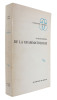
First edition (20 Septembre, 1967, numéro 630) of Derrida's seminal main work, the foundational text for deconstructive criticism.1967 marks a turning point in the history of modern philosophy, constituting the birth of ""Deconstruction"". In this one year, Derrida publishes all of his three break-through books, ""De la grammatologie"", ""L'écriture et la difference"" and ""La Voix et le phenomene"", profoundly altering the course of modern thought. Although all three books are responsible for the introduction of Deconstruction, it is primarily ""De la Grammatologie"", Derrida's magnum opus, that has come to be associated with this groundbreaking concept.""Jacques Derrida's revolutionary theories about deconstruction, phenomenology, psychoanalysis, and structuralism, first voiced in the 1960's, forever changed the face of European and American criticism. The ideas in ""De la grammatologie"" sparked lively debates in intellectual circles that included students of literature, philosophy, and the humanities, inspiring these students to ask questions of their disciplines that had previously been considered improper. Thirty years later, the immense influence of Derrida's work is still igniting controversy..."" (Review, Spivak's translation of Derrida's ""Of Grammatology"", 1997).Derrida's concern is to bring to light the binary schema that is hidden in all kinds of texts and ideas of culture. In the present text Derrida brilliantly reveals some of the principles of deconstruction, not through theoretical explication, but, rather, by demonstration, showing that the arguments promulgated by their subject-matter exceed and contradict the oppositional parameters in which they are situated. Put into other words, deconstruction seeks to expose, and then to subvert, the various binary oppositions that undergird our dominant ways of thinking.The ideas that Derrida here present have had an enormous impact on a number of the human sciences, including psychology, literary theory, cultural studies, linguistics, feminism, sociology and anthropology. Due to this work, a whole new world of problematic suppression and marginalisation has become apparent, making ""De la grammatologie"" one of the most important philosophical works of the later part of the 20th century. ""One of the major works in the development of contemporary criticism and philosophy"". (J. Hillis Miller, Yale University).
De la grammatologie.
(Paris), Les éditions de Minuit, (1967 - verso of t-p., recte 1970). 8vo. Orig. printed wrappers. Some underlinings in first part of the book, otherwise fine. 447 pp.
This copy is printed in 1970, but is an exact reprint of the first edition of 1967.Among Jacques Derrida's (1930-2004) three break-though books, 'De la grammatologie', 'L'écriture et la différence' and 'La Voix et le phénomène', all published in 1967, it is primarily the first that has become associated with the famous concept of 'deconstruction', which can be seen as Derrida's attempt to translate and bring further the idea of the 'Destruktion der Geschichte der Ontologie' set forth by Martin Heidegger. This connection suggests that Derrida seeks to continue the major project of Heidegger, but in a certain and specific sense. For Derrida's strategy is much more concerned with bringing forth the hidden binary schema in all kinds of text and ideas of a culture and not only in the philosophical ones. Therefore, in the present text Derrida presents some of the principles of deconstruction, not through theoretical explication, but, rather, by demonstration, where Derrida shows that the arguments promulgated by their subject-matter exceed and contradict the oppositional parameters in which they are situated. Or put in other words, deconstruction seeks to expose, and then to subvert, the various binary oppositions that undergird our dominant ways of thinking.The here presented ideas has had an enormous impact on a number of the human sciences, including psychology, literary theory, cultural studies, linguistics, feminism, sociology and anthropology, and due to the thinking of Derrida a whole new world of problematic suppression and marginalisation has become apparent. This makes 'De la grammatologie' one of the must important philosophical works of the later part of the 20th century.
Carte postale autographe adressée depuis Yale à son ami Jos Joliet
s. n. | 1980 | 15 x 10.2 cm | Une carte postale + une enveloppe
Carte postale autographe signée de Jacques Derrida adressée à son ami Jos Joliet, depuis l'Université de Yale dans le Connecticut, 18 lignes à l'encre bleue, enveloppe manuscrite jointe. La carte représente une vue du Sterling Memorial Library de l'université. En 1975, Jacques Derrida devient professeur invité à l'université de Yale à New Haven dans le Connecticut. Jacques Derrida déplore le fait de n'avoir pas eu l'opportunité de rencontrer son ami tout en se réjouissant de bientôt retrouver la France : "Dans quelques jours, je serai rentré (heureux de retrouver les "proches" mais un peu terrifié à l'idée de ce que je vais devoir affronter autrement..." Joseph Joliet, ancien étudiant de Jacques Derrida devint un très proche ami du philosophe. Très attentif à l'écriture de Joliet, Derrida rédigera la préface de son roman: "L'enfant au chien assis" et le soutiendra dans ses périodes difficiles (cf. Derrida de Benoit Peeters). - Photographies et détails sur www.Edition-Originale.com -

Mémoires d'aveugle. L'Autoportrait et autres ruines.
Paris Réunion des Musées Nationaux 1990 In-4 Broché, couverture illustrée à larges rabats Dédicacé par l'auteur
Catalogue édité à l'occasion de l'exposition présentée au Musée du Louvre d'octobre 1990 à janvier 1991. Texte de Jacques Derrida. 71 planches dont 22 en couleurs, l'une reprise en couverture, oeuvres de Coypel, Trouvain, Ribot, La Fage, Zuccaro, Lucas de Leyde, David, Primatice, Rubens, Bianchi, Ligozzi, Rembrandt, Baudelaire, Suvée, RegnaultFantin-Latour, Van Rysselbeghe, Bruegel, Rops, Redon, Gavarni, Chardin, Courbet, Calandrucci, Carrache, Clovio, .... Index et bibliographie in fine. 142 pp. >>> ENVOI AUTOGRAPHE signé et daté de DERRIDA Très bon 0
Limited Inc
Galilée | Paris 1990 | 15 x 24 cm | broché
Edition originale de la traduction française dont il n'a pas été tiré de grands papiers. Envoi autographe signé de Jacques Derrida à Jos (Joliet) enrichi d'une précision manuscrite, sur feuille volante, de Jacques Derrida à propos d'un passage de ce texte. Joseph Joliet, ancien étudiant de Derrida devint un très proche ami du philosophe. Très attentif à l'écriture de Joliet, Derrida rédigera la préface de son roman: "L'enfant au chien assis" et le soutiendra dans ses périodes difficiles (cf. Derrida de Benoit Peeters). Dos très légèrement insolé, agréable exemplaire. - Photographies et détails sur www.Edition-Originale.com -
ARTAUD : dessins et portraits.
Gallimard 1986 Gallimard, 1986, 267 p., cartonnage éditeur sous jaquette, environ 30x24cm, second plat de la jaquette un peu sali, bon état néanmoins et intérieur bien propre.


Merci de nous contacter à l'avance si vous souhaitez consulter une référence au sein de notre librairie.
La Contre-allée
La Quinzaine littéraire / Louis Vuitton, 1999, in-8 br. (15 x 21,5), 309 p., coll. "Voyager avec…", ill. photos, texte de Maurice Nadeau en préambule, ex-libris, couverture à rabats, bon état.
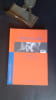
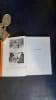
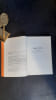
L'ouvrage croise un texte de Catherine Malabou (L'Écartement des voies) et les réflexions en contrepoint de Jacques Derrida sous forme de lettres et de notes écrites alors qu'il voyage à travers le monde (d'Istanbul à New York, de Baltimore à Jérusalem). Il interroge le concept même de voyage, de dérive, d'errance et d'arrivée, en s'opposant à l'idée traditionnelle d'un parcours balisé qui conjure l'aléa et l'accident." Voyager avec Derrida revient d'abord à découvrir que tout ce qui, en Occident, s'est appelé "voyage" [...], a toujours présupposé, comme sa condition de possibilité, une solidarité indéfectible, voire une synonymie entre deux termes : dériver et arriver [...]. La logique d'une telle solidarité présuppose que tout ce qui arrive dérive ; cet axiome commande le rapport essentiel que le voyage entretient avec la destination, avec l'événement, avec la vérité. " Comme si elle feignait de chercher, dans de nombreux textes de Derrida, une boussole perdue, un principe de destination (ou de désorientation), Catherine Malabou explore l'expérience autant que la pensée du voyage. Elle dessine, sans carte, trois voies : - 1 la déconstruction du schéma dérivatif qui soutient traditionnellement l'odyssée du sens, - 2 l'esquisse d'une traversée biographique, - 3 l'abord de l'autre et l'imminence de l'arrivant absolu. Lui-même en voyage, d'Istanbul à Laguna en Californie, de Turin à Baltimore, de New York à Tunis, entre la Pologne, Israël et la Palestine, Jacques Derrida confie en contrepoint (ou contre-allée) ses réflexions à Catherine Malabou alors qu'il attend puis lit son texte. Il lui rappelle les origines du redoutable mot " voyage " dans sa vie - et son amour mortel pour tant de lieux. Une correspondance se cherche ainsi entre deux traversées, elle parie sur la perte dont on part - et la chance du départ : " D'une certaine façon, il n'y a peut-être de voyage digne de ce nom que là où, à tous les sens de ce mot, on se perd, on le risque, sans même prendre ou assumer ce risque : non pas même de se perdre mais d'être perdu. Pour soi. N'accorder de privilège, ergo, à aucun de ces trois mots : " Où suis-je ". Voir le sommaire sur photos jointes.
D'un ton apocalyptique adopté naguère en philosophie
Galilée | Paris 1983 | 12 x 18.50 cm | broché
Seconde version de cette conférence dont il n'a pas été tiré de grands papiers. Envoi autographe signé de Jacques Derrida à Joseph Joliet, ancien étudiant de Derrida qui devint un très proche ami du philosophe. Très attentif à l'écriture de Joseph Joliet, Jacques Derrida rédigera la préface de son roman: "L'enfant au chien assis" et le soutiendra dans ses périodes difficiles (cf. Derrida de Benoit Peeters). Agréable exemplaire. - Photographies et détails sur www.Edition-Originale.com -
Signéponge
Seuil | Paris 1988 | 14 x 20.50 cm | broché
Edition originale de la traduction française. Envoi autographe signé de Jacques Derrida "à Jos (Joliet) co-signataire de ce Signéponge...".Joseph Joliet, ancien étudiant de Derrida devint un très proche ami du philosophe. Très attentif à l'écriture de Joliet, Derrida rédigera la préface de son roman: "L'enfant au chien assis" et le soutiendra dans ses périodes difficiles (cf. Derrida de Benoit Peeters). Agréable exemplaire. - Photographies et détails sur www.Edition-Originale.com -
La carte postale de Socrate à Freud et au-delà
Flammarion Aubier | Paris 1980 | 14 x 22 cm | broché
Edition originale sur papier courant. Envoi autographe signé de Jacques Derrida à un couple de proches amis Jos et Christine (Joliet).Joseph Joliet, ancien étudiant de Derrida devint un très proche ami du philosophe. Très attentif à l'écriture de Joliet, Derrida rédigera la préface de son roman: L'enfant au chien assis et le soutiendra dans ses périodes difficiles (cf. Derrida a Biography, par Benoit Peeters). Dos légèrement ridé sans gravité, une trace de pliure marginale en pied du premier plat, exemplaire complet de sa bande annonce qui comporte de petites déchirures. - Photographies et détails sur www.Edition-Originale.com -
Parages
Galilée | Paris 1986 | 15 x 24 cm | broché
Edition originale dont il n'a pas été tiré de grands papiers. Envoi autographe signé de Jacques Derrida à Joseph Joliet, ancien étudiant de Derrida qui devint un très proche ami du philosophe. Très attentif à l'écriture de Joliet, Derrida rédigera la préface de son roman: "L'enfant au chien assis" et le soutiendra dans ses périodes difficiles (cf. Derrida de Benoit Peeters). Dos très légèrement insolé, agréable exemplaire. - Photographies et détails sur www.Edition-Originale.com -
Marges de la philosophie
Les Editions de Minuit | Paris 1979 | 13.50 x 22 cm | broché
Nouvelle édition dont il n'a pas été tiré de grands papiers. Envoi autographe signé de Jacques Derrida à Joseph Joliet, ancien étudiant de Derrida qui devint un très proche ami du philosophe. Très attentif à l'écriture de Joliet, Derrida rédigera la préface de son roman: "L'enfant au chien assis" et le soutiendra dans ses périodes difficiles (cf. Derrida de Benoit Peeters). Agréable exemplaire. - Photographies et détails sur www.Edition-Originale.com -
Points de suspension
Galilée | Paris 1992 | 15 x 24 cm | broché
Edition originale dont il n'a pas été tiré de grands papiers. Envoi autographe signé de Jacques Derrida à Joseph Joliet, ancien étudiant de Derrida qui devint un très proche ami du philosophe. Très attentif à l'écriture de Joliet, Derrida rédigera la préface de son roman: "L'enfant au chien assis" et le soutiendra dans ses périodes difficiles (cf. Derrida de Benoit Peeters). Dos très légèrement insolé, agréable exemplaire. - Photographies et détails sur www.Edition-Originale.com -
L'autre cap
Les Editions de Minuit | Paris 1991 | 14 x 18.50 cm | broché
Edition originale dont il n'a pas été tiré de grands papiers. Envoi autographe signé de Jacques Derrida à Joseph Joliet, ancien étudiant de Derrida qui devint un très proche ami du philosophe. Très attentif à l'écriture de Joliet, Derrida rédigera la préface de son roman: L'Enfant au chien assis et le soutiendra dans ses périodes difficiles (cf. Derrida de Benoit Peeters). Agréable exemplaire. - Photographies et détails sur www.Edition-Originale.com -
Positions
Les Editions de Minuit | Paris 1972 | 13.50 x 18.50 cm | broché
Edition originale dont il n'a pas été tiré de grands papiers. Envoi autographe signé de Jacques Derrida à Joseph Joliet, ancien étudiant de Derrida qui devint un très proche ami du philosophe. Très attentif à l'écriture de Joliet, Derrida rédigera la préface de son roman: "L'enfant au chien assis" et le soutiendra dans ses périodes difficiles (cf. Derrida de Benoit Peeters). Dos insolé, trois petites taches sur les plats, agréable état intérieur. - Photographies et détails sur www.Edition-Originale.com -
Ulysse gramophone, deux mots pour Joyce
Galilée | Paris 1987 | 14 x 19 cm | broché
Edition originale dont il n'a pas été tiré de grands papiers. Envoi autographe signé de Jacques Derrida à Joseph Joliet, ancien étudiant de Derrida qui devint un très proche ami du philosophe. Très attentif à l'écriture de Joliet, Derrida rédigera la préface de son roman: ""L'enfant au chien assis"" et le soutiendra dans ses périodes difficiles (cf. Derrida de Benoit Peeters). Dos très légèrement insolé sans gravité, bel exemplaire. - Photographies et détails sur www.Edition-Originale.com -
L'animal autobiographique. Autour de Jacques Derrida.
Éditions Galilée, 1999. Fort volume in-8 br. de 576 p. Coll. " La philosophie en effet ". Actes du colloque tenu à Cerisy-la-Salle du 11 au 21 juillet 1997 sous la direction de Marie-Louise Mallet. Nombreuses contributions. E.O. Envoi autographe de Jacques Derrida.
[ADAMI (Valerio).] - ADAMI (Valerio)] DERRIDA (Jacques).
Reference : 123403
(1975)
Valerio Adami, le voyage du dessin. Accompagné par Jacques Derrida.
Paris Maeght, n° spécial de la revue "Derrière le miroir", n° 214 1975 1 vol. Broché in-folio, en feuilles, sous couverture illustrée, 21 + (7) pp. avec 2 lithographies originales à double page, 2 reproductions en couleurs et 15 planches en noir. Edition originale du texte de Jacques Derrida. Couverture défraîchie, sinon en bon état général.
![Valerio Adami, le voyage du dessin. Accompagné par Jacques Derrida.. ADAMI (Valerio)] DERRIDA (Jacques).](https://static.livre-rare-book.com/pictures/VIG/123403_1_thumb.jpg)
![Valerio Adami, le voyage du dessin. Accompagné par Jacques Derrida.. ADAMI (Valerio)] DERRIDA (Jacques).](https://static.livre-rare-book.com/pictures/VIG/123403_2_thumb.jpg)