Write to the booksellers
795 books for « christoph h j »Edit
-
Type
Book (785)
Engraving (4)
Magazine (2)
Maps (2)
New book (2)
-
Latest
Last month (11)
Last week (1)
-
Language
Dutch (1)
English (3)
French (767)
German (13)
Latin (5)
Russian (6)
-
Century
17th (20)
18th (87)
19th (62)
20th (188)
21st (87)
-
Countries
Belgium (79)
Canada (4)
Côte d'Ivoire (1)
Denmark (56)
France (363)
Greece (7)
Italy (1)
Switzerland (273)
United Kingdom (5)
United States of America (6)
-
Syndicate
ALAC (4)
CLAM (4)
CLAQ (1)
ILAB (423)
NVVA (88)
SLACES (88)
SLAM (186)
Topics
- Aesthetics (3)
- Africa (4)
- Algebra (2)
- Anatomy (5)
- Animals (2)
- Archaeology (14)
- Architecture (9)
- Asia - orient (3)
- Basel (7)
- Bible (10)
- Biography (3)
- Buch hans christoph (3)
- Chemistry (2)
- Children’s books (5)
- Christianity (5)
- Churches (4)
- Comic strip (2)
- Communism (2)
- Crimea (2)
- Diplomacy (2)
- Dog (the) (4)
- Early printed books (5)
- Egypt (6)
- Emblems (2)
- Ethnology (2)
- Europe (2)
- Exegesis (7)
- Fine arts (10)
- First edition (5)
- Geography (3)
- German literature (5)
- Germanic languages (35)
- Germany (13)
- Gluck (19)
- Goethe johann wolfgang (2)
- Greece (2)
- Guide books (3)
- Hackney (2)
- Helvética (69)
- History (48)
- Illustrated books (2)
- India (3)
- Industrial arts & crafts - fine arts (3)
- Italy (2)
- Jacob (5)
- Latin (3)
- Law (12)
- Literature (22)
- Maps (4)
- Mathematics (10)
- Medicine (22)
- Military arts (13)
- Mountaineering climbing (4)
- Music (3)
- Musical theory (3)
- Navy (2)
- Nazism (2)
- Nepal (2)
- Newspaper (2)
- Newspapers press (2)
- Opera (9)
- Opera ballet (9)
- Orientalism (8)
- Painters (10)
- Painting (4)
- pharmacy (2)
- Philology (7)
- Philosophy (21)
- Photography (8)
- Physics (4)
- Poetry (6)
- Policy (4)
- Psychology (6)
- Regionalism (2)
- Religions (23)
- Review (4)
- Russia (4)
- Scandinavian (2)
- Schiller (6)
- Sciences (4)
- Sociology (3)
- Steinbeck john (2)
- Surgery (2)
- Switzerland (66)
- Tales (7)
- Technology (3)
- Theatre (9)
- Theology (20)
- Translation (2)
- Travel (5)
- Ussr (4)
- Various (3)
- Veterinary art (2)
- Wagner richard (7)
- Waltz (4)
- Wieland (28)
- Zurich (4)
BAUR (Andreas ) - STUDER (Monica) - VAN DEN BERG (Christoph)
Reference : 20680
(2003)
ISBN : 3856162119
Being a guest
Christoph Merian Verlag 2003 Photographies de Christoph MERIAN VELAG
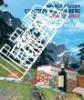
Le projet « Vue des Alpes », un hôtel fictif sur internet est le point de départ des explorations du couple d’artistes suisses Monica Studer et Christoph van den Berg autour de l’image. S’inscrivant dans la longue tradition helvétique du paysage, Monica Studer et Christoph van den Berg nous plongent au coeur de préoccupations artistiques qui témoignent, par une parfaite maîtrise des nouvelles technologies de l’image, d’une volonté de remettre en cause une vision idéalisée et romantique de la montagne et de son paysage. Très bon état d’occasion
Hermann oder das befreyte Deutschland, ein Heldengedicht. Mit einigen historischen Anmerkungen und einer komischen Epopee, der Baron, bereichert. Nebst einer Vorrede ans Licht gestellet von Joh. Chr. Gottscheden.
Neue, verbesserte, vermehrte und mit Kupferstichen ausgezierte Auflage. Leipzig, Bernhard Christoph Breitkopf, 1753. 8°. (7) Bl., XXVI, 272 S. Mit 1 gest. Frontisp. und 12 Kupfertafeln von Johann Christoph Sysang nach A. Wernerin und Gottlieb Leberecht Crusius. Halblederband der Zeit.
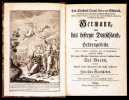
VD18 10554874. – Seebass II, 895. – Goedeke III, 262. – Zweite, erste illustrierte Ausgabe. Christoph Otto Frh. von Schönaich (1725–1807), ein sächsischer Offizier, wurde nach der Publikation des Hermann-Epos, das erstmals 1751 erschien zum Dichter gekrönt. Die Geschichte beschreibt Ereignisse vor und nach der Varus-Schlacht. Das «Gedicht ist von literarhistorischen Interesse, weil es von Gottsched gegen Klopfstocks Messias ausgespielt wird» (Seebass). Zu den Kupferstichen siehe Lanckoronska-Oehler I, 64 «Gottlieb Leberecht Crusius (1730–1804) erste und schönste Arbeit ... die Johann Christoph Sysang (1703–1757), der gewandte Drechsler und Stecher, meisterhaft ausführte». – Das Papier durchgehend etwas, die Tafeln stärker gebräunt mit vereinzelten Stockflecken. Der Einband berieben und bestossen.
Wolfgang Christoph Deßlers himmlische Seelen-Lust unter den Blumen göttliches Worts : oder andächtige Betrachtungen über unterschiedliche auserlesene Sprüche Heil. Schrifft, wodurch ein glaubiger Mensch, in der Liebe gegen Gott und den Nächsten gestärcket
Nürnberg ( Nuremberg ) Felsecker 1740 in 8 (19,5x12) 1 volume reliure plein veau marbré de l'époque, dos à nerfs orné, plats ornés d'un double encadrement doré, tranches dorées, page de titre imprimée en rouge et noir, 10 feuillets non chiffrés, 688 pages, 8 feuillets non chiffrés, avec 37 planches gravées (37 engraving emblematic plates). Wolfgang Christoph Deßlers himmlische Seelen-Lust unter den Blumen göttliches Worts : oder andächtige Betrachtungen über unterschiedliche auserlesene Sprüche Heil. Schrifft, wodurch ein glaubiger Mensch, in der Liebe gegen Gott und den Nächsten gestärcket, im Creuz ermuntert und zur Beständigkeit im Glauben bis ans Ende, angewiesen wird : Mit erbaulichen Liedern und angenehmen Kupfern gezieret. Wolfgang Christoph Dessler, 1660-1722. Rare. Bel exemplaire
Très bon Reliure
Rütimann, Christoph / Gahse, Zsuzsanna und Schwander, Martin:
Reference : 55767AB
(1990)
Christoph Rütimann 2.2. - 7.4.1991. Index (Brevier) an Christoph Rütiman Vorbei von Zsuzsanna Gahse.
Bern, Kümmerly + Frey, 1990. 23,3x13 cm. 1 Bl, 8 Bl., 3 Bl., gefaltete Tafel (ca. 45x270 cm). Originalbroschur.
Erschien anlässlich der Ausstellung im Kunstmuseum Luzern vom vom 2. Februar bis 7. April 1991. In Form einer Strassenkarte gedruckt. - Mit handschriftlicher Widmung von Christoph Rütimann.
Iphigénie en Aulide. Tragédie. Opéra en trois Actes dédiés au Roy. Par M. Le Chevalier Gluck. Représenté pour la première fois par l'Académie de Musique, le mardi 19 Avril 1774, Gravée par le Sieur Huguet.
A Paris, Au Bureau d'Abonnement Musical, Rue du Hazard Richelieu Et Aux Adresses Ordinaires, A. P. D. R., sans date (circa 1775), 1f.blanc, titre avec le catalogue des ouvrages de musique de l'éditeur au verso, 298 pages, 2ff.blancs, cartonnage moderne avec les pages de gardes remplacées, titres dorés sur pièce de titre en basane brune. Des rousseurs, traces d'humidité et petits trous de ver dans la marge supérieure, 2pages refaites à la main et collées sur les pages 24 et 26, quelques notes manuscrites dans la marge. Comme pour l'Edition originales de chez Le Marchand les partitions ont été gravées par Huguet.
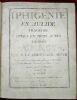
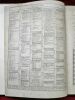
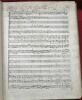
Iphigénie en Aulide est une tragédie lyrique en trois actes de Christoph Willibald Gluck sur un livret de François-Louis Gand Le Bland Du Roullet créé à Paris le 19 avril 1774, à l'Académie royale de musique à Paris.Christoph Willibald, Ritter (chevalier) von Gluck est un compositeur bavarois d'opéra de la période classique, né à Erasbach, dans l'électorat de Bavière, le 2 juillet 1714 et mort à Vienne, dans l'archiduché d'Autriche, le 15 novembre 1787. Merci de nous contacter à l'avance si vous souhaitez consulter une référence au sein de notre librairie.
HUNTER, (William) ; WOLF, (Johann Christoph) & ESCHELSKROON, (Adolph).
Reference : 4964
(1793)
I. Description du Pegu et de l'Isle de Ceylan. Renfermant des détails exacts et neufs sur le climat, les productions, le Commerce, le Gouvernement, les Moeurs et les Usages de ces Contrées. Traduit de l'Anglois & de l'Allemand par L.L.***. II. La vie et les aventures de Jean-Christophe Wolf, premier secrétaire d'Etat à Jaffanapatnam dans l'isle de Ceylan avec description de cette isle, de ses productions naturelles, des manières et des usages de ses habitans. Traduites de l'allemand. On y a joint une description abrégée mais complette de la mème isle.
Paris, Maradan, 1793. 1793 1 vol. in-8° (200 x 128 mm.) en 2 parties avec pagination continue de: partie 1: 32 pp. (dont faux titre, titre); 95 pp.; partie 2: [2] ff. (faux titre, titre); 354 pp. (dont table, reprise de la pagination à 97, sauts et erreurs dans la pagination sans manque, 351 pp. en réalité). Ex-libris armorié gravé collé au dos du premier plat: «Bibliothèque de Mr. Le Baron de Zangiacomi». (Quelques mouillures, rousseurs et marques dues au cuir). Demi-basane à coins dépoque, plats recouverts de papier à la colle fauve, dos à nerfs ornés, titres de maroquin rouge et vert, tranches jaspées de bleu. (Défauts dusage).
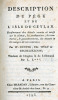
Edition originale des traductions en français par Louis Langlès de cette réunion de 3 travaux réunis en 2 parties sur Pégu, ville portuaire du sud de la Birmanie, et le Ceylan, Sri Lanka actuel (E.O. : I. Londres, 1785, II. Berlin & Stettin, 1782 et Hambourg, 1782). William Hunter (1718-1783), médecin, professeur, anatomiste et orientaliste écossais, vécut une grande partie de sa vie en Inde. Après avoir choisi de faire une maîtrise en arts à l'Université de Glasgow, qui le mènerait à une carrière religieuse, il vient à la médecine en étudiant avec William Cullen (1710-1790 ; médecin et chimiste britannique). Il commence à s'intéresser à l'anatomie au St George's Hospital de Londres, se spécialise dans l'obstétrique et arrive à établir ce domaine comme une branche à part entière et acceptée de la médecine. Après 1756, la pratique médicale de Hunter était principalement consacrée à l'obstétrique, et il était le spécialiste le plus performant dans ce domaine en Grande-Bretagne à son époque, devenant médecin de la reine Charlotte en 1762. Il est élu membre de la Royal Society en 1767 et professeur d'anatomie à la Royal Academy en 1768. Pour aider à l'enseignement de la dissection, il engage le sculpteur Agostino Carlini (vers 1718-1790; sculpteur, peintre et membre fondateur de la Royal Academy) pour faire des sculptures des écorchés d'un criminel récemment exécuté. Il est très intéressé par l'art et a de vastes connexions avec le monde artistique. Hunter choisit pour illustrer ses schémas les dessins de Léonard de Vinci (1452-1519 ; célébrissime peintre italien et homme d'esprit universel) et Kenneth Clark (1903-1983 ; historien de l'art, auteur, directeur de musée, professeur d'université) le considère comme la personne qui a permis la redécouverte des dessins de Léonard de Vinci au XVIIIe siècle au Royaume-Uni. En outre, Hunter est un collectionneur de minéraux, monnaies, instruments scientifiques, objets ethnographiques, de livres rares et d'uvres d'art en tout genre. Il a légué ses collections à l'université de Glasgow, un acte qui a inspiré l'ouverture du Hunterian Museum, le premier musée public d'Écosse, en 1807. Dans les dernières années de sa vie, Hunter prend le poste de chirurgien sur un vaisseau de marine avant de passer au service de la Compagnie des Indes dans le Bengale. Il est envoyé à Java comme inspecteur général des hôpitaux, professeur et examinateur du collège de Calcutta et enfin, secrétaire de la Société asiatique. Hunter a rassemblé les matériaux pour la première partie du présent ouvrage en juillet 1782, lorsque son navire a été retenu par une tempête à Pegu. Il décrit les produits et l'agriculture de Pegu, ainsi que les grottes d'Elephanta, d'Ambola et de Canara. Cette partie est complétée par un important compte rendu de Ceylan, le tout traduit de langlais (E.O. : Londres, 1785). La seconde partie intitulée "La vie et les avantures de Jean-Christophe Wolf [...] (pp. 96-354), traduit de lallemand (E.O. : Berlin & Stettin, 1782) est due à Wolf lui-même, relate ses aventures à Ceylan. Johann Christoph Wolf (1683-1739) est un savant, hébraïste allemand, professeur de langues orientales à Hambourg, recteur de l'académie de cette même ville et premier secrétaire d'État à Jaffanapatnam à Ceylan. Suit la traduction de lallemand en français (E.O. : Hambourg, 1782) de la description abrégée de cette île due à Adolf Eschelskroon (1736-1793), explorateur danois, marchand, consul et agent royal danois à Kiel qui vécut aux Indes orientales pendant 18 ans. Provenance : le Baron Zangiacomi (1766-1846), magistrat et un homme politique français : il est successivement pair de France, président de chambre et conseiller à la Cour de cassation, membre du Conseil des Cinq-Cents et député de la Convention nationale (ex-libris armorié gravé collé au dos du premier plat). Rare édition en français dont on ne dénombre que quelques exemplaires passés en vente ces 100 dernières années. 1 vol. 8vo (200 x 128 mm.) in 2 parts with continuous pagination of : part 1 : 32 pp. (of which false title, title) ; 95 pp. ; part 2 : [2] ff. (false title, title); 354 pp. (including table, resumption of pagination at 97, jumps and errors in pagination without incidence, 351 pp. in reality). Engraved armorial bookplate pasted to the back cover: "Bibliothèque de Mr. Le Baron de Zangiacomi". (Some spotting, foxing and marks due to the leather). Contemporary half-basane with corners, boards covered with glue paper, spine ribbed and decorated, titles in red and green morocco, edges speckled with blue. (Defects of use). First edition of the French translations by Louis Langlès of this collection of 3 works in 2 parts on Pegu, a port city in southern Burma, and Ceylon, present-day Sri Lanka (E.O.: I. London, 1785, II. Berlin & Stettin, 1782 and Hamburg, 1782). William Hunter (1718-1783), a Scottish physician, teacher, anatomist and orientalist, lived much of his life in India. After choosing to pursue a Master of Arts degree at Glasgow University, which would lead to a religious career, he came to medicine by studying with William Cullen (1710-1790; British physician and chemist). He became interested in anatomy at St. George's Hospital in London, specialized in obstetrics, and succeeded in establishing this field as a separate and accepted branch of medicine. After 1756, Hunter's medical practice was primarily devoted to obstetrics, and he was the most successful specialist in this field in Britain in his day, becoming physician to Queen Charlotte in 1762. He was elected a Fellow of the Royal Society in 1767 and Professor of Anatomy at the Royal Academy in 1768. To help teach dissection, he hired the sculptor Agostino Carlini (c. 1718-1790; sculptor, painter and founding member of the Royal Academy) to make sculptures of the flayed body of a recently executed criminal. He was very interested in art and had extensive connections to the art world. Hunter chooses to illustrate his diagrams with the drawings of Leonardo da Vinci (1452-1519; celebrated Italian painter and universal mind) and Kenneth Clark (1903-1983; art historian, author, museum director, university professor) considers him the person who brought about the rediscovery of da Vinci's 18th century drawings in the UK. In addition, Hunter is a collector of minerals, coins, scientific instruments, ethnographic objects, rare books and works of art of all kinds. He bequeathed his collections to the University of Glasgow, an act that inspired the opening of the Hunterian Museum, the first public museum in Scotland, in 1807. In the last years of his life, Hunter took the position of surgeon on a naval vessel before moving to the service of the India Company in Bengal. He was sent to Java as Inspector General of Hospitals, Professor and Examiner of the College of Calcutta and finally, Secretary of the Asiatic Society. Hunter gathered the materials for the first part of this work in July 1782, when his ship was held up by a storm at Pegu. He describes the produce and agriculture of Pegu, as well as the caves of Elephanta, Ambola, and Canara. This part is completed by an important account of Ceylon, all translated from English (E.O.: London, 1785). The second part, entitled "The life and adventures of Johann Christoph Wolf [...]" (translated from French, pp. 96-354), translated from the German (E.O.: Berlin & Stettin, 1782), is due to Wolf himself and relates his adventures in Ceylon. Johann Christoph Wolf (1683-1739) was a German scholar, Hebraist, professor of Oriental languages in Hamburg, rector of the academy of the same city and first secretary of state in Jaffanapatnam in Ceylon. Follows the translation from German into French (E.O.: Hamburg, 1782) of the abridged description of this island due to Adolf Eschelskroon (1736-1793), Danish explorer, merchant, consul and royal Danish agent in Kiel who lived in the East Indies for 18 years. Provenance: Baron Zangiacomi (1766-1846), a French magistrate and politician: he was successively peer of France, president of chamber and adviser to the Court of Cassation, member of the Council of Five Hundred and deputy of the National Convention (armorial bookplate engraved pasted on the back of the first plate). Rare edition in French of which only a few copies have been sold in the last 100 years.
Auf den Diamanten und Goldfeldern Südafrikas.
Schilderungen von Land und Leuten, der politischen, kirchlichen und kulturellen Zustände Südafrikas von Carl Christoph Strecker O. M. I. Mit Titelbild, 100 Abbildungen im Text und einer Karte, 1 vol. in-8 cartonnage éditeur illustré. Herdersche Verlagshandlung, Freiburg im Breisgau, 1901, vii-682 p., 1 frontispice, 100 ill. et une 1 carte dépliante
Récit détaillé des missions et des observations de Carl Christoph Strecker, missionnaire de la congrégation des Oblats de Marie-Immaculée (O.M.I.), dans les régions minières d'Afrique du Sud à la fin du XIXe siècle. L'ouvrage richment illustré offre un panorama complet sur la géographie, l'ethnographie et les tensions politiques et religieuses de l'époque, notamment dans le Transvaal. Bon état (cartonnage un peu frotté)
[Jan and Caspar Luiken] - Georg Andreas Will. Cf. Holzmann, Weigel Johann Christoph
Reference : 028660
(1766)
Die Grösse und Mannigfaltigkeit in den Reichen der Natur und Sitten : nach der Absicht des Schöpfers von je her verbunden und hier in hundert feinen Kupferstichen und soviel phÿsischen und moralischen Schilderungen nach neuem Geschmack vorgestellt und erläutert, jedermann zum Nutzen, jungen Dichtern, Malern und Künstlern aber zum besondern Vortheil
Nurnberg 1766 Johann Christoph Weigel Hardcover 1st Edition
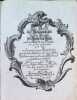
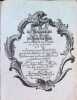
Couverture rigide avec de petits dommages sur la couverture, en mauvais état, 25 x 20 cm, 208 pp., Allemand, 1ère édition, état du livre : Bon La taille et la diversité dans les royaumes de la nature et des moeurs : selon l'intention du Créateur depuis toujours liées et ici présentées et expliquées dans cent belles gravures sur cuivre et autant de descriptions physiques et morales selon un nouveau goût, pour l'utilité de tous, mais au bénéfice particulier des jeunes poètes, peintres et artistes. Page de titre gravée et 100 gravures en cuivre emblématiques à demi-page. Chaque emblème est accompagné de distiques allemands et de texte. Les plaques de cuivre sont de Jan et Caspar Luiken. Selon l'introduction, ces plaques ont été précédemment utilisées pour l'Ethica naturalis de Weigel. Texte de Georg Andreas Will. Cf. Holzmann. [208] p. : ill. ; 26 cm (4to) Un livre d'emblèmes éducatif basé sur divers aspects de la nature et de la nature humaine avec 100 emblèmes gravés par Jan Luiken (41 images) et Caspar Luiken (59 images). Chaque emblème est accompagné d'un vers allemand du graveur et éditeur allemand Johann Christoph Weigel. [Cette description peut avoir été traduite par une IA.]

(CLAM, )
Phone number : +32(0)496 80 81 92
Hello Camel.
Berlin Kehrer Verlag 2016 Première édition. Christoph Bangert est un photojournaliste allemand qui documente les crises pour des publications internationales. Ce livre de photos est une réponse au fait d'avoir été embarqué avec les troupes en Afghanistan et en Irak. Il s'agit d'un documentaire sur les efforts déployés par les êtres humains pour créer quelque chose qui s'apparente à la "normalité" face à la violence et au chaos. Tissu décoré. Signé et numéroté sur la page de titre. 225 d'une limitation non spécifiée. Non paginé. 320 x 245 mm (12œ x 9Ÿ pouces). L'ouvrage est accompagné d'une page d'épreuve / page d'imprimeur de la production, sur laquelle est imprimé un chameau. Excellent état de conservation.
First edition. Christoph Bangert, is a German photojournalist who documents crises for international publications. This photo book is a response to being embedded with the troops in Afghanistan and Iraq. This is a documentary of human striving to create something approximating 'normality' in the face of violence and chaos. Decorated cloth. Signed and numbered to the title page. 225 of an unspecified limitation. Unpaginated. 320 by 245 mm (12œ by 9Ÿ inches). Comes wrapped in a proof page / printer's page from the production, with a camel printed upon it. Excellent condition. .
Religion als Bild, Bild als Religion. Beiträge einer internationalen Tagung. Regensburger Studien zur Künstgeschichte, 15.
Les Marches, Schnell & Steiner 2012, 245x175mm, Verlegereinband mit Umschlag. Neues Exemplar.
illustriert, Pour un paiement via PayPal, veuillez nous en faire la demande et nous vous enverrons une facture PayPal
Der Weihnachtsabend. Eine Erzählung zum Weihnachtsgeschenke für Kinder. Von dem Verfasser der Ostereyer.
Landshut, in der Krüll'schen Buchhandlung. 1825. 12°. 172 S. Bedruckte Originalbroschur.
Wegehaupt 1,1955. - Erste Ausgabe. - Die rührende Geschichte des Waisenkindes Anton, der von einer Försterfamilie aufgenommen wird und der sich, Jahrzehnte später, seiner Pflegefamilie dankbar zeigt, gehört zu den wichtigsten und frühesten Schilderungen der "deutschen" Weihnachtstradition mit Weihnachtsbaum, den Geschenken und dem gemeinsamen Singen von Weihnachtsliedern. Christoph von Schmid war auch der Autor des Weihnachtsliedes "Ihr Kinderlein kommet". Der erfolgreiche Schriftsteller, katholische Geistliche und Pädagoge Christoph von Schmid (1768-1854) war das Vorbild religiöser Erbauungsliteratur für Kinder. - Originalbroschur angestaubt und am Rücken angerissen. Mit handschriftlichem Besitzvermerk auf dem Vorderdeckel. Erste Bl. eselsohrig. Ränder stockfleckig.
Beyträge zur critischen historie der deutschen sprache, poesie und beredsamkeit - Tome 1.
Georg Olms Verlag. 1970. In-12. Relié. Bon état, Couv. convenable, Dos satisfaisant, Intérieur frais. 689 pages - livre en allemand gothique.. . . . Classification Dewey : 430-Langues germaniques. Allemand
Livre en allemand gothique - Herausgegeben von einigen mitgliedern der deutschen gesellschaft in leipzig - Begründet von Johann Christoph Gottsched und Johann Georg Lotter, fortgefuhrt von Johann Christoph Gottsched - 32 stücke in acht bänden. Classification Dewey : 430-Langues germaniques. Allemand
Christoph Zellweger : Foreign Bodies.
Sans lieu Actar 2007 1 vol. broché in-8, broché, couv. illustrée, 147 pp., nombreuses reproductions en noir et en couleurs. Texte bilingue anglais-allemand. Très bon état.
Collectif - Dario Gamboni, Florens Deuchler, Heinz Horat, André Meyer, Christoph et Dorothee Eggenberger, Oskar Bätschmann, Paul-André Jaccard, Eva-Maria Preiswerk-Lösel, Nicolas Bouvier, Hans Christoph von Tavel, Stanislaus von Moos, Beat Wyss:
Reference : 14181
(1987)
Ars Helvetica - Arts et culture visuels en Suisse (complet). I: La géographie artistique - II: L'économie artistique - III: L'architecture religieuse - IV: L'architecture profane - V: La peinture du Moyen-Âge - VI: La peinture de l'époque moderne - VII: La sculpture - VIII: Arts précieux, Arts appliqués - IX: L'Art populaire - X: L'iconographie nationale - XI: Esthétique industrielle - XII: La scène artistique aujourd'hui - XIII: Index général.
Disentis, Pro Helvetia / Desertina, 1987-1993. 13 volumes in-8, exception faite de l'Index qui est broché, les volumes sont sous reliure toile jaune titrée et jaquette couleurs. Abondamment illustrés. Menus défauts aux jaquettes, belle condition générale.
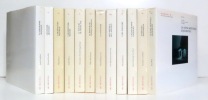
Rare ensemble complet, dont le recherché volume de Nicolas Bouvier sur l'Art populaire. 10 ans • 10 francs : à l'occasion de son 10e anniversaire, la Bergerie vous propose pour une période limitée une sélection d'ouvrages à 10 francs suisses. Plus d'informations sur la page d'accueil de notre site.
Grundzüge der Elementarphysik oder methodischer Leitfaden für den ersten physikalischen Unterricht auf Schulen.
Halle, Hemmerbe und Schwetschke, 1807, kl. in-8vo, XXIV + 126 S. + 1 gef. gest. Tafel, Original-Pappband. Lederrückenschild.
Erstausgabe dieser physischen Schrift von Christoph Bernoulli, Naturforscher und Technologe. Spross der berühmten Basler Gelehrtenfamilie, Christoph war Gründer und Leiter des philotechnischen Instituts, Professor der Naturgeschichte in Basel. HBLS II/194; Poggendorff I/163. Image disp.
(SLACES, NVVA)
Phone number : 41 (0)26 3223808
PLUTARQUE, MELANCHTHON (Philipp) editeur, HEUMANN (Christoph August) traducteur
Reference : 27155
Plutarchi de Liberorum educatione commentarius, cum nova interpretatione latina et adnotationibus Christ. Aug. Heumanni. Editionem curavit, Guil. Xylandri suasque observationes addidit Jac. Frider. Heusingerus. [CARACTERES GRECS ET LATINS).
Petit in-8, demi-basane de l'époque, (22), 192, (199) p. d'index, planche frontispice gravée, dernier feuillet partiellement détaché. Lipsiae, apud Mich. Carol. Frid. Mullerum, 1749.
Traduit et édité par Christoph August Heumann avec la collaboration de Jakob Friedrich Heusinger d'après l'édition de Guilielmus Xylander.Titre de départ : "Liber de educatione liberorum" -- Epître dédicatoire à Jakob Friedrich Heusinger -- Titre de départ : "Plutarchi Chaeronensis liber de educatione liberorum".Contient aussi: "Programma quo praelectiones publicas in hunc Plutarchi librum destinatas indicavit", par Philippus Melanchthon, aux p. [21]-[22] -- "De Eurydice Plutarchi dissertatio..." par Christoph August Heumann aux p. 183-186 -- "De Eurydice Plutarchi et epigrammate illius conjecturae" par Jakob Friedrich Heusinger, aux p. 187-192 -- "Index analyticus in Plutarchi commentarium de liberorum educatione emendatior editus et novorum exemplarium numeris accomodatus accedit alius index adnotationum" par Johann Heinrich Rapp aux p. -[199]).Frontispice et vignette au titre gravé sur cuivre par Johann Martin Bernigeroth. Bandeaux, lettrine et culs-de-lampe gravés sur bois. Index.Rousseurs et auréoles. Manque au dos, en tête et pied. Cachets. (Exemplaire de travail).

Phone number : 33 01 47 07 40 60
Welthandelsrecht.Studium und Praxis.
München - Wien, C.H. Beck - Manz 2003, 225x140mm, XVII- 515Seiten, broschiert. Exemplar wie neu.
Pour un paiement via PayPal, veuillez nous en faire la demande et nous vous enverrons une facture PayPal
La Macrobiotique ou L'Art de prolonger la Vie de l'Homme ; Par C. W. HUFELAND, Premier médecin et conseiller d'Etat du roi de Prusse. Traduit de l'allemand par A.-J.-L. Jourdan. Nouvelle Edition.
Bruxelles, Librairie Deprez-Parent, F. Parent Editeur, 1841, 1 volume in-12 de 165x105 mm environ, 391 pages, demi-reliure à coins en parchemin crème. Des rousseurs, coupes émoussées, cartonnage frotté, sinon bon état.
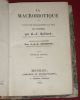
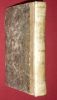
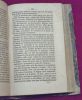
Le docteur Christoph Wilhelm Hufeland (Langensalza (Thuringe), 12 août 1762 - Berlin, 25 août 1836) est le premier médecin du roi de Prusse Frédéric III et de la reine Louise de Prusse. Il est reconnu comme le précurseur le plus célèbre de la médecine préventive anti-vieillissement. À travers son livre Makrobiotik oder die Kunst, das menschliche Leben zu verlängern (lArt de prolonger la vie par la macrobiotique), paru en 1796, Hufeland devient très connu à son époque. C'est le père de la chronobiopathologie. Merci de nous contacter à l'avance si vous souhaitez consulter une référence au sein de notre librairie.
Aspasia oder Die platonische Liebe :C. M. Wieland. [4 Orig. Rad. Taf. von Erhard Amadeus Dier] Die blaue Blume ; 4
Wien ; Leipzig : L. Heidrich,1922,in folio demi cartonnage editeur,18 p.beau texte en gothique ; 4 eaux fortes ht signées au crayon,,Die blaue Blume ; 4,tirage à 350 ex.,bon etat
![Aspasia oder Die platonische Liebe :C. M. Wieland. [4 Orig. Rad. Taf. von Erhard Amadeus Dier] Die blaue Blume ; 4. Wieland, Christoph Martin](https://static.livre-rare-book.com/pictures/BRK/12827_1_thumb.jpg)
![Aspasia oder Die platonische Liebe :C. M. Wieland. [4 Orig. Rad. Taf. von Erhard Amadeus Dier] Die blaue Blume ; 4. Wieland, Christoph Martin](https://static.livre-rare-book.com/pictures/BRK/12827_2_thumb.jpg)
![Aspasia oder Die platonische Liebe :C. M. Wieland. [4 Orig. Rad. Taf. von Erhard Amadeus Dier] Die blaue Blume ; 4. Wieland, Christoph Martin](https://static.livre-rare-book.com/pictures/BRK/12827_3_thumb.jpg)
Vol. della collana erotica Die blaue Blume. Erhard Amadeus-Dier (Vienna 1893 - Klosterneuburg 1969) fu pittore di genere, acquarellista, incisore e fine esecutore di ex libris. Bénézit, 4, p. 570; Vollmer, I, p. 37-38. Remise de 20% pour toutes commandes supérieures à 200 €
BIONUS SMYRNAEUS. - MOSCHUS SYRACUSANUS. - SCHIER, Iohann Adam. - HERMIAS. - DOMMERICH, Christoph. - GEMISTUS, Georgius. - REICHARDO, Henrico Godofredo.
Reference : 94195
3 Titres. 1. Bionis et Moschi Idyllia cum metaphrasi latina et notis integris Fvluii Ursini, Bonav. Vulcanii, Henrici Stephani, Iosephi Schaligeri, Isaaci Casauboni, Dan. Heinsii, Guil. Xylandri, Iac. Palmerii nec non selectis longopetraei, Nicolai Schwebelii et Ioh. Heskin recenscit M. Iohann Adam Schier. Relié avec, 2. Hermiae philosophi gentilium philosophorum irrisio. Cum adnotationibus Hier. Wolfii Thomae Galei, Wilh. Worthii suisque graece in usum prealectionum separatim edidit J o. Christoph. Dommerich. Relié avec, 3. Georgii Gemisti Plethonis de iis quae post pugnam mantinensem apud graecos gesta sunt Libri II nunc primum seorsim editi et notis illustrati ab Henrico Godofredo Reichardo.
Lipsiae - Halae, Apud Ioh. Georg. Loewium - Apud Carolum Hermannum Hemmerde - Apud Christ. Gottl. Hilscher 1752, 1764, 1770, 175x120mm, cartonnage. Bon état.
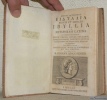
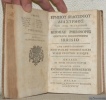
titre gravée - 8 ff. - 186 pages - 7 ff. + 108 pages - 1 ff. + 11 ff. - 144 pages - 7 ff., bandeaux, lettrines, culds-de-lampe, texte en grec ancien et latin, Pour un paiement via PayPal, veuillez nous en faire la demande et nous vous enverrons une facture PayPal
Dans les traces... de la Constitution dei verbum du concile Vatican II: Bible théologie et pratiques de lecture
Cerf 2009 206 pages 13 4x1 8x21 2cm. 2009. Broché. 206 pages. Cet ouvrage de Christoph Theobald propose une lecture actualisée de la constitution conciliaire Dei Verbum dans un contexte postconfessionnel et pluridisciplinaire. Il examine les enjeux épistémologiques culturels théologiques et pratiques de la lecture chrétienne de la Bible notamment en contexte ecclésial
légères notes au crayons à papier (effaçable) proche du très bon état par ailleurs
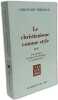
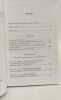
LE CHRISTIANISME COMME STYLE: Une manière de faire de la théologie en postmodernité - TOME 1 & 2
CERF 2007 13 7x21 4x3 8cm. 2007. Broché. 2 volume(s). L'ouvrage 'Le christianisme comme style' de Christoph Theobald propose une approche stylistique du christianisme qui évite de le réduire à son enseignement doctrinal permettant ainsi d'honorer l'ensemble de la vie chrétienne comme une manière d'habiter le monde. Distribué en quatre parties volumineuses il traite organiquement l'ensemble des traités de la théologie dogmatique selon un principe formel unificateur
Très bon état
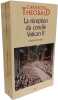
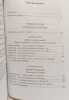
LA RECEPTION DU CONCILE VATICAN II - TOME 1 ACCEDER A LA SOURCE - TOME 1: Tome 1 Accéder à la source
CERF 2009 928 pages 23 4x4 4x14 6cm. 2009. Broché. 928 pages. Cet ouvrage de Christoph Theobald propose une analyse historique et théologique de la réception du concile Vatican II depuis sa phase préparatoire jusqu'à l'époque contemporaine. Il examine comment les papes successifs (Paul VI Jean-Paul II Benoît XVI François) ont interprété et mis en œuvre les textes conciliaires tout en esquissant une théorie de la réception. Le livre invite à renouer le lien entre l'Église et l'Évangile dans le contexte actuel
Très bon état
Vsemirnaya istoriya. In Russian /World History
Short description: In Russian. Schlosser, Friedrich Christoph. World History. St. Petersburg Moscow: M.O. Wolf, 1867-1868 (St. Petersburg). You are welcome to reach out to us for a detailed description of the copies currently available. Delivery of this book may take longer than usual including extended processing and pre-shipping time, no expedited shipping is available. Please advise us if you have a set date or a deadline to receive your order.SKU3508150
Vsemirnaya istoriya. In Russian /World History
Short description: In Russian. Schlosser, Friedrich Christoph. World History. Saint Petersburg: Publishing House of A. Serno-Solovyevich, 1861-1869. You are welcome to reach out to us for a detailed description of the copies currently available. Delivery of this book may take longer than usual including extended processing and pre-shipping time, no expedited shipping is available. Please advise us if you have a set date or a deadline to receive your order.SKU3114489