Write to the booksellers
16900 books for « christian g »Edit
-
Type
Artists' books (2)
Autographs (6)
Books (16612)
Drawings (1)
Engravings (2)
Magazines (13)
Maps (2)
Music sheets (248)
New books (3)
Object books (1)
Photographs (8)
Posters (2)
-
Latest
Last 24h (20)
Last 3 days (24)
Last month (188)
Last week (67)
-
Language
Albanian (1)
Czech (1)
Dutch (9)
English (4)
French (16491)
German (40)
Greek (1)
Latin (5)
Romanian (1)
Russian (346)
Spanish (1)
-
Century
16th (8)
17th (49)
18th (274)
19th (354)
20th (7368)
21st (2365)
-
Countries
Belgium (796)
Brazil (1)
Canada (67)
China (5)
Côte d'Ivoire (56)
Denmark (411)
France (13848)
Germany (13)
Greece (10)
Switzerland (1336)
United Kingdom (8)
United States of America (349)
-
Syndicate
ALAC (60)
CLAM (38)
CLAQ (3)
CNE (5)
ILAB (7985)
NVVA (168)
SLACES (168)
SLAM (7096)
SNCAO (16)
Topics
- Africa (47)
- Alsace (157)
- Andersen hans christian (491)
- Aquitaine (88)
- Archaeology (144)
- Architecture (162)
- Artists (40)
- Autographs (70)
- Belgium (57)
- Bernadac christian (184)
- Biography (158)
- Brittany (70)
- Children’s books (301)
- Christianity (43)
- Christmas (45)
- Cinema (85)
- Civilisation (56)
- Comic strip (200)
- Concentration camp (50)
- Cooking (168)
- Culinary art (52)
- Dedication (147)
- Detective novels (68)
- Drawings (58)
- Economics (106)
- Education (80)
- Education - morals (53)
- Egypt (226)
- Esotericism (44)
- Ethnology (45)
- Fine arts (175)
- First edition (155)
- Football (51)
- Football (49)
- Freemasonry (53)
- Genealogy (52)
- Geography (119)
- Germanic languages (96)
- Germany (77)
- Guide books (55)
- Helvética (152)
- History (699)
- Hitler (54)
- Humour anecdotes (44)
- Industrial arts & crafts - fine arts (73)
- Jacq christian (384)
- Journalism (43)
- Laborde christian (51)
- Law (159)
- Legends (46)
- Literature (840)
- Magazine (150)
- Mathematics (56)
- Medicine (144)
- Megret christian (50)
- Military arts (49)
- Millau christian (56)
- Montaignac christian (81)
- Motor vehicle (45)
- Museums (39)
- Music (50)
- Navy (66)
- Nazism (48)
- Newspapers press (221)
- Painting (57)
- Paris (103)
- Petitfils jean-christian (60)
- Philosophy (201)
- Photography (221)
- Plume christian (46)
- Poetry (389)
- Policy (141)
- Psychology (86)
- Regionalism (167)
- Religions (168)
- Review (216)
- Reviews (188)
- Rock (122)
- Scandinavian literature (60)
- Science fiction (41)
- Sciences (89)
- Scores (250)
- Social sciences (46)
- Sociology (54)
- Songs (224)
- Sports (63)
- Sudan (78)
- Switzerland (163)
- Tales (105)
- Theatre (77)
- Theology (65)
- Travel (89)
- Various (139)
- War (317)
- Wine (52)
- Youth (59)
- Zoology (41)
- Zuber christian (123)
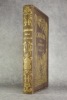
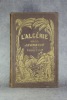
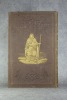
L'ALGERIE DE LA JEUNESSE. ILLUSTRATIONS PAR L. LASSALLE
PARIS. ALPH. DESESSERTS, EDITEUR. DE LA LIBRAIRIE A L'ILLUSTRATION POUR LA JEUNESSE. SANS DATE. (1847). IN-8 (16 X 24,5 X 3 CENTIMETRES ENVIRON) DE (4) + 362 ET (1) PAGES, RELIURE DE L'EDITEUR PLEINE PERCALINE MARRON, PLATS ET DOS ORNES DE COMPOSITIONS DOREES PAR HEROU, TITRE ET TRANCHES DORES. ILLUSTRE DE QUELQUES GRAVURES EN NOIR ET DE 14 BELLES PLANCHES HORS TEXTE SOUS SERPENTE, LITHOGRAPHIEES, COLORIEES ET GOMMEES, DONT 12 DE TYPES ET COSTUMES. (L'HISTOIRE DE L'ALGERIE ET DE LA COLONISATION FRANCAISE, A TRAVERS LES AVENTURES D'UN JEUNE BRETON EMBARQUE POUR L'ALGERIE, FAIT PRISONNIER PAR LES ARABES ET DEVENU UN FAMILIER D'ABD-EL-KADER). PREMIER TIRAGE POUR CE BEAU CARTONNAGE ROMANTIQUE. ROUSSEURS SUR CERTAINES PAGES DE TEXTE, PETITES TRACES D'USURE EXTERIEURE SANS GRAVITE, SINON BON EXEMPLAIRE.
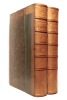
LA CIVILISATION HELLENIQUE. TOME I. XI EME- VIII EME S. PARIS. EDITIONS CAHIERS D'ART. 1969.
1969 1969 GRAND IN-4 DE VII + 320 PAGES, RELIURE DE L'EDITEUR PERCALINE BLANCHE, TITRE IMPRIME EN BLEU, SOUS JAQUETTE IMPRIMEE. ILLUSTRE DE 262 REPRODUCTIONS.
PETITES TACHES SUR LA JAQUETTE, SINON BEL EXEMPLAIRE.
SPIESS (Christian Heinrich) ; BILDERBECK (Ludwig Franz Benedict von, trad.)
Reference : 780
Théodore, ou le petit savoyard. Traduit de l'allemand, par l'auteur de CYANE.
Paris : Le prieur, an VI-1798. LE PIONNIER DU GOTHIQUE ALLEMAND EN TRADUCTION FRANÇAISE


3 parties en 1 vol. In-18° (130 x 84 mm), 144 pp - 141 pp. - 143 pp., demi-basane brune à coins, dos lisse (reliure de l'époque). Les trois gravures en frontispice manquent à l'exemplaire, elles semblent ne jamais avoir été reliées. Seconde édition française, après la première de 1797, de ce roman allemand dont l'édition originale fut publiée en 1792 sous le titre Der Mäusefallen und Hechelkrämer, eine Geschichte sehr wunderbar und doch ganz natürlich. Le romancier à succès Ludwig Franz von Bilderbeck traduit librement (l'histoire est notamment transposée de l'Allemagne vers la France) cette fantaisie gothique à l'intrigue labyrinthique où se mêlent trésors, brigands, assassinats, magiciens et spectres. Pionnier du Schauerroman, pendant allemand de la littérature gothique dont le nom signifie « roman de frisson », Spiess, pourtant critiqué pour le caractère morbide et scabreux de sa production, fut l'un des auteurs les plus lus de sa génération. Son influence transparaît dans les oeuvres des britanniques Radcliffe et Lewis. « Tout à coup il aperçoit une longue figure humaine, qui sembloit descendre sur le rayon qui éclairoit sa prison; elle portoit une robe noire et une large ceinture couverte de signes magiques ; elle tenoit dans sa main droite un flambeau allumé, et dans l'autre une baguette blanche... un second fantôme suivit de près le premier: celui-ci paraissoit habillé de blanc; il portoit divers instruments que Théodore, qui commençoit à perdre de nouveau connoissance, ne put distinguer... Mais lorsqu'il vit que ces deux spectres alloient s'établir dans le souterrain, que l'un d'eux avoit déjà posé à terre un gros paquet enveloppé dans une serviette, tandis que l'autre, décrivant un cercle magique, murmuroit entre ses dents une espèce de conjuration, alors, rassemblant toutes ses forces, il s'élance, et crie d'une voix terrible: --Fuyez, noirs esprits! fuyez! » (2ème partie, pp. 44-45). Provenance : "Arvidus Klingspor", avec son ex-libris gravé "BIBLIOTHECA NAESBYENSIS" daté 1895, contrecollé au contreplat supérieur. D'origine suédoise, Carl Arvid von Klingspor (1829-1903) exerça comme généalogiste et spécialiste de l'héraldique. Il contribua notamment à la documentation des armoiries des grandes familles d'Europe de l'Est. CCFR : Trois bibliothèques françaises recensent l'ouvrage dans leurs fonds catalogués: BnF (Tolbiac) pour l'édition de 1797, Troyes pour celle de 1798, BnF (Tolbiac) et Strasbourg pour celle de 1822. OCLC : Deux exemplaires à l'étranger: Hagley Museum and Library (États-Unis) pour l'édition de 1797, Madrid pour celle de 1798. Petit manque à la pièce de titre, épidermures, frottements et manques de papier sur les plats et les coupes, coins rognés, papier légèrement et uniformément jauni, quelques rares rousseurs, une tache d'encre marginale p. 59 de la première partie.


MANDL LOUIS. (1812-1881). EHRENBERG CHRISTIAN GOTTLIEB (1795-1876).
Reference : 2324
(1839)
TRAITE PRATIQUE DU MICROSCOPE, ET DE SON EMPLOI DANS L’ETUDE DES CORPS ORGANISES. SUIVI DE RECHERCHES SUR L’ORGANISATION DES ANIMAUX INFUSOIRES, PAR D.-C.-G. EHRENBERG. ACCOMPAGNE DE 14 PLANCHES.
A PARIS. CHEZ J.-B. BAILLIERE, LIBRAIRE DE L’ACADEMIE ROYALE DE MEDECINE. 1839. IN-8 (14 X 21 X 3 CENTIMETRES ENVIRON) DE XIV + 486 PAGES, RELIURE D'EPOQUE 1/2 VEAU BRUN, FILETS DORES SUR DOS LISSE, TITRE DORE. ILLUSTRE 14 PLANCHES HORS TEXTE. PREMIERE EDITION DE LA TRADUCTION FRANCAISE. BON EXEMPLAIRE.
Verbessertes Gothaisches Gesangbuch zum Gebrauch beym öffentlichen Gottesdienst und bey häuslicher Andacht [suivi de] Die sonn und festtäglischen episteln und evangelia
Gotha ; id. : Reyher ; id., 1800 ; s. d. (pas après 1800).. UNE INTÉRESSANTE RELIURE ALLEMANDE DATÉE EN VÉLIN ROSE À DÉCOR ET MARQUE D'APPARTENANCE


In-12° (176 x 111 mm), [48] - 312 - [8] + vélin rose, dos lisse orné, frise en encadrements sur les plats avec un large fer au centre, initiales et date sur le plat supérieur, garde de papier dominoté, tranches dorées antiquées (reliure allemande de l'époque). Réunion de 2 rares gesangbuch, littéralement « Livres de chants » ou recueil de cantiques protestants luthériens dans un spécimen peu courant de reliure allemande en vélin coloré en rose et doré, aux tranches antiquées. Le dos est décoré d'urnes, les plats présentent un fer central rayonnant au sein duquel se trouve l'agneau pascal entouré de la devise: « Siehe das ist gottes lam » (« Voici l'agneau de dieu », qui ôte le péché du monde, Jean 1: 29) et sur le plat supérieur, au dessus, les initiales « A. C. D. S. » et, en dessous, la date « 1800 ». Provenance : A. C. D. S. (non identifiée), initiales sur le plat supérieur répétées à l'encre brune au bas de la première garde blanche. CCFR (21/10/2026) : Aucun exemplaire de cette édition de 1800 trouvé à la BnF ni au CCFr, qui n'a que celle de 1780 (Strasbourg). Coloration et ors partiellement passés, une tache sur le plat supérieur, mors fendus en tête sur quelques millimètres, petits manques à la coiffe de tête, aux extrémités des mors et à un coin, papier uniformément roussi.
HONEGGER MARC ET MEYER CHRISTIAN. (TABLES RONDES PRESENTEES ET REUNIES PAR).
Reference : 171
(1986)
ISBN : 2868201075
LA MUSIQUE ET LE RITE SACRE ET PROFANE.
STRASBOURG. ASSOCIATION DES PUBLICATIONS PRES DES UNIVERSITES DE STRASBOURG. (ACTES DU XIII° CONGRES DE LA SOCIETE INTERNATIONALE DE MUSICOLOGIE. STRASBOURG. 29 AOUT- 3 SEPTEMBRE 1982). 1986. 2 VOLUMES PETIT IN-8 (15,5 X 24 ET 15 X 20,5 CENTIMETRES ENVIRON) DE (4) + 491 PAGES ET (2) + 797 PAGES, COUVERTURE JAUNE ILLUSTREE, TITRE IMPRIME EN NOIR. BON EXEMPLAIRE.

RUDIMENS D'UNE PYRETOLOGIE METHODIQUE, TRADUITS DU LATIN PAR M. CLANET, EX OFFICIER DE SANTE.
TOULOUSE. FAGES. MEILHAC. 1801. IN-8 (13 X 20 CENTIMETRES ENVIRON) DE XVI + 384 PAGES, RELIURE D'EPOQUE 1/2 VELIN, TITRE DORE SUR ETIQUETTES JAUNE ET VERTE, TRANCHES JAUNES. PETITE TRACE DE BRULURE ANCIENNE SUR QUELQUES FEUILLETS EN FIN DE VOLUME, SINON BON EXEMPLAIRE.
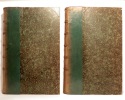
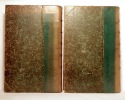
URBIS HIEROSOLYMAE, QUEMADMODUM EA CHRISTI TEMPORE FLORUIT, ET SUBURBANORUM EIUS BREVIS DESCRIPTIO. DE LOCIS, ITEM, QUAE IESU CHRISTI & SANCTORUM PASSIONE AE GESTIS NOBILITATA SUNT; ALIARUMQUE INDIGNIORUM HISTORIARUM BREVIS COMMENTARIUS. OMNIBUS CHRISTIANIS LECTU UTILIS, SACRAE VERO SCRIPTURAE INTERPRETIBUS NECESSARIUS. ADIUNCTA EST TOPOGRAPHICA DELINEATIO AD VIVUM AENEIS FORMIS EXPRESSA, CUI NUMERI TOTO LIBRO NOTATI, EXACTE RESPONDENT, CHRISTIANO ADRICHOMIO DELPHO AUCTOR. EDITIO POSTREMA AB AUCTORE AUCTA & EMENDATA.
COLONIAE AGRIPPINAE. IN OFFICINA BIRCKMANNICA, SUMPTIBUS ARNOLDI MYLII. 1592. PETIT IN-8 (10,5 X 19 CENTIMETRES ENVIRON) DE (32, DONT 3 BLANCHES) + 136 + (24, DONT 4 BLANCHES)PAGES, RELIURE D'EPOQUE PLEIN VELIN IVOIRE. VIGNETTE DE TITRE AUX ARMES DE JERUSALEM GRAVEE SUR BOIS. LE PLAN DE JERUSALEM N'EST PAS PRESENT ICI, COMME DANS LA PLUPART DES EXEMPLAIRES CONNUS DE CET OUVRAGE. LES PAGES 130 A 136 CONTIENNENT UN CATALOGUE DES LIVRES PARUS SUR JERUSALEM. PETITS DEFAUTS EXTERIEURS, PETIT MANQUE DE PAPIER SANS ATTEINTE AU TEXTE SUR LE FEUILLET DE TITRE, SINON BON EXEMPLAIRE.


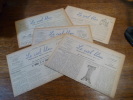
LE CIEL BLEU. "Hebdomadaire littéraire pour tous". Direction : Rose Capel. Comité de rédaction : Paul Colinet, Christian Dotremont, Marcel Mariën.
Bruxelles, 1945.Neuf In folio de quatre pages (36,5 x 27,5 cm.). Les numéros 8 et 9 sont imprimés sur papier vert. Pliure centrale à chaque numéro due à lenvoi postal. Quelques légères déchirures aux pliures sinon ensemble en bon état.Direction : Rose Capel. Comité de rédaction : Paul Colinet, Christian Dotremont, Marcel Mariën. Collection complète en 9 numéros, du 22 février au 19 avril 1945.N° 1 (22 février 1945) : André Breton, Pablo Picasso, Lewis Carroll Le Morse et le charpentier, traduit par Henri Parisot, Pierre Mabille, Marcel Mariën, Christian Dotremont Raymond Roussel, le poète extrème, Marcel et Gabriel Picqueray, Marcel Lecomte, Paul Colinet, Jean Pfeiffer, Georges Lambrichs.N° 2 (1er mars 1945): André Breton (sur Thomas de Quincey), Paul Colinet, Marcel Mariën, Christian Dotremont, Marcel Béalu, Marcel et Gabriel Picqueray, Georges Lambrichs, Scutenaire, Angèle Scaillet. Dessin de Robert Willems.N° 3 (8 mars 1945) : Marcel Mariën (sur René Magritte), Marcel et Gabriel Picqueray, Christian Dotremont, Paul Colinet, Scutenaire, Edmond Kinds. Illustration de Magritte.N° 4 (15 mars 1945) : Paul Colinet, Marcel Mariën, Christian Dotremont (sur Edgar Poe), Marcel et Gabriel Picqueray, Scutenaire, Edmond Kinds, Hubert Juin. Illustration de Robert Willems.N° 5 (22 mars 1945) : Christian Dotremont Comment traverser le miroir, Car Névisty, Marcel et Gabriel Picqueray, André Souris, Paul Colinet, Scutenaire, Jean Pfeiffer.N° 6 (29 mars 1945) : Jean Pfeiffer André Breton, René Magritte, Marcel et Gabriel Picqueray, Achille Chavée, André de Rache, Christian Dotremont, Scutenaire, Paul Colinet, Marcel Mariën.N° 7 (5 avril 1945) : Georges Henein, Jean Pfeiffer Paul Nougé, Franz Kafka Notule traduite par Marcel Lecomte et G. Laudier, Marcel et Gabriel Picqueray, Camille Goemans, Scutenaire, Paul Colinet, Marcel Broodhaerts, Christian Dotremont. Dessin de Suzanne Van Damme.N° 8 (12 avril 1945) : André de Rache, Car Névisty, Christian Dotremont, Scutenaire, Marcel Mariën, Fernand Dumont, Hubert Juin, Marcel et Gabriel Picqueray, Dessin de Robert Willems.N° 9 (19 avril 1945) : Angèle Scaillet, Irène Hamoir, Marcel et Gabriel Picqueray, André Souris, Paul Colinet, Christian Dotremont Prisme infini de la lenteur, Armand Permantier, Georges Roux.
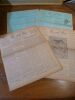
[Dezeuzr] - Alain Coulange - Christian Prigent - Christian Limousin
Reference : 013919
(1977)
GRAMMA 6. Daniel Dezeuze : Feuilles de carnet (textes, dessins)
Pont-sur-Yonne Editions Gramma 1977 In-4 Broché, couverture illustrée
Edition originale. Textes de Daniel Dezeuze "Feuilles de Carnets", Alain Coulange, Christian Prigent et Christian Limousin. Entretien de DEZEUZE avec Alain Coulange, Christian Prigent et Christian Limousin. Nombreuses illustrations et reproductions en noir. 88 pp. Très bon 0
DANOVSKY (lieutenant Carl-August von)-[STOLBERG-WERNIGERODE (Christian-Ernest, comte de)].
Reference : 5644
(1766)
Accurate vorstellung der sämtlichen churfürst trouppen. Accurate Vorstellung der Samtlichen Churfürsts Sächsitz : TROUPPEN. Worinnen zur eigentlichen Kentnis der Uniform von jedem Regimente ein Officier und Semeiner in völliger Montirung und ganzer Statur nach dem Leben abgebildet sind. Nebst beigefügter Nachricht der Urkunde. 1.) Von der Stiftung. 2). denen Chefs 3) der Stärcke und. 4) der in Friedenszeiten habenden Garni?ons jeden Regiments oder separirten corps heraus gegeben und gezeichnet von. Carl Aug. v. Danowsky Lieut. ci devant des Ingen. [Présentation précise de l'ensemble des troupes de l'électorat de Saxe. Dans laquelle, pour la connaissance réelle de l'uniforme de chaque régiment, un officier et un semainier sont représentés en action en tenue complète et en pleine stature. Avec le message joint du certificat. 1.) De la fondation. 2). Des chefs. 3) de force et. 4) De la garnison en temps de paix de chaque régiment ou en corps séparé. Délivré et signé par Carl Aug. V. Danowsky, Lieutenant ci devant Ingénieur.] [[Precise presentation of all the troops of the electorate of Saxony. In which, for the actual acquaintance with the uniform of each regiment, an officer and a weekman are represented in action in full dress and in full stature. With the certificate message attached. 1.) From the foundation. 2). Chiefs. 3) by force and. 4) Of the peacetime garrison of each regiment or separate corps. Issued and signed by Carl Aug. V. Danowsky, Lieutenant Engineer.]
Sans lieu, 1766. 1766 1 vol in-4° (257 x 160 mm.) manuscrit en langue allemande rédigé à l'encre brune de : [1] f. dépliant (page de titre à lencre rouge et noir dans un encadrement orné d'un blason, de pavillons et d'armes dessinés au lavis d'encre), [33] ff. comportant deux à trois gouaches d'officiers en uniforme pour un total de 67 dessins polychromes titrés surmontant des tableaux explicatifs. Ex-libris armorié gravé " Christian Ernest Grafzustolberg" contrecollé au dos du 1er plat. Plein vélin d'époque, dos lisse, titre doré avec date manuscrite, tranches jaspées de rouge.


Très beau manuscrit militaire illustré de 67 dessins polychromes présentant l'ensemble des troupes de l'électorat de Saxe en Allemagne, travail exécuté par le lieutenant ingénieur Carl Auguste Von Danowsky très certainement pour le comte Christian de Stolberg-Wernigerode, (1691-1771) dont il porte lex-libris. L'électorat de Saxe était un État du Saint-Empire romain germanique qui joua un rôle majeur dans l'histoire de l'Allemagne, situé au centre du pays. Il est né du duché de Saxe-Wittemberg en 1356, lors de la Bulle dor promulguée par lempereur Charles IV. Il disparaît lors de la dissolution du Saint-Empire en 1806. Lee dernier électeur, Frédéric-Auguste III, allié à Napoléon Ier, devient alors roi de Saxe. Par sa position géographique, cet état a été ainsi souvent été impliqué dans des conflits et doù limportance de son armée. Dans son titre, richement enluminé et surmonté dun blason, le lieutenant Daniovsky annonce son objectif de représenter pour chaque régiment un officier et un semainier (sous-officier) en action en tenue complète et en pleine stature. Chacun des 31 feuillets est consacré à un régiment. Il comporte un titre et deux à trois gouaches d'officiers en uniforme surmontant un tableau explicatif sur 4 colonnes : 1.) De la fondation. 2). Des chefs. 3) Des unités. 4) De la garnison en temps de paix de chaque régiment ou en corps séparé. Chaque portrait a été finement exécuté par cet officier ingénieur aux talents dartiste en coloris trés vifs (gouache, aquarelle, or et argent): Gardes du Corps, Carabiniers, Cuirassiers, Chevaux légers, gardes Suisses, Grenadiers, Infanterie, Fusillers, Mousquetaires, Invalides, Ingénieurs, Artillerie, Canonier et Hussards. Provenance : ex-libris gravé de Christian-Ernest, comte de Stolberg-Wernigerode, (1691-1771), homme politique allemand membre de la Maison de Stolberg. De 1710 à 1771, il gouverne le comté de Wernigerode, ville de Saxe-Anhalt en Allemagne.située dans les montagnes du Harz, qui devient une dépendance de Brandebourg-Prusse en 1714. Chevalier de l'Ordre de l'Aigle noir et Ordre de l'Union parfaite, il sert son cousin du côté de sa mère, le roi Christian VI de Danemark, en tant que conseiller privé de 1735 à 1745. Sous son règne, une grande activité de construction est entreprise dans le comté de Wernigerode. Le Lustgarten (Jardin d'Agrément) à Wernigerode est remodelé dans le style français et une Orangerie est installée. Il est également responsable de la construction du Wolkenhäuschen ("Cabane dans les Nuages"), un petit refuge sur le Brocken, la plus haute montagne du Harz. Il est très probable que ce comte soit le commanditaire du présent manuscrit Précieux document dune prestigieuse provenance demeuré très frais. 1 vol. 4to (257 x 160 mm.) manuscript in German written in brown ink of : [1] folding leaf (title page in red and black ink in a frame decorated with a coat of arms, flags and weapons drawn in ink wash), [33] ff. comprising two to three gouaches of officers in uniform for a total of 67 titled polychrome drawings surmounting explanatory tables. Engraved armorial bookplate "Christian Ernest Grafzustolberg" pasted on the back cover. Full contemporary vellum, smooth spine, gilt title with handwritten date, red speckled edges. Beautiful military manuscript illustrated with 67 polychrome drawings presenting all the troops of the Electorate of Saxony in Germany, work executed by the lieutenant engineer Carl Auguste Von Danowsky most certainly for the count Christian de Stolberg-Wernigerode, (1691-1771) whose ex-libris it bears. The Electorate of Saxony was a state of the Holy Roman Empire which played a major role in the history of Germany, located in the center of the country. It was born from the duchy of Saxony-Wittemberg in 1356, during the Golden Bull promulgated by Emperor Charles IV. It disappeared with the dissolution of the Holy Roman Empire in 1806. The last elector, Frederick-Augustus III, allied with Napoleon I, became King of Saxony. Due to its geographical position, this state was often involved in conflicts and hence the importance of its army. In his title, richly illuminated and surmounted by a coat of arms, Lieutenant Daniovsky announces his objective to represent for each regiment an officer and a semainier (non-commissioned officer) in action in full dress and in full stature. Each of the 31 sheets is dedicated to a regiment. It includes a title and two to three gouaches of officers in uniform surmounting an explanatory table in 4 columns: 1.) Of the foundation. 2). Of the leaders. 3) Units. 4) Of the peacetime garrison of each regiment or separate corps. Each portrait has been finely executed by this engineer officer with artistic talents in very vivid colors (gouache, watercolor, gold and silver): Gardes du Corps, Carabiniers, Cuirassiers, Chevaux légers, Gardes Suisses, Grenadiers, Infantry, Fusillers, Mousquetaires, Invalides, Engineers, Artillery, Canonier and Hussards. Provenance: engraved bookplate of Christian-Ernest, Count of Stolberg-Wernigerode, (1691-1771), German politician and member of the House of Stolberg. From 1710 to 1771, he governed the county of Wernigerode, a town in Saxony-Anhalt, Germany, located in the Harz Mountains, which became a dependency of Brandenburg-Prussia in 1714. Knight of the Order of the Black Eagle and Order of the Perfect Union, he served his cousin on his mother's side, King Christian VI of Denmark, as a privy councillor from 1735 to 1745. During his reign, a great deal of building activity was undertaken in the county of Wernigerode. The Lustgarten (Pleasure Garden) in Wernigerode was remodeled in the French style and an Orangery was installed. He is also responsible for the construction of the Wolkenhäuschen ("Hut in the Clouds"), a small refuge on the Brocken, the highest mountain in the Harz. It is very likely that this count is the sponsor of the present manuscript A precious document of a prestigious provenance that has remained very fresh.
[revue] Objets et Mondes tome 24 fascicule 1-2. (Auteurs: Jean GUIART, Jean-Claude MARIZE, Christian FLEURY, Aparna RAO, Marc GABORIEAU, Berta G. RIBEIRO, Christian PELRAS)
Reference : 13978971
[revue] Objets et Mondes tome 24 fascicule 1-2. Sommaire: Jean GUIART, André Leroi-Gourhan (1911-1986) - Jean-Claude MARIZE, Bisket jatrâ, la fête communale de Bhaktapur, Népal. - Christian FLEURY, Armement et équipement du samuraï. - Aparna RAO, Tamis et tambours sur cadre des Ghorbat d'Afghanistan. - Marc GABORIEAU, Fabrication des échevaux de coton au Népal. - Berta G. RIBEIRO, La vannerie et l'art décoratif des indiens du Haut Xingu, Brésil. - Christian PELRAS, Collecte d'objets en pays bugis, Célèbes-Sud, Indonésie.
Paris: Musée de l'Homme, Museum National d'Histoire Naturelle, 1987 in-4, nombreuses illustrations. Broché, très bon état. Sommaire: Jean GUIART, André Leroi-Gourhan (1911-1986) - Jean-Claude MARIZE, Bisket jatrâ, la fête communale de Bhaktapur, Népal. - Christian FLEURY, Armement et équipement du samuraï. - Aparna RAO, Tamis et tambours sur cadre des Ghorbat d'Afghanistan. - Marc GABORIEAU, Fabrication des échevaux de coton au Népal. - Berta G. RIBEIRO, La vannerie et l'art décoratif des indiens du Haut Xingu, Brésil. - Christian PELRAS, Collecte d'objets en pays bugis, Célèbes-Sud, Indonésie.
[revue] Objets et Mondes tome 24 fascicule 1-2. Sommaire: Jean GUIART, André Leroi-Gourhan (1911-1986) - Jean-Claude MARIZE, Bisket jatrâ, la fête communale de Bhaktapur, Népal. - Christian FLEURY, Armement et équipement du samuraï. - Aparna RAO, Tamis et tambours sur cadre des Ghorbat d'Afghanistan. - Marc GABORIEAU, Fabrication des échevaux de coton au Népal. - Berta G. RIBEIRO, La vannerie et l'art décoratif des indiens du Haut Xingu, Brésil. - Christian PELRAS, Collecte d'objets en pays bugis, Célèbes-Sud, Indonésie. (Paris: Musée de l'Homme, Museum National d'Histoire Naturelle, 1987). [M.C.: revue, Ethnologie, préhistoire, Japon, Afghanistan, Népal, Brésil, Amazonie, Indonésie]
Panegyricus de gentis Danorum antiqvitate, rerumq ab illa gestarum celebritate In Honorem Natalis Augustisimi, Potentisimi & Gloriosissimi Monarchae Christiani Qvinti. - [PANEGYRIC OF KING CHRISTIAN V]
Hafniae (Copenhagen), Christian Wering, 1684. Folio (420 x 290 mm). In contemporary full calf with richly gilt spine. All edges gilt. Wear to extremities, scratches to boards, parts of gilting worn off. Inner hinges split. Outer lower margin with stain. Otherwise internally nice and clean, printed on good paper. 33 ff.

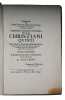
First appearance of this panegyric of Christian V, King of Denmark and Norway. A Danish translation was published the same year. Christian V was the King of Denmark and Norway from 1670 until his death in 1699. He belonged to the House of Oldenburg and was the eldest son of King Frederick III of Denmark. Christian V is known for his efforts to strengthen the Danish monarchy and assert royal authority. During his reign, Christian V pursued policies aimed at centralizing power, enhancing the military, and expanding Danish influence. He engaged in numerous conflicts, including the Scanian War (1675–1679) against Sweden, which aimed to regain territories lost to Sweden in previous conflicts. Christian V also promoted mercantilist economic policies and sought to strengthen trade and industry within Denmark-Norway. He was succeeded by his son, Frederick IV, upon his death in 1699. Biblioteca Danica III, 33.Thesaurus 623.
[# ILLUSTRATEUR: Christian] - # AUTEUR: Jourda Pierre - Rudel Jean et Christian
Reference : 0772
(1947)
# TITRE: Saint-Guilhem-le-désert vallée inspirée du Languedoc. Son site - son abbaye - son cloitre - son héros de légende - son Saint
# AUTEUR: Jourda Pierre - Rudel Jean et Christian # ILLUSTRATEUR: Christian # ÉDITEUR: Se trouve chez l'artiste - Christian # ANNÉE ÉDITION: 1947 # ENVOI, BEAUX PAPIERS: Vélin B.F.K. de Rives # COUVERTURE: En feuilles sous double emboitage # DÉTAILS: In 4° en feuilles 4ff n+ XIVff + pagination continue 103pp + 1ff table. N° 35 des 39 exemplaires, comportant un dessin original de Christian, une suite répétant dans un autre ton les 24 hors-texte et l'ouvrage complet. Illustrations de Christian, 24 dessins originaux à la plume reproduits en héliogravures reprises à l'eau-forte et au burin par Charles-Paul Dufresne en hors-texte. Ouvrage achevé sur les presses du maître imprimeur Aulard pour la typographie, sur les presses à bras du maître imprimeur taille-doucier Padovani pour les gravures, le 12 mars 1947.Le texte forme deux parties principales, l'une présente le site, l'abbaye et son cloitre roman fameux avec tout ce qui s'y rattache de pittoresque fantastique, de spiritualité profonde et de sublime poésie. L'autre présente le grand guerrier devenu moine et saint, le fameux Guillaume d'Orange de la chanson de geste, connu dans l'histoire médiévale sous le nom de Saint-Guilhem, dont la haute figure historique trop oubliée a donné à ce site qui fut pour lui la vallée inspiratrice, sa valeur humaine et spirituelle inoubliable.(introduction). Envoi de l'artiste. # PHOTOS visibles sur www.latourinfernal.com
# ÉTAT: Etat de neuf, non rogné, non coupé
Fodreise fra Holmens Canal til Østpynten af Amager i Aarene 1828 og 1829. - [ANDERSEN'S ""REAL"" DEBUT]
Kjöbenhavn, 1829. 12mo. Bound with the original wrappers in a lovely slightly later burgundy red half calf with richly gilt spine and marbled covers. A few stains to wrappers and brownspotting to text. In spite of the spotting, all in all a lovely copy. 136 pp. Ex-libris on pastedown: ""Hyllested"". Glued note on the last endpaper.
The rare first edition of Hans Christian Andersen's debut novel, ""Journey on Foot"", here in the extremely scarce original printed wrappers. Andersen himself considered this book his debut and refers to it as ""my first publication"". It came to play a tremendous role in the development of his writing and constitutes one of his most important works. It is the first piece of Andersen that yields any success and the first work for which he gained any recognition. ""It is a well-known fact that Hans Christian Andersen made his début as a writer three times during his youth. The first time he published a book was in 1822, when 'Youthful Attempts' came out [...]. He was 17 years old, penniless and in need for help, but the main part of the circulation ended up in the paper mill [...] The second time he made his début was in 1829, when he published 'Journey on Foot from Holmen's Canal to the Eastern Point of Amager', a book which can hardly be classified as a travel book. To me it seems a subtle and humorous arabesque and a literary satire. This book was published in the year after he had left grammar-school and was qualifying for the entrance examination to academic studies at the university. It can rightly be regarded as a key, which enables us to understand the entire development of his later production [...]. It was Carl Bagger, his friend from the school days, who had instigated him to cultivate his inborn talent for satire, and during the same year he published 'Journey on Foot' they met regularly together with a third mate in the 'Serapionsclub' to which Andersen showed up with a piece of paper sticking out of his pocket. As a free writer it was the fantastic arabesque à la E. T. A. Hoffmann, which came into the centre of their poetic endeavour. What he had learned from Bernhard Severin Ingemann, his fatherly friend, talked about to Carl Bagger and read in Hoffmann, Jean Paul and Ludwig Tieck, he laid out in his book, which as a mixture of an autobiography in disguise and an allegorical satire contains all the basic motifs of his poetic world as a raw material."" (Kofoed) In ""The Fairy Tale of My Life"", Andersen writes: ""Having passed my examinations, the multicoloured fantasies and inventions by which I had been haunted on my walking tours back from my coach, flew like a swarm of bees out in the world in my first publication: 'Journey on Foot from Holmen's Canal to the Eastern Point of Amager', a humours, weird book, a kind of fanciful arabesque, yet perfectly indicating my whole personality and my views at that time."" ""'Journey on Foot' is a grotesque and serious satire foreseeing the deluge of letters in a mass society, and this issue is in my opinion not only superior as a motive in Andersen's first book but also an overall theme in his entire production. A kind of grotesque humour is one of the characteristics of the arabesque, and if we take a look at the collected tales we may easily sort out a series of narratives typical of the same fluttering, self-ironical and even prophetic style."" (Kofoed) See: Kofoed, Niels. (1999). ""The Arabesque and the Grotesque: Hans Christian Andersen Decomposing the World of Poetry"". In Johan de Mylius, Aage Jørgensen and Viggo Hjørnager Pedersen (ed.), Hans Christian Andersen. A Poet in Time. Papers from the Second International Hans Christian Andersen Conference 29 July to 2 August 1996. The Hans Christian Andersen Center, Odense University, Odense University Press. BFN: 22.
Biblia Det er Den gantske Hellige Scrifft paa Danske igien offuerseet oc Prentet effter vor allernaadigste Herris oc Kongis K. Christian den IV. Befaling. Mett Register/ alle D. Lutheri Fortaler ghans Udledning i Brædden oc Viti Theodori Summarier. Cu... - [THE MAGNIFICENT CHRISTIAN IV FOLIO BIBLE]
Kiøbenhaffn, (Melchior Martzan og Salomon Sartor), (1632-) 1633. Folio (binding: 37 x 25 cm.). Bound in a spledid, contemporary full calf binding over wooden boards. Rich, elaborate gilding to both boards and spine. The gilding is vague, especially on the front board, but the tooling is very sharp, and the binding overall is magnificent. With four beautiful, ornamented brass edges to each board and two large ornamented brass clasps. All edges are gilt and beautifully blindtooled. Wear to capitals, where the cords are loosening a bit, and with a bit of loss of leather. A bit of wear to hinges, at the cords, which are showing. But overall the binding is in splendid condition. Also internally extremely well preserved. The title-page has a tiny restored hole to lower right corner, and the first four leaves might have been inserted. They are slightly smaller at the outer margin than the other leaves. But that might also be due to restoration, as the binding has not been tampered with at any point and is completely unrestored. The text is unusually nice, clean and fresh, by far the nicest copy we have ever come across. Pasted-down front end-paper with the ownership signature and lacquered coat-of-arms seal of Severin Svanenhielm (Severin Seehusen (1664-1726) ) as well as the ownership signatures of Søren Schiøtz (1796-1863) (with names of members of his family), C. Th. Zahle and Erik Zahle. With the book plate of William Davignon (d. 1924). The brass corners carry the initials HL and are depicted in Johannes Rudbeck's Svenska Bokband I (fig. 26, p.53). The binding there is dated 1622, whereas our binding is from 1633 or right after. The brass fittings were a commercial merchandise for sale in Germany and probably also in both Sweden and Denmark. Engraved title-page as well as the engraved portrait of Christian IV, all by the royal engraver Simon the Pas. Without the half-title, which merely contains the printed words ""BIBLIA / Paa Danske"", which is almost never present. (21 - not counting the engraved title-page and the portrait), 353 (i.e. 354 due to the erroneous double pagination 353), 226, 159 ff.

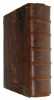
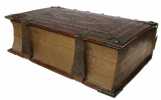
A magnificent copy of the scarce first edition of the last (i.e. the third) of the Danish folio-bibles, known as ""Christian IV's Bible"", being a slightly revised edition of the Bible of 1589. Christian IV is the most famous Danish king ever to have lived, and the Christian IV bible is extremely sought-after. An unusually fresh and complete (apart from the always lacking half-title) copy of this splendid bible, printed by the first royal printer Melchior Martzan and Salomon Sartor (part 2). The numerous woodcut illustrations are the same that were used for the Frederik II Bibel from 1589. The four engraved leaves - the portrait and the three title-pages - are by Simon de Pas.Bibl. Dan.I,9 - Thesaurus II, 378. - Birkelund, 41. - Darlow and Moule, 3160. Provenance: Svanenhielm was a family of Danish and Norwegian nobility. Morten Hansen Seehuusen (1629-1694) was a merchant from Bredstedt in Schleswig-Holstein, who re-located to Stavanger, Norway. His son, Severin Seehusen (1664-1726) was an official in Bergen as well as in Stavanger and Northern Norway. He owned, among other properties, Damsgård Manor outside Bergen, Svanøy in Sunnfjord, and Arnegård in Stavanger. In 1720, Severin Seehausen was ennobled under the name Svanenhielm. Søren Daniel Schiøtz (1796-1863) was a Norwegian bailiff and judge, who was also very much engaged in religious matters and came to play an important role in the history of theology in Norway. He was one of the founders of the Norwegian Mission Society and the Norwegian Israeli Mission. He translated several important upbuilding pieces from German, among them a comprehensive bible history. Carl Theodor Zahle (1866 – 1946) was a highly important Danish lawyer and politician. He was prime minister of Denmark from 1909 to 1910 and again from 1913 to 1920. In 1895, he was elected member of the lower chamber of the Danish parliament, for the Liberal Party. A campaigner for peace, in 1905 he co-founded the Social Liberal Party (Det Radikale Venstre). He stayed on as a member of Parliament for Det Radikale Venstre until 1928, when he became a member of the upper chamber of Parliament (Landstinget). In 1929, he became Minister of Justice , a post which he held until 1935. Zahle was instrumental in starting negotiations for a new Danish–Icelandic Act of Union in 1917, which resulted in Iceland being recognized as a sovereign nation in a personal union with the king of Denmark the following year. Erik Zahle (1898-1969) was a famous Danish art historian, author, and museum director.
Juke Box Magazine n° 197 - Johnny Hallyday par Christian Nauwelaers, Kim Fowley par Jacques Leblanc et Christian Eudeline, Super 45 tours français 91 par Trovatori a Katia Valère, British R&B 42, 1963-69 par Jacques Barsamian, Gene Vincent par Christian
Jacques Leblanc Editions. Novembre 2003. In-12. Broché. Bon état, Couv. convenable, Dos satisfaisant, Intérieur frais. 82 pages. Nombreuses illustrations en couleurs et noir et blanc dans et hors texte.. . . . Classification Dewey : 780-Musique

Sommaire : Johnny Hallyday par Christian Nauwelaers, Kim Fowley par Jacques Leblanc et Christian Eudeline, Super 45 tours français 91 par Trovatori a Katia Valère, British R&B 42, 1963-69 par Jacques Barsamian, Gene Vincent par Christian Nauwelaers Classification Dewey : 780-Musique
Rokoko und Revolution. Ein Deutscher Maler und Hofmann. Lebenserinnerungen des Joh. Christian Mannlich, 1741-1822. Nach der französichen Originalhandschrift. Herausgegeben von Eugen Stollreither. Mit acht Bildnissen
Berlin, Ernst Siegfried Mittler, 1910 fort vol. in-8, XLVIII pp., 568 pp., [2] ff. n. ch. de catalogue, avec 8 portraits hors texte et un tableau généalogique dépliant de la lignée Pfalz-Zweibrücken-Birkenfeld, percaline cerise, dos lisse orné d'un décor doré, titre poussé en lettres dorées sur le plat supérieur, tête bleue (reliure de l'éditeur). Dos uniformément insolé.
Édition originale allemande partielle et remaniée de ces souvenirs du peintre Mannlich, protégé de Christian IV, Auguste II et Maxilmilien IV (- Ier), dont le manuscrit était cependant rédigé en français. Au moment où son protecteur s'installa à Munich comme héritier de la branche bavaroise, il était devenu le directeur central de toutes les galeries de peintures, cabinets et collections de gravures du Palatinat et de Bavière.Il faut noter que Le manuscrit a connu plusieurs éditions partielles en français : celle de J. Delage, "Le chevalier Gluck à Paris. Souvenirs", dans la Revue de Paris, 1946, n° 10, p. 97-121 ; idem, "Aminte. Mémoires inédits du Chevalier de Mannlich", Revue de Paris, 1947, n° 7, p. 51- 77 ; et aussi, Mémoires du Chevalier Christian de Mannlich, Paris, 1948. La seule édition complète du texte original est celle de K.-H. Bender et H. Kleber : Johann Christian von Mannlich. Histoire de ma vie. Mémoires de Johann Christian von Mannlich (1741-1822), parue en deux volumes à l'adresse de Trèves, 1989-1993. - - VENTE PAR CORRESPONDANCE UNIQUEMENT - LIEN DE PAIEMENT, NOUS CONSULTER.
Christian Bourgois 1966 1986
Christian Bourgois 1986 in8. 1986. Broché. Ce livre est un catalogue des titres publiés par les éditions Christian Bourgois entre 1966 et 1986 marquant les vingt premières années de cette maison d'édition indépendante fondée par Christian Bourgois avec l'ambition de s'adresser aux passionnés d'une littérature originale et audacieuse
Bon Etat intérieur propre
[Christian de Gastyne ] - GASTYNE, Christian de Christian de Gastyne
Reference : 27993
CHARME DU VIEUX QUARTIER LATIN. Texte et eaux-fortes de Christian de Gastyne
Alger Editions Baconnier 1957 in 4 (29x23) 1 volume broché en faux-feuillets sous couverture rempliée, texte non paginé. Complet de 10 eaux-fortes hors-texte (le Panthéon, rue Saint-Séverin, La Sorbonne, rue de la Montagne Sainte-Geneviève, place de la Contrecarpe, rue Tournefort, rue du Pot de fer, dans le jardin du Luxembourg, rue Malebranche, rue Mazarine) et et de la lithographie en couleurs hors-texte signé au crayon par Christian de Gastyne. Edition originale. Tirage à 630 exemplaires, celui-ci un des 380 hors-commerce réservés aux éditions Baconnier, notre exemplaire nominatif est imprimé sur papier Licorne. Très bel exemplaire ( Photographies sur demande / We can send pictures of this book on simple request )
Très bon Broché Ed. originale
[Christian ] - JOURDA Pierre, RUDEL Jean, et Christian Christian
Reference : 17864
SAINT-GUILHEM-LE-DESERT. Vallée inspirée du Languedoc. Son site, son abbaye, son cloitre, son héros de légende, son saint
Sans lieu Se trouve chez L'artiste 1947 in folio (33x26) Un volume broché, en faux-feuillets, couverture rempliée, chemise, étui de l'éditeur, 106 pages. Son site, son abbaye, son cloitre, son héros de légende, son saint. Tirage à 900 exemplaires numérotés sur papier vélin B.F.K. de Rives, celui-ci issu du tirage de tête à 39 exemplaires (numérotés de 1 à 39), comportant un dessin original à pleine page signé de Christian, une suite répétant dans un autre ton les 24 hors-texte, et l'ouvrage complet accompagné de ses 24 héliogravures reprises à l'eau-forte et au burin par Paul Dufresne, reproduisant en hors-texte les 24 dessins originaux à la plume de Christian. Bel exemplaire, on joint le spécimen de souscription de l'ouvrage
Très bon Broché Signé par l'illustrateur Ed. numérotée
PRIGENT (Christian) - MAÏAKOVSKI (Vladimir) - NOVARINA (Valère) - VERHEGGEN (Jean-Pierre) - PRIGENT (Christian) - BUSTO (Daniel) - LOURAU (René) -
Reference : 42303
TXT. N°8: «Babil des classes dangereuses» -
Directeur: Christian Prigent, 1975. Un volume (15x22cm) broché sous couverture illustrée en deux tons, 131 pages. Au sommaire: Christian Prigent: L’organon de la révolution; Vladimir Maïakovski: intervention à la maison du Komsomol de la Krasnaïa Presnia: 25 mars 1930 et autres textes inédits. Valère Novarina: Le babil des classes dangereuses (p. 53 à 76); Jean-Pierre Verheggen: M’violence c’est m’violangue; Christian Prigent: Oeuf-glotte, sotie, etc. Bon état -
Tous nos livres sont visibles sur notre site : https://www.livrepoesie.com/
GUILLEAU (Christian). THIERRY (François). RILKE (Rainer Maria). HOLDERLIN (Friedrich). CHRESTIEN DE TROYE. OSTER SOUSSOUEV (Pierre). MAURY (Patrick). NOVALIS. VERHAEREN (Emile). CHEDID (Andrée). NERVAL (Gérard de). BAYLE (Hélène). HIRSCH (François). KNEIP (Pierre). DU BELLAY (Joachim). GUEZ RICORD (Christian Gabriel). FRANCOIS (Jocelyne). VAN GOGH (Vincent). DETREZ (Yann). RAMUZ (Charles-Ferdinand). SORRENTE (Dominique). PRASSINOS (Mario). MALLARME (Stéphane). SERENI (Vittorio). MANDELSTAM (Ossip). PAIRE (Alain). DURSSON (Werner). JAMME (Franck André). TACHE (Pierre-Alain). JOUVE (Pierre Jean). PALLEN (Henri). PETRARQUE (François). MUNIER (Cristophe). RUYSBROECK. BERGERET (Yves). MAULPOIX (Jean-Michel). BARONHEID (Marc). MILOSZ (O.V. de L.). TCHOUANG TSEU. CALLIYANNIS (Christian). RIMBAUD (Arthur). BAUDELAIRE (Charles).
Reference : 45119
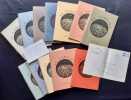
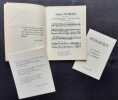
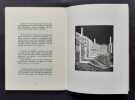
Le Lamparo. Cahier de poésie, n°1 à 12. Printemps 1979 - hiver 1981. Collection complète.
L’Isle-sur-la-Sorgue, directeurs: Christian Guilleau et François Thierry. 12 fascicules 16,2x21,5cm, brochés au moyen d’un cordon, sous couvertures illustrées d’une gravure sur bois par Boyan. Impression sur papier vergé d’Ingres. 12 numéros en 12 livraisons d’une cinquantaine de pages illustrées de partitions (Beethoven, Bach, Brahms, Mahler, Webern...) de gravures originales et photographies, avec feuillet libre sur beau papier cartonné, imprimé. Collection complète de cette belle revue imprimée à la main, tirée à 350 puis à 330 exemplaires numérotés. Avec une carte autographe signée de François Thierry et une enveloppe d’expédition adressée à Roger Munier.
Tous nos livres sont visibles sur notre site : https://www.livrepoesie.com/
GUILLEAU (Christian). THIERRY (François). RILKE (Rainer Maria). HOLDERLIN (Friedrich). CHRESTIEN DE TROYE. OSTER SOUSSOUEV (Pierre). MAURY (Patrick). NOVALIS. VERHAEREN (Emile). CHEDID (Andrée). NERVAL (Gérard de). BAYLE (Hélène). HIRSCH (François). KNEIP (Pierre). DU BELLAY (Joachim). GUEZ RICORD (Christian Gabriel). FRANCOIS (Jocelyne). VAN GOGH (Vincent). DETREZ (Yann). RAMUZ (Charles-Ferdinand). SORRENTE (Dominique). PRASSINOS (Mario). MALLARME (Stéphane). SERENI (Vittorio). MANDELSTAM (Ossip). PAIRE (Alain). DURSSON (Werner). JAMME (Franck André). TACHE (Pierre-Alain). JOUVE (Pierre Jean). PALLEN (Henri). PETRARQUE (François). MUNIER (Cristophe). RUYSBROECK. BERGERET (Yves). MAULPOIX (Jean-Michel). BARONHEID (Marc). MILOSZ (O.V. de L.). TCHOUANG TSEU. CALLIYANNIS (Christian). RIMBAUD (Arthur). BAUDELAIRE (Charles).
Reference : 45120
Le Lamparo. Cahier de poésie, n°1 à 12. Printemps 1979 - hiver 1981. Collection complète.
L’Isle-sur-la-Sorgue, directeurs: Christian Guilleau et François Thierry. 12 fascicules 16,2x21,5cm, brochés au moyen d’un cordon, sous couvertures illustrées d’une gravure sur bois par Boyan. Impression sur papier vergé d’Ingres. 12 numéros en 12 livraisons d’une cinquantaine de pages illustrées de partitions (Beethoven, Bach, Brahms, Mahler, Webern...) de gravures originales et photographies, avec feuillet libre sur beau papier cartonné, imprimé. Collection complète de cette belle revue imprimée à la main, tirée à 350 puis à 330 exemplaires numérotés. Une couverture légèrement insolée sinon bon état.


Tous nos livres sont visibles sur notre site : https://www.livrepoesie.com/
WALDEMAR II, CHRISTIAN III, FREDERIK II, CHRISTIAN IV - LOVSAMLING 1642-43.
Reference : 58063
(1642)
Omfattende Lovsamling i 13 dele. 1. Judske Lowbog. 2. Christian III Recess. 3. Frederik II Recess. 4. Frederik II Obne Brefue. 5. Frederik II Handfestning. 6. Frederik II Gaards Ræt. 7. Frederik II Søret. 8. Frederik II XXV Articler Fremmede der begie...
Kiøbenhaffn, Peder Hake - Jørgen Holst, 1642-43. 4to. Indbundet i et lidt senere hellæderbind. Ophøjede bind på ryg. Rig rygforgyldning. Forgyldt titeletiket på ryg. Nederste rygfelt med tab af en smule skind ved foden. Med træstukket fællestitelblad, Kobberstukket titelblad til Jydske Lov (stukket af Haelwegh) samt kobberstukket portræt af Valdemar II. Christian IV's Reces har kobberstukket titelblad og et kobberstukket portræt af kongen. Usædvanlig rene eksemplarer og alle trykt på svært skrivepapir.
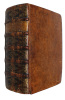
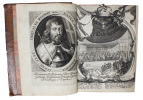
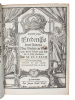
Omfattende lovsamling, som indeholder gældende ret under Christian IV med hans såkaldte Store Recess, som er forløberen for Chr. V's Danske Lov fra 1683. - Lovsamlingen er meget lig den som beskrevet i Bibl. Dan.II,629. - Thesaurus 427 ff.