 Write to the booksellers
1484 books for « a de francesco »Edit
-
Type
Book (1474)
Engraving (12)
Maps (27)
Music sheets (14)
New book (6)
Photographs (3)
-
Latest
Last 3 days (2)
Last month (5)
Last week (1)
-
Language
English (1)
French (1501)
Italian (29)
Latin (4)
Russian (1)
-
Century
16th (30)
17th (17)
18th (44)
19th (110)
20th (540)
21st (125)
-
Countries
Belgium (165)
Canada (10)
Côte d'Ivoire (3)
Denmark (12)
France (1058)
Germany (3)
Greece (12)
Netherlands (1)
Poland (1)
Switzerland (256)
United Kingdom (13)
United States of America (2)
-
Syndicate
ALAC (10)
CLAM (6)
CLAQ (5)
CNE (5)
ILAB (650)
NVVA (22)
SLACES (22)
SLAM (555)
SNCAO (5)
Topics
- Alps (7)
- Arabic (5)
- Archaeology (19)
- Architecture (47)
- Astrology (15)
- Biography (6)
- Botany (11)
- Catholicism (13)
- Children’s books (13)
- China (4)
- Civilisation (10)
- Collections (9)
- Comic strip (4)
- Dictionaries (5)
- Early printed books (10)
- Economics (10)
- Education (5)
- Engraving (books about) (8)
- Erotic (4)
- Europe (28)
- Ex-libris (15)
- Fine arts (34)
- First edition (8)
- Flora (4)
- Florence (5)
- Flowers (6)
- Franco (4)
- Geography (10)
- Greece (21)
- Greek (5)
- Guide books (6)
- Helvética (10)
- Hermeticism (4)
- History (112)
- Industrial arts & crafts - fine arts (11)
- Islam muslim (6)
- Italian (149)
- Italian literature (9)
- Italy (89)
- Justice (4)
- Latin (16)
- Law (21)
- Legends (4)
- Linnean society of lyons (6)
- Literature (68)
- Lyons and area (6)
- Lyons college (6)
- Lyons college pc (6)
- Lyons revue (6)
- Manuscripts (5)
- Maps (29)
- Medicine (9)
- Middle ages (7)
- Monaco (5)
- Monographs (6)
- Moon (5)
- Museums (11)
- Music (4)
- Mythology (4)
- Naples (8)
- Opera (11)
- Opera ballet (11)
- Painters (9)
- Painting (16)
- Palaeography (10)
- Petrarch (50)
- Philology (32)
- Philosophy (27)
- Photography (13)
- Poetry (9)
- Policy (7)
- Provence (4)
- Psychology (6)
- Quebec (6)
- Religions (26)
- Reverend (29)
- Review (9)
- Rome (18)
- Sciences (29)
- Scores (29)
- Sculpture (7)
- Sicily (4)
- Sociology (4)
- Songs (15)
- Switzerland (13)
- Symbolism (5)
- Tales (4)
- Testimonies / stories (6)
- Theatre (12)
- Theology (20)
- Translation (4)
- Travel (5)
- Travels & tourism (4)
- Various (10)
- Vatican city (11)
- Venice (8)
- Verdi giuseppe (6)
Rapporto al cittadino Carnot / I testimoni della storia
Lacaita 2006 288 pages 14 2x2x22cm. 2006. Broché. 288 pages.
Très Bon Etat de conservation intérieur propre bonne tenue
La filosofia dell'approssimativismo
CEDAM - Casa Editrice Dott. Antonio Milani 1952 in8. 1952. Broché.
Etat correct bords frottés abîmés intérieurs propres pages non-coupées
Les terres du Saint-Sacrement
Hachette 1953 in12. 1953. Broché.
Bon état couverture plastifiée tranche ternie intérieur propre
Manuel de cérès dans gouverneurs - Signes- décans - Aspects - némésis - Gazette astrologique
De Francesco Antoine 27 pages in8. Sans date. Broché. 27 pages.
Bon Etat
Manuel de némésis - Signes - décans - maisons - Aspects
De Francesco Antoine 39 pages in8. Sans date. Broché. 39 pages.
Bon Etat
Francesco Melzi d'Eril. Milanese scomodo e grande uomo di stato visto da un lontano pronipote
Alinea 2000 in8. 2000. Broché.

Bon état général cependant couverture ternie dos creusé intérieur propre
Le Cose Fiorentine Ora per la Prima Volte Pubblicate Da Roberto Ridolfi Guicciardini Francesco
Leo S. Olschki editore 1983 in4. 1983. Broché.
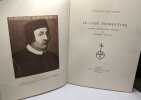
Bon état couverture défraîchie (ternissures tache d'eau sur le dos et le 2e plat) intérieur propre
Considerazioni Di Francesco Mario Pagano Sul Processo Criminale
General Books LLC 2012 34 pages 0x25x19cm. 2012. Agrafé. 34 pages.

proche du très bon état cependant 2e plat marqué
Francesco filelfo
Utet 1967 in8. 1967. Cartonné. avec un coffret carton editeur
Bon Etat quelques rousseurs
Complet de ses 100 planches couleurs - Francesco de BOURCARD.
Reference : 14332
(1853)
Usi e Costumi di Napoli e Contorni Descritti e Dipinti [Us et Coutumes de Naples et ses environs décrits et peints].
1853 Napoli, Stabilimento Typografico di Gaetano Nobile, 1853-1858 (en pages de titre) - 1857-1866 (en couvertures), 2 vol. grand in-8° (260 x 175 mm) reliés pleine percaline havane éditeur, auteur, titre et tomaisons dorés au dos, titre doré au centre des plats supérieurs, grand fleuron à froid au centre des plats inférieurs, couvertures imprimées en lithographie conservées, de XIX pp. (faux-titre, titre et « Cenno su Napoli ») de 324 pp. , 50 planches ; 340 pp. (faux-titre et titre inclus) - 50 planches. Cartonnages usagés (dos recollés, coiffes élimées, taches deau au plat supérieur du T.I et au plat inférieur du T.II), intérieur en très bon état.
![Usi e Costumi di Napoli e Contorni Descritti e Dipinti [Us et Coutumes de Naples et ses environs décrits et peints]. . Complet de ses 100 planches ...](https://static.livre-rare-book.com/pictures/AUR/14332_1_thumb.jpg)
![Usi e Costumi di Napoli e Contorni Descritti e Dipinti [Us et Coutumes de Naples et ses environs décrits et peints]. . Complet de ses 100 planches ...](https://static.livre-rare-book.com/pictures/AUR/14332_2_thumb.jpg)
![Usi e Costumi di Napoli e Contorni Descritti e Dipinti [Us et Coutumes de Naples et ses environs décrits et peints]. . Complet de ses 100 planches ...](https://static.livre-rare-book.com/pictures/AUR/14332_3_thumb.jpg)
Edition originale de cet ouvrage rare (les couvertures conservées sont en 2e édition mais le corps de louvrage fait bien partie du tirage original), complet de ses 100 planches aquarellées à lépoque.Passionné par la vie quotidienne de la ville, Francesco de Bourcard (1821-1886), napolitain d'origine suisse, se consacre pendant une vingtaine d'années, de 1847à 1866, à la rédaction de l'ouvrage qui allait le rendre célèbre. La première édition du premier volume est publiée en 1853, la seconde en 1858. L'uvre dépeint et raconte les coutumes locales de l'époque, les personnages typiques du peuple et un large éventail de fêtes populaires et religieuses. Les textes sont accompagnés de cent gravures, signées par le dessinateur et le graveur, qui illustrent sous forme graphique les sujets décrits dans les chapitres (Wikipédia). Outre les articles de Bourcard, on trouvera des textes signés de Giueseppe Regaldi, Carlo Tito Dalbono, Francesco Mastriani, Emmanuele Rocco, Emanuele Bidéra, Achile de Lauzières et Enrico Cossovich.Les planches sont gravées par F. di Bartolo, Saro Cucinotta, Giovanni Fusaro, Carlo Martorana, Francesco Pisante, daprès les dessins de Francesco Salverio Altamura, Teodoro Duclère, Teodoro Ghezzi, Carlo Martorana, Pasquale Mattei, Nicola Palizzi, etc. Des marins et pêcheurs aux petits musiciens de rue, en passant par la pêche du soir, la conteuse, la lavandière, le vendeur de vieux trucs - Des lazzaroni et porteurs aux pauvres de l'hospice de S. Gennaro, en passant par lhuitrier, la vendeuse de poulpes, le commissaire-priseur de vins, le pizzaiolo, le gitan, le cortège de funérailles. Signature autographe de lauteur à lencre noire au verso des pages de titre des 2 vol. comme il se doit.En létat des cartonnages. Réf. biblio. : Colas, I-144-145. *******************************English translation :Complete with 100 color plates.Francesco de BOURCARD - Usi e Costumi di Napoli e Contorni Descritti e Dipinti [Uses and Customs of Naples and its Surroundings Described and Painted]. Napoli, Stabilimento Typografico di Gaetano Nobile, 1853-1858 (title pages) - 1857-1866 (covers), 2 vol. large in-8° (260 x 175 mm) bound in full publisher's tan percaline, author, title and tomaisons gilded on spine, gilded title in center of upper boards, large cold fleuron in center of lower boards, lithographed covers preserved, of XIX pp. (false-title, title and Cenno su Napoli) of 324 pp. 50 plates ; 340 pp. (including false-title and title) - 50 plates. Worn paper boards (spine rebacked, headpieces worn, water stains on top cover of T.I. and bottom cover of T.II.), interior in very good condition.First edition of this rare work (the preserved covers are in the 2nd edition, but the body of the book is part of the original edition), complete with its 100 watercolor plates.Fascinated by the city's daily life, Francesco de Bourcard (1821-1886), a Neapolitan of Swiss origin, devoted some twenty years, from 1847 to 1866, to writing the work that was to make him famous. The first edition of the first volume was published in 1853, the second in 1858. The work depicts and recounts the local customs of the time, typical folk characters and a wide range of popular and religious festivals. The texts are accompanied by one hundred engravings, signed by the designer and the engraver, which illustrate in graphic form the subjects described in the chapters (Wikipedia). In addition to Bourcard's articles, there are texts by Giueseppe Regaldi, Carlo Tito Dalbono, Francesco Mastriani, Emmanuele Rocco, Emanuele Bidéra, Achile de Lauzières and Enrico Cossovich.The plates are engraved by F. di Bartolo, Saro Cucinotta, Giovanni Fusaro, Carlo Martorana, Francesco Pisante, after drawings by Francesco Salverio Altamura, Teodoro Duclère, Teodoro Ghezzi, Carlo Martorana, Pasquale Mattei, Nicola Palizzi, etc. From sailors and fishermen to small street musicians, the evening fisherman, the storyteller, the washerwoman, the seller of old things - From lazzaroni and porters to the poor of the S. Gennaro hospice, the oystercatcher, the octopus seller, the wine auctioneer, the pizzaiolo, the gypsy, the funeral procession.Author's autograph signature in black ink on verso of title pages of 2 vols. as appropriate.In the condition of the hardcovers. Bibliographical ref. : Colas, I-144-145.


Masculinities in Early Medieval Europe. Tradition and Innovation, 450?1050
, Brepols, 2023 Paperback, 306 pages, Size:156 x 234 mm, Illustrations:10 b/w, 5 tables b/w., Language(s):English, Italian. ISBN 9782503607351.
Summary This volume brings together a collection of essays that delve into the shifts in ideas, roles, and practices of masculinities and male attitudes during the transition from late Antiquity to the early Middle Ages. This period was marked by significant changes, including the collapse of Roman political authority in the West, the fragmentation of imperial universalism in polities, and the rise of Christianity, which all challenged the gender roles inherited from Antiquity. Within this historical context, the book explores the evolution of men's privileges, responsibilities, and burdens through eleven case studies focusing on different categories of men and manly behaviour. The volume brings to life husbands and fathers, kings and workers, clerics and warriors from both the East and the West, as revealed through contemporary textual and material sources and preserved in the physical remains of male bodies and actions. In doing so, this volume will bring to the fore new perspectives on masculinities and gender history. TABLE OF CONTENTS Cristina La Rocca, Introduzione I. QUESTIONI DI FAMIGLIA/ FAMILY MATTERS Michael E. Stewart, Marriage, Power, and Manly Romanitas in the Age of Justinian Annamaria Pazienza, When the Groom Relocates: Men's Change of Residence after Marriage in Lombard Italy Andreas Fischer, Fathers and Sons: Roles, Laws and Expectations in Late Antiquity and the Early Middle Ages II. PARLIAMO DI GUERRIERI/ LET US TALK ABOUT WARRIORS Danuta Shanzer, Power, Violence, Pity, and Courage: Through Clerical Eyes in the Early Middle Ages Francesco Borri, Savage Dreams: Militant Masculinity between Antiquity and the Middle Ages Leonardo Sernagiotto, The Importance of Being Lothar: the Power, Violence, Courage and Impiety of a Carolingian Emperor III. CORPI DI CHIERICI, CADAVERI DI CHIERICI / CLERICAL BODIES, CLERICAL CORPSES Rachel Stone, On Criminal Priests: Illicit Desires and Clerical Masculinity Francesco Veronese, Men Moving Men's Bodies: Hagiographical Masculinities in Carolingian Times IV. QUEL CHE RESTA DELLA MASCOLINIT / WHAT IS LEFT OF MASCULINITIES Bonnie Effros, St Martial, Disciple of Christ: Apostolic Conversion Stories and the Crisis of Modernity in Nineteenth-Century France Flavia De Rubeis, La firma dell'uomo: uso della scrittura e consapevolezza di s Giovanna Bianchi & Serena Viva, Archaeology and Anthropology of a Group of laboratores from a Royal Center in Early Medieval Tuscia Francesco Borri & Francesco Veronese, Conclusioni
Istoria dell' Incendio del Vesuvio accaduto nel Mese di Maggio dell' anno MDCCXXXVII. Scritta per l'Accademia delle Scienze
Naples, Angelo Vocola, a spese di Francesco Darbes, 1740, in-8, [16]-226 pp, 1 tabl. et 2 pl. dépl, Vélin rigide du XVIIIe s, titre manuscrit en tête du dos, Seconde édition, revue et enrichie d'annotations par Francesco Darbès (Johnston-Lavis). L'originale, au format in-4, a été publié en 1738 (Naples, imprimerie de Novello de Bonis). Cet ouvrage anonyme a été attribué à Francesco Serao (1702 -1873), professeur de médecine à l'Université de Naples et médecin personnel de la reine. L'auteur est l'un des premiers qui, en relatant les phénomènes de l'éruption de 1737, s'exprime, dans la mesure où l'époque le permettait, en langage scientifique, en décrivant les états minéralogique et chimique. Deux planches gravées sur cuivre, déjà présentes dans l'édition originale, représentent le Vésuve vu depuis le palais du roi et ses cratères. Avec un tableau des conditions météorologiques du mois de mai 1737. Bon exemplaire. Petit accroc sans manque sur une des planches. Furchheim 181. Johnston-Lavis, Bibliography of the geology and eruptive phenomena of the more important volcanoes of southern Italy (1918) : p. 160 et p. 257 pour l'édition originale). Couverture rigide
Bon [16]-226 pp., 1 tabl. et 2
[Pier Francesco Mola] - Petrucci, Francesco (ed)
Reference : 082656
(2005)
ISBN : 8876240713
Mola e il suo tempo. Pittura di figura a Roma dalla collezione Koelliker
Petrucci, Francesco (ed): Mola e il suo tempo. Pittura di figura a Roma dalla collezione Koelliker. Exhibition: Arricia, Palazzo Chigi, 2005. 256pp with 74 colour plates and 91 monochrome illustrations. Wrappers, 28x24cms. Exhibition of works by Pier Francesco Mola in the collection of the Luigi Koelliker, Milan. Highlights the artistic mood around Rome during Mola's time. Text in Italian.
Exhibition of works by Pier Francesco Mola in the collection of the Luigi Koelliker, Milan. Highlights the artistic mood around Rome during Mola's time. Text in Italian
De Rerum Praenotatione libri novem. Pro veritate religionis/ contra superstittiosas vanitates editi. [Opera aurea & bracteata / Liber imaginatinis]. + Hymni Heroici tres. Ad sanctissimam trinitatem, ad Christum, et ad Virginem Mariam, una cum commenta... - [A MONUMENT OF RENAISSANCE SCEPTICISM]
Strassburg, Knobloch, 1506-7 + 1511 4to. Bound in one very nice full mottled calf binding from ab. 1800, with five raised bands to richly gilt spine. A bit of wear to extremities. Occasional browning, but all in all very nice and clean. 289 ff (without the white blanks) + (4), xcvi, (7), (4, -index & errata).
![De Rerum Praenotatione libri novem. Pro veritate religionis/ contra superstittiosas vanitates editi. [Opera aurea & bracteata / Liber imaginatinis]. + ...](https://static.livre-rare-book.com/pictures/LLX/51410_1_thumb.jpg)
![De Rerum Praenotatione libri novem. Pro veritate religionis/ contra superstittiosas vanitates editi. [Opera aurea & bracteata / Liber imaginatinis]. + ...](https://static.livre-rare-book.com/pictures/LLX/51410_2_thumb.jpg)
![De Rerum Praenotatione libri novem. Pro veritate religionis/ contra superstittiosas vanitates editi. [Opera aurea & bracteata / Liber imaginatinis]. + ...](https://static.livre-rare-book.com/pictures/LLX/51410_3_thumb.jpg)
Scarce first edition of Giovanni Francesco Pico's seminal ""Opera"", issued by Pico himself, in which some of his most important works appear for the first time, e.g. ""De Rerum Praenotatione"", ""De fide ordine"" and the ""Staurostichon"" as well as his translation of Justin the Martyr's ""Admonitio"", here bound with the highly important second edition of the ""Hymni heroici tres"". The present publication occupies a central place in the development of Renaissance thought. Through the ""Opera"" of Pico, skepticism came to play a dominant role in the development of early modern thought. ""Telesio, Bruno, Galileo, and others also employed the same arguments which Pico had brought to the consciousness of Renaissance Europe. Gianfrancesco Pico's skeptical techniques did not die with him, but lived on to produce a tangible, recognizable influence on the intellectual ambience of early modern Europe."" (Schmitt, p. 7). This seminal ""Opera"", published 13 years before the publication of Pico's magnum opus (""Examen Vanitatis"") and 26 years before his death, is of the utmost importance to the development of Pico's thought and to the development of Renaissance thought in general - ""a study on the philosophy of Gianfrancesco Pico della Mirandola would furnish an important addition to our knowledge of the philosophy of the Italian Renaissance"" (Schmitt, p. (VII)). The many important works in the present publication are known under the joint title ""Opera aurea & bracteata"" or ""Liber imaginationis"". The publication is made up of 9 parts, all of which were also intended for separate sale (and which all have separate paginations). The works included are: ""De rerum praenotatione etc."", ""De fide et ordine credenda"", ""De morte Christi & propria cogitanda libri tres"", ""De studio divinae & humanae philosophiae, libri duo"", ""De imaginatione"", ""Vita Io. Pici patrui. Eiusdem de uno & ente/ defensio & alia quaepiam"", ""Epistolarum libri quattuor "", the translation of Justini's "" Admonitio "" - together with ""Saurostichon/de mysterijs Germaniae Heroico carmine"" and ""Expositio tex. decreti de con. dis.ii. Hilarii"", and then follows "" Ad lectorum "" - 6 of the works here are FIRST PRINTINGS. The second edition of the ""Hymni heroici"" is of the utmost scarcity. It originally appeared in 1507, but only the second edition also contains Pico's famous poem ""Staurosticon"".This magnificent collection of works by ""the first modern sceptic"" and ""the only serious student of Sextus before the middle of the sixteenth century"" (Copenhaver & Schmitt) constitutes a milestone in Renaissance thought. The seminal work ""De rerum praenotatione"", which appears here for the first time, is among the most important that Pico wrote. It constitutes a fierce attack upon superstition, and a defense of the true religious truths - theories that underpin ALL of his later thought and are of fundamental importance to his later works, including the ""Examen"". ""This is a lengthy work (second in length only to the ""Examen Vanitatis"" among Pico's works) against pretended modes of prophesy. It is of the same genre as Giovanni Pico's work against astrology and is dedicated to the author's cousin and protector, Alberto Pio. It was first printed in the ""opera"" of 1506-07… There is no substantial portion of the work extant in manuscript."" (Schmitt, p. 192). The ""de fide et ordine"", which also appears here for the first time, is likewise one of Pico's significant works, although not as philosophical as the previous work. ""This is a work of medium length, principally theological, but of some philosophical importance. It was dedicated to Pope Julius II in the first printed edition of 1506-07"" (Schmitt, pp. 193-94).The ""Staurostichon"" is Pico's most famous poem, dedicated to Emperor Maximilian. In spite of the few pages it takes up, it has been the subject of much debate and interpretation throughout the centuries. Apparently ""[t]he extant manuscript seems to have been made after the first printed edition [i.e. the present]."" (Schmitt, p. 196).Pico's translation of the ""Admonitio"" (which is no longer attributed to Justin the Martyr) is of great importance. ""The first printing of the translation, which is dedicated to Zanobi Acciaiuoli, was in the ""opera"" of 1506-07. It was often reprinted, remaining a standard translation for most of the sixteenth century."" (Schmitt, p. 200). The four books of Pico's letters are also printed here for the first time. ""In the three editions of the ""Opera"" are printed four books of letters. These were prepared for the edition of 1506-07 and were reprinted with few additions in the later editions. Consequently, it seems that the bulk of Pico's personal letters written after 1505 have not come down to us."" (Schmitt, p. 200). Giovanni Francesco [Gianfranceso] Pico della Mirandola (1470-1533), not to be confused with his uncle Giovanni Pico della Mirandola (1463-1494) was a highly important Renaissance thinker and philosopher, who was strongly influenced by the Neoplatonic tradition, but even more so by the preaching of Girolamo Savonarola, whose thought he defended throughout his life. Just like his uncle, Gianfrancesco Pico devoted his life to philosophy, but being a follower of Savonarola and having a Christian mission, he made it subject to the Bible. He even depreciated the authority of the philosophers, above all of Aristotle. ""At the very beginning of the 16th century, Gian Francesco Pico, the nephew of Pico della Mirandola, had predicted the final failure of all attempts at reconciliation of the different philosophical movements. Gian Francesco Pico was a thinker of very considerable stature and a follower of Savonarola. There was a touch of tragedy about his personality. For his life was suspended, as it were, between the scaffold of Savonarola and incessant family feuds - in the course of one of which he was finally killed. No wonder that he borrowed from the scepticism of Sextus Empiricus in order to destroy philosophy to make more room for religion."" (Garin, p. 133). Gianfr. Pico, a learned scholar and apt reader of classical texts, was the first Renaissance thinker that we know to have seriously studied and used the works of Sextus Empiricus, which were not printed until the 1560'ies, causing a revolution in Renaissance thinking. ""The printing of Sextus in the 1560s opened a new era in the history of scepticism, which had begun in the late fourth century BCE with the teachings of Pyrrho of Elis. [...] Before the Estienne and Hervet editions, Sextus seems to have had only two serious students, Gianfrancesco Pico at the turn of the century and Francesco Robortello about fifty years later."" (Copenhaver & Schmitt, pp. 240-41). ""No significant use of Pyrrhonian ideas prior to the printing of Sextus' ""Hypotyposes"" has turned up, except for that of Gianfrancesco Pico della Mirandola [...] His writings may seem isolated from the main development of modern skepticism that began with the publication of the Latin translations and modernized formulation of ancient scepticism offered by Michel de Montaigne. However, they represent a most curious use of skepticism that reappears in the early seventeenth century with Joseph Mede and John Dury and the followers of Jacob Boehme and in the early eighteenth century in the writings of the Chevalier Ramsay, the first patron of David Hume, to fortify or justify prophetic knowledge."" (Popkin, p. 20). Gianfr. Pico develops his sceptical arguments to their fullest extent in his ""Examen"" (1520), which is considered his main work. However, the foundation of all these ideas are laid in his earlier works, all the significant of which are present here, in his seminal ""Opera""-collection. Together, they constitute the earliest printed testimonies to the use of scepticism and a premonition of the role that scepticism came to play in Renaissance thought, primarily after the first printings of Sextus in the 1560'ies. ""The revival of ancient philosophy was particularly dramatic in the case of scepticism. This critical and anti-dogmatic way of thinking was quite important in Antiquity, but in the Middle Ages its influence faded [...] when the works of Sextus and Diogenes were recovered and read alongside texts as familiar as Cicero's ""Academia"", a new energy stirred in philosophy"" by Montaigne's time, scepticism was powerful enough to become a major force in the Renaissance heritage prepared for Descartes and his successors."" (Copenhaver & Schmitt, pp. 17-18).""Throughout the early modern period, from Ficino and Pico to Newton and Leibniz, such convictions supported a pattern of historiography that could never have emerged without the humanists, even though it did not preserve their fame for modern times. Other myths of classicism and Christianity outlived the fable of ancient theology because they conflicted less flagrantly with the findings of historyThe purpose of the ancient theology was to sanctify learning by connecting it with a still more ancient source of gentile wisdom that reinforces sacred revelation. Rather than baptize the heathens as Ficino or the older Pico wished, some early modern critics damned them, and one of the most aggressive thinkers of this school was the younger Pico. He saw an impassable gulf between Christian and pagan belief where his uncle had tried to build bridges."" (Copenhaver & Schmitt, p. 337). Schmitt Appendix Section I: nrs. 4, 13, 14, 26, 50"51 Section II: nr.11See:Charles B. Schmitt: Gianfrancesco Pico della Mirandola (1469-1533) and his critique of Aristotle. 1967.Copenhaver & Schmitt: Renaissance Philosophy. 1992.Eugenio Garin: Italian Humanism. Philosophy and Civic Life in the Renaissance. Translated by Peter Munz. 1965.Richard H. Popkin: The History of Scepticism. From Savonarola to Bayle. 2003.
LE INGENIOSE SORTI composte per Francesco Marcolini da Forli. Intitulate Giardino di Pensieri, Novamente Ristampate, e in Novo et Bellissimo Ordine Riformate.
1550 Venise, Francesco Marcolini, juillet 1550. Petit in-folio (225 X 322) demi-vélin ivoire, plats de papier dominoté, auteur, titre, lieu d'édition et date calligraphiés au dos en rouge et noir (reliure XVIIIe) ; A-Z4, Aa-Cc4 : 104 feuillets. A partir des figures des philosophes (page 64) il est donné un même numéro pour deux pages. Nombreuses restaurations aux premiers feuillets, l'encadrement architectural du portrait de l'auteur est masqué par un feuillet de doublure, marges du feuillet 43/44 rognées.
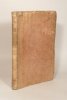
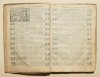
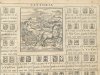
UN GRAND LIVRE SUR LA DIVINATION ET LE DÉCHIFFREMENT DE L'AVENIR. Seconde édition, aussi rare que la première parue en 1540. Frontispice de Joseph Forta, portrait de l'auteur au verso, 50 GRAVURES représentant les cartes à jouer, les chances, les Vertus et les Vices et 50 autres figurant les philosophes, dont sept répétées, le tout gravé sur bois ; avec des explications en vers par Lodovico Dolce. Célèbre traité d'interrogation, voire de maîtrise du hasard au moyen de cartes à jouer. Francesco MARCOLINI (ca 1500-1559), avant tout imprimeur, exerça pendant environ un quart de siècle, de 1535 à 1559, avec une longue interruption en 1546 lorsqu'il se rendit à Chypre comme cavalier du Podestat. Philipp Hoefer écrit à propos de Marcolini : « Imprimeur italien… qui n’est guère connu que comme rédacteur d'un ouvrage curieux et fort recherché des bibliophiles : Le Sorti ». L'ADMIRABLE ICONOGRAPHIE du livre, due à Giuseppe PORTA, élève de Francesco Salviati, occupe la moitié des pages, où l'on voit de nombreux personnages dans les situations les plus diverses et singulières, exprimant toutes les nuances de l'espoir et du désespoir humain face aux lois du destin. Toutes les pages du livre sont, par ailleurs, illustrées de près de deux cent combinaisons de cartes, accompagnées d'explication en vers par Lodovico Dolce. La grande figure du titre montre un groupe débattant dans le "giardino di pensieri". Les figures du premier plan disposent d'un jeu de cartes et du livre même de Marcolini, tandis que d'autres interrogent un astrolabe. La composition du titre dérive d’un dessin de Francesco Salviati, gravé par Marco Dente. Cervolini ("Marcolini", page 20) tout comme Mauroner ("Incisione di Tiziano", 42) rejettent l'attribution du portrait à Salviati et l'attribuent au Titien. (« Les "Sorti" de Marcolini sont un des plus beaux livres de gravures sur bois italiens. », CAILLET, III, 7113 - HARVARD, 280, reproduit des illustrations de l'ouvrage sur quatre pages – BERÈS, "80 ans de passion, 3ème vente", n°242, exemplaire de l’édition de 1540 – SANDER, 4231 – BRUNET, III, 1407-1408, Suppl.I, 941). MODESTE EXEMPLAIRE de cet ouvrage rare, qui a probablement dû être très compulsé et manipulé, mais qui a néanmoins réussi à traverser les siècles pour arriver jusqu'à nous, complet et aisément consultable. GOOD COPY. PICTURES AND MORE DETAILS ON REQUEST.
Il Carnevale Italiano Mascherato que si Veggono in Figura Varie Inventione di capritii. « Le premier véritable répertoire rassemblant les costumes qu’on rencontrait au carnaval de Venise ».
Très rare et splendide suite de gravures dédiée aux costumes typiques du carnaval de Venise. S.l.n.d. [1642]. Album in-folio de 1 frontispice et 22 gravures sur bois (sur 23, manque la planche appelée « Bragato ») montées sur des feuilles de papier vergé dans des fenêtres. Les gravures mesurent 145 x 95 mm. Reliure du XXe siècle en cartonnage de papier marbré. 304 x 207 mm.
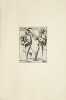
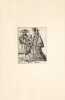
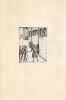
Très rare et splendide suite de gravures dédiée aux costumes typiques du carnaval de Venise. Colas 317 et Lipperheide, 3168 (23 planches). Manque à Cicognara, Ruggieri et Vinet. Porter des masques extravagants était une tradition du carnaval de Venise, et visait en quelque sorte à créer une certaine égalité entre les classes sociales. Ces déguisements pouvaient correspondre à des personnages tels que l’homme sauvage ou le démon, ou à des caricatures de gens ordinaires : paysans, maîtres, poètes ou musiciens. Francesco Bertelli était un écrivain, éditeur et typographe installé à Padoue dans la première moitié du XVIIe siècle. « Il contribua à exporter l’idée de Venise comme une ville des plaisirs, regorgeant de courtisanes et de caractères de la commedia dell’arte. Dans le volume de plusieurs dizaines de gravures qu’il publia en 1642 et dont nous conservons des versions différentes, ‘Il Carnevale Italiano Mascherato…’, il a fait la somme des masques variés qui participaient habituellement au carnaval de Venise. C’est le premier véritable répertoire rassemblant les costumes qu’on y rencontrait. Douze planches proviennent du recueil de son père Pietro (Diversarum nationum habitus) paru en 1591 sur les costumes de diverses nations, d’autres s’inspirent des livres de costumes de Ferdinando Bertelli en 1563, de Cesare Vecellio en 1590 et de Giacomo Franco en 1610. Les personnages représentés, parfois seuls, souvent en couples ou en trio, constituent les types de masques auxquels on se réfère en général quand on cherche à imaginer comment on se déguisait au milieu du XVIIe siècle. Marquées par l’esprit des collections de costumes et accompagnées dans certaines versions de deux lignes de commentaires, les gravures de Francesco Bertelli montrent des personnages en pied qui semblent souvent se donner en spectacle. Nulle part n’y figure encore la bautta même si parfois semble s’ébaucher un ‘volto’. Des planches de Bertelli ont à leur tour été insérées dans certains volumes de l’Itinéraire d’Italie d’Andrea et Frans Schott, connu aussi sous le nom de Francesco Scoto, qui fut utilisé par les pèlerins et par de nombreux voyageurs au fil de ses multiples rééditions de 1600 à 1761. C’est dire combien elles constituent un creuset de la diffusion des images du carnaval auprès d’un large public. On possède des recueils de gravures de comédiens italiens du XVIe siècle, mais peu d’autres représentations gravées et a fortiori peintes du carnaval de Venise au XVIIe siècle. » (G. Bertrand, Histoire du carnaval de Venise). Précieux exemplaire de cet illustré d’une grande rareté consacré aux costumes du carnaval de Venise au XVIIe siècle. Very rare: only 3 copies have appeared at auction in at least 30 years, most recently at Christie's New York, 12th June 2009. Plate counts vary from copy to copy, from 23 in the Colas and Lipperheide copies to the Correr Museum copy in Venice, which appears to be the most complete with 28 plates. Voir l’article de Lina Padoan Urban ("Il Carnavale Veniziano, nelle Maschere incise da Francesco Bertelli," in Il Polifilo, Milano, 1986) qui tente de determiner la composition de cette suite et ses différents tirages.
Mahomet et les grandes conquêtes arabes - Collection l'univers des connaissances n°24
Hachette 1967 in12. 1967. Broché.
Bon état
The Law And Economics Of Irrational Behavior (Stanford Economics & Finance)
Stanford University Press 2005 613 pages 15 4x3 8x22 4cm. 2005. Broché. 613 pages.

proche du très bon état intérieur propre
Il socialismo senza Marx
Massimiliano Boni 1974 in8. 1974. Broché.
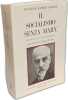

Très Bon état bonne tenue intérieur propre jaquette un peu défraîchie
Gli ordinamenti giuridici del Rinascimento medievale
Giuffrè 1965 322 pages 16 8x2x24cm. 1965. Broché. 322 pages.
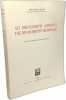

proche du très bon état intérieur propre bonne tenue
Lezioni di diritto processuale civile - VOLUME PRIMO + SECONDO + TERZO + QUARTO --- I Classici della CEDAM
CEDAM 1986 1700 pages in8. 1986. Reliure editeur. 4 volume(s). 1700 pages.
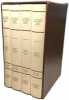
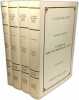
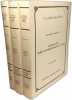
livres comme neuf avec leur jaquette emboîtage abîmé sur les bords (accrocs) texte fac simile manuscrit
Diritto e società nell'antica Roma
Riuniti 1982 in8. 1982. Broché.
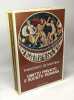
Bon état bords frottés intérieur propre
Memorie degli apostoli in catacumbas
Citta del vaticano 1953 291 pages Collezione Amici delle catacombe XIX . Pontifico instituto di archaeologia cristiana Roma. in-8. 1953. broché. 291 pages.
Brochure décollée . Avec ses 8 planches en fin d'ouvrage . Des passages soulignés avec repères en marge au crayon de bois a l'intérieur
Les nouvelles découvertes archéologiques en Italie
Ferrovie dello stato 120 pages in8. Sans date. Broché. 120 pages.
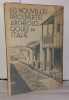
Etat correct (EC)
Il sole alle spalle
L'aquila Marcello ferri 1980 170 pages in8. 1980. Broché. 170 pages. Envoi de l'auteur en page de faux-titre à Mr Charles Dédeyan professeur ès Lettres
Bon Etat

