 Write to the booksellers
GETTE (Paul-Armand)
Colour etc.
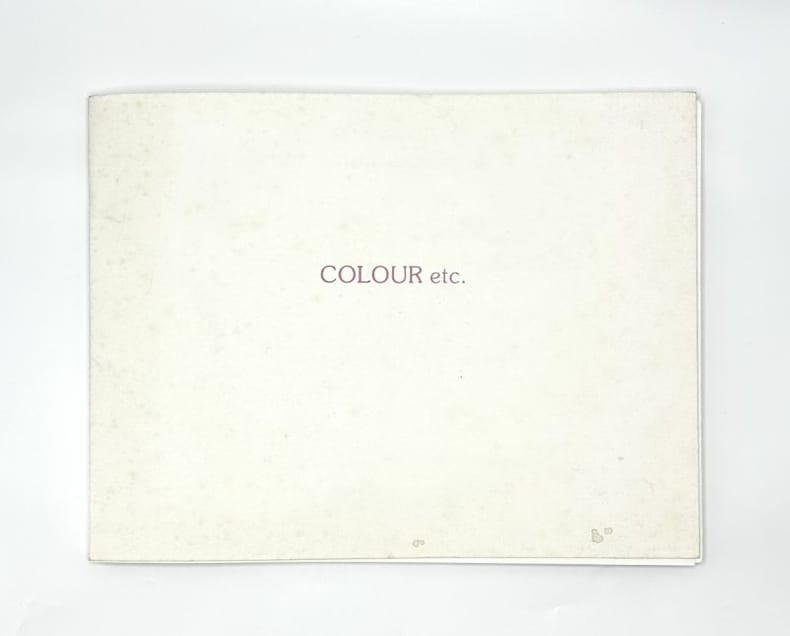
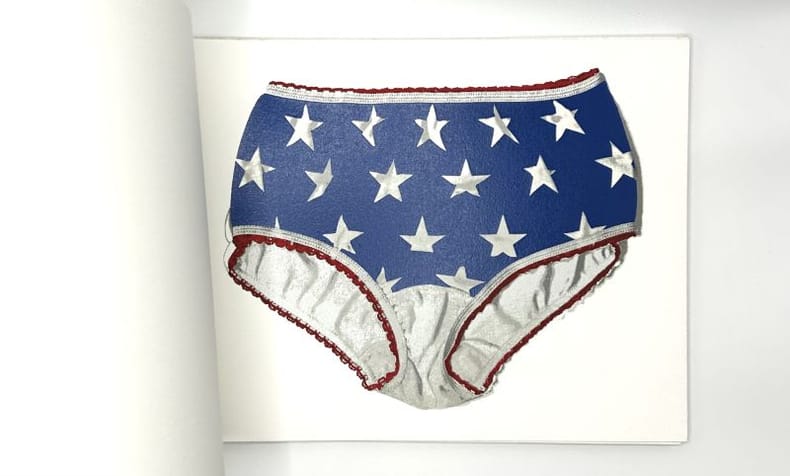
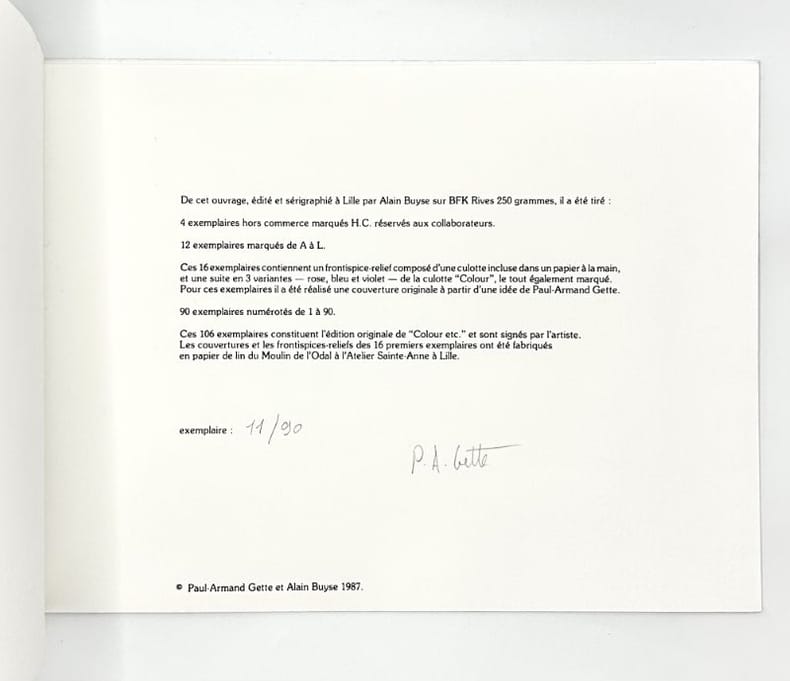
Lille Alain Buyse In-8 oblong, broché en planches, non paginé. Lithographies couleur.
Reference : 16411
Tirage à 106 exemplaires numérotés, signé par l'artiste. Couverture un peu salie. * Voir photographie(s) / See the picture(s). * Membre du SLAM et de la LILA / ILAB Member. La librairie est ouverte sur rendez-vous.
Bookseller's contact details
Librairie Jacques Desse
M. Jacques Desse
5 rue Du Sommerard
75005 Paris
France
librairiejacquesdesse@gmail.com
06 83 89 54 66
Payment mode


Sale conditions
Conformes aux règles du SLAM (Syndicat de la Librairie Ancienne et Moderne) et de la LILA (Ligue Internationale de la Librairie Ancienne).
5 book(s) with the same title
The pocket encyclopaedia of Roses in colour - 421 roses reproduced in full colour
Blandord press 1963 in12. 1963. Cartonné.
Bon Etat de conservation bords un peu frottés annotations sur le 4e plat
Interdisciplinary Approaches to the Colour Blue in Ancient Egypt and Sudan
, Brepols, 2026 Hardback, Pages: 294, Size:216 x 280 mm, Illustrations:18 b/w, 143 col., 8 tables b/w., Language: English. ISBN 9782503620138.
Summary From the earliest days of Pharaonic and Kushite cultures, blue was a highly valued colour. Initially sourced in the mineral world, with stones of various shades being collected and used for personal ornamentation, and later from dye plants - whose blue hues required complex extraction - blue became a symbol of prestige and innovation. Since blue is relatively rare in its raw natural form, synthetic methods of making blue were developed early on, leading to the creation of the colour through crafts like faience, glassmaking, and pigment production. Made and used in different ways, and invested with many meanings, the colour blue became omnipresent in material culture and architecture. This volume is a collaborative anthology exploring the significance of blue in ancient Egypt and Sudan. It brings together experts from diverse fields - art history, archaeology, linguistics, textile and leather studies, conservation, and heritage science - to examine the Nile Valley's material world through a 'blue lens'. The book investigates the cultural, technological, and symbolic dimensions of blue, tracing how people discovered, imitated, dyed, painted, carved, and experienced the colour. Through integrative research that crosses the boundaries of the humanities and natural sciences, the volume offers a groundbreaking perspective on colour studies, revealing how the pursuit of blue drove artistic and technological advancements across time. TABLE OF CONTENTS List of Illustrations Preface Acknowledgements List of Contributors 1. Material and Immaterial Perspectives to the Colour Blue in Ancient Egypt and Sudan Elsa Yvanez and Cecilie Br ns 2. What's so Special about Blue? Some Thoughts on Blue Materials and their Manufacture in Ancient Egypt Paul Nicholson 3. Faience in Kush: First Overview of the Material, its Meanings, and Significance Shadia Abdrhabo 4. Supplying the Mediterranean World with Egyptian Blue: An Archaeometric Perspective Alexandra Rodler and Ariadne Marketou 5. The Colour of the Monkey and the Background: Blue Colours in Old Kingdom Wall Paintings Kaori Takahashi, Ahmed Abdrabou, Yoko Taniguchi, Mostafa Shehata, Akiko Nishisaka, and Hussein Kamal 6. Ornamental and Scriptural Blue in the Ptolemaic Temple of Deir el-Medina Sandrine Vuilleumier 7. Eternity Under a Cyan Sky: Assembling Blue at 25th Dynasty El Kurru, Sudan Rachael J. Dann 8. Material and Non-material Aspects of the Colour Blue in Medieval Nubia Magdalena Wozniak and Dobrochna Zieli?ska 9. Blue Threads along the Middle Nile: Multidisciplinary Approaches to an Ancient Passion for Indigo (Sudan, c. First-Sixth Century CE) Elsa Yvanez, Bart?omiej Witkowski, Tomasz Gierczak, and Magdalena Biesaga 10. Green Is the New Blue: Coloured Leather in Ancient Egypt - An Archaeometric Approach Lucy Skinner and Andr J. Veldmeijer 11. 'Marvels from the land of Tefrore': Lapis lazuli and Dark Blue Minerals in Egyptian Temples Stefan Baumann 12. A Case of the Blues? Blue in the Egyptian Medical Texts Joseph Clayton 13. The Egyptians Didn't Have Blue - Because They Had Two, and You Should Too! Blue as a Witness to Cognitive Evolution on an Issue Dividing Anthropology and Philology at the Cost of Historical Linguistics David A. Warburton 14. Blue Eyes: The Apotropaic Qualities of Blue Karel Innem e 15. Epilogue. A Dyer's View on Blue: The Colour of Transformation Fria Gemynthe Index
COLOUR REVOLUTION Victorian Art, Fashion & Design
, Acc Art Books, 2023 Paperback, 256 pages, ENG. edition, 280 x 220 x 20 mm, NEW, illustrated in colour. ISBN 9781910807576.
Britain's industrial age is often perceived through a black-and-white filter as the 'funereal' age of coal pollution and bleak working class slums. This catalogue will dispel that perception, demonstrating how the industrial revolution transformed colour, and focus on the central role it played in art, culture and technology As opposed to approaches favouring a long history of colour, the catalogue focuses on the second half of the 19th century and argues that this was a crucial chromatic turn, which has been significantly ignored by prominent historians of colour and previous publications Several essays in the catalogue offer new research into key chromatic events of the period including the 1862 International Exhibition Accompanies an exhibition at the Ashmolean Museum from 21 September 2023 to 18 February 2024 Contrary to the monochrome vision of Queen Victoria's mourning dresses and the coal-polluted streets of Charles Dickens' London, Victorian Britain was, in fact, a period of new and vivid colours. The Industrial Revolution had transformed the Victorians' perception of colour and, over the course of the second half of the 19th century, it became the key signifier of modern life. Colour Revolution: Victorian Art, Fashion & Design charts the Victorians' new attitudes to colour through a multidisciplinary exploration of culture, technology, art and literature. The catalogue explores key 'chromatic' moments that inspired Victorian artists and writers to think anew about the materiality of colour. Rebelling against the bleakness of the industrial present, these figures learned from the sacred colours of the past, the sumptuous colours of the Middle East and Japan and looked forward towards the decadent colours that defined the end of the century.
Three bound groups of Architectural Plans A total of 13 water colour architectural plans
Paris N/A 1908 Une belle collection de 9 études au crayon par Ledonné. Il s'agit principalement d'esquisses pour des études dans une Ecole Nationale en France, mais certaines font partie de sa soumission pour le certificat "Form Drawing" de la Cooper Union for the Advancement of Science and Art. Ces feuilles sont accompagnées d'un certificat imprimé et gaufré de l'université. Les feuilles comprennent 9 dessins au crayon, signés au recto, au verso ou aux deux. Certains sont des études de caractère de statues, dans un style grec. Quelques-uns sont des esquisses d'éléments architecturaux. La plupart des feuilles ont un format de 48 x 31 cm. Elles sont toutes en bon état, propres, mais certaines portent quelques marques et l'une d'entre elles présente des plis et des déchirures sur le bord (sans incidence sur l'image). Celles qui ont été soumises à l'école portent deux cachets, l'un pour l'école et l'autre indiquant la note / les points attribués. Les cachets ne figurent pas sur les images. Toutes les images sont d'un excellent niveau et peuvent être encadrées. Plusieurs de ces photos ont été présentées dans le cadre d'un cours à la Cooper Union. Cette institution a été fondée par l'inventeur, l'industriel et le philanthrope Peter Cooper à New York en 1858 (d'après le certificat, 1859 d'après leur site web) et existe encore aujourd'hui. Le certificat comporte une jolie vignette gravée représentant le grand hall de l'établissement. Il est signé à l'encre par le directeur et le président du collège, et porte un sceau estampé à l'aveugle. Il montre que Ledonné était inscrit à la Free Night School, et vraisemblablement à une école d'architecture (bien que ce sujet ait été appelé designing). Nous ne savons pas grand-chose sur Ledonné. Français, il a séjourné aux États-Unis entre 1899 et 1903, puis est rentré en France et a travaillé comme dessinateur ou architecte sous la direction de l'architecte Eugené Dr Chifflot (frère de Jules Léon Chifflot).
A lovely collection of architectural studies in ink and water colour by Ledonné. It is not clear whether these are studies as a draughtsman working for Eugené Dr Chifflot, or as an Architectural student (or perhaps a combination). The three groups are as follows: (1) Résumé des Constructions - Perspective lineaire des Prof. F Julien. 4 Sheets. One is a water colour of a fountain on art card, signed by Ledonné and with the éleve signed by Eu. Chifflot. Next is a perspective of the same, in red and black ink on architectural glassine, showing perspective lines (also signed by both). Next a epure de perspective of the fountain in red and black in (also signed by both). Finally, a section of the profile and plan, signed by Ledonné and professor Julien. There is a blank cover sheet (signed by Ledonné and Chifflot). Each sheet is 65 x 48cm, signed by both Ledonné and Chifflot, and in good, clean condition. They are held together by brass rivets to the top edge. (2) Projet de Stéréotomie un Chalet dans les Montagnes. 5 sheets. First is a water colour elevation and cut out of a chalet design. Second is a red, black and water colour design and perspective of the chalet staircase. Next a water colour detail of the joints and woodwork of the chalet. Next are water colour details of the woodwork and roof beams. Finally, details of the passages and brickwork. Each sheet is 65 x 48cm, signed by both Ledonné and Chifflot, and in good, clean condition. They are held together by brass rivets to the top edge. (3) 4 sheets of designs for a pavilion of honour. The first is an elevation and details in water colour. (This has some staining and edgewear to it). Second a plan and elevation of the interior with perspective lines. next is a wate rcolour perspective and elevation of the lunette, Finally, the stereotomie of the staircase. (showing the process of the assembly of the complex structure). These three sheets are in good, clean condition. Each sheet is 65 x 48cm, signed by both Ledonné and Chifflot. They are held together by brass rivets to the top edge. We can find little about Ledonné. A Frenchman, he was in American between 1899 and 1903, and later returned to France and worked as a draughtsman or architect under the architect Eugené Dr Chifflot (Brother of Jules Léon Chifflot). .

The economics of the colour bar : a study of the economic origins and consequences of racial segregation in South Africa / William
Andre deutsch 1964 in12. 1964. Broché.
Bon Etat de conservation couverture un peu défraîchie intérieur propre

