 Write to the booksellers
WICK (Gabriel).
Gardens in Revolution. Landscapes and Political culture in France 1760-1792.
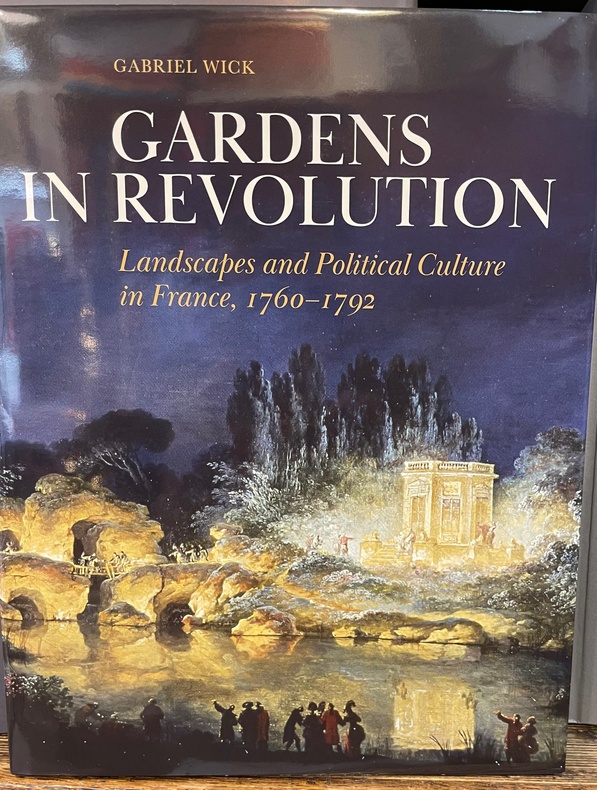
2025, in-4 pleine toile, jaquette (381 pages). Entièrement illustré.
Reference : 9507
Bookseller's contact details
Librairie du Camée
Mme Françoise Cogan
70, Rue Saint André des Arts
75006 Paris
France
01 43 26 21 70
Payment mode
Sale conditions
Envoi des ouvrages à réception de votre règlement.
1 book(s) with the same title
Gardens in Revolution Landscapes & Political Culture in France, 1760-1792
, Brepols - Harvey Miller, 2025 Hardback, Pages: 384 pages, Size:220 x 280 mm, Illustrations:263 col. Language:English. *new. ISBN 9781915487513.
Summary France in the mid-1760s witnessed what the aphorist and garden lover the prince de Ligne hailed as ?La révolution du goût? ? the revolution of taste. A small number of dissident and philosophically minded aristocrats remade their gardens in the bizarre and eccentric manner of the English. The informality and apparent naturalism of these jardins anglais stood in marked contrast to the symmetry, regularity, and proudly assumed artifice of the jardins à la française, the century-old legacy of André Le Nôtre and his master Louis XIV. The English-inflected aesthetic was all the more controversial because France had just suffered humiliating defeat at the hands of England in the Seven Years? War. Landscape gardens formed part of a broader taste for English fashions, pastimes, and mindsets that was derisively termed Anglomania by traditionalists. Louis XVI opined to his brother-in-law Joseph II that anglomanie was the most pernicious threat to the well-being of France. What did it mean for the kingdom?s great dynasts to reframe their identities in the image of the nation?s rival? Were these aesthetic developments simply a question of fashion or did they portend a deeper instability and discontentment in the upper echelons of the Bourbon monarchy? How did new English-inflected settings allow aristocrats and the people to interact differently? Gardens in Revolution argues that royal, aristocratic and public gardens were catalysts in early modern political culture: settings that allowed dynasts to redefine their identities, transform their interactions with the press and the people, and in so doing contest the limited influence and autonomy afforded them within the Bourbon state. Covering the three decades from the end of the Seven Years? War to the abolition of the monarchy, it charts how estates and gardens like Marie-Antoinette?s Petit-Trianon and Saint-Cloud, the comte d?Artois? Bagatelle, or the duc d?Orléans? Monceau and Le Raincy served as instruments of communication, self-expression and self-representation. It argues that English-inflected aesthetics were a critical means for grandees to manifest their ?affabiliteì,? or openness to the public, and their dissatisfaction with the current political order. TABLE OF CONTENTS Introduction Chapter 1: In the Gardens of the Princes Patriotes: The princes de Conti and Condé and the Duc d?Orléans Chapter 2: Triumph through Disgrace: The Duc de Choiseul at Chanteloup Chapter 3: Révolte à l?Anglaise: The Duc de Chartres at Monceau and Saint-Leu Chapter 4: A Revolution at Court: Marie-Antoinette, the Petit-Trianon and the Reinvention of the Royal Garden Chapter 5: Prince of the Public Sphere: The Comte d?Artois?s Landscapes Chapter 6: The Crown?s New Estates: Rambouillet and Saint-Cloud Chapter 7: A Modern Domain for a Republican Prince: Orléans and Le Raincy Conclusion: The King?s Last Garden: Tuileries Bibliography

