Write to the booksellers
CORIOLIS, Gaspard Gustave de
Théorie mathématique des effets du jeu de billard.
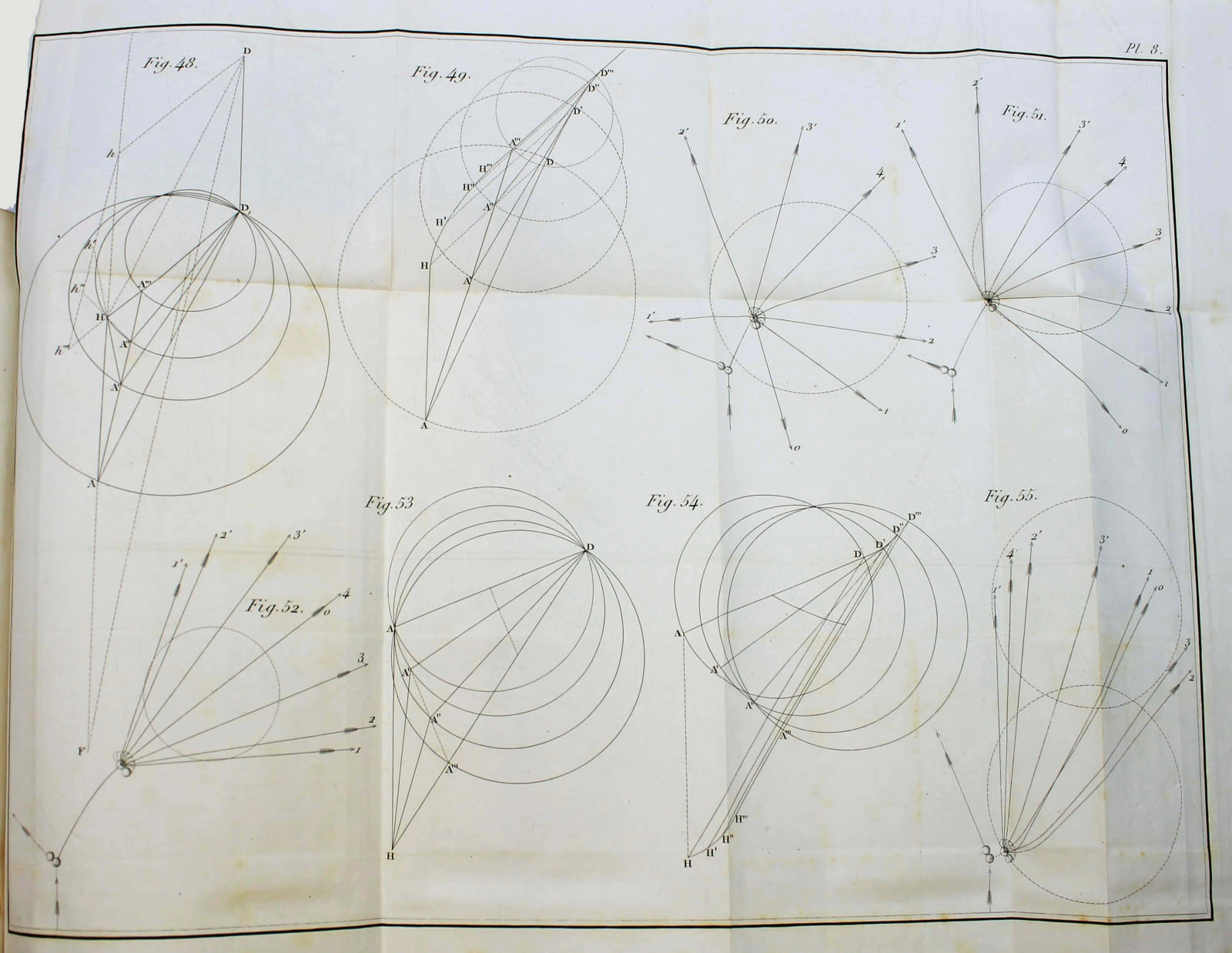
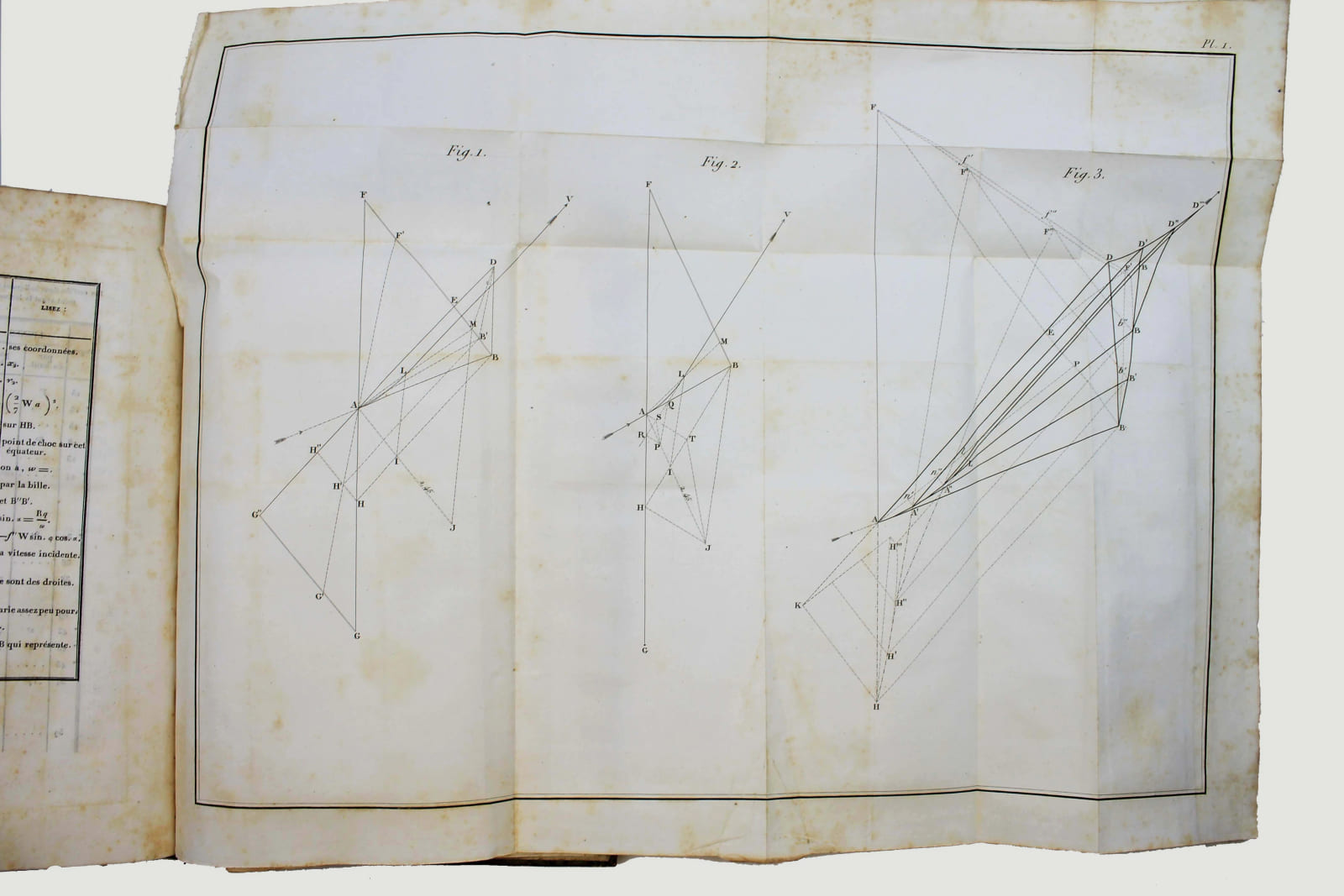
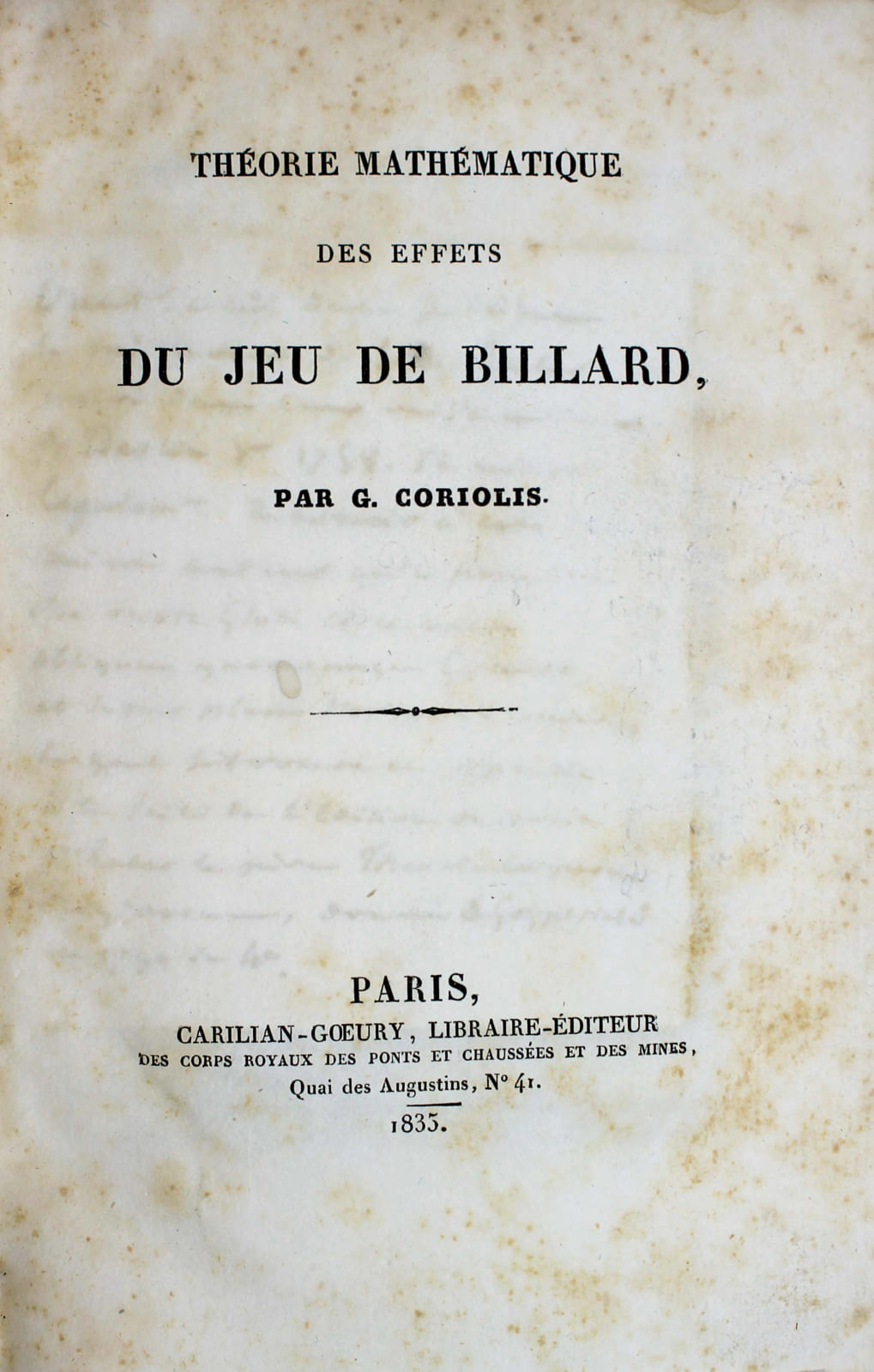
Paris, Carilian-Goeury, 1835.
Reference : 18965
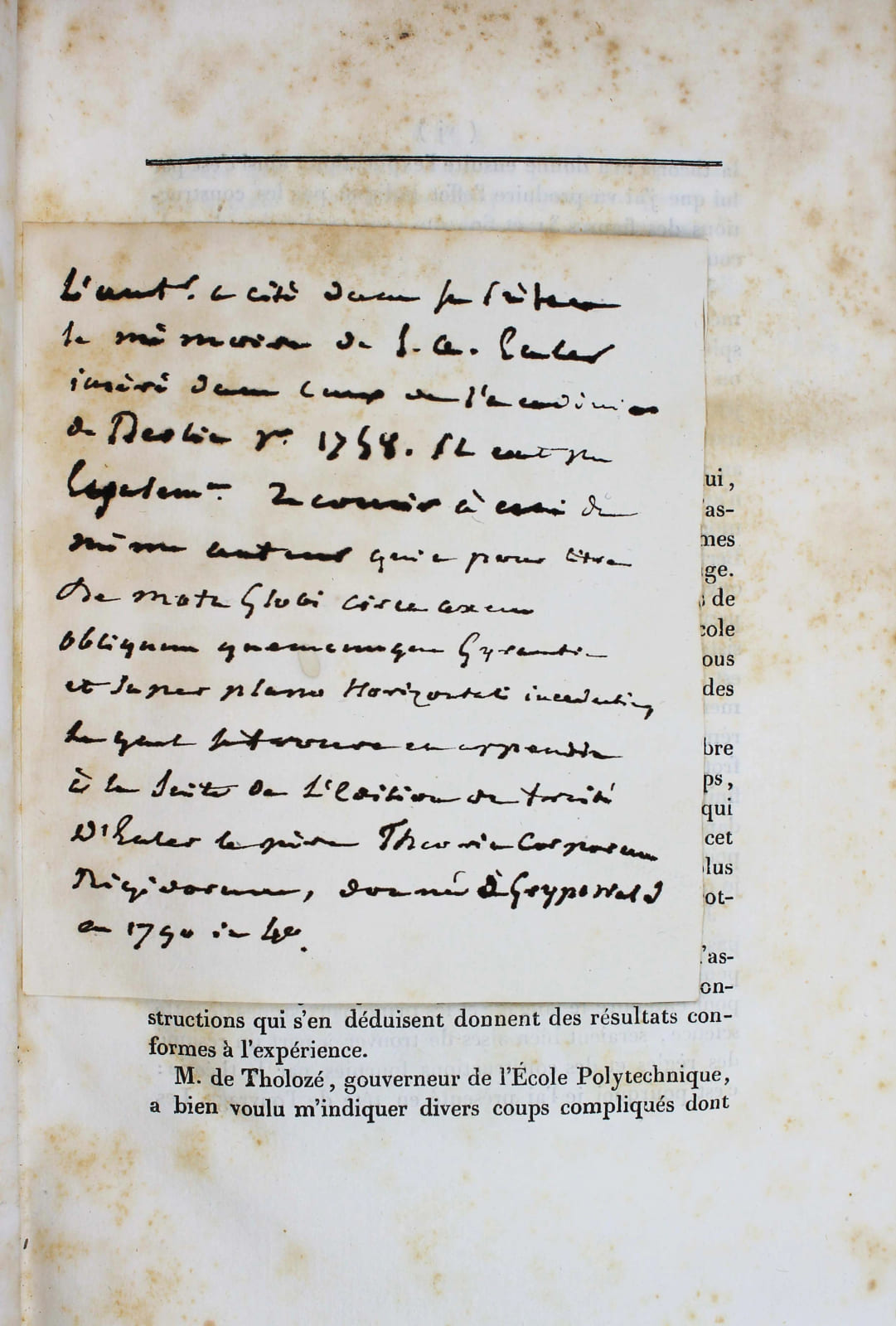
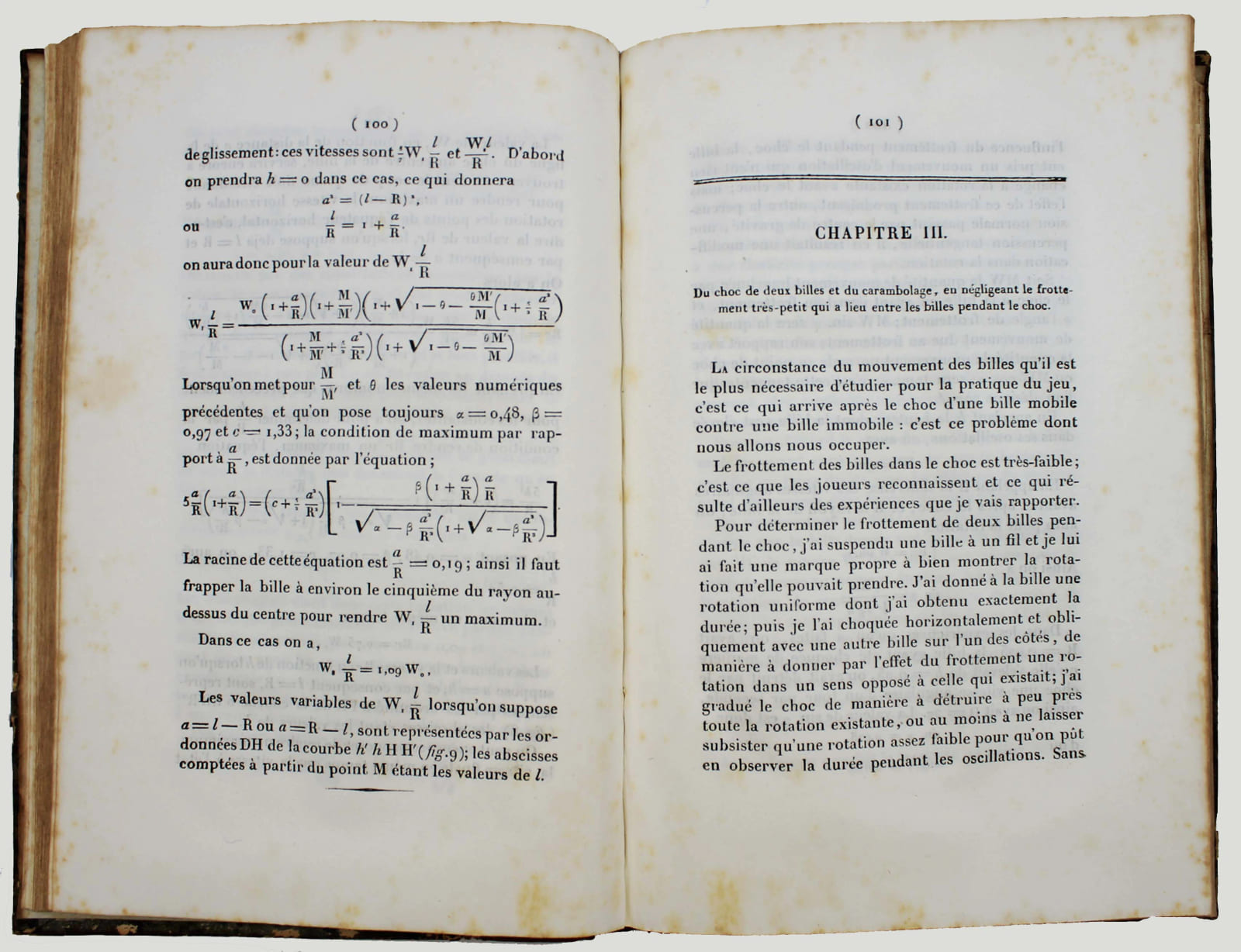
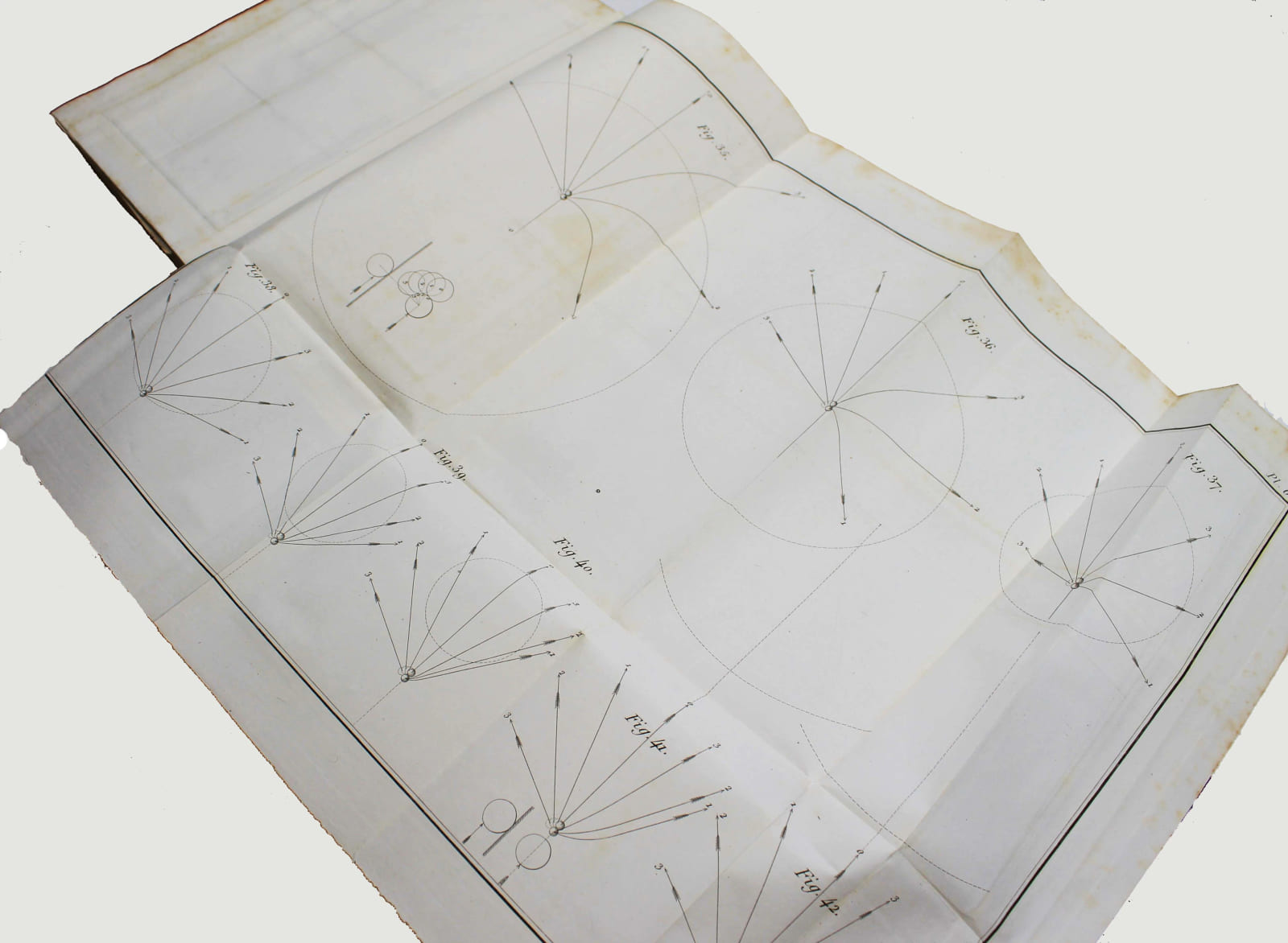
Première édition. Gaspard Gustave de Coriolis (1792-1843) a succédé à Navier à la chaire de mécanique appliquée à l'Ecole des Ponts-et-Chaussées, puis est devenu directeur des études à l'Ecole polytechnique. Il est aujourd'hui célèbre pour le théorème de mécanique qui porte son nom et pour la "force de Coriolis". L'étude du déplacement et du choc des billes dans le jeu de billard offrit à Coriolis un beau sujet d'étude dans le domaine de la cinématique et des mouvements composés. L'observation des coups du célèbre joueur François Mingaud, confrontée aux travaux de Poisson sur le frottement d'une sphère, ainsi qu'à ceux d'Euler fils, lui ont permis de dégager une théorie mathématique, qu'il présente ici à la fois sous une forme simplifiée pour les non-mathématiciens, et aussi sous leur aspect théorique détaillé pour les élèves de l'Ecole polytechnique. En début d'ouvrage, on a relié une note de l'époque disant que l'auteur cite le mémoire d'Euler fils 'De motu globi circae' publié en 1758 et qu'on le trouve aussi placé à la fin du 'Theoria corporum' de son père de 1790. Charnières fendillées, coiffe abimée, rousseurs. /// In-8 de VII, (1), 174 pp., 12 pl. Demi-veau brun, dos orné. (Reliure de l'époque.) //// First edition. A classic work on collisions of spheres exposed both for non-mathematicians and for pupils of Ecole Polytechnique. Gaspard Gustave de Coriolis (17921843) succeeded Navier as professor of applied mechanics at the Ecole des Ponts-et-Chaussées, and later became director of studies at the Ecole Polytechnique. He is best known today for the mechanical theorem that bears his name and for the Coriolis force. The study of the motion and collision of balls in the game of billiards provided Coriolis with a fascinating subject of study in the field of kinematics and compound motion. By observing the shots of the famous player François Mingaud and comparing them with Poissons work on the friction of a sphere, as well as that of Euler the Younger, he was able to develop a mathematical theory, which he presents here both in a simplified form for non-mathematicians and in its detailed theoretical form for students at the Ecole Polytechnique. At the beginning of the book, a contemporary note was bound, stating that the author quotes Euler's son's treatise, 'De motu globi circae...', published in 1758, and that it also appears at the end of his father's 'Theoria corporum' of 1790. Hinges slitghly spliting, head cap damaged, some foxing. /// PLUS DE PHOTOS SUR WWW.LATUDE.NET
Bookseller's contact details
Hugues de Latude
Hugues de Latude
06 09 57 17 07
Payment mode


Sale conditions
Books are guaranteed to be complete and in good condition unless otherwise stated.