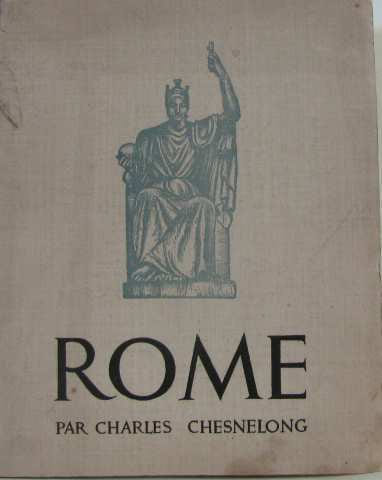
Librairie des champs-elysées 1939 in8. 1939. Broché.
Reference : 181913
Bon Etat jauni
Un Autre Monde
M. Emmanuel Arnaiz
07.69.73.87.31
Conformes aux usages de la librairie ancienne.
'' Rome ancienne - Rome souterraine et Byzantine - Rome Féodale et Papale - Rome moderne '' Rome, la capitale de l'Italie, est une ville riche en histoire, avec des couches d'histoire allant de l'Antiquité à la période moderne. Voici un aperçu des différentes périodes de l'histoire de Rome : Rome ancienne : La fondation légendaire de Rome remonte à 753 av. J.-C. selon la tradition romaine. Rome antique était le centre de l'Empire romain, qui a atteint son apogée au Ier siècle av. J.-C. et au Ier siècle de notre ère. C'était une période de grande prospérité, de développement architectural et de conquêtes militaires. Parmi les monuments les plus célèbres de cette époque, on trouve le Colisée, le Forum romain, le Panthéon et le Circus Maximus. Rome souterraine et Byzantine : Sous la Rome antique, il y avait un réseau complexe de catacombes souterraines utilisées pour l'inhumation. La période byzantine de Rome a commencé après la chute de l'Empire romain d'Occident en 476 de notre ère et a duré jusqu'à la conquête de la ville par les Lombards en 751. Pendant cette période, Rome est devenue une partie de l'Empire byzantin. Rome Féodale et Papale : Après la chute de l'Empire romain, Rome est devenue une ville importante dans le cadre du Saint-Empire romain germanique. Au Moyen Âge, Rome est devenue le siège du pouvoir papal et du christianisme. Les papes résidaient au Vatican, et la ville est devenue le centre de l'Église catholique romaine. Des bâtiments emblématiques tels que la basilique Saint-Pierre, la Chapelle Sixtine et le Palais du Latran ont été construits pendant cette période. Rome moderne : Au cours des siècles suivants, Rome est devenue une ville importante dans la Renaissance italienne, avec des artistes tels que Michel-Ange et Léonard de Vinci qui ont travaillé sur des projets importants à Rome. Au XIXe siècle, Rome est devenue la capitale du Royaume d'Italie unifié, mettant fin à des siècles de domination papale. Aujourd'hui, Rome est une ville moderne qui allie son histoire riche à une vie contemporaine animée. Elle est célèbre pour ses musées, ses galeries d'art, sa cuisine, et bien sûr, le Vatican, qui reste un centre religieux majeur. Chacune de ces périodes a laissé une empreinte significative sur la ville de Rome, et nous pouvons explorer ses différentes facettes en visitant ses nombreux sites historiques et culturels. fort volume in-4, 270x180, relié demi chagrin, dos à nerfs, frottements, toutes tranches dorées, 673 pages, poids 2,2 kg Ouvrage orné d'un joli panorama dépliant de Rome, signée de Rouargue et Doherty. L'ouvrage est complet de ses 25 planches par Rouargue (dont un plan dépliant) ainsi qu'un grand nombre de figures dans le texte. Paris Furnes, Libraire éditeur 1845
, Brepols, 2020 Paperback, 436 pages, Size:190 x 290 mm, Illustrations:67 b/w, 75 col., 10 tables b/w., 1 maps b/w, Languages: English, German. ISBN 9782503588384.
Summary Important centres of charity, hospitality and representation, the national churches of Rome were also major hubs of musical production. This collective work is the fruit of several years of largely unpublished research on the musical life of these institutions, considered for the first time as a whole. What it primarily brings to light is the common model which emerged from the interactions between the national churches, as well as between these and other Roman churches, in musical matters - eloquent example of a unifying cultural paradigm. The repertories used by these churches, the ceremonies and celebrations they orchestrated in the teatro del mondo which Rome constituted at the time, their role in the placing of musicians within the city's professional networks are just some of the themes explored in this work. The cultural exchanges between the national churches and the "nations" that they represented in the pontifical city form another important area of investigation: whether musical or devotional, connecting places of worship and private palaces or extending from one side of the Alps to the other, these exchanges reveal the permeability that characterised many national traditions. At the heart of this richly illustrated study are two fundamental lines of inquiry: the first concerns the processes of identity construction developed by communities installed in foreign lands, the second line of inquiry is cultural hybridity. In pursuing these, we aim to further understanding of the dialectics of exchange at work in Rome during the modern period. * The preparation of this publication has benefitted greatly from the collaboration of Jorge Morales. TABLE OF CONTENTS Foreword by Bernard Ardura Introduction by Michela Berti and milie Corswarem I. The Musical Model of National Churches in Rome ? 2. NOEL O'REGAN Cappella fissa-Cappella mobile: the Organisation of Musicians for Major Feastdays at Rome's National Churches ? 3. CRISTINA FERNANDES A Close Look at S. Antonio dei Portoghesi and Roman Life: The Testimony of Father Manuel de Campos ? 4. KLAUS PIETSCHMANN Music Cultivation in Roman National Churches before the Council of Trent ? 5. TOBIAS DANIELS A New Organ for the Anima. The Notarial Contract of 1546 and the History of the "German National Church" in Rome in the Middle of the Sixteenth Century ? 6. FRANCESCA FANTAPPI -JOS MAR A DOM NGUEZ Alessandro Scarlatti and the Spanish National Church of S. Giacomo degli Spagnoli ? 7. ESTEBAN HERN NDEZ CASTELL The Musical Archive of the Spanish National Church of S. Maria in Monserrato in Rome II. Music and the Identity Process Identity and Repertory ? 8. BERNARD DOMPNIER Identity Affirmation and Roman Conformity: the Festive Calendars of the National Churches ? 9. CRISTINA FERNANDES Daily Liturgy and 'Internal' Musical Practices in S. Antonio dei Portoghesi ? 10. GALLIANO CILIBERTI S. Luigi dei Francesi in the Seventeenth Century: a Laboratory for Music, Liturgy and Identity ? 11. ESTEBAN HERN NDEZ CASTELL : Evidence of a 'More Hispano' Polyphonic Passion at the Spanish National Church of S. Maria in Monserrato in Rome ? 12. MILIE CORSWAREM S. Luigi dei Francesci's Volume of Masses dating from 1557: an Example of French Polyphony ? 13. MICHELA BERTI The musical collection of San Luigi dei Francesi: on the trail of national character The Construction of National Identity from Self-Representation and Conflict ? 14. JOS MAR A DOM NGUEZ To Obey the Pope and to Serve the King: Cardinals, Identity and Ceremony in the National Churches c. 1700 ? 15. BRUNO BOUTE Liturgy and Bureaucracy-Bureaucracy as Liturgy ? 16. DIANA CARRI -INVERNIZZI Political Images and the National Churches of Rome c. 1640 ? 17. JORGE MORALES Musical Practices and Identity. The Story of the Roman Sojourn (1623-27) of Maurice of Savoy, Crown-Cardinal of France ? 18. ANNE-MADELEINE GOULET Self-Fashioning a French Cultural Persona in Rome: Marie-Anne de la Tr moille (1683-1686) ? 14. CRISTINA FERNANDES : Portuguese Celebrations in Rome, between the Embassy and the National Church: Sacred and Secular Music for the Glory of the King III. National Churches : Network in Rome and Cultural Transfer ? 20. DOMENICO ROCCIOLO 'Inhabitants of Various Nations' in Rome from the Sixteenth to the Eighteenth Century ? 21. ANNE PI JUS Foreign Musicians and Musical Networks in Late Sixteenth-Century Rome: Spanish Composers between the Oratory and the National Churches ? 22. CRISTINA FERNANDES Oratorio Musical Traditions in Rome: Portuguese connections ? 23. FRANCESCO PEZZI The Musical Patronage of a Cardinal Protector: Otto Truchsess von Waldburg in Rome ? 24. CRISTINA FERNANDES Portuguese Young Musicians under Royal Patronage in Rome and their Relations with the National Church: some Pieces of the Puzzle ? 25. CRISTINA FERNANDES The Role of the National Church of S. Antonio dei Portoghesi in the 'Romanisation' of the Lisbon Royal and Patriarchal Chapel Afterword by Kate van Orden Illustration Credits Translators Index of Persons Index of Places
, Brepols, 2022 Paperback, xcv + 442 pages, Size:156 x 234 mm, Illustrations:63 b/w, 1 col., Language(s):English, Middle English. ISBN 9782503594675.
Summary The scene is Rome in the fifteenth century, Golden Rome, a magnet drawing pilgrims by its architectural attractions and the magnitude of its religious importance as the mother of faith. The Austin friar John Capgrave attended Rome for the Jubilee in 1450, including the Lenten stations, and his Solace of Pilgrimes, intended as a guide for subsequent pilgrims, was written up following the author's own pilgrimage. In three parts it covers the ancient monuments, the seven principal churches and the Lenten stations, and other churches of note, especially those dedicated to the Blessed Virgin Mary. The work has been described as the most ambitious description of Rome in Middle English. The present edition offers a new Text based on a transcription of the author's holograph manuscript. Parallel with the Text there is a modern English Translation. The illustrations, mostly from a period slightly later than the 1450 Jubilee, aim to give some visual clue as to what Capgrave saw. There is a full account of the multiple sources that he used, most of which is the product of new research. Following the Text there is a Commentary that aims to provide some background information about the buildings and monuments that Capgrave focuses on, and to explain and illuminate any difficulties or points of interest in the Text. Capgrave is an omni-present guide leading us towards what he considered an appropriate interpretation of the classical past as a foundation for the Christian present, which built on it and surpassed it. TABLE OF CONTENTS Preface Abbreviations Introduction Select Bibliography Editorial Procedure The Solace of Pilgrimes by John Capgrave OSA Part I Ancient Rome Introduction and list of chapters in Part I ch 1 The original founders of Rome ch 2 The gates, walls and towers of Rome ch 3 The bridges of Rome ch 4 The hills of Rome ch 5 The 'palaces' in Rome ch 6 The triumphal arches in Rome ch 7 The cymyteries 'catacombs' in Rome ch 8 Holy places and their pre-Christian names ch 9 The Angulla Sancti Petri 'St Peter's Obelisk' ch 10 Pagan temples turned to Christian use ch 11 The Capitol ch 12 The statue of the Dioscuri ch 13 The statue of Marcus Aurelius at the Lateran ch 14 The Coliseum ch 15 The Pantheon ch 16 Ara Celi ch 17 The Mausoleum of Augustus ch 18 The Septizodium ch 19 The Circus of Tarquinius Priscus ch 20 The Cantharus in the atrium in front of old San Pietro ch 21 The 'pyramid' or tomb of Romulus ch 22 The paleys 'temple' of Trajan ch 23 The conch-shaped font where Constantine was allegedly baptized ch 24 The place called Omnis Terra (= Monte Testaccio) ch 25 The rulers of Rome from the time of Romulus to the last king Tarquinius ch 26 The rulers of Rome from Tarquinius to the first emperor ch 27 The emperors of Rome from Julius Caesar to Frederick II (d 1250) Part II The seven principal churches and the stations for Lent Prologus ch 1 San Pietro ch 2 San Paolo fuori le Mura ch 3 San Sebastiano ch 4 San Giovanni in Laterano ch 5 Santa Croce in Gerusalemme ch 6 San Lorenzo fuori le Mura ch 7 Santa Maria Maggiore ch 8 The station at Santa Sabina ch 9 The station at San Giorgio in Velabro ch 10 The station at Santi Giovanni e Paolo ch 11 The station at San Trifone ch 12 The station at San Giovanni in Laterano ch 13 The station at San Pietro in Vincoli ch 14 The station at Santa Anastasia ch 15 The station at Santa Maria Maggiore ch 16 The station at San Lorenzo in Panisperna ch 17 The station at Santi Apostoli ch 18 The station at San Pietro ch 19 The station at Santa Maria in Domnica ch 20 The station at San Clemente ch 21 The station at Santa Balbina ch 22 The station at Santa Cecilia in Trast vere ch 23 The station at Santa Maria in Trast vere ch 24 The station at San Vitale ch 25 The station at Santi Marcellino e Pietro ch 26 The station at San Lorenzo fuori le Mura ch 27 The station at San Marco ch 28 The station at Santa Pudenziana ch 29 The station at San Sisto Vecchio ch 30 The station at Santi Cosma e Damiano ch 31 The station at San Lorenzo in Lucina ch 32 The station at Santa Susanna ch 33 The station at Santa Croce in Gerusalemme ch 34 The station at Santi Quattro Coronati ch 35 The station at San Lorenzo in Damaso ch 36 The station at San Paolo fuori le Mura ch 37 The station at San Martino ai Monti and the station at San Silvestro in Capite ch 38 The station at Sant'Eusebio ch 39 The station at San Nicola in Carcere ch 40 The station at San Pietro ch 41 The station at San Crisogono ch 42 The station at San Ciriaco in Thermis ch 43 The station at San Marcello al Corso ch 44 The station at Sant'Apollinare ch 45 The station at San Stefano Rotunda ch 46 The station at San Giovanni alla Porta Latina ch 47 The station at San Giovanni in Laterano ch 48 The station at Santa Prassede and the station at Santi Nereo e Achilleo ch 49 The station at Santa Prisca ch 50 The station at Santa Maria Maggiore ch 51 The station at San Giovanni in Laterano ch 52 The station at Santa Croce in Gerusalemme ch 53 The station at San Giovanni in Laterano ch 54 The station at Santa Maria Maggiore Part III Other churches of note, especially those dedicated to our Lady Prologus ch 1 Santa Maria Rotunda (= Pantheon) ch 2 Santa Maria in Aracoeli ch 3 Lacking ch 4 Santa Maria sopra Minerva ch 5 Santa Maria Annunziata ch 6 Santa Maria in Transpontina ch 7 Santa Maria in Palmis ch 8 Santa Maria del Populo ch 9 Santa Maria Antiqua ch 10 Santa Maria in Cosmedin ch 11 Santa Maria Imperatrice ch 12 Santa Maria della Consolazione ch 13 Santa Maria in Portico Further chapters lacking Commentary Appendix Index of Names and Places
Unique volume répertorié présentant 9 éditions originales rarissimes, dont 3 manquant à la B.n.F., relatant les fêtes organisées à Rome en 1725 et 1729 pour célébrer le mariage de Louis XV et la naissance du Dauphin en reliure de l’époque. Volume in-4 relié en vélin ivoire de l’époque, dos lisse. 237 x 175 mm.
Le Cardinal Melchior de Polignac est nommé ambassadeur à Rome, son ambassade lui permet de donner libre cours à sa passion pour les antiquités romaines. Il entreprend des recherches dans Rome, participe à la découverte de sculptures antiques et ainsi se constitue une collection qu'il transportera ensuite à Paris pour l'installer dans son hôtel de la rue de Varenne. Il est aussi un ambassadeur fastueux et s'investit dans son rôle de représentation en donnant de grandes fêtes. La plus connue est donnée pour le mariage de Louis XV. En 1729, pour la naissance du Dauphin, une autre grande fête est organisée. Il en demande la représentation au peintre Giovanni Paolo Pannini qui peint Préparation du feu d'artifice et de la décoration de la fête donnée sur la place Navone à l'occasion de la naissance du dauphin, tableau conservé au Musée du Louvre. Un seul exemplaire à la B.N.F. (Richelieu + musique). 1/ Costanzi, Giovanni Battista (1704-1778). Carlo Magno festa Teatrale à l’occasion de la naissante de Delfino offerta alle… Re, e Regina de Francia dal Cardinale Otthoboni. Rome, Antonio de Rossi, 1729. In-4. Frontispice, titre, (20) et 64 pp., qq. trous de vers dans le f. final. Vignette de titre gravée des armes royales de France, frontispice gravé et 13 planches de Francesco Vasconi d’après Michetti, introduction historique en italien et français. Première édition et bel exemplaire. Costanzi a écrit cet opéra, «remarquable par la splendeur de sa mise en scène» (Grove II, p. 461), pour célébrer la naissance du Dauphin Louis, fils de Louis XIV et de Maria Leckzinska. Michetti (1704-1778) écrivit le livret alors qu’il était au service du Cardinal Pietro Ottoboni, au Palais duquel il fut représenté. L’un des deux cymbalistes représentés sur le frontispice pourrait être Costanzi. Cicognara 1497; Colas 1106; Berlin Kat. 4147. Il testo è preceduto da una "Notizia storica" in italiano e francese. Dedicato "alle Sacre Reali Maestà Cristianissime del Re, e Regina di Francia dal Cardinale Otthoboni, protettore degl'affari della Corona". Antiporta raffig. il proscenio del teatro, Armi di Francia inc. sul tit. e 13 magnifiche tavole f.t. illustranti le diverse scene della festa, disegnate da Nicolò Michetti, impresario del Card. Ottoboni, e finem. inc. in rame da Filippo Vasconi, Carlo Grandi, Paolo Pilaja e G. Massi. Di particolare importanza è l'antiporta, che costituisce una delle prime raffigurazioni di un'orchestra barocca, formata da 11 elementi e diretta dal Costanzi. Prima edizione di questo libretto d'opera in tre atti in versi, scritto dal Cardinale Pietro Ottoboni, nipote di Papa Alessandro VIII, per celebrare la nascita del Delfino di Francia, Luigi (1729-65), unico figlio di Luigi XV e di Maria Leckzinska e futuro padre di LuigiXVI; la musica venne composta da Giovanni Costanzi (noto come Giovannino del Violoncello, Roma 1704‑1778, grande compositore ed innovatore nella tecnica del violoncello), allora al servizio dell’Ottoboni e Maestro di Cappella in S. Luigi dei Francesi. Animarono la festa, che ebbe luogo in Piazza Navona, sontuosi fuochi d'artificio, ideati da Pierleone Ghezzi su incarico del Cardinale Melchior de Polignac, ambasciatore di Francia a Roma, il quale donò al Ghezzi un diamante del valore di oltre 200 doppie. (piccole macchie d'inchiostro nell'angolo alto delle pp. 33-34. «Le illustrazioni costituiscono un documento prezioso per la storia del teatro, l’antiporta rappresentat l’unica raffigurazione conosciuta, all’infuori dei disegni di Juvarra, del teatro della Cancelleria» (Olivier Michel). Esposito, Annali di A. de Rossi, 449-50. Sonneck, Cat. of Opera Librettos, I, 259. Allacci 166. Sartori 5108. NOtizie su Costanzi in Diz. Biogr. It., vol. 30, pp. 380-3. Précédé de: 2/ Metastasi, Pietro. Componimento dramatico da cantarsi in occasione della felicissima nascita del real Delfino per ordine dell’eminentissimo signor cardinale di Polignac ministro di sua maestà cristianissima presso la Santa Sede. [Poesia del signor abbate Pietro Metastasio; music adel signor Leonardo Vinci]. In Roma, per Antonio de’Rossi, nella strada del Sem. Romano, 1729. 22, (2) pp.: ill. calcogr.; fol. Autori del testo e della musica a p. 3 2 parti Segn.: A12 Sul front. vignetta calcogr. (Cornucopie e serpenti. Spes populorum votum soluit libens merito) Testatine, finalini, iniziali calcog. In gran parte allusive al Delfino di Francia A p. 3 : Interlocutori A p. 4: Imprimatur Cantata nota anche col tit. La contesa de' Numi, fatta eseguire dal card. Polignac nel cortile di Palazzo Altemps il 26 e 30 novembre 1729 (25 nov. 1729 : New Grove 2. ed.), cfr. S. Franchi, Le impressioni sceniche, Roma 1994, p. 672, n. 129. Précédé de: Un seul exemplaire à la B.N.F. (Richelieu – Arts du Spectacle). 3/ Mancin, Giambattista. Per la Nascita del Real Delfino di Francia All’Eminentissimo… Cardinal di Polignac... Roma, Giovanni Maria Salvioni, 1729. Figurato ; Iniz. e Vign. inc. in rame, xv pp. Précédé de: Manque à la B.N.F. 4/ Raccolta di eruditi componimenti con una cantata à quattro Voci, Opera del Metastasio, e Notizie Generali delle Feste celebrate per il Felice Nascimento del Real Delfino… dedicata all’Emo… Cardinal di Polignac… Roma, Gio: Battista Caporali, 1730. Figurato; Iniz e Test. Inc. in rame; (8) pp., 70. L’opera di Metastasio, con musica di Leonardo Vinci, comincia a p. 16. Précédé de: Un seul exemplaire à la B.N.F. - Tolbiac. 5/ Rome. festivals. Circo agonale di Roma Restituito all’antica forma con illuminazioni e macchine artificiali dall’E. mo, e R. mo Cardinale di Polignac ministro di S. M. Christianissima per celebrate il felice nascimento del Delfino. Rome, Nella stamperia di Gio. Battista de Caporali, per andare all’Orso, 1729. In-4 de 32 pp. et une grande planche dépliante. Edition originale rarissime. Exemplaire de présent sur très grand papier vélin. Une grande initiale historiée, des pièces de tête et de queue décoratives. Aux armes du Cardinal Polignac sur la page de titre. Un récit très rare de la transformation élaborée de la Piazza Navona pour célébrer la naissance du Dauphin Louis, fils du roi Louis XV de France (1715-1774) et de son épouse royale MariaLeczinska (1703-1768). Le peintre rococo Pier Leone Ghezzi (1674-1750), chargé de la mise en scène des événements, fit "restaurer" la place à son ancienne gloire en tant que stade de Domitien, dont les fondations sont enfouies sous la place et donnent à l'espace moderne sa particularité, de forme oblongue. Le spectacle a été capturé par le peintre romain Giovanni Paolo Pannini (1691-1765), qui a réalisé un tableau de la Place dans sa splendeur, dont il existe deux exemplaires. L'un se trouve au Louvre, l'autre à la National Gallery of Ireland. La place a été transformée par l'érection de magnifiques colonnes, de temples quadriformes (tous peints pour ressembler à du marbre), de statues monumentales et de fontaines où coulait du vin (qui était distribué aux spectateurs). La pièce maîtresse de la scène, la Fontaine des Quatre Fleuves du Bernin ; L'église Sainte-Agnès de Borromini a servi de décor imposant à cette splendide exposition. Tous ces éléments, dont les inscriptions, la symbolique de la statuaire, les blasons royaux, les guirlandes de lauriers, de fleurs et de fleurs qui unifiaient les éléments, les torches et candélabres qui illuminaient toute la scène, les différents instruments joués, etc., etc. sont décrits en détail. Les performances sont également décrites. Les musiciens jouaient depuis des scènes surélevées, ravissant la foule avec leurs chansons. Il y a eu des feux d'artifice (dirigés par les bombardiers papaux du Château Saint-Ange), un défilé de cavalerie et une représentation dramatique écrite par le célèbre librettiste Pietro Metastasio (1698-1782), sur une musique de Léonard de Vinci (1690-1730). La représentation a eu lieu dans la résidence de l'ambassadeur de France, le Patazzo Altemps, à l'extrémité nord de la place. La dernière page du récit nomme les artistes, le scénographe et les ingénieurs en charge du feu d'artifice. La deuxième partie du volume comprend des sonnets composés en l'honneur du Dauphin, de la mère du garçon, Maria Leczinska, et de l'ambassadeur de France au Vatican, le cardinal Melchior di Polignac. 6/ Distinta Relazione delle Feste celebrate in Roma per ordine dell’e... Cardinal di Polignac… in occasione della felice nascita del Real Delfino di Francia. Roma, Rocco Bernabò, 1729. 15 pp. 7/ Distinta Relazione e Notizie della Macchina di fuoco Artificiale, fatta in Piazza Navona… 4 Ottobre 1725... Dall’Emo… cardinale Melchiorre di Polignac… in occasione delle Reggie Nozze dell’istesse Sagre, e Reale Maestà di Luigi XV, e Maria. Roma, Pietro Ferri, 1725. 4 Aucun exemplaire à la B.N.F. 8/ F. L. A sua Eminenza il Sig. Cardinal di Polignac in occasione… Sonetto. Roma, Bernabò, 1725. Aucun exemplaire à la B.N.F. 1 c. ripieg., déchirure. 9/ Componimento per musica da recitarsi nel Palazzo dell’Emo… Cardinal di Polignac… in occasione delle Felicissime Nozze… Music adel Sig. Francesco Gasparini. Roma, 1725. Figurato; pp. 14 + 2 tavole ripieg. inc. in rame; Iniz. e Vign. inc. in rame, déchirure à une planche. Réjouissances faites à Rome, au sujet du Mariage du Roi. Extrait d'une Lettre écrite de cette ville le 10 Octobre 1725: La Fête que le Cardinal de Polignac, chargé des Affaires du Roi en cette Cour, donna a l'occasion du Mariage de S.M. commença le 24 du mois dernier à l'entrée de la nuit, par une décharge de cent boëtes disposés dans la Place de l'Apollinaire, où est le Palais de ce Cardinal. Elle étoit illuminée par un grand nombre de pots à feu, par des lampions à toutes les fenêtres des maisons, & par des flambeaux de cire blanche à toutes les façades, & au milieu on avoit élevé un Fort à quatre bastions, au haut duquel s'élevoit un grand bassin, d'où couloient cinq fontaines de vin. Les Tambours & les Trompettes succédèrent aux boëtes, & toute la Ville vint voir l'illumination. Il y en eut le même soir une magnifique à l'Église Nationale de S. Louis. & de très-belles à celle de la Trinité du Mont, de S. Antoine, de S. Yves, de S. Claude, de S. Denis, de N.D. des Miracles, même au Couvent de S. Esprit, dont les Religieuses sont Italiennes, mais sous la protection du Roi. Les Palais des Cardinaux Ottoboni, Gualterio, Cienfuegos, l'Académie de France pour la Peinture & Sculpture, & le plus grand nombre des Palais & des autres maisons de la Ville furent aussi illuminez. Le 25 au matin le Cardinal de Polignac, accompagné d'un grand nombre de Prélats, alla en grande cérémonie à l'Église de S. Louis, où les Cardinaux Ottoboni & Gualterio se rendirent, ainsi que les principaux Seigneurs de cette Ville. [...] L'Évêque d'Eleuteropolis célébra la Messe, qui fut chantée par une excellente Musique, de même que le Te Deum, pendant lequel on tira une grande quantité de boëtes. Les fontaines de vin continuèrent à couler ce jour-là. Le soir les illuminations recommencèrent, & il y eut une Cantate chez le Cardinal de Polignac. (...) La galerie du Palais, en face de laquelle on avoit dressé un Théâtre pour la Musique, etoit occupée par les Cardinaux, qui s'y trouvèrent au nombre de 19 par l'Ambassadeur de Venise, par les Princes Romains, les Prélats & et les Gentilshommes du premier ordre ; par les Princesse & les autres Dames de cette Ville. & par un grand nombre d'Étrangers de considération, & les autres personnes qui n'avoient pu être placées dans la Galerie, le furent sur des bancs rangez des deux cotez du Théâtre. On distribua une grande quantité de rafraîchissemens : & après la Cantate on servit une collation très-magnifique de confitures, & de fruits glacez. Cette Cantate, dont les paroles sont d'Ignazio de Bonis, de l'Académie des Arcadiens, & la Musique de Francesco Gasparini, tous deux Auteurs renommez, parut à tous les connoisseurs parfaitement belle, & d'une exécution admirable. On l'a faite imprimer ici ; & je vous en envoyé un Exemplaire. Il y a parmi les vignettes, qui sont très bien gravées, & qui ont rapport à ce grand sujet, plusieurs emblèmes & devises que vous goûterz sans doute : celle-ci entre les autres. Le Globe terrestre qu'éclairé un Soleil Levant, avec ces mots, Jam magnus, sed quantus erit. Cette Fête devoit être terminée par un feu d'artifice, qui avoit été préparé dans la Place Navone pour le 26 mais la pluye continuelle obligea de le remettre au 4 de ce mois. [...] Le Cardinal Ottoboni avoit prêté au Cardinal de Polignac, pour recevoir la Compagnie, le Palais Ornani, situé vis-à-vis le feu. Comme la Place de l'Apollinaire s'unit à la Place Navonne, S.E. avoit choisi ce vaste lieu pour y élever la machine du feu d'artifice. [...] Il y avoit des échaffauts par tout, & on voyoit du monde jusques sur le toits. Description du Feu d'artifice [...] Le principal sujet de la décoration representoit le Mariage de Cupidon & de Psyché, célébré sur le Mont Olympe. On voit par l'estampe qui en a été gravée ici, & que je vous envoyé, Jupiter qui préside aux noces, Venus & les Grâces qui sont près de l'Amour & de Psyché, Ganimede qui leur donne le Nectar. La Déesse de la Beauté y paraît avec celle de la Sagesse sur laquelle elle s'appuye. La jalouse Junon n'a point été appellée à la Fête. Apollon y représente ce qu'il y a de plus poli, la Cour, les Grands, les Villes, les Gens de Lettres, Pan & Sylvain représentent les Peuples de la Campagne. La Seine & la Vistule, dont les Dieux sont représentez au bas du Mont avec les symboles convenables, mêlent leurs eaux ; les Zephirs enfin sont prêts à servir les jeunes Epoux. On commença à une heure de nuit à mettre le feu à tout l'artifice, au son des Tambours des Trompettes. Il réussit dans la dernière perfection, & dura sans être interrompu d'un moment, près de deux heures, toujours de la même force & dans la même abondance. Cette vaste Place étoit pleine de spectateurs, & le peuple de Rome, qui depuis longtems n'aime rien tant, comme vous sçavez, que les jeux & les grands spectacles, témoigna sa joye par des acclamations continuelles. Ce serait faire tort au mérite & à la vertu. & supprimer aussi une circostance considérable de cette Fête, en omettant qu'elle a eu un Surintendant & un Conducteur, qui a beaucoup contribué à son succès ; c'est le Chevalier Ghezzi, homme d'un goût admirable. & d'un excellent caractère, lequel s'est donné plus de peine dans cette occasion, que s'il eut été question de la fortune. Il est né avec des talents rares qui ont été cultivez par son père, Peintre de réputation. [...] Voici l'Estampe reçue de Rome, réduite à la juste moitié de sa grandeur, que nous avons fait graver pour la satisfaction de nos lecteurs. Unique recueil répertorié réunissant neuf éditions originales rarissimes, dont trois manquent à la B.N.F, relatives aux fêtes organisées par le Cardinal de Polignac à Rome en 1725 et 1729 pour célébrer le mariage de Louis XV et la naissance du Dauphin.
, Brepols, 2024 Paperback, 619 pages, Size:230 x 280 mm, Illustrations:16 b/w, 154 col., 6 maps color, 5 musical examples, Language: English. ISBN 9782503613123.
Summary The thirty chapters in this book are based on the work of an international, multidisciplinary team of researchers and archivists brought together for the PerformArt project, funded by the European Research Council from 2016 to 2022. This project investigated the artistic patronage of the great Roman aristocratic families of the seventeenth and eighteenth centuries through research in the extant archives. After the accession to the papal throne of Innocent X in 1644, and more so after the Peace of the Pyrenees in 1659 - which led to a greater loss of power for the pope in his relations with other European states - the Roman families stepped up their efforts to assert their social preeminence not only through architecture and the fine arts, but also through the ephemeral performing arts: music, theatre, and dance, which were omnipresent throughout the year and especially during the intense period of artistic production that was the Roman Carnival. The search for traces of these spectacles in the archives of these families reveals that their desire to display their magnificence - an ideal well documented in the literature of the period - gave rise to lavish expenditure on a scale that could only be justified by the benefits (if not tangible, then at least symbolic) they hoped to gain. The essays in this book, which draw on social economic history, the history of ideas, and the evolving artistic practices of the time, make a major contribution to our knowledge of courtly societies in Ancien R gime Europe by integrating the performing arts into their analyses in innovative ways. TABLE OF CONTENTS Overture Anne-Madeleine GOULET, Introduction - Prologue: The Roman Context Isabella CECCHINI and Anne-Madeleine GOULET, Some Thoughts about the Roman Context Irene FOSI, Magnificence and the Roman Nobility between the Papacy and Europe I. The Economy of Magnificence Beno t MAR CHAUX, Patrons, Aristocratic Patrimonies and Finance: Reconsidering the Economic Foundations of Private Magnificence in Rome (c. 1650-1700) Isabella CECCHINI, Instruments of Magnificence. Finance and Credit in Early Modern Rome Maurizio PEGRARI, The Costs of Magnificence, the Magnificence of Costs: Nobility, Economics, and Status in Seventeenth and Eighteenth-Century Rome Isabella CECCHINI and Anne-Madeleine GOULET, Celebrating a Wedding in the Lante della Rovere Family: An Exercise in Magnificence (1682-83) Cristina FERNANDES, Portuguese Patronage in Rome and the Economics of Magnificence: La Virt negl'amori by Alessandro Scarlatti at the Teatro Capranica (1721) - Intermezzo I. Into the Family Archives Marco CAVIETTI, Portraying the Family in Household Archives in the Seventeenth and Eighteenth Centuries Orsetta BARONCELLI, The Computista and the Archivista: Two Key Figures in the Management of Roman Family Archives in the Seventeenth and Eighteenth Centuries Letizia LELI, Reordering a Family Archive in the Seventeenth Century: The Case of the Lante della Rovere Archive II. Social Values and Moral Principles Aldo ROMA, Education to Magnificence: Aristocratic Schooling and College Academies in Seventeenth- and Eighteenth-Century Rome Sarah MALFATTI, Patronage and Pastoral Simplicity in Arcadia: Patronus nullus esto - the Case of Francesco Maria Ruspoli (1707-21) Diana BLICHMANN, Sumptuousness versus Sobriety: Magnificence in the Musical Productions at Cardinal Pietro Ottoboni's Teatro della Cancelleria (1710-12) Valeria DE LUCCA, Ars moriendi in Seventeenth-Century Rome: Staging Lorenzo Onofrio Colonna's Death - Intermezzo II. Some Thoughts on Method Manuela GRILLO and Michela BERTI, Magnificenza as a Paradigm in the Development of a Thesaurus: From Scientific Research to a Difficult Definition, and Back Again III. Conquering and Asserting Magnificence Sara Elisa STANGALINO, Lorenzo Onofrio Colonna 'L'Africano': Military and Artistic 'Campaigns' in Rome and Spain Barbara NESTOLA, 'Donna regale in auree scene t'apre il mondo in teatro': Maria Camilla Pallavicini Rospigliosi and Opera in Rome at the End of the Seventeenth Century Michela BERTI, The Conquest of Magnificence: The Performing Arts and the Social Ascent of the Vaini Family Huub VAN DER LINDEN, Boxes at the Teatro Capranica in 1732: Occupants, Financial Dealings, and Social Visibility - Intermezzo III. Brokers of Magnificence in the Noble Household Natalia GOZZANO, Maestri di casa: Masters of Roman Magnificence in the Old Regime Alexandra NIGITO, The Christmas Cantata in Rome: Papal Munificence and Self-promotion by the Majordomo (1676-1740) milie CORSWAREM, The Art of Appropriation: Girolamo Colonna and the Festivities Held at Rome for the Coronation of Ferdinand IV as King of the Romans (1653) IV. Magnificence on Stage Gloria GIORDANO, 'Si fatto di nuovo ma impiegandovi molte cose del vecchio': The Artifice of Magnificence in the Choreographic Episodes at the Seminario Romano Valentina PANZANARO, Monumentality and Magnificence: Dance and Dramaturgy in Seventeenth century Roman Visual and Musical Sources Jos Mar a DOM NGUEZ, Gloria GIORDANO, Chiara PELLICCIA, Beyond Magnificence: The Caduta and its Imagery in the Performing Arts in Seventeenth-Century Rome Teresa CHIRICO, Magnificence in Miniature: The Puppet Theatre of Cardinal Pietro Ottoboni in the Palazzo della Cancelleria (1694-c. 1712) - Intermezzo IV. The City as a Stage. The Roman Scene in the Early Eighteenth Century Antonella FABRIANI ROJAS, Nobility, Spectacle, and Competition: Reflections on Francesco Valesio's Diario (1700-42) V. The Glories of Fame: Reputation, Circulation, Market Chiara PELLICCIA, The Colonna Family and the Performing Arts in Villeggiatura at Marino lodie ORIOL, From the Reputation of the Artist to the Magnificence of the Prince: The Borghese Family and its Musicians in the Eighteenth Century Giulia VENEZIANO and Margaret MURATA, Rome, Naples, Opera and the 1720s in Rome Glossary Maps General Bibliography Sources and Archival Documents Names of Individuals and Communities Titles of Works Place Names