 Write to the booksellers
North Freya Freya
Cat
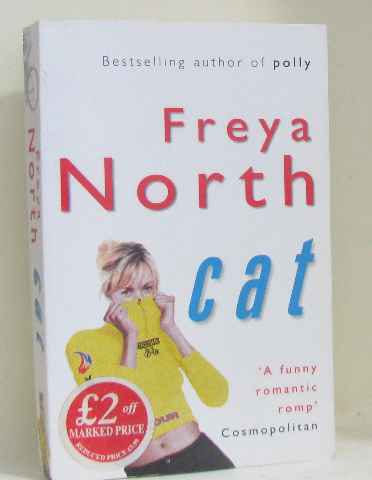
Arrow Books Ltd 2000 448 pages 19x13x3cm. 2000. Broché. 448 pages.
Reference : 165390
ISBN : 9780099278351
Bon Etat
Bookseller's contact details
Un Autre Monde
M. Emmanuel Arnaiz
07.69.73.87.31
Payment mode
Sale conditions
Conformes aux usages de la librairie ancienne.
5 book(s) with the same title
Die gegenwärtige Situation in der Quantenmechanik I-III [All]. (The Present Situation in Quantum Mechanics). - [SCHRÖDINGER'S CAT]
Springer, Berlin, 1935. 4to. (256x186mm). Pages 807-812 823-828" 844-849 from volume 23 of 'Die Naturwissenschaften'. Bound together in recent attractive marbled boards (Hanne Jensen). Leather title with gilt lettering on front board. A fine and clean copy.
First edition and first announcement of Schrödinger's famous reply to the EPR-paradox (also known as Schrödinger's Cat). When in May 1935 Einstein, Podolsky and Rosen published the so-called EPR-paper in ""Physical Review"", they set out to demonstrate that the Copenhagen interpretation of quantum mechanics could not constitute a complete description of nature. The EPR-article prompted a number of responses, e.g. from Bohr, the co-founder of the Copenhagen School, who began writing his response immediately after the publication of the Physical Review article. It is this debate that Schrödinger participates in with his seminal paper on ""The Present Situation in Quantum Mechanics"", in which he presents what is now famously known as Schrödinger's Cat. Schrödinger's Cat is the name of the thought experiment that Schrödinger develops in this article and that was intended as a discussion of the EPR article.After the publication of the EPR article, Einstein and Schrödinger had begun an exchange of letters on the subject of the possibility of quantum mechanics, as interpreted by the Copenhagenists, representing reality. During this exchange of letters, Schrödinger had been inspired by Einstein's view of the problem of applying the Copenhagen interpretation of Quantum mechanics to everyday objects. But Schrödinger, in his response, took his illustration of the absurdity of the interpretation and the incompleteness of quantum mechanics a step further" he applied it to a living entity, namely a cat. Schrödinger imagines a sealed box containing a cat, a bottle of poison, a radioactive source, a Geiger counter and a hammer. When the Geiger counter detects radiation, a mechanism is switched on that makes the hammer fall the hammer breaks the bottle, and the poison kills the cat. Because it is random, when the Geiger counter will detect radiation, and because in Quantum mechanics, physical conditions are described with the aid of a wave-function that explains all possible conditions of the system, Quantum mechanics, according to the Copenhagen interpretation, would come to the conclusion that the cat in the box is both living and dead, at the same time (the wave function is made up of a superposition of the two conditions -the cat being living and the cat being dead-" the two positions collapse into one, as soon as the system is interpreted as consisting of only one condition -either dead or living cat-, with the sole possible conclusion that the cat is both). Due to Heisenberg and Bohr's independent interpretation of Quantum theory (the ""Copenhagen interpretation), Quantum theory had in 1927 developed in a direction unforeseen by Schrödinger. ""Schrödinger was ""concerned and disappointed"" that this ""transcendental, almost physical interpretation of the wave phenomena"" had become the ""almost universally accepted dogma."""" (D.S.B. XII, p. 221). His most famous and widely used attack on this interpretation was that of ""Schrödinger's Cat"". This paradox of the dead-and-alive cat vigorously illustrated the absurdity of quantum mechanics and what was necessary to describe the states within this system. The thought experiment of Schrödinger's cat turned out to be hugely influential, and has become a standard paradox within both physics and philosophy.

Die gegenwärtige Situation in der Quantenmechanik I-III [All]. (The Present Situation in Quantum Mechanics). - [SCHRÖDINGER'S CAT]
Berlin, Springer, 1935. Royal8vo. Bound in recent half cloth with gilt lettering to spine. In ""Die Naturwissenschaften"", Vol 23, 1935. Minor wear to extremities, otherwise a very fine and clean copy. Pp. 807-812" Pp. 823-828" Pp. 844-849. [Entire volume: XIX, (1), 870, 8 pp.].
First edition and first announcement of Schrödinger's famous reply to the EPR-paradox, arguably the most celebrated and influential illustration of the paradoxes of quantum theory also known as Schrödinger's Cat. When in May 1935 Einstein, Podolsky and Rosen published the so-called EPR-paper in ""Physical Review"", they set out to demonstrate that the Copenhagen interpretation of quantum mechanics could not constitute a complete description of nature. The EPR-article prompted a number of responses, e.g. from Bohr, the co-founder of the Copenhagen School, who began writing his response immediately after the publication of the Physical Review article. It is this debate that Schrödinger participates in with his seminal paper on ""The Present Situation in Quantum Mechanics"", in which he presents what is now famously known as Schrödinger's Cat. Schrödinger's Cat is the name of the thought experiment that Schrödinger develops in this article and that was intended as a discussion of the EPR article.After the publication of the EPR article, Einstein and Schrödinger had begun an exchange of letters on the subject of the possibility of quantum mechanics, as interpreted by the Copenhagenists, representing reality. During this exchange of letters, Schrödinger had been inspired by Einstein's view of the problem of applying the Copenhagen interpretation of Quantum mechanics to everyday objects. But Schrödinger, in his response, took his illustration of the absurdity of the interpretation and the incompleteness of quantum mechanics a step further" he applied it to a living entity, namely a cat. Schrödinger imagines a sealed box containing a cat, a bottle of poison, a radioactive source, a Geiger counter and a hammer. When the Geiger counter detects radiation, a mechanism is switched on that makes the hammer fall the hammer breaks the bottle, and the poison kills the cat. Because it is random, when the Geiger counter will detect radiation, and because in Quantum mechanics, physical conditions are described with the aid of a wave-function that explains all possible conditions of the system, Quantum mechanics, according to the Copenhagen interpretation, would come to the conclusion that the cat in the box is both living and dead, at the same time (the wave function is made up of a superposition of the two conditions -the cat being living and the cat being dead-" the two positions collapse into one, as soon as the system is interpreted as consisting of only one condition -either dead or living cat-, with the sole possible conclusion that the cat is both). Due to Heisenberg and Bohr's independent interpretation of Quantum theory (the ""Copenhagen interpretation), Quantum theory had in 1927 developed in a direction unforeseen by Schrödinger. ""Schrödinger was ""concerned and disappointed"" that this ""transcendental, almost physical interpretation of the wave phenomena"" had become the ""almost universally accepted dogma."""" (D.S.B. XII, p. 221). His most famous and widely used attack on this interpretation was that of ""Schrödinger's Cat"". This paradox of the dead-and-alive cat vigorously illustrated the absurdity of quantum mechanics and what was necessary to describe the states within this system. The thought experiment of Schrödinger's cat turned out to be hugely influential, and has become a standard paradox within both physics and philosophy.
Die gegenwärtige Situation in der Quantenmechanik I-II. (The Present Situation in Quantum Mechanics). - [SCHRÖDINGER'S CAT]
Berlin, Springer, 1935. Royal8vo. As extracted from ""Die Naturwissenschaften"", vol. 23, 1935. No backstrip. Fine and clean. Pp. 807-812"" 823-828.
First edition and first announcement of Schrödinger's famous reply to the EPR-paradox (also known as Schrödinger's Cat). When in May 1935 Einstein, Podolsky and Rosen published the so-called EPR-paper in ""Physical Review"", they set out to demonstrate that the Copenhagen interpretation of quantum mechanics could not constitute a complete description of nature. The EPR-article prompted a number of responses, e.g. from Bohr, the co-founder of the Copenhagen School, who began writing his response immediately after the publication of the Physical Review article. It is this debate that Schrödinger participates in with his seminal paper on ""The Present Situation in Quantum Mechanics"", in which he presents what is now famously known as Schrödinger's Cat. Schrödinger's Cat is the name of the thought experiment that Schrödinger develops in this article and that was intended as a discussion of the EPR article.After the publication of the EPR article, Einstein and Schrödinger had begun an exchange of letters on the subject of the possibility of quantum mechanics, as interpreted by the Copenhagenists, representing reality. During this exchange of letters, Schrödinger had been inspired by Einstein's view of the problem of applying the Copenhagen interpretation of Quantum mechanics to everyday objects. But Schrödinger, in his response, took his illustration of the absurdity of the interpretation and the incompleteness of quantum mechanics a step further" he applied it to a living entity, namely a cat. Schrödinger imagines a sealed box containing a cat, a bottle of poison, a radioactive source, a Geiger counter and a hammer. When the Geiger counter detects radiation, a mechanism is switched on that makes the hammer fall the hammer breaks the bottle, and the poison kills the cat. Because it is random, when the Geiger counter will detect radiation, and because in Quantum mechanics, physical conditions are described with the aid of a wave-function that explains all possible conditions of the system, Quantum mechanics, according to the Copenhagen interpretation, would come to the conclusion that the cat in the box is both living and dead, at the same time (the wave function is made up of a superposition of the two conditions -the cat being living and the cat being dead-" the two positions collapse into one, as soon as the system is interpreted as consisting of only one condition -either dead or living cat-, with the sole possible conclusion that the cat is both). Due to Heisenberg and Bohr's independent interpretation of Quantum theory (the ""Copenhagen interpretation), Quantum theory had in 1927 developed in a direction unforeseen by Schrödinger. ""Schrödinger was ""concerned and disappointed"" that this ""transcendental, almost physical interpretation of the wave phenomena"" had become the ""almost universally accepted dogma."""" (D.S.B. XII, p. 221). His most famous and widely used attack on this interpretation was that of ""Schrödinger's Cat"". This paradox of the dead-and-alive cat vigorously illustrated the absurdity of quantum mechanics and what was necessary to describe the states within this system. The thought experiment of Schrödinger's cat turned out to be hugely influential, and has become a standard paradox within both physics and philosophy.
1- ROUSSEAU (Jean-Jacques). Discours sur l'origine et les fondemens de l'inégalité parmi les hommes. Amsterdam, Marc-Michel Rey, 1755. lxx, (2), 262, (2) p. d'errata et "avis pour le relieur", vignette de titre, planche gravée en frontispice.2- [ROUSSEAU et LE CAT (Claude Nicolas)]. Discours qui a remporté le prix à l'Académie de Dijon, en l'année 1750. Sur cette Question posée par la même Académie: Si le rétablissement des Sciences & des Arts a contribué à épurer les moeurs. Par un Citoyen de Genève [J.-J. ROUSSEAU]. Nouvelle édition, Accompagnée de la Réfutation de ce Discours, par les Apostilles critiques de l'un des Académiciens Examinateurs qui a refusé de donner son suffrage à cette Pièce (...) [Cl.-N. LE CAT]. Londres, Edouard Kelmarneck [i.e. Rouen], 1751. xij, 132 p. faux-titre et titre inclus, grande vignette en bandeau, planche frontispice gravée.3- ROUSSEAU. Lettre de J.J. Rousseau, de Genève, à M. Grimm, Sur la réfutation de son Discours, par M. Gautier (...). S.l.n.d. [i.e. Paris, Pissot, 1751]. 31 p., (1) p. dapprobation.
3 ouvrages reliés en un volume in-8 (200 x 121 mm), plein veau brun de l'époque, dos à nerfs orné de caissons fleuronnés et cloisonnés, pièces de titre de maroquin bordeaux, tranches rouges.
1- Edition originale de premier tirage comportant les 3 cartons (p. LXVII, 111 et 139) et la correction de l'éditeur à la plume p. 11 (accent aigu sur "conformé").Frontispice: "Il retourne chez ses Égaux" dessiné par Eisen, gravé par Sornique, fleuron-vignette de titre par Simon Fokke et fleuron en tête de la dédicace aux armes de la République de Genève, également signé par Fokke."Oeuvre source, à partir de laquelle on peut faire commencer toute la réflexion moderne sur la nature de la société" (J. Starobinski).(Dufour, n°55. Gagnebin, III, p. 1862. Tchemerzine-Scheler, V, 532a).2- Première édition de cette édition contenant lintégralité du premier discours de Rousseau accompagné de sa réfutation juxtalinéaire, point par point, par Claude Nicolas Le Cat.Médecin et chirurgien auteur d'importantes découvertes, fondateur et Secrétaire perpétuel de lacadémie de Rouen, Le Cat réfute, le premier, les thèses de Rousseau.En homme des Lumières, il défend, contre Rousseau, les effets des sciences et des arts comme facteurs de progrès et affirme sa foi en la perfectibilité du genre humain. Le texte est suivi d'une réponse de Le Cat à la réplique que Rousseau avait fait paraître dans le "Mercure" de septembre 1751 (p. 95-124).Vignette-bandeau dessinée par Le Lorrain et gravée par Fessard. Bien complet de planche frontispice gravée par Jacques, qui manque souvent: "Satire, tu ne le connais pas". L'adresse est fictive, l'ouvrage est imprimé à Rouen, d'après Weller.(Gagnebin III, 1856. Dufour, 17. Conlon, 'Ouvrages relatifs à J.-J. Rousseau, n°1).3- Edition originale de premier tirage, avec lapprobation signée de Remond de Sainte-Albine datée du 23 octobre 1751, état dorigine avant la réimpression des pages 23 à 26 voulue par Rousseau. Titre de départ. Titre courant: "Lettre à M. Grimm". Ladresse est restituée d'après le "Mercure de France" de décembre 1751 et la permission tacite accordée à Pissot.La réponse de Rousseau à la réfutation de son "Discours" sur les Sciences & des Arts que Joseph Gautier, professeur à Nancy, avait publié dans le "Mercure de France" d'octobre 1751.(Dufour, I, p. 27-28, n°26).Papillon portant une signature ex-libris ancienne apposé dans la marge inférieure du deuxième texte. Timbre à froid en coin supérieur du premier.Traces de restaurations. Cuirs des plats légèrement "écaillés".Bon exemplaire, relié à lépoque.

Reference : albab37ac2afa7538bd
Elmirs cat. A cat-cat. In Russian /Kotlyar Elmira. U kota-kotofeicha.
Elmirs cat. A cat-cat. In Russian /Kotlyar Elmira. U kota-kotofeicha. Artist V.Malinkovsky M. Kalysh 1975. We have thousands of titles and often several copies of each title may be available. Please feel free to contact us for a detailed description of the copies available. SKUalbab37ac2afa7538bd.

