 Write to the booksellers
AULU-GELLE
Noctes Atticae. Editio nova et prioribus omnibus docti hominis cura multo castigatior.
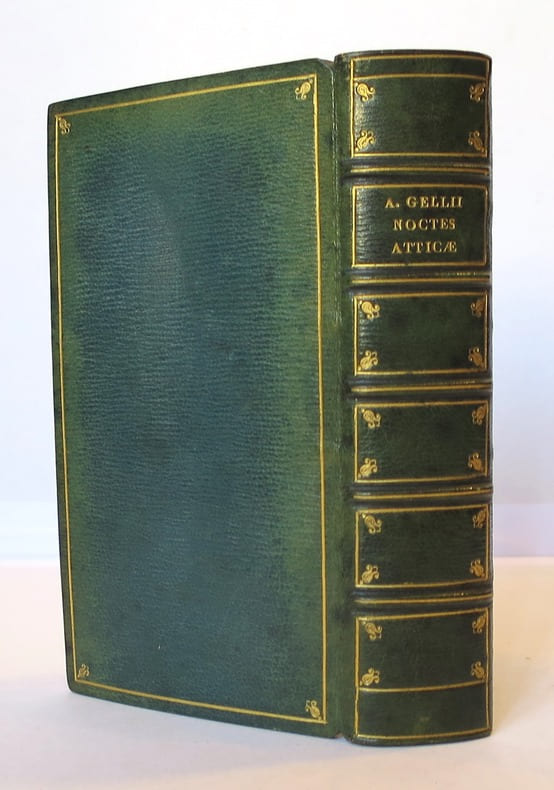
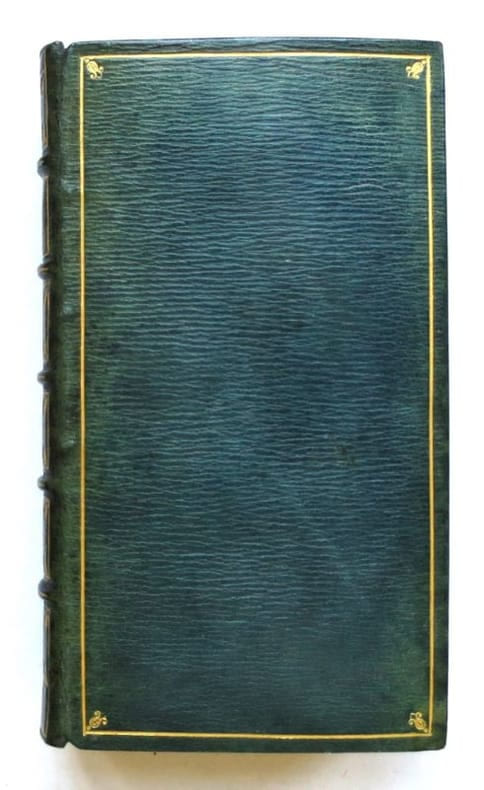
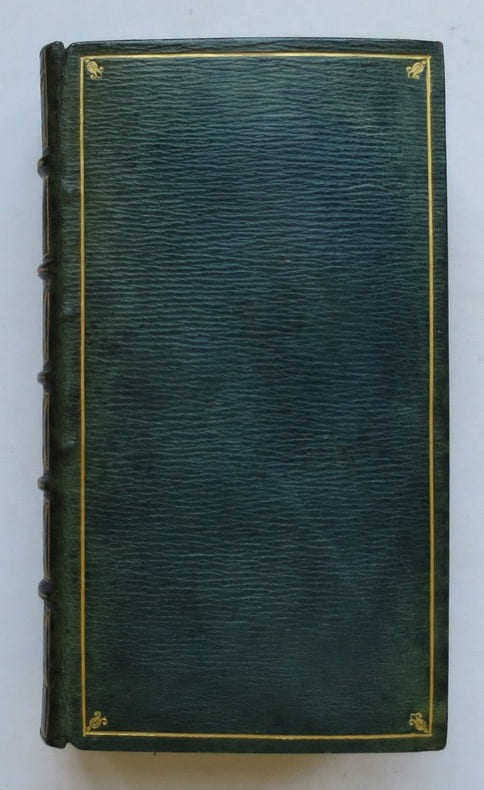
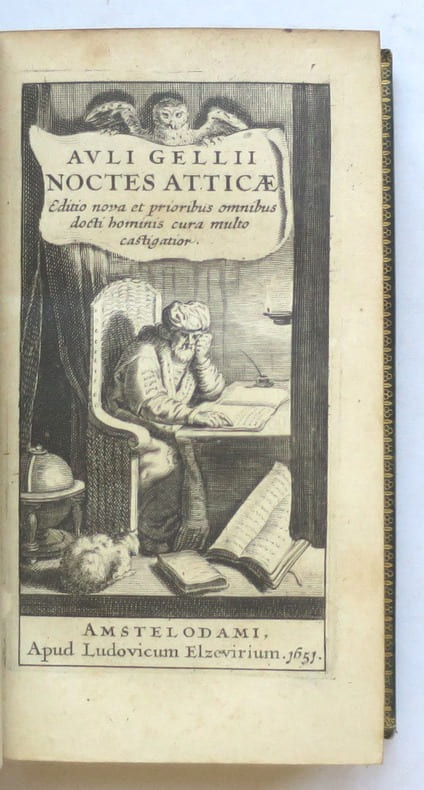
Amsterdam Louis Elzevier 1651 Fort volume petit in-12 maroquin bleu vert, dos à nerfs orné, filet doré encadrant les plats avec fleurons aux angles, dentelle dorée intérieure et sur les coupes, tranches dorées. 24 feuillets non chiffrés, 498 pp. et 62 feuillets non chiffrés, le dernier blanc (Muller). Plats un peu passés.
Reference : 14730
Excellente et rare édition, dont il est difficile de trouver des exemplaires en aussi bonne condition. Le recueil d'Aulu-Gelle est précieux pour l'histoire de la civilisation et de la littérature du Bas-Empire. Il contient un grand nombre d'observations critiques sur plusieurs auteurs, des anecdotes historiques et biographiques, des réflexions sur la morale, la grammaire, les antiquités, la philosophie, la physique. Il renferme également un grand nombre de fragments d'anciens auteurs dont on n'a plus les ouvrages. Beau titre-frontispice gravé.Pieters, p.203, n°8. Rahir, 1145.
Bookseller's contact details
Librairie Jeanne Laffitte
Mme Jeanne Laffitte
25, Cours d'Estienne d'Orves
13001 Marseille
France
04 91 59 80 49
Payment mode


Sale conditions
Nos conditions sont conformes aux usages de la librairie ancienne et moderne.
1 book(s) with the same title
Auli Gellii Noctes Atticae. Editio nova et prioribus omnibus docti hominis cura multo castigatior.
Amsterdam (Amstelodami), Apud Ludovicum Elzevirium, 1651.
12mo. (XLVIII),498,(122 index) p. 19th cent. marbled boards. 13 cm (Ref: Neue Pauly, Suppl. 2, p. 261; Willems 1127: 'Édition fort jolie et qui passe pour très correcte'; Berghman 2065 ; Rahir 1145; Graesse 3,46; Ebert 8287; Dibdin 1,340/41; Fabricius/Ernesti 3,10: 'emendatissima editio'; Schweiger 2,378: 'Neue, werthvolle Recens. nach Handschr. von Jo.Frd. Gronovius'; Brunet 2,1524: 'Jolie édition') (Details: 5 thongs laced through the joints; engraved title, depicting a learned writer at work under the light of an oil lamp) (Condition: Cover worn at the extremities; marbled paper on the back scuffed; lower corner of a few leaves vaguely waterstained; without the last two blank leaves. Paper somewhat yellowing) (Note: A favorite author of the Renaissance. The Latin author Aulus Gellius, ca. 125-180 AD, was never counted as a major author in antiquity, nor later. His only work 'Noctes Atticae' or 'Attic Nights', is a miscellany that 'ranges from literature to law, from wondrous tales to moral philosophy; one of his favorite topics is the Latin language'. (...) The exposition, in a mildly archaizing but never difficult Latin, often takes the form of dialogues with or between culturally eminent persons whom Gellius had known'. It derives its name from the fact of its having been written during the long nights of a winter which the author spent in Attica as a young itinerant student. The Noctes Atticae were exploited by pagans and Christians alike in late antiquity. In medieval florilegia he is much quoted for piquant tales and moral sentiments. 'From Petrarch onward Gellius became a favorite author of the Renaissance'. 'More than 100 manuscripts were copied'. He was used as a valuable source of information on the Latin language, and had preserved numerous quotations from lost authors, which were presented with grace and elegance. Gellius became a model for the 'Miscellanea' of the Italian humanist Angelo Poliziano. 'In the 18th century, however, new canons of elegance caused his style to seem less attractive, and compilation sank to minor merit' (Quotations from 'The Classical Tradition', Cambr. Mass., 2010, p. 386/7) The 20 books of the Noctes Atticae were ably edited 'cura docti hominis'. This learned editor was the Dutch classicist of German origin Johann Friedrich Gronov, or Gronovius, 1611-1671, He was the successor of Heinsius at the University of Leiden, and he was influenced by Vossius, Grotius, Heinsius & Scriverius. His editions mark an epoch in the study of Livy, of Seneca, Tacitus & Gellius. (Sandys, History of Classical Scholarship, 2,321) (Provenance: On the front pastedown in ink the name of 'Berend van Marle' or 'Barend van Marle', and in pencil the name of a collector of Elzeviers 'J. van Dijck') (Collation: * - 2*-12; A - 2C-12 (lacking the blanks 2C11 & 2C12) (Photographs on request)

