 Write to the booksellers
RAMSAY ANDRE-MICHEL. (CHEVALIER DE. 1693-1743).
LES VOYAGES DE CYRUS, AVEC UN DISCOURS SUR LA MYTHOLOGIE.
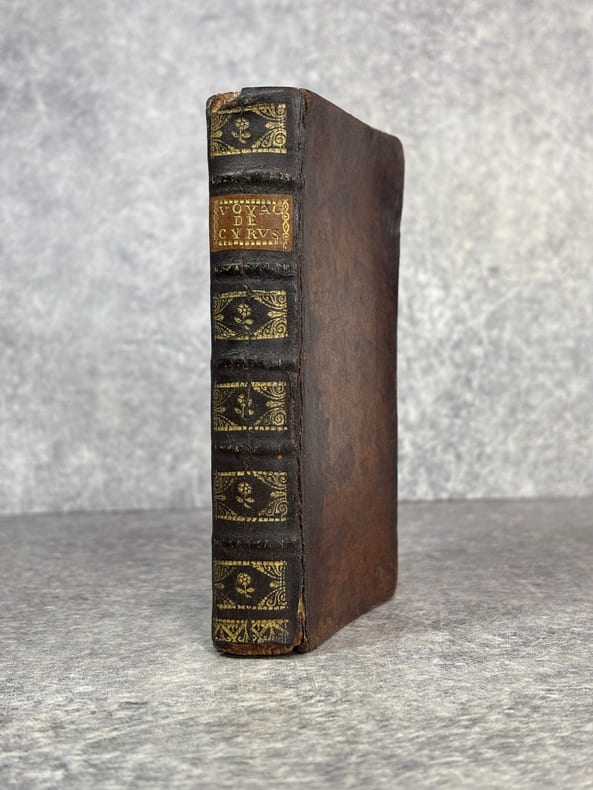
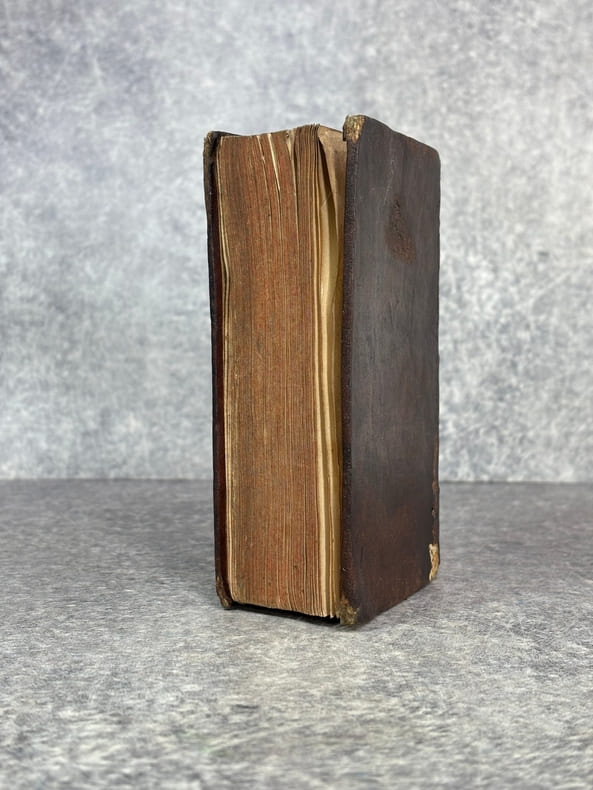
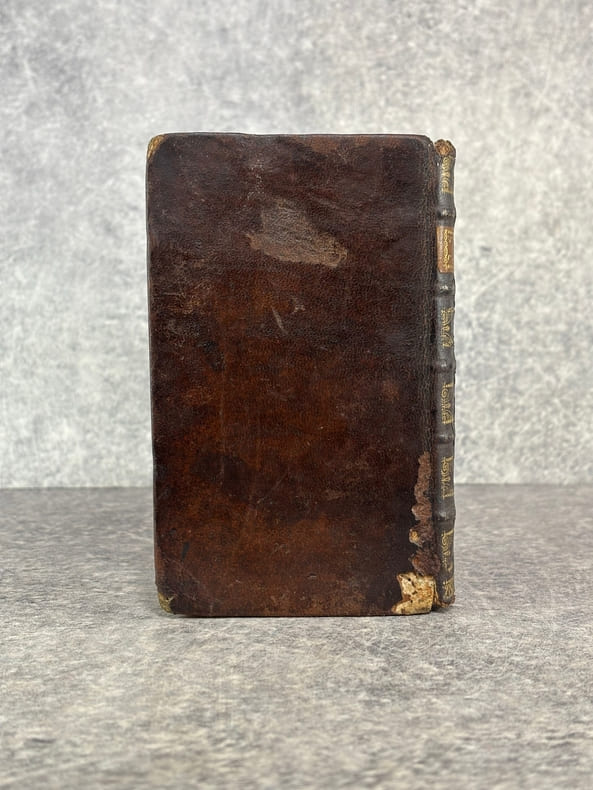
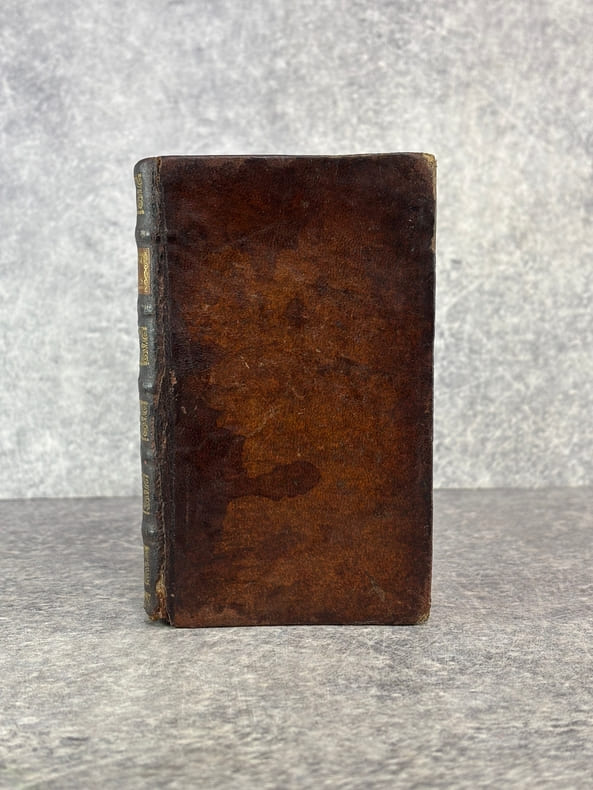
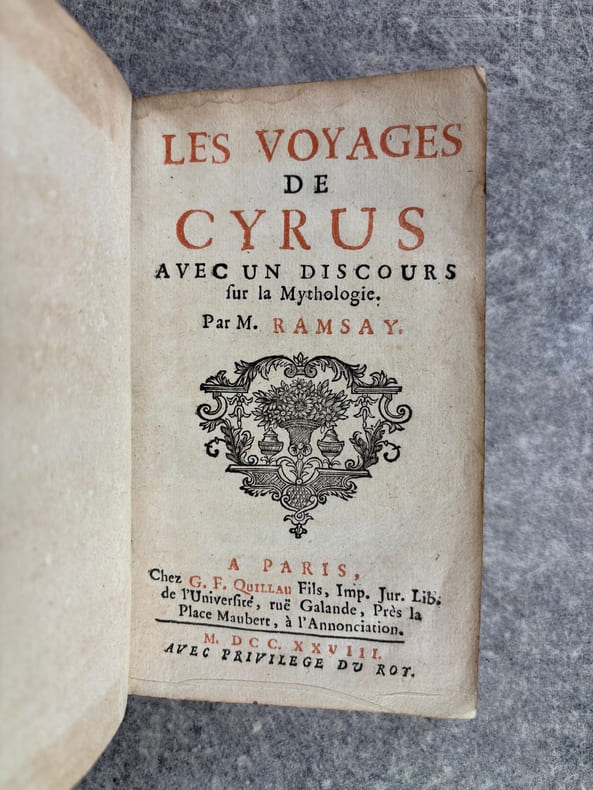
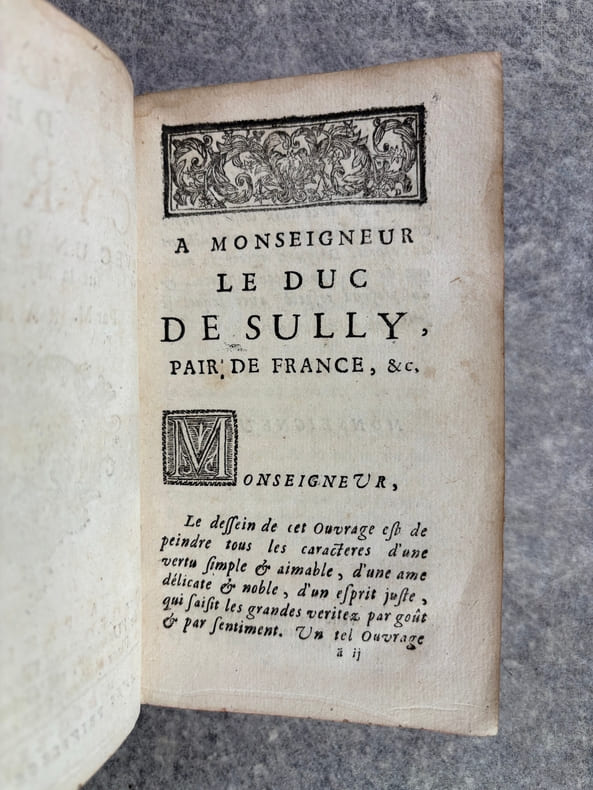
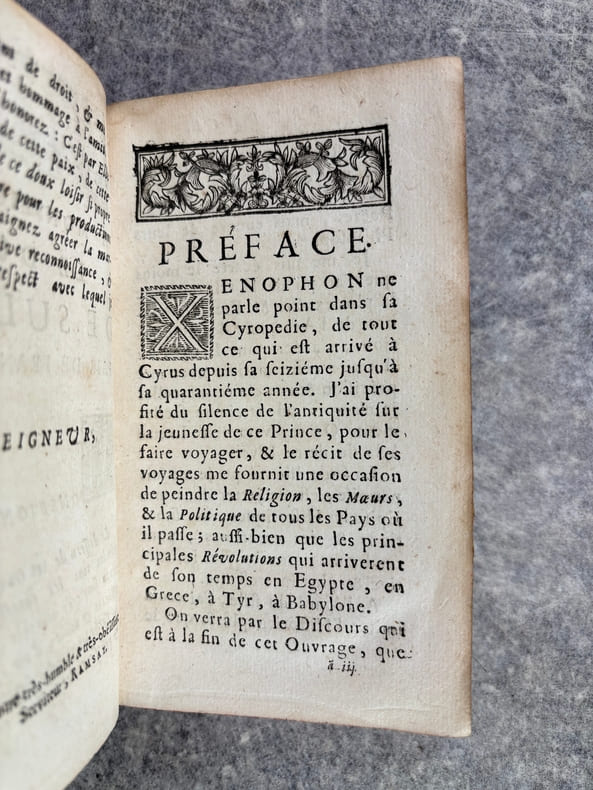
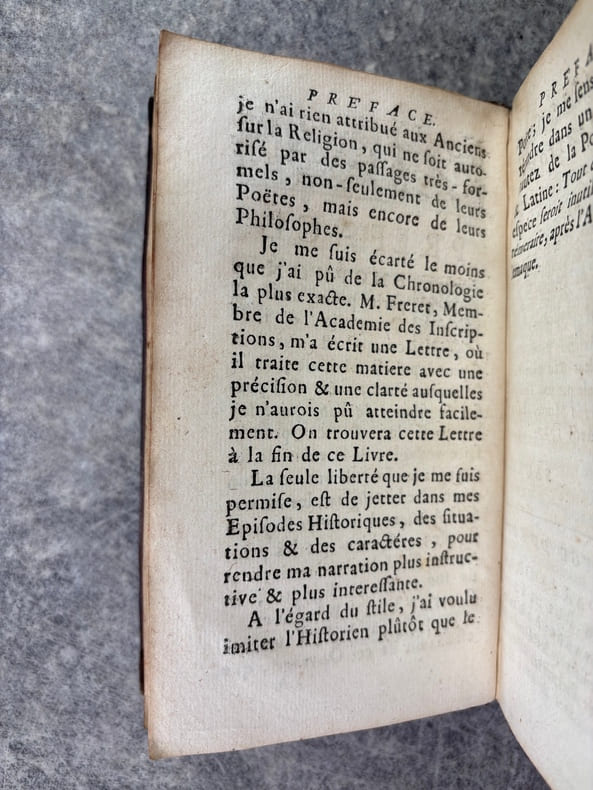
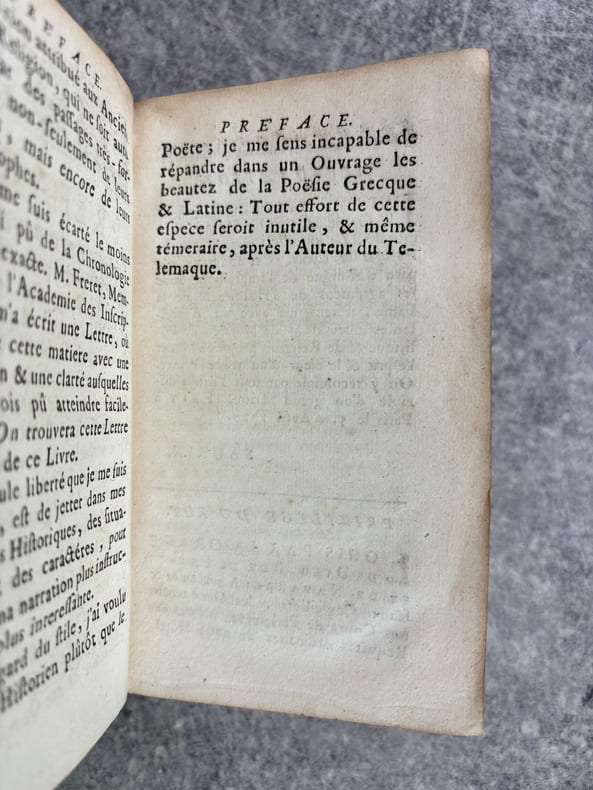
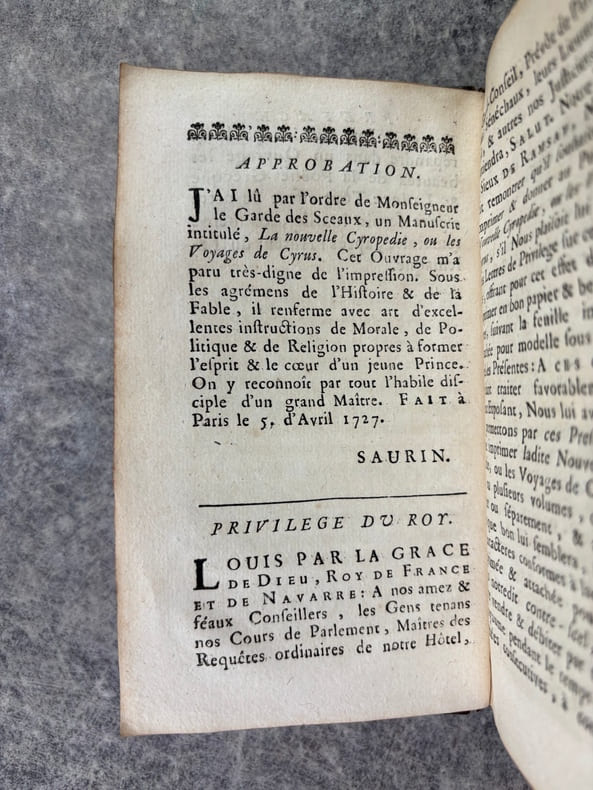
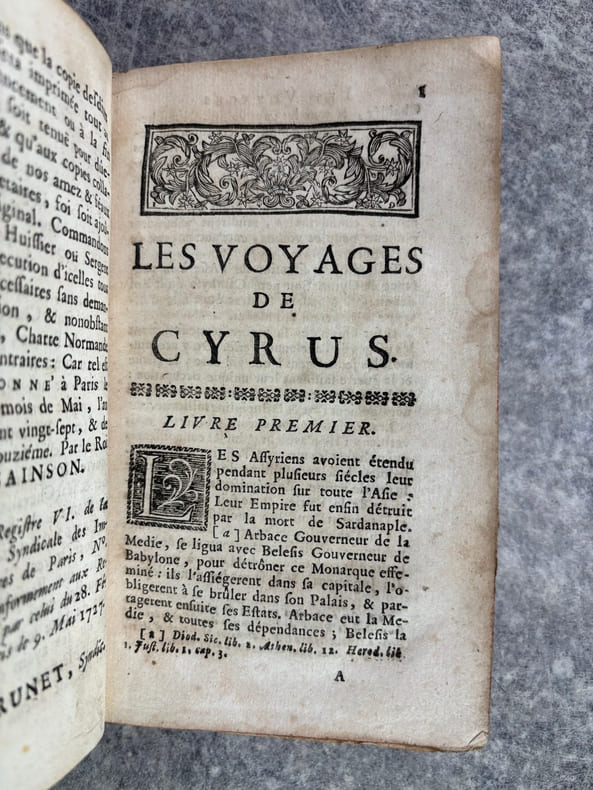
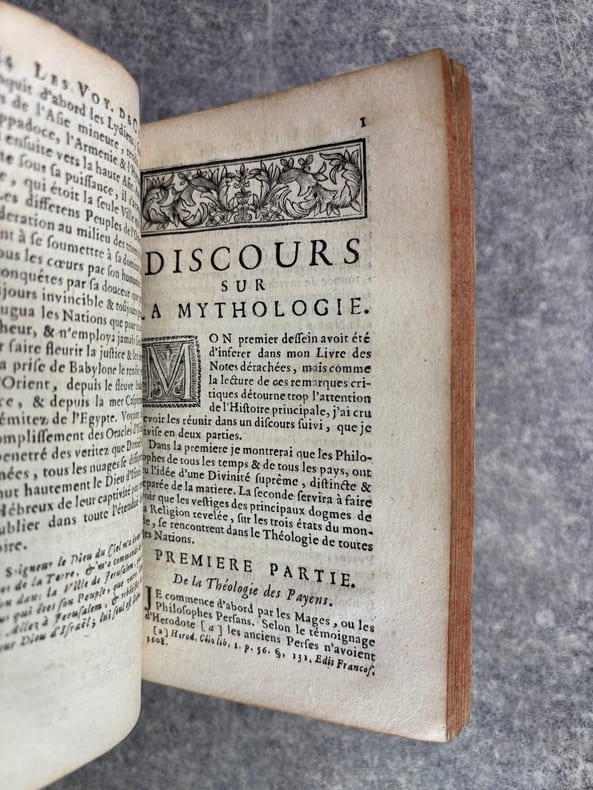
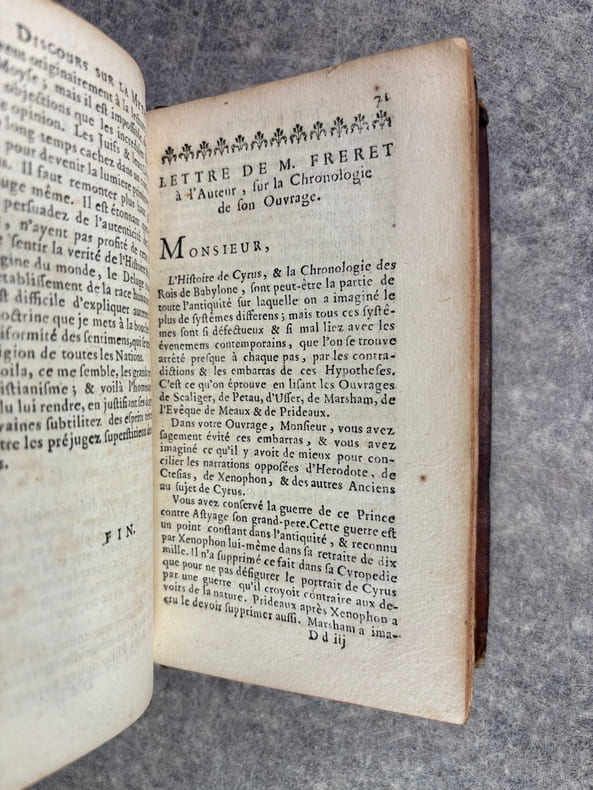
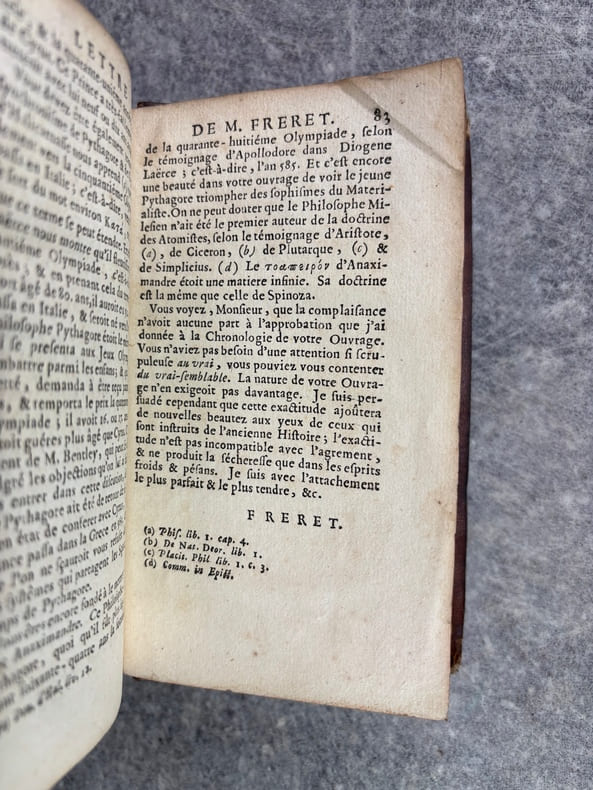
A PARIS. CHEZ G. F. QUILLAU FILS. 1728. IN-12 (10 X 15,5 X 3 CENTIMETRES ENVIRON) DE (12) + 344 ET 83 PAGES, RELIURE D'EPOQUE PLEIN VEAU BRUN, DOS A CINQ NERFS ORNE DE CAISSONS A FLEURONS DORES, TITRE DORE SUR ETIQUETTE MAROQUIN HAVANE, TRANCHES ROUGES. QUELQUES DEFAUTS EXTERIEURS, SINON BON ETAT INTERIEUR.
Reference : 866
Bookseller's contact details
Librairie du Château de Capens
M. Xavier Ottavi
Château de Capens
31410 Capens
France
05 61 87 90 67
Payment mode
Sale conditions
au comptant à la commande<br />
5 book(s) with the same title
Les Voyages de Cyrus, Avec un Discours sur la Mythologie.
Amsterdam, Pierre & Mortier, 1728. 8vo. In contemporary vellum. Light wear to extremities and internally a few leaves with miscolouring. An overall nice copy. (8), 187, (3), 180 pp. + 2 frontispieces.
Second edition of Ramsay's work on an imaginary tour of the ancient world undertaken by Cyrus, founder of the Persian Empire. He meets famous figures such as Pythagoras and Zoroaster who give him lessons on how a wise leader should act. The work because very popular and was published in numerous editions.""Les Voyages de Cyrus was first published in 1727 and became a bestseller in France and then in Britain after being translated into English by Nathaniel Hooke, nephew of the Jacobite agent of the same name. Ramsay’s work imagines the travels of Cyrus the Great, the 6th-century BC founder of the first Persian Empire. Cyrus’s early life had been fictionalised by Xenophon of Athens as a way to promote his own political and moral philosophy and Ramsay uses this device to drive his own narrative. The work is also strongly influenced by Archbishop Fénelon’s Les aventures de Télémaque, fils d’Ulysse (The adventures of Telemachus, son of Ulysses). Though Fénelon’s work appears to be set in the time of Homer’s heroes it was immediately seen as a scathing attack on the autocratic rule of Louis XIV and the self-indulgent nature of aristocratic society. Ramsay also draws on the ancient Greek historian Herodotus, notably for a grisly event towards the end of Book 1."" (National Library of Scotland).

LES VOYAGES DE CYRUS, AVEC UN DISCOURS SUR LA MYTHOLOGIE, TOME II
Chez Gabriel-François Quillau Fils, Paris. 1727. In-12. Relié demi-cuir. Bon état, Couv. convenable, Dos satisfaisant, Intérieur frais. 224 + 188 pages. Quelques bandeaux, lettrines et culs-de-lampe ornés en noir et blanc. Tranche mouchetée. Titre, tomaison, fleurons, bandeaux et filets dorés sur le dos. Dos légèrement frotté.. . . . Classification Dewey : 94.3-Livres anciens XVIII ème
Avec Privilège du Roy. Livres VI, VII, VIII. 'Cyrus ne fut pas plutôt arrivé en Crète, qu'il se hâta d'aller à Gnossus Capitale de cette Isle, où l'on admire le fameux Labyrinthe de Dedale, & le superbe Temple de Jupiter Olympien: Ce Dieu y est représenté sans oreilles, (...) Classification Dewey : 94.3-Livres anciens XVIII ème

LES VOYAGES DE CYRUS, avec un discours sur la mythologie.
Paris, Quillau, 1728, 1 pleine basane d'époque, dos à nerfs, orné, tranches rouge, coiffes manquantes, coins émoussés. in-8, titre, 4 ff.n.c. (dédicace au duc de Sully, préface), 373 et 126 pp., page de titre restauré, manque sur la page de garde ;
En fin d'ouvrage, lettre de M. Freret à l'auteur, sur la chronologie de son ouvrage.
Les voyages de Cyrus, avec un discours sur la mythologie.
A Luxembourg, Chez André Chevalier, 1728. 2 tomes en 1 volume in-8 de [8]-323; 114 pages, pleine basane havane, dos à nerfs orné, pièce de titre maroquin bordeaux.
De la bibliothèque de D. Puille, avec son ex-libris. Coins frottés. Fresch, Bibliographie de la Franc-Maçonnerie, 1124. Du 26 septembre au 5 octobre, le libraire est absent il prendra connaissance de vos commandes dès le 6 octobre au matin. Et durant cette période, l'horaire de fermeture sera 17h30 du lundi au vendredi. – From September 26 to October 5, the bookseller is absent; he will take note of your orders as early as the morning of October 6. And during this period, the closing time will be 5:30 p.m. from Monday to Friday.
Les voyages de Cyrus, avec un discours sur la mythologie.
A Luxembourg, Chez André Chevalier, 1728. 2 tomes en 1 volume in-8 de [8]-323; 114 pages, demi basane brune, dos lisse orné de filets dorés, supra-libros Polier Vernand.
Bel exemplaire en provenance de la bibliothèque de Jean-Henri Polier (de Vernand), Lieutenant baillival de Lausanne, il siégea aux Conseils des Soixantes et des Deux-Cents. Il fut président de la Société économiques de Lausanne. Du 26 septembre au 5 octobre, le libraire est absent il prendra connaissance de vos commandes dès le 6 octobre au matin. Et durant cette période, l'horaire de fermeture sera 17h30 du lundi au vendredi. – From September 26 to October 5, the bookseller is absent; he will take note of your orders as early as the morning of October 6. And during this period, the closing time will be 5:30 p.m. from Monday to Friday.

