 Write to the booksellers
Centre POMPIDOU Moet Hennessy
A TABLE
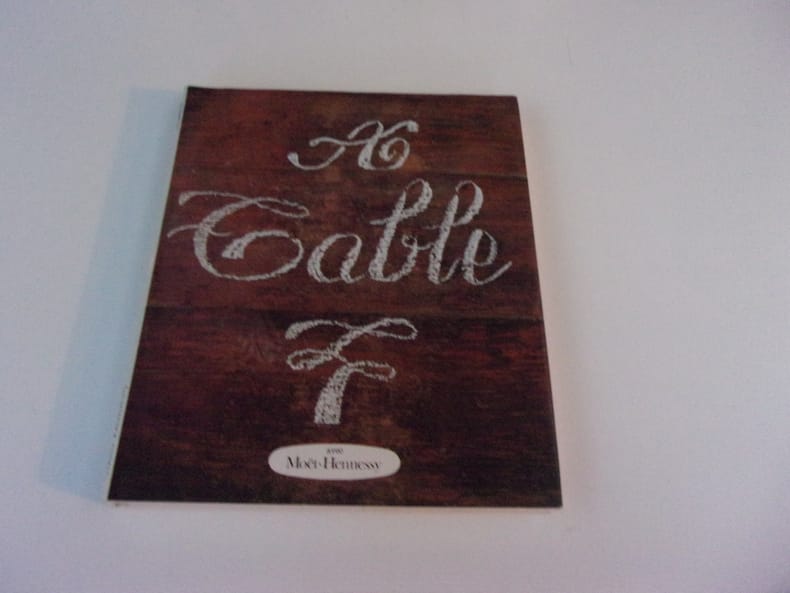
exposition. Centre Pompidou. 27 novembre 1986 9 mars 1987.format moyen, cartonné.192 pages illustrations n/b et couleurs. Bon état. Une expédition par Mondial Relay pourra vous etre proposée 1986
Reference : 22253
Bookseller's contact details
Occasion de lire
M. Vincent Huchette
1032 rue du grand pont
62140 Aubin Saint Vaast
France
09 64 01 66 55
Payment mode

Sale conditions
Les prix sont nets.le port est en plus. une expédition par Mondial Relay vous sera proposée. Expédition des ouvrages dans un emballage protecteur soigné des la réception du règlement par chèque, virement bancaire ou Paypal.
5 book(s) with the same title
Les horloges astronomiques et monumentales les plus remarquables de l'antiquité jusqu'à nos jours. Avec une préface par E. Esclangon. En appendice : table chronologique, table onomastique, table bibliographique.
Strasbourg, Chez l'auteur, 1931. 28 x 22 cm, 514 pp. Broché, en bon état, exemplaire non coupé. Nombreuses illustrations.
Alfred Ungerer, l'auteur de cet ouvrage, était fabricant d'horloges à Strasbourg. Il présente ici un répertoire le plus complet possible des horloges monumentales de France, Allemagne, Angleterre, Italie, Suisse, Amérique, Belgique, Pays-Bas, Tchécoslovaquie et Autriche.

Les Accessoires du Costume et du Mobilier depuis le Treizième jusqu'au milieu du Dix-Neuvième siècle. 3 volumes. Tome 1 : Bijouterie, bagues, bracelets, boucles d'oreilles, bijoux en acier et en fonte de Berlin, boutons, châtelaines, cachets, pommes de cannes, éventails, miroirs, escarcelles et sacs, boîtes et tabatières, coffrets, luminaires, objets en tôle vernie. Tome 2 : Outils et instruments de précision, bésicles, lunettes, lorgnettes, écritoires, horloges, montres, ciseaux, navettes, accessoires de fumeurs, ustensiles de table et de cuisine : couteaux, cuillers et fourchettes, bassinoires, mortiers, moulins à café, paniers, clavandiers. Tome 3 : Description détaillée des sujets figurés dans les planches en phototypie. Table analytique permettant de retrouver les renseignements contenus dans les textes ainsi que les documents figurés dans les planches. Table méthodique. Bibliographie.
Paris, Schemit, 1928. 33 x 25,5 cm, xxiv-200 pp., 201 à page 389 , et 393 à page 567. Trois volumes reliés demi-maroquin à coins, dos à nerfs, titres dorés, têtes dorées, couvertures conservées. Reliures signées Ad. Lavaux. Dos du tome I légèrement insolé, quelques traces de frottements et quelques épidermures sinon très beaux exemplaires. Ouvrage contenant 353 phototypies reproduisant plus de 3000 documents.
Le relieur Lavaux, Adrien, père, ancien contremaître chez Durvand puis chez Petitot. S'établit en 1910, 13 place Dauphine dans l'atelier tenu auparavant par Garaud. Mobilisé de 1914 à 1919, l'atelier est fermé durant cinq années. À sa réouverture il travaille pour Boucheron, Gustave Geoffroy, Rolan Dorgelès, Francis Carco... En 1930 il change de local et s'installe 16, place Dauphine dans un atelier créé en 1876. Décédé en 1937, son fils qui était son collaborateur depuis 1919 lui succède.
MUSEE NATIONAL DES ARTS ET TRADITIONS POPULAIRES
Reference : 18338
(1985)
ISBN : 2-7118-2030-0
Les Français et la table.
Paris, Réunion des musées nationaux, 1985 1 volume 15,5 x 20cm Broché sous couverture au 1er plat orné d'une vignette couleurs. 509p., 1feuillet; nombreuses illustrations en noir, vignettes et pleines pages, 8 planches couleurs. Bon état (plis marqués au dos et à la charnière supérieure).
Catalogue de l'exposition présentée en 1985-1986 au Musée national des arts et traditions populaires (Paris), organisée avec la collaboration de la Réunion des musées nationaux: 465 n°s avec notices et, pour certains, commentaires et photos, illustrant l'histoire des "manières de table", du repas dans la Gaule celtique au "plateau" du cosmonaute (mobilier et ustensiles, services et manières de table, préparation des repas, organisation des menus...), alternant avec des textes de divers auteurs (Zeev GOURARIER, Agnès BENOIT, Rémy GUADAGNIN, Olivier MEYER, Gabrielle DEMIANS, Catherine ARMINJON, etc); notes et références; bibliographie; expositions. Exemplaire complet de son petit papier d'erratum.
CHATEAUBRIAND (François-René de) / [DELANDINE DE SAINT-ESPRIT (Jérôme)].
Reference : 20146
(1831)
Oeuvres complètes de M. le vicomte de Chateaubriand - Tome XXVIII - Table analytique et raisonnée des matières, avec une notice sur la vie et les ouvrages de l'auteur.
Paris, Ladvocat, 1831 1 volume In-8° (13,5 x 21,7cm) Broché sous couverture ornée au dos, de motifs d'encadrement et d'une vignette sur les plats. 1 faux titre, 1 faux-titre illustré, 1 titre, 283p., 2 feuillets. Couverture salie, avec manque angulaire au 1er plat; rousseurs; non rogné, non coupé.
1ère édition du XXVIIIè et dernier volume des "Oeuvres complètes" de François-René de CHATEAUBRIAND (1768-1848) publiées en 1826-1831 chez Ladvocat, contenant la table des matières (titres des chapitres) et la "table analytique et raisonnée des matières" des 27 volumes de la collective, et une "Notice sur la vie et les ouvrages de M. le vicomte de Chateaubriand", par Jérôme DELANDINE DE SAINT-ESPRIT, bibliothécaire du château de Rambouillet (1787-1855). Exemplaire bien complet du faux-titre illustré d'une gravure de C.Thompson.
1-Ire Table de la Ire Race des Rois de France dite des Mérovingiens - 2-IIe Table de la Ire Race des Rois de France dite des Mérovingiens - 3-IIIe Table de la Ire Race des Rois de France dite des Mérovingiens - 1ere table de la IIe race des Rois de France dite des Carlovingiens,pour l'arbre généalogique des Rois de France - IIe Table de la IIe Race des Rois de France dite des Carlovingiens - Ire Table de la Troisième Race des Rois de France, dite des Capétiens - IIe Table de la 3e Race des Rois de France Qui contient la Branche Roiale dite des Valois - IIIe Table de la 3e race de Rois de France Qui contient la Branche d'Orléans-Valois - Table Généal. hist. et Chrônol. de la Maison Royale de Bourbon - Table généalogique et chronologique de la maison royale de Bourbon. 1765- Table des Rois de France depuis Pharamond ,premier roi de la Monarchie en 420 jusqu’à Louis XV dit le bien aimé- Rare ensemble de 10 planches gravées en grand format, imprimées à Nancy, complet
1765 P. Antoine, Imprimeur ordinaire du Roi, Nancy,1765-1767,10 planches gravées (tableaux) en feuilles, pli central grand format IN PLANO, : 1re Table de la Ire Race des Rois de France dite des Mérovingiens, dédiée à S.A. Sérénissime Monseigneur le Duc de Chartres, dessiné par Manouisse et Jeandon, Chez P. Antoine, Imprimeur ordinaire du Roi, Nancy, 1767, format 580 x 800 mm. - pli central,jaunissires traces de colle au dos. IIe Table de la Ire Race des Rois de France dite des Mérovingiens, dédiée à S.A. Sérénissime Monseigneur le Duc de Chartres, Chez P. Antoine, Imprimeur ordinaire du Roi, Nancy, 1767, format 550 x 780 mm. - pli central,jaunissires traces de colle au dos. IIIe Table de la Ire Race des Rois de France dite des Mérovingiens dédiée à S.A. Sérénissime Monseigneur le Duc de Chartres, dessiné par Manouisse et Jeandon, Chez P. Antoine, Imprimeur ordinaire du Roi, Nancy, 1767, format 550 x 785 mm. - pli central,jaunissires traces de colle au dos. 1ere table de la IIe race des Rois de France dite des Carlovingiens,dédiée à S.A. Sérénissime Monseigneur le Duc de Chartres, Chez P. Antoine, Imprimeur ordinaire du Roi, Nancy, 1767, format 550 x 790 mm. tache et mouillure en marge,pli central,jaunissires traces de colle au dos. IIe Table de la IIe Race des Rois de France dite des Carlovingiens,dédiée à S.A. Sérénissime Monseigneur le Duc de Chartres, Chez P. Antoine, Imprimeur ordinaire du Roi, Nancy, 1767, format 550 x 790 mm. - pli central,jaunissires traces de colle au dos. Ire Table de la Troisième Race des Rois de France, dite des Capétiens, dédiée à S.A. Sérénissime Monseigneur le Prince de Condé, Chez P. Antoine, Imprimeur ordinaire du Roi, Nancy, 1766, format 510 x 695 mm. - pli central,jaunissires traces de colle au dos. IIe Table de la 3e Race des Rois de France Qui contient la Branche Roiale dite des Valois, dédiée à S.A. Sérénissime Monseigneur le Prince de Condé, Chez P. Antoine, Imprimeur ordinaire du Roi, Nancy, 1766, format 530 x 740 mm. - pli central,jaunissires traces de colle au dos. IIIe Table de ma 3e race de Rois de France Qui contient la Branche d'Orléans-Valois, dédiée à S.A. Sérénissime Monseigneur le Prince de Condé, Chez P. Antoine, Imprimeur ordinaire du Roi, Nancy, 1766, format 505 x 675 mm - pli central,jaunissires traces de colle au dos. Table Généal. hist. et Chrônol. de la Maison Royale de Bourbon dédiée et présentée à S.A. Sérénissime Monseigneur le Prince de Condé, 1765, imprimé à Nancy par Dorvasy, 1765, Chez Thomas, Nancy, 1765, format 535 x 800 mm ,fente et manque en marge et au pli central,restaurable. Table des Rois de France depuis Pharamond ,premier roi de la Monarchie en 420 jusqu’à Louis XV dit le bien aimé- Nancy 1767,format 535 x 800 mm pli central,jaunissires traces de colle au dos,tache au milieu. Trés rare ensemble de 10 planches en grand format, imprimées à Nancy, Georges Henry, 1771?.complet dans l’etat
L'abbé LIONNOIS (1730-1806) naquit à Nancy.Il est connu pour son enseignement de la géographie, la chronologie et l'histoire au moyen de tableaux synoptiques.Lorsque l'atlas historique connu sous le nom de LESAGE parut en 1804 on donna de justes éloges à ce mode d'enseignements mais on on ignorait qu'il avait eu pour devancier l'abbé LIONNOIS. Après la publication coûteuse de son ouvrage, il se vit enlever le fruit de son travail par la banqueroute du libraire, Henry, qui prit la fuite en emportant en Russie presque toute l'édition de ces tableaux, ce qui fait que cet écrit est devenu très rare.les tableaux sont dus à divers imprimeurs de Nancy (P. Antoine, Thomas, Jeandon, Dorvasy). Remise de 20% pour toutes commandes supérieures à 200 €

