 Write to the booksellers
ROSENBERG Pierre TEMPERINI Renaud
CHARDIN
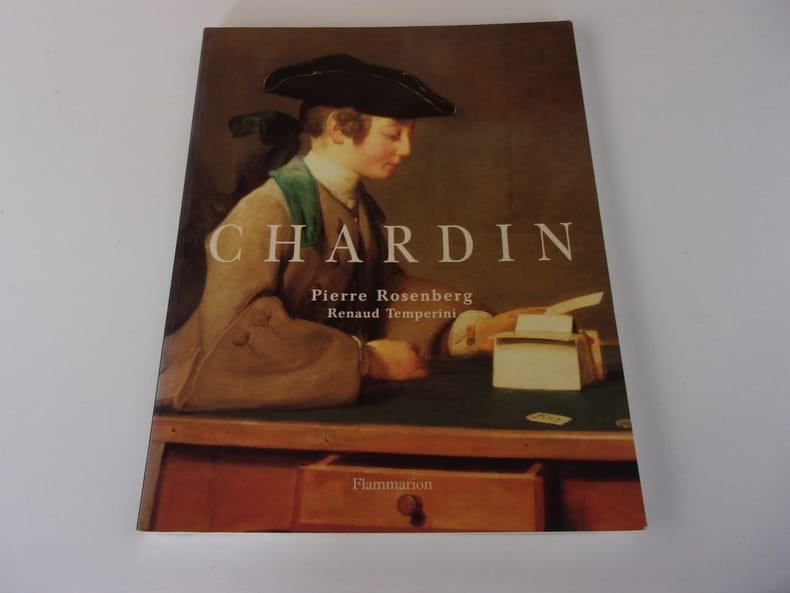
Grand format , couverture souple.191 pages. Reproductions couleurs. Bon état. Une expédition par Mondial Relay pourra vous être proposée 1999 Flammarion
Reference : 22038
Bookseller's contact details
Occasion de lire
M. Vincent Huchette
1032 rue du grand pont
62140 Aubin Saint Vaast
France
09 64 01 66 55
Payment mode

Sale conditions
Les prix sont nets.le port est en plus. une expédition par Mondial Relay vous sera proposée. Expédition des ouvrages dans un emballage protecteur soigné des la réception du règlement par chèque, virement bancaire ou Paypal.
5 book(s) with the same title
Voyages du Chevalier Chardin, en Perse, et autres Lieux de L'Orient. Enrichie de Figures en Taille-douce, qui représentent les Antiquités & les Choses remarquable du Païs. Nouvelle Edition. Vol. 1-3 (of 4 = ""Supplement""). l. Paris á Ispahan - 2. ...
A Amsterdam, 1735. 4to. 3 cont.full mottled calf. Raised bands, richly gilt backs. Extremities with small traces of use, slight weakening to parts of hinge, top of spine on vol. II with loss of leather ca 1x2 cm. Internally fine on good paper. 2 engr.frontisp. (with portraits), 3 engr.titlevign., 3 large engr. textvignettes. (12),390,(4),359,(4),437 pp. and 78 mostly large folded engraved plates (maps,plans,views etc.). - To this second edition was published a 4th volume which contains the author's previously published work ""Couronnement de Soliman III"" and extracts from the author's manuscript, this supplementary volume is not present here, but the 3 volumes contain the whole travel and all the plates belonging to these 3 volumes.
Rare second edition of Chardin's travels, regarded as being one of the finest works of early Western scholarship on Persia and the Near East in general. ""Thought to have been read by writers such as Montesquieu and Rousseau, Chardin's account stands apart from those of other travellers to the region (Caucasus) at this time through its awareness of cultural difference and relativity and in its desire to place accuracy above romanticism."" (Speake, The Literature of Travel and Exploration, 1).Chardin set out from Paris for Persia and India. He reached Ispahan 1673, spent four years in Persia, visited India and returned by the Good Hope in 1677. The first volume contains the trip from Paris to Isfahan, the second contains a particular description of Isfahan and the relation of the author's two voyages, from Ispahan to Bander-Abassi, the third contains a general description of the Persian empire and the particular descriptions of the sciences and arts which are in use therein, of political, military, and civil government.Born in Paris in a Hugenot (Protestant) family, Jean Chardin (1643-1713) undertook his travels to Persia because of his father's position as a jeweler and shareholder in the French East India Company. The younger Chardin set out in 1664, traveling through Turkey, the Black Sea, Georgia and Armenia. Soon after his arrival in Persia, he received a commission to create jewelry for Shah Abbas II, who died in 1666 and was succeeded by Shah Safi. After witnessing the latter's coronation, Chardin went on India and finally returned to Paris in 1670. In 1671, he published an account of the coronation and in the same year set off for Persia again, arriving in Isfahan in 1673 and remaining there for several years, before once more visiting India and returning home in 1677. With the persecution of the Hugenots in France, he moved to England in 1680""Travel restarted with 17th-century missionaries, whose medical and pedagogical expertise helped counterbalance Orthodox (or pagan) reservations. Dominican Prefects Dortelli D'Ascoli and Giovanni da Lucca (1630s) extended Giorgio Interiano's description of Circassia (and Abkhazia). Theatine proselytisers targeted Mingrelia/western Georgia (Capuchins the eastern provinces) - the Vatican's Fide Press further contributed by printing the first Georgian books (Chikobava/Vateishvili). Many, including mission-head Don Pietro Avitabile (1626-1638), recounted their experiences. Prefect to Mingrelia, Joseph Marie Zampi, a 23-year denizen from approximately 1645, contributed a third significant source in his description of Mingrelian religious practice. This he handed to Jean Chardin (1643-1713) in 1672. A French traveller who became English(!) ambassador in Holland, Chardin translated and incorporated it as a substantial part of his own description of a sometimes perilous journey through Transcaucasia (1672-3), which reflects Ottoman and Persian influence in western and eastern parts, respectively - a Turkish organized slave-trade flourished from various Mingrelian ports. Linguistically, Zampi revealingly observed that the ecclesiastical language, Georgian, was as difficult for even the Mingrelian priesthood to understand as Latin was for Italian peasants!"" (Speake, The Literature of Travel and Exploration, 1, 199-202).Brunet 1802Graesse II, P. 121

Voyages de M. le chevalier Chardin, en Perse, et autres lieux de l’Orient… Cette relation que Chardin fit de ses voyages reçut les éloges de Jean-Jacques Rousseau et de Voltaire et devint le livre de chevet de Montesquieu.
Première édition complète, en partie originale, rare dans ce format, des Voyages de Chardin en Perse ornée de 78 planches dépliantes, reliée en maroquin noir de l’époque. Amsterdam, Jean Louis de Lorme, 1711. 3 tomes en 3 volumes in-4 de: I/ 1 portrait-frontispice, (4) ff., 279 pp., 1 carte dépliante, 17 planches hors texte dont 9 dépliantes; II/ 454 pp., 15 planches hors texte dont 4 dépliantes; III/ 254 pp., (13) ff., 46 planches hors texte dont 31 dépliantes. Pleine reliure de l’époque en maroquin noir, dos à nerfs ornés de fleurons dorés, encadrement à la Du Seuil sur les plats, roulettes dorées sur les coupes, tranches dorées. Qq. restaurations discrètes. Reliure de l’époque. 252 x 189 mm.
Première édition complète, en partie originale, rare dans ce format, de l'une des meilleures descriptions anciennes de la Perse.Elle est encore de nos jours une source inestimable pour la connaissance de la culture et de la civilisation persanes à la fin du XVIIesiècle. Un portrait, une carte, 78 planches (vues, costumes, écritures anciennes, antiquités, etc.) et 6 tableaux hors texte dépliants. «Le Voyage de Chardin en Perse est l’un des voyages les plus intéressants publiés au XVIIIe siècle». Brunet, I, 1802. Fils d’un bijoutier protestant de la place Dauphine à Paris, Jean Chardin (1643-1713) montra rapidement un goût prononcé pour les voyages, où se mêlaient curiosité des ailleurs et l’espoir d’y faire fructueux commerce. Il fit deux longs séjours au Moyen‑Orient. Le premier, de 1664 à 1670, le vit séjourner longtemps à Ispahan, et nommer «marchand du shah». A son retour, il publia une relation du Couronnement de Solimaniii (1671). Son second séjour au Moyen-Orient se déroula de 1671 à 1677. En 1686, il publia à Londres le journal de son second voyage à Ispahan (dont Bayle fit un éloge appuyé), puis, en 1711, une édition beaucoup plus complète qui comprend, outre le même journal (format le tome i), une présentation très fouillée de la Perse (tome ii), une description particulière d’Ispahan et le récit d’un voyage à Ormuz (tome iii). «Sa position officielle, ses relations avec les principaux personnages, la connaissance qu’il s’empressa d’acquérir des idiomes du pays, lui permirent de recueillir une multitude de renseignements sur le gouvernement, les mœurs, les antiquités, les monuments et l’histoire de la Perse. Un dessinateur habile, qu’il avait amené, l’accompagnait dans toutes ses explorations, et il put rapporter ainsi des reproductions exactes des monuments, des costumes, des ruines de Persépolis, des armes, des ustensiles… On a prétendu que l’académicien Charpentier avait aidé Chardin dans la rédaction de son livre. Quoi qu’il en soit, ce qui appartient incontestablement à l’illustre voyageur, ce sont ces matériaux précieux recueillis avec tant d’intelligence et de courage, ces recherches profondes, ces observations, ces renseignements curieux et authentiques sur l’histoire, l’administration, la législation, les mœurs, les sciences, les arts, les usages d’un pays pour ainsi dire inconnu jusqu’alors.» «Le témoignage unanime des voyageurs, dit Langlès, qui, depuis Chardin, ont visité et décrit les mêmes contrées, n’a servi qu’à constater la justesse, la profondeur de ses observations, la variété de ses connaissances et sa véracité». L’illustration superbe, gravée sur cuivre comprend un portrait frontispice en premier tirage par Thomassin daté 1710 et 78 grandes planches, gravures ou cartes, la plupart dépliantes ou à double page ainsi que 6 bandeaux gravés en tête des chapitres. Chardin était accompagné par un dessinateur, Grelot: toutes les vues, scènes et portraits ont été réalisés d’après nature. Précieux exemplaire de cette rare édition au format in-4, conservé dans son élégante reliure en maroquin noir de l’époque, condition des plus rares pour ce voyage.

Voyages du chevalier Chardin en Perse, et autres lieux de l’Orient. Enrichis de figures en taille-douce, qui représentent les antiquités et les choses remarquables du pays. Nouvelle édition, augmentée du Couronnement de Soliman III & d’un grand nombre de Passages tirés du Manuscrit de l’Auteur, qui ne se trouvent point dans les Editions précédentes. Première édition complète des Voyages du chevalier Chardin en Perse et autres lieux de l’Orient, « augmentée du Couronnement de Soliman III & d’un grand nombre de Passages tirés du Manuscrit de l’Auteur » et ornée de 79 superbes gravures hors texte.
Cette édition est ornée de 79 gravures hors texte dont 51 dépliantes, de 2 frontispices et de 4 vignettes en tête. Amsterdam, aux dépens de la Compagnie, 1735. 4 tomes en 2 volumes in-4 de : I/ (7) ff., 390 pp., (1) f. bl., (2) ff., 359 pp, 1 frontispice, 61 planches, 2 cartes et 2 vignettes dans le texte ; II/ (3) ff., 437 pp., (3) ff., 324 pp., (15) ff., 1 frontispice, 16 planches et 2 vignettes dans le texte. Veau fauve mosaïqué, plats entièrement ornés d’un double encadrement mosaïqué alternant veau brun et veau fauve avec panneau central plus foncé, le tout souligné de roulettes et fleurons estampés à froid, filet doré d’encadrement, dos à nerfs richement ornés, tranches mouchetées. Reliure anglaise de l’époque. Marques d’appartenance de deux bibliothèques sur les feuillets de titre. 247 x 195 mm.
Première édition complète des voyages de Chardin en Perse, augmentée de plusieurs passages et du couronnement de Soliman III. Brunet, I, 1802 ; Chadenat, I, 1566 ; Schwab, Bibliographie de la Perse, n°87-88 ; Wilson p.40 ; Atabey 220 ; Diba p. 238. Le Couronnement de Soliman III confère un intérêt particulier à la présente édition. « Cette relation, dit Boucher de la Richarderie, n’a point été insérée dans les éditions des voyages de Chardin en 1711 et 1723. Elle ne se trouve que dans la dernière édition de ses Voyages, donnée après sa mort en 1735.- Très rare ». (Bibliographie de la Perse). « Le témoignage unanime des voyageurs qui, depuis Chardin, ont visité et décrit les mêmes contrées, n’a servi qu’à constater la justesse, la profondeur de ses observations, la variété de ses connaissances et sa véracité […] La première édition de ses voyages, publiée à Londres en 1686 in-folio, ne contient que le voyage de Paris à Ispahan ; elle n’a pas été continuée parce que l’auteur partit pour la Hollande où il publia 2 autres éditions, à peu près complètes de son Voyage en Perse. Nous disons à peu près complètes car le libraire Delorme exigea de l’auteur la suppression de certains passages capables de déplaire au clergé romain, et d’empêcher le débit de l’ouvrage en France. Ces passages ont été réintégrés dans l’édition de 1735, 4 volumes in-4 ». (Biographie universelle, VII, 506). Cette édition est ornée de 79 gravures hors texte dont 51 dépliantes, de 2 frontispices et de 4 vignettes en tête. Le tome 2 présente des tableaux dépliants atteignant jusqu’à 190 cm de longueur et représentant les bas-reliefs d’un temple des ruines de Persépolis. Chadenat mentionne à propos de cette édition « 79 belles planches repliées : cartes, vues, scènes, etc. ». Il précise qu’il possède « une très belle édition, dans une jolie reliure [en veau jaspé avec un compartiment de veau clair sur les plats], de cet ouvrage estimé ». Fils d’un joaillier de la place Dauphine à Paris, Chardin partit en 1665 pour les Indes dans le but accessoire d’y faire le commerce des diamants, et surtout entraîné par la passion des voyages. Il traversa la Perse, visita Surate, Ormus, et revint se fixer à Ispahan, où il séjourna 6 années et où le Schah Abbas II le nomma son « marchand ». « Sa position officielle, ses relations avec les principaux personnages, la connaissance qu’il s’empressa d’acquérir des idiomes du pays, lui permirent de recueillir une multitude de renseignements sur le gouvernement, les mœurs, les antiquités, les monuments et l’histoire de la Perse. Un dessinateur habile, qu’il avait amené, l’accompagnait dans toutes ses explorations, et il put rapporter ainsi des reproductions exactes des monuments, des costumes, des ruines de Persépolis, des armes, des ustensiles, … On a prétendu que l’académicien Charpentier avait aidé Chardin dans la rédaction de son livre. Quoiqu’il en soit, ce qui appartient incontestablement à l’illustre voyageur, ce sont ces matériaux précieux recueillis avec tant d’intelligence et de courage, ces recherches profondes, ces observations, ces renseignements curieux et authentiques sur l’histoire, l’administration, la législation, les mœurs, les sciences, les arts, les usages d’un pays pour ainsi dire inconnu jusqu’alors. Le témoignage unanime des voyageurs, dit Langlès, qui, depuis Chardin, ont visité et décrit les mêmes contrées, n’a servi qu’à constater la justesse, la profondeur de ses observations, la variété de ses connaissances et sa véracité ». « Ce voyage est un des plus intéressants que l’on ait publiés dans le siècle dernier. Cette edition est encore assez recherchee […] et elle se trouve difficilement » mentionne Brunet. Bel exemplaire, à belles marges, orné de 79 superbes gravures à pleine page, conservé dans son élégante reliure de l’époque en veau mosaïque.
Voyages de Mr. le chevalier Chardin, en Perse, et autres lieux de l’Orient. Édition la plus estimée, en grande partie originale, de la description de la Perse de Chardin.
Édition la plus estimée, en grande partie originale, de la description de la Perse de Chardin. Ravissant exemplaire en veau écaille de l'époque aux dos ornés de la toile d'araignée dorée. Paris, Denys Horthemels, 1723 (tome 1), Amsterdam, Jean-Louis de Lorme, 1711 (les 9 autres tomes).10 tomes reliés en 11 volumes in-12 de :I/ (15) ff. avec le privilège, 254 pp., 1 portrait de l’auteur, 1 carte dépliante, 1 planche hors texte ;II/ 334 pp., 9 planches dépliantes;III/ 285 pp., 7 pl. dépl.;IV/ 280 pp., 6 pl. dépl.;V/ 312 pp., 4 pl. dépl. et 6 tableaux dépliants ;VI/ 328 pp., 5 pl. dépl.;VII/ 448 pp. ;VIII/ 255 pp., 16 pl. dépl.;IX/ (Volume de texte) 308 pp. / (Volume de planches) 29 pl. dépl. ;X/ 220 pp., (41) ff. de table.Seul le 1er volume est daté de 1723, les autres sont à la date de 1711. Très légère mouillure en tête du vol. 2, légère mouillure en marge int. du tome 3. Plein veau fauve écaille, triple filet doré autour des plats, dos à nerfs ornés de fleurons dorés à la toile d’araignée, pièces de titre et de tomaison de maroquin rouge et citron, filet doré sur les coupes, roulette intérieure dorée, tranches rouges. Reliure de l’époque.161 x 93 mm.
Édition en grande partie originale, la première complète, de la meilleure description de la Perse du XVIIe siècle. Cette célèbre relation fut la première à fournir une connaissance exacte de l’état de cette région particulièrement à la mode au XVIIIe siècle.Brunet, I, 1802 ; Chadenat 547 ; Atabey 219. Pas dans Blackmer.« Ce voyage est un des plus intéressants que l’on ait publiés dans le siècle dernier. L’édition que nous citons est assez belle, et les exemplaires bien conditionnés en sont peu communs. » (Brunet)« Édition recherchée, ornée d’un portrait, d’une carte et de nombreuses figures repliées ». (Chadenat)Fils d’un bijoutier protestant de la place Dauphine à Paris, Jean Chardin (1643-1713) montra rapidement un goût prononcé pour les voyages, où se mêlaient curiosité des ailleurs et l’espoir d’y faire un fructueux commerce. Il fit deux longs séjours au Moyen-Orient. Le premier, de 1664 à 1670, le vit séjourner longtemps à Ispahan, et nommer « marchand du shah ». A son retour, il publia une relation du Couronnement de Soliman III (1671). Son second séjour au Moyen-Orient se déroula de 1671 à 1677. En 1686, il publia à Londres le journal de son second voyage à Ispahan (dont Bayle fit un éloge appuyé), puis, en 1711, une édition beaucoup plus complète qui comprend, outre le même journal, une présentation très fouillée de la Perse, avec des chapitres sur sa littérature, sur son histoire, sa religion et sa vie politique, une description particulière d’Ispahan et le récit d’un voyage à Ormuz.« Sa position officielle, ses relations avec les principaux personnages, la connaissance qu’il s’empressa d’acquérir des idiomes du pays, lui permirent de recueillir une multitude de renseignements sur le gouvernement, les mœurs, les antiquités, les monuments et l’histoire de la Perse. Un dessinateur habile, qu’il avait amené, l’accompagnait dans toutes ses explorations, et il put rapporter ainsi des reproductions exactes des monuments, des costumes, des ruines de Persépolis, des armes, des ustensiles…On a prétendu que l’académicien Charpentier avait aidé Chardin dans la rédaction de son livre. Quoi qu’il en soit, ce qui appartient incontestablement à l’illustre voyageur, ce sont ces matériaux précieux recueillis avec tant d’intelligence et de courage, ces recherches profondes, ces observations, ces renseignements curieux et authentiques sur l’histoire, l’administration, la législation, les mœurs, les sciences, les arts, les usages d’un pays pour ainsi dire inconnu jusqu’alors ».« Le témoignage unanime des voyageurs, dit Langlès, qui, depuis Chardin, ont visité et décrit les mêmes contrées, n’a servi qu’à constater la justesse, la profondeur de ses observations, la variété de ses connaissances et sa véracité ».L’abondante illustration gravée sur cuivre comprend 1 portrait de l’auteur, 1 grande carte et 77 grandes planches, la plupart dépliantes : vues, monuments, costumes, antiquités, … ainsi que des bandeaux gravés en tête des chapitres. Certaines planches mesurent plus de 1 m sur 165 mm. Chardin était accompagné par un dessinateur, Grelot : toutes les vues, scènes et portraits ont été réalisés d’après nature et les estampes sont d’un intérêt manifeste pour l’étude des coutumes et des mœurs et la représentation des costumes des Perses et Indiens.Séduisant exemplaire de cette intéressante relation de voyages très illustrée, dans une fine et jolie condition, en veau écaille de l’époque aux dos particulièrement décoratifs ornés à la large toile d’araignée dorée.
Voyages du chevalier Chardin en Perse, et autres lieux de l'Orient () Nouvelle édition, soigneusement conférée sur les trois éditions originales, augmentée d'une Notice de la Perse, depuis les temps les plus reculés jusqu'à ce jour, de Notes, etc. par L. Langlès
Le Normant | Paris 1811 | 12.5 x 20.5 cm pour les 10 volumes de texte - 34,5 x 52 cm pour le volume d'atlas | 10 volumes reliés + 1 atlas
Considérée comme lédition ancienne la plus complète des Voyages de Chardin, cette imposante publication en dix volumes et un atlas fut établie en 1811 par Louis-Mathieu Langlès. Lorientaliste la fit précéder dune notice historique sur la Perse depuis les temps les plus reculés et lenrichit dun appareil critique abondant, confrontant le texte aux connaissances historiques, géographiques et philologiques de son temps. Elle demeura lédition de référence jusquà la publication, en 2018, du texte intégral modernisé et annoté par Philip Stewart. Les dix volumes de texte sont revêtus de reliures de lépoque en pleine basane fauve racinée, dos lisses ornés de frises et de fleurons dorés, pièces de titre et de tomaison en chagrin maroquiné noir, roulettes dorées aux coiffes, en partie estompées, dentelle dorée encadrant les plats, gardes et contreplats de papier à la cuve, tranches marbrées. Latlas, relié séparément comme il est dusage pour son format in-folio, est conservé dans une reliure de lépoque en demi-veau fauve, dos lisse orné de frises et de fleurons dorés, pièce de titre brune, étiquette de maroquin rouge sur le premier plat, plats de papier marbré et tranches marbrées. Quelques frottements et restaurations au dos. Le premier volume présente plusieurs particularités typographiques : la pagination passe de 235 à 256 sans lacune de texte et les pages 213 à 220 ont été interverties. Les planches de latlas, portrait et carte compris, ont été postérieurement renumérotées au pochoir à lencre bleue de 1 à 65. Quelques rousseurs affectent les planches. Latlas contient un portrait de Chardin, une grande carte dépliante et 83 vues et figures réparties sur 63 planches, numérotées de [1] à 82, avec une planche 81 bis et quelques erreurs de numérotation ; neuf sont de grandes planches dépliantes et la plupart des figures occupent la pleine page. Le portrait-frontispice fut gravé par Jean-César Macret daprès un dessin de Charles-François-Adrien Macret. Agréable exemplaire, joliment relié à lépoque, latlas présentant, conformément à lusage, une reliure distincte de celle des volumes de texte. * Fils dun joaillier huguenot de la place Dauphine, Jean Chardin quitta Paris en 1664 pour un premier voyage qui devait le conduire jusquen Perse et en Inde. Il accéda à la cour safavide, où le chah Abbas II le nomma marchand royal et lui confia lexécution de bijoux. De retour en France en 1670, il repartit dès lannée suivante et gagna Ispahan en 1673, accompagné du dessinateur Guillaume-Joseph Grelot. Ses longs séjours, sa pratique du persan et son accès à la cour lui permirent de dépasser le simple récit ditinéraire pour dresser un vaste tableau de la Perse safavide, de son gouvernement, de sa religion, de ses sciences, de ses arts et de sa vie quotidienne. Revenu en Europe dans un contexte devenu de plus en plus hostile aux protestants français, Chardin sétablit en Angleterre en 1681. Charles II lanoblit ; lannée suivante, il fut reçu à la Royal Society. Il consacra dès lors une grande partie de son existence à mettre en ordre les matériaux accumulés au cours de ses voyages et de ses années de résidence en Perse. Cette lente genèse explique lhistoire éditoriale particulièrement complexe des Voyages. Une première partie parut à Londres en 1686, mais il fallut attendre lédition dAmsterdam de 1711 pour voir réunie la majeure partie de luvre. Soucieux de pouvoir écouler son livre dans les pays catholiques, léditeur Jean-Louis de Lorme avait cependant retranché plusieurs passages, notamment ceux où saffirmait le calvinisme de Chardin. Prosper Marchand les rétablit, avec dautres fragments manuscrits et leCouronnement de Soliman III, dans son édition de 1735, première édition complète de luvre publiée. Près dun siècle plus tard, Louis-Mathieu Langlès reprit cette tradition textuelle et la soumit aux méthodes nouvelles de lérudition orientaliste. Fondateur et premier directeur de lÉcole spéciale des lan

