 Write to the booksellers
POMPEIUS (Sextus Pompeius Festus) - VERRIUS FLACCUS Marcus - SCALIGER Joseph
M. Verrii Flacci quae extant Sex. Pompei Festi De Verborum Significatione libri XX.
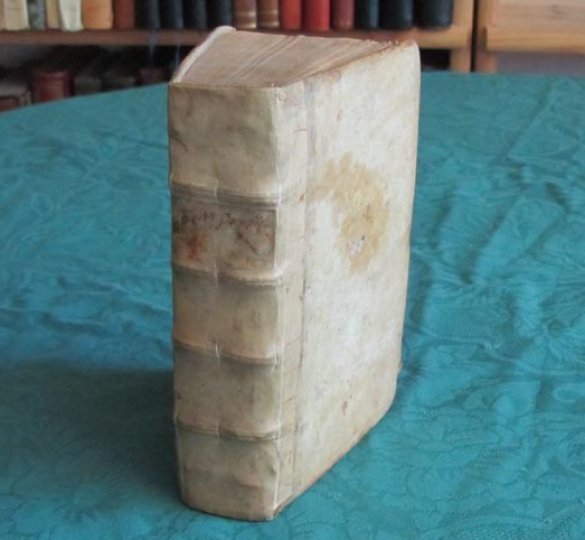
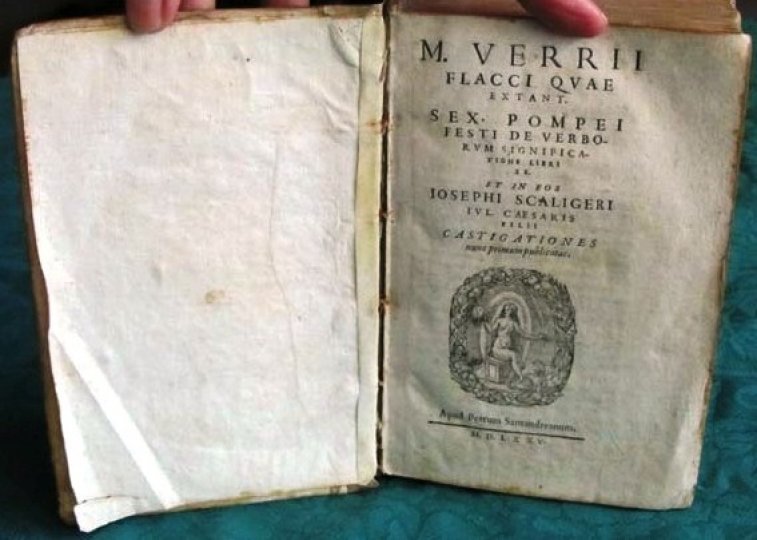
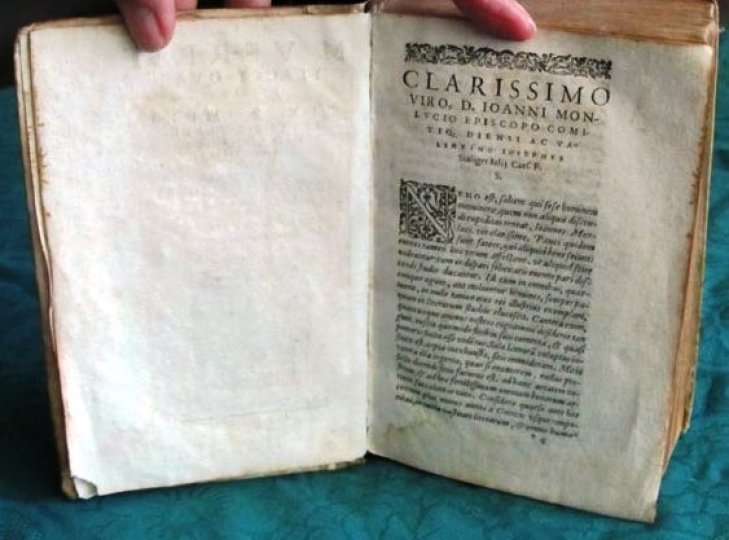
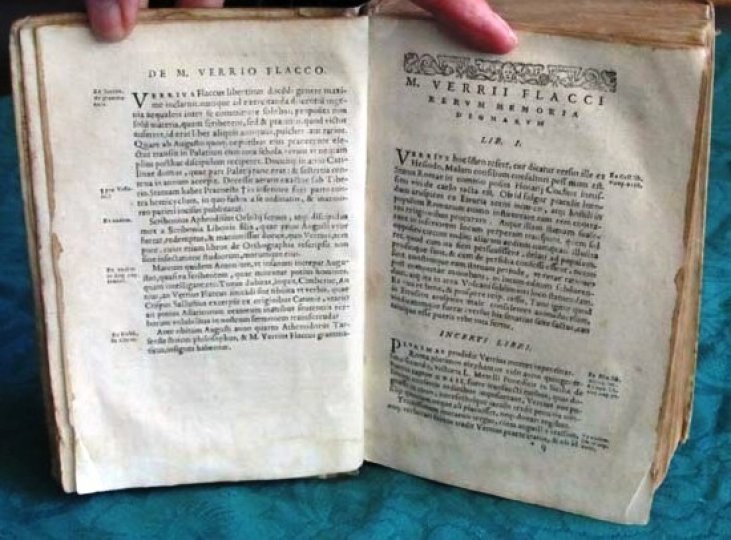

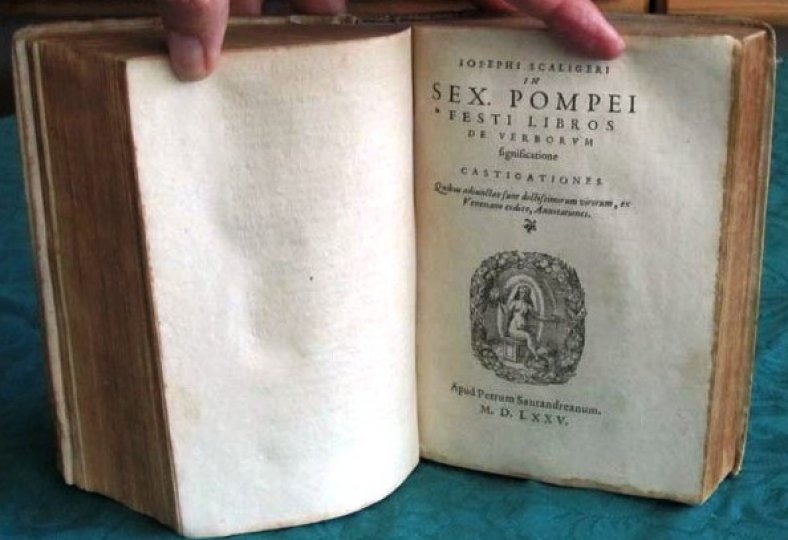
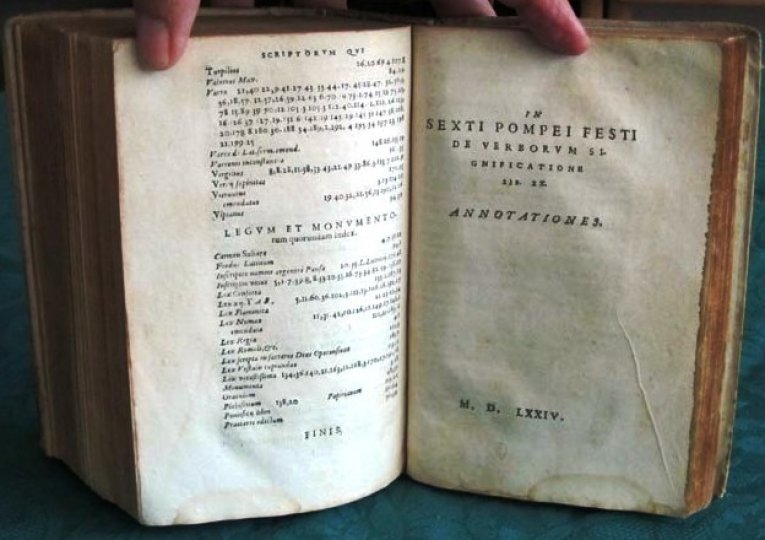
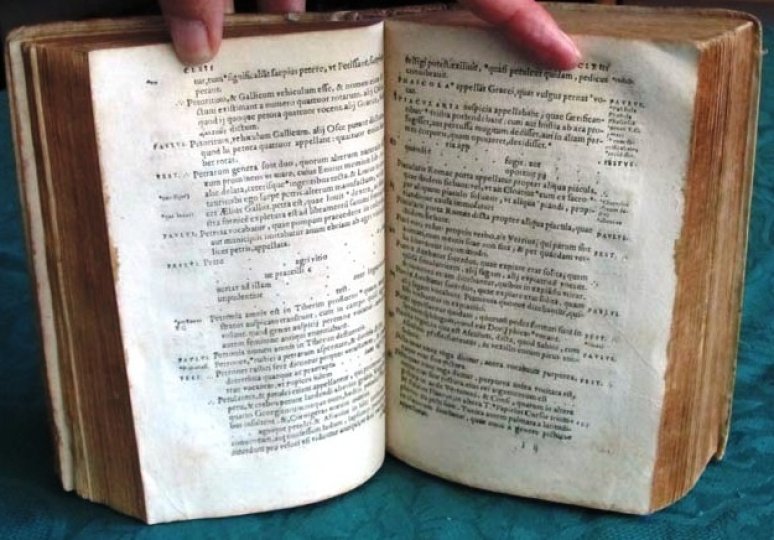
M. Verrii Flacci quae extant Sex. Pompei Festi De Verborum Significatione libri XX. Et in Eos Josephi Scaligeri Iul. Caesaris Filii Castigationes nunc primum publicatae.Marcus Verrius Flaccus (né vers 55 avant J.-C., mort en 20 après J.-C.), est un savant érudit, historien, philologue, poète, grammairien et maître d'école (grammaticus) romain, exerçant sous les règnes d'Auguste et de Tibère.Festus Grammaticus, Sextus Pompeius Festus est un grammairien latin de la fin du IIe siècle ap. J.-C, ayant peut-être vécu à Narbo (Narbonne).Il avait composé, sous le titre de Significatione Verborum, une sorte de dictionnaire précieux pour la connaissance des antiquités romaines, de la langue latine et de la mythologie.Joseph Juste Scaliger, fils de Jules César Scaliger, né en 1540 à Agen et mort en 1609 à Leyde est l'un des plus grands érudits français du XVIe siècle. Il surpassa de loin son père comme philologue, et se fit en outre un nom comme chronologiste et historien.Sans lieu (Genève), Apud Petrum Santandreanum 1574-1575. Préface, 200 pages, index, et Annotationes (1574), 76 pages.Reliure plein vélin de l'époque. Dos à nerfs avec titre manuscrit (restauré). Quelques mouillures. 2 coins frottés. Pas de rousseur. Bon état. Format in-12°(17x12).
Reference : 14650
Bookseller's contact details
Livres et Collections P. Commerot
M. Philippe Commerot
8 allée des Acacias
92310 Sèvres
France
09 67 04 07 48
Payment mode


Sale conditions
Les livres sont expédiés le jour même de la réception du règlement. Vous pouvez passer vos commandes par mail, ou par téléphone. Règlements en euros, par carte bancaire, chèque français, virement bancaire, ou lien de paiement Stripe. Evitez paypal.
2 book(s) with the same title
M. Verrii Flacci quae extant et Sex. Pompei Festi de Verborum significatione libri XX. Cum vetusto Bibliothecae Farnesianae exemplari Romae nuper edito, collati; ex quo lacunae pene omnes sunt suppletae. In eos libros Ant. Augustini annotationes, ex editione Veneta, J. Scaligeri castigationes recognitae, ex Parisiensi, F. Ursini notae, ex Romana. Accesserunt nunc denique doctissimorum virorum notae ex eorum scriptis hinc inde collectae. (Bound with:) Q. Asconii Pediani Patavini Commentationes in aliquot orationes M. Tullii Ciceronis. (...) Francisci Hotomani studio & diligentia post omnes omnium editiones quam emendatissimae. (...) Eiusdem Hotomani expositiones suae in Asconium operae & diligentiae.
Ad 1: (Genève), Apud Petrum Santandreanum, 1593. Ad 2: Lyon (Lugduni), Apud Joan. Tornaesium & Gul. Gazeium, 1551.
8vo. 2 volumes in 1: Ad 1: (XVI),CCCIX,(1 blank),(23 index),(1); LXXV,(1 blank),(10),CCXVI,(22 = index),(4),84 (recte 80) p. Ad 2: (XXIV),171,(1) p. H.leather. 17 cm (Ref: Ad 1: GLN-3651; Schweiger II,1135; Bernays, see p. 258/59 & 279; Ad 2: A. Cartier, Bibliographie des éditions des Tournes, no. 185; Schweiger I,18) (Details: 2 Back with 5 raised bands, and a black shield; Ad 1: 'Veritas' printer's device on the title: a woman, the naked truth, seated on a cubus, holding a radiant sun in her right hand. In her left hand she holds an opened book and a palm leaf. Her feet rest on the globe; the garland of fruit which surrounds her shows a ribbon with a motto in Greek: 'Alêtheia Pandamatôr', i.e. 'Allmighty Truth'. Ad 2: completely printed in italics; engraved printer's mark on title, a 'Ouroboros', with motto: 'quod tibi fieri non vis, alteri ne feceris', type no. 5. (See Cartier p. 40); Prism mark, type d on the verso of the last leaf, with motto 'Nescit labi virtus' (See Cartier p. 42) (Condition: Back rubbed; corners bumped; paper on covers slightly worn; a few small wormholes in the second half of the first work only; occasional faint pencil underlinings; old ownership entry at the upper margin of the title of Asconius erased; first title slightly soiled) (Note: Ad 1: Festus is a 2nd century abbreviator of a lost lexicographic work by Marcus Verrius Flaccus, dating from the first century B.C. Remains of his work survive in Festus; J.J. Scaliger, 1540-1609, produced a highly acclaimed edition in 1575. He was praised for his success at completing blank portions of the Farnese manuscript. The editor uses both Paulus Diaconus and Festus for a reconstruction of the text in strict alphabetical order, from A to V; Bernays tells us that the 216 pages with the 'Castigationes' of Scaliger are 'unverändert abgedruckt' in this edition of 1593 (Bernays p. 279). Scaliger's notes are followed by the notes of lesser gods, but nevertheless 'docti viri'. Ad 2: Asconius Pedianus, probably 3-88 A.D, produced for his sons a historical commentary on a number of the orations of the Roman politician/orator Cicero, the Verrines, pro Cornelio, contra M. Antonium & Catilinam, contra Pisonem, pro Scauro, & pro Milone. François Hotman, 1524-1590, was a French protestant jurist and author) (Provenance: Engraved bookplate of Jonkheer Henri de Brauw, depicting his coat of arms) (Collation: Festus: q - 2q8, a - v8 x8 (minus x8 blank); A - V8 X2; 2A - 2E8 2F2. Asconius: a - m8 n4 (lacking the blanks n3 and n4) (Photographs on request)
M. Verrii Flacci quae extant. Et Sex. Pompei Festi De verborum significatione libri XX. Cum vetusto Bibliothecae Farnesianae exemplari Romae nuper edito, collati; ex quo lacunae pene omnes sunt suppletae. In eos libros Ant. Augustini annotationes, ex editione Veneta, Io. Scaligeri castigationes recognitae, ex Parisiensi, Ful. Ursini notae, ex Romana. Accesserunt nunc denique doctissimorum virorum notae ex eorum scriptis hinc inde collectae.
Paris (Parisiis), Apud Arnoldum Sittart, 1584.
8vo (XXVIII),CCCIX,(1 blank),(22 index),(2 blank); LXXV,(1 blank),(10),CCXVI,(24 index),84 p. Limp vellum 17 cm (Ref: Smitskamp 61; Schweiger 2,355 & 1134; Brunet 5,2 1148; Renouard-1926, n° 1044 (Renouard et alii, 'Imprimeurs et libraires parisiens du XVIe siècle', Paris, 1964)) (Details: 5 thongs laced through the joints. Engraved printer's mark of Arnoldus Sittart on the title, his motto: 'Finis coronat opus', 'the end crowns the work'. (BaTyR : Base de Typographie de la Renaissance, no. 28409) The printer's mark shows the coat of arms of Cologne, the city where Arnoldus Sittart was born: the escutcheon bears 3 crowns and beneath them are twelve drops; the escutcheon is supported by a standing crowned griffin and idem lion; above the shield a helmet with peacock feathers as crest. (See for an explanation Wikipedia 'Kölner Wappen') (Condition: The vellum is probably recycled from another book; that is why the cover is wrinkled, dog-eared, slighlty soiled, and cut short. A small piece of the outer-edge of the backcover has gone. Three names and a small inscription on the title, 1 name has been erased. Partly slightly waterstained at the lower margin. Some hardly visible pinpoint wormholes near the right lower corner of one quarter of the book) (Note: Festus is a 2nd century grammarian, who produced an abbreviation of a lexicographic work by Marcus Verrius Flaccus, a wellknown antiquarian and grammarian living in Augustan Rome. Verrius compiled an enormous lexicon in 80 books, full of unusual, difficult, and archaic words, with discussions about customs, political institutions, beliefs and Roman law. Remains of his work survive in the epitome of 20 books made by Sextus Pompeius Festus. Festus also added examples found in other sources; an other epitome of this epitome of Festus was made in the 9th century by the historian Paulus Diaconus. The original work of Verrius is completely lost, and only 1 manuscript of Festus survived the Middle Ages in a heavily mutilated form. The first reliable text, which was a great improvement compared to earlier editions was published in 1559 by Antonio Agustin, 1517-1586, who made good use of the Farnese manuscript at Naples. He also added a commentary. It remained dominant for 2 centuries. Fulvius added in this edition suggestions concerning Greek material. J.J. Scaliger, 1540-1609, produced a highly acclaimed edition in 1575. He was praised for having successfully completed the gaps and damaged passages of the Farnese manuscript. Grafton says about this edition that 'fluency in conjecture and attention to detail could hardly be raised to a higher level'. (A. Grafton. Joseph Scaliger, a study in the history of classical scholarship, Oxf. 1983, vol. 1, p. 134/160) This edition of 1584 repeats Scaliger's of 1575. The text of Agustin is also printed, followed by 75 p. with his annotations, and followed by a 216 p. commentary by Scaliger; at the end we find the notes of Ursinus) (Collation: +6, *8, a-x8, A-V8, X2, 2A-2E8, 2F2) (Photographs on request)

