 Write to the booksellers
Temple Bailey Irene
Le Viking
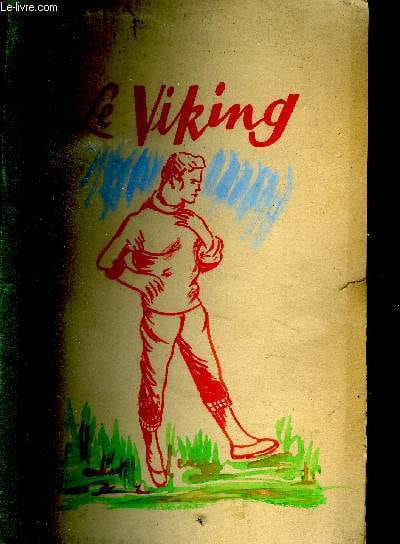
Les feuilletons de la semaine Radio. Non daté. In-12. Broché. Etat d'usage, Couv. convenable, Dos satisfaisant, Papier jauni. 108 pages augmentées de quelques illustrations en noir et blanc dans le texte.. . . . Classification Dewey : 840-Littératures des langues romanes. Littérature française
Reference : RO40003625
Texte en deux colonnes. Classification Dewey : 840-Littératures des langues romanes. Littérature française
Bookseller's contact details
Le-livre.fr / Le Village du Livre
ZI de Laubardemont
33910 Sablons
France
05 57 411 411
Payment mode


Sale conditions
Les ouvrages sont expédiés à réception du règlement, les cartes bleues, chèques , virements bancaires et mandats cash sont acceptés. Les frais de port pour la France métropolitaine sont forfaitaire : 6 euros pour le premier livre , 2 euros par livre supplémentaire , à partir de 49.50 euros les frais d'envoi sont de 8€ pour le premier livre et 2€ par livre supplémentaire . Pour le reste du monde, un forfait, selon le nombre d'ouvrages commandés sera appliqué. Tous nos envois sont effectués en courrier ou Colissimo suivi quotidiennement.
5 book(s) with the same title
Harvesting the Margins of the Viking World. Decentralizing Economies in Late Iron Age Fennoscandia
, Brepols, 2026 Hardback, Pages: 246, Size:216 x 280 mm, Illustrations:32 b/w, 37 col., 9 tables b/w., Language: English. ISBN 9782503620183.
Summary Viking Age research has long been shaped by an 'agricultural paradigm' - a framework that centres economic and social development in the fertile plains of southern and central Scandinavia. This dominant model has marginalized alternative subsistence strategies and rendered northern regions peripheral, both geographically and conceptually. This volume challenges that orthodoxy through a new focus on the economic and cultural significance of Late Iron Age Fennoscandia. Gathering fifteen chapters from established scholars in the field, this work explores how environmentally diverse and often-overlooked northern areas were not passive peripheries. Instead they were active arenas of innovation, connectivity, and identity formation. Contributors examine mixed economies and subsistence strategies, and the movement of people, materials, and ideas across forested outlands, coastal zones, and inland trade networks. From indigenous agency to interregional exchange, this volume decentres traditional narratives to offer a more nuanced and inclusive understanding of economic life in the Late Iron Age. TABLE OF CONTENTS List of Illustrations 1. Setting the Scene: Shifting Late Iron Age Geography Kristin Ilves and Charlotta Hillerdal 2. Challenging Marginality: Nuancing the Agricultural Paradigm of Viking Age Fennoscandia Charlotta Hillerdal Conceptualizing a New Viking Age North 3. Fuzzy Boundaries: Defining the Wilderness in Finnish Scholarship Tuija Kirkinen 4. Historical and Mythical Northern Land: Dialoguing between the Viking Age and the Present in Northern Finland Vesa-Pekka Herva and Risto Nurmi 5. The Rise of an Economic Elite - Societal Changes in the North Induced by Viking Age Trade Networks Jari-Matti Kuusela 6. Maritime Transformations in Northern Norway during the Viking Age and Medieval Period: Innovation and Independence on the Edge of Europe Stephen Wickler 7. Sámi in the North - Central Actors in Viking Age Trade Ingela Bergman 8. Trade and Subsistence in Northeastern Fennoscandia: The Northern River Routes and the White Sea Coast Hanna-Leena Puolakka 9. The Outland as an Economic Resource Base: Exploitation in the Norse Periphery Irene Baug Diversifying Economy and Connectivity 10. Hunters and Combmakers, Mountains and Markets: Problematizing the Movement of Reindeer Antler in Viking-Age Norway Steven P. Ashby 11. The Riches behind the Langeid Sword: Viking Age Iron Production and Trade Kjetil Loftsgarden 12. From Quarry to Pot: Soapstone in Local and Regional Networks Eva Svensson, Lena Grandin, Erik Ogenhall, Stefan Nilsson, Ellinor Larsson, Hans Olsson, and Annie Johansson 13. Shears and Frontiers: Pastoral Grave Goods in Viking Age Sweden and their Implications Samanta Rose 14. Was it for Iron? Andreas Hennius 15. Clandestine Clay? Explorations into Late Iron Age Religious Identity Creation in an Island Setting Kristin Ilves, Kim Darmark, and Elisabeth Holmqvist
Crossing Disciplinary Boundaries in Studies of the Viking Age
, Brepols, 2022 Hardback, 365 pages, Size:156 x 234 mm, Illustrations:1 b/w, 10 col., 1 tables b/w., 1 maps b/w, 1 maps color, Language: English. ISBN 9782503592961.
Summary What happens when scholars cross outside the perceived 'boundaries' of their discipline? What problems arise when a scholar trained in one field employs materials or methodologies from an adjacent subject area, engaging with new sources, research methodologies, and traditions, and how can such issues be resolved? Taking as its starting point the increasing shift towards interdisciplinarity seen within Viking-age studies, this collection of essays aims to explore the benefits and pitfalls that can arise from crossing disciplinary borders in this area, and to gain new knowledge about how to address issues that have occurred in previous examples of interdisciplinary combinations. The volume draws together contributions from authors in different disciplines, among them philology, history, archaeology, literary studies, folklore studies and history of religion, in order to hold a constructive and multi-perspective discussion on the benefits and issues arising from interdisciplinary research in studies of the Viking Age. Together, these chapters aim to bridge the gap that often exists between scholars from adjacent fields of research, and in doing so, to stimulate the trend in interdisciplinary approaches to research that can improve our understanding of the past. TABLE OF CONTENTS Interdisciplinarity in Viking Age Studies. An Introduction Daniel Sävborg Interdisciplinary ? Multidisciplinary ? Transdisciplinary. Navigating the Wandering Rocks of Trending Terminology on Changeable Tides of Discipline Ideology Frog The Legend of the Invitation of Varangian Princes in the Light of Interdisciplinarity Elena Melnikova Saga Studies and Slavic-Finnish Archaeology: 'Bilateral Cooperation' Tatjana N. Jackson Crossing Borders between Literature and Toponymy. The Narrative Landscape of Hvolsvöllur and its Implications Matthias Egeler Women and Swords in the Viking Age. An Interdisciplinary Study of an Archaeological and Textual Motif Leszek Gardela 'Many big ships and excellently well fitted?'. A Case Study of Norse Vessels in Hákonar saga Hákonarsonar c. 1204-1263 William Pidzamecky Interdisciplinary Research in the Study of Human Sacrifices in Late Iron Age Scandinavia Klas Wikström af Edholm The Royal Erfi-Feast, Inauguration at the High-Seat, and Genealogical Knowledge in Viking Age Scandinavia. An Interdisciplinary Approach Olof Sundqvist Some Thoughts on the Category of Religion in Research of Viking Age Scandinavia Andreas Nordberg Molding Myth and Memory. The Plasticity of Old Norse/Icelandic Traditional Tales Annette Lassen Old Norse Religion and the Troublesome Quest for an Interdisciplinary Approach Henrik Janson
Viking Archaeology in Iceland, Mosfell Archaeological Project.
, Brepols - Harvey Miller, 2014 Paperback, XXVI 256 pages ., 83 b/w ill. 10 colour ill. 17 maps, 23 graphs, 28 b/w tables, 216 x 280 mm, Languages: English. ISBN 9782503544007.
The Viking North Atlantic differs significantly from the popular image of violent raids and destruction characterizing the Viking Age in Northern Europe. In Iceland, Scandinavian seafarers discovered and settled a large uninhabited island. In order to survive and succeed, they adapted lifestyles and social strategies to a new environment. The result was a new society, the Icelandic Free State. This volume examines the Viking Age in Iceland through the discoveries and excavations of the Mosfell Archaeological Project (MAP) in Iceland?s Mosfell Valley. Directed by Professor Jesse Byock with Field Director Davide Zori, MAP brings together scholars and researchers from Iceland, Britain, Canada, Denmark, Norway, Sweden, Germany, and the United States. The Project incorporates the disciplines of archaeology, history, saga studies, osteology, zoology, paleobotany, genetics, isotope studies, place-names studies, environmental science, and historical architecture. The decade-long research of MAP has led to the discovery of an exceptionally well-preserved Viking chieftain?s farmstead, including a longhouse, a pagan cremation site, a conversion-era stave church, and a Christian graveyard. The research results presented here tell the story of how the Mosfell Valley developed from a ninth-century settlement of Norse seafarers into a powerful Icelandic chieftaincy of the Viking Age.
Charlotte Hedenstierna-Jonson, Anne Irene Riisøy, Jakub Morawiec (eds)
Reference : 70424
Viking Women. Between Theory, Text, and Materiality
, Brepols, 2026 Hardback, Pages: 129, Size:216 x 280 mm, Illustrations:1 b/w, 12 col., 3 tables b/w., Language: English. ISBN 9782503622675.
Summary This volume offers an interdisciplinary exploration of gender relations in medieval Scandinavia, focusing on the roles of women in Old Norse society. Despite decades of research, this topic continues to attract critical attention, a reflection both of its enduring relevance in medieval studies and of the ways in which it intersects with contemporary cultural discourse. Bringing together eight contributions by leading specialists, this book combines archaeology, history, literary analysis, and legal studies to shed new light on established debates and to offer insights into emerging perspectives. The chapters draw on both methodological and theoretical approaches, variously tracing connections between legendary heroines such as Brynhild and the enigmatic women of the Oseberg and Birka graves, exploring gender in the mortuary landscape, and assessing the role played by women in creating and promulgating skaldic verse. Highlighting the interplay between text and material culture, this collection presents a coherent yet multifaceted picture of women's roles in Viking Age societies. TABLE OF CONTENTS List of Illustrations 1. Viking Women - Between Theory, Text and Materiality: An Introduction Charlotte Hedenstierna-Jonson, Jakub Morawiec, and Anne Irene Riisøy 2. The Role of Women in Viking Age Society: Previous Research Evaluated Alexandra Sanmark 3. Women and Chairs in Legal Rituals: Between Text and Materiality Anne Irene Riisøy 4. Gender and the Mortuary Landscape: Burial Mounds as Meaningful Symbols Marianne Moen 5. Active Men and Emblematic Women: A Reflection on Agency, Narrative, and Interpretations in Archaeological Practice Charlotte Hedenstierna-Jonson 6. Power, Magic, and Gender in the Early Viking Age: The Case of the Oseberg Women Bjørn Bandlien 7. Female Understanding and Transmission of Skaldic Poetry Jakub Morawiec 8. The Lady with the Book: Feminine Figures of Wisdom, the Alfred Legend, and the Cultural Politics of Englalond Rafa? Borys?awski Index
Sigurt le viking
Hachette 2004 209 pages in8. 2004. broché. 209 pages. Sigurt le Viking est le premier tome d'une trilogie jeunesse qui suit les aventures de Sigurt un jeune orphelin recueilli par un guerrier viking. Il embarque pour une expédition vers le Vinland (future Amérique) mais se retrouve seul après le massacre de ses compagnons lors d'une dure traversée dans les glaces du Grand Nord. Le roman se distingue par son souci de réalité historique et son rejet des clichés sur les 'invasions normandes'
Très bon état

