 Write to the booksellers
FOURCADE Dominique,
Il,
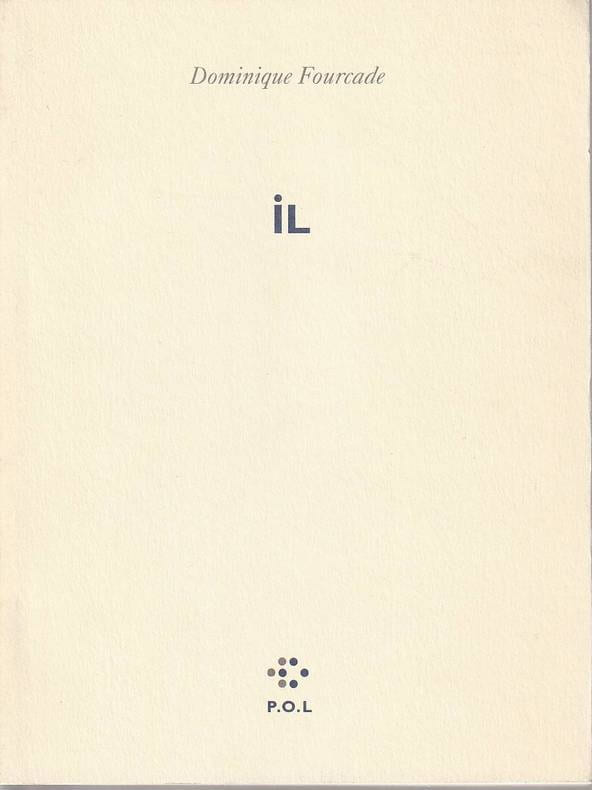
P.O.L, 1994, 165 pp., broché, édition originale, envoi autographe de l'auteur à Marcelin Pleynet, quelques pages cornées et passages signalés au crayon, bon état.
Reference : 52567
Bookseller's contact details
L'odeur du book - Negri-Meary S.A.R.L.
60 rue Hermel
75018 Paris
France
0033 (0)1 42 23 30 39
Payment mode


Sale conditions
Vous pouvez passer vos commandes par e-mail, par téléphone ou par courrier. Nous vous donnerons confirmation de la disponibilité des ouvrages souhaités par téléphone ou par e-mail. Nous vous enverrons votre commande dès réception de votre règlement par chèque, carte bancaire, Paypal ou virement bancaire international à l'ordre de Negri-Meary SARL. Envoi par courrier suivi à votre charge. Vous pouvez également retirer les ouvrages commandés à la librairie aux heures d'ouverture.
5 book(s) with the same title
Vers Ispahan.
Paris, Calmann-Lévy, s.d. (1910), 1 vol. rel. Bas. Dos lisse orné de fleurs dorées, plats de la couverture conservés.
Histoire d’un garçon. Illustrations de Chovin.
Paris, Maison Quantin, s.d. (1889), 1 vol. rel. Cart. ed. Tranches dorées. Le bord supérieur du premier plat est affecté de taches>. Usures aux coiffes et aux coins. Les dorures de la couverture ont encore belle allure, réserve faite de la précision ci-avant.
Narcisse-Achille de Salvandy - Longue lettre autographe signée - 4 pages - 1842
Narcisse-Achille de Salvandy. Longue lettre autographe signée - 4 pages - 1842 Homme politique et écrivain français Lettre autographe signée de Narcisse-Achille de Salvandy, datée du 29 décembre [1842]. Rédigée à l'encre noire sur un double feuillet de papier vélin. Dans cette lettre adressée à un collègue, Narcisse-Achille de Salvandy livre une longue et passionnante réflexion politique, exprimant son refus de la servilité envers le gouvernement tout en rejetant les intrigues partisanes, et évoque sa vision de l'indépendance de l'élu en citant notamment Pierre-Paul Royer-Collard. Dimensions : 13,3 x 20,2 cm État : Voir photos et description pour plus de détails. Nombre de pages : 4 pages
L'élan vers le pire
Auteur : Emil Cioran Titre : L'élan vers le pire Édition : Éditions Gallimard (NRF), Paris, 1988 Tirage : originale (Achevé d'imprimer le 11 août 1988). Photographies : Irmeli Jung, N&B Reliure : Broché, couverture souple pelliculée et illustrée Dimensions : 30 x 28 cm État : Complet, très bon état de conservation. Couverture et intérieur frais. Voir photos pour plus de détails. Nombre de pages : Non paginé.
Le Prince (De Principatibus) Traduction de Jacques Gohory, prieur de Marcilly présenté par Raymond Aron
S.l., Le livre de Poche, 1969, broché, 187 pages paginées, 16.5 x 11 x 1.2 cm, coins de la couverture légèrement émoussés, une toute petite déchirure sur la dernière page.

